Double Life (ダブル・ライフ, Enen Yo, 2022)

The heroine of Enen Yo’s Double Life (ダブル・ライフ) has a recurring dream of being trapped in an endless tunnel. No matter how long she walks, she can never see an exit, but she also claims that she is always awake to her true self. It is in a way her true self that seems to have gotten away from her as she struggles to overcome career disappointment and a moribund marriage to a passive aggressive salaryman who barely speaks to her and seems to resent her presence in his life. 

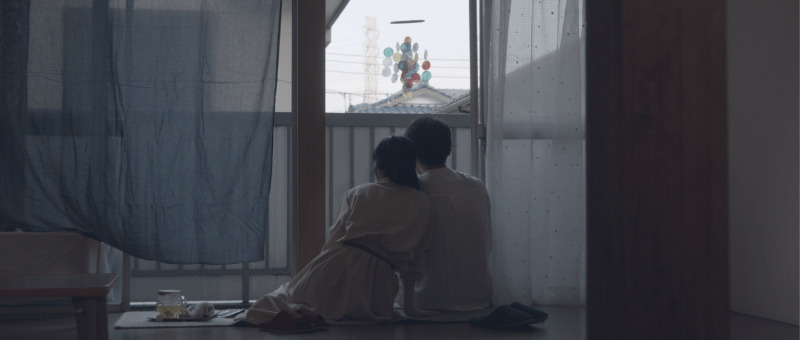
After giving up her dance career following an injury, Shiori (Atsuko Kikuchi) has been working as an assistant to movement coach Kumiko whose practice is closer to performance art than contemporary dance. Shiori had wanted to take part in one of Kumiko’s “Communicating Love” couples sessions and though her husband Ryo had originally agreed he cancels at the last minute with an abrupt text message he refuses to explain over the phone. He refuses to explain at home too, later giving an excuse that would have seemed reasonable if he’d offered it in a less abrasive manner but given his behaviour makes him seem guilty and evasive. Smelling another woman’s perfume on his shirt only deepens Shiori’s suspicions that he’s been having an affair. It’s for these reasons that she takes up the recommendations of a friend, Misaki, to contact a man who rents himself out for role play assignments to pose as her husband so that she can participate in the workshop even without Ryo’s cooperation. 

This might in someways seem perverse given that the workshop is about exploring intimacy as a couple, but as Kumiko explains it’s as much about coming to understand your own feelings as it is your partner’s. Shiori has in a sense hired Junnosuke to mirror her, conforming to her image of an idealised Ryo as the tender and loving husband he does not otherwise seem to be. Perhaps just incredibly good at his job, Junnosuke is a perfect fit for the exercise and is able to effectively pick up on Shiori’s buried anxieties echoing her dream of the tunnel but envisioning her as a beautiful butterfly dancing its way towards the exit. Shiori decides to hire him for an extended period and even rents a small flat to role play a happier marriage but also begins to lose sight of the boundaries of their “fake” relationship.

As Junnosuke says, once he’s in character it’s his lived “reality” until it’s not, but one also has to wonder what toll this lifestyle takes on the core “Junnosuke”, whether he can be said to exist at all and is able to have “authentic” personal relationships or whether not having them affects his life if he is able to derive emotional satisfaction through his various role playing activities. In any case as he later reminds Shiori he is a creature of her creation who only ever mirrored her desires and in doing so showed her who she is and what she wants along with the way out of the dark tunnel towards a more satisfying existence. 

Kumiko, who is herself dealing with a sense of loss, tells her something similar in explaining that she must rediscover her centre of gravity which is also a means of spiritual reorientation in recalibrating herself to her present physicality and learning move in tune with the rhythms of the body she has now not the one she used to have before the injury which she must fully accept as a part of herself. It’s rediscovering her love of dance that grants her mastery over her body and soul and allows her to find a way through her despair in accepting that she must change to meet the new future rather than remaining trapped in a disatfying present defined by a longing for an immutable past. 

Shot with a breezy poeticism that is at once lyrical and naturalistic, Yo’s gentle drama explores a process of healing conducted through theoretical role play that suggests that in certain cases literal authenticity is less important than the emotional in making an essential truth fully visible. In any case through living her “double life”, Shiori gains a new perspective on herself and others that finally allows her to see the light at the end of a tunnel she feared would never appear.


Double Life screens in Frankfurt 11th June as part of this year’s Nippon Connection.

International trailer (English subtitles)

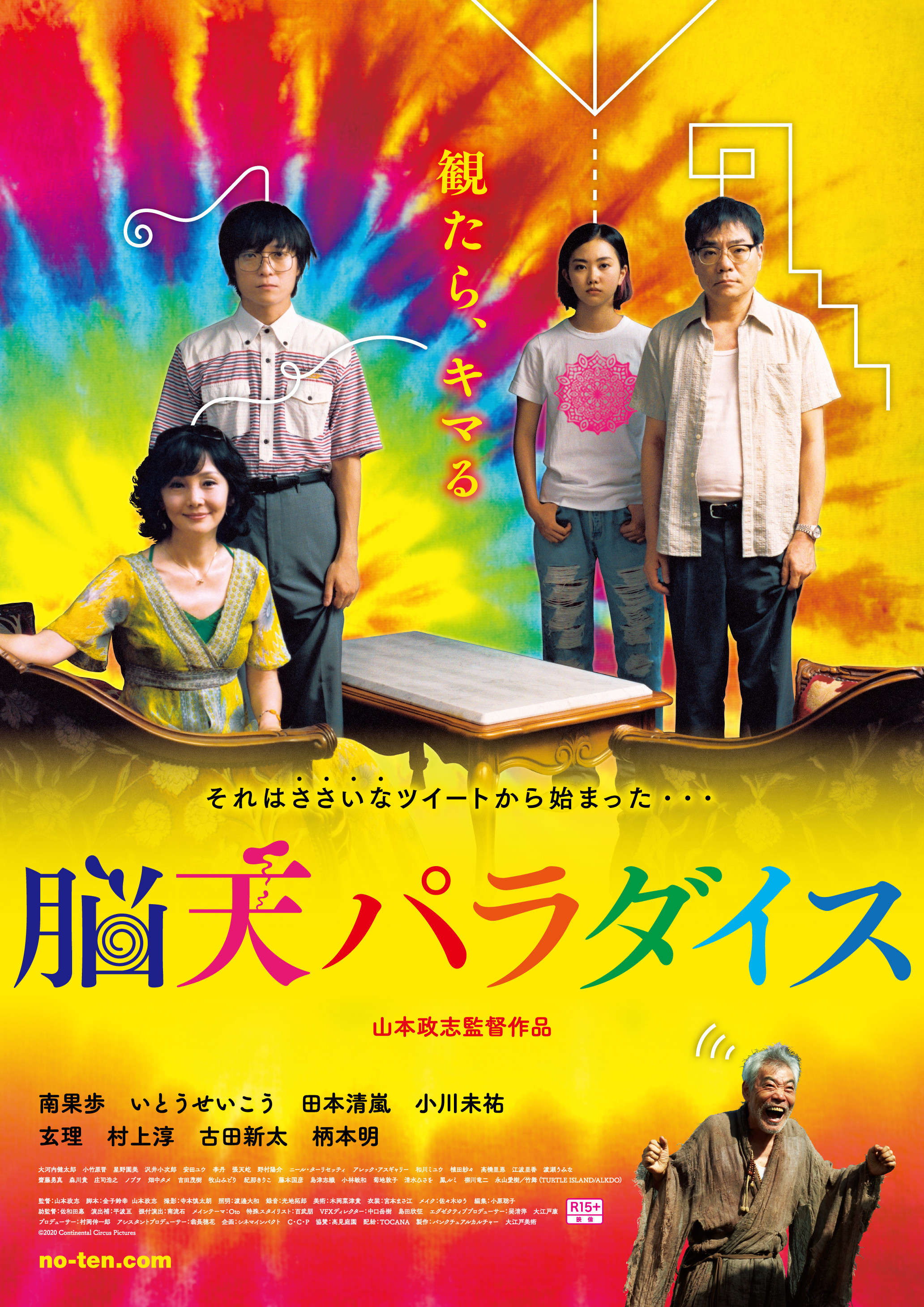
Wonderful Paradise (脳天パラダイス, Masashi Yamamoto, 2020)

A moribund Tokyo mansion becomes the scene for an orgy of life, death, love, and rebirth in Masashi Yamamoto’s surrealist party movie Wonderful Paradise (脳天パラダイス, Noten Paradise). Sometimes you have to learn to say goodbye and move on, other times you have to learn to forgive and let go of past resentment. Of course, sometimes you have to do both of those things at the same time, which is perhaps appropriate for the former home of the Sasayas which seems to exist between the realms of life and death, a perpetual Bon festival where departed spirits and lost souls congregate for one almighty party. 

Dad Shuji (Seiko Ito) has had a run of bad luck and unfortunately lost the family home he inherited from his parents meaning he and his two adult children, son Yuta (Soran Tamoto) and daughter Akane (Mayu Ozawa), are having to move on though who knows where to. Resentful that she’s having her life uprooted by her father’s fecklessness, Akane takes to social media and Tweets that there’s a party at hers and everyone’s invited as kind of goodbye to the house. Meanwhile, a series of strange events occur from a weird old monk (Akira Emoto) who keeps trying to pray to the various neoclassical statues on the property going nuts at a belligerent removal man and then apparently dropping dead, to the resurfacing of mother Akiko (Kaho Minami) who apparently left the family some years previously for a man who ran a coffee shop but has since passed away. 

The first people to arrive for the party are a gay couple looking for somewhere to celebrate their marriage, a minor irony in that the event will later descend into an elaborate funeral for two people who may or may not be dead. As more and more guests arrive, along with a series of opportunistic commercial food stands and other businesses, the party begins to get out of hand becoming ever stranger as the night wears on. 

At the heart of it all are the tensions in the family, an unresolved resentment directed at son Yuta who is, according to his brash aunt Yuka (Sonomi Hoshino), overly preoccupied with his family circumstances to the extent that it prevents him from getting a regular job and moving on with his life. Shuji has quite clearly failed both as a son and as a father, eventually betting one of his dad’s precious antiques in a card game run by yakuza loansharks setting up shop in the house. Akane appears exasperated, but is also harbouring an intense resentment towards Akiko for her abandonment that prevents her being able to “move on” from her former family home. 

Moving on is also a problem for a few of the ghosts, the line between the living and the dead becoming increasingly blurred. One random surreal moment to the next, Yamamoto careers between absurdist episodes culminating in a fight between a murderous sentient coffee bean and a statue come to life. What began as a lowkey wedding eventually becomes a bizarre funeral enacted through the medium of Bollywood song and dance transitioning into a traditional enka festival number all of which happens before a couple of hapless crooks who’ve been operating a drug factory on the family’s property for the last two years without them ever knowing turn up with their “super mandala drug of paradise” to send the evening in a psychedelic direction. 

Yet for all the surreality of death, violence, sex, and rebirth when dawn arrives it brings with it a kind of calm brokering a new peace between friends and family members as they learn to accept each other and the past in an unburdened sense of openness. Possibly deceased monks, talking cats, kids who can’t figure out how to stop swinging and mysteriously turn themselves into sticks or dissolve in bath water, scorned lovers, unrepentant thieves, ghosts and family secrets descend on this weird gothic mansion in the middle of a city, creating a “wonderful paradise” for one night only filled with surrealist magic and unforgettable strangeness that nevertheless pushes the family back together through dream logic and a taste of the absurd. A weird, sometimes incomprehensible, journey into an etherial, psychedelic twilight psychodrama rave, Yamamoto’s charmingly bizarre nighttime odyssey is a law unto itself but one filled with wonder for the uncanniness of the everyday. 


Wonderful Paradise streamed as part of this year’s Nippon Connection.

Original trailer (English subtitles)