Love Doesn’t Matter to Me (愛されなくても別に, Aya Igashi, 2025)

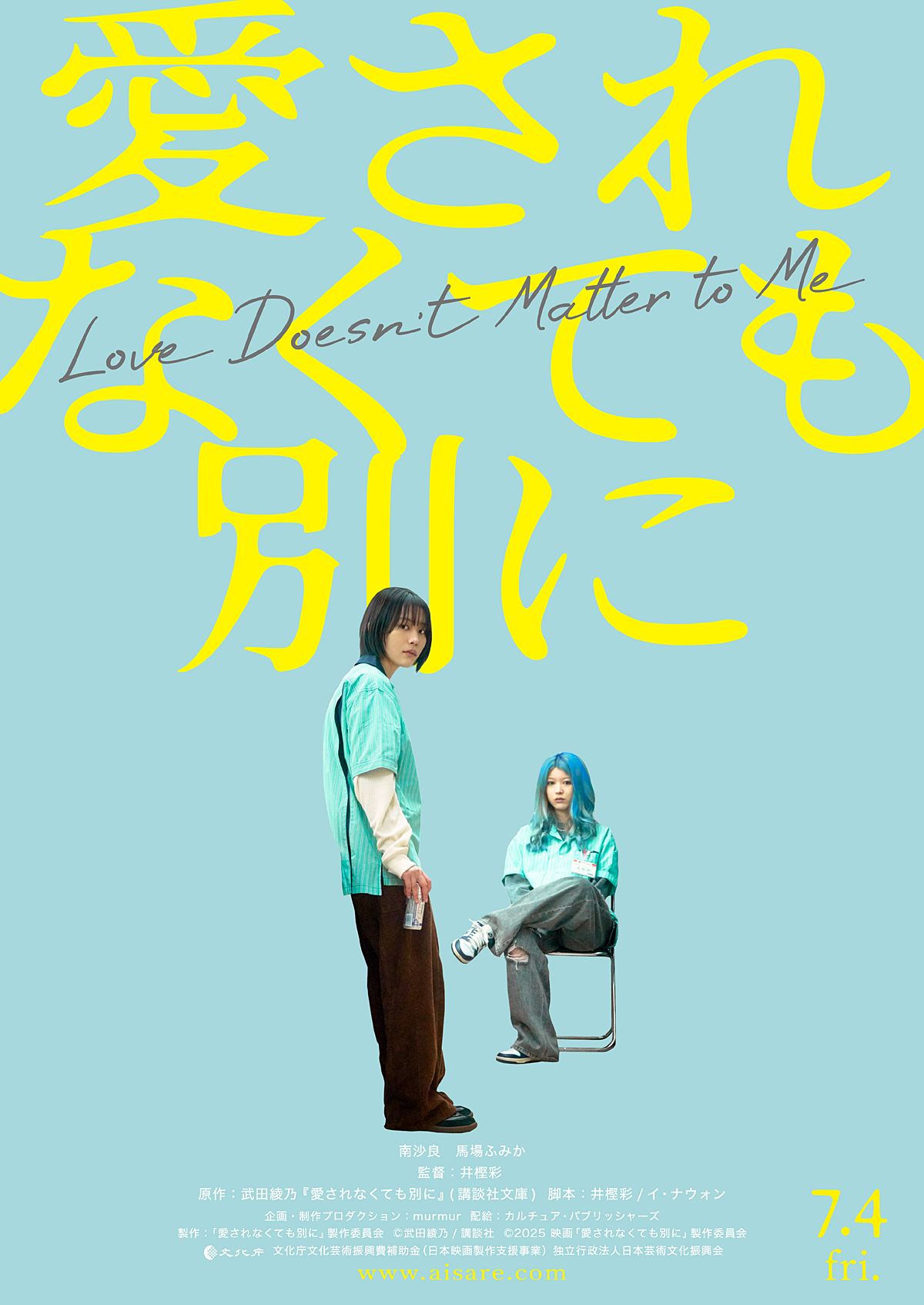
Two young women find solace and solidarity in each other after escaping toxic familial environments in Aya Igashi’s adaptation of the novel by Ayano Takeda, Love Doesn’t Matter to Me (愛されなくても別に, Aisarenakutemo Betsuni). Though some might say that parents always love their children even if that love was not conveyed in the optimal way, the two women struggle with their contradictory impulses in craving the love of a parent who in other ways they know is past forgiveness.

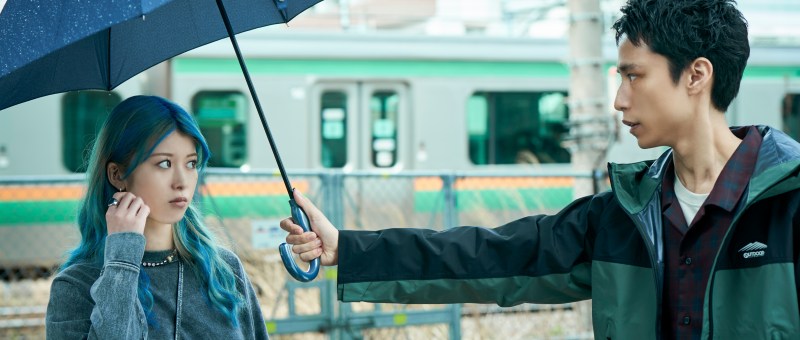
The problem for Hiiro (Sara Minami) is that the roles have become reversed. She is effectively the parent of her irresponsible mother (Aoba Kawai) who treats her like a housekeeper and is intent on exploiting her labour. Hiiro’s mother didn’t want her to go to university and is still charging her rent and board to live at home while Hiiro works several part-time jobs to jobs to support them. She believes that her mother lives beyond her means, but is unaware of the extent to which she’s been financially abusing her by keeping both the child support her absent father had been sending and the student loan she’d taken out as a safety net. Having to work so hard also means that Hiiro is tired all the time and is prevented from taking part in normal university life or social activities which leaves her unable to make friends. At times she resents her mother so much she’s worried she might end up snapping and killing her to be free, but at the same time loves her and therefore puts up with her ill-treatment.

Enaga (Fumika Baba), meanwhile, is ostracised because her father is on the run after killing someone, though the reason she is resentful of her family is a history of sexual abuse and exploitation that have left her feeling worthless. As she later says there’s no point comparing your unhappiness to that of other people, otherwise you just end up making yourself more miserable as if you were trying to win an unhappiness competition. Nevertheless, learning of Enaga’s situation wakes Hiiro up to the possibility that other people are unhappy too and her life may not have been as comparatively bad as she felt it to be in the depths of her isolation. 

Yet what both women seem to crave is the positive maternal relationship they’ve each been denied. Hiiro gets to know another student, Kimura (Miyu Honda), who also has no friends partly owing to a judgemental attitude and poor social skills whom she later discovers to be from a wealthy background despite her being desperate to find a job and working alongside Hiiro at the convenience store. Kimura resents her mother (Shoko Ikezu) for being overly controlling and possessive. She’s come all this way to university to escape her, yet her mother calls every few hours and is angry if she doesn’t answer and makes frequent visits leaving Kimura with no freedom or social output. To Hiiro, Mrs Kimura’s actions seem to come from an obviously loving place and she might have a point that Kimura is naive, having been kept sheltered all life by her own helicopter parenting, which is why she’s been sucked into a cult. Hiiro sees in Mrs Kimura the love and affection she’d have liked from her own mother and is jealous rather than seeing how seeing Kimura feels suffocated and is driven to despair in being unable to escape her mother’s control.

Lady Cosmos (Yoko Kondo), the cult leader in whom Kimura has found salvation, tells each of the girls that they were loved by their imperfect parents and ought to love them back, but they seem to know better. Though she makes some perspicacious comments, Lady Cosmos also tells them exactly what they want to hear and attempts to occupy a more positive material space to be the loving mother they never had. But, of course, not so different from Hiiro’s mother, she’s bleeding Kimura dry by forcing her to pay extortionate amounts for readings and holy water. Ironically she’s still controlling her much like her own mother had, but Kimura thinks she’s found freedom in cult and resents any attempt to undercut Lady Cosmos’ belief system even if she’s at least on one level forcing herself to believe it rather than being a true believer. 

What might be surprising is that the two women effectively break free of the “cult” of family in accepting that their parents aren’t good for them and the decision to cut them out of their lives is valid rather than the breaking of a taboo or an unnatural rejection of the sacred bond between a mother and a child. Instead they effectively remake the image of family for themselves as one of mutual solidarity and unconditional love between two people who aren’t related by blood but have discovered a much deeper bond rooted in shared suffering.


Love Doesn’t Matter to Me screens as part of this year’s Japan Foundation Touring Film Programme.

Trailer (English subtitles)
A Crimson Star (真っ赤な星, Aya Igashi, 2018)

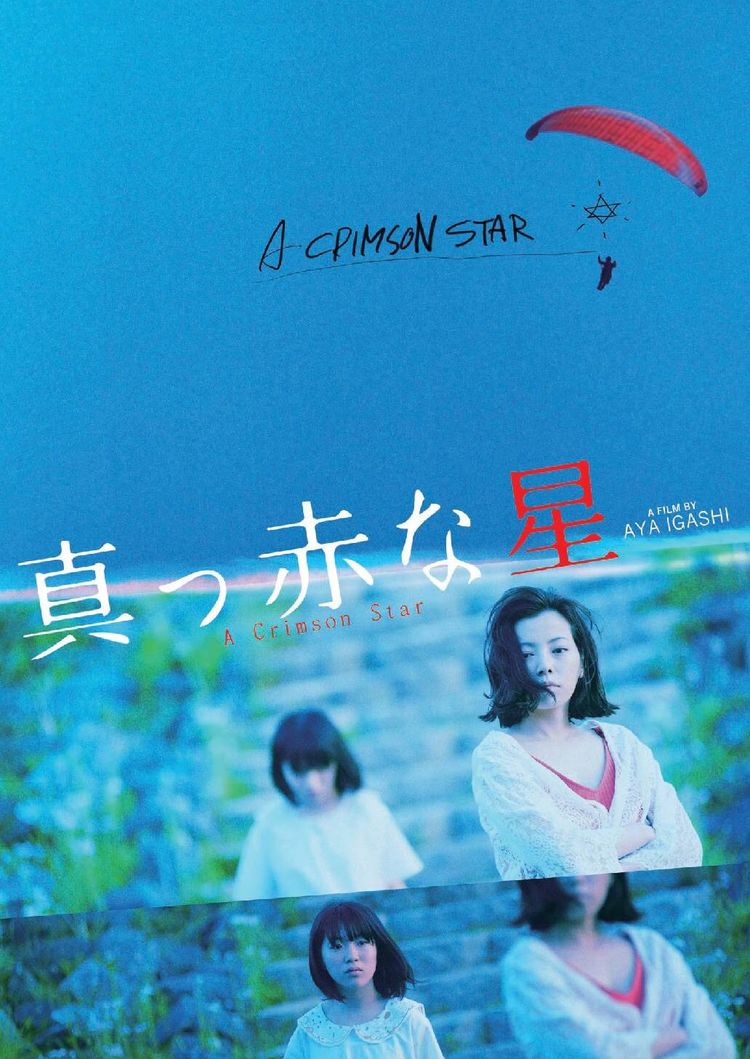
A Crimson Star posterFalling in love is, perhaps, like standing too close to the sun and for the young heroine of Aya Igashi’s debut feature A Crimson Star (真っ赤な星, Makkana Hoshi), it means nothing unless it burns. Set in the otherwise serene environment of a rural Japanese summer, full of blue skies and green fields bursting with life, A Crimson Star is the story of two ostensibly very different women in very different places who nevertheless develop an essential and inescapable bond in their shared sense of loneliness and isolation, but their relationship is also a problematic one in which the familial and the romantic have become inextricably linked.

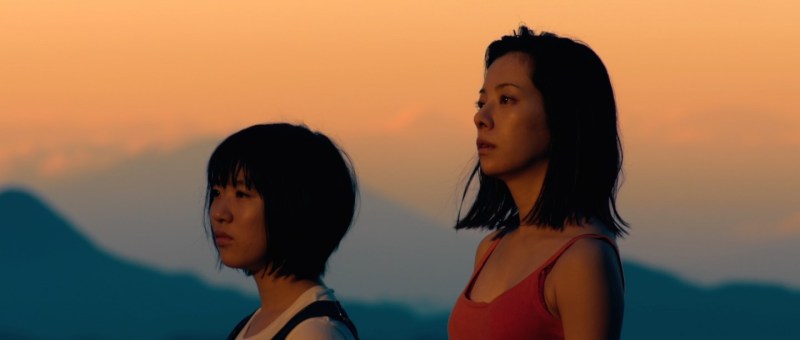
14-year-old Yo (Miku Komatsu), undergoing a lengthy period of hospitalisation for an undisclosed illness, develops an intense fondness for her kindly nurse, Yayoi (Yuki Sakurai). On her discharge, however, Yo is stunned to learn that Yayoi has abruptly resigned and all but disappeared. Meanwhile, Yo’s family life continues to deteriorate. Her disinterested mother has got a new boyfriend who is often drunk and violent. In order to escape him, Yo takes a trip to the corner shop and makes a surprising discovery in a street of parked cars which turns out to be (as yet unknown to the the naive Yo) the secluded byroad used for secret assignations seeing as this is such a one horse little town that there isn’t even a love hotel. Yayoi has become an embittered sex worker and her lonely degradation breaks Yo’s heart. When her mother’s boyfriend eventually begins molesting her, it’s to Yayoi that Yo turns looking for care and support from a woman who had nursed her but is no longer a nurse.

The “crimson star” of the title most obviously refers to the wings of the paraglider gazed at so often by the earthbound Yo, but it is also echoed in the tiny scars and wounds which define the relationship between the two women. In the first scene of the film, the hospitalised Yo has a prominent bruise on her foot apparently caused by Yayoi nicking a vein when taking a blood sample. Even so, Yo leans in tell her that she is her favourite nurse – words which bring tears to Yayoi’s eyes and perhaps precipitate her decision to leave the hospital. For Yo, who is emotionally neglected by her mother and has never known true care and affection, the bruise becomes an odd kind of proof of love which she has come to associate with pain. Later, Yo spots an odd mark on Yayoi’s neck – she is of course too young to know what it is. Yayoi shows her, literally, by biting her slightly below the shoulder and creating another kind of “crimson star”.

Yo’s early attraction to the 27-year-old Yayoi has a distinctly maternal quality in which she looks for the same kind of compassionate care she experienced in hospital and which her mother refuses to give her. There is also, however, a nascent sexual attraction which provokes intense jealousy as Yo attempts to get closer to Yayoi but finds herself unable to achieve the kind of all encompassing love she is seeking. Given Yo’s extreme youth, the relationship is in many ways extremely inappropriate and infinitely confused, a combination of familial, platonic, and romantic longings which appear to be unbreakable but remain unresolved. Yo, almost becoming the thing she wants to find, begins to take care of the depressed, broken Yayoi – tidying the apartment, folding washing, and repairing external signs of damage, while Yayoi becomes care taker rather than care giver presenting her with an opportunity to reexamine her self-destructive tendencies including a dead end relationship with married paraglider Kengo (Katsuya Maiguma).

Kengo becomes a particular point of contention for Yo, not just for reasons of jealousy but because he causes Yayoi to suffer. Early on she spots him on his bike with his small daughter, every inch the doting dad which is, of course, something she never had. Kengo is also a symbol of familial betrayal as he undermines his seemingly happy family by continuing to string Yayoi along on what is, ironically enough, a no strings basis. Family has betrayed both women who find themselves adrift and alone with no clear anchor except perhaps each other.

Yet what Yo wants is to escape – to soar in the quiet skies high above all, free of earthly constraints like the paraglider she so often sees, but paragliders are crafts built for two and Yo wants to go with Yayoi, strapped together enveloped in a private world into which nothing else may enter. The “crimson star” then becomes the unattainable feeling of closeness and total connection that continues to elude her, furthering her view that love is pain and the pain she feels must be love. Backed by a crimson sky, the future is both hopeful and filled with light, but perhaps also tethered and marked by a melancholy resignation. Beautifully composed, Igarashi’s debut is a raw, often uncomfortable examination of an elemental bond forged between two lonely, damaged women each seeking impossible connection as an escape from a loveless existence.


A Crimson Star made its World Premiere at the 2018 Raindance Film Festival.

Original trailer (English subtitles)