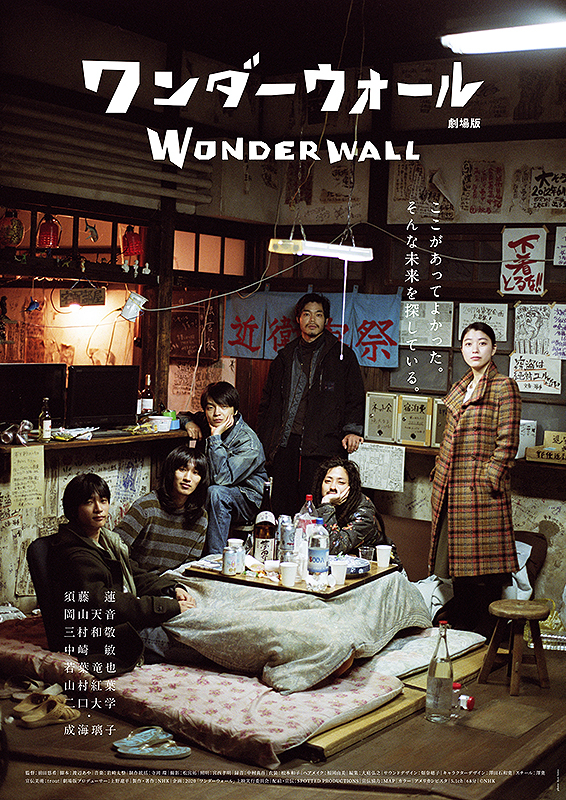
Wonderwall: The Movie (ワンダーウォール 劇場版, Yuki Maeda, 2020)

It’s funny, in a way, that young people are often the ones fighting to preserve the old while those in middle-age and beyond are largely keen to bulldoze the past for future gain. Yuki Maeda’s campus drama Wonderwall (ワンダーウォール 劇場版, Wonderwall: Gekijoban) sees a collection of students take a stand against the bureaucratic capitalism of their university in their attempt to save a much loved dorm but largely finding their efforts frustrated by an implacable hierarchy. 

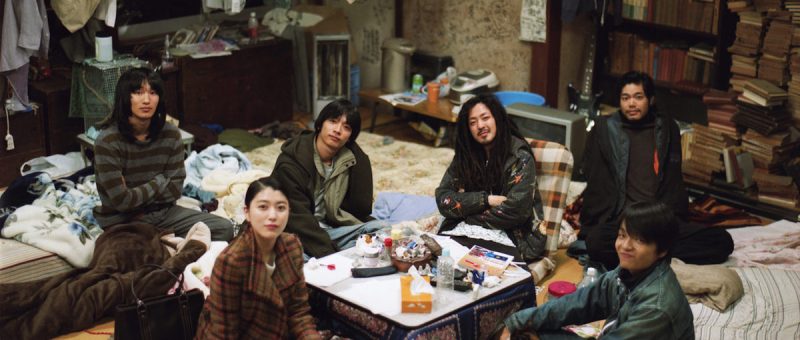
The Konoe Dorm at Kyoto University was built in 1913, which is to say the beginning of the Taisho era in which arts and culture flourished in a rapidly modernising and international nation. As one of the students tells us, Konoe is run not by the faculty but the students themselves and operates like a commune in which there is no hierarchy, all are equal and equally responsible. They have regular “meetings” about various domestic problems such as refuse collection which can go on for hours because all decisions must be unanimous while they also operate gender neutral bathrooms so that everyone really can be equal and free to be themselves. It’s impossible not to see the university’s attempts to destroy it as an attempt on the students’ autonomy and an attempt to impose order on their bohemian existence. 

At more than one point, a student remembers walking past the alley that leads to the dorm in the dark and seeing the light glowing from its doors as if beckoning them in. In this space, the students inherit what has been passed down to them while teaching each other and the next generation what they know including the negotiation skills they’ve been using to argue their case in their ongoing battle with the faculty. The film’s title refers to a plastic screen that was placed in the student affairs office separating the students from the staff so that they could no longer meet them on their own terms. The narrator likens the wall to the one that fell in Berlin in 1989 and laments that back then we knocked walls down but now we only throw them up. The students argue that the dorm is well built and of architectural interest while it would otherwise be possible to renovate and bring it up to current earthquake codes if only the university would agree. Tragically, a sympathetic teacher who is forced to agree with them is then compelled to reverse his decision and shockingly dies not long after presumably from the stress of the situation along with his own inner conflict regarding the treatment of the students. 

Mifune (Satoshi Nakazaki), the leader of the protests, eventually becomes disheartened. They managed to oust the old battleaxe from the front desk and assumed they could take a step forward to the next boss, but she was merely replaced and by a pretty young woman to boot leaving the guys feeling like they’ll never win. It transpires that the university wants the land the dorm sits on to build a high rise along with additional medical and engineering labs as these are the subjects that bring in funding which is otherwise thin on the ground from the current government. Yet as a visitor says, if prosperity made you happy there wouldn’t be so many young people who feel they have no option other than to take their own lives. If so many people are fighting for its survival, the dorm must have something essential for human happiness. Mifune comes to describe his feeling for the building as something like love in the warmth with which it inspires him.

Quite poignantly, Maeda ends on a series of title cards revealing that the university now refuses to speak to the student body at all and has in fact silenced them, even going so far as to sue 15 tenants who refused the order to move out. Another of the students wonders if the dorm was a victim of its own success, that their “utopian” thinking left them unable to unite for a common goal and perhaps it would have been better if they’d turned to the dark side and gone in all guns blazing in a show of violent defiance. The action shifts to a pair of musical set pieces in which the students and well-wishers play the “Wonderwall” song as a makeshift orchestra breathing life into the rapidly dilapidating building’s walls while continuing to fight for the survival not only of the Konoe Dorm but everything it represents in the freedom and community the students fear will soon disappear from the their lives. 


Original trailer (English subtitles)

Backlight (逆光, Ren Sudo, 2021)

©2021 『逆光』 FILM
©2021 『逆光』 FILM

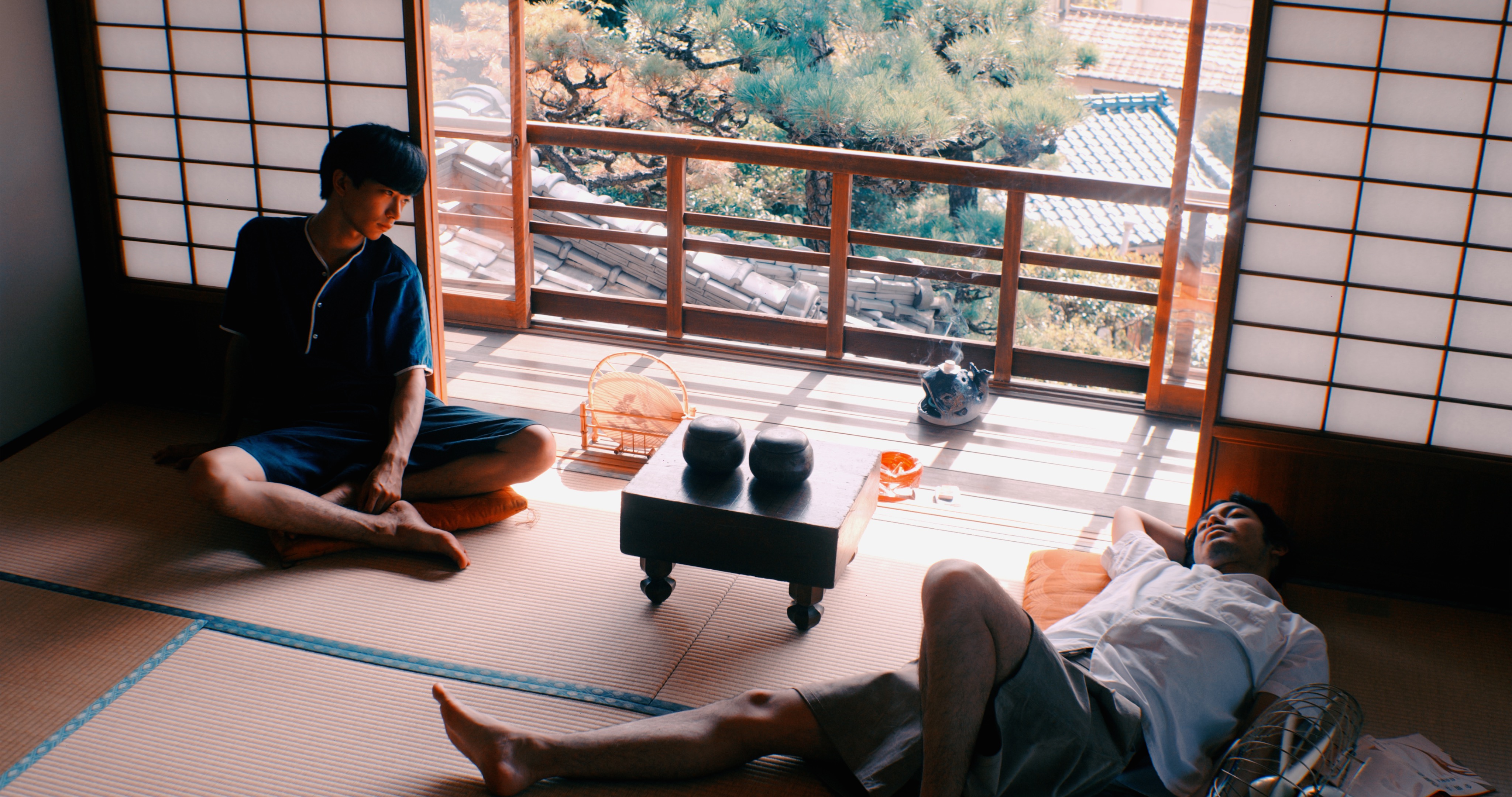
An aloof young man brings a friend back from college but struggles to convey to him his true feelings in the Onomichi of the 1970s in actor Ren Sudo’s directorial debut, Backlight (逆光, Gyakko). This may partly be because he himself is uncomfortable in his childhood home while the object of his affection seemingly takes to it though as someone else later hints perhaps in the end he is only toying with him as a pleasant summer diversion that will eventually draw to a close. 

Sudo opens the film with a series of black and white slides of Onomichi in the 70s accompanied by a cheerful voiceover in opposition to the film’s subsequent gloominess describing the area for tourists and in particular its cable car. Finally the slides give way to clumsy shots of Yoshioka (Haya Nakazaki), university friend of Akira (Ren Sudo), and a copy of Yukio Mishima’s College of Unchasteness. Akira has invited Yoshioka to stay with him at his family home in Onomichi for a week over the summer, but it’s fairly odd behaviour to invite someone somewhere and then spend the whole time telling them how awful it is and that you can’t wait to leave. 

Evidently the son of wealthy parents who for whatever reason are not around, Akira is a fairly unsympathetic figure who seems to have been harbouring resentment towards Onomichi ever since his family moved to the area from Tokyo when he as a child. He views it as dull and backward and seems to have only contempt for those who live there such as childhood friend Fumie (Eriko Tomiyama) whom he blanks in the street as like the cable cars of the opening he passes her in the company of Yoshioka. Realising he is back, she arrives at his home to return some books he’d lent her but even on encountering her there Akira treats Fumie disdainfully and is quite embarrassingly rude in front of his new friend explaining that he lent the books so that a simple country girl like her wouldn’t fall behind the times while contemptuously assuming that she won’t actually have read them. 

These misogynistic attitudes seem prevalent in the local community which is in any case unusually obsessed with Mishima. Another local intellectual describes College of Unchasteness, which Akira has not actually read, as “silly prose for women” a phrase Akira later echoes, while making a cynical comment as to its content suggesting that a woman’s ultimate pleasure lies in being murdered by a man she may have been manipulating. Unable to voice their desires directly there may be a degree of manipulation going on, Akira silently courting Yoshioka who may indeed be toying with him in the way that he may have been toying with Fumie who has since come to know of his sexuality. In any case he seems to be uncertain of Yoshioka’s receptiveness, crassly suggesting Fumie invite another girl, Miko (Akira Kikoshi), who seems strange and otherworldly, with the rationale that it would be a problem if she were too pretty and by implication insulting Fumie too in the process. Miko meanwhile is evidently upset by the lewd conversation while later prompted to leave the party after a political debate breaks out about nuclear arms. Perhaps it’s not surprising for a party that seems to be populated by Mishima devotees but even if their support for re-armament is a facet of their anti-Americanism it is curiously at odds with the times again upsetting Miko whose mother is a survivor of the atomic bomb having lost all her family. 

Even so the closing scenes turn back to Mishima and doomed romance in a description of love as a political act in which love that does not transgress, is not considered shameful or taboo, is not really love at all. Akira may have found the courage to overcome his fear of rejection, but it seems has not been altogether successful in love. Playing with the light, the brightness of the beaches, murkiness of the room occupied by Yoshioka, and that of the fire ominously reflected on Akira’s face, Sudo adds a note of wistful nostalgia expressed in the song sung by Miko that perhaps presents this “heartbreaking” summer with a sentimentality it does not quite appear to have even as Akira seems to come to an accommodation with himself, Fumie, and Onomichi amid the confusing summer heat. 


Backlight streamed as part of this year’s Nippon Connection.

Original trailer (no subtitles)

Images: ©2021 『逆光』 FILM

La Maison de Himiko (メゾン・ド・ヒミコ, Isshin Inudo, 2005)

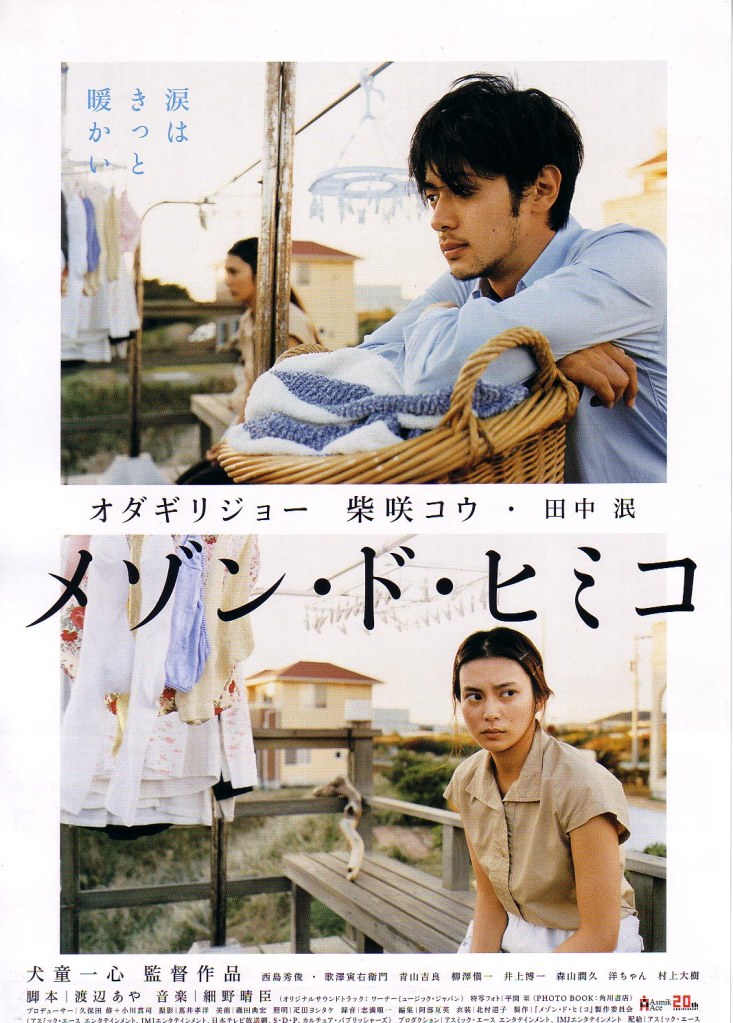
la-maison-de-himikoIn Japan’s rapidly ageing society, there are many older people who find themselves left alone without the safety net traditionally provided by the extended family. This problem is compounded for those who’ve lived their lives outside of the mainstream which is so deeply rooted in the “traditional” familial system. La Maison de Himiko (メゾン・ド・ヒミコ) is the name of an old people’s home with a difference – it caters exclusively to older gay men who have often become estranged from their families because of their sexuality. The proprietoress, Himiko (Min Tanaka), formerly ran an upscale gay bar in Ginza before retiring to open the home but the future of the Maison is threatened now that Himiko has contracted a terminal illness and their long term patron seems set to withdraw his support.

Haruhiko (Joe Odagiri), Himiko’s much younger lover and the manager of the home, is determined to reunite his boss with his estranged daughter, Saori (Kou Shibasaki), before it’s too late. Saori is a rather sour faced and sullen woman carrying a decades long grudge against the father who abandoned her as a child and consigned her mother to a life of misery and heartbreak, so Haruhiko’s invitations are not warmly received. Haruhiko is not the giving up type and manages to sweet talk Saori’s colleague into revealing her desperate financial situation which has her already working two jobs with a part-time stint in a combini on top of her regular work during which she finds herself looking at lucrative ads for work on sex lines. When Haruhiko offers her a well paying gig helping out at the home, she has no choice but to put her pride aside.

The exclusively male residents of La Maison de Himiko lived their lives during a time when it was almost impossible to be openly gay. Consequently many of them have been married and had children but later left their families to live a more authentic life. Unfortunately, times being what they were, this often meant that they lost contact with their sons or daughters, even if they were able to keep in touch with their ex-wives or other family members for updates. For these reasons, La Maison de Himiko provides an invaluable refuge for older men who have nowhere else to go as they enter the later stages of their lives. The home provides not only a safe space where everybody is free to be themselves but also a sense of community and interdependence.

Though the situation is much improved, it is still imperfect as the home and its residents continue to face prejudice from the outside world. Saori, still carrying the pain of her father’s rejection, views his choice as a selfish one which placed his own desires above the duty he should have felt towards his wife and child. Partly driven by her resentment, Saori has a somewhat negative view of homosexuality on arriving at the home, offering up a selection of homophobic slurs, and is slow to warm to the residents. Gradually getting to know her father again and through her experiences at the home, her attitude slowly changes until she finds herself physically defending her new found friend when he’s set upon by a drunken former colleague who publicly shames him in a nightclub.

The home is also plagued by a gang of bratty kids who often leave homophobic graffiti scrawled across the front wall. One of their early tricks involves throwing a bunch of firecrackers under a parked car to stun Saori so they can hold her captive for a bit because they have really a lot of questions about lesbians and they wondered if she was one, though one wonders what they’d do if someone answered them seriously. Predictably, the leader of the bratty kids may be engaging in these kinds of behaviours because he’s confused himself. Thankfully La Maison de Himiko is an open and forgiving place, welcoming the boy inside to offer support to a young man still trying to figure himself out.

This is not a coming out story, but it is a plea for tolerance and acceptance through which Saori herself begins to blossom, easing her anger and resentment and sending her trademark scowl away with them. One of her closest friends at the home is a shy man who lived most of his life in the closet but makes the most beautiful embroidered clothes and elegant dresses. Sadly, the most lovely of them is reserved for his funeral – he’s too ashamed to wear it alive because he doesn’t like the way he looks in the mirror. Eventually he and Saori end up having an unconventional fancy dress party in which they both break out of their self imposed prisons culminating in a joyous group dance routine in a local nightclub.

Joe Odagiri turns in another nuanced, conflicted performance as the increasingly confused Haruhiko who finds himself oddly drawn to Saori’s sullen charms though the film thankfully avoids “turning” its male lead for an uncomfortable romantic conclusion. A young man among old ones, Haruhiko is somewhat out of place but has his own empty spaces. Revealing to Saori that he lives only for desire he betrays a nagging fear of his own emptiness and journey into a possibly lonely old age. Nevertheless, La Maison de Himiko is generally bright and cheerful despite some of the pain and sadness which also reside there. A warm and friendly tribute to the power of community, La Maison de Himiko is a hymn in praise of tolerance and inclusivity which, as it makes plain, bloom from the inside out.


Original trailer (no subtitles)

And the fantastic dance sequence from the film

Plus the original version of the song (Mata Au Hi Made) by Kiyohiko Ozaki