Old Fox (老狐狸 , Hsiao Ya-chuan, 2023)

It’s all about “inequality”, according to the titular Old Fox (老狐狸, lǎohúli). Or at least knowing how to leverage it. Inequality is something that’s coming to bother the young hero of Hsiao Ya-chuan’s coming-of-age drama in which a small boy finds himself torn between two father figures, one a wily old slumlandlord with a heart of stone and the other his melancholy and disappointed but kindhearted father who simply endures the many blows that life has dealt him. 

Set in Taipei in 1989 shortly before an apocalyptic stock market crash in the post-martial law economy crushes the hopes of millions of ordinary people convinced to invest their savings, the film wastes no time in showing us the various inequalities in play in small alleyway of traditional stores all owned by Boss Xie (Akio Chen) whom many seem to regard as a kind of saviour even if he cares not at all about them. Jie’s (Bai Run-yin) father Tai-lai (Liu Kuan-ting) works in a local restaurant and rents a room above a beef noodle cafe for which he pays in cash every week to Miss Lin (Eugenie Liu), a pretty young woman working for Boss Xie and enjoying an unusual amount of power for someone of her age and gender for a society still somewhat conservative. 

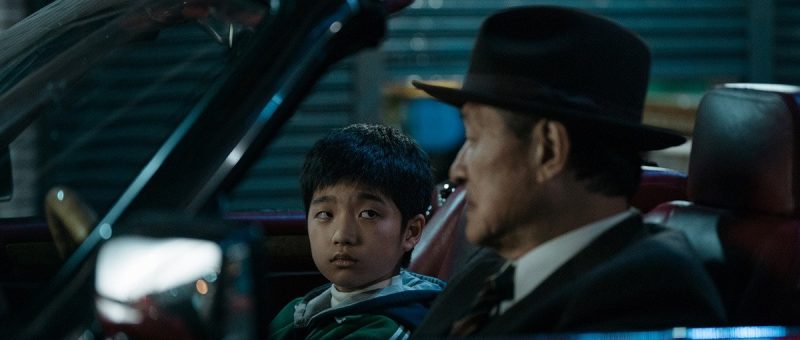
Tai-lai has been patiently saving money so that he can afford to buy a house and open a hair salon which was the dream of his late wife, but obvlious to the world around him he hasn’t noticed that prices are continuing to rise placing his dream of homeownership further out of his reach. Meanwhile, Jie is bullied at school and called a “snitch” without understanding why or even what the word means. This sense powerlessness and inferiority maybe be why he’s drawn to Boss Xie, a man who does after all exude power if also a sense of menace and melancholy. Xie in turn sees in Jie a potential protégé, both a mirror of his younger self and an echo of the son he lost who rebelled against everything he represents.

Nicknamed Old Fox, Xie stands for everything that’s wrong with the contemporary society which is about to implode in the financial crash. Wounded by his childhood poverty in which he, like Jie, also pleaded with a local landlord to sell his mother a property, Xie has adopted a ruthlessly selfish disregard for the lives of others teaching Jie his mantra of “none of my damn business” while the boy develops a worrying admiration for the aura a man like Xie projects and actively enjoys the sensation that others fear him. While hanging out with Xie he comes to look down on men like his father whom Xie calls “losers” who care only for others and disregard themselves. Xie teaches him to leverage the inequalities of power and turn his enemies’ weakness back against them to increase his own strength placing him further at odds with Tai-lai’s innate goodness and down-to-earth humanity. 

Yet we can also see that Tai-lai has had a life of disappointment. A woman who comes into the restaurant (Mugi Kadowaki) now married to a thuggish local big wig is a former childhood sweetheart from whom he was separated by time and circumstance while it also seems that Miss Lin has taken a liking to him though he appears not to have noticed. At home he plays the saxophone and takes in tailoring while resigned to saving a little longer before he’ll finally be able to buy a house and achieve his dreams. Tai-lai is one of the few who does not play the stock market and is therefore free of the danger it represents while Jie soon becomes sick of his his father’s frugality in their regular practice of turning the boiler off after having a bath and keeping their taps on a slow drip so they don’t trip the water metre and longs to become a man like Boss Xie unafraid to exploit any advantage in complete disregard for the lives of others. 

A brief coda set in the present in the day suggests that the older Jie may have found a happy medium, at least disguising a genuine concern for the safety and happiness of others as being solely about profit, while Xie’s sadness and doubts about the path his life has taken are never far from the surface as the society teeters on the brink of financial disaster. Capturing a palpable sense of late ’80s Taipei the film has a nostalgic atmosphere but also an equally prescient quality in the things that are only half-visible to the younger Jie in the melancholy disappointments of the adults who surround him still struggling to reroot themselves in a new society while overburdened by the failures of the old.


Old Fox screens April 22nd as part of this year’s San Diego Asian Film Festival Spring Showcase.

Original trailer (English subtitles)

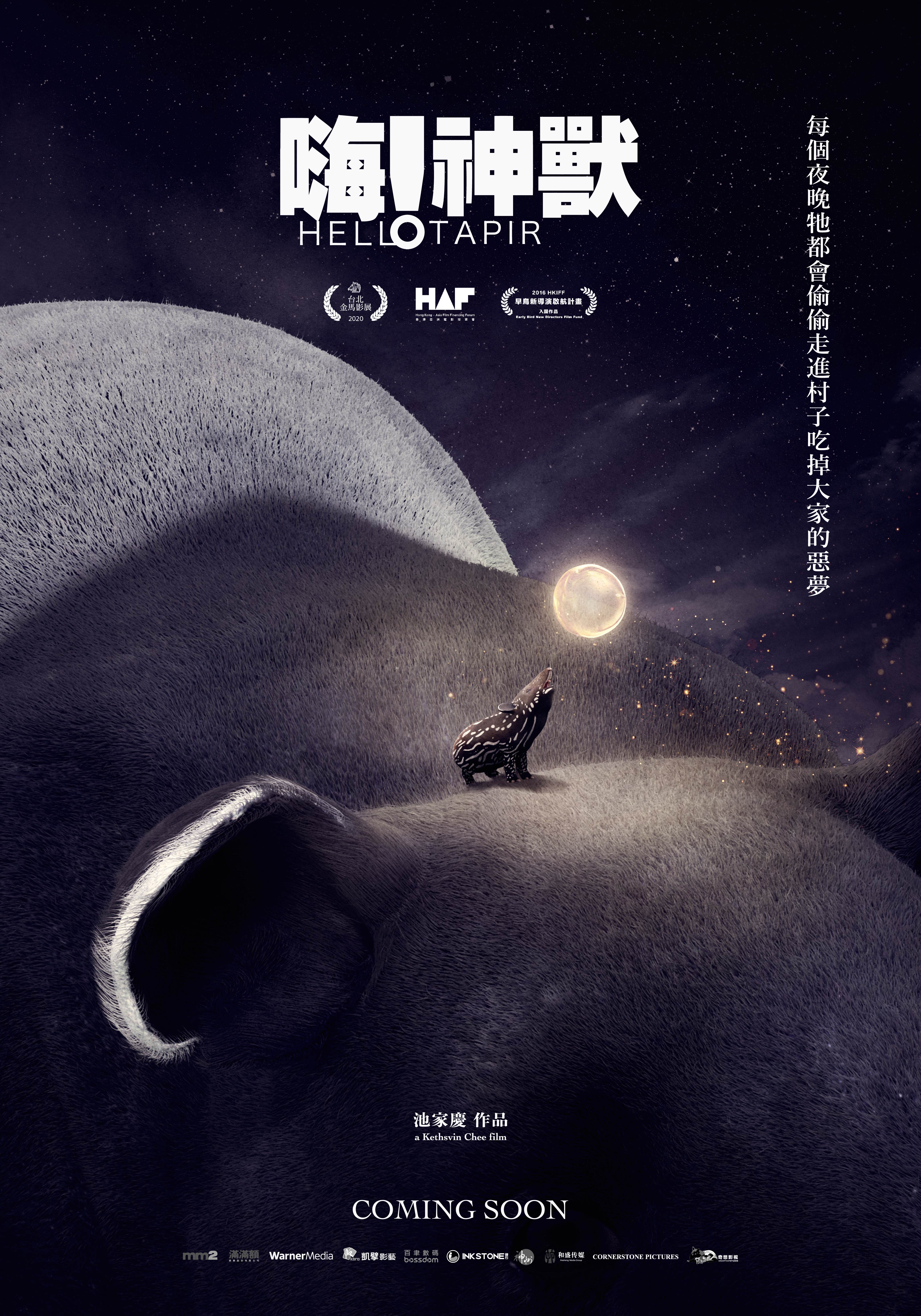
Hello! Tapir (嗨!神獸, Kethsvin Chee, 2020) [Fantasia 2021]

“In this world, everything disappears eventually” according to the prophetic words of the absent father of young Keat in Kethsvin Chee’s charmingly retro children’s fantasy adventure Hello! Tapir (嗨!神獸, Hāi Shénshòu). At heart a tale of grief and a small child’s acceptance of death, Hello! Tapir is also one of gentle adventure as the hero and his two friends search for tapirs in the undergrowth but eventually discover an accommodation with loss in the knowledge that nothing’s ever really gone even if you can’t see it. 

Keat (Bai Run-yin) lives in a small fishing village with his fisherman father (Lee Lee-zen) and grandma (Lü Hsueh-feng) who sells seafood at the market. Captivated by his father’s improbabe tale of having encountered a tapir who eats people’s nightmares in the forest, Keat implores his dad to take him to see it too but Keat’s father Sheng is always too busy and often reneges on his promises. Ominous winds start to blow when news of a typhoon is broadcast over the radio while Keat is angry that no one woke him before his father left on the boat as he had asked them to do. Sure enough, not long after Keat discovers a commotion at the harbour and gathers there has been some kind of accident at sea. His father hasn’t come home and his grandma is frantic but he’s just a little boy and no one is telling him anything. 

Told from a child’s point of view, Chee’s melancholy tale perfectly captures the confusion and resentment of a small boy in the midst of crisis. Keat cannot conceive of the idea his father may never come home again, replying to his friend’s questions that he’ll be back maybe tomorrow or the day after that. After all, he was supposed to take him to see the tapir. Because he’s sure his dad’s coming back, he grows resentful towards his recently returned mother (Charlie Yeung Choi-Nei) who left the family some time previously and had been living in Taipei and his grandmother for taking his father’s place away by boxing up his clothes and preparing to sell the fishing boat which came back empty on its own for scrap. 

Meanwhile he attempts to secure his father’s legacy by searching for the tapir on his own, encountering a baby which later leads him into the forest and towards its giant parent sucking on golden nightmare orbs all the way. Tapirs are obviously not native to Taiwan and so their presence is as decidedly unexpected as their unusual appearance. You would’t expect to see one wandering through town unless it had recently escaped from a zoo, but they are perhaps Keat’s way of processing the loss of his father the adult tapir gently showing him what it was he most wanted but feared to know while comforting him with its reassuringly warm presence. 

On the cusp of adolescence, Keat finds himself squarely between two sets of overlapping worlds caught between the fantasy of nightmare-eating tapirs and the reality of his grief while also remaining firmly in the realms of childhood having innocent adventures with his two friends as they try all sorts of tricks to draw out the mystical creatures just as his mother deals with the difficulties of planning a funeral and making plans for the future without overburdening her son with impending change. Nobody tells Keat anything because he’s just a child and they think he won’t understand, but he understands that they’re not telling him and the knowledge further increases his sense of loneliness and alienation left entirely alone with his grief and anxiety. 

A beautifully drawn magical realist fable, Chee’s charmingly old fashioned kids fantasy adventure makes the most of its idyllic seaside setting replete with a warm and friendly atmosphere despite its concurrent tragedy. Keat is forced to face the reality of his loss, but does so while maintaining a sense of wonder for the natural world secure in the knowledge that all things disappear in the end, but it isn’t the end of the story and death is merely another part of life. Warm and empathetic, Hello! Tapir paints its coastal setting with an uncanny sense of magic coupled with a cosmological sense of security as its young hero begins to come to terms with his loss thanks to the gentleness of sleeping creatures. 


Hello! Tapir streamed as part of this year’s Fantasia International Film Festival

Original trailer (English subtitles)

Dear Tenant (親愛的房客, Cheng Yu-Chieh, 2020)

Taiwan introduced marriage equality in 2019 and is often regarded as the most liberal of Asian nations but that does not necessarily mean that it’s free of prejudice or homophobia whether internalised or otherwise. Cheng Yu-Chieh’s melancholy family drama Dear Tenant (親愛的房客, Qīn’ài de Fángkè) begins in fog, mirroring it seems the hero’s sense of numb confusion consumed as he is with guilt and grief but also perhaps reflecting the miasma of his life in which he is forced to remain silent, prevented from fully expressing himself by a persistent sense of shame and anxiety. 

Chien-yi (Mo Tzu-yi) has been caring for his mother-in-law Mrs. Chou (Chen Shu-fang) and Yo-yu (Bai Run-yin), the son of his late partner Li-wei (Yao Chun-yao), for the past five years, but is described by them merely as a “tenant”, a lodger occupying the upstairs annex not really part of the family. His liminal status is fully brought home during the New Year dinner which he cooks and serves but, as Li-Wei’s brother Li-gang (Jay Shih) has decided to make a rare visit home from an extended stay in China, later excuses himself from as if he were the help not entitled to sit at the family table. Mrs. Chou, meanwhile, grumpily invites him to stay low-key resentful of Li-gang suspecting he’s only come to ask for more money, suspicions which are deepened after he starts talking about retirement apartments. When Mrs. Chou passes away suddenly a few months later Li-gang returns again and is both annoyed to learn that Chien-yi has already adopted Yo-yu and distressed to realise that his mother put the house in Yo-yu’s name which means he’s not getting the inheritance he assumed would be his. Consequently, he accuses Chien-yi of killing his mother to get his hands on the house, a series of events complicated by the autopsy report which suggests Mrs Chou’s death may have been hastened by over medication. 

A shy and reticent man, Chien-yi perhaps has reasons for his silence and his reluctance to speak openly with the police, who are needlessly aggressive and belligerent in their treatment of him, is easily understandable. Questioned by the relatively sympathetic prosecutor he is pressed about his “relationship” with the family and remains somewhat coy, later explaining that Mrs Chou had asked him not to tell Yo-yu that he and his father were lovers continuing to refer to him only as her “tenant” even as he took care of the household. The prosecutor asks him why he didn’t leave after his lover died, a question Chien-yi rightly feels to be absurd asking her if she’d ask the same question of a woman who stayed to look after her husband’s family after her husband died. Of course she wouldn’t, it would be ridiculous and insensitive.

It’s impossible to escape the sense that Chien-yi falls under greater suspicion solely because of his sexuality, the lead police officer quite clearly getting a bee in his bonnet about this particular case. They find him evasive and uncooperative, insensitive to the reasons he may have not to trust them that are later justified by their treatment of him as they again make moral judgements about his use of a dating app they likely would not make if he were picking up women though they might perhaps make of a woman in the same situation. Incongruously hanging out in a gay bar they hassle a former hookup who happens to be a drug user, blackmailing him into incriminating Chien-yi while Li-gang has Yo-yu taken to a psychiatrist in the suggestion that he may have been abused, explaining that he doesn’t want him raised in an “abnormal” environment. Chien-yi finds himself in handcuffs less for the alleged crime than for being a “suspicious” person who must surely be guilty of something even if it’s only his existence. 

It doesn’t seem to matter that Chien-yi tenderly cared for Mrs Chou even while she rejected him, angrily sniping that no matter how good he is to her it won’t bring her son back, or that he’s the only father the nine-year-old Yo-yu has ever really known having lost Li-wei when he was only four, he is condemned for his silence and his “secrets” ostracised by the previously warm parents at the piano school where he teaches after being outed by the insensitive police investigation. Consumed by grief and guilt he does his best to care for Li-wei’s family in his place, but is continually othered by a society which recognises him only as a “tenant” denying him his rightful place as bereaved spouse and step-father. As the melancholy ending perhaps implies, justice and equality are still very much works in progress even a rapidly liberalising society. 


Dear Tenant streams California until May 2 as part of San Diego Asian Film Festival’s Spring Showcase.

Original trailer (English / Traditional Chinese subtitles)

No. 76 Horror Bookstore: Tin of Fear (76号恐怖書店之恐懼罐頭, David Chuang & Hung Tzu-peng, 2020)

The first in a potential franchise, David Chuang & Hung Tzu-peng’s chilling anthology 76 Horror Bookstore: Tin of Fear (76号恐怖書店之恐懼罐頭, 76-Hào Kǒngbù Shūdiàn zhī Kǒngjù Guàntou) adapts four short stories from the online novel series of the same name. Somewhat interconnected and featuring some of the same cast, the four episodes each present a different kind of horror but all featuring a rather grisly spin from the secrets contained in the grim apartment building of the first instalment to the heartbreaking familial drama of the last as a collection of contemporary lost souls attempt to make sense of life, death, and that which exists somewhere in between. 

Titled “Rent”, the first chapter sees single mother Miss Ho (Esther Huang) leave her young son behind to travel to Taipei hoping to earn money through sex work in order to buy a house in which they can live together. Unfortunately, however, her city existence is even grimmer than expected, inhabiting a rundown apartment block overseen by an extremely creepy landlord (Lai Hao-Zhe) who informs her that the previous tenant, whose belongings are still in the room, abruptly disappeared without trace. “When your son grows up, he’ll be able to protect you” the landlord adds in rather sexist fashion finally getting round to fixing the lock on her door while singing unsettling nursery rhymes about slow rats getting eaten alive. Gradually Miss Ho becomes aware that the building is home to a dark secret connected with the sad fate of one particular family who apparently attempted to resist the urban renewal programme but ironically finds that her own victory lies in a sense with complicity. 

Meanwhile, in Hunger a convict (Joe Chang Shu-Wei) wakes up on the outside after a traumatic episode only to discover that in this version of reality food has been declared illegal. The clerk at a convenience store (Troy Liu Tzu-Chuan) reacts to his polite request for sustenance with shear horror as if he’d just asked him where he might be able to find the weapons grade plutonium or high grade explosives. A strangely dressed man hanging round outside explains that there’s no more food for another 76 days, but he can supply him with some tins for a small fee. Gesturing at the sign inside the store which is currently counting down to a ghost festival might have clued the man in on where he might be if only he had his thinking cap on, but sure enough he finds himself trapped in a purgatorial hellscape and eventually faced with an ironic confrontation as he resolutely fails to take the opportunity to overcome his baser instincts. 

Shifting into teen supernatural romance, Hide and Seek takes a less grisly though no less cruel turn as a bunch of kids head out on an adventure to celebrate the 18th birthday of Xiaoqi (Eric Lin Hui-Ming). Best friend Shaohua (Troy Liu Tzu-Chuan) has organised a camping trip to a supposedly haunted former dormitory yet the conflict here is of a more ordinary kind in that both the boys had unwittingly intended to declare their love to the same girl. Nevertheless, as the haunted house adventure proceeds Xiaoqi begins to to wonder who is haunting who, unwittingly forced into a delayed confession of his repressed emotion. 

Something similar befalls Hsin-chieh (Annie Ting-ni), the 30-something heroine of final instalment Taxi who has recently discovered she is pregnant and is subsequently consumed with maternal anxiety that reflects the loss of each of her parents in very different circumstances along with a possible sacrifice of independence and individual identity. Nagged by the aunt who raised her and seemingly cajoled by her perfectly pleasant, vaguely supportive boyfriend Ah-Shu (Wang Wei), Hsin-chieh leans towards an abortion, ending the relationship and getting a flat of her own but soon finds herself haunted by a creepy little girl and a host of other strange goings on until finally forced to face the legacy of abandonment in order to make peace with the traumatic past, ending a painful cycle of guilt and retribution in a bloody confluence of death and rebirth. Filled with surreal and nightmarish imagery, Taxi is at heart all about forgiveness and moving forward, a fitting end these four gloomy tales of supernatural harassment and guilty consciences finding at least a ray of hope in new life unburdened by fear or shame.


No. 76 Horror Bookstore: Tin of Fear streams in the US March 27 – 31 as part of the 12th season of Asian Pop-Up Cinema.

Original trailer (English / Traditional Chinese subtitles)

Mr. Long (ミスター・ロン, SABU, 2017)

Mr. LongTaiwan and Japan have a complicated history, but in SABU’s latest slice of cross-cultural interplay each place becomes a kind of refuge from the other. Working largely in Mandarin and with Taiwanese star Chang Chen, SABU returns to a familiar story – the lonely hitman tempted by a normal family life filled with peace and simplicity only to have his dreams taken from him by the spectre of his past. Only this time it isn’t just his past but that of others too. Despite the melancholy air, Mr. Long (ミスター・ロン) is a testament to the power of simple human kindness but also a condemnation of underworld cruelty and its vicelike grip on all who enter its grasp.

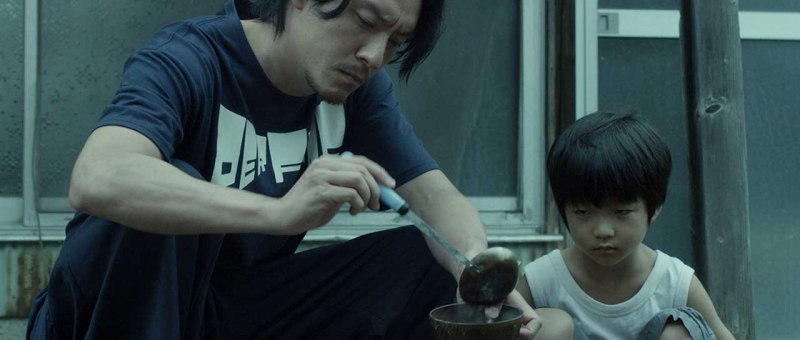
Mr. Long (Chen Chang) is the best hitman in the Taiwanese underground. A part-time cook, he’s known for his knife skills and fearless action, entering a room full of gangsters and instantly eviscerating them before they can even reach for their weapons. Sent to Japan to take out a prominent yakuza, Mr. Long finds his usual methods ineffective owing to the fact his target is wearing a stab vest. Captured, beaten and driven out into the middle of nowhere, Mr. Long is beginning to think this is the end of his story when the gangsters are attacked by another knife wielding assailant repeatedly asking them to free his girl. Mr. Long escapes in the ensuing chaos but has no money or way back home.

Marooned and bleeding in a rundown area, Mr. Long is saved by quiet little boy who brings him first medical supplies and then some probably stolen vegetables. Mr. Long manages to find an abandoned house which still has running water and cooking facilities and shares his improbably tasty soup with the little boy whose name is Jun. Surprisingly, Jun can speak fluent Mandarin because his mother, Lily, is also from Taiwan. Soon enough, other people in the area start to hear about the mysterious stranger and his wondrous cooking. Before he knows what’s happening, the tiny town has adopted him and built a stall on a cart where he can sell Taiwanese beef noodles.

SABU embraces his absurd sense of humour as Mr. Long’s capture becomes a cartoonish slapstick affair which ultimately sees him running off into the night with a sack on his head before regaining his quintessential cool. Mr. Long is the archetypal movie hitman – the major reason why he doesn’t say much is firstly that he doesn’t know any Japanese but  his conversations with the boy are pretty one sided and he doesn’t seem to be the chattiest even in Taiwan. Confused as to why all of this is happening Mr. Long asks Jun for guidance only for him to point out that it’s his own fault for acting so cool and never saying anything.

Yet for all the comedy there’s an underlying sadness as Mr. Long comes to care for this strangely friendly village which has more or less adopted him, providing him with food, clothing, and even an occupation in his brand new beef noodle stand. Even though he’s been in contact with his bosses and is supposed to get a boat to Taiwan in just a few days, Mr. Long doesn’t quite want to go home and let all of these nice people down. Especially as he’s begun to bond with the boy and grow closer to his mother.

Both Mr. Long and Lily are people who’ve had their lives ruined by proximity to the underworld – his by being trapped into a profession of killing with no possibility of escape, and hers by losing the love of her life to men who claimed to own her. Lily’s story is a sad one which eventually sees her fall into prostitution as a means of caring for her son only to be exploited by a duplicitous customer who gets her hooked on heroine as a means of control. Mr. Long frees her from this particular demon and the three begin to look as if they could make a go of things together only for the past to suddenly reappear and ruin everything.

Unexpectedly dark, Mr. Long veers between whimsical comedy and heartbreaking tragedy as its hero begins to long for another life which he knows he will be denied. Filled with SABU’s typically absurd world view mixed with balletic yet horrifying violence as the lonely hitman becomes the dragon spelt out in his name, Mr. Long is a familiar gangland tale in which a man cannot escape his past or his nature and risks rejection from those who’ve come to love him when they discover who he really is, but even if there can be no escape for some there is hope of redemption in human kindness and genuine connection.


Mr. Long was screened at the 17th Nippon Connection Japanese Film Festival.

Original trailer (no subtitles)