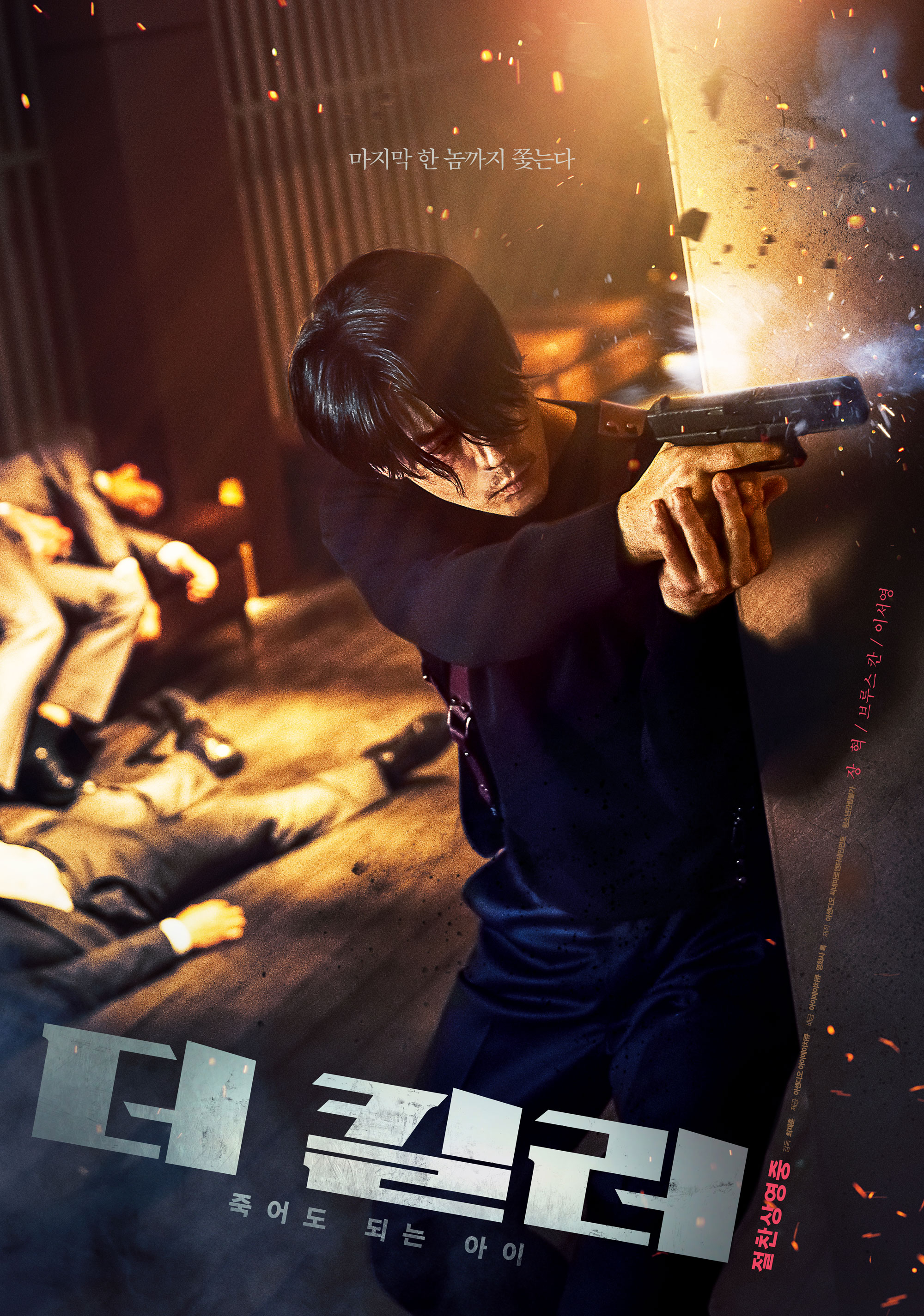
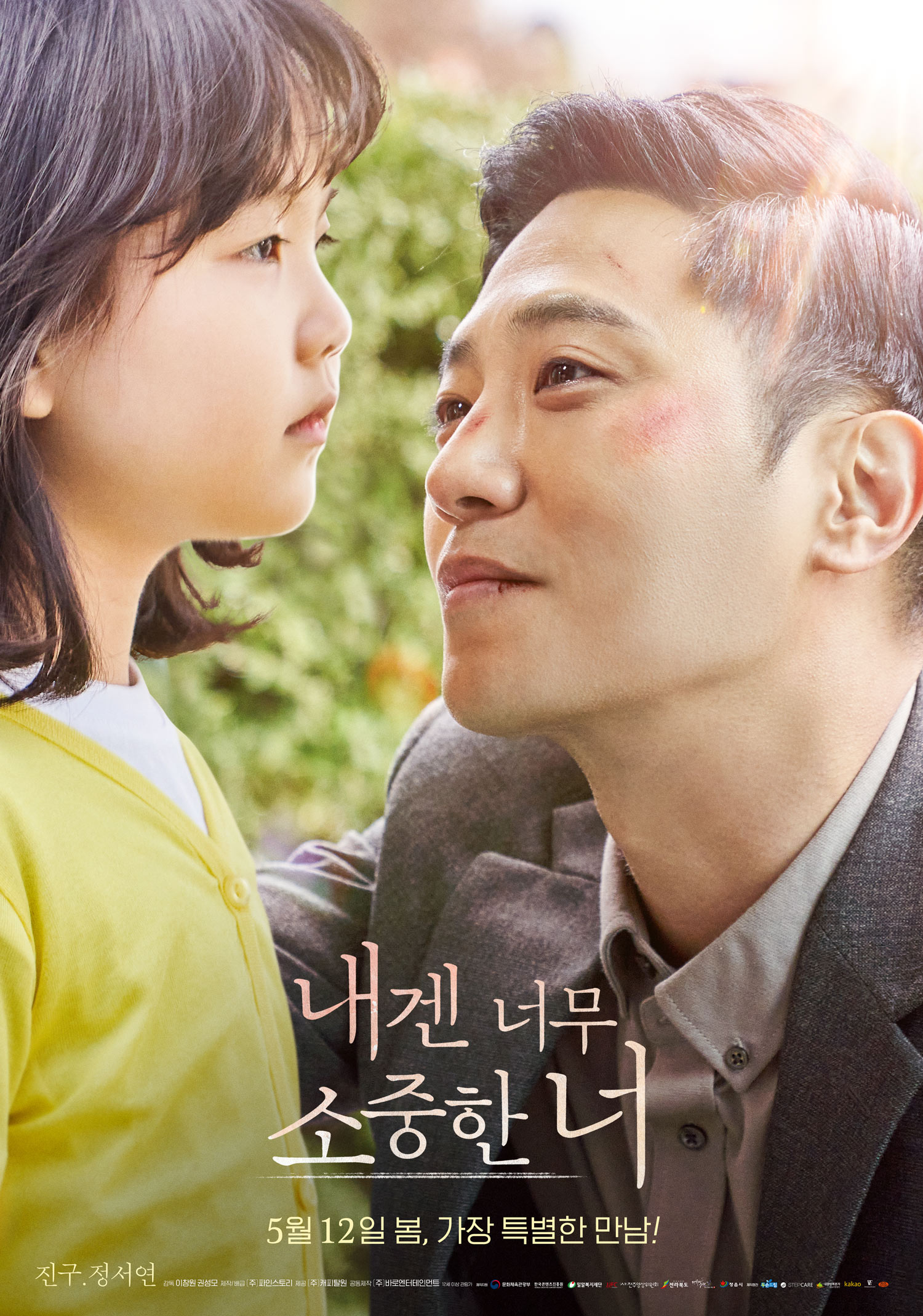
My Lovely Angel (내겐 너무 소중한 너, Lee Chang-won & Kwon Sung-mo, 2021)

“You’ve got to be brutal to survive in this world,” according to a coldhearted gangster remonstrating with down on his luck chancer Jae-sik (Jin Goo) for his seeming inability to be as bad as the world around him in Lee Chang-won & Kwon Sung-mo’s touching drama My Lovely Angel (내겐 너무 소중한 너, Naegen Neomu Sojunghan Neo), “You won’t get anywhere the way you handle stuff.” He might have a point, Jae-sik doesn’t really have the heart to be a heartless gangster but for the moment at least has been driven into cynicism by the futility of his life. 

When one of the women in the small troupe of performers at promotional events he drives round in his van doesn’t turn up for work, Jae-sik is irritated and not really all that remorseful on realising that the reason Ji-young hasn’t arrived is that she died in a freak accident. Like most of the other women, he doesn’t know much about her personal life hearing from the police that her family record only lists a seven-year-old daughter. Investigating her apartment he makes two important discoveries. Firstly, Ji-young’s lease is about to expire and there’s a 70,000 won deposit looking for a new owner. Secondly, Ji-young’s daughter Eun-hae (Jung Seo-Yeon) is still in the apartment though she behaves as if she doesn’t know he’s there and seems to survive on packets of bread her mother had left on the kitchen table. 

It takes Jae-sik quite a while to realise that Eun-hae is deafblind, but in any case he ends up moving into the apartment and superficially looking after her in the hope of claiming that he’s Ji-young’s common law spouse and entitled to the deposit money and anything else Ji-young might have to bequeath. But as he discovers, deafblind people find themselves trapped in an awkward limbo of the contemporary welfare system which recognises only deaf or blind people, leaving those who are unable to see or hear without any kind of support. Jae-sik tries to take Eun-hae to school, but she’s put in a class for blind children which is taught through spoken language that she is obviously unable to hear. Jae-sik complains that the classes are no good for her while she becomes obviously bored and frustrated by them, but the teacher’s only suggestion is that she also take the classes for deaf children which are taught in visual media she obviously can’t see. 

Of course, to begin with Jae-sik only accepts Eun-hae as a means of getting the money, otherwise little interested in what will happen to her now. He tries to ring her estranged birth father, but he rejects all responsibility for her presumably having walked out on the relationship because of his reluctance to care for a child with special needs. Jae-sik tells the landlady, who thinks he’s Eun-hae’s dad, that he’s looking for a nanny because he wouldn’t be able to care for her on his own while working only for the landlady to point out that Ji-young was managing it alright hinting at the patriarchal double standards which still see childcare as an inherently female domain. 

Still despite himself, Jae-sik begins to bond with Eun-hae who is after all completely dependent on him. He begins to communicate with her through teaching her words written in hangul by tracing them on her palm, while she seems to blossom in a new world of sensation when the pair embark on a road trip to the country. Though his past chases him, the further Jae-sik travels from the city the less cynical he seems to become no longer interested solely in money but beginning to care about those around him, not just Eun-hae but those he meets along his journey many of whom are also dealing with their own problems which sometimes echo his own as in a single-mother’s attempts to care for her ageing father as his dementia worsens. Lee & Kwon lend a golden glow to the expanses of the rural farmland where Jae-sik and Eun-hae find themselves taking refuge, Eun-hae in thrall to the natural world cheerfully dancing in the rain, smelling the flowers, and befriending animals even as the city snaps at their heels. Avoiding obvious sentimentality, the film nevertheless tells a poignant story of paternal redemption and the blossoming of a little girl finally finding a means to express herself.


My Lovely Angel screened as part of this year’s London Korean Film Festival.

Original trailer (English subtitles)
The Killer (더 킬러: 죽어도 되는 아이, Choi Jae-hoon, 2022) [Fantasia 2022]

A retired hitman gets back in the game when he’s charged with babysitting a naive teen who almost immediately ends up getting kidnapped by human traffickers in Choi Jae-hoon’s retro action fest, The Killer (더 킬러: 죽어도 되는 아이, The Killer: Jookeodo Dweneun Ai). The Korean title of the film is appended by that of the novel from which it is adapted, The Girl Who Deserves to Die by Bang Jin-ho, and hints at the secondary drama which underpins the main narrative in which the kind of masculinity the cynical hitman projects is redefined to accommodate a nascent paternity, 

When questioned by the 17-year-old Yoon-ji (Lee Seo-young), Ui-gang (Jang Hyuk) tells her that he has no children because he didn’t want them. Even so he appears to be in touch with some of the children of his wife’s friends whom he mostly calls by generic names such as “Punk Ass 1”, and his rejection of paternity appears to be born of a desire for a simple life spent in comfort with his wife without additional responsibilities. When his wife asks him to take care of her friend’s daughter so the two of them can jet off to Jeju island for two weeks, he’s understandably reluctant especially as a girl of 17 hardly needs a babysitter but at the end of the day he generally does as his wife tells him. 

Consequently, he allows Yoon-ji a high degree of (illusionary) freedom while placing a tracker on her so he can at least keep tabs on where she is. Perhaps because her mother is away and has left her with a random middle-aged man she doesn’t know, Yoon-ji takes advantage of the situation and makes a few bad choices which result in her falling into the trap of a gang of people traffickers. Ui-gang wants to get her back mostly because his wife will be upset with him if he doesn’t but also begins to develop a fatherly bond with Yoon-ji while morally outraged by the societal corruption he uncovers through searching for her. 

In a genre archetype, sensitive killer Ui-gang has the moral high ground in that he has a code to live by along with a sense of justice that is revulsed by the casual cruelty of those who would trade human beings like cattle. He discovers that Yoon-ji’s kidnapping was not an accident but that someone actively chose her and wants to know who and why stopping not just at rescuing her but trying to take down the whole corrupt mechanism while discovering that its roots extend even further than he had expected. His final resolution that no child deserves to die restores his humanity as evidenced by his acceptance of a paternal responsibility and the creation of a new family unit with his wife and Yoon-ji. 

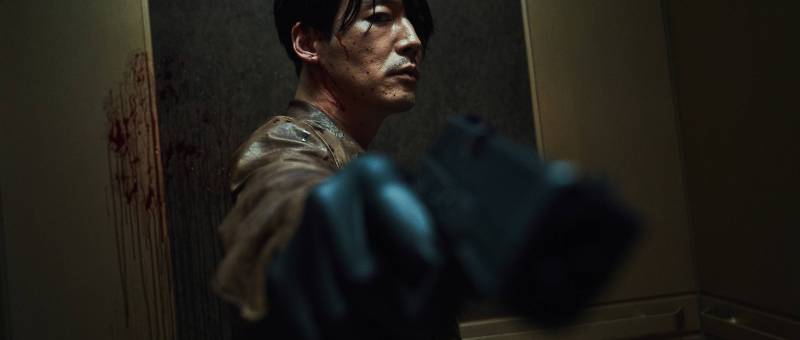
Even so his path to rescuing her is structured in the same way as a video game, Choi’s composition sometimes referencing that of a first person shooter as Ui-gang emerges from lifts and cooly takes out a gangster who then crashes violently into the background. He fights his way towards resolution hacking and slashing at hordes of oncoming foot soldiers while armed with nothing other than a pair of chair legs or else cooly executing them with a single shot. An arms dealer friend literally references The Man from Nowhere which the film at times also echoes both narratively and visually in its tightly controlled and well choreographed action sequences. This sense of unassailability is in itself a reflection of Ui-gang’s moral goodness while the bumbling quality of the crooks and the ease with which he dispatches them equally reflects their immorality. 

A retro action fest, The Killer makes the most of a modest budget while taking aim at a contemporary society that leaves young people so unprotected that traffickers can even claim to be “helping” them given that there are few other ways for runaway teens to earn a living on the streets. Then again it may be a little problematic that the solution presented lies in a restoration of the patriarchal ideal in Ui-gang’s resumption of his paternity in pledging to protect Yi-joon until she comes of age. Nevertheless, anchored by another strong performance from veteran actor turned rising action star Jang Hyuk, Choi’s stripped back action thriller is a visceral journey into the dark heart of the contemporary society.


The Killer screened as part of this year’s Fantasia International Film Festival.

International trailer (English subtitles)