12 Weeks (Anna Isabelle Matutina, 2022)

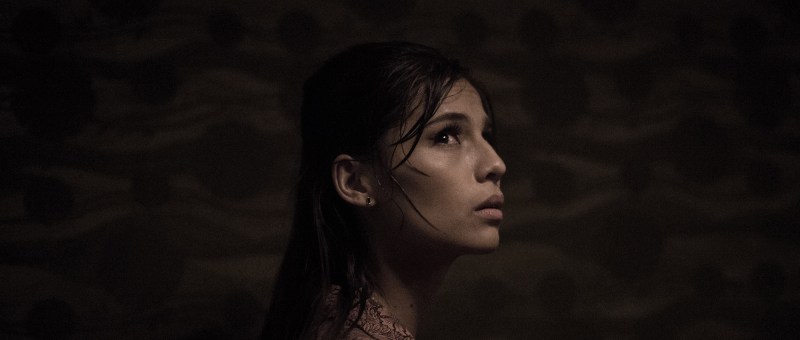
“Not all women want to be mothers” according to the heroine of Anna Isabelle Matutina’s 12 Weeks, yet this is apparently largely what society expects of them. Faced with an unexpected pregnancy at 40, Alice decides on abortion though it is technically illegal in the fiercely Catholic Philippines and she finds herself having to offer justification for her choices while trying to process her complicated relationship with her own mother who often tells her that she too wanted an abortion but obviously did not go through with it and left shortly after Alice was born to become a domestic worker in Hong Kong. 

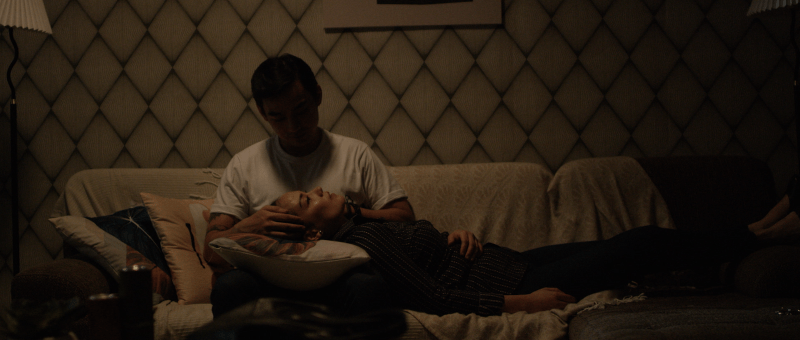
The irony is that Alice (Max Eigenmann) works for an NGO supporting people displaced by natural disaster or civil unrest but is to an extent displaced herself in her estrangement from her mother, Grace (Bing Pimentel). In a poignant moment after having been made aware of the pregnancy by Alice’s violet ex Ben (Vance Larena), Grace brings out a box of baby clothes that once belonged to Alice only she never got to wear them because her grandmother who was raising her told Grace not to send anything but money because she had no way of knowing what size her daughter was. Grace is excited about the prospect of becoming a grandmother because it gives her a second chance at the motherhood she was denied by economic circumstance especially as the implication is she could play a larger role in their upbringing while Alice continues with her career. 

But even considering the strained relationship between them, Grace is far from supportive more or less taking over booking doctor’s appointments on her daughter’s behalf without really consulting her. Aside from the awkwardness and upset of the situation, Alice cannot discuss the abortion with her mother because of its illegality and the risks it might cause to herself and those otherwise involved in it. To be able to access an abortion safely, she has to undergo a counselling session and is then told that her operation will take place at 11pm hinting at its illicitness that it must take place under cover of darkness. The counsellor is sympathetic and clear that she isn’t trying to change her mind even if some of the questions seem invasive or patriarchal. Asking if Alice has been subject to domestic violence she offers help making sure that she’s not being pressured into an abortion she might not want by violent partner or the necessity of escaping them. 

Ben is indeed violent and it’s a fact that if she changes her mind and keeps the baby it will become much more difficult to keep him out of her life. Slightly younger than she is, he is moody and insecure while financially supported by Alice and living in a home she owns. He is not a responsible person with whom to raise a child though places extreme pressure on her to have the baby and manipulatively leaks the pregnancy news to Grace knowing she’ll do the same. Alice discovers that in reality everyone else is making her decisions for her, including a colleague who suddenly cancels a trip she was supposed to make to a disaster area on the grounds that his own wife has recently had a miscarriage and in his opinion it’s not safe for her to go. 

Set during the imposition of martial law on Mindanao in 2017, the film implies that a kind of martial law already exists for women who are unable to make their own decisions about their reproductive health or exercise their own autonomy. Alice is repeatedly told that she should have the baby because she is already 40 and the chance won’t come again though little thought is given to whether she wanted the chance or not while her own thoughts surrounding motherhood are clouded by the relationship she has with Grace which was largely affected by the economic realities that forced her to become a migrant worker. In part she rejects becoming a mother out of anxiety worrying that she is not suited to it, but is also conflicted in its inextricable ties to Ben and with wider patriarchal violence in general depriving her of the ability to choose from all angles. In the end a choice is made for her in the cruellest of ways leaving her more or less powerless with only the small comfort of female solidarity. 


12 Weeks screened as part of this year’s New York Asian Film Festival

Midnight in a Perfect World (Dodo Dayao, 2020)

“It doesn’t matter what’s happening as long as nothing’s happening to me” a middle-aged woman exasperatedly exclaims, irritated by a young man’s naive curiosity. A dark exploration of the legacy of Martial Law, Dodo Dayao’s surrealist horror movie Midnight in a Perfect World asks how much of your freedom you’re prepared to sacrifice for security and if the illusion of a “perfect world” in which everything “just works” is worth the price of your complicity. 

In a near future Manila in which all of the city’s infrastructural problems have been solved, conspiracy theorist Tonichi (Dino Pastrano) is convinced that a mysterious force is disappearing people in random parts of the city after midnight, a theory which is only strengthened after his friend Deana rings him in a panic convinced she’s become a victim of his “blackouts” and insisting that someone’s stolen the moon. Tonichi’s other friends, the sensible Mimi (Jasmine Curtis-Smith), reckless Jinka (Glaiza de Castro), and melancholy hospital worker Glenn (Anthony Falcon), are less convinced but caught in the street after midnight the gang have no option but to look for a “safe house” in order to escape the creeping darkness. For unexplained reasons, Tonichi is unable to enter with his friends and finds himself trapped outside in “God’s Blindspot”, as the mysterious Alma (Bing Pimentel), a middle-aged woman and safe house veteran, describes it. 

Alma might in a sense be seen as the embodiment of the Martial Law generation, holing up in her safe house minding her own business and defyingly not caring what’s going on outside determined only to make it through the night. She offers cryptic words of advice to the youngsters, but does not really try to help them outside of trying to prevent them from interfering with her own survival. The so-called safe house has a hidden upper floor apparently invisible from the outside and hiding its own secrets. When one of the gang manages to break open the door and pays a heavy price for their curiosity, Alma merely creeps forward fearfully and closes it again ensuring she is safe from its myriad horrors even in her wilful ignorance. 

Still, you have to ask yourself why if this world is now so “perfect” the youngsters seem so unhappy. Their drug use appears not to be particularly hedonistic but may offer them a degree of escape from a society which has become oppressive in its efficiency. Sensible Mimi cautions Jinka against associating with smarmy drug kingpin Kendrick (Charles Aaron Salazar) who spins bizarre stories of weird aliens while proffering a new drug which supposedly feels “like dying and going to heaven.” On her way from Kendrick’s Jinka passes a group of intense men and immediately pegs them as a hit squad, realising that Kendrick’s hideout has been exposed and she herself may now be in danger in an echo of the extra-judicial killings which have become a grim hallmark of Duterte’s Philippines. “Beta version Martial Law” is the way Jinka later describes it, drug users now taking the place of “activists” as targets not solely of legitimate authority but vigilante bounty hunters. The rumours of strange disappearances, people “erased” from their society, are yet another means of control inviting complicity with an unofficial curfew for a population ruled by fear.  

As if to ram the allegory home, Dayao ends the credit roll with the Martial Law era slogan “Sa ikauunlad ng bayan, disiplina ang kailangan” or “For the nation’s progress, discipline is needed” followed by the English phrase “Never Again”. Yet, it is happening again, the extra-judicial killings of the Duterte era no different from the disappearances of “activists” under Marcos. Jinka refers to the old Manila as the world capital of malfunction, its transformation seemingly brought about by a mysterious force but unlike Mimi who seems otherwise prepared to accept complicity in her “everything works” conspiracy theory remains dejected and suspicious. None of these young people is happy with their new utopia or prepared to pay the price demanded to live in it yet there appears to be no real way to resist and their eventual decision to brave the darkness exposes nothing so much as their naivety. Scored with eerie sci-fi synths and often shot in total darkness, Dayao’s surreal horror show offers a bleak prognosis for the contemporary society unable to escape from the permanently haunted house of an authoritarian legacy. 


Midnight in a Perfect World screened as part of this year’s Neuchâtel International Fantastic Film Festival (NIFFF).

Original trailer (English subtitles)