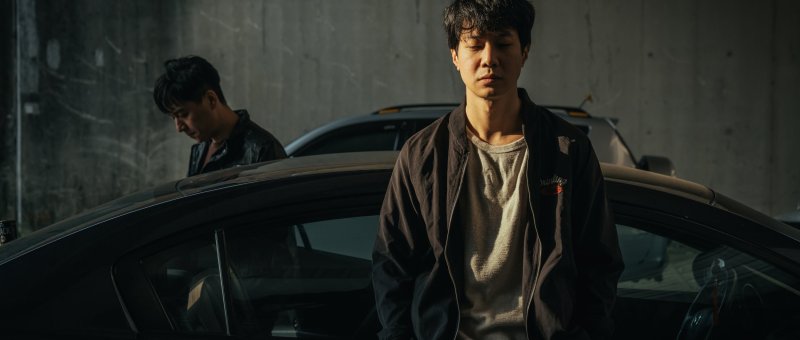
You Have To Kill Me (我是自願讓他殺了我, Chan Chun-Hao, 2021)

An earnest policeman discovers nothing is quite as he thought it to be in Chan Chun-Hao’s adaptation of the novel by Feng Shi, You Have to Kill Me (我是自願讓他殺了我, wǒ shì zìyuàn ràng tāshā le wǒ). Drawn into a dark web of intrigue which eventually points to abuse of power and a low regard for human life, he is forced into a realisation that even as a law enforcement officer he can never be certain of what is real and what is not while caught in the middle in a battle of between parents each trying desperately to protect their sons. 

About to propose to his live-in girlfriend Kai (Janel Tsai), Shing’s (Cheng Jen-shuo) world comes crashing down when he and his partner Ye-ze (Xue Shi Ling) are dispatched to the mountains and discover that she is the victim of the homicide they’ve been sent to investigate. Shing apprehends the apparent killer, Li Zi-jian (Snoopy Yu), running away from the scene, but the situation is complicated when it turns out that Zi-jian is the son of a local politician, Chairman Li (Yin Chao-Te), and while he admits to the killing claims that he did it at the instigation of Kai who was suffering from terminal cancer and wanted him to help her escape her suffering. A look at Kai’s medical records bears out his story, but on closer examination Shing realises the documents don’t add up. His suspicions are confirmed when Kai’s parents, whom he had seemingly never met, arrive and fail to identify the body claiming instead that it is another woman who had been harassing their daughter, Lin Jing. 

Shing is forced to accept that he might not have known the woman he wanted to marry and that their relationship was founded on a lie, uncertain how much of any of it might have been real. Meanwhile he runs into a series of bureaucratic roadblocks as the chairman continues to disrupt the investigation in order to protect his son, eventually having Shing taken off the case leading him to investigate all alone discovering even more uncomfortable truths that cause him to question his reality. Leaving aside the minor plot hole that it seems unusually easy to live under an assumed name in contemporary Taiwan even if you’re involved in activities which would generally require an extensive background check, Shing has good reason to be confused as he dives ever deeper into an amoral morass in which those with power are prepared to manipulate it for their own ends without much thought for the lives of others. “That’s how much a person is worth” the chairman baldly states signing a settlement agreement over something else his son may or may not have done, later claiming that it doesn’t matter if he caused someone’s death “accidentally” and he’d do it all again to save his son. 

Even so, the chairman may have limits in that his attempts to manipulate the system are bureaucratic in nature and seemingly unnecessary at least it seems as if there would be easier ways to achieve his aims without directly harming others even if they would risk lives indirectly. Meanwhile his accomplice is also seemingly involved in order to protect their family, willing to compromise themselves morally to protect their elderly relatives while believing nothing that bad would come of their actions. Then again, Shing finds himself on the receiving end of further recriminations accused of having failed to protect the woman he knew as Kai from herself leaving her with only a dark path to ensure that justice would be done and corruption exposed. 

While Zi-jian feared he was a burden to his father feeling himself unloved even as he went to such drastic lengths to protect him, Kai/Jing was also afraid to fully trust Shing fearing she’d one day disappoint him unable to move on from her traumatic past without putting it to rest. Taking aim firmly at the societal corruption that allows the rich and powerful to misuse their position for their own gain while ordinary people suffer Chan’s noirish drama situates itself in a murky world of constant uncertainty in which even an earnest policeman can be largely oblivious of the lives of those around him while the purest of motivations can lead to only darkness and misery.  


You Have To Kill Me streams in the US April 4 – 10 as part of the 14th season of Asian Pop-Up Cinema.

Original trailer (English subtitles)
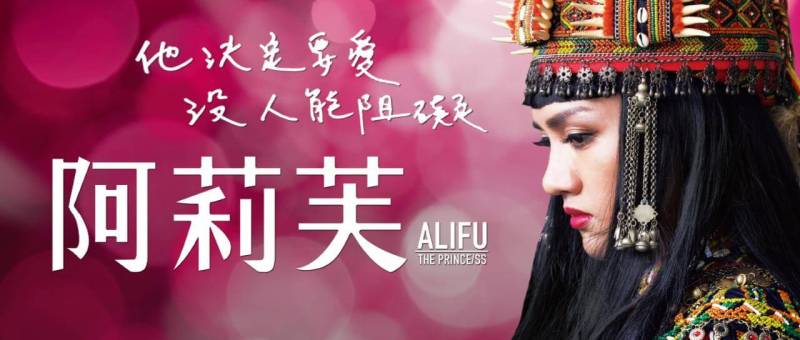
Alifu, the Prince/ss (阿莉芙, Wang Yu-lin, 2017)

Alifu posterAmong Asian nations, Taiwan has a reputation for being liberal and permissive but if you’re a minority within a minority life is far from easy even if you manage to find support from others in a similar position. So it is for Alifu (Utjung Tjakivalid) – the conflicted soul at the centre of Wang Yu-lin’s nuanced depiction of the road towards self acceptance and actualisation in the face of competing duties and obligations, Alifu, the Prince/ss (阿莉芙, Ālìfú). While Alifu struggles with the demands of being the heir to the Chieftainship of an indigenous tribe with all the rights and obligations that entails, her lesbian roommate struggles with a bad breakup and growing feelings for her transitioning best friend, a drag queen is conflicted about his sexuality, and a transgender bar owner worries for the future of those close to her after she is diagnosed with a terminal illness. Despite the multitude of difficult circumstances, each attempts to deal with their problems in a mature and rational fashion finding love and mutual support from their friends and community even if others sometimes require a little more time.

Alifu, born the son of a tribal chief, identifies as a woman and has been working in a hairdressers in the city to save up for gender reassignment surgery. Her plans for the future are thrown into disarray when she is abruptly called home, walking into a family meeting during which her father (Ara Kimbo) suddenly announces that he is stepping down because of poor health and that his son will be taking over. Though it is possible for a woman to succeed as chief, Alifu has not disclosed her intentions to transition to her traditionally minded father who wears a prominent wooden cross around his neck and does not seem to be particularly understanding of his child’s feelings or emotions, caring only for his appearance in the eyes of the tribe.

Alifu’s transition is subtly revealed in the lengthy opening in which she slowly sheds her “masculine” appearance by discarding her baseball cap, rearranging her hair and stepping into the ladies loos where she puts on colourful lipstick and hoop earrings before making her way to the hairdressers where she earns her living. Meanwhile, her lesbian roommate Pei-Zhen (Chao Yi-Lan) thinks nothing of leaving the house dressed in a way which best makes her feel comfortable only to cause a mini ruckus in the salon when her ex gives her the side-eye for openly flirting with another client apparently after “something special”. After hours, Alifu picks up extra money by doing hair and makeup for the drag acts at a local gay bar where she has also drawn close to the owner, Sherry (Bamboo Chen), who is in a long-term though apparently non-sexual relationship with a former gangster (Wu Pong-fong).

Alifu soon develops a liking for a new drag act at the bar, describing him as somehow “not like the others”. Chris (Cheng Jen-shuo), a local government worker, is a mild mannered sort apparently happily married to a piano teacher (Angie Wang) and living a conventional middle-class life, except that he likes to stay out late on Fridays performing at Sherry’s drag bar. Though it would be a mistake to assume Chris is gay just because he enjoys drag, his “secret life” eventually places a wedge between himself and his wife who is hurt to find out about his alter-ego through a third party. Chris’ wife doesn’t necessarily disapprove of his drag career but is disturbed to discover such a big secret in her married life and, understandably, has a lot of questions about the status of their relationship – something Chris isn’t keen on talking about leading to his wife finally throwing him out. Struggling to reconcile his drag persona with his need for a conventional life, Chris finds himself exiled and unable to integrate himself fully as whole person, torn between his conflicting desires. 

Meanwhile, Alifu’s ever supportive best friend Pei-Zhen has begun to develop feelings for her roommate despite the fact that Alifu has no interest in women and Pei-Zhen is a lesbian with no previous interest in male genitals. Seducing her, Pei-Zhen reassures Alifu that male or female she will always love her – something which becomes a minor theme in arguing for fluidity and self identification over culturally defined notions of gender, echoed in the relationship of Sherry and her partner which seems to be deep and loving but also celibate. Perhaps overly convenient, the union of Alifu and Pei-Zhen does at least provide an opportunity to experience the best of both worlds in allowing Alifu to fulfil her obligations to her tribe while also living an authentic life as a transgender woman.

Warm and filled with a particularly Taiwanese brand of humour, Alifu is a sympathetic exploration of life on the margins, both from the perspectives of the LGBT community and that of the indigenous peoples attempting to preserve their traditional culture whilst acknowledging their place in the modern world. Arriving at an important moment, Wang Yu-lin’s empathetic drama is a celebration of love and equality but most of all of the power of self-acceptance and actualisation in bringing about real social change.


Screened as part of the Chinese Visual Festival 2018.

Original trailer (English subtitles)

https://youtu.be/WxCBr6Adkw8