You & Me & Me (เธอกับฉันกับฉัน, Weawwan Hongvivatana & Wanweaw Hongvivatana, 2023)

A pair of identical twins come to consider an inevitable separation on the eve of the Millennium in twin directors Wanweaw Hongvivatana and Weawwan Hongvivatana’s quirky Thai comedy You & Me & Me (เธอกับฉันกับฉัน). Set in 1999 and apparently autobiographically inspired, the film follows the two young women as they face the coming end of the world in Y2K anxiety, but for all that their world really is ending as they find themselves shipped off to the country with their mother as their parents embark on a trial separation with the looming threat of divorce. 

Amusingly named “You” and “Me”, the girls (both played by Thitiya Jirapornsilp) are all but inseparable and reflect that they are glad never to feel lonely and always to have someone to share things with. They rejoice in their sameness rather than resenting it and often use it to trick the world around them so they can get two dinners for the price of one or sneak each other into cinemas on a single ticket. They swap places all the time and occasionally sit exams for each other to maximise their individual strengths. But then, when Me sits a maths exam for You she ends up meeting fellow student Mark (Anthony Buisseret) who “shares” his pencil with her by breaking it in two. Mark then abruptly disappears, but the girls reencounter him once they go to stay with their grandmother in the country (Karuna Looktumthong) where he has also relocated following his parents’ divorce only he thinks the girl he gave his pencil to was You, not Me. 

Mark may be the first thing they can’t really “share” though in a way that’s what they end up doing. Me never tells her sister she likes Mark, and You doesn’t realise it was Me he liked at the maths exam, but gradually he starts to come between them if only in disrupting their dynamic as You starts to want more time away from her sister and Me feels as if she’s being abandoned. Half a melting ice lolly lying untouched in a glass seems to neatly sum up her views about the changing nature of their relationship as sisters. But then they’re also at the age in which their sameness might start to bother them. Me abruptly goes out and gets a different haircut, as if she wanted to play her sister at her own game and assert her individuality even if it ends their childish games of place swapping and trickery. 

The millennial apocalypse is also a symptom of their adolescent anxiety as they try to come to terms with impending adulthood and the changes that will inevitably take place in their lives meaning they too will need to split and necessarily head in different directions though it doesn’t mean they’ll be less close or connected, especially with the “Y2K safe” mobile phones their dad tragically thinks are his next big business opportunity. The film takes them from Bangkok to the country where their grandmother still speaks in dialect and in all honesty Y2K might not matter all that much even if the girls run up grandma’s tab in the local shop trying to prepare for the end of the world. The television news is full of tales of mass suicides and Nostradamus, but their problems are both bigger and smaller as they ponder fresh starts in a new century which is only really the entrance to the next stage of their lives. 

Millennial nostalgia and the laidback atmosphere of the Thai countryside lend the film a peaceful air of serenity as the girls begin shift towards acknowledging their individual identities over their bond as sisters, not exactly rejecting their sameness but adjusting it in considering the future paths of their lives. Playing both sisters, Thitiya Jirapornsilp captures a sense of what make Me Me and You You but also what they are together and the anxieties they each face as twins, something of which the directors have first hand knowledge in repeatedly insisting that in the end twins are just the same as everyone else even if the girls sometimes have trouble separating themselves from each other. Strangely poignant in its Millennial conclusion, the film nevertheless ends on a note of warmth and solidarity in which the two sisters prepare to step into the new century independently and together no longer so afraid of whatever it might bring. 


You & Me & Me screened as part of this year’s New York Asian Film Festival.

International trailer (English subtitles)

Images: ©2023 GDH 559 Co., Ltd.
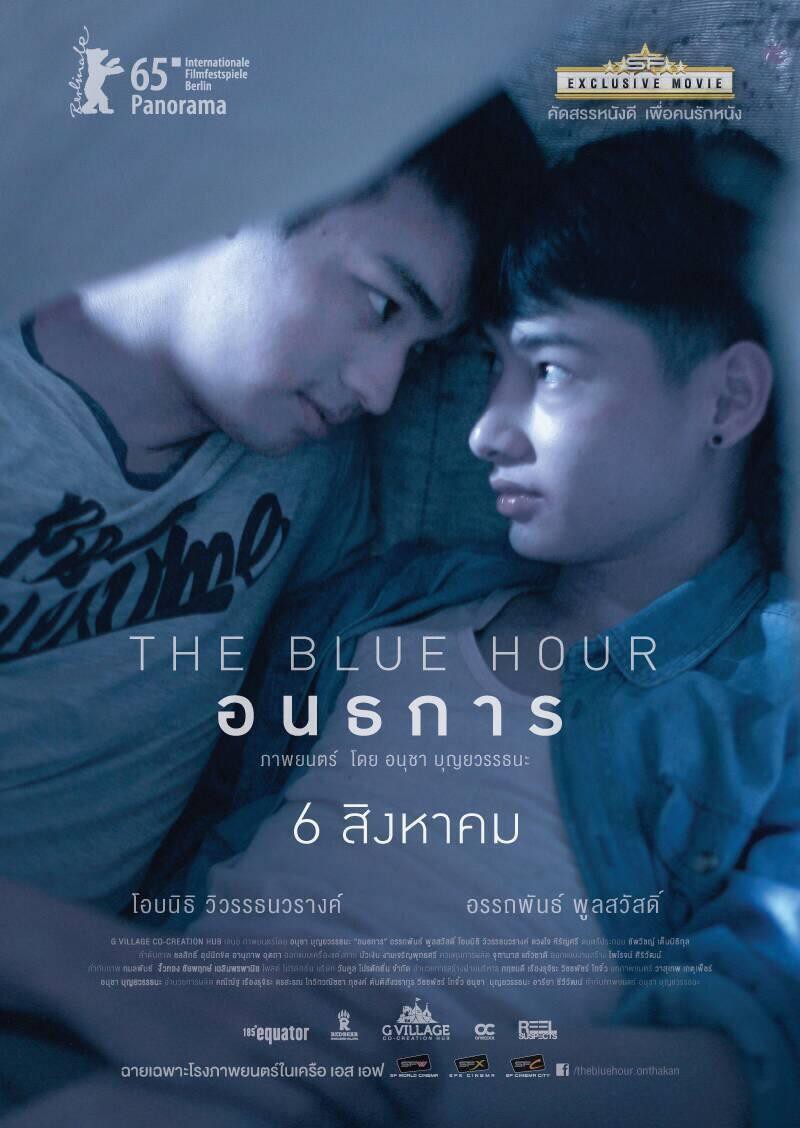
The Blue Hour (อนธการ, Anucha Boonyawatana, 2015)

Reality and fantasy begin to blur for a young man rejected by his family and persecuted by a society he feels has no place for him in the ethereal debut from Anucha Boonyawatana, The Blue Hour (อนธการ). Imbued with a strong sense of spiritual dread, the film casts its duplicitous hero adrift in an increasingly confusing reality in which his relationship with a mysterious boy encountered online may be his only anchor while drawn towards darkness and a lonely obsolescence. 

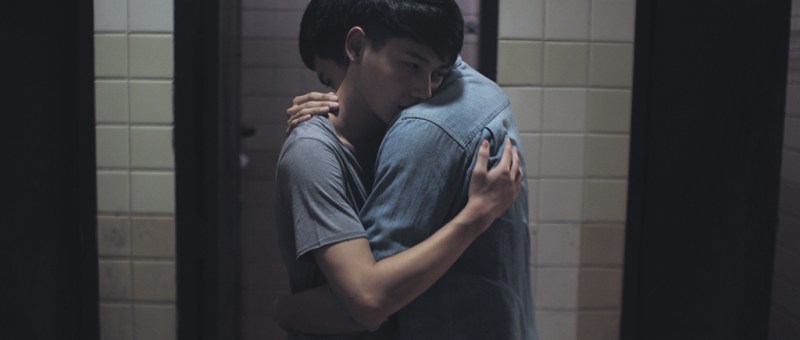
As we first meet high schooler Tam (Atthaphan Phunsawat) he is bloodied and bruised, a scene later repeated finding him beaten by bullies after money he’d supposedly borrowed from them but is unable to to return. He seems to be carrying an intense amount of resentment and self-loathing, not least towards his mother and brother who he says do not trust him accusing him of being responsible for anything untoward that occurs in their home. Then again, as Tam explains to new friend Phum (Oabnithi Wiwattanawarang), sometimes he actually did do what he’s accused of yet still resents the assumption while undermining our faith in him as a reliable narrator of his own history. In any case, Tam’s mother has figured out he’s gay and is very unhappy about it directly asking him why he can’t “change” while taking his sexuality as a personal slight against her parenting, asking him if he hasn’t considered her feelings and reminding him that his father “hates it”. In Tam’s mind his family’s negative view of him is directly tied to his sexuality and concurrent sense of otherness, fearing that they see him as inherently wicked simply because he is different. “My family don’t hit me in the face” he reassures Phum when questioned about the collection of scars and bruises across his body hinting that they hurt him in other ways that the world can’t see. 

Yet his meeting with Phum is also in its way dark and ominous as if Phum himself is one of the spirits of which he later speaks hiding people away until they can claim them for the spiritworld. Their first meeting takes place at a dilapidated, disused swimming pool Phum claims is haunted which has eerie stains in the shape of people covering its walls one of which looks just like the figure of Tam sitting on the pool’s edge. If that weren’t odd enough, Phum later takes him on a date to garbage dump he says is on land that his family once owned but were unfairly cheated out of. This literal dumping ground nevertheless has its own sense of spiritual oddness, Tam finding the body of a man which seems to have regained some kind of life as does the body of a dog he later leaves there. Meanwhile, he’s shot at by a random man with a gun, presumably one of the gangsters Phum says are squatting on his land, and eventually clubs him over the head in act of violence later to recur whether in fantasy or reality outside of Tam’s direct memory. 

When Phum tells him that “if we can get rid of them then this land will be ours. Then we can live here together” he’s perhaps talking more widely or at least to Tam’s fracturing psyche suggesting that if he could rid himself of the oppressive forces in his society then he’d be able to live freely having reclaimed his emotional landscape and cleared it of the trash left behind. His visions become darker, haunted by a sense of dread as he tries to scrub the silhouette of himself from the pool’s wall and encounters bloody scenes of his own violence whether real or imagined. What he seems to seek is the promised oblivion of Phum’s stress beating ritual immersed beneath the murky waters of his escapist dreamscape. Oneiric and elliptical, Anucha Boonyawatana’s beautifully photographed non-linear tale of repression and release paints a darkening picture of the contemporary society for boys like Tam fracturing under the weight of rejection and resentment, their mounting rage and loneliness turned inward yet threatening to explode into self-destructive violence. Hidden away he might well be and bound for another world hand in hand with his mysterious saviour. 


The Blue Hour screens at the Barbican on 23rd May as part of this year’s Queer East.

Original trailer (English subtitles)

Malila: The Farewell Flower (มะลิลา, Anucha Boonyawatana, 2017)

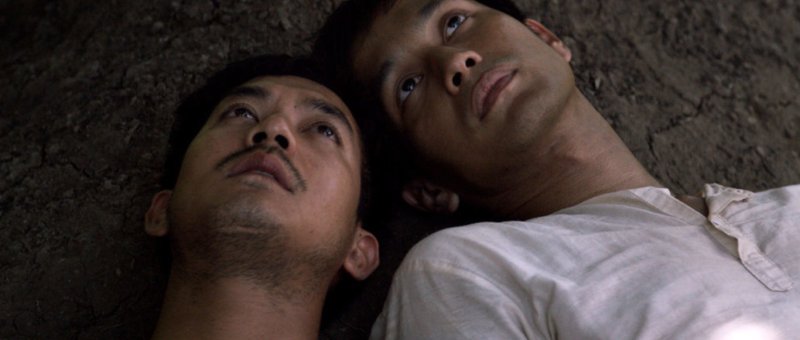
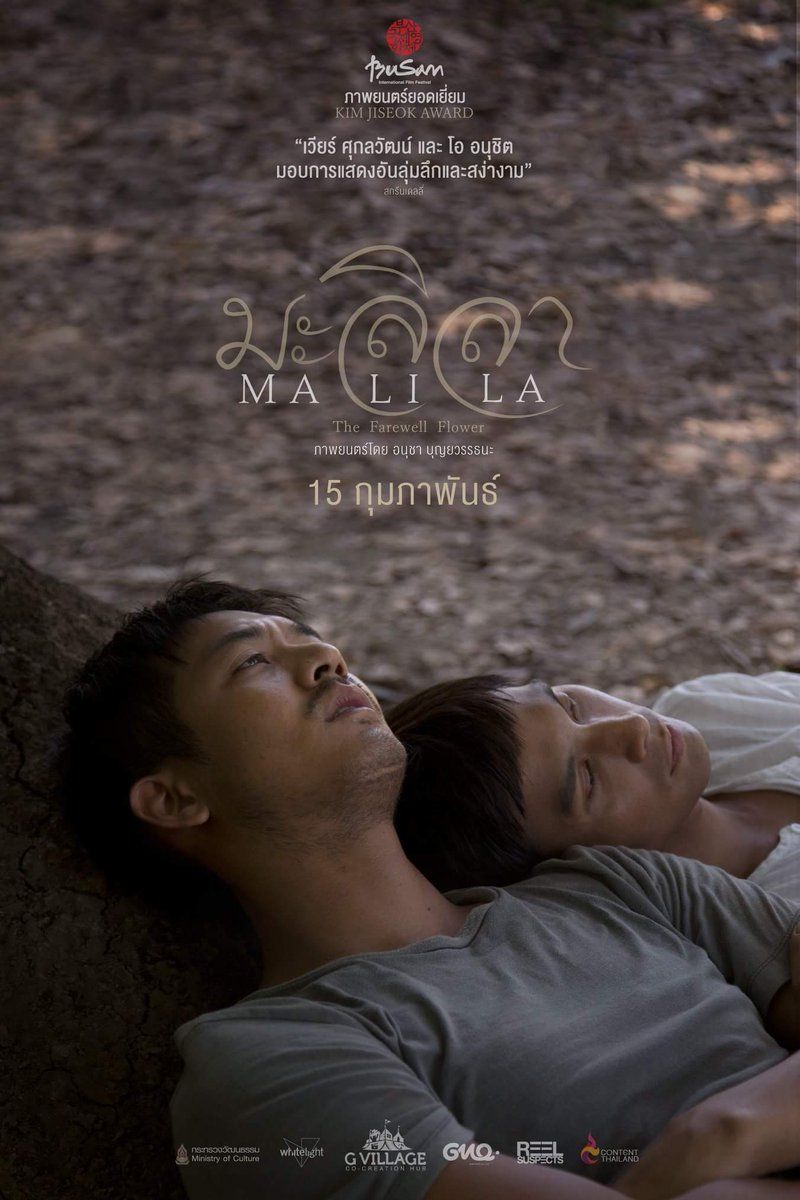
Malila posterAnucha Boonyawatana’s second feature, Malila: The Farewell Flower (มะลิลา), opens with a quotation from a 19th century poem. The poem laments that even a Baisri painstakingly created to honour the gods will eventually be cast away once it has served its purpose. No longer divine, its soul departed, the ornament is just another thing to be disposed of. Like the beautiful Baisri, two men’s souls will briefly intertwine only for the flowers of their love to wither on the vine, fading away with the great work still incomplete. This incompleteness, the lingering sense of absence and irreconcilable longing, propel the one left behind onto a spiritual journey hoping to discover if the answers to his need lie within or are not to be found at all.

Shane (Sukollawat Kanarot), the owner of a jasmine plantation, has recently begun to rebuild his life following a period of heavy drinking during which his wife left him and his young daughter was killed by a python in the jungle. Reuniting with his former lover, Pich (Anuchit Sapanpong), Shane is distraught to find out that he is terminally ill with lung cancer and has decided to give up on conventional medicine and devote the rest of his life doing the things that make him happy. Pich’s one form of “treatment” is in his constant making and dispatching of “Baisri” – ornaments constructed from leaves and flowers for ceremonial occasions which, painstakingly created, must be sent away on the river after they have fulfilled their purpose.

Jasmine flowers are, as Pich remarks, too weak – they wither before the Baisri is completed. Though the two men are able to rekindle their romance, their time is limited. Shane contemplates becoming a monk in the hope that his good karma can be transferred to Pich but it is not to be. Alone, he sets out on a spiritual journey guided by another monk hoping to encounter the ghosts of himself and of his loves to absolve himself of his guilt and loneliness.

Set against the beautiful Thai landscape, Malila is a tale of fading flowers and eternal regrets. The art of Baisri requires intense focus and dedication in order to repurpose and reorder nature into something essentially manmade but beautiful. Later, during his quest, Shane will be met with a terrifying though no less intense experience when his guide and fellow monk instructs him in the art of corpse meditation. The sight of the body, putrid and infested with hungry maggots busily going about their business, presents a strong contrast with the otherwise idyllic scenery and forces a more literal contemplation of the process of decay as the human form dissolves leaving only memory and a ghost of past emotion in its place.

Ironically, or perhaps not, a Baisri is intended to mark a new beginning – a “farewell” on an onward journey. Shane sets off on a spiritual quest, suffering nobly in the forests with their frequent rainstorms and learning to be in the moment in the company of the comparatively better experienced monk who guides him, a former soldier now on the spiritual path. His search is internal but illuminated by the world around him and his gradually increasing connection with it.

Eventually transcending this world for another, Shane begins to find his answers and finally cleanses himself of his loss and suffering. Mixing lyrical poetry with beautifully photographed naturalism, Anucha Boonyawatana tells a painful tale of love lost and found, hearts broken and repaired, and finally of acceptance both of one’s self and of the transience of all things. Malila: The Farewell Flower is a parting gift to a departing love, filled with sorrow and regret but also with beauty even in decay.


Screened at BFI Flare 2018.

Original trailer (English subtitles)