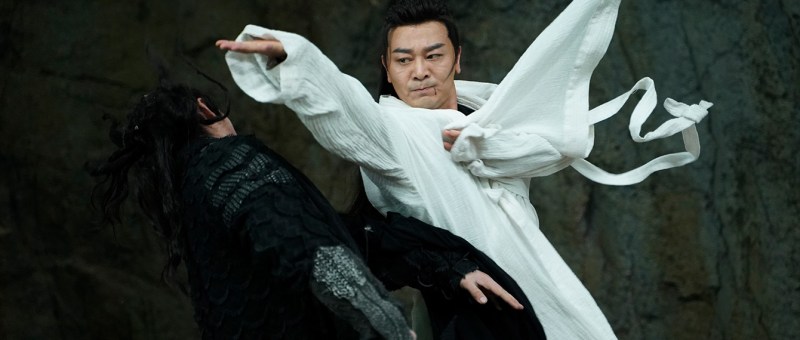
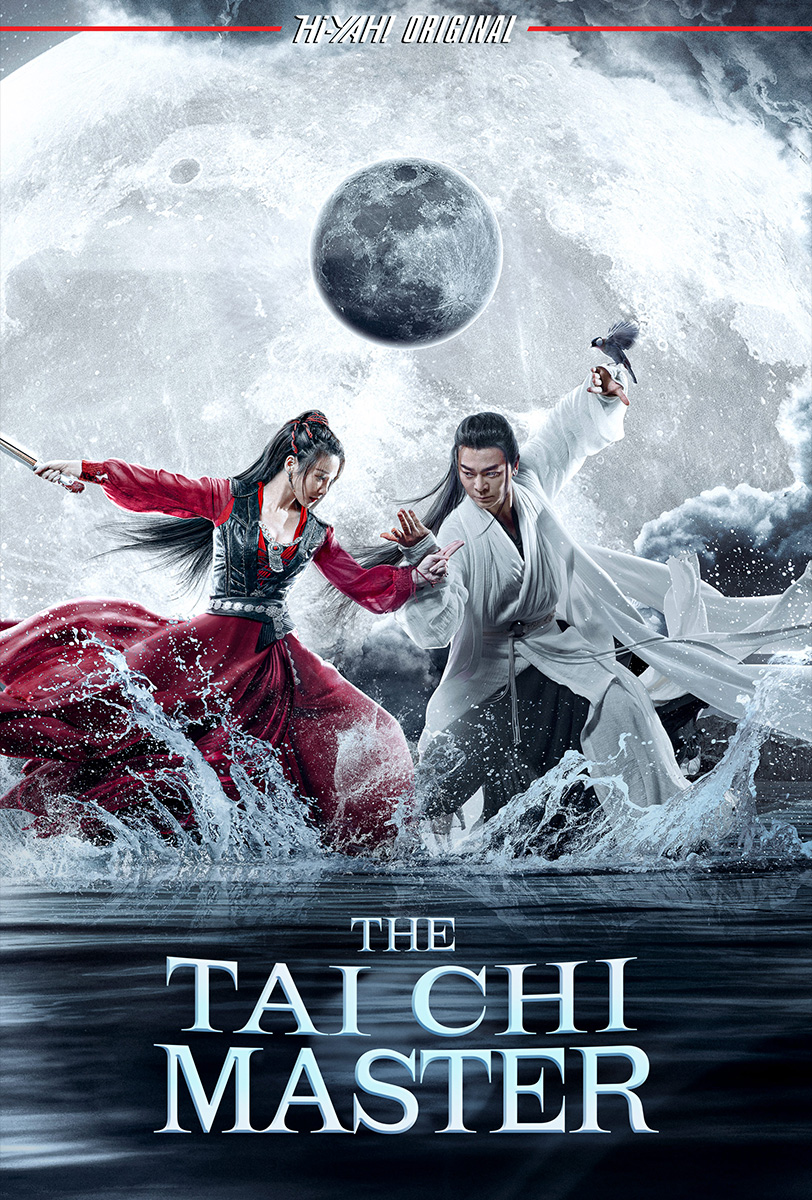
The Tai Chi Master (张三丰, Lin Zhenzhao & Cheng Siyu, 2022)

The funny thing is that, in contrast to contemporary Chinese cinema, Lin Zhenzhao & Cheng Siyu’s The Tai Chi Master casts those who stand up to corruption as the villains. Of course, their insurrection threatens the social order and their subsequent to overthrow the Song Dynasty may be too revolutionary to find much a approval but it’s surprising all the same even if the film also finds fault with officials too focused on the “big picture” rather than the citizens in the townships they’re supposed to be overseeing.

In any case, though it should not be confused with the Jet Li film from 1993 with which it shares both English and Chinese titles, this Tai Chi Master is once again an origin story for the renowned Taoist scholar Zhang Sanfeng which is the name the hero takes at the film’s conclusion having achieved a degree of enlightenment through experiencing near death and tragedy at the hands of the Netherworld Cult. For the most part, he goes by his courtesy name Junbao and is something of a libertine, spending most of his time enjoying fine liquor and trying to craft immortality pills as a member of the Wuji Sect. 12 years previously when the Imperial Court increased taxes to a unreasonable degree, the Netherworld Cult slaughtered the corrupt officials but were condemned by the rest of society for their actions. Junbao has a habit of drinking with Kui Tianxing, the former head of the Netherworld Cult who has been imprisoned in the Wuji’s Sect’s gloomy basement for the last 12 years and in fact transgressively learns from him “evil” techniques claiming that there is no good or bad in martial arts for all depends on the righteous heart of the practitioner.

But there is unrest brewing and it seems some can no longer bear the corruption and indifference of the noblemen supposedly managing their interests on behalf of the court. After taking a liking to a mysterious forest woman who rides a giant silkworm she charms with a flute, Junbao is taken to task for his solipsistic hedonism. She asks him how he can ignore suffering in the world and continue to remain apart from it, but he doesn’t truly gain the desire to oppose injustice until the Wuji Sect is targeted and his master is killed. Even then, his opposition is awkwardly positioned given that the new Netherworld Cult is also motivated by the desire to throw off the authority of corrupt officials, which means in a sense that Junbao is defending that same corrupt social order which he does not otherwise challenge.

In keeping with the teachings of the real Sanfeng, he instead preaches righteousness and harmony but otherwise removes himself from the martial arts and wider worlds, while his brief romance with the mysterious silkworm woman seems to fall by the wayside in his ongoing quest for spiritual enlightenment. Meanwhile, it has to be said that his relationship with the little girl who seems to be in his care is a little uncomfortable at times. In what is presumably supposed to be a sweet and innocent piece of childish banter, she frequently flirts with him, makes statements about becoming his girlfriend, and expresses jealousy towards the silkworm woman all of which seems very inappropriate for a child of no more than 11 or 12.

Nevertheless, the fight choreography is often interesting if sometimes marred by imperfect CGI and mid-level production values for a streaming film. The injection of fantasy-style lore with its demons and underground, cave-like bases gives the film’s internal universe a degree of consistency in reflecting the yin/yang philosophy espoused by the Netherworld Cult in the white-clad, surface-living Wuji Clan and the dark, anarchic world of the often masked rebels. The mysterious silkworm and the flute-playing woman meanwhile seem to occupy a liminal space caught between each world and whatever she says like Junbao not really a part of either until pulled into the final battle. Perhaps troubling or at times contradictory in some of its implications, the film does at least have a degree of charm in its likeable characters and fleshed-out backstories that hint at the possibilities of an ongoing franchise.


The Tai Chi Master is available digitally in the US courtesy of Well Go USA.

Trailer
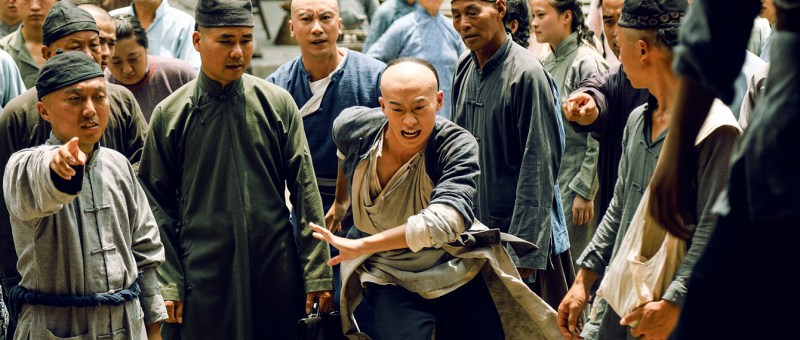
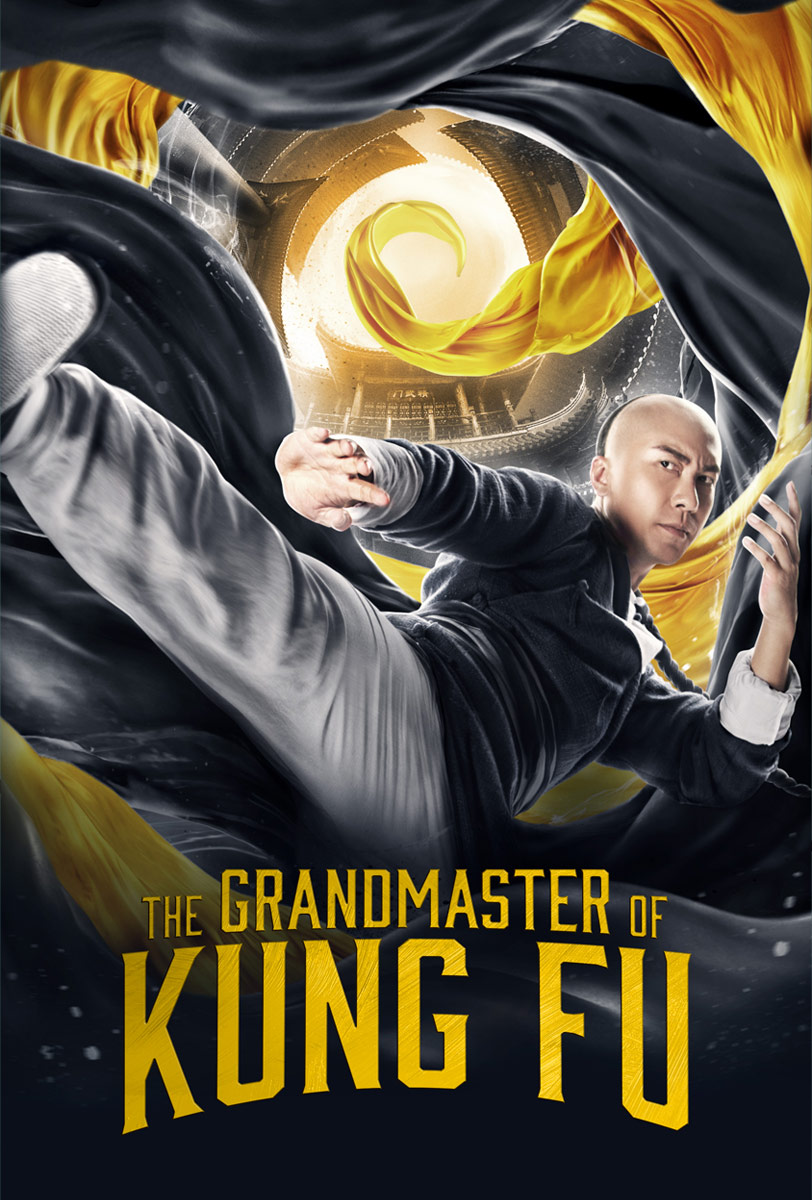
The Grandmaster of Kung Fu (霍元甲之精武天下, Cheng Siyu, 2019)

“Chinese martial arts are unimpressive” sneers a Japanese soldier as a member of an aikido school which has just received permission to open in the martial arts homeland of Tianjin. Boasting surprisingly high production values in comparison with the average Chinese action movie streamer, The Grandmaster of Kung Fu (霍元甲之精武天下, huò yuán jiǎ zhī jīng wǔ tiānxià) once again sees a humble man stand up on behalf of all of China against an oppressive coloniser this time intent on fighting them on their own ground by beating the locals in a “fair” fight pitting Chinese boxing against Japanese martial arts. 

Set at a complex historical moment, the film opens with the news that new regulations have taken hold at the Imperial University which will introduce Western learning to China but that many fear it’s a ruse to open the door to a Japanese invasion. That does seem to be the case in Tianjin which is soon occupied by unpleasant and duplicitous Japanese military officers who plan on opening a martial arts school of their own to rival those already in the town and eventually take it over. Meanwhile, the chairman of the Wu Shu association is about to step down and is holding a contest to find his successor. The burly Zhao quickly sees off all challengers until the arrival of mysterious stranger Huo Yuanjia (Dennis To Yu-hang) places his victory in jeopardy. Zhao plays a few underhanded moves, but an irritated Yuanjia essentially lets him win knowing his next blow may kill him. Zhao seems like the wrong person to lead the association now that it is threatened by the Japanese but eventually encourages Yuanjia to take a stand refusing to allow the proud traditions of Tianjin to be destroyed by the burgeoning Japanese empire who brand China the “sick man of Asia”.

Indeed, from the offset the Japanese are shown to be cruel and dishonourable despite the captain’s early words that they should play strategically in their quest to colonise China. Colonel Takeda is in someways much more even handed, openly reprimanding his men for acting in a way that reflects badly on the Japanese such as ordering the entire school to attack Yuanjia after he defeats aikido champ Anbei. But even Takeda is playing the long game, hoping that he can break the spirit of the Chinese by defeating them at martial arts leaving them so demoralised that they will give up on all thoughts of rebellion. Yuanjia is not however so easily beaten and neither is China as he very directly says to the japanese soldiers who try to shut him down. He frames his battle as one that will decide the course of the entire nation, that if he fails to stand up to the Japanese now then China will forever be oppressed by foreign powers though as he’s also fond of pointing out, he’s “just” a porter that the martial arts society didn’t even really want to accept before he showed them what he can do.

Nevertheless, he finds himself torn by the admittedly well-worn plot device of a nagging wife who doesn’t like him going off fighting and would much rather he stay at home even if it means all of China falls. Even she eventually comes round and gives him a precious amulet that becomes his saving grace. Chinese kung fu is he points out all about love and the desire to protect, whereas as according to Takeda Japanese martial arts are all about conquest and destruction. Yuanjia tells him that there’s no need to look for a winner or a loser in a contest of martial arts, and that in the end he cannot win because his philosophy is soulless and little more than meaningless violence while his is rooted in love and country. Martial arts is about applying peace, he explains, not bullying the weak (which seems like an odd concession in its characterisation of China as a defenceless victim only Yuanjia can save). 

Running a tight 74 minutes, the film boasts a series of impressive fight sequences performed by genre star Dennis To along with a series of above average performances as the small band of Tianjin martial artists attempt to preserve their traditions while taking a stand against foreign incursion which might in is own way have a few uncomfortable implications in its nationalistic dimensions. Nevertheless, it boasts surprisingly good production values for a straight to streaming movie and largely manages to sell its admittedly familiar tale with considerable panache.


The Grandmaster of Kung Fu is released in the US on Digital, blu-ray, and DVD on Jan. 31 courtesy of Well Go USA.

US release trailer (English subtitles)