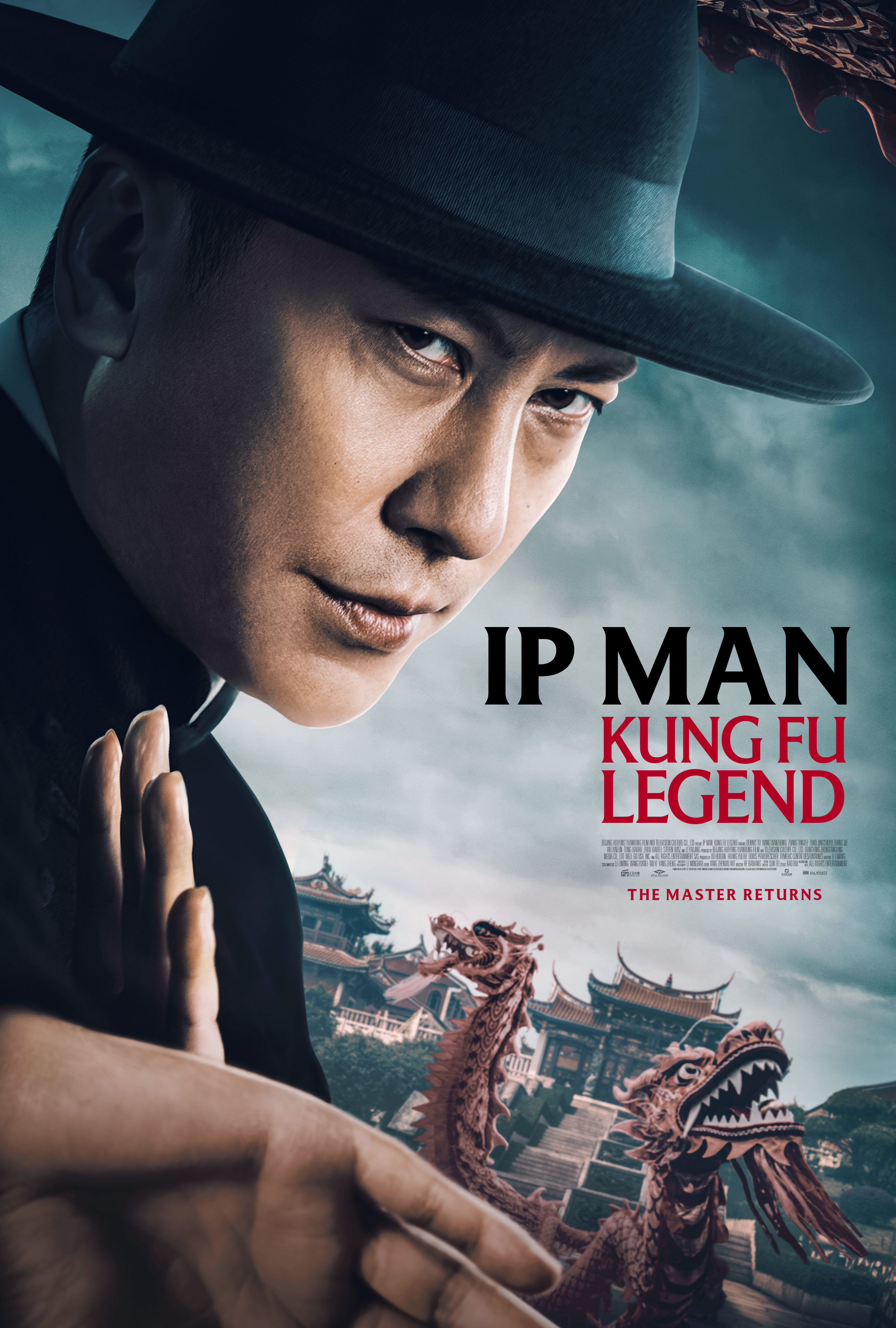
Ip Man: Kung Fu Legend (宗师叶问2, Li Liming, 2026)

Ip Man returns once again to fight injustice in colonial Hong Kong as a corrupt fixer tries to intimidate the local Martial Arts Society out of its headquarters in order to open a Western-style boxing gym. Ip Man: Kung Fu Legend (宗师叶问2, zōngshī Yè Wèn) is technically a sequel to 2019’s Ip Man: Kung Fu Master, though only in that it is directed by Li Liming and stars Dennis To Yu-Hang in the title role.

This outing for the folklore hero has a little more story to it than most as Ip Man returns to Hong Kong from Foshan to open a martial arts school to find himself a little less than welcome given that interest is martial arts is declining, schools have closed, and the last thing many of those remaining want is more competition. In order to be accepted by the local Martial Arts Society, Ip Man has to pass three trials, though it’s clear the current head, Hong, has begun to veer from the path of righteousness as he deliberately makes things difficult for Ip Man and even tries to cheat before the trial is interrupted by the arrival of the real villain, Pike, a corrupt British businessman valued by the colonial authorities who are dependent on his money to fund their election campaigns. 

Thus the enemies Ip Man is fighting are the forces of imperialism and capitalism as represented by Pike. Realising that they share a common enemy, Hong eventually teams up with Ip Man to defend the dock workers led by Ip Man’s friend Jinsong whose livelihoods are under threat if Pike manages to take over the port. Martial artists and workers are the foundation of the Chinese people, Hong intones while pledging to reject foreign influence in fear that allowing the British in will only lead to a total takeover. His underling, Yihu, meanwhile feels differently and tries to persuade Hong to work with the British believing that he would still be able to maintain management of the Zhonghua building. The fact is that the society is broke and can no longer support its members. Yihu’s mother is seriously ill and needs expensive medical treatment that the society can no longer fund while he also feels resentful and under valued by Hong after being passed over for promotions and generally ignored.

Yihu’s resentment and sense of inferiority make him the perfect target for seduction by Pike after which he undergoes a total personality transformation in becoming a rather flamboyant gangster with a fashionable haircut and sunglasses which generally seem to be used as a symbol of evil within the film. A crazed henchman sent after Ip Man who uses meat hooks as weapons also wears distinctive sunglasses and is driven by greed rather than righteousness. He tells Pike that his initial investment only covers knocking off Ip Man, which he has so far failed to do, and that taking out Yihu once he’s served his purpose is going to cost extra. 

Nevertheless Pike seems to have half the police station under his thumb though we only ever see Chinese officers. Though the first is pragmatic, he also tries to mitigate Pike’s influence while female officer Mei attempts to directly oppose it even while told that Pike is effectively above the law. She is also battling entrenched sexism as her superior advises her going against Pike might be doubly dangerous as there are already those who do not like the idea of women serving in the police force and may use her obstinacy as a reason why they shouldn’t. The martial arts world, by contrast, is depicted as much more egalitarian with the first of the masters Ip Man is asked to fight a woman skilled in unarmed combat. Likewise, when Ip Man eventually opens his school, two little girls excitedly ask to join so that they too can protect their community with their fists if necessary. 

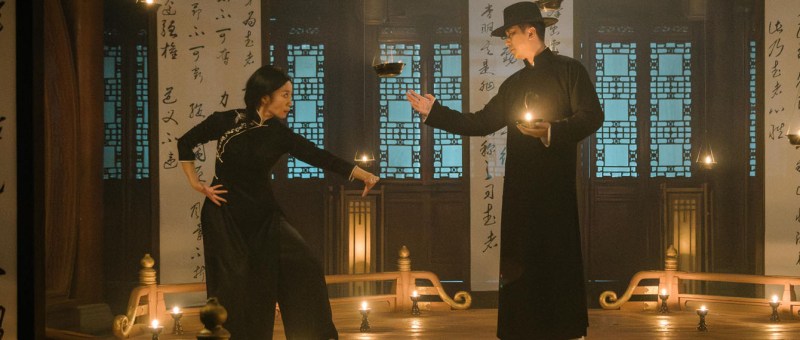
IP Man subversively suggests that one might have to use their fists for justice. But at the same time, there is an awkwardness involved in that Mei and the police force that has resisted corruption become justice’s arbiters at the same time as she commits what might actually be an extrajudicial execution even if in self-defence. Nevertheless, the encroaching forces of capitalist imperialism have been beaten back with Ip Man installed as the leader of the Martial Arts Society. Though the film’s most impressive action scene may be its first as Ip Man faces off against a female master while trying to keep a candle alight, its does its best to live up to the expectations of its name while paying homage to classic fights from the franchise’s history.


Ip Man: Kung Fu Legend is released on Digital, 4K Ultra HD, Blu-ray & DVD July 14 courtesy of Well Go USA.

Trailer (English subtitles)
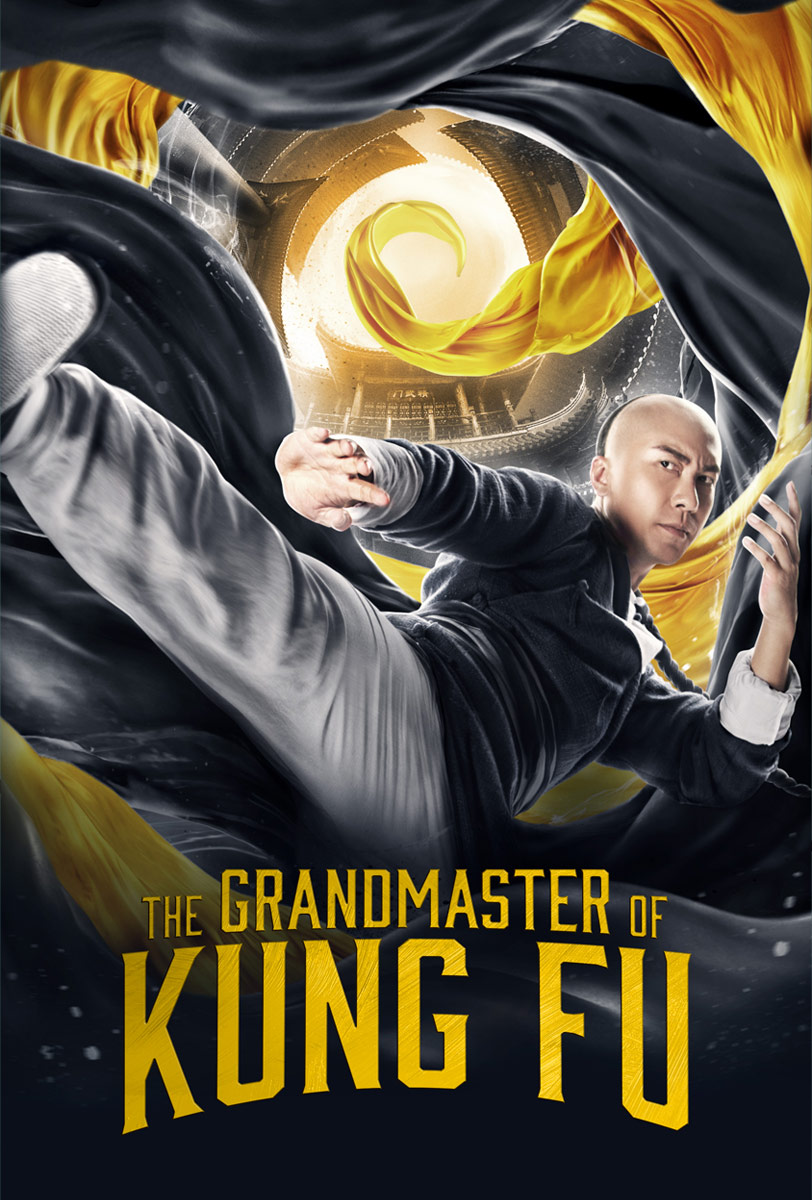
The Grandmaster of Kung Fu (霍元甲之精武天下, Cheng Siyu, 2019)

“Chinese martial arts are unimpressive” sneers a Japanese soldier as a member of an aikido school which has just received permission to open in the martial arts homeland of Tianjin. Boasting surprisingly high production values in comparison with the average Chinese action movie streamer, The Grandmaster of Kung Fu (霍元甲之精武天下, huò yuán jiǎ zhī jīng wǔ tiānxià) once again sees a humble man stand up on behalf of all of China against an oppressive coloniser this time intent on fighting them on their own ground by beating the locals in a “fair” fight pitting Chinese boxing against Japanese martial arts. 

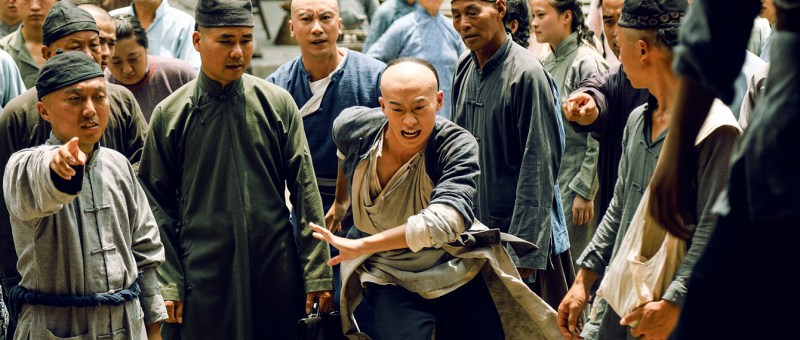
Set at a complex historical moment, the film opens with the news that new regulations have taken hold at the Imperial University which will introduce Western learning to China but that many fear it’s a ruse to open the door to a Japanese invasion. That does seem to be the case in Tianjin which is soon occupied by unpleasant and duplicitous Japanese military officers who plan on opening a martial arts school of their own to rival those already in the town and eventually take it over. Meanwhile, the chairman of the Wu Shu association is about to step down and is holding a contest to find his successor. The burly Zhao quickly sees off all challengers until the arrival of mysterious stranger Huo Yuanjia (Dennis To Yu-hang) places his victory in jeopardy. Zhao plays a few underhanded moves, but an irritated Yuanjia essentially lets him win knowing his next blow may kill him. Zhao seems like the wrong person to lead the association now that it is threatened by the Japanese but eventually encourages Yuanjia to take a stand refusing to allow the proud traditions of Tianjin to be destroyed by the burgeoning Japanese empire who brand China the “sick man of Asia”.

Indeed, from the offset the Japanese are shown to be cruel and dishonourable despite the captain’s early words that they should play strategically in their quest to colonise China. Colonel Takeda is in someways much more even handed, openly reprimanding his men for acting in a way that reflects badly on the Japanese such as ordering the entire school to attack Yuanjia after he defeats aikido champ Anbei. But even Takeda is playing the long game, hoping that he can break the spirit of the Chinese by defeating them at martial arts leaving them so demoralised that they will give up on all thoughts of rebellion. Yuanjia is not however so easily beaten and neither is China as he very directly says to the japanese soldiers who try to shut him down. He frames his battle as one that will decide the course of the entire nation, that if he fails to stand up to the Japanese now then China will forever be oppressed by foreign powers though as he’s also fond of pointing out, he’s “just” a porter that the martial arts society didn’t even really want to accept before he showed them what he can do.

Nevertheless, he finds himself torn by the admittedly well-worn plot device of a nagging wife who doesn’t like him going off fighting and would much rather he stay at home even if it means all of China falls. Even she eventually comes round and gives him a precious amulet that becomes his saving grace. Chinese kung fu is he points out all about love and the desire to protect, whereas as according to Takeda Japanese martial arts are all about conquest and destruction. Yuanjia tells him that there’s no need to look for a winner or a loser in a contest of martial arts, and that in the end he cannot win because his philosophy is soulless and little more than meaningless violence while his is rooted in love and country. Martial arts is about applying peace, he explains, not bullying the weak (which seems like an odd concession in its characterisation of China as a defenceless victim only Yuanjia can save). 

Running a tight 74 minutes, the film boasts a series of impressive fight sequences performed by genre star Dennis To along with a series of above average performances as the small band of Tianjin martial artists attempt to preserve their traditions while taking a stand against foreign incursion which might in is own way have a few uncomfortable implications in its nationalistic dimensions. Nevertheless, it boasts surprisingly good production values for a straight to streaming movie and largely manages to sell its admittedly familiar tale with considerable panache.


The Grandmaster of Kung Fu is released in the US on Digital, blu-ray, and DVD on Jan. 31 courtesy of Well Go USA.

US release trailer (English subtitles)