Useless (无用, Jia Zhangke, 2007)

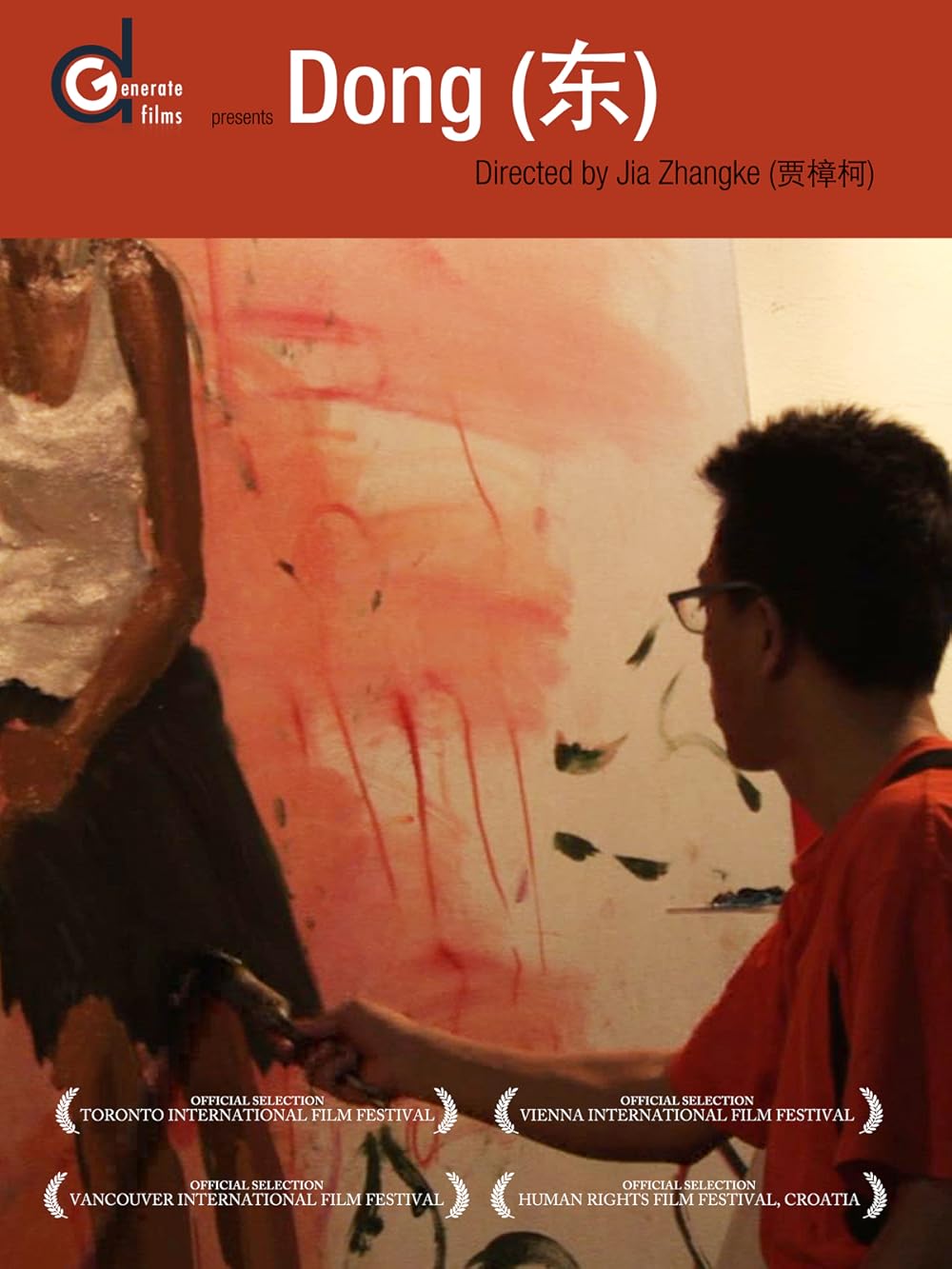
Perhaps in no other medium does the relationship of art and utility present itself quite so much as in fashion. As the primary subject of Jia Zhang-ke’s Useless (无用, wúyòng), second in a trilogy of films examining Chinese artists, points out China is the world’s largest manufacturer of textiles. Yet until she took it upon herself to found one, it had no fashion label to call its own. Travelling from the garment factories of Guangdong, to the artisan studio of Ma Ke, and bright lights of Paris Fashion Week, before arriving firmly back in Jia’s hometown of Fenyang with its independent tailors and the miners who frequent them for repairs and alterations, Jia zooms in to the modern China probing the divides of art and industry in an increasingly consumerist society. 

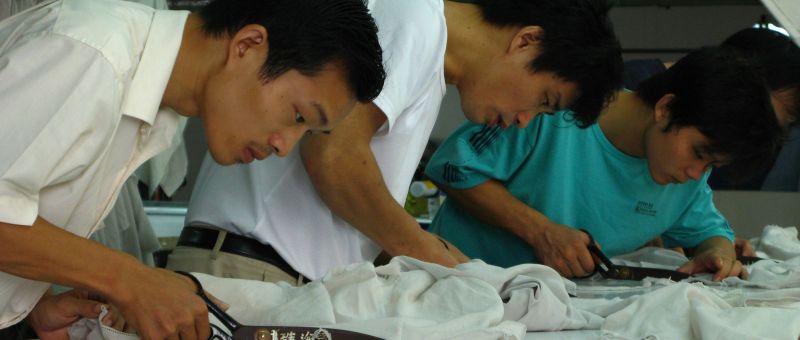
Jia begins with a lengthy pan across a strangely silent factory floor, seemingly a relic of a previous era. The workers dine in a quiet cafeteria they have to squeeze through a gate which remains locked to enter, and have access to an on-site doctor. They get on with their work quietly without overseers breathing down their necks and do not seem unhappy, oppressed, or exploited, at least as far as the camera is permitted to see. The camera hovers over the label of a just-completed garment which belongs to Exception, the fashion store launched Ma Ke in the mid-90s, ironically she says as a reaction against mass-produced, disposable fashion. 

Nevertheless, as she points out, you can’t be free to experiment when you’re a recognisable brand with a clear place in the market, which is why she started an artisan side label, “Wu Yong” meaning “useless”, hinting at her desire to find a purer artistic expression within the realms of fashion design. For the camera at least, Ma Ke casts an eye over her atelier like a factory foreman, though her studio space is a million miles away from the Guangdong factory, though borrowing the aesthetics of the early industrial revolution. Her employees weave by hand using antique looms, Ma Ke reflecting on the differing relationships we might have to something made by hand which necessarily carries with it the thoughts and emotions of the maker, and that made “anonymously” in a factory. Yet these designs are crafted with concerns other than the practical in mind, Ma Ke travelling to Paris to exhibit them in a living art exhibition that, in some senses, repackages the concept of Chinese industry for a Western palate. 

It’s Ma Ke, however, who guides Jia back towards Fenyang, explaining that she likes to travel to forgotten, small-town China where she describes familiarising herself with these other ways of life as akin to regaining a memory. In the dusty mining town he follows a man taking a pair of trousers to a tailor to be repaired, perhaps something unthinkable in the consumerist culture of the cities where clothing is a disposable commodity to be discarded and replaced once damaged. Jia spends the majority of the sequence in the shop of a pregnant seamstress who loses her temper with her feckless, drunken husband while seemingly supporting herself with this intensely practical art. Yet it’s in her shop that he encounters another woman also after alterations who explains to him that her husband was once also a tailor but found his business unviable and subsequently became a miner instead. Like Ma Ke he laments the effect of mass production on the market, knowing that a lone tailor cannot hope to compete with off-the-peg for cost and convenience. As we watch the miners shower, washing the soot from their flesh, we cannot help but recall Ma Ke’s avant-garde installation with its faceless, blackened figures, nor perhaps the workers at the factory visiting the doctor with their various industrial illnesses. 

Objects carry memories according to Ma Ke, they have and are history. The clothes tell a story, every stitch a new line, but they also speak of the contradictions of the modern China in the push and pull between labour and exploitation, art and industry, tradition and modernity, value and consumerism. Yet Jia leaves us with the figure of the artisan, patiently pursuing his small, functional art even as they threaten to demolish his studio around him. 


A Writer’s Odyssey 2 (刺杀小说家2, Lu Yang, 2025)

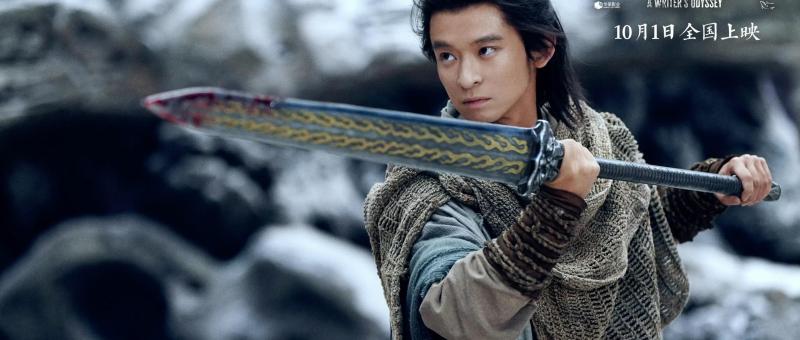
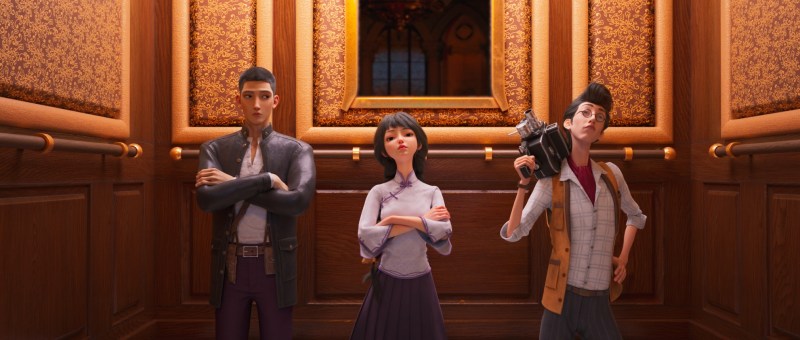
Arriving four whole years after the previous instalment, A Writer’s Odyssey 2 (刺杀小说家2, cìshā xiǎoshuōjiā 2) is in many ways a very different film. While its predecessor was a fairly serious affair tackling some of the issues of the modern China such as child trafficking, machinations of the oligarch class, and generalised capitalistic oppression, the sequel is a typically mainstream fantasy blockbuster complete with some fairly goofy humour and the ultimate message that despotism is bad and people should work for the good of others rather than just themselves.

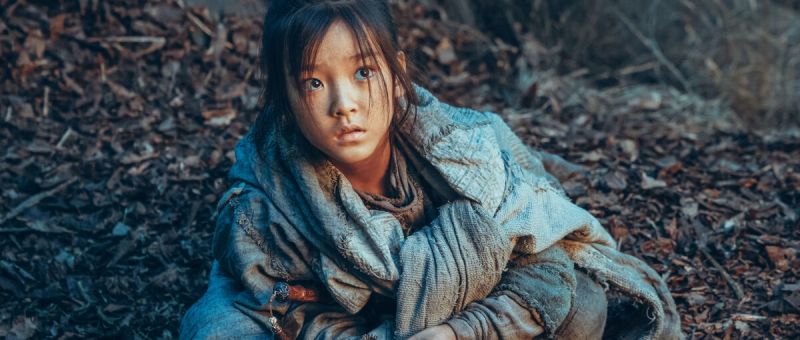
In that regard at least, it’s another pointed attack on authoritarians and corporate bullies like Aladdin’s Li Mu. The entire Aladdin plot is, however, jettisoned, which seems like a missed opportunity, especially as it means that Yang Mi does not reprise her role and we don’t get any answers about who the boy was with Tangerine at the end of the previous film nor whether the “death” of Redmane led to the death of Li Mu in the real world as he feared it would. In truth, even Guan Ning (Lei Jiayin) is somewhat sidelined. Six years later, he, Tangerine (Wang Shendi), and Kongwen (Dong Zijian) are living as a family running a restaurant. Though Kongwen finished his Godslayer novel, it was stolen by an influencer, Cicada (Deng Chao), who accused him of plagiarism which got Kongwen blacklisted in the publishing industry and unable to earn any money through writing. As he’d said in the previous film, it was writing that gave his life meaning so now he’s started to become hopeless and depressed. 

Meanwhile, he’s begun to dream of Ranliang and the return of Redmane who has survived but as a mortal rather than as a god and is determined to get back everything he’s lost. This means, in meta terms, that he wants to challenge “god”, or really Kongwen, whom he sees as the architect of his fate. On the one level, it seems as if he’s trying to insist on his own free will and is sick of being controlled by unseen forces, but in reality he just wants the powers of a god for himself so he can oppress people properly. Nevertheless, this means he has to come to our world in order to square off against Kongwen, the writer.

It has to be said the vision of the real world on offer this time is much glossier and devoid of the kind of darkness that haunted Guan Ning. Though they’re worried because the restaurant’s not doing so well, the trio seem to have pretty nice lives with relatively few other problems outside of Cicada who is now aligned with Redmane in place of Li Mu standing in for a venal class of confluencers. Kongwen is then fighting a war on two fronts as Redmane taunts him to come over to the dark side and turn his fantasy story of good defeating evil into one of nihilistic despair echoing the way that Kongwen feels in his life.

The meta drama of the writer pursued by his characters is resolved in a fairly unexpected way with Kongwen effectively giving up his godlike powers and allowing his characters to save themselves through “mortal courage” rather divine intervention. Though Renliang had been plunged into chaos as the power vacuum Redmane left behind saw his former allies effectively become warlords reenacting the warring states period, in the end it’s solidarity that saves them as they agree to band together to oppose Redmane while offering the possibility of forgiveness if only Redmane can give up his quest for domination and agree to work for the common good. 

Kongwen learns something similar, remembering his writing isn’t solely an economic activity, and not only about himself but giving something back to the world. Torn between the anarchic ambition of Redmane and the righteousness of Jutian (Chang Chen), modelled after his own absent father, he struggles to find meaning amid the injustices of the modern China having been unfairly cancelled by netizens after being falsely accused of plagiarism by the man who stole his story and asks himself if it’s worth sacrificing his friends in a last ditch attempt to save them through teaming up with the forces of darkness. Nevertheless, Lu frames his tale in a much more lighthearted fashion as symbolised by demonic armour Darkshade’s sudden merging with a lettuce to become unexpectedly adorable. As such, it feels like something of a missed opportunity in choosing not to build on the foundations of the first film but sidestep them completely. Even so in upping its production values and the quality of its visual effects, the sequel embraces a new sense of fun which is definitely different but possessed of its own charm.


Trailer (English subtitles)
A Writer’s Odyssey (刺杀小说家, Lu Yang, 2021)

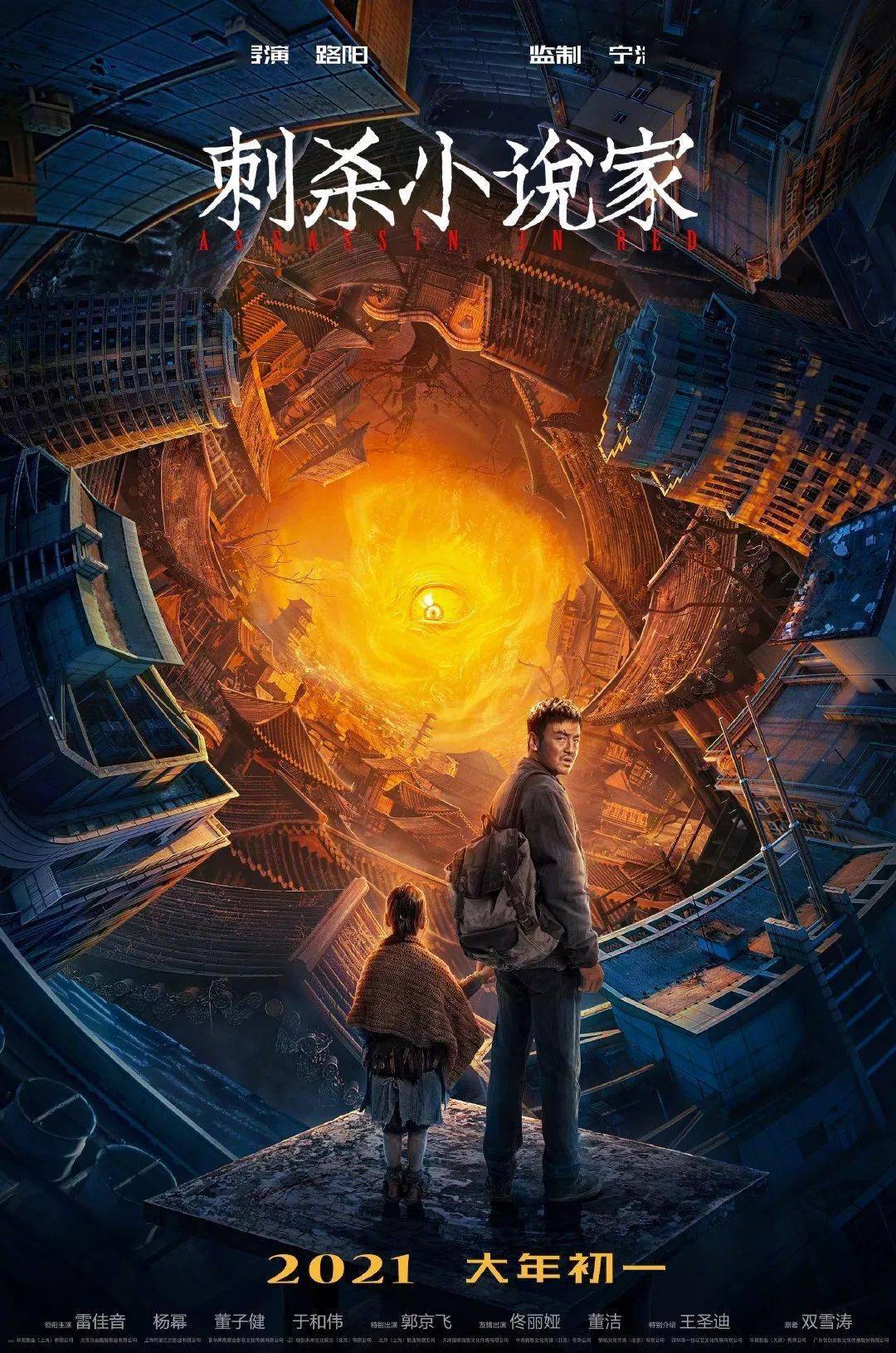
“As long as I keep writing, my existence has meaning,” according to the titular writer at the centre of Lu Yang’s action fantasy, A Writer’s Odyssey (刺杀小说家, cìshā xiǎoshuōjiā). His art, though derided as trivial, is it seems the best form of resistance to the feudalistic capitalism that has overtaken the authoritarianism of the communist past. Broken father Guan Ning (Lei Jiayin) desperately searches for his daughter Tangerine who has been missing six years, assumed to have been swallowed by China’s child trafficking network, only to find himself plagued by bizarre dreams of a fantasy city.

The city is, it seems, that of Kongwen’s (Dong Zijian) fantasy novel series which he live streams over the internet. Whenever something bad happens to the evil despot at the story’s centre, Lord Redmane, it’s visited on the CEO of vast corporation Aladdin (read: Alibaba), Li Mu (Yu Hewei), which has just launched the Lamp App which will they claim “resculpt time” so that time and distance are no longer an issue. Li Mu is panicked because Kongwen has said he’s going to end the series in three days and it doesn’t look good for Lord Redmane, so he’s fearful for his life. Noticing that Guan Ning has some sort of super power in which he can hurl rocks with unusual accuracy, he leverages Tangerine’s disappearance to convince him to knock off Kongwen in exchange for his daughter’s location.

Of course, the fantasy world and the “real” are connected in more ways than one with Ranliang conjuring visions of the Cultural Revolution in which the despotic leader is literally protected by hordes of mindless “Red Guards” while pitting one district against another and seemingly destroying all art. Li Mu, meanwhile, is destroying human innovation with his apps and treats the lives of others with callous disregard. His right-hand woman Tu Ling (Yang Mi), originally resentful of Guan Ning in blaming him for losing his child having been abandoned by her own parents, becomes disillusioned with his tactics on realising that he lied to Guan Ning and the candidates he picked for Tangerine are five random girls none which is likely to be her. Figuring out that she’s probably next after Li Mu knocks off Kongwen, who is also the son of his former business rival that he seemingly betrayed to take control of the company, and gets rid of Guan Ning for good measure, her allegiances begin to change creating a kind of parallel with Tangerine and the mysterious boy hanging around with her.

Meanwhile, in the fantasy world, Kongwen teams up with a demonic suit of armour that feeds on his blood but is also a near unbeatable killing machine that may or may not be evil. Guan Ning comes to believe that the fantasy world may be the only place he can find Tangerine and switches side from agreeing to kill Kongwen to deciding to protect him so that he can finish the story and possibly write a better ending for his fantasy character who as yet remains undefined. He’s later revealed to be a member of the brainwashed Red Guard, which may be appropriate as his former job was a banker which is to say a soldier of capitalism. Only art can break his programming in the form of Tangerine’s flute playing which reawakens his humanity and memory. 

The implication seems to be that China cannot escape either its communist past or capitalist future except through the liberation that comes with artistic endeavour. When Guan Ning is tasked with killing Kongwen, he follows him about town and hears his neighbours run him down as a “parasite”, a man of almost 30 with no real job and no income who is still being financially supported by his mother. This information might be offered to make it seem less bad to kill him, as if in this hyper-capitalistic society his life is worth nothing because that’s what he contributes. Kongwen feels this a little himself and has suicidal thoughts, but also insists that his life has meaning precisely because he writes and expresses all of this frustration with the contemporary society along with his buried resentment towards Li Mu for the death of his father and theft of his birthright. Shot like a video game, the film’s sprawling fantasy-esque world hints at still more adventures to come in this David and Goliath competition in which Kongwen and Guan Ning attempt to overthrow this cruel and corrupt order to find a way to free themselves from its authoritarian cruelties if only in their minds.


Trailer (English subtitles)
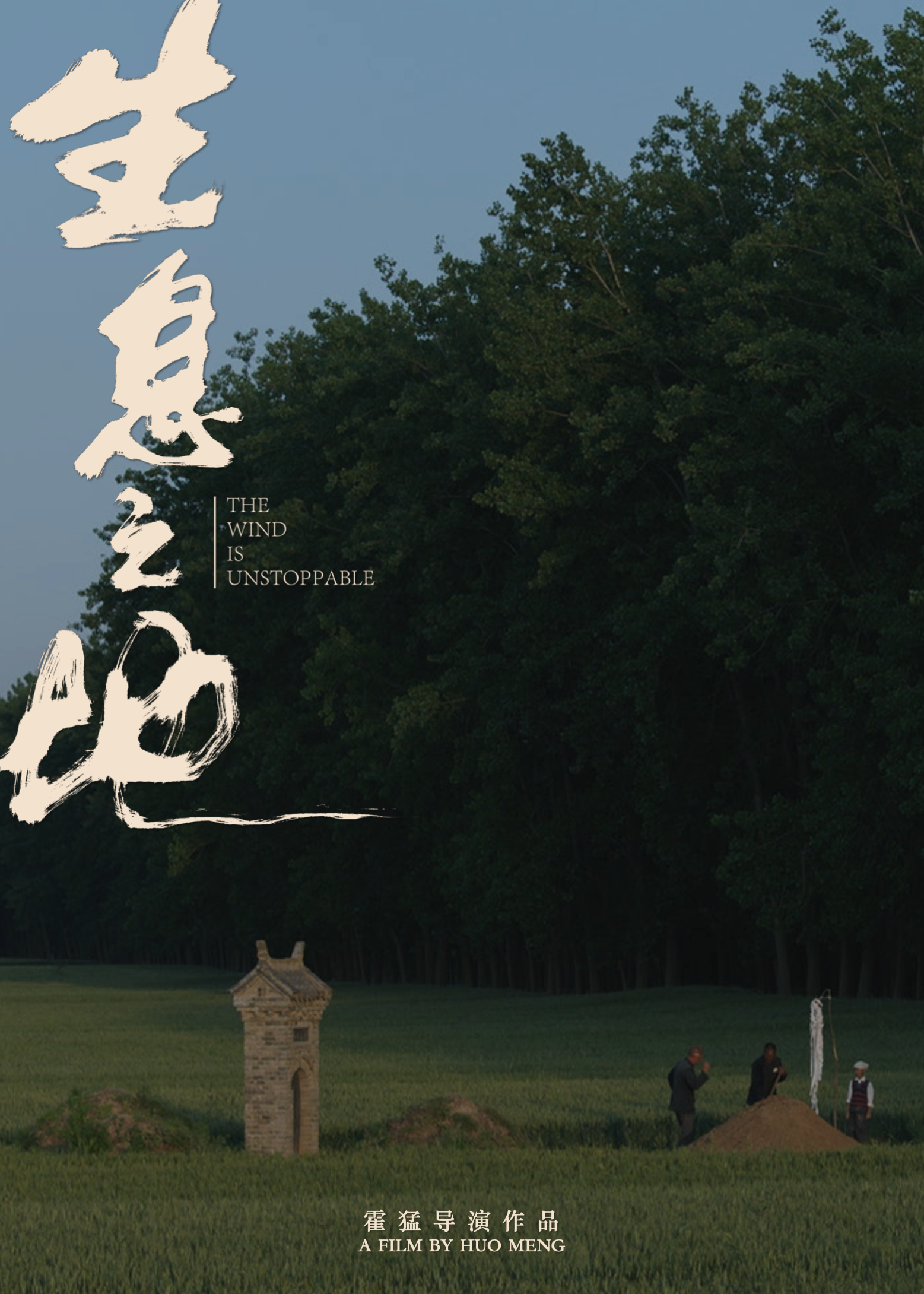
Living the Land (生息之地, Huo Meng, 2025)

When a way of life has gone on unchanged for centuries, the idea that it might soon disappear seems unthinkable, but change is indeed coming to the village in Huo Meng’s elegiac drama, Living the Land (生息之地, shēngxī zhī dì). Set concretely in 1991, the economic reforms and impact of the One Child Policy are beginning to make themselves felt, while incoming mechanisation begins to destabilise the rural environment. Farmers will always have to work the land, one utters in exasperation as a local man employs a large American tractor he says is capable of doing the work of a hundred villagers, while other young men decide it’s time to go south and seek their fortunes in the factories of a new era.

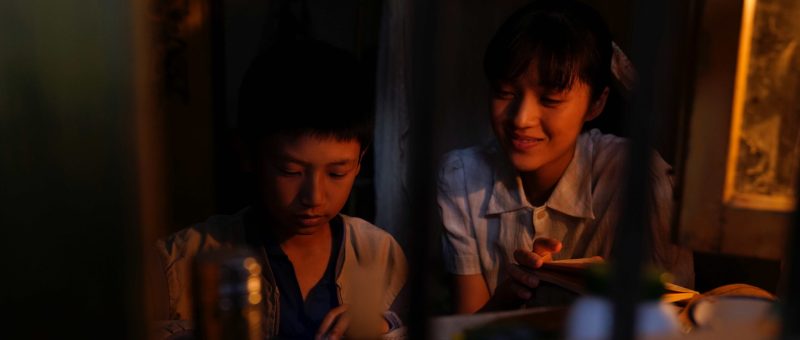
Even so, the film opens with a literal digging up of the past. 10-year-old Chuang’s (Wang Shang) great aunt has died, and his uncle and grandfather want to exhume his great uncle from the makeshift grave he was placed in after getting on the wrong side of the authorities so they can be buried together. Villagers talk cryptically about those who didn’t make it through the Cultural Revolution and Great Leap Forward, but otherwise continue living their traditional lives in harmony with the landscape. The irony is that Chuang is a left behind child whose parents are working away in the city, but the reason he’s not with them is because he’s a secret. He’s their third child and they can’t afford to pay the fine for violating the One Child Policy while his father works for the government and would probably be fired if they found out.

And so, Chuang is living with his maternal grandparents while his siblings are with their parents. The fact he keeps wetting the bed at a comparatively late age is likely down to this sense of rootless anxiety. He doesn’t know if he should say this is his home village because he has a different surname to the people he’s living with. While his grandfather plots out burial spaces for the rest of the family, he leaves Chuang out, and when the boy asks why, he says he doesn’t belong here because his name isn’t Li. He’s mainly been cared for by his aunt, Xiuying (Zhang Yanrong) but she soon comes under pressure to marry, especially when a wealthy local man takes a liking to her and her tentative romance with the local school teacher falls flat when he too goes south without her. 

Xiuying attends the regular pregnancy screenings on her aunt’s behalf to hide the fact that she is pregnant with an unauthorised third child, which is one way in which the village attempts to get around these restrictions imposed from outside which threaten their way of life and livelihoods. They need more children to help work the land, while they’re finding it increasingly difficult to make ends meet selling wheat and bricks. Half of their wheat crops are destroyed when oil prospectors arrive with some in the village excited about the prospect of any being found, believing they’ll all be rich or that factories will open offering new jobs so the young won’t leave the community. But the prospecting leads to tragic consequences and seems unlikely to prove rewarding for the locals. 

When Chuang’s great-grandmother is interviewed by the authorities, she tells them that she doesn’t actually have a name. Before her marriage, she was just “third sister” and after that someone’s wife, mother, grandmother. The authorities don’t like that, and someone suggests calling her “Mrs Li Wang”, but there are a few of those already so she ends up becoming “Third Mrs Li Wang”, which doesn’t seem like a tremendous improvement. The lives women are continually devalued in the traditional, patriarchal community in which they are still chiefly valued for the ability to give birth, which they now can’t do because of the One Child Policy. Xiuying is bullied into marrying a man she doesn’t like, and then is mistreated by him because she didn’t bleed on their wedding night so he doesn’t believe she was a virgin likely because of the rough treatment she received during the pregnancy exam when they suddenly began to suspect she wasn’t a married mother of two. Chuang gets left behind again as the village slowly depletes and mechanisation forever disrupts this very traditional way of life, though the elegiac music suggests that even those who went south didn’t fare all that much better in amid the economic instability of the 90s reforms which destroyed not only communities and ways of life our very relationship with the land itself.


Living the Land screens as part of this year’s San Diego Asian Film Festival.

Hero (英雄, Zhang Yimou, 2002)

In the closing moments of Zhang Yimou’s Hero (英雄, Yīngxióng), what we see is an empty space. The outline of a person surrounded by arrows, or perhaps the doorway they protected with their body that nevertheless remains closed. On its initial release, Zhang’s film received criticism for what some saw as an overt defence of authoritarianism. After all, what we may come to understand is that the hero of the title is the Qin emperor (Chen Daoming), the founder of the modern China, but also in historical record a brutal tyrant whose tyranny is therefore justified in the name of peace, just as contemporary authoritarianism is justified in the name or safety and order.

This reading is only reinforced by the demeanour of Qin himself who condemns the nameless “hero” to death because he has chosen authority and this is what authority demands. No forgiveness, no compassion, only brutality and an iron first. Yet he cries because he is a compassionate man and understands the sacrifice he is asking his remorseful assassin to make. He does not do it because he is cruel or out of vengeance or anger, but because he believes it necessary to ensure peace for “all under heaven”. Now we may find ourselves asking again if the assassin is the hero after all because he willingly submits himself to and sacrifices himself for a tyrannous authority because he believes it to be the best and only choice that he can make for the wider society.

Nevertheless, there is something chilling in the vision of a thousand arrows flying toward one man who does not flinch while the man who ordered them sent appears to shake with his own power. The soldiers retreat, and the king is left alone, dwarfed by the immense architecture of the palace and the blood-red calligraphy of the character for sword reimagined by another potential hero whose name echoes his final conviction that in the end the apotheosis of the swordsman lies in the realisation that there is no sword. It’s this that leads him to abandon is own desire to assassinate the king and submit himself to a greater authority in the name of peace. In the end what he rejects is the tyranny of the sword itself, yet the king is also an embodiment of that tyranny because his authority is only possible through terrifying violence. 

In this way, the assassin, ironically named “Nameless” (Jet Li), may stand in for the everyman refusing to bow to the authority of a corrupt king who cares only for power. In one of the many tales he tells, Nameless remarks that he fought with the first of Qin’s three assassins in his mind and it’s true enough that what passes between the two men is a duel of words which is eventually won by the king. Qin tells Nameless of his desire to increase his influence beyond the other six kingdoms of Warring States China and create an empire that encompasses “all under heaven”, but Nameless later cautions him to remember those who gave their lives for the highest ideal, peace, and refrain from further killing. The closing title card is displayed over the Great Wall, making plain that Qin did in fact stop after conquering the six other kingdoms to unite all of China while building the wall to protect his citizens from “northern tribes,” or perhaps competing imperialists.

But walls keep people in as well as out and are in fact another facet of the king’s tyranny and a symbol of enduring authoritarianism. The problem is that it isn’t tyranny or authoritarianism that any of the assassins oppose for they are driven only by hate and vengeance and have no greater ideology or vision for the future. The argument is that peace under the iron fist of Qin is better than the chaotic freedom of the Warring States society, yet what we’re left with is nihilism. The love between assassins Flying Snow (Maggie Cheung Man-yuk) and Broken Sword (Tony Leung Chiu-wai ) is disrupted in each of the tales Nameless relates of them, firstly by romantic jealously and then secondly ideological divide. The conclusion that Broken Sword comes to is that they must not resist, but Flying Snow cannot live without recrimination with the past and the sealing of its tragic legacy. Her revolution fails, and as such “all under heaven” there is only death and only in death is freedom to be found.

The sense that these assassins are already dead is echoed in the choice of white for the final sequence of the film. Zhang frames each of his sequences in vibrant colour, the red of the first tale in which the lovers are destroyed by a supposed love triangle, the blue of the second in which tragedy and sacrifice do not so much destroy as deify it, the green of the penultimate in which jade curtains billow and fall inside the imperial palace, and finally the cold white of death in which the lovers eventually find their home leaving their surrogate child alone in a windy desert of futility. Yet each of these sequences is filled with an intense beauty and the romanticism found in classic wuxia. What remains in the mind is the balletic fight between the tragic heroine Flying Snow and the orphaned pupil Fading Moon (Zhang Ziyi) in an autumnal forest that’s suddenly drenched in red, or feet dancing across the water, an image of an idealised past and lost love among wandering ghosts with no home to go to. Here there are no heroes, only lonely souls and frustrated ideals. 


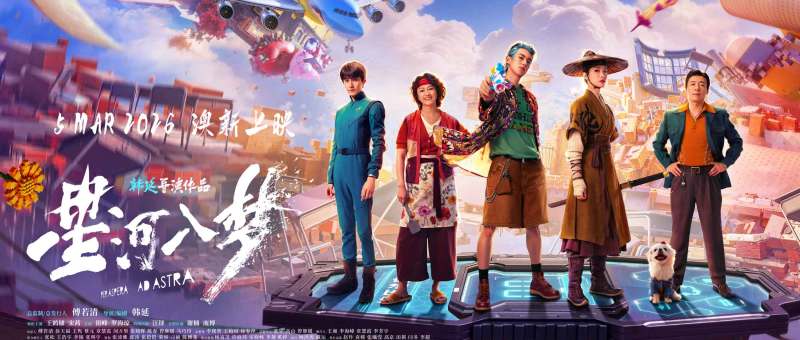
Creation of the Gods II: Demon Force (封神第二部:战火西岐, Wuershan, 2025)

Picking up where the previous film left off, Yin Jiao (Chen Muchi) has been taken to the immortal realm of Kunlun where they first assume it’s too late to save him what with his head and his body having become separated. But on a closer look, the Immortals realise that the sheer force of Yin Jiao’s resentment has sustained him. They can save him after all, but when they try, he usurps all their power and becomes something that not even they can control. The future of the Shang, in fact of China itself, now rests with him. Will he be able to contain his rage and fight for a better world, or will it get the better of him and he’ll burn it all to hell in revenge?

To that extent, the second part in the Creation of the Gods trilogy inspired by the classic foundation myth The Investiture of the Gods, presents a similar problem to the first. Given the opportunity to save the world or enrich oneself, what will most people choose? Yin Shou chose the latter and is still in thrall to his fox demon lover who is now herself in mortal peril having transferred Yin Shou’s wounds to herself to heal him to the extent that her own body, that of rebellious lord Su Hu’s daughter Daj (Narana Erdyneeva), has begun to decay. 

There is something quite tragic and poignant about the almost romance that arises between Ji Fa and Deng Chanyu who bond over the realisation that they are really fighting for the same thing, family, even he fights for the living and she the dead. During her time in Xiqi, Deng Chenyu gains a glimpse of another life in which she might find the home she’s been searching for only to realise that she must sacrifice herself for its survival though in doing so she might also achieve her dream of dying on the battlefield with her family. As the people of Xiqi hold a celebration for Yin Jiao’s return, two old ladies grab Jiang Ziya (Huang Bo) and try to pull him into a reel. He protests he has more important matters to deal with, but as the old ladies remind him happiness is the most important matter. In effect, that’s what each of them is fighting for in opposing the by now quite literally lifeless tyranny that Yin Shou represents. His romance with the fox demon has its poignancy too in her apparent willingness to sacrifice herself for him and resultant powerlessness to save herself while he can only rely on the might of giants and demonic magic in order to cement his rule.

Accelerating the pace, Wuershan moves from set piece to set piece beginning with an epic horse chase along a narrow mountain road as Ji Fa and Den Chanyu (Nashi) face off against each other while building progressively towards the assault in Xiqi and confrontation with end boss Wen Zhong (Wu Hsing-kuo). The influence of the supernatural only grows in strangeness as Wen Zhong uses his third eye to create deadly beams of light that paralyse all caught in their beams to make his soldiers’ jobs that much easier as they wipe out Xiqi. Demonic magician Shen Gongbao (Xia Yu) lurks in the background preparing a huge zombie army with his “Deathworms” spell and continuing to disconcertingly float about as a severed head. This time around, altruism squarely defeated selfishness, but who knows if the world will be as lucky next time?


Trailer (English / Simplified Chinese subtitles)

Dead to Rights (南京照相馆, Shen Ao, 2025)

“All you have to do is survive,” turncoat translator Guanghai (Wang Chuanjun) tells his conflicted mistress Yuxiu (Gao Ye) in trying to justify his decision to collaborate with the Japanese whom he assumes will end up winning this war and taking control of China’s future. Perhaps his strategy is understandable, even sensible in some ways, in allying himself with an invading force and using them for protection while trying to get his hands on exit visas for his wife, son ,and mistress too, but is this level of complicity really permissible given the unfolding atrocities all around him?

Released to mark the 80th anniversary of the end of the war, Shen Ao’s gritty drama is inspired by the efforts to expose the horror of the Nanjing Massacre, though it was not actually exposed in the way the film implies. This might explain the strangeness of the English language title which is perhaps intended to signify that they have the Japanese bang to rights for the atrocities they committed because of the photo evidence which they themselves took. A young Japanese officer, Hideo Ito (Daichi Harashima), whom the film seems to imply is a descendant of Hirobumi Ito who was assassinated by Korean Independence activists in Harbin in 1909, is employed as a war photographer having apparently been given this position to keep him safe while fulfilling his elite family’s military duty. Ito appears in some ways conflicted but in others indifferent to the chaos around him. He cheerfully takes photographs of Japanese soldiers holding the heads of Chinese citizens they’ve beheaded or bayoneting babies, and is genuinely confused when his pictures come back marked “no good” because he thought they’d be good for encouraging morale rather than evidence of inhuman depravity that would dishonour his fellow countrymen. 

Neverheless, he baulks at the idea of killing anyone himself which is one reason he looks for an excuse not shoot Ah Chang (Liu Haoran), a postman caught in the street trying to flee the city. Noticing a photo album that fell out of his postbag, Ito asks him if he knows how to develop photographs. Chang nods to everything he says to save his own life and Ito makes him his personal developer. Of course, Chang doesn’t know anything about photography, but is unexpectedly saved first by Guanghai who realises he’s not who he says he is but says nothing, and then by the owner of the photo studio, Jin (Wang Xiao), who is hiding in the basement with his wife and two children. Chang develops the photos with Jin’s help, but becomes conflicted on discovering those of the atrocities in feeling as if by developing them he has become complicit in the Japanese’s crimes. 

Ito insists that he and Chang are “friends”. When the Japanese marched into the city, they said they’d abide by the Geneva Convention and surrendering soldiers would be treated kindly. They repeatedly state that it’s the Chinese who have spurned their “friendship” by resisting them, but the Japanese soldiers refer to the Chinese as pigs and dogs, raping, killing, and pillaging without a second thought. One of the women at Yuxiu’s theatre tries to flee but is caught and made into a comfort woman later losing her mind. Yuxiu too is raped by Japanese soldiers after being forced to sing Peking Opera for them, which they do not really appreciate, just as the soldiers other than Ito fail to recognise the value of traditional Chinese art. 

In what’s become a famous and potentially incendiary line, Chang eventually fires back that “we are not friends” and it’s true enough that the film is also, to some extent, indulging in a contemporary anti-Japanese sentiment which has already led to violence. The poster tagline reads “No Chinese person can ever forget”. Nevertheless, it largely avoids overt propaganda aside from some jabs at the KMT who fire on their own soldiers and featuring a large picture of Chiang Kai-shek who abandoned Nanjing which had been the capital, ceding it to the Japanese and retreating to Wuhan, until the second half of the film in which Jin flicks through the various backdrops he has of famous Chinese landmarks and Chang remarks “not one inch less” emphasising that in any era China will give no ground. The sentiment undoubtedly also applies to “lost” territories to which the Mainland thinks it has a claim such as Taiwan.

The act of photography thereby becomes a means of resistance in turning the images that Ito had intended to be pro-Japanese propaganda into those which will eventually damn them. Chang and Yuxiu are forced to pose with a dead baby murdered by a Japanese soldier as part of Ito’s staged photoshoot designed to disprove the earlier pictures in insisting that the Chinese population have welcomed the Japanese and are happy to be citizens of its empire, but discover their way of resisting in reversing the historical truth by keeping hold of the negatives. 

But Ito is perhaps, like Guanghai, caught out by his own naivety in failing to realise that allowing Chang to develop the photos has also made him a witness, so now he knows too much. Though he originally tries to protect him and insists they’re “friends”, Ito soon changes his tune on realising his mistake and that he could end up in trouble if his photos of the atrocities are leaked. Though the generals express distaste and instruct their officers to stop the soldiers rampaging, the local commander, Inoue, tells Ito that they must destroy China to take it which is why he lets the men do as they please in an attempt to break their spirit. But their spirit doesn’t break. Chang and the others continue to plot escape and the eventual exposure of the horrific acts committed by the Japanese in Nanjing. Technically accomplished and elegantly staged, Shen’s harrowing drama seems to say that the truth will out and that sooner or later there will be a reckoning in which all will have to answer for the choices they have made.


Trailer (simplified Chinese / English subtitles)

The Chef, The Actor, The Scoundrel (厨子戏子痞子, Guan Hu, 2013)

“They were described as insane. But others said they were heroes,” according to the opening narration of Guan Hu’s zany wartime comedy, The Chef, The Actor, The Scoundrel (厨子戏子痞子, Chúzi Xìzi Pǐzi). Of course, the truth is that they seem to be both, a band of anonymous avengers desperately trying to end the cholera outbreak in Beijing in 1942 by stealing a vaccine from the Japanese and distributing it to the local population. 

They do this by kidnapping two Japanese soldiers who were involved with Unit 731 working on bioweapons. In a touch of irony, they may have intended to spread the disease intentionally to use to local Chinese population as test subjects, but the Japanese army in China is now so heavily affected they think it might just cost them the war. In any case, the plan goes awry because Ogasawara (Masanobu Otsuka) turns out not to be carrying the vaccine, but a sample of an even deadlier strain against which the existing version won’t work. Meanwhile, the restaurant where the gang are holed up is also surrounded by bandits who think the soldiers were carrying a different sort of treasure. 

In truth, the gang are scientifically trained special agents with a mission to retrieve the vaccine but having realised that the Japanese can’t be tortured into giving it up, are forced to put on a charade pretending to be a camp sushi chef, his mute wife, a Peking opera performer, and a cowboy. What looks like completely random, bumbling incompetence is actually a finally turned plan designed to get Ogasawara to give up the secret of the vaccine. When Ogasawara’s ogre-like assistant points out they’ve killed far too many people for their captors to let them go, Ogasawara insists they weren’t people, they were test subjects, before explaining that their captors’ biggest weakness is a lack of unity.

This is, of course, ironic, as even if the band are pretending to be at each other’s throats trying to take control of their prey, they are actually working together. Meanwhile, though it may, at times, seem as if Ogasawara is playing them at their own game, it turns out he doesn’t have a game plan either and isn’t really thinking that far ahead. The Japanese just want the code to create the vaccine, and only commit to rescuing Ogasawara when it turns out the recipe he gave them doesn’t work, meaning they need him to come back and work on the project. But the heroes are a little bit ahead of him, realising they might have access to what’s needed to create the vaccine for themselves and spread it throughout the city. 

The final title card dedicates the film to “the movies we loved when we were young,” and Guan certainly does make good use of silent film aesthetics, even in also falling into a more mainstream sensibility and employing may of the same mannerisms as similar blockbuster movies with split screens and fast zooms. The film’s zany humour plays out almost as a kind of reaction to the grim and absurd world all around it in which death lurks all around, along with Japanese Imperial forces and bandits, and nothing is quite as it first seems to be. The Japanese soldiers refer to the Chinese as “Shinajin,” a sort of derogatory term meaning “Chinaman,” while the trio refer to the Japanese as “kimonos” as if to signal their mutual animosity while the dialogue itself is full of silly puns and weird swearing. 

Which is quite something considering the darkness of the premise. Not only are we dealing the atrocities of Unit 731 which is not only responsible for the cholera outbreak, but potential apocalypse for China which is under threat from several angles including the Nationalists and bandits. The sickness they are really trying to cure is their subjugation as they take care to issue the vaccine to ordinary Chinese people without seeking fame or fortune. Nevertheless, the closing titles insist they were based on real people who studied at Yenching University Medical College before the war and then went on to lead quite ordinary lives after this brief moment of heroic insanity as they harness nonsense as a weapon to trick the enemy into betraying themselves before giving up the ghost.


Trailer (Simplified Chinese and English subtitles)

The Shadow’s Edge (捕风追影, Larry Yang, 2025)

China’s mass surveillance system has come to the rescue in many a recent action film, as if it were saying that China will always find you if you’re in trouble but perhaps also if you’re the one making it. A loose Mandarin-language remake of 2007’s Eye in the Sky, The Shadow’s Edge (捕风追影, Bǔfēng zhuīyǐng) takes a slightly different tack in being somewhat wary of AI-based technology and the way it’s already embedded itself so deeply in our lives as to have engendered a rapid deskilling of the younger generation. 

The Macau police force rarely conducts on the ground surveillance anymore and is heavily reliant on its network of video cameras along with facial recognition software. Madame Wang (Lang Yueting), however, the officer in charge ends up disabling the AI system because it’s proving unhelpful and undermining her authority. In any case, it leaves them vulnerable to interference and unbeknownst to them they’ve been hacked. A talented group of thieves have managed to throw them off the scent by manipulating the footage so it looks like their vehicle is in a completely different place while they’re busy committing the crime. The hackers have managed to combine new technologies and old in a much more successful way than the police as they use a mixture of traditional disguise techniques and well-honed spycraft along with video manipulation to evade detection. 

It’s at this point that the police decide they need to bring back someone who still remembers how to do analogue police work to teach them how to combat this new digital threat. The irony is that the hackers are also being led by a veteran espionage expert now in his 70s and known only as “The Shadow” (Tony Leung Ka-fai). Though it’s true enough that he knows the evil that lurks in the hearts of men, The Shadow has surrounded himself with a group of former orphans whom he has trained in the arts of surveillance and infiltration while they take care of all the new technological stuff. But it’s also a slight degree of hubris and a mishandling of the digital side that leads to a slip-up in which the Shadow’s face may have been captured on camera for the first time in decades. As he ages out, there is conflict between father and sons as the boys begin to resent the Shadow’s paranoia and over cautiousness, wondering why they don’t simply take the bigger prize without considering that it may be more difficult to claim and leave them vulnerable to retribution.

Wong (Jackie Chan), the former special forces veteran officer they bring in to train the youngsters experiences something similar in the awkwardness of his relationship with Guoguo (Zhang Zifeng), the daughter of his former partner who was killed on the job because of an error in judgement made by Wong. Guoguo has been consistently sidelined by the police team where she’s surrounded by incredibly sexist men who doubt her ability to do the job because of her gender and short stature, and now has conflicting feelings about Wong that are bound up with her father’s death and a fear of being patronised convinced that Wong too is reluctant to let her do her job out of a problematic sense of overprotection.

Nevertheless, she proves a natural at the old-fashioned art of surveillance and develops a more positive kind of paternal relationship with Wong than that the Shadow has with his band of orphans. In essence, Guoguo learns both how to be part of a team and how to lead it, while Shadow’s boys don’t really learn much of anything beyond ruthlessness and generational conflict. In any case, the answer seems to be that’s what’s needed is both old and new, and that an over-reliance on technology isn’t helpful while AI isn’t necessarily faster than a finely tuned mind like the Shadow’s or merely someone who knows the backstreets well enough to anticipate an exit route. Drawing impressive performances from both his veteran leads, Yang succeeds in blending expertly crafted action sequences with interpersonal drama and giving the film a slick retro feel through the use of split screens and impressive editing. A post-credits sequence also hints at a wider conspiracy in play and the potential of a sequel, which would certainly be a welcome development given the strength and ambition of this opening instalment.


The Shadow’s Edge is in UK cinemas from 3rd October courtesy of CineAsia.

UK trailer (English subtitles)
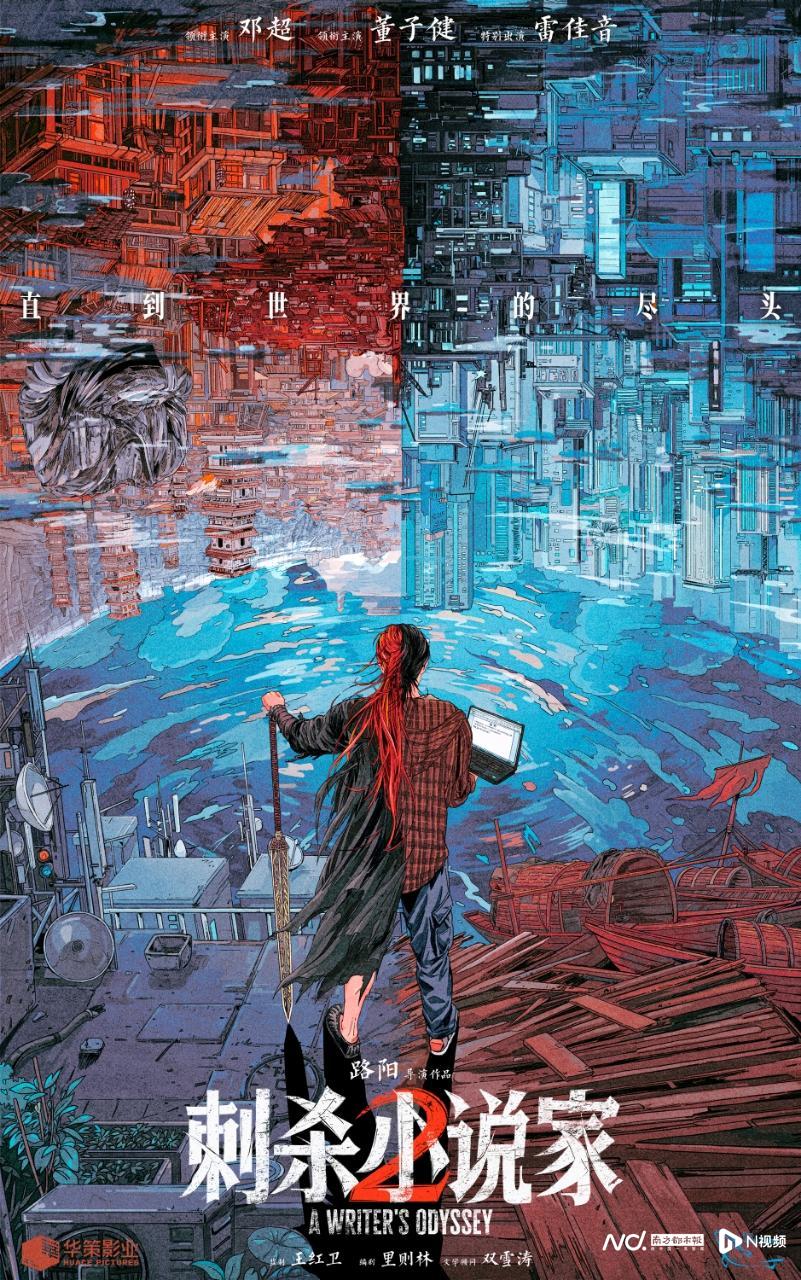
Design of Death (杀生, Guan Hu, 2012)

A doctor (Simon Yam Tat-wah) dispatched to put an end to a “mysterious disease” finds himself embroiled in mystery after discovering the barely breathing body of an unpopular villager in Guan Hu’s darkly comic drama, Design of Death (杀生, Shāshēng). Adapted from a 1998 novella by Chen Tiejun, the film’s Chinese title translates as “to kill a living thing”, the first act forbidden under Buddhism. Yet this particular village has decided it has no other choice if it is to maintain order along with its famed “longevity”.

The son of an itinerant pedlar reluctantly taken in by the village’s ruling Niu clan, Niu Jieshi (Huang Bo) is a general nuisance and agent of chaos. For the first part of the film, we see him act in ways which are rude and vulgar, cruel, violent, and morally repugnant. In short, we can well understand why pretty much everyone wanted him dead and any one of them might have killed him. Yet as the film goes on, we come to sympathise with Jieshi. We see him more as a loveable rogue who was never fully accepted by the village because he was not of it by birth. His foreignness is the reason to which the other villagers attribute to his inability to conform with their rules and traditions, and though, in retrospect, most of his pranks are just silly, his presence destabilises the sense of order which has enabled this place to earn the name Long Life Village. In any case, living past 120 might not be much fun when you’re constrained by so many rules and social mores while many are concerned more with the village’s reputation than the lives or happiness of the villagers.

But the village’s reputation does seem to be important to the powers that be, which is why the doctor is eventually sent there. They want him to find out the cause of this “mysterious disease” and stop it spreading so the Long Life Village doesn’t lose its USP. When he arrives, however, it seems like the “mysterious disease” is actually cancer, which obviously doesn’t spread from person to person. The only other symptom is a minor eye infection, though the real disease running through the village is enmity with the determination to put a stop to Jieshi’s chaotic antics. Jieshi proves oddly unkillable, resurrecting himself after his first encounter with the doctor having been thrown off a cliff in a sack. His defiance only spurs on the villager elders, who then bring back another doctor, Niu (Alec Su You-peng), who had been away studying Western medicine in the cities after being kicked out of the village for another infraction some years previously.

There’s something disconcertingly modern about Niu that makes his presence in the village somehow threatening, as if he were the harbinger of a more authoritarian era. Despite being a doctor, he is cold-hearted and rational and is determined not only to kill Jieshi but his unborn child. The unnamed doctor is, by contrast, a master of Chinese medicine though also educated in the Western style and suspicious of Niu. All he wants to is to understand why Jieshi died, which is also in its way to cure the sickness in the village to which Niu is an obstacle. What he gradually realises is that most of the other people in the village are pretty awful and what they succeeded in doing was creating the circumstances for Jieshi’s death by making the village uninhabitable for him. 

But it may also be true that there’s something cosmically dangerous about killing such an elemental spirit and that the village cannot in fact survive in the absence of chaos. Jieshi is then the individual hammered into submission by implacable authoritarianism while the village is a microcosm of a corrupt authoritarian society ruled over by a petty elite obsessed with rules and tradition. That the doctor dresses in modern style and uses a mix of traditional and modern equipment suggests, as does the pregnant finale, that in all things there must be balance. The ultramodernism of Niu with its fascist undertones won’t work, nor will the hardline traditionalism of the village. Had they only made more of an attempt to understand and accept Jieshi rather than forcing him into submission, they too might have survived and evolved but in fact were only ever headed towards destruction in their obsession with a long life lived in misery.