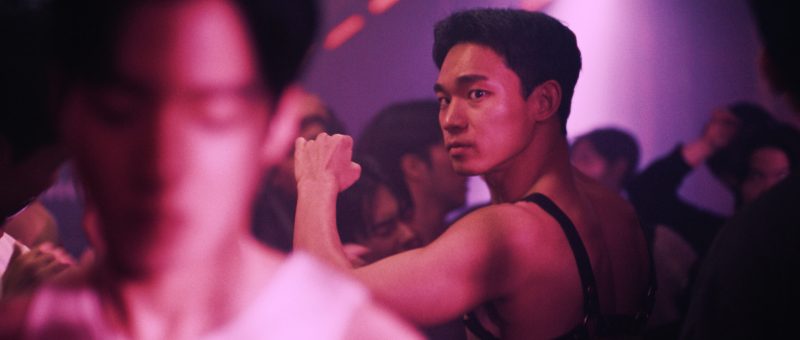
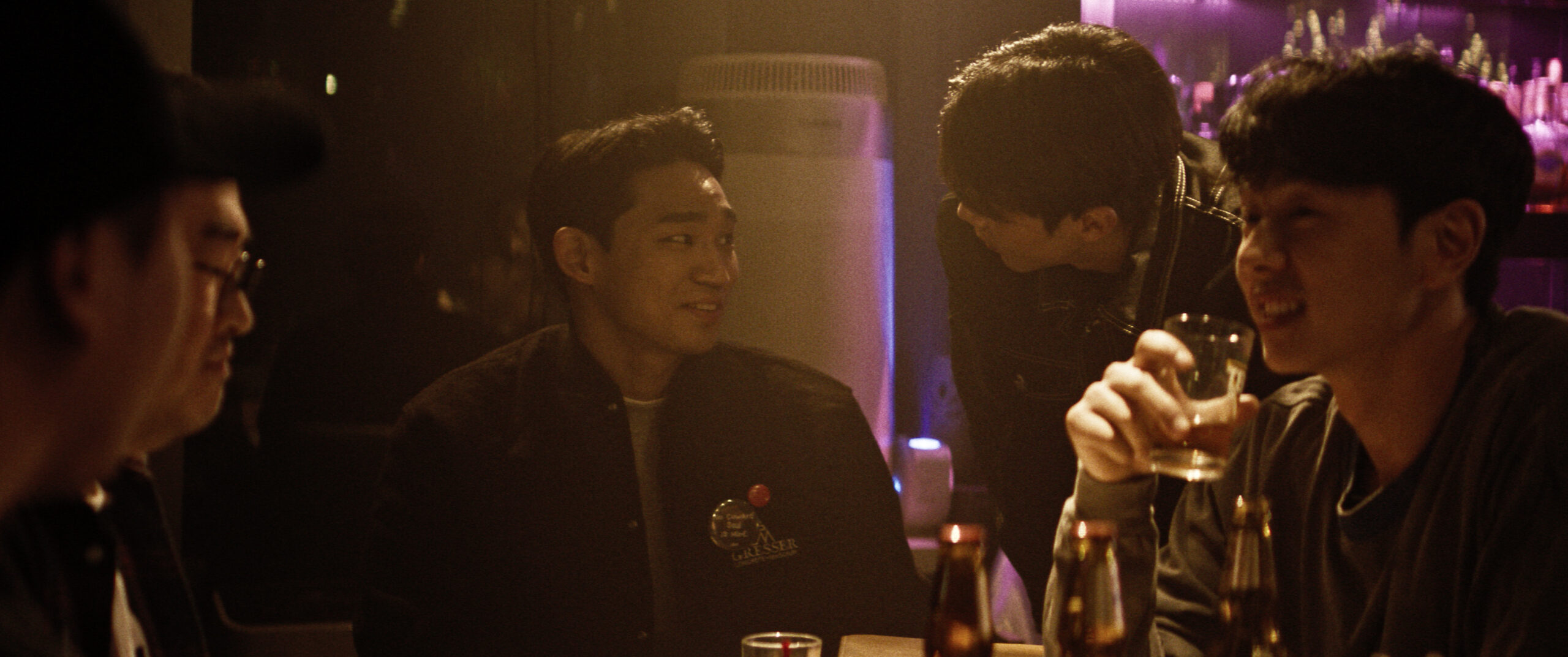
3670 (Park Joon-ho, 2025)

In recent years, indie films about North Koreans in the South have focused on the discrimination they face and how difficult it can be for them to integrate into South Korean society, not because of how different it is from everything they’ve known, but because the South doesn’t quite accept them. The problems of the hero of 3670 are, however, two-fold in that he is also gay and finding it difficult to straddle both communities while looking for companionship.

The opening scene finds him having sex with a guy from a dating app in a darkened room, but as soon as they’re finished, his partner gets up to shower and insists on leaving, refusing Cheol-jun’s (Cho You-hyun) invitations to get dinner and clearly uninterested either in friendship or romance. He asks him where he’s from, and on figuring out he’s from the North, rolls his eyes a little asking if he doesn’t have any gay friends yet. Cheol-jun doesn’t have any South Korean friends at all, let alone gay ones, and has never met any other gay people who left North Korea. He’s never disclosed the fact that he is gay to his North Korean friends or aunt living in the South who is his only familial link, which leads to moments of accidental insensitivity when his friends push him to date a North Korean girl they mistakenly think is interested in him, and his aunt tells him to settle down and get married in the South as his parents would have wanted him to.

The film seems a little ambivalent about Cheol-jun’s third community which is the Church. While it might be as Cheol-jun says helpful in a lot of ways in giving him something to belong to and helping with things like scholarship applications, it’s somewhat exploitative in that their help is obviously conditional on Cheol-jun accepting their religious beliefs which are otherwise in conflict with desire to find freedom as a gay man. Cheol-jun sometimes picks up extra money speaking at Church events in which he outlines how grateful he is to have been “saved” by the grace of God which brought him to the South away from the Godless North. Unlike other similarly themed films, 3670 doesn’t tread any further into how those from the North can be almost fetishised and exploited for their stories, but it is clear that that the Church is also using him to further their own aims. On the advice of his hookup date, Cheol-jun ends up attending a mixer for gay men which he keeps secret from his North Korean friends where he meets Yeong-jun (Kim Hyeon-mok), a gay man of the same age who lives in his area and shops at the convenience store where he has a part-time job, and later gets him a paying gig speaking about his salvation at his church.

Yeong-jun’s mother is a deaconess, and it seems that, in some ways, Yeong-jun is even less free that Cheol-jun who is beginning to discover a new kind of freedom as he introduces him to the gay scenes in Jogno and Itaewon. He views himself as inferior because he doesn’t believe himself to be conventionally attractive and has been having trouble passing the interview process to get a job (possibly those two things are somewhat connected in his mind). Yeong-jun also hasn’t said anything to his mother about being gay and sometimes goes to church to placate her even though he thinks there’s no place for him there as a gay man with the rather repressive religion that his mother practices. When he gets a job and is fully independent, he plans to stop attending church, making clear that for him, as a gay man in a capitalistic society, his freedom rests in financial security and achieving socially defined success by joining the workforce.

The fact that’s capitalism to which Cheol-jun must adjust himself is echoed in his advisor’s advice that he needs to market himself and give the university he’s trying to apply to a reason to choose him over another candidate. When he becomes a member of Yeong-jun’s friendship group, they also tell him that he needs a “selling point”, which they think should be his North Koreanness. But in an odd way, these ironic words of advice do lead to him becoming more at home with himself even if he’s also still caught between these two communities. With his North Korean friends, he dresses in a dowdier style, but puts on fashionable clothes and a university baseball cap to hang out in queer spaces with Yeong-jun. He tells his North Korean friends that he’s going to visit his aunt while occasionally blowing them off to see his gay friends, making it clear that he cannot exist simultaneously in both spaces as a North Korean and as a gay man.

But as much as Cheol-jun begins to find himself, Yeong-jun founders. Cheol-jun overhears some of his gay friends making fun of him for his North Koreanness and suggesting they only hung out with him out of pity, robbing him of this new community through spite and bitchiness rooted in a series of misunderstandings along with the social dynamics within the gay community and the friendship group itself. Nevertheless, when he does actually meet another North Korean man through the hook-up app, he helps him accept himself too by introducing him to these queer spaces in much the same way Yeong-jun did and showing him that it’s alright and it’s not as difficult or frightening to inhabit these spaces as he might have assumed it to be. 

Cheol-jun finds freedom here, at least much more freedom than he would have in the North. He’s not in the same kind of danger. But even many of the men in Yeong-jun’s friendship group are closeted and live as “straight” men, keeping quite about their private lives and restricting their authentic selves to Itaewon and Jogno, much as Cheol-jun keeps his North Korean and gay selves separate until he eventually decides to confide in some of his friends and finds them unexpectedly supportive because like him they too are here in search of happiness. The title of the film comes from a code Yeong-jun’s friends use to organise meetups hinting at their clandestine nature and desire to avoid inviting outsiders into their secure community. Cheol-jun, by contrast, is now free to wear his trendy clothes with his North Korean friends and to be open and unguarded in either community, effectively eliding the division between the two. Though his relationship with Yeong-jun who evidently meant a lot to him and changed his life in many ways may have been disrupted by the societal realities of the South from lookism not just in the gay community but the wider society to conventional definitions of success and entrenched homophobia along with the way they impact on a man like Yeong-jun, Cheol-jun has perhaps discovered a home for himself and a kind of freedom in his life as a gay North Korean man in the South.


3670 screens as part of this year’s San Diego Asian Film Festival.

Trailer (no subtitles)
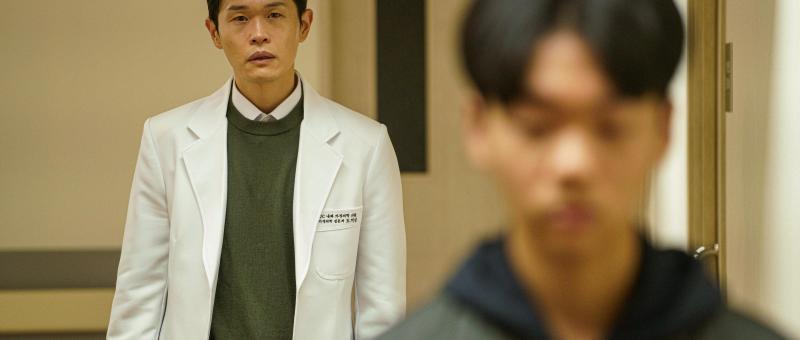
Frankenstein Father (프랑켄슈타인 아버지, Choi Jea-young, 2024)

A teenage boy confronts his paternal legacy but finds it largely hollow in Choi Jae-young’s pointed familial drama, Frankenstein Father (프랑켄슈타인 아버지). Frustrated by his circumstances, the boy begins asking questions about his genetic history in search of an explanation of all his “faults”  but begins to realise that perhaps the faults were not his own in any case and what he really wants is freedom, the right and opportunity to be his own man rather than a reflection of her father’s desires.

Left largely alone after his mother’s death amid the absence of his truck driver father, Young-jae decamps at the home of doctor Chi-sung who illicitly sold his sperm as a medical student 17 years previously. Af first Chi-sung wants nothing to do with the boy but is worried by his attempt to blackmail him, insisting he’ll expose the illegal sperm donation and ruin Chi-sung’s medical career. He sets about trying to disprove hie’s the father, but is finally forced to accept it and there after determines to prove to Young-jae that his “faults” are not his fault and he doesn’t owe him anything as per the contracts he signed with his parents. 

Of course, Chi-sung is also keen to prove himself “faultless”, that his austere life is the correct path because it’s order, rules, and discipline that have allowed him to become what he is today. To that extent, it niggles at him that he could have had a son like Young-jae who is sullen and rebellious. Young-jae describes himself as “dumb,” and has a host of other qualities that dissatisfy him such as shellfish allergy but is perhaps looking for some kind answers about himself and his relationship with Dong-suk, the man who raised him but is also a disappointment in Young-jae’s eyes. A long distance truck driver, Dong-suk is unsophisticated and fond of a drink. He is also controlling, insisting that Young-jae continually check in with him via text and send photos to prove he’s where he should be, and crucially preventing him from doing what he most wants to do which is run.

Running is a symbol of Young-jae’s desire for freedom, but he remains constrained by each father figure. After warming to him, Chi-sung offers him what he wants in promising to get him experimental treatment for his heart condition so he can run again, but soon turns out to be much like Dong-suk insisting he follow his rules and stick rigidly to the plan that he has designed for his sophistication which is also an effort to turn him into a mini Chi-sung. Young-jae is to him an echo of himself for he also grew up with a father who drank and disappointed him. Like Young-jae he too learns for escape as symbolised by his dream of buying a yacht and going to sea that he seems to be continually putting off. 

Yet as Young-jae points out, it wasn’t him who broke when he found out Dong-suk wasn’t his biological father but Dong-suk himself. Chi-sung hints that his decision to use sperm from a A+ donor was informed by insecurity, that he wanted to raise a son who was better than himself though as Dong-suk told his patient human’s can go back to what they once were but can never exceed it. The battle of over paternity of Young-jae isn’t so much a contest of nature vs nurture but a vicarious tussle of masculinity between each of the men who each want to prove themselves through asserting paternal authority over Young-jae and determining the course of his further life.

But Young-jae is almost a man himself and is no longer content to be bound by such corrupted authority. As he later says, he’s no desire to become another of his fathers’ “faults”. Conversely Chi-sung is clearly still trapped by his own father’s legacy and and afraid of the freedom Young-jae chases realising that the fault also did lie with him. In attempting to father Young-jae, he’s also attempting to father himself, insisting Dong-suk raised the boy “wrong” and he must correct him, but perhaps realising he learned a few wrong lessons himself and must make peace with his own past to set himself free while allowing Young-jae to run in a direction of his of choosing no matter the risks to his heart.


Frankenstein Father screens July 25 as part of this year’s New York Asian Film Festival.

Black Light (빛과 철, Bae Jong-dae, 2020)

“Everyone here is at fault” according to the heroine of Bae Jong-dae’s spiralling mystery drama, Black Light (빛과 철, Bich-gwa Cheol). Two women on opposite sides of an accident that may have been something darker find not so much common ground as mutual resistance as they each alternately long for and reject answers as to how and why their husbands eventually collided in a deadly car crash which has had very different consequences for each of their families, discovering a sense of conspiracy and corruption which leads straight to the dark heart of modern capitalism. 

Distressed and anxious, 30-something Hee-ju (Kim Si-eun) has returned to her hometown and is about to start back at the factory where she worked five years’ previously prior to her marriage. As we later realise, Hee-ju’s husband passed away in a car accident which was ruled to have been his own fault after he veered across the central reservation and collided with another vehicle the driver of which has been in a coma ever since. What Hee-ju doesn’t know is that Young-nam (Yeom Hye-ran), the other man’s wife, also works at the same factory while looking after her teenage daughter and caring for her husband, who is not thought likely to wake up, at the local hospital. 

Filled with a sense of guilt, Hee-ju avoids Young-nam like the plague, dropping her shopping in the street and running in the other direction after catching sight of her on the other side of a pedestrian crossing even though Young-nam makes an attempt to be kind to her and obviously bears no ill will. That sense of guilt, however, soon turns to resentment after she accidentally befriend’s Young-nam’s daughter Eun-young (Park Ji-hoo) who in the depths of her own grief and internalised guilt gives her cause to believe that what she’s been told of the accident may not in fact be the whole truth. 

Everyone is indeed acting out of a sense of guilt in that they feel their own actions in some way contributed to the fatal collision, certain that if they had acted differently Hee-ju’s husband may still be alive. Spitting fire and vengeance, Hee-ju determines to discover “the truth”, now convinced that her late husband has been unfairly maligned and is in fact the victim rather than the guilty party, but the more questions she asks the more frustrated she feels. According to her, the police investigation may have been flawed with crucial evidence uncollected, later discovering that her own brother who dealt with the aftermath of the accident in her absence may have been involved in an effort to cover something up not quite realising that he may have attempting to protect her from an uncomfortable truth she may be better off never knowing. 

Meanwhile, she also realises that the causes of the collision may stem back to a workplace accident caused by improper labour practices at the factory and that her own position, and perhaps that of Young-nam, is directly related to the factory’s desire to assuage their guilt while preventing any possible blowback from the two women should they draw a direct line between the oppressive working environment and the eventual collision. Hee-ju is desperate to apportion blame so that she can let herself off the hook. A nervous wreck of a woman she is plagued by a debilitating ringing in her ears and at least appears to be somewhat unbalanced. Young-nam, meanwhile, appears to be genuinely kind and forgiving if urging herself towards a kind of stoicism resentful of her husband and fearful that her daughter’s guilt-ridden conclusions about why he went out that day may in fact be correct.  

Nevertheless, Young-nam as a middle-aged woman with a teenage daughter is in a much different position from the still young and childless Hee-ju having lost her source of economic support with few savings to fall back on. She needs to make sure she keeps the insurance payout because she needs to pay her husband’s medical fees even while the doctors caution her it may be time to consider longterm hospice care, implying there’s little more that can be done for him medically and he will likely never regain consciousness. With heartbreaking simplicity she explains to Hee-ju that in someways it may be better to die, implying perhaps that if her husband were “guilty” then he, or more to the point she, is already paying for it. She just wants to move on and resents Hee-ju’s attempts to dig up the past while also sorry for her, realising she knows almost nothing and that what she doesn’t know is only going to end up causing her more pain. Forced to confront their mutual sense of guilt and responsibility, the two women eventually find an uneasy solidarity in their desire for answers, only to wonder if the accident was just that after all if informed by a confluence of ugly circumstances from rampant capitalism to relationship breakdown and emotional crisis. The light at the end of the tunnel is pitch black. It really doesn’t matter whose fault the accident was, the waves of guilt and recrimination spiral all the same. 


Black Light screens at Chicago’s Lincoln Yards Drive-in on April 22 as part of the 12th season of Asian Pop-Up Cinema.

Original trailer (English subtitles)