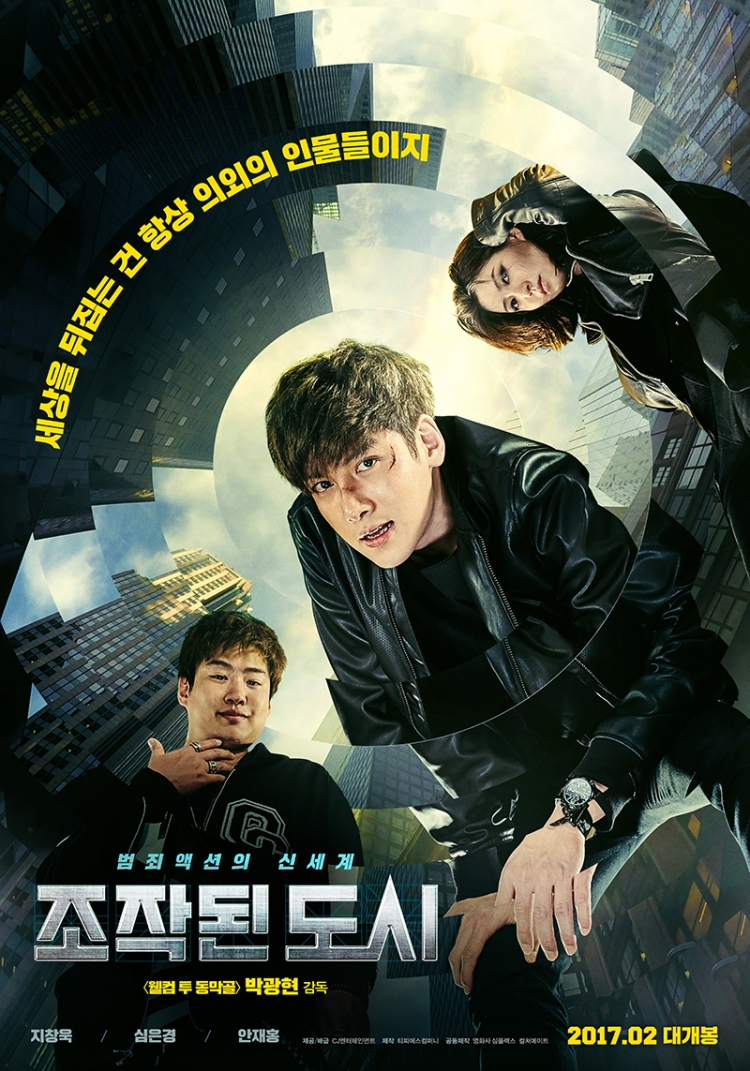
 The real and the unreal. In the era of fake news, it’s become ever harder to draw a clear line between the two but when you live online, the borders are even more permeable. Twelve years after the wartime comedy Welcome to Dongmakgol, director Park Kwang-hyun finally makes a return to the director’s chair with an action packed cyberpunk thriller which joins the ranks of recent Korean films bemoaning the country’s hardwired tendency to social inequality where the rich and powerful are free to run roughshod over the merely ordinary. Fabricated City (조작된 도시, Jojakdwen Doshi) refers to more than just the literally manufactured online world, but to the social reality in which unseen forces govern and define the lives of others, operating in secret behind a government backed curtain.
Kwon Yoo (Ji Chang-wook) was once a national athlete – a rising star of the Korean Taekwondo team. Starting fights when he wasn’t supposed to put paid to that dream and now Kwon Yoo is an aimless wastrel. Too sad and ashamed to have anything more to do with Taekwondo, Kwon Yoo spends all his time in gaming cafes, living a more successful life online. In his favourite game he’s known as the Captain, and the dashingly heroic leader of his party known as Resurrection.
One evening someone leaves their phone behind. It rings and Kwon Yoo answers it. Irritated, he’s about to hang up on the frantic sounding woman who wants him to bring the phone to her but her offer of money changes his mind. Kwon Yoo delivers the phone but the whole thing seems weird especially as the door was open and the woman in the shower when he arrived. Next thing he knows, Kwon Yoo is arrested for a brutal rape and murder. The police have a lot of evidence against him, and so Kwon Yoo winds up in jail where he’s branded a sex offender. Luckily a crazed serial killer realises this kid is no killer and helps him get out whereupon his loyal Resurrectionists valiantly come to the aid of their Captain in the real world, exposing the impressive fit up job that got him put away in the first place.
The deeper Kwon Yoo and his team dive the more corruption they discover. Kwon Yoo is not the only innocent sacrificed for someone else’s grand plan, there are others and the pattern is disturbing. Like Kwon Yoo, the other victims are usually people living on the margins – ones that no one would miss or the uncharitable might say were “unnecessary”, lives that can be exchanged for those of the rich and famous finding themselves in a fix. Kwon Yoo’s fate becomes an extreme version of that meted out to the young men and women of Korea unlucky enough to have been born without wealth, connections, or familial status – expendable and condemned to live without hope.
The fabricated city, in its more literal sense is the online world Kwon Yoo and his team have chosen and in part created for themselves in an attempt to escape the aspects of their lives and personalities which most disappoint them. Kwon Yoo, kicked off the Taekwondo team, has made a warrior hero of himself online, backed by a similarly escapist squad he doesn’t really know. His saviour turns out to be a shy computer genius who can only bear to talk via telephone even when in the same room yet has broken out of her self imposed isolation in order to save the life of her online friend. Other members of the team follow suit bearing similar backstories, attempting to live up to their fantasy selves for real with varying levels of success. Yet the fantasy world was all they had, locked out of all means of escape or advancement by the rigid social codes which make their present predicament possible, even if the fact remains that Kwon Yoo was doing a pretty good job of wasting his life all on his own.
Fabricated City’s biggest selling point is in its unusually well developed production design which takes its cues from the video game world with fantastical images from a prison carved into a mountain to the relatively more familiar cyberpunk influenced technological hybridity as floors become giant computer screens and everything really does exist online. Jumping genres from the classic wrong man to prison drama and eventually techno thriller, Fabricated City bites off more than it can chew but its well choreographed action and typically Korean sense of subtly ironic humour help to smooth over some of the film’s more outlandish moments.
Fabricated City was screened at the 19th Udine Far East Film Festival.
International trailer (English subtitles)
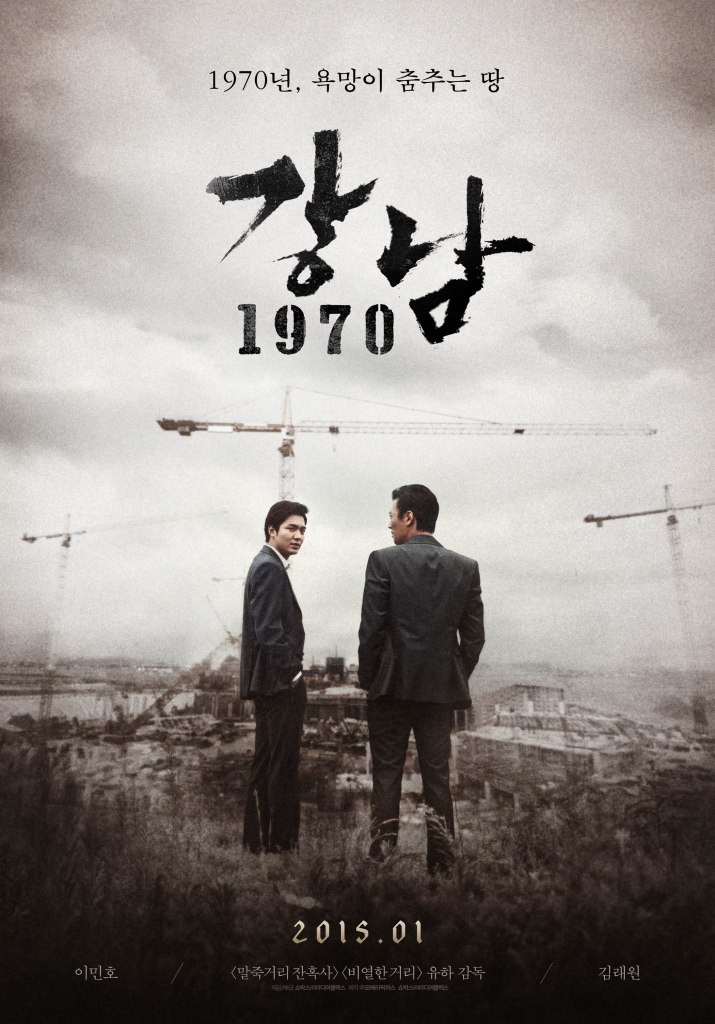 Yoo ha takes us back to the 1970s for some Gangnam Blues (강남 1970, Gangnam 1970) in a sorry tale of fatherless men caught up in dangerous times of ambition and avarice, very much at the bottom of the heap and about to be eclipsed by the “new world” currently under construction. Back then, Gangnam really was all just fields, owned by farmers soon to be cheated out of their ancestral lands by enterprising gangsters engaged in a complicated series of land grab manoeuvres, anticipating the eventual expansion of the bursting at the seams capital. Far from the shining city of today, Gangnam was a wasteland frontier town, the sort of place where a man can make a name for himself trading on his wits and his fists alone.
 For the world’s more full of weeping than you can understand – the residents of Goksung, the setting for Na Hong-jin’s nihilistic horror movie The Wailing (곡성, Goksung), might be inclined to agree with Yeats if only because the name of their town is also a homonym for the “sound of weeping”. There is plenty to weep over, and in places Na’s film begins to feel like one long plaintive cry reaching far back to the dawn of time but the main wounds are comparatively more recent – colonisation, not only of a landscape but of a soul. When it comes to gods, should you trust one over another simply because of its country of origin or is your faith to be bestowed in something with more universal application?
 In 1925 an avid cave explorer, Floyd Collins, became trapped in a narrow crawl space. Though he was discovered and help came with food and water, a cave in left him sealed off down there and fourteen days later he died of thirst and exposure. As tragic as this obviously is, Floyd Collins is remembered for another reason – his rescue became one of the earliest mass media crazes. The surrounding media furore also inspired the 1951 Billy Wilder classic Ace in the Hole in which a grizzled reporter attempts to manipulate the fate of a man trapped in a cave for the maximum media coverage with the consequence that his delays cost the man his life. Jung-soo, a father on his way home with a birthday cake for his young daughter is about to join the marooned underground club when a shoddily built tunnel collapses sealing him inside. Unfortunately for Jung-soo, he finds that times have not changed all that much.
 Windows on Worlds