Band Four (4拍4家族, Mo Lai Yan Chi, 2023)

“Music is the best therapy, keep on playing music” is the advice of a doctor in Mo Lai Yan Chi’s poignant drama Band Four (4拍4家族) in which a disparate family is brought back together through their musical passions. Functioning as a kind of political allegory for a culture in danger of forgetting itself, the film rediscovers a sense of intergenerational solidarity in which that which seems lost can be reclaimed and passed down surviving in the minds of those who will remember.

The past intrudes in a more literal sense when the estranged father of Cat (Cantopop singer Kay Tse On-Kei), who has just lost her mother, suddenly returns and moves into her apartment after many years living over the border in Shenzhen. Former rockstar King (Teddy Robin) is clearly befuddled by the changes in contemporary Hong Kong, attempting to pay for a local snack in renminbi and getting Hong Kong Dollars back before being fined for littering by a very officious policewoman while he struggles to find a place for himself in Cat’s life given her understandable resentment of him for abandoning her only to return with another daughter in tow who has an incredibly similar Chinese name. 

Cat too is partly living in the past, fixed on getting to perform at an international festival with her band, Band Four, the name of which is inspired by her father’s old band, Band Seven, in order to honour the memories of two members who passed away suddenly just before they were due to travel abroad. Now in her 30s, Cat struggles to keep the band together only for her best friend to quit after deciding to get married and move to France while she’s otherwise forced to perform in fairly humiliating circumstances which only encourage her other two band members to an accept an offer to move to the Mainland. 

Many are indeed leaving, including King’s former bandmate and the owner of the live music venue where Cat plays who explains his wife wants to move abroad for a better future for their son though he finds it difficult to leave. Cat’s songs ask why it is she’s the only one who’s remained behind and committed to her dream, as if she were a kind of guardian of the old Hong Kong even as her own memory fails and she fears the time when she will forget everyone who was close to her. She worries about how to safeguard her memories in the same way she worries about raising her son, Riley (Rondi Chan), who is not academically inclined and struggles at school but appears to have a talent for the drums along with a kind and generous heart. 

Riley had explained that Cat started the band to find a family, which is what she eventually gets in learning to forgive her father whose interest in becoming a part of her life again is genuine while she also bonds with her half-sister Lok Yin (Anna hisbbuR) who also has musical aspirations and romantic disappointments that might otherwise leave her feelings lost and alone. “If you’re unhappy talk to your family” Lok Yin had advised Riley only to have the same advice given back to her and unexpectedly finding value in it. Occupying a maternal space, Cat strives to safeguard the future looking for others who could care for Riley as her own health fails while discovering that her family will take care of both him and her resolving that it won’t matter if Cat no longer remembers because they will remember for her. 

A musical love letter to Hong Kong, the film is both an advocation for moving forward but also for taking the past with you as you go, treasuring the memories of something that might no longer exist anywhere else. As Cat later says, anywhere you play is your stage and if you stumble over your lines someone else will be there to remind you where you are. Cheerful and heartwarming despite the sometimes heavy themes and a sense of inevitable erasure, Lai captures a sense of community warmth and mutual solidarity among those who choose to stay and remember rather than abandon their memories and start anew somewhere else.


Band Four is in UK cinemas from 15th December courtesy of Central City Media.

UK trailer (English subtitles)
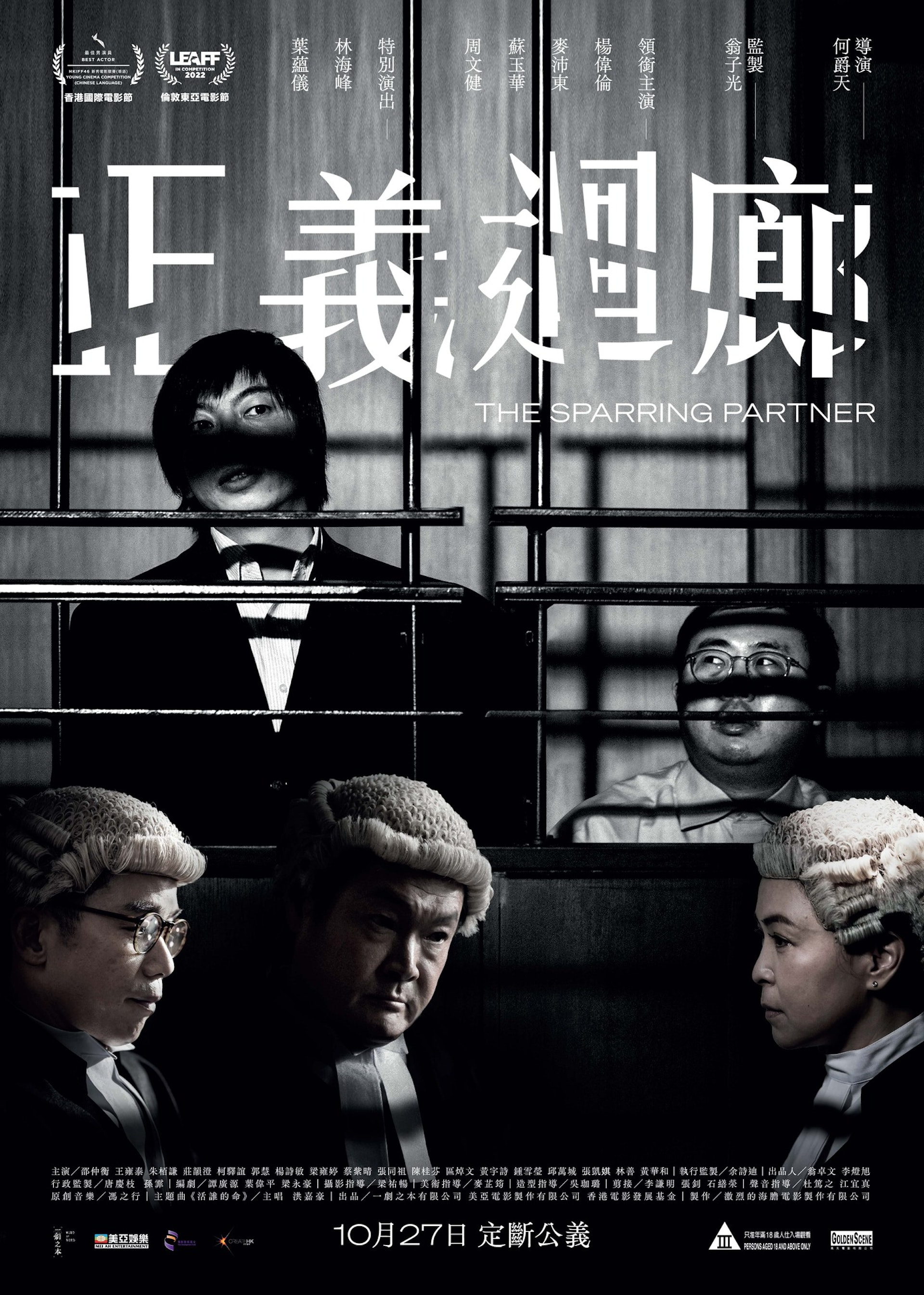
The Sparring Partner (正義迴廊, Ho Cheuk-tin, 2022)

Loosely based on a real life case in which a man murdered his parents then reported them missing and even went to the media for help looking for them, Ho Cheuk-tin’s The Sparring Partner (正義迴廊) distances itself from the sensationalism of the crime to ask a series of questions about human nature and the operation of the criminal justice system. The first of those questions is obviously why, but not just why did he murder the people who raised him but why did he go to the media and why did he eventually decide to confess. 

One reason Henry (Yeung Wai-lun) gives for killing his parents is that his upbringing was abusive, a fact later confirmed by his sympathetic cousin herself a devout Christian. It seems fairly clear that Henry has an inferiority complex for which he blames his mother and father, resentful that they made him play piano and wouldn’t let him play basketball to which he attributes the small stature that led to merciless bullying in school and fractured masculinity in adulthood. Ho often places the camera slightly behind Henry’s shoulder, emphasising his smallness and neatly reflecting the way in which he literally feels as if everyone is looking down on him. He has so far had a life full of failure, studying abroad but failing to make the grade and resentful towards his more successful older brother Ho Jin to whom his parents force him to sign over his share of a flat they bought as an investment after Henry’s gambling debts and inability to find a job left him unable to pay the mortgage. Losing a flat in Hong Kong is worse than losing a life Henry’s lawyer points out at trial, attempting to justify the resentment that led to Henry’s decision to not only murder but brutally dismember his parents. 

Another question mark, however, hangs over Henry’s accomplice and why exactly he chose to take him down with him. Angus (Mak Pui-tung), a man he met at a job interview, seems to have learning difficulties and may not quite understand what is going on. His sister describes him as naive and explains that he has a tendency to make friends with those who only hope to exploit him and may have been manipulated by Henry in fear for the safety of himself and his family or else simply not to lose the friendship. The extent of his involvement with the crimes remains unclear, Henry claiming that he was present and participated in the killing of his mother, while Angus insists that he only took part in the disposal of the bodies. Perhaps uncomfortably the film asks how much we can really trust Angus, suggesting that he may simply be manipulating the sympathy of others and is not really quite as naive as he makes out. 

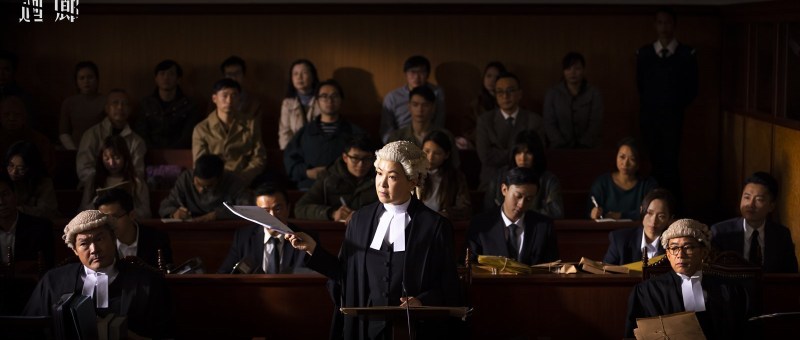
In any case, his treatment at the hands of the police is as unjust as it comes, intimidated into offering a confession simply to make the interrogation stop so that he sleep and get something to eat. In court the truth hardly matters, a trial is about constructing a credible narrative. The lawyers for joint defendants Angus and Henry attempt to undercut each other, Henry’s arguing he is not responsible on the grounds of mental illness while implicating Angus as the instigator, and Angus’ intent on emphasising his disability suggesting was merely manipulated by Henry. The jurors in the jury room struggle to make sense of the case but also of their own role, tasked not with assessing guilt or innocence but the strength of the argument based on the evidence they’ve been given only for some of them to base their convictions on gut instinct anyway. 

They are perhaps aware that Henry is a master manipulator, he lied to his own brother and fooled all of Hong Kong with his video appealing for support before dramatically confessing online. He has obvious delusions of grandeur and idolises Hitler, claiming that had he been born at the right time he could have done what Hitler did. Ho often dramatises his moments of introspection as fantasy in which Henry poses as Hitler and speaks German to those around him before snapping back to reality and finding him experiencing a moment of clarity that makes him step back. Yet there are moments of heartbreaking authenticity in the “friendship” between the two men such as in their meeting at the job interview as they bond in a shared sense of rejection, the subtext of their crimes inviting the reading that they are intended as acts of vengeance against the society into which neither of them was able integrate. 

In the closing scenes, a policeman remembers evidence left behind during the initial sweep of the crime scene by his incompetent boss and returns to Angus’ apartment to find a migrant family living there who tell him they know there was a murder but they don’t care about things like that and are just grateful to have a home. Henry too continues his dark jokes about permanently devaluing his family’s apartments, but seems genuinely distressed on realising that his brother really may abandon him for his total lack of remorse while Angus finds himself exploited by the tabloid press only too eager for all the gory details. Ho’s closing images which find Angus enveloped in the webs of the spiders which plague his dreams perhaps hints at his place in a complex network of forces which contribute to his exclusion from prejudice towards the disabled to fatphobia along with the manipulation of men like Henry who promise friendship but only take advantage of his inability to resist. Then again, the fact of the matter is that you’ll never really know the truth, whether Henry did it all for the attention and ended up alone anyway or if it really was Angus who planned everything and fooled all of Hong Kong, like the jury all you can do is weigh up the evidence and draw your own conclusions.  


The Sparring Partner screened as part of this year’s London East Asia Film Festival and will open in UK cinemas on Nov. 18 courtesy of CineAsia.