
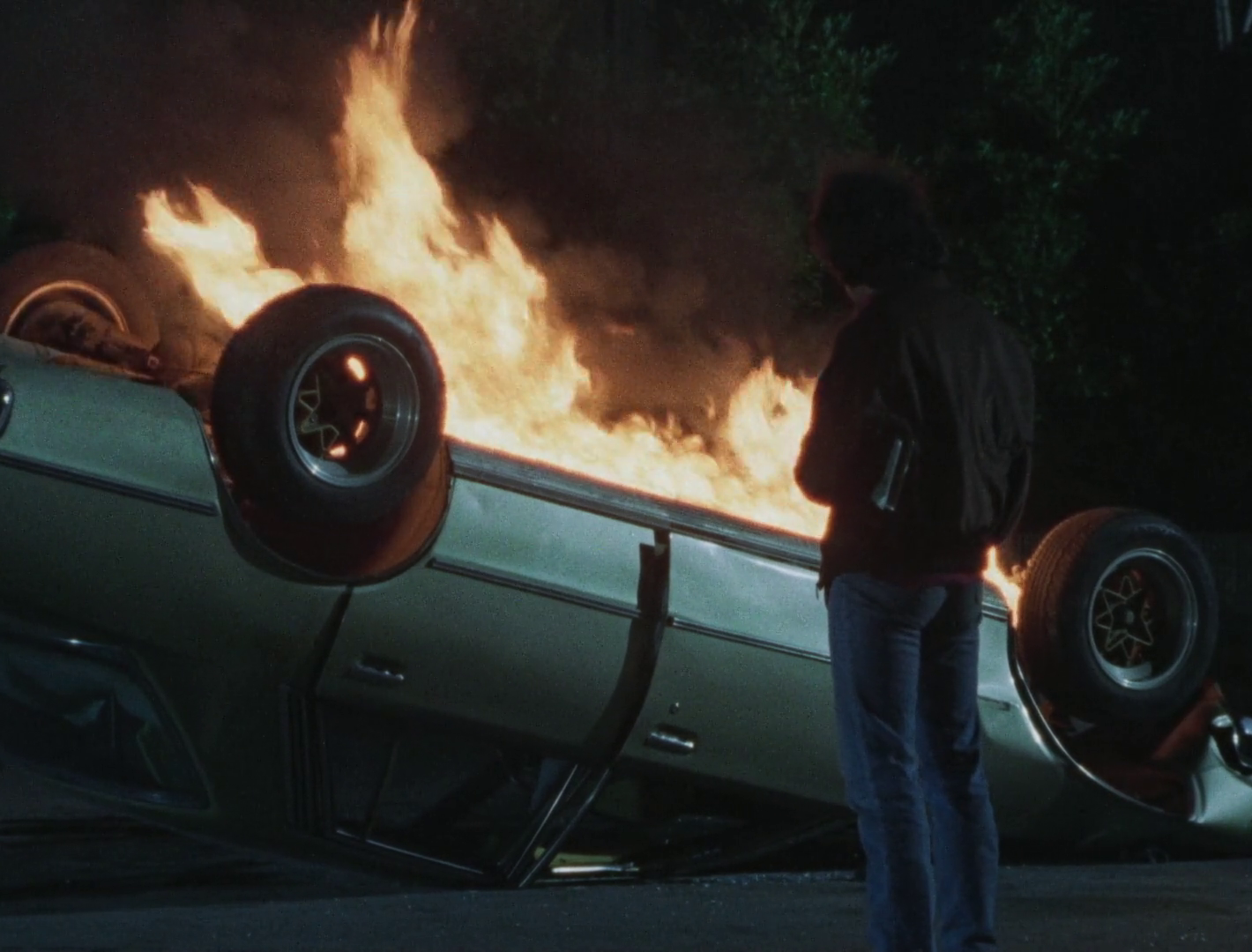
Freedom lies outside the confines of Japan In Yoichi Sai’s gritty crime thriller Burning Dog (襲撃 BURNING DOG, Shugeki Burning Dog). As the film’s name suggests, Shu (Seiji Matano) is a man on fire looking for a way out. When he’s betrayed by a gang member who shoots him and tries to make off with the do., He hot tails it back to Okinawa but as his old friend Takuji reminds him, he’s still in Japan and not as far from Tokyo as he might like to think.
Takuji welds his desire for a fake passport against him to convince Shu to participate in his plan to rob a nearby American base on payday. For his part, he doesn’t really know what he wants to do with the money, but later tells his wife Ryoko that they could go anywhere together which is to say the money represents freedom in the ability to escape Japan. Then again, Takuji tells her that they could go the three of them, including his minion Koji who has been sleeping with Ryoko seemingly with his knowledge. There’s a strange kind of homoeroticism between Takuji and Koji that suggests that at least from Takuji’s view it’s a kind of proxy relationship. He allows Koji to sleep with his wife because he can’t actually sleep with him, though he doesn’t really appear to like his wife very much either. Shu tells him off when he first arrives in Okinawa for taking him to a club to look for women, pointing out that he has a wife at home, though Takuji describes her as a kind of inheritance and otherwise chases sex workers while dreaming of a life in which he’s not treated like “garbage” in particular by the Americans.
“Women never forget when they’ve been wronged,” Shu warns Takuji, though it might also go for his relationship with former flame Mei who also took part in the traumatic bank robbery 10 years previously in which one of their teammates shot a policeman and then got killed. Mei now works at a furniture shop supplying Japanese-style furnishings to the resident Americans including Captain Ford, Takuji’s mark who apparently has no combat experience or chance for promotion but does have a drinking problem and a susceptibility to bribes. The fact he smuggles drugs out from the American base is more literal representation of the corruption caused by the ongoing presence of the American military. The Americans are currently involved in the Gulf War, which according to Takuji is why they’ve taken their eye off the ball. Huge amounts of money are flying through Okinawa to pay soldiers and they won’t be expecting anyone to try to steal it.
The robbery is then a way of rebelling against the dominance of the American military and the marginalisation of men like Takuji. Captain Ford, meanwhile, may actually be smarter than he looks and a little bit ahead of the game or perhaps not far enough ahead while Mei’s allegiance seems uncertain. Shu’s isn’t all that clear either, but in any case just like back in Tokyo committing a heist together doesn’t so much bring people together as tear them apart. Someone’s double crossed them. It isn’t clear who, but it might not matter to Shu whose only goal has been to leave Japan completely with some money he could actually spend unlike the loot from the Tokyo heist which still hasn’t been laundered. He can’t take it all, but at the same time he may not want to share it and is willing to blast away his last chance at romance or redemption in attempt to escape his traumatic past.
Which is all to say, there are no real winners in this nihilistic game. As much as Shu is an antihero outsider trying to rebel against the constraints of Japanese society, he’s also a rampant misogynist sexually abusing the girlfriends of his targets for information and striking women who displease him while pushed to extremes geographical, social, and psychological. But like many of the hero’s of V-Cinema, the truth is that there is no real place for men like him in post-bubble Japan and only finally breaking free of its constraints can he hope to reclaim his identity and live as a free man.

 Windows on Worlds