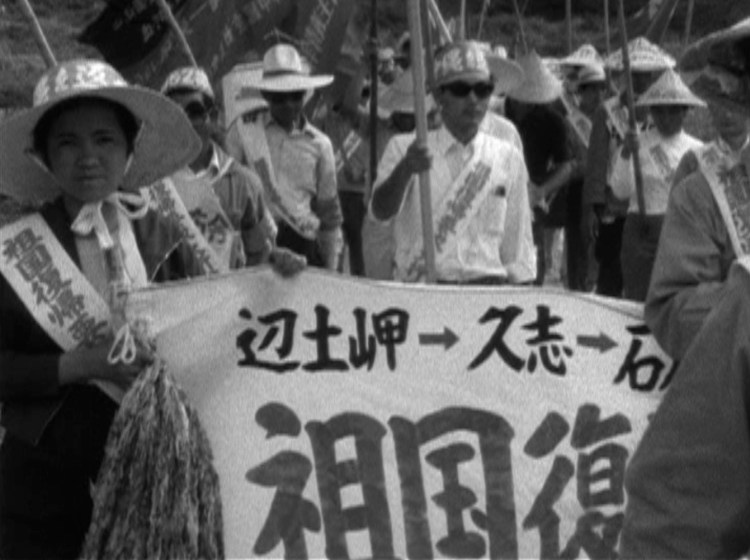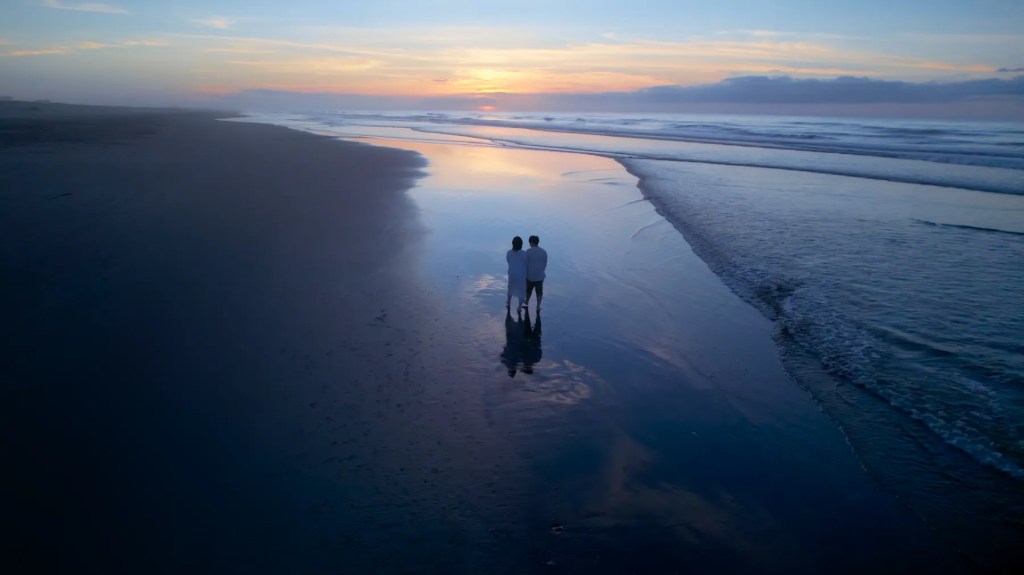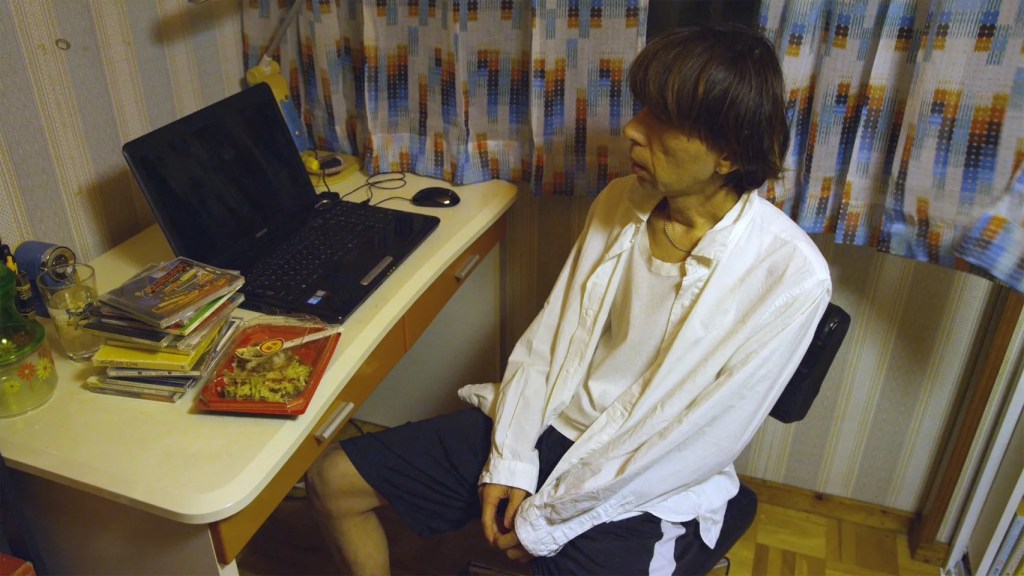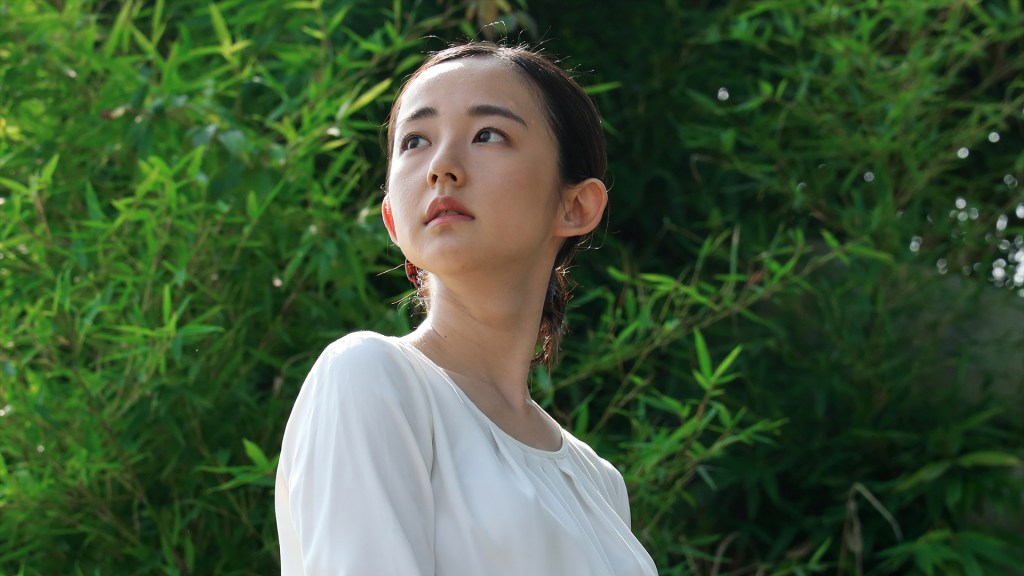
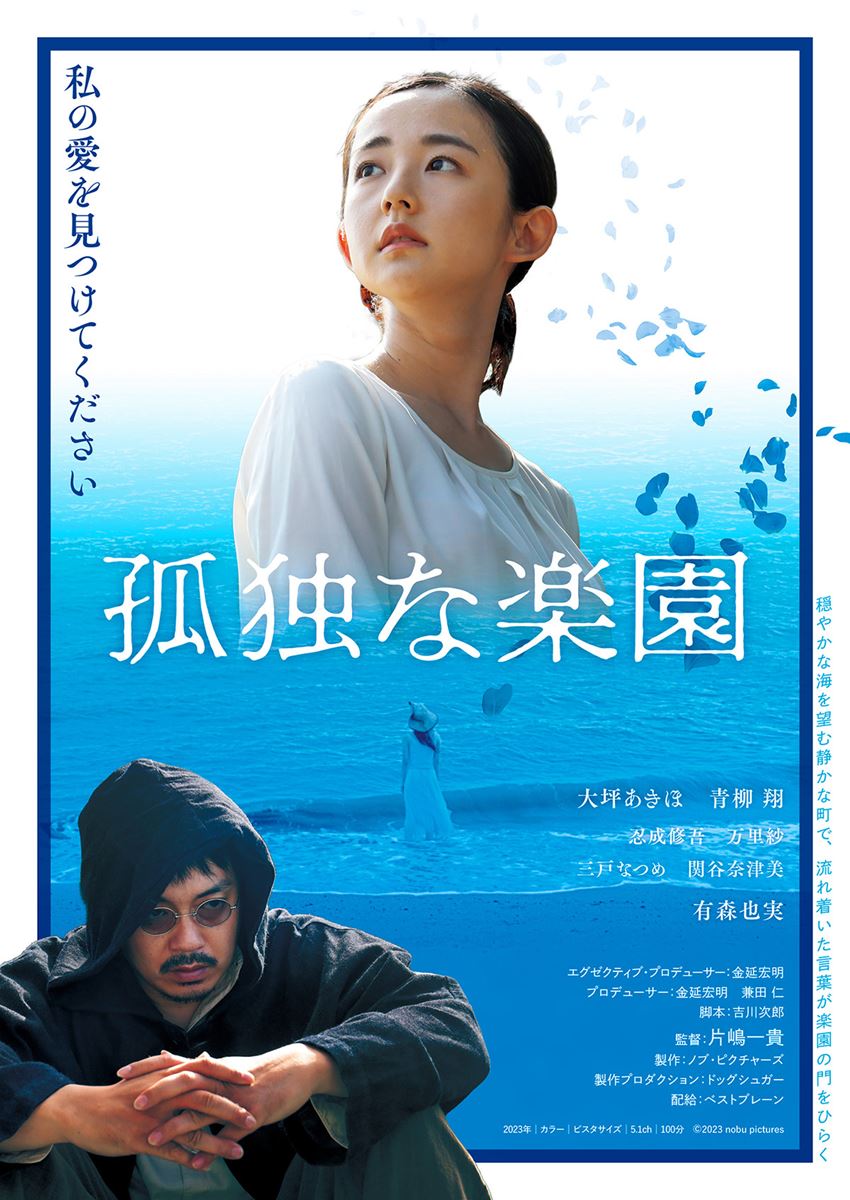
Paradise of Solitude (孤独な楽園, Ikki Katashima, 2024)

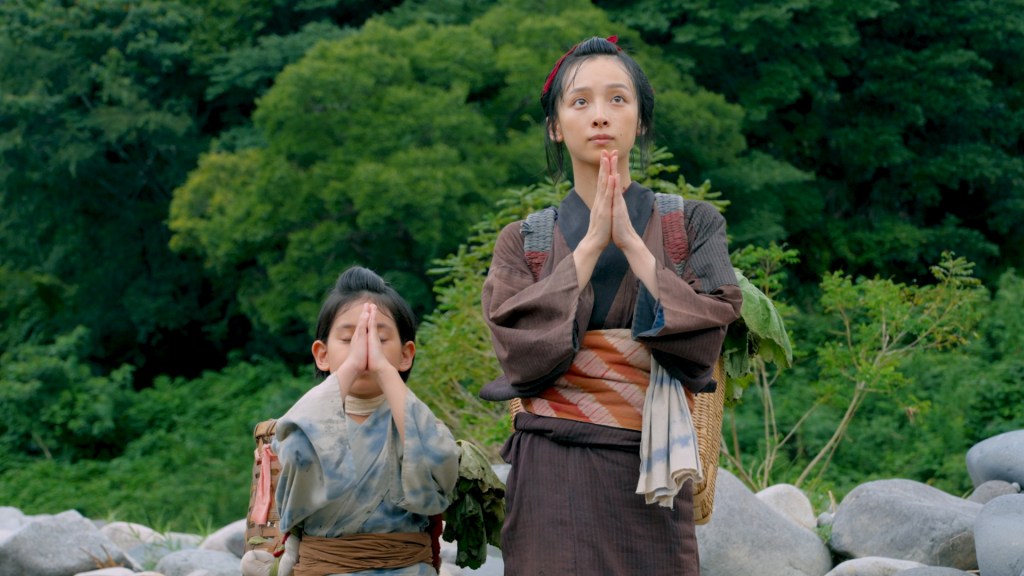
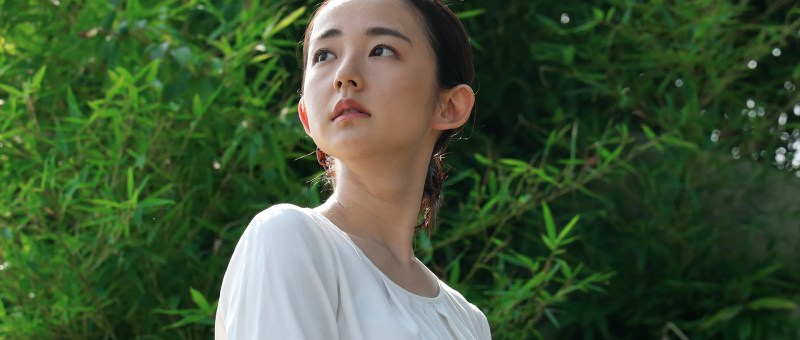
A blocked writer and a introverted young woman discover unexpected connection through accidental epistolary communication in Ikki Katashima’s poetic drama, Paradise of Solitude (孤独な楽園, Kodokuna Rakuen). Each wondering what exactly “paradise” means, the pair of them eventually find new ways to face the past and move on with their lives all while undergoing a vicarious romance with yearning at its centre that may or may not develop into something more “real” or else achieve its power solely through its lack of resolution. 

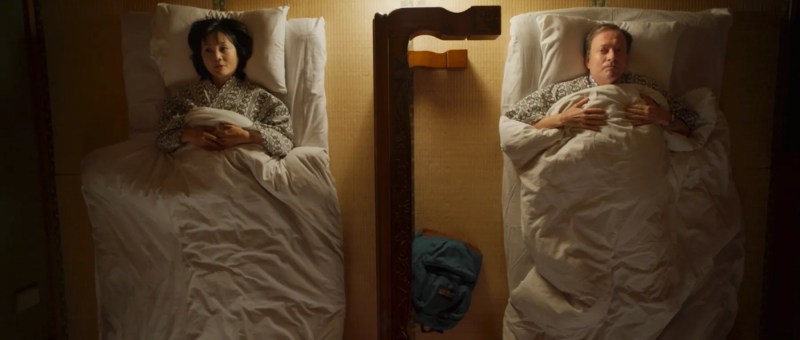
Yu Tsushima (Sho Aoyagi) is a writer struggling to meet his deadlines on a new serialised novel. Suffering with an illness, he’s retreated to his hometown and is now unable to leave because he experiences seizures on boats which understandably leaves him preferring not to get on them. One day, he receives an incredibly poetic love letter from an anonymous address only to notice a link to a porn site at the end of the email like a cruel punch line. Meanwhile, Ayame (Akiho Otsubo) is a nervous and introverted young woman working at a factory on the next island over. To begin with, it seems like she has suffered under the authoritarian rule of her aunt Tsukiko (Narimi Arimori), though as we later discover she may have meant well. 

Showing a talent for writing which sees her exploited by the factory boss, Ayame is tasked with writing a love letter on behalf of her friend Elena to a man she’s apparently only seen once yet has fallen hopelessly in love with. There’s something a little strange about this proposition, and not least because it seems like Elena may actually want this letter for herself and has unspoken (in Japanese, at least) feelings for Ayame. Elena is not the only non-Japanese person working at the factory at which it seems there may be some racist attitudes and behaviour among the employees, though there may be other reasons she feels isolated and otherwise drawn to Ayame.

But somehow, the letters find their way to Yu who is then “inspired” to write a new serial basically ripping off the anonymous correspondence but rewriting it in his own way while Ayame, having read his stories in a literary magazine, is not exactly angry yet confused and continues writing in order to complete this literary back and fore in crafting a new story together. Though the letters spin a tale of a lovelorn soul, it’s really the past that Ayame longs to revisit in the resultant trauma of her mother’s unexplained abandonment.

On top of the weird island drama, Katashima builds on the sense of uncanniness with a subplot about a cult-like local church and its own desire to reclaim Ayame thereby preventing her from fully confronting her past. Just as Yu is suffering from a medical condition, Ayame too experiences panic attacks when in contact with the church. Though it’s not always clear what is objectively true and what part of the story Yu is constructing from Ayame’s prose, parallel stories develop in which Ayame’s father hoped to liberate her mother’s soul though she eventually decided to chase paradise somewhere else. 

Because of her experiences, Ayame comes to believe that love within her has died, but perhaps begins to regain something of it thanks to her correspondence with Yu who becomes remorseful in learning that his actions may have been additionally unethical in encouraging Ayame to engage with her past trauma and risk dragging it all up again. He, meanwhile, begins to discover his creativity and overcomes the psychological dimensions of his condition by leaving his island and breaking out of his self-imposed isolation. The correspondence is like the message in a bottle discovered by Ayame’s mother which claimed to be from “paradise”, a hand across the ocean promising a better world over the horizon. Whether or not they find each other eventually in a more direct sense may not really matter, for simply having this invisible presence has enabled each of them to move past their internalised inertia and restart their lives. They may be trapped in a paradise of solitude, but on the other hand not quite alone and now a little more open to life’s possibilities rather than bound by its hurts and disappointments too frightened to leave the safety of their isolation in search of a more perfect paradise.


Paradise of Solitude screened as part of this year’s Cinema at Sea.

Trailer (no subtitles)
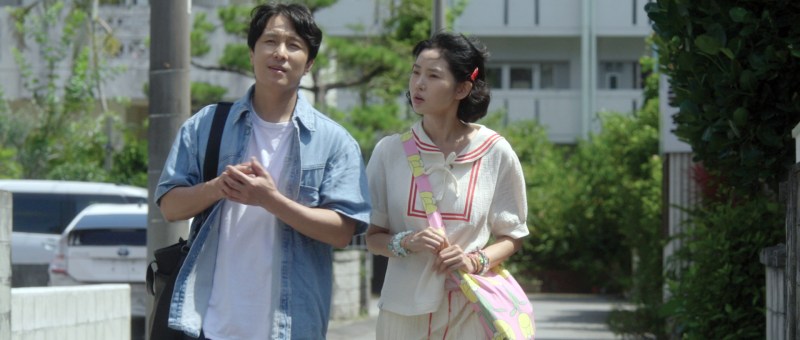
Okinawa Blue Note (오키나와 블루노트, Cho Sung-kyu, 2024)

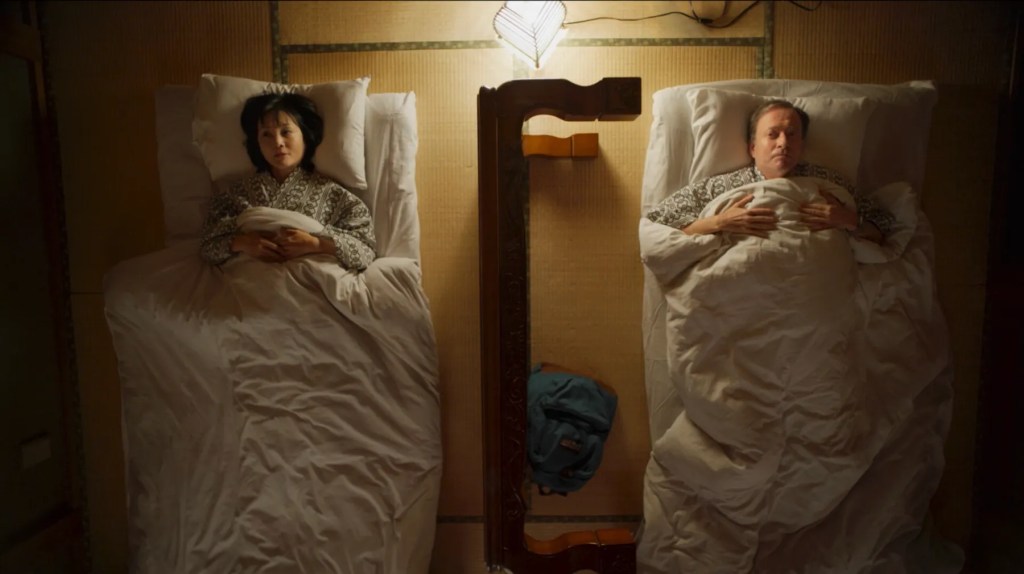
If you run into someone who has the same name, same birthday, and was on the same flight as you to a random destination wouldn’t you call that fate? The protagonists of Cho Sung-kyu’s Okinawa Blue Note (오키나와 블루노트) prefer to think of it as mere coincidence, at least to begin with. They each have different reasons for coming to Okinawa, but then again perhaps fate sent them here to get a new lease on their lives if not to fall in love.

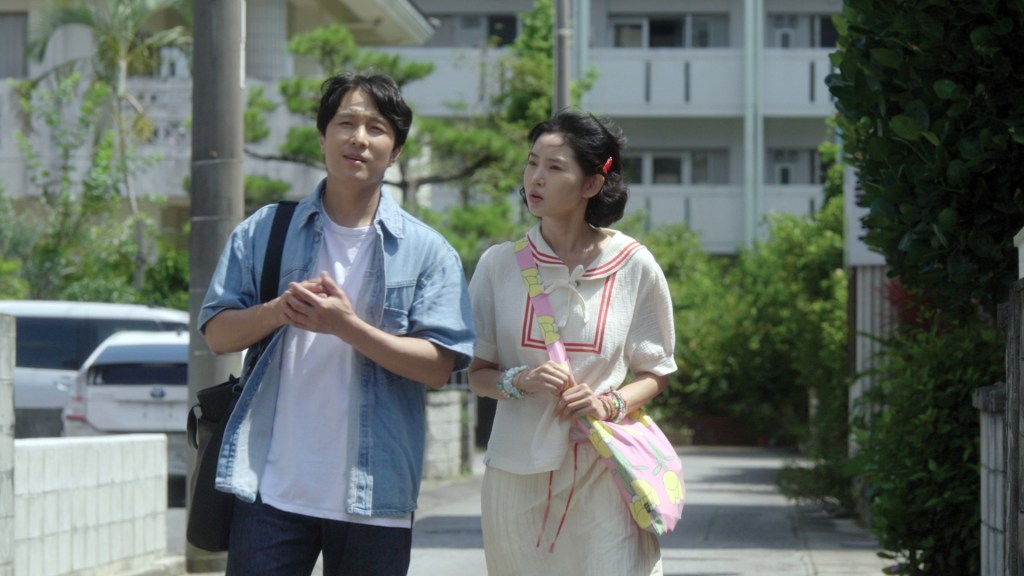
Love does however seem a little unlikely for the mismatched pair each named Kim Jungmin who are about as different from each other as it’s possible to be. Yet the male Jungmin’s (Kim Dong-wan) animosity is somewhat understandable given that his arrival in Okinawa has become chaotic thanks to the female Jungmin’s (Hwang Seung-eon) presence given that she mistakenly ended up with both his pre-booked car and room reservation because the staff members only checked the name and not the booking number. Jungmin isn’t the sort of person who copes well with complications, nor does he cope well with noisy, more extroverted people like the female Jungmin who is also annoyed by the whole thing but on the other hand doesn’t think it’s really her problem having merely assumed she’d been lucky enough to receive a free upgrade rather than actively nabbing someone’s more expensive package. Nevertheless, he’s forced to get along with her because he needs to borrow her rental car to get around which also means accompanying her on her touristic adventures and getting swept up in her enthusiastic exploration of the island.

The female Jungmin has a tendency to drink too much, say things she shouldn’t, and forget about them by the next morning. The male Jungmin, by contrast doesn’t drink because he is living with rheumatoid arthritis though he says he intends to drink again if his condition improves. He writes romance novels and doesn’t use the internet all that much. She writes webtoons and posts stories to instagram. They really have very little in common aside with a sense of dissatisfaction about their lives, their names, birthdays, and travel itinerary but you can’t deny that their meeting is like one of the male Jungmin’s novels as even he finds himself musing on a new story about someone who comes to Okinawa to patch things up with an old lover only to fall in love with a whale shark they met along the way.

Gradually it becomes apparent that the female Jung-min is here to confess her feelings to a boy from Korea who, it turns out, may have come to Okinawa in search of greater freedom rather than needing to be liberated from his tank which ironically may be more the case for the male Jungmin. Though it’s obvious from their second meeting with Taemin’s colleague Hiro that the two men are a couple, the female Jungmin can’t seem to see or accept it nor does he actually tell her outright that he’s gay only that all he wants from her is friendship as he’s explained several times before only she was too drunk at the time to remember she’s already declared her feelings and been rejected. What the female Jungmin saw as “fate” really was just coincidence and personal myth making as Taemin too had his own fate to follow that led him to Okinawa where he was freer to pursue his romantic desires, if only slightly, than in the still conservative Korea. When the male Jungmin floats an idea for a book inspired by his time in Okinawa the two men give their consent to be included but also ask their relationship remain a same sex one rather than the heterosexual casting Jungmin had given it possibly out of an attempt to disguise their identity but also an underlying squeamishness towards the inclusion of LGBTQ+ issues.

Nevertheless, the male Jungmin is able to re-envision the situation by turning his life into fiction and exploring a relationship between himself and the female Jungmin with the roles somewhat reversed in which he is a stereotypically hard drinking, chain-smoking writer and the female Jungmin a put upon woman with rheumatoid arthritis helping someone else achieve their romantic desires. Is this life imitating art, or art imitating life? Whatever it is, it seems the trip to Okinawa with its tranquil streets, picturesque environment, friendly and laid-back people has offered each of them opportunities both romantic and creative in a moment of unexpected serendipity, or perhaps this time it really was fate after all.


Okinawa Blue Note had its World Premiere as part of this year’s Cinema at Sea.

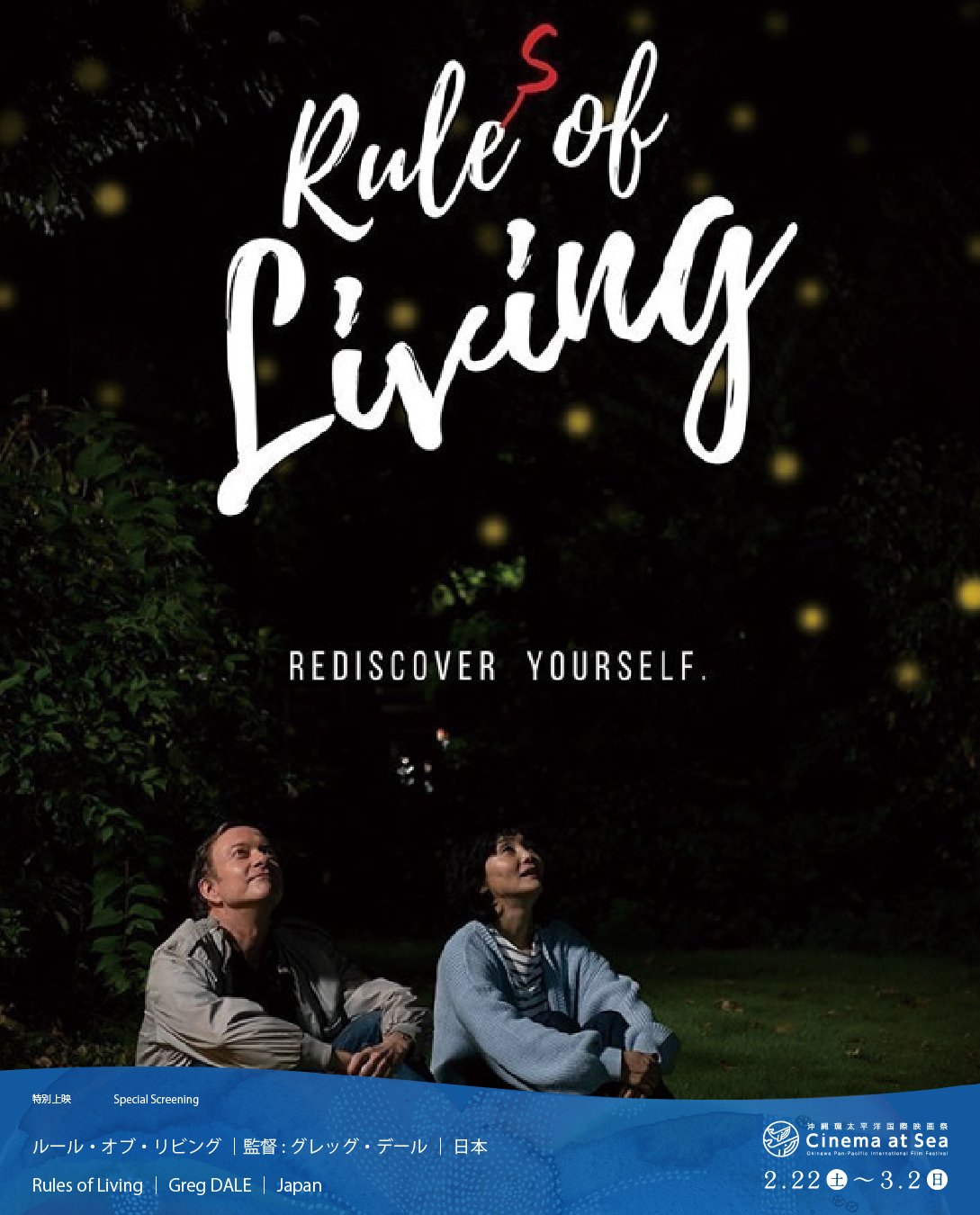
Rules of Living (ルール・オブ・リビング, Greg Dale, 2023)

A lost tourist finds a begrudging sanctuary in the home of a reluctant middle-aged woman in Greg Dale’s cross-cultural comedy, Rules of Living (ルール・オブ・リビング). Well intentioned as it may be, the film has some outdated humour and suffers from an unbalanced perspective that prioritises that of the American hero and at times uncomfortably pushes a message of Western individualism as he somehow “liberates” there heroine, Mikako (Kaho Minami), from her sense of obligation to her family and wider community. 

In a case in point, Mikako doesn’t want a roommate because her well-appointed home is a private sanctuary from the outside world and its constant judgement but is more or less forced to let Vincent (Greg Dale) in out of guilt and politeness. For his part fleeing a messy divorce and his own dissatisfaction with life under capitalism, Vincent arrives in Japan only to be somehow surprised that everything’s in Japanese and he can’t communicate with anyone because they are all too embarrassed about their English ability to respond to his questions. This results in a little well-worn humour in which his asking a portly middle-aged lady about a cheap place to stay is misunderstood and leads to an awkward situation as the apparently sexually insatiable older woman drags the naive and wholesome Vincent to a love hotel. Yet Vincent, an aficionado of Lafcadio Hearn, continues to wander round with wide-eyed wonder before rocking up Mikako’s office for more language-barrier banter and subsequently at her house despite not having made any attempt to contact her to make arrangements having befriended her daughter Chieko in Bali.

The film seems to directly contrast Mikako with her daughter who has given up a prestigious job and corporate career to go travelling leaving Mikako overstretched trying to care for her own mother alone as her health declines. Chieko’s decision is to a degree selfish in that she doesn’t answer her mother’s calls and does not even return home for her grandmother’s funeral while ironically looking down on Mikako for being a doormat who always puts the needs of others above her own as, the films argues, is expected by Japanese society. That’s not entirely wrong, though there must be a middle ground between total abandonment and selfless sacrifice in which not everything would simply be left for Mikako alone to deal with and she would have more freedom to fulfil herself outside of the expectations of others including those of Vincent. It’s notable that Mikako also seems to be dissatisfied in her career because of persistent sexism and office mores in which, at 49, she’s been more or less demoted to the ranks of office ladies after spending the rest of her working life in accounts and likely won’t be offered any further promotions, therefore justifying Chieko’s decision to quit. At the office, Mikako is treated as a maternal figure unfairly over relied upon by the boss because of her advanced skills while the younger women make too many mistakes and are slapdash in their work because they aren’t planning to stay in these jobs long term.

Meanwhile, Mikako is also under pressure to remarry especially as many seem to remark on the fact her family home is too large for her as a single woman. She’s been in a semi-serious relationship with a divorced childhood friend for some time but neither of them seem keen to give marriage another go until he too is pressured by his father to find another wife in order to take over the family business. Koichi (Kippei Shiina) is apparently the perfect man, nice, polite, well turned out and professionally successful yet there’s no real spark and Mikako feels guilty that she can’t learn to love Koichi in the way everyone else seems to love him for her. If she marries him, it will be for convenience and companionship along with the expectations of others much more than for herself. 

Her romance with Vincent is not all that convincing but born of frustration with these same social expectations and desire to put herself and her feelings first as manifested in her sudden desire to learn English. Vincent teaches English around the neighbourhood and spreads these individualist ideas around while enlivening the community through the simple act of communication as if no one had ever thought to speak to anyone else before. Yet he meets a more cynical force in the head of the language school he eventually gets a job at who is from India and offers yoga classes on the side despite never having practiced it before coming to Japan in another example of the pernicious qualities of these “expectations”. Vincent partially falls victim to them too in assuming a young woman in the staffroom is a lost student rather than a teacher simply because she looks Japanese. Nana complains no one takes her seriously because of her appearance despite her native level English and American accent. Before arriving at Mikako’s Vincent had tried to rent an apartment only to be told they don’t rent to foreigners and those that do either offer inappropriate accommodation or ask for a series of spurious additional fees. A man in the street also yells at him to go out with his own kind when seeing him with Mikako.

Essentially, Mikako’s choice is between two men, Vincent who apparently represents “freedom”, and Koichi who represents conventionality. This rather undermines the central thesis of Mikako rediscovering herself and taking agency over her life rather than as her daughter had said devoting herself entirely to the service of others. The film’s title is taken from a series of rules Mikako pastes up as condition for Vincent staying with her which included not using the bathroom or disturbing her while she’s in the living room, symbolising her desire for privacy and reluctance to let the relentlessly friendly Vincent into her life (even though being reluctant to let a total stranger and especially a man you’ve never met before stay in your house with you is completely understandable), but also hints at the “rules” that govern her own life in a conformist and patriarchal society. Some of these at least she may escape in deciding to follow her heart even if the place it leads her to has rules of its own that may not in the end be all that better.


Rules of Living screened as part of this year’s Cinema at Sea.

Trailer (English subtitles)

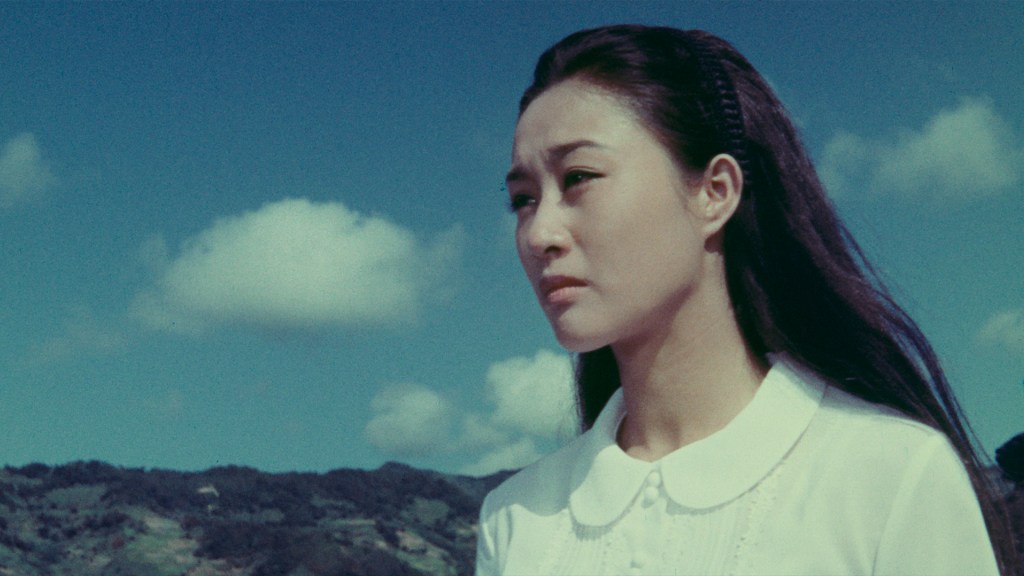
Sunset Over the Horizon (夕陽西下, Lin Fu-Ti, 1968)

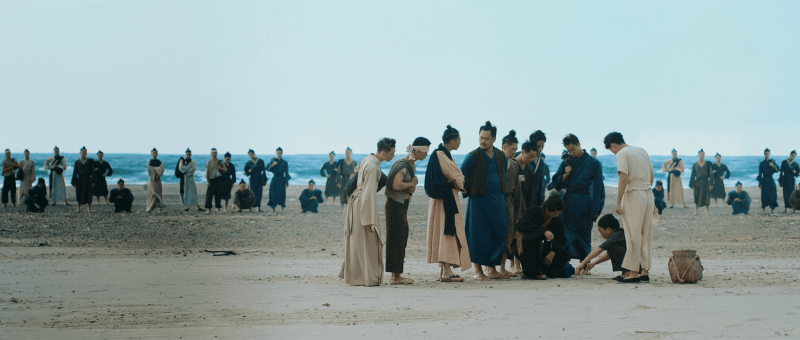
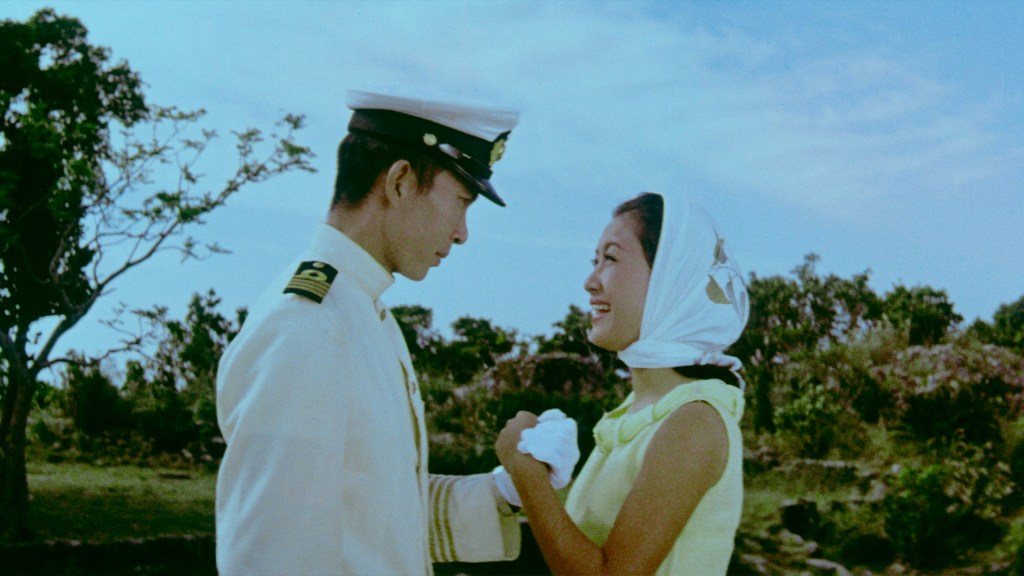
Shot at the same time as The Love in Okinawa, Sunset Over the Horizon (夕陽西下) is another Okinawan and Taiwanese co-production directed by Lin Fu-ti assumed lost until its discovery in San Francisco’s Chinatown in a Mandarin-dubbed print. Unsurprisingly, it features many of the same cast members and locations and even has a similar theme of impossible love but is more ambitious in scope incorporating both dream sequences and flashbacks to explore the changing relationship between Japan and Taiwan.

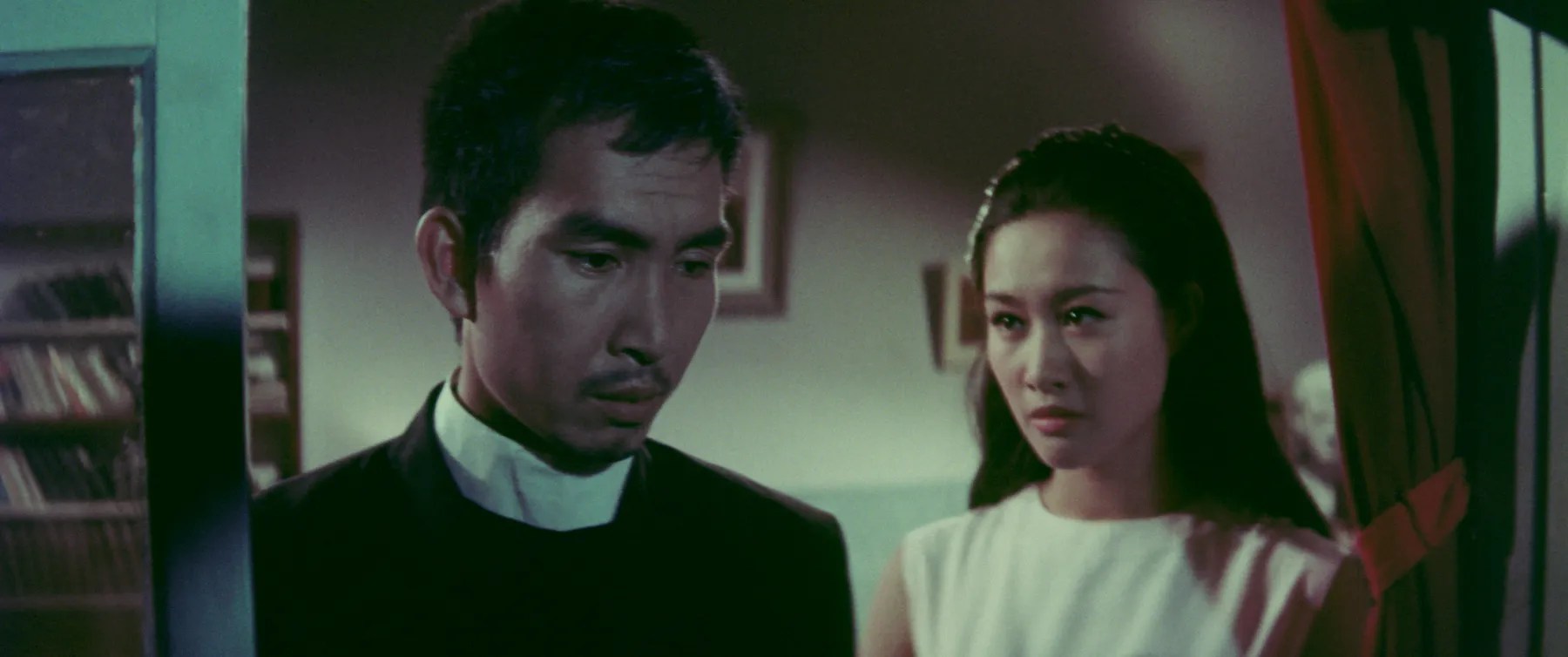
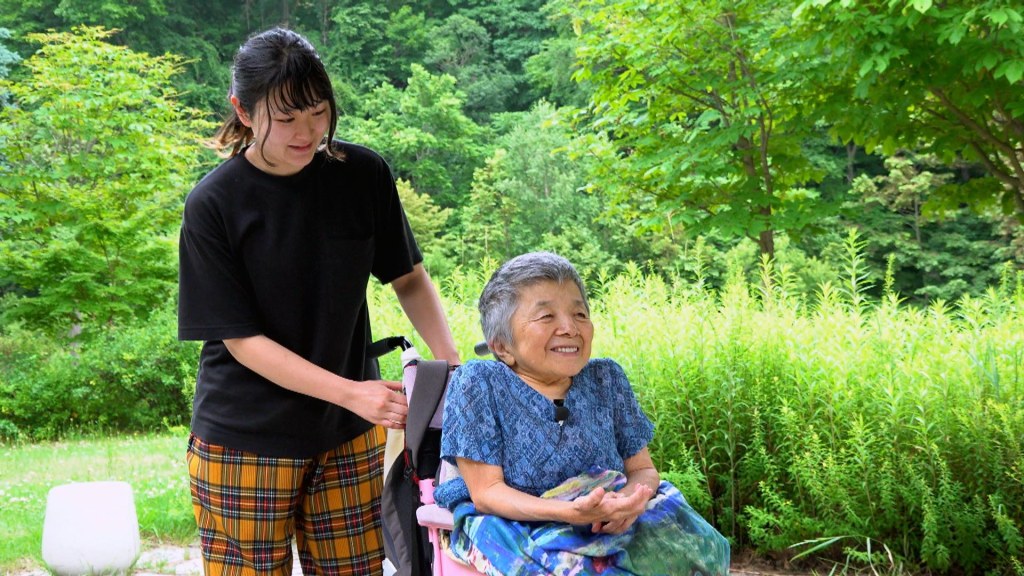
Lin opens the film with its conclusion as Shizuko watches a boat silently depart carrying away her love, the much older pastor/penniless painter Ching-wen who has made the decision to return to Taiwan having finally faced, if not quite come to terms with, his traumatic past at the end of the war and Taiwan’s “liberation” from Japanese colonisation. Japan had conquered Taiwan by force in 1895, but otherwise ruled with much less of an iron fist than it did in other areas of its empire. Lin seems to be making a minor point in dramatising the moment of “liberation” as one of conflicting emotions as the Japanese flag is slowly lowered and that of the KMT, another colonising force, rises in its place meaning that the island is not really “liberated” at all, merely changing hands and to a regime that became more oppressive than that which preceded it had been. 

The irony is that it’s this “liberation” that disrupted his romantic future as a young Taiwanese student in love with the daughter of a Japanese general. With the end of the war, the Japanese must leave Taiwan and so his love must go with them and return to the mainland. She asks Ching-wen to come with her, but he refuses. He is unwilling to leave his nation and his family, though we can see he did so years later and traveled to her hometown of Okinawa though she ultimately chose to take her own life out of a sense of despair and futility. She could not return to Japan with Ching-wen nor stay with him in Taiwan either and so to her the only answer, the only real “liberation,” lay in death.

Shizuko later posits something similar even if her dilemma is different. Her businessman father wants her to marry the son of a local factory owner so that he will support his business but Shizuko refuses because she wants to fall in love and does not seem to like her father’s chosen suitor. The situation is somewhat complicated by the fact that Shizuko is a child of her father’s first marriage and is therefore resented by her stepmother who wants her to leave the family as quickly as possible. In some ways this dynastic union represents a decision to embrace the more consumerist future that Japan in the later 1960s represents. Ching-wen on the other hand despite his ruination represents something purer and more spiritual that is less materialistic and rooted in sincere emotion. Shizuko insists that the businessman may buy her body but never her heart, but that seems perfectly fine to him because it seems he’s not all that bothered about her heart and just wants to possess her like a trophy. Frustrated by her objections, he continues to offer greater sums of money and later tells his underling, who looks horrified, that he plans to keep her locked up at home.

But there are other forces which stand in the couple’s way such as the inappropriate 18-year age gap considering that Shizuko is only 19 years old meaning she was born around the time Ching-wen’s first love died (probably at around the same age). It appears that Ching-wen is protestant preacher and so there’s no religious reason why he should not be married, but it’s clear that he has a serious alcohol problem and is a broken, ruined shell of a man unable to bear the romantic heartbreak he endured as a student and has presumably been atoning for ever since. Given all of this, there is no real explanation for the love that exists between them in the first place save for physical attraction (which is less likely given Ching-wen’s unkempt appearance) or a meeting of souls. In the end the theme seems to be moving on from the past and we realise that the lovers cannot be together because Japan and Taiwan must in effect go their separate ways. Though Shizuko too says she longs to return to Taiwan (when she lived there is not explained), she must fulfil her duty to her father by marrying the Japanese businessman. Over the horizon, there is only ever a sunset with no real indication of a happier future in the distance only futility and endurance if also a new beginning in moving on from the traumatic past.


Sunset Over the Horizon screened as part of this year’s Cinema at Sea.

Trailer (English subtitles)

Tale of the Land (Loeloe Hendra, 2024)

After witnessing her parents’ murder, a young woman is forced into an isolated way of life in Loeloe Hendra’s indie drama, Tale of the Land. Land is, at least according to grandfather Tuha, a place where nothing good happens which might be why he insists on keeping May on the boat. Or then again, perhaps as May is beginning to suspect, he is willingly constraining her and ensuring that she will remain at sea though she now wants a little more out of life.

On one of his ventures out, Tuha is passed by a huge and impressive coal liner while plagued by visions of the house sinking. May asks him if the house will last, but he replies that it surely will for the ancestors will protect them. Yet this is why land has become such a contentious issue to Tuha. The family was forced off their ancestral land by the arrival of the mine. Tuha isn’t lying when he tells May that the land is dangerous because the mine appears of have acquired the consent of the villagers through threat and violence. He no longer speaks to his surviving son because he views him as a traitor for having given in and thrown his lot in with the miners.

But May isn’t sure she believes her grandfather anymore. Perhaps he’s only saying that because he fears being alone and means to trap her with him. Tuha told her that she’s the victim of an incurable curse and is in effect allergic to the land. Every time she touches ground, she collapses. Her fate is echoed in the wounded buffalo she sees on the shore, longing for freedom yet tethered and caught between two worlds. The buffalo turns out to belong to Lawa, a local soldier who seems to have taken a liking to May but a sworn enemy of Tuha in representing the modern nation  mired in authoritarianism and destructive capitalism. 

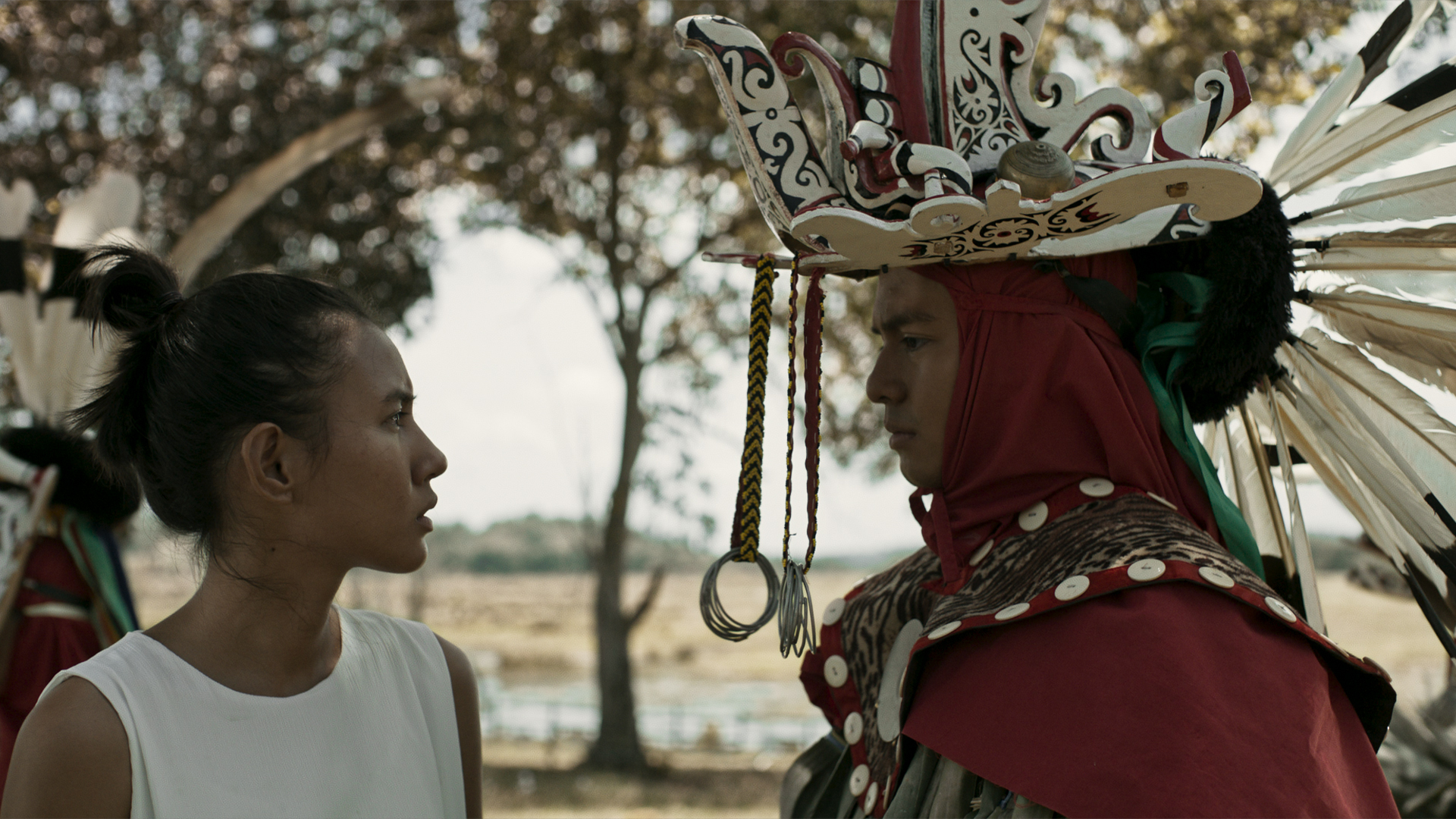
Thus May is caught between the two men, the grandfather with his certain faith in the power of the ancestors, and the modern man who swears he’ll cure her and also take her to the site of her parents’ graves. Tuha tells her that this is the only place left to them and they must accept it, that she should give up any thought of returning to the land and learn to be happy with the self-sufficient life they’ve built at sea. The film is then a kind of parable for the fate of the Dayak people who have been displaced from their ancestral lands by the incursion of modernity in the form of violent corporatism as manifested in the destructive mining industry which ruins the environment. Whether May’s condition really is a “curse”, or a trauma response to witnessing the deaths of her parents, the land is a dangerous place and most particularly for people like her. Yet the sea isn’t really safe either and offers her little prospect of safety or happiness.

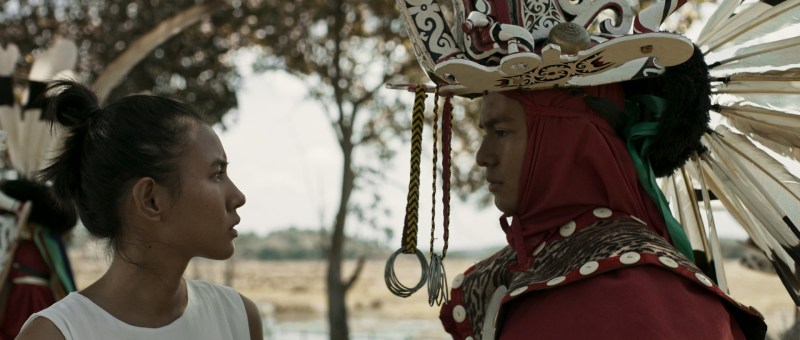
She tries to fight her curse with modernity by simply wearing shoes so that the soles of her feet don’t touch the earth, but discovers that it isn’t really that simple. Dreams and reality become indistinct, May performing a traditional folk dance on the house on the water and also taking part in a folk ritual with Lawa on land. She experiences echoes of the life that’s been taken from her, but finds little in its place already fed up with the monotony of life on the sea but torn between her grandfather’s warnings and Lawa’s promises. Tuha constantly berates her for doing the wrong thing, claiming it’s her fault they’ve no fish because she upset the ancestors by forcing him to kill a chicken in order to appease her curse but she can’t be sure he’s wrong, or that his stubbornness isn’t justified. He was right when they said they had nowhere else to go because their people have been exiled from their own lands and can no longer wander freely but are trapped within a liminal space literally floating in the ocean between the land and the horizon while unable to travel in either direction. May may be on the move and trying to reclaim what is hers by right, stepping ashore onto an uncertain land little knowing whether it will accept her or she it.


Tale of the Land screens as part of this year’s Cinema at Sea.

Trailer (English subtitles)

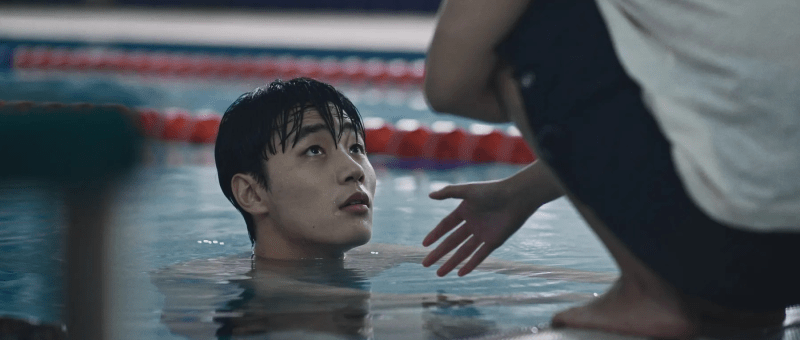
Boy in the Pool (보이 인 더 풀, Ryu Yeon-su, 2024)

If you know you’ll never be the best, is it better to give up right there and then or to continue but out of simple enjoyment rather than ambition? For Seok-young, the second option doesn’t make any sense. It’s just a waste of time to pursue something that you have no aptitude for when there are those born with natural abilities that you could not hope to equal no matter how hard you tried. But as much as she claims quitting doesn’t make you a loser, there is something a little sad in the idea of abandoning something you once loved simply because other people were better at it than you were.

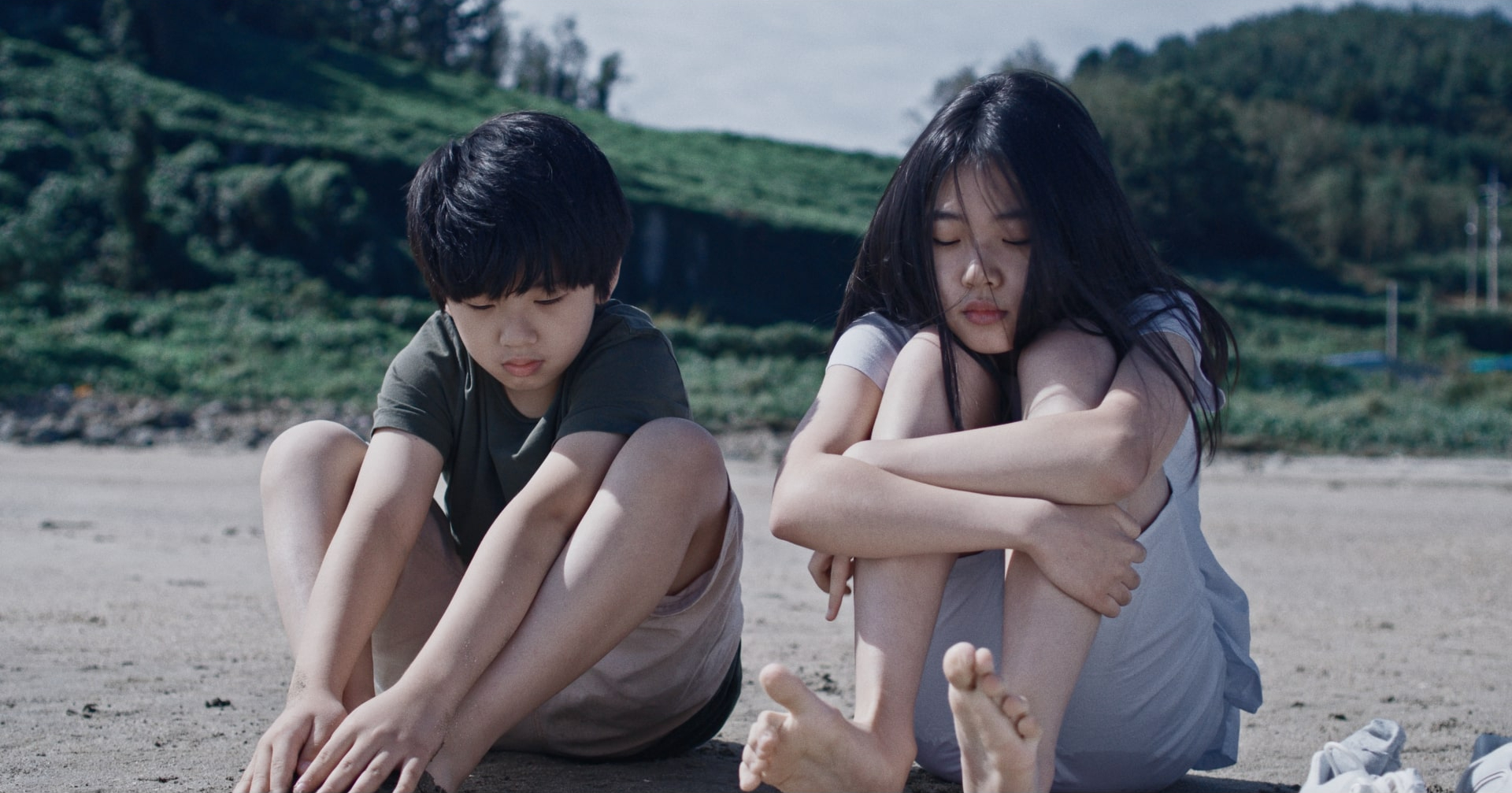
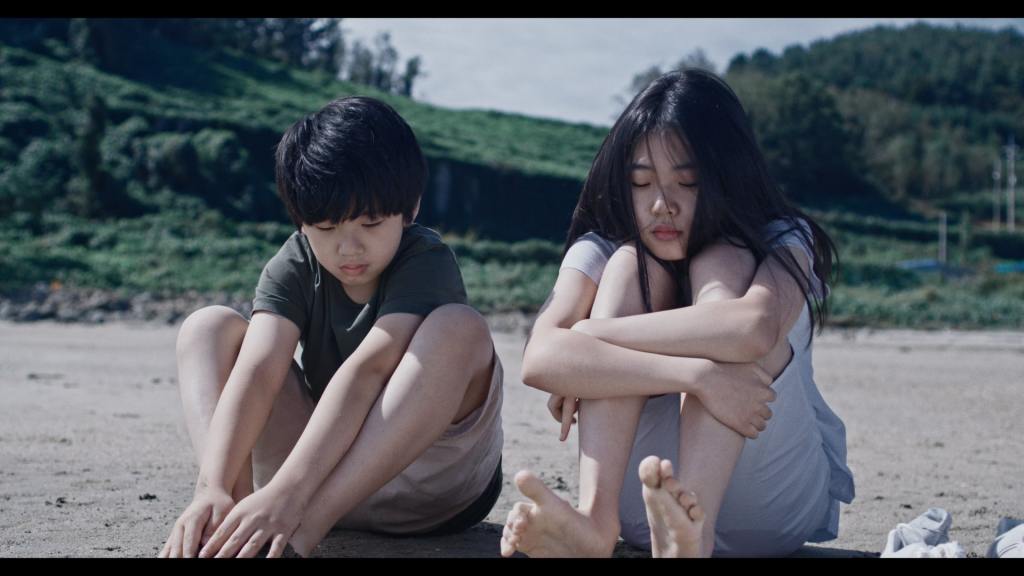
At 13 years old, Seok-young is a swimming obsessive and very proud of the fact that she recently won a trophy. One of the reasons she’s so upset she and her family are moving back to her mother’s hometown following her parents’ divorce is that she’ll have to leave her swimming club and is worried there either won’t be one in the rural backwater or that the other kids won’t be at her level. Unable to make headway at the pool, she goes swimming in the sea instead only to be struck by a foot cramp and rescued from drowning by sullen local boy Woo-joo. Though he angrily runs away from her and says he hates swimming, the two later bond over their shared love of the sport and outsider status. But Woo-joo turns out to be a prodigy and much better than Seok-young meaning that he’s soon picked up by a coach to train in Seoul and Seok-young quits swimming in a fit of pique.

There’s a gentle yet contradictory theme running through the film of allowing your fear of not being good enough to rob you of the joy of doing something just because you enjoyed it. Seok-young seems to quit a lot of things, and as a high schooler is left home alone when her sister too goes to Seoul to train as a concert pianist. She is diffident and aloof in her relationship with Woo-joo, never revealing her true feelings but pushing him away and needling him in his own insecurity as a backwards way of reassuring him that he has the talent to succeed. Meanwhile, he is carrying a secret that makes him doubt his talent and feel self-conscious in the pool, afraid to reveal himself and as it turns out with good reason. Only Seok-young knows and is completely unfazed by his difference, recognising it as the thing that makes him unique while stopping short of admitting that she does indeed think there’s something more to him than swimming and would like him even if never swam again. 

Nevertheless, there’s something quite upsetting about the idea that Woo-joo would have to sacrifice what makes him unique not only to succeed but simply to be able to fit in. He lives with a sense of being different, and is perhaps also bullied and discriminated against because he’s being raised by his grandmother, something else which Seok-young just accepts without question. Seok-young, meanwhile, is displaced amid her parents divorce and humbled by the realisation that she may have overestimated her talent for swimming. She continues to vacillate and unlike those around her flounders for direction. Another boy who’s interested in her reveals that he kept going to the swimming club just for fun even after realising there was no way he could be as good as someone like Woo-joo, but Seok-young seems to retreat into herself in her insecurity. She’s afraid to keep going or try new things out of fear she won’t be good enough rather than simply doing her best and having a good time. 

But as she says, quitting doesn’t make you a loser and giving up something that isn’t making you happy can be a victory in itself as she perhaps discovers in returning home less in defeat than in search of something more. Woo-joo too seems to have found his niche, now whole again and all of himself while no longer submitting to the pressure of needing to achieve something more for others than himself that had ruined whatever joy he may have found in swimming. The message of Ryu’s gentle drama is less one of knowing your limitations than avoiding letting the fear of failure prevent you from doing something you love or conversely walking away from something that isn’t working while finally gaining the courage to chase after what it is you really want.


Boy in the Pool screens as part of this year’s Cinema at Sea.

Trailer (English subtitles)

Cinema at Sea Announces Complete Programme for 2025

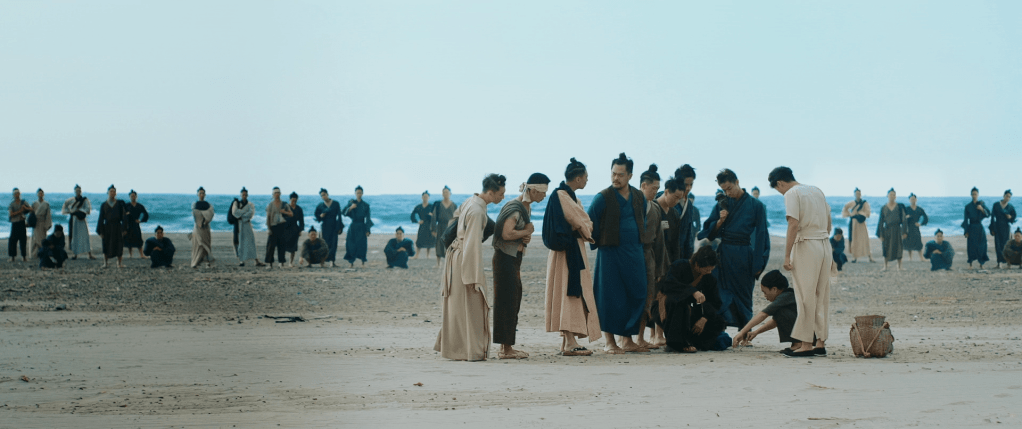
Cinema at Sea – Okinawa Pan-Pacific International Film Festival has announced the full programme for its second edition which runs 22nd February to 3rd March, 2025. This year’s festival opens with Ocean Elegy: The Tragedies of Mudan and Ryukyu, a documentary exploring the Mudan incident, and closes with New Zealand drama, Tinā. The festival will also feature a special focus on Maori filmmaker Mike Jonathan.

Here are the East Asian features screening in this year’s programme:

Indonesia

  • Tale of the Land – drama revolving around a young woman who believes she is living with a curse that prevents her from setting foot on land.

Japan

  • Asia is One (1973) – the Nippon Documentarist Union explore the destructive legacies of imperialism and exploitation through the stories of migrant workers in the Okinawan islands. Review.
  • BOuQuET – experimental drama directed by actress Sahel Rosa.
  • Enlightenment – drama revolving around a man who uses media to escape reality.
  • Paradise of Solitude – human drama in which a blocked writer receives a letter from a woman looking for lost love.
  • River Returns – poetic and elliptical drama from Masakazu Kaneko in which a little boy goes on a journey into the folkloric past.
  • Rules of Living – drama in which a woman opens her home to a befuddled tourist.
  • Step Out – Okinawa-set drama from Yukihiko Tsutsumi following a young man who dreams of dancing.
  • YUUHO:No Border – documentary focusing on disability activist Yuuho.

Malaysia

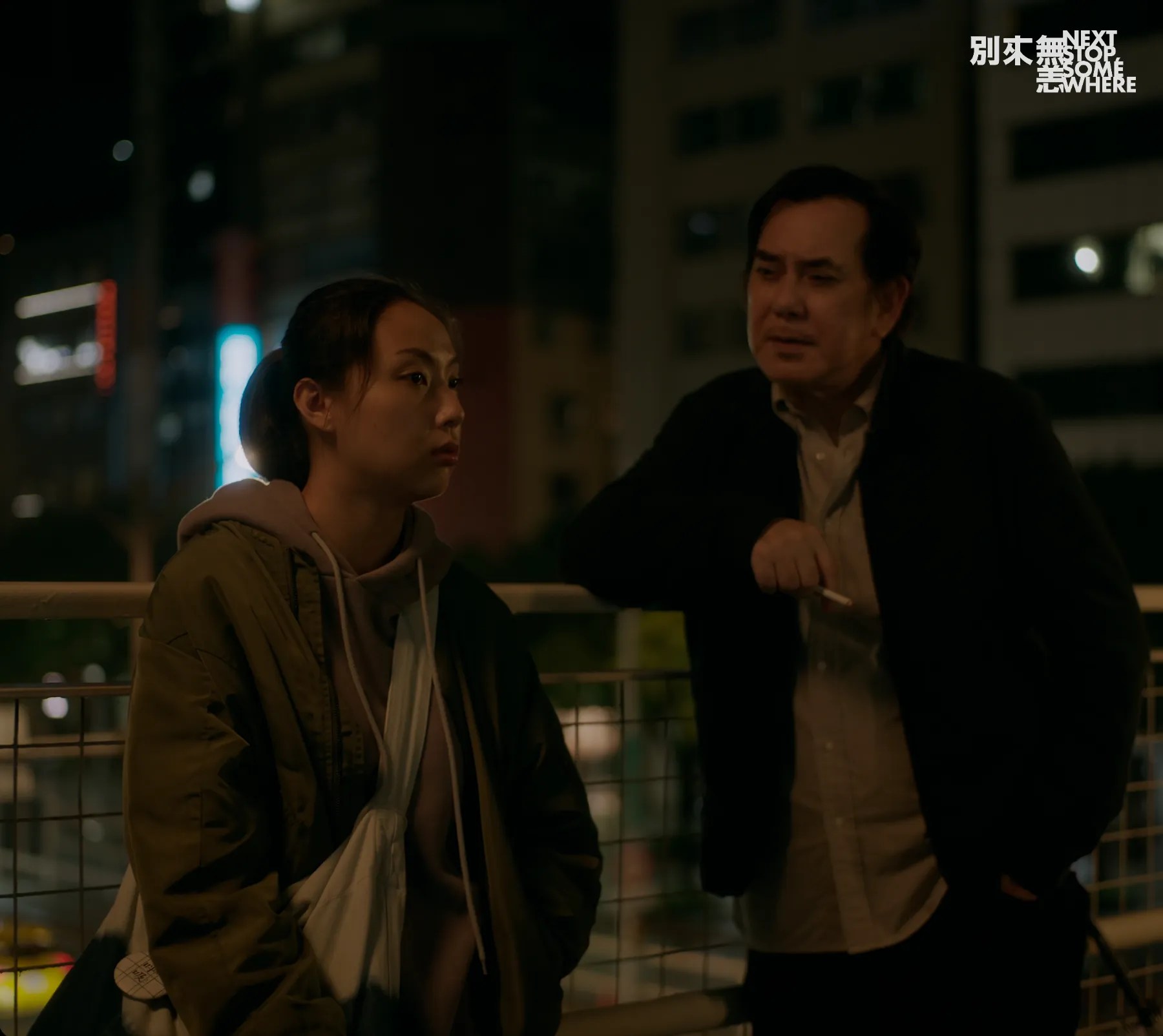
  • Next Stop, Somewhere – two people head abroad in search of freedom only to end up trapped by pandemic quarantine and a loveless marriage.

Philippines

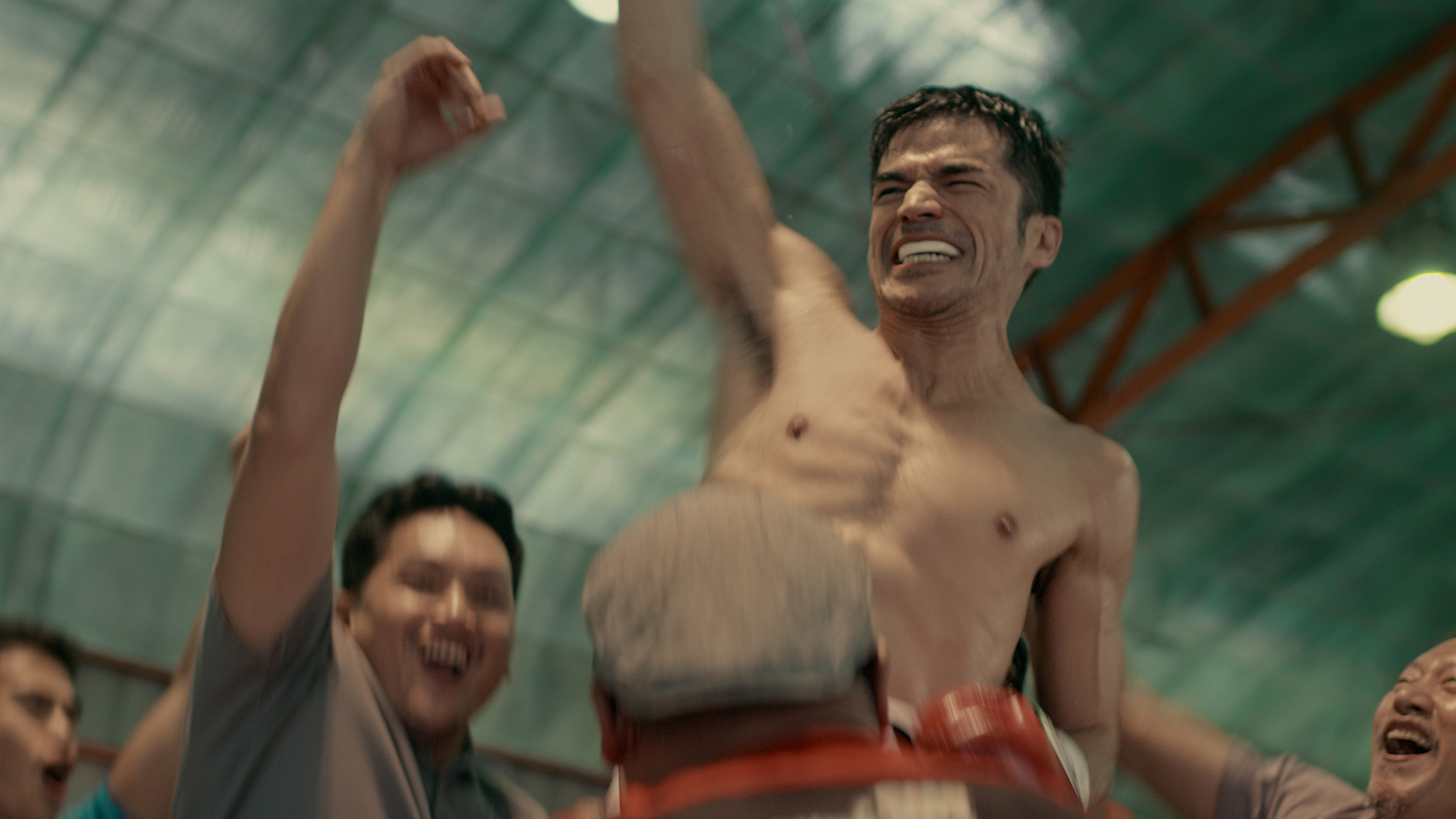
  • Gensan Punch – drama from Brillante Ma Mendoza in which a Japanese boxer heads to the Philippines after he is rejected by the Japanese Boxing Association on the grounds of his disability.

South Korea

  • Boy in the Pool – gentle drama about a boy a girl who meet at the pool but then take different paths in life.
  • Okinawa Blue Note – a best-selling Korean romance novelist travels to Okinawa only to experience unexpected complicattions.

Taiwan

Thailand

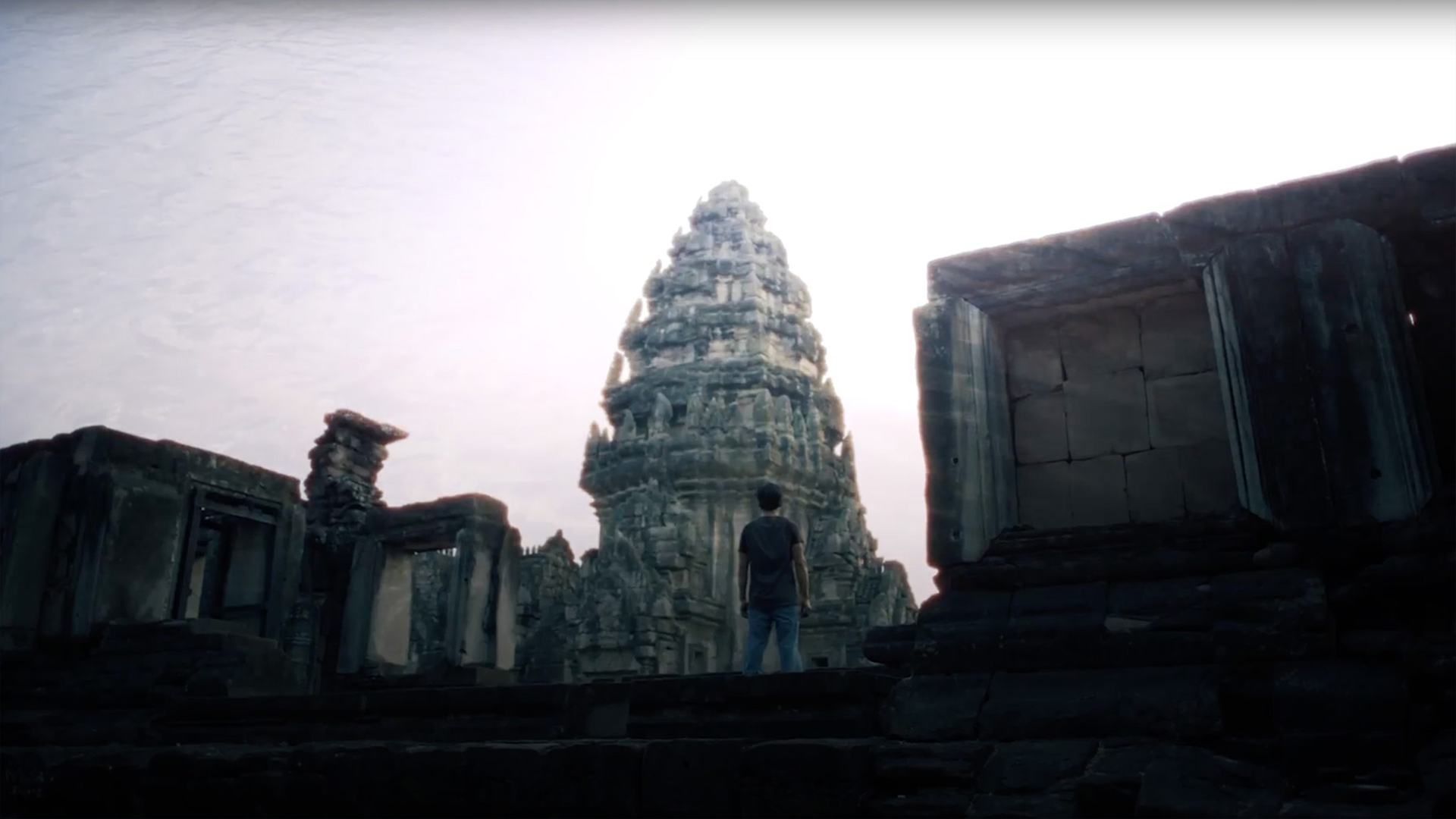
  • Rivulet of Universe – mystical drama in which a Cambodian migrant worker meets a young couple with relationship issues mirroring those of an ancient myth.

Cinema at Sea – Okinawa Pan-Pacific International Film Festival takes place at cinemas across the islands 22nd February to 3rd March 2025. The full programme can be found on the official website while you can also follow Cinema at Sea on FacebookInstagram, and X (fomerly known as Twitter).