Kaiju Guy! (怪獣ヤロウ!, Junichiro Yagi, 2025)

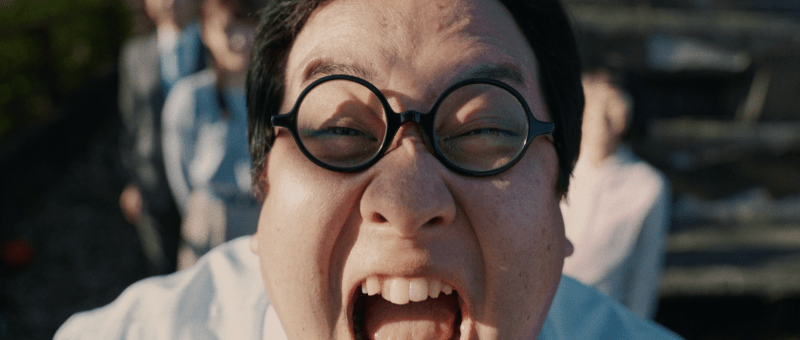
“This is my grand revenge against the world,” a frustrated civil servant insists while watching a giant avatar of himself destroying the town. Yamada (Gumpy) always wanted to make Kaiju movies, but now approaching middle age he’s given up most of his dreams and aspirations and lives a dull life working in the tourism division of the local council. An opportunity presents itself when he’s put in charge of a PR video for the town at the behest of its ultra-conservative mayor.

Junichiro Yagi’s Kaiju Guy! (怪獣ヤロウ!Kaiju Yaro!) has a meta quality given that it’s about a film designed to promote the local area, but there are many other parallels in play. The first would be Yamada’s unsatisfying life standing in for that of a corporate drone, while the mayor (Michiko Shimizu) is later cast as the villain precisely because of her reverence for “tradition” and is under the impression that changing anything would be a betrayal of her ancestors in a nod to the rigidity of local government. Yamada’s teacher had told him to smash through the constraints, though that’s something he’s only just beginning to find the strength to do. 

Though Yamada immediately suggests making a kaiju movie, he’s quickly shot down and reminded the mayor wants a conventional puff piece they can use to promote the town. Back in middle school, everyone had laughed at him for his DIY kaiju movie except his teacher who told him not to worry about what other people think and that those who challenge the status quo will always come in for attack or ridicule. Back then, the town of Seki had been the monster, though this time it’s supposed to be the victim that will eventually be saved. The mayor’s script had ironically been for a particular brand of hometown movie that’s become common in Japanese cinema in recent years in which a young person has their dreams crushed in Tokyo and rediscovers the charms of the place where they grew up after returning home in defeat. But there is something quite sad about the juxtaposition of Yamada thinking through the themes of the movie while riding his moped along empty streets which are flanked by rows closed shops.

The economic possibilities of the town becoming a tourist hotspot if the movie does its job might be one reason why many of the local businesses immediately pitch in to help besides a desire to display their hometown pride. Of course, most of them pull out when Yamada reimagines it as a kaiju movie even if he has a few supporters who think a kaiju movie might be fun and interesting way to sell the positives of Seki. In the course of making his movie, with the help of a grumpy, retired kaiju movie master by the name of Honda (Akaji Maro), Yamada discovers a way to use various local assets, such as filming sparks at the factory to create the fire-breathing effect and capturing the strange sound of a local bird for its roar. The heroes of the film become the local businesses supporting it who appear as a mini squad teaming up to fight the monster, while Yamada himself plays the marauding beast and “saviour” of the town going after the mayor and city hall to challenge their conservative insistence on tradition. 

What he eventually discovers is that even the mayor herself is oppressed by “tradition supremacy” and once had to give up her own hopes and dreams to conform to her family’s insistence on the way things should be done. Her abrupt decision to make the film may have been a reflection of her latent desire for change, both for herself and for Seki even as she constantly harps on about cormorant fishing and sword making which are apparently the two biggest draws. Ironically, the film completely fulfils its role as a PR movie for Seki capturing the small-town charms of the area along with its warm community spirit. Smashing through barriers with his kaiju movie, Yamada’s dull and grey existence is suddenly brightened through accessing his creativity and having his artistic desires validated by those around him. Not only are kaiju movies not naff or nerdy, but a source of fun that can bring the community together as well encourage visitors from outside if only to explore the kind of place that could have produced something so wonderfully unconventional.


Kaiju Guy! screens 30th May as part of this year’s Nippon Connection.

Trailer (English subtitles)

Images: © 2024 Team KAIJU GUY!
Erica 38 (エリカ38, Yuichi Hibi, 2019)

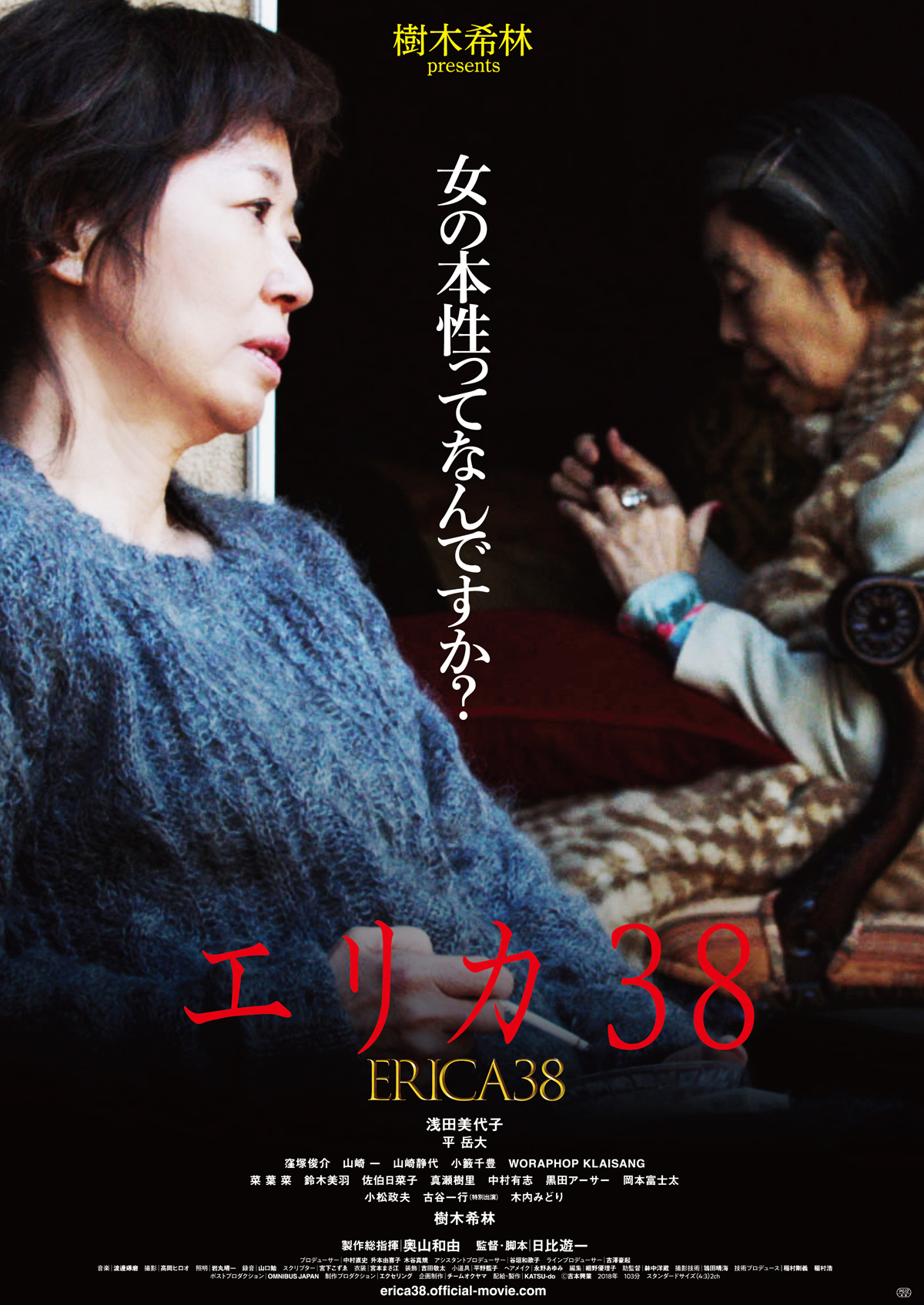
Erica 38 poster“Everybody’s life is in someway unfulfilling”, admits the philosophical victim of a con woman in ripped from the headlines tale Erica 38 (エリカ38). “It’s like a crutch” he adds, without a little fantasy you can’t go on. Like the “Erica” of the title, her victims are also looking for escape from an unsatisfying reality, and unfortunately for them already have what she feels would make her life more bearable – vast wealth. Returning to Japan after three decades abroad, director Yuichi Hibi does his best to humanise the figure of the coldhearted grifter, painting her as just another disappointed, lonely old woman desperately trying to recapture the sense of possibility so cruelly denied her in youth.

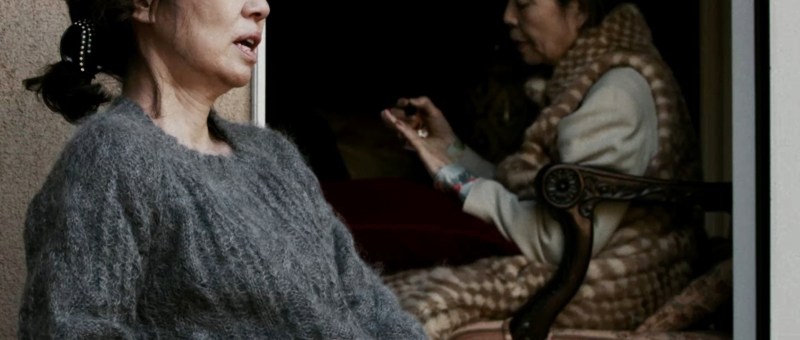
Later rebranding herself as “Erica”, a 38-year-old woman of means, our “heroine” is Satoko Watanabe (Miyoko Asada), an ageing bar hostess supplementing her income by peddling a dodgy multi-vitamin pyramid scheme to bored housewives eager to make a few extra bucks. Her sales pitch, however, gets her noticed by a refined old woman sitting close by in an upscale hotel during in one of her sessions. The woman, Mrs. Ito (Midori Kiuchi), introduces her to a “friend”, Hirasawa (Takehiro Hira), who cuts in with a sales pitch of his own in branding himself as a paid up member of the global elite who works with the Pentagon on important international matters. Hirasawa heavily implies his business is not quite on the level, but Satoko, captivated by his suave sophistication, fails to realise just how dodgy he really is. Before long, she’s joined him in his “consultation” business, selling fraudulent investment opportunities in the emerging market of Cambodia.

It is surprisingly easy to sympathise with the dejected Satoko as she falls under Hirasawa’s spell. Already well into her 50s when the film begins and clearly over 60 when she rebrands herself as the 38-year-old Erica, Satoko has led an unhappy life beginning with a traumatic childhood lived in the shadow of an abusive, adulterous father. The only memory of joy from her youth is when she and her mother (Kirin Kiki) giggled together after accidentally tipping rat poison into dad’s miso soup. Life since then, it seems, has been one disappointment after another spent in the hostess bars of Kabukicho. What all of that means, however, is that she’s become skilled in the art of selling fantasy. All that time invested in extracting cold hard cash from lonely men has set her in good stead for selling unrealistic investment opportunities to the already comfortably off.

Unrepentant, Satoko tells herself that she bears no responsibility towards those who lost money in her scams because they were chasing exactly the same thing she was – escape, and they both found it at least for a moment. Her victims made the decision themselves, she never forced anyone, and so it’s their own fault that they fell for her patter while she perhaps laments only that she’s been foolish and profligate in not planning better for the eventual implosion of all her schemes.

“There’s a thin line between real and fake”, she tells a party guest admiring one of her paintings, “if someone sees it as real then real it is”. Satoko’s cons are, in essence, an extension of the paradox of the hostess business. Anyone with an ounce of sense would have seen that the business isn’t legitimate, but like a salaryman in a hostess bar they invest in the semblance of connection while knowing in a sense that isn’t “real”. Ironically enough, Satoko is forced to realise that the first victim of her subterfuge is herself. Chasing a dream of love, she fell hard for Hirasawa without thinking him through. Hirasawa succeeds in his schemes because he’s scrupulously careful in maintaining his persona – he operates out of hotels, has no fixed address, and uses several cellphones. As Satoko later finds out, he is effectively running a harem, romancing several women all like herself bringing in the big bucks while he sits back relatively risk free. She has been used, once again.

The implosion of her dream of romantic escape is what sends her to Thailand where she ponders a reset, rebranding herself as the 38-year-old Erica of the title and beginning an affair with a young and handsome Thai man she rescued from gangsters with her ill-gotten gains. Porche (Woraphop Klaisang) later describes her as “My Angel”, of course realising that she was much older than she claimed but claiming not to care. It may be that he really did love her, but you can’t ignore the corruption of all that money and the power that it buys. In the end, money can’t buy you love, or a path out of loneliness, or a cure for disappointment.

Satoko was, like many, just another lonely, disappointed old lady trying to escape an unsatisfying present through a fantasy of returning to the past, rebooting herself as a successful business woman, loved and in love, as someone with a brighter future to look forward to. Her sales patter worked because it was “true”, the similarly dejected could sense in her the desperation for escape and as they wanted to escape too they let her take them with her. A melancholy tale of delusion and disillusionment, Erica 38 has immense sympathy for the scammer and the scammed painting them both as victims of an often unfair, conformist society in which freedom is the rarest commodity of them all.


Erica 38 screens in New York on July 25 as part of Japan Cuts 2019.

Original trailer (English subtitles)