Locust (蟲, KEFF, 2024)

“Taiwan is doomed,” according to a middle-aged man taking the chance to emigrate in Keff’s debut feature Locust (蟲, chóng). A damning indictment of the island nation seemingly mired in economic disparity, political corruption, and generalised despair the film positions its mute hero as one who has been rendered silent but is caught between a life of subjugation and violent rebellion that may also in its way be a kind of conformity with the world around him.

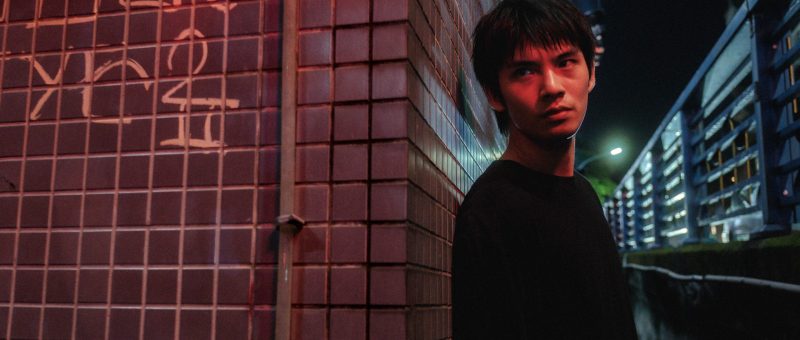
Zhong-han (Liu Wei Chen) is not deaf but was left mute after a childhood injury and now works in a mom and pop noodle cafe which has seen better days. By nights, he supplements his income working as an enforcer for local gangster Boss Wang collecting debts on his behalf. But as his friend Kobe (Devin Pan) says, what’s the point of collecting money from people who don’t have any? Originally proclaiming himself a kind of Robin Hood, Kobe suggests they simply take it off people who do have the cash instead and particularly if they got it (in his view) unjustifiably such as through generational wealth or influencing. Zhong-han can sympathise with these goals, especially as it was a gang of influencers who made fun of his dancing at a local disco, but as time goes on it becomes clear Kobe is intent on a kind of class warfare that’s more about revenge against a classist society than sharing the wealth. 

You might think Boss Wang would have a problem with Kobe’s apparent freelancing, but he later rises through the ranks to become his right hand man in a pattern that gets repeated in which those who once opposed those in power acquiesce when they’re given the illusion of sharing it. Something similar happens to bumbling local political candidate Jia-bao who tries to stand up for Rong (Yu An Shun) when his noodle restaurant is threatened but is later seen drinking in a hostess bar with Boss Wang and slimy businessman Bruce.

Bruce’s Western name might immediately mark him as the villain, a globalising entrepreneur who sees a noodle shop like Rong’s as an embarrassment, a symbol of an older, less sophisticated Taiwan that no longer belongs in the current society. It’s to Bruce that Rong’s childhood friend and sometime landlord Wen sells the building in which he lives and works and it doesn’t take a genius to realise he probably hasn’t bought it to maintain old-fashioned local community charm. In the news item playing in the opening scene, the reporters discuss the opening of a new French bakery with a brand new pastry christened the Taiwan Eclair which has become the latest must eat item with the queues around the block symbolising both an aspirant internationalism and the vacuity of consumerist desires. Yet it seems that Zhong-han’s greatest wish is to be able to take his girlfriend out for fancy cake only neither she nor he can afford it as they are each locked out of the cake-eating classes. 

Immediately before the item about the French bakery, the news had discussed the protests in Hong Kong which continue to reverberate through Taiwan as it processes its own difficult relationship with Mainland China amid constant fears of military incursion. Wen points to the land he once owned and suggests it won’t be worth anything if they end up going to war. In a slightly awkward way, the film aligns Rong’s struggle with that of the protestors though less towards authoritarian oppression than the tyrrany of amoral capitalism and men like Bruce who wear fancy suits but behave like thugs. The film paints both struggles as futile, though noble, and suggests that there is really no way that Rong can win against a man like Bruce and might have been better to take what he could get when he could get it.

Zhong-han’s situation is equally hopeless. Though he tries to move away from his destructive gangster past, the world won’t let him forget and his options will always be limited by his disability, lack of education, and socio-economic status. Rong tells him that he’d always thought of him as a son and intended to leave the noodle shop to him when the time came, but like so many other things in his life that future seems lost to him now and no other presents itself. The film seems to offer a similar prognosis for Taiwan itself, a land of despair and futility in which “it won’t make any difference” has seemingly become a way of life. 


Locust screened as part of this year’s Cannes Film Festival.

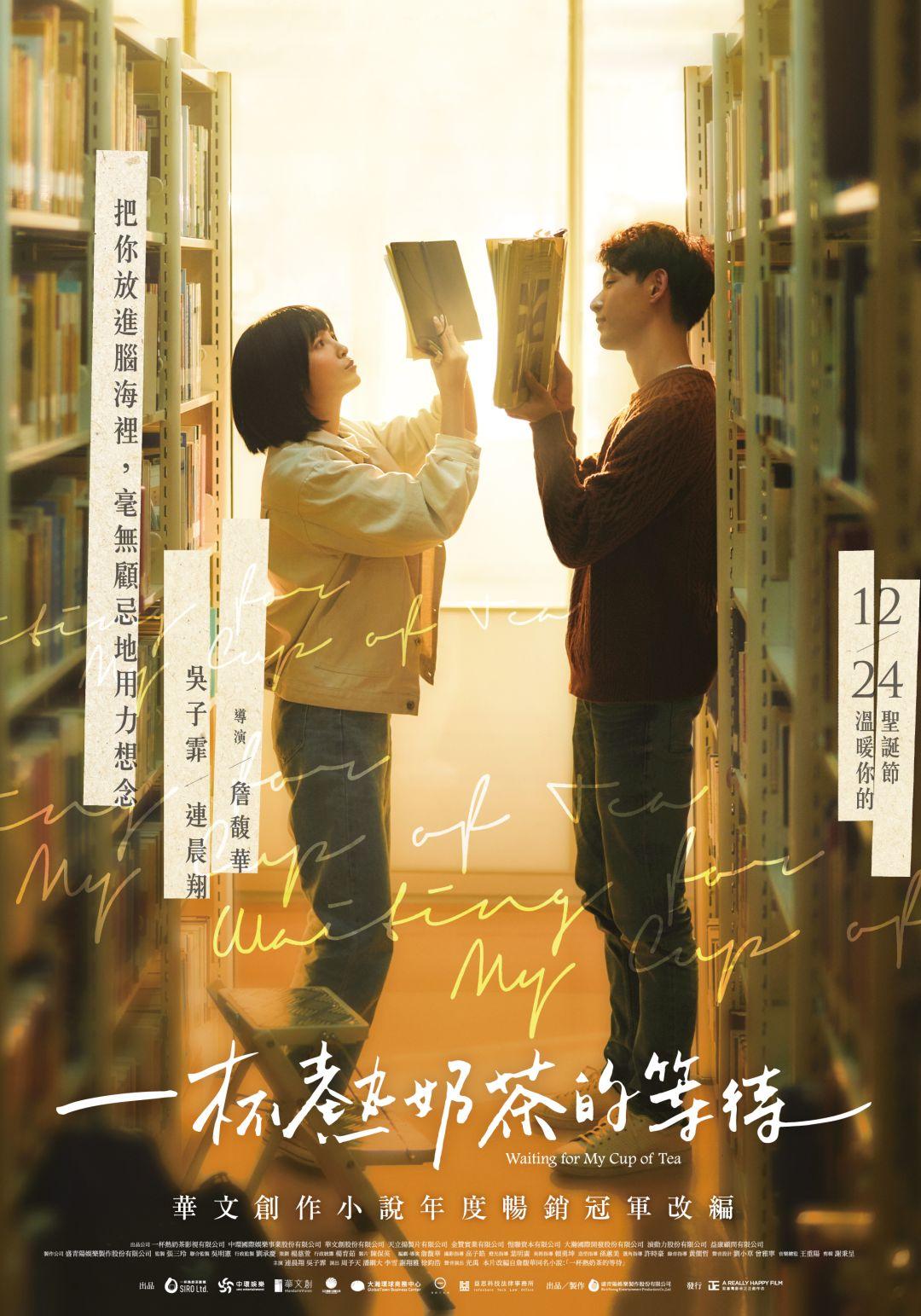
Waiting for My Cup of Tea (一杯熱奶茶的等待, Phoebe Jan Fu-hua, 2021)

How long should you wait for love? Released during the prime romance season over the Christmas holidays and adapted from her own novel, Phoebe Jan Fu-hua’s Waiting for My Cup of Tea (一杯熱奶茶的等待, yī bēi rè nǎichá de děngdài) wonders if love is something you can defer or something to which you should submit as a collection of youngsters attempt to deal with various kinds of baggage from unresolved attachments to chronic illness, career worries, and the burden of responsibility for one’s own feelings and those of others. 

Xiao-hua (Ellen Wu), for example, is a shy young art student who seems to stand at a distance from her friends while intensely irritated by a classmate/neighbour who has a sideline as a model and seems to have everything passed to her on a plate simply for being pretty. It’s Yi-chun’s love life, however, which is beginning to annoy her partly because each of her suitors, which Xiao-hua suspects may extend to at least three, constantly rings her bell mistakenly believing Yi-Chun’s is broken. After being jokingly threatened by Yi-chun’s overbearing secret boyfriend, she later runs into another young man, Zi-jie (Simon Lien Chen-hsiang), ringing her bell in vain advising him to come back later fearful of a scene should he enter and find another guy in Yi-Chun’s flat, while she’s also touched by the sight of a third man, A-wen, sitting quietly on a bench opposite her window next to a bouquet of flowers assuming he too is probably waiting for Yi-Chun. 

Feeling sorry for A-wen sitting out in the cold waiting for a girlfriend who’s probably off with someone else, Xiao-hua buys him a hot milk tea from a vending machine which will become something of a motif throughout the film, but it’s Zi-jie she eventually falls for after a series of meet cutes during which he declares himself uninterested in committed romantic relationships and indifferent to Xiao-hua’s revelation that Yi-Chun may have as many as three guys on the go at the same time. Even so, he appears much more interested in her than he ever was in the model next-door, later ending his association with Yi-Chun rather abruptly much to her surprise in order to better romance Xiao-hua if mainly through an air of mystery. 

Though all of these people are very young, in the main college students about to graduate, they each have their own barriers to romance which they’re wary to overcome, Xiao-hua’s being her previous relationship with fellow student Shao-Ping who broke up with her to take care of a childhood friend living with mental illness while selfishly asking Xiao-hua to wait for him. At one point or another, everyone asks someone else to wait or else to give them time, Xiao-hua eventually that of asking Zi-jie on figuring out why he seems to be keeping a distance from her echoing the words of the radio host she’s fond of listening to that he should give her time and learn to let her in, while he later asks the same of her, and of course A-wen is always “waiting” in one sense or another. There is something a little uncomfortable in Shao-ping’s broodiness, opposed to Xiao-hua’s new relationship not only because he unfairly believes he still has a right to a say in her romantic future but uncomfortably suggesting that he sees an ironic degree of symmetry fearing that Xiao-hua will discover that Zi-jie is a “burden” she will become responsible for an idea tacitly affirmed in the otherwise positive conclusion in suggesting that Zi-jie must wait until he’s physically fit for love before committing himself fully. 

Meanwhile Xiao-hua’s romantic naivety is challenged by relationships between her friends witnessing a couple she thought were made for each other suddenly break up while each of them prepare for their lives after college, getting jobs and moving on often in different directions. She comes to realise that it’s unfinished business that holds people back and that in the end it’s better to have an uncomfortable conversation than leave a door open that would be better closed because there’s no sense waiting for a moment that’s already passed, but then paradoxically commits herself to waiting as an act of faith in a surer love. A gentle meditation on loneliness, grief, and the internalised barriers to romance Jan’s melancholy drama is less an advocation for moving on than for taking the time to find the right direction or at least one that is your particular cup of tea. 


Waiting for My Cup of Tea screens in Chicago April 10 as part of the 14th season of Asian Pop-Up Cinema.

Original trailer (English subtitles)