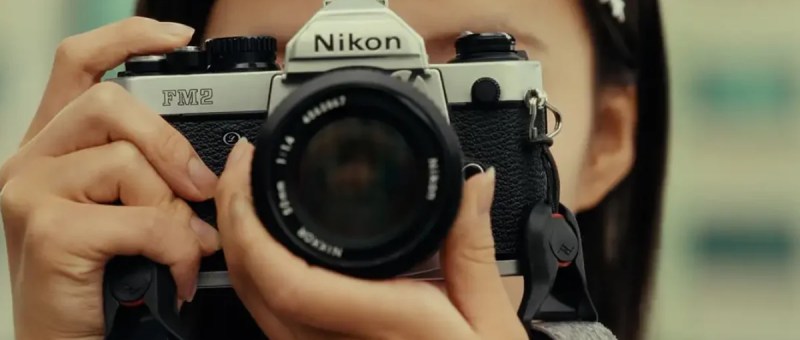
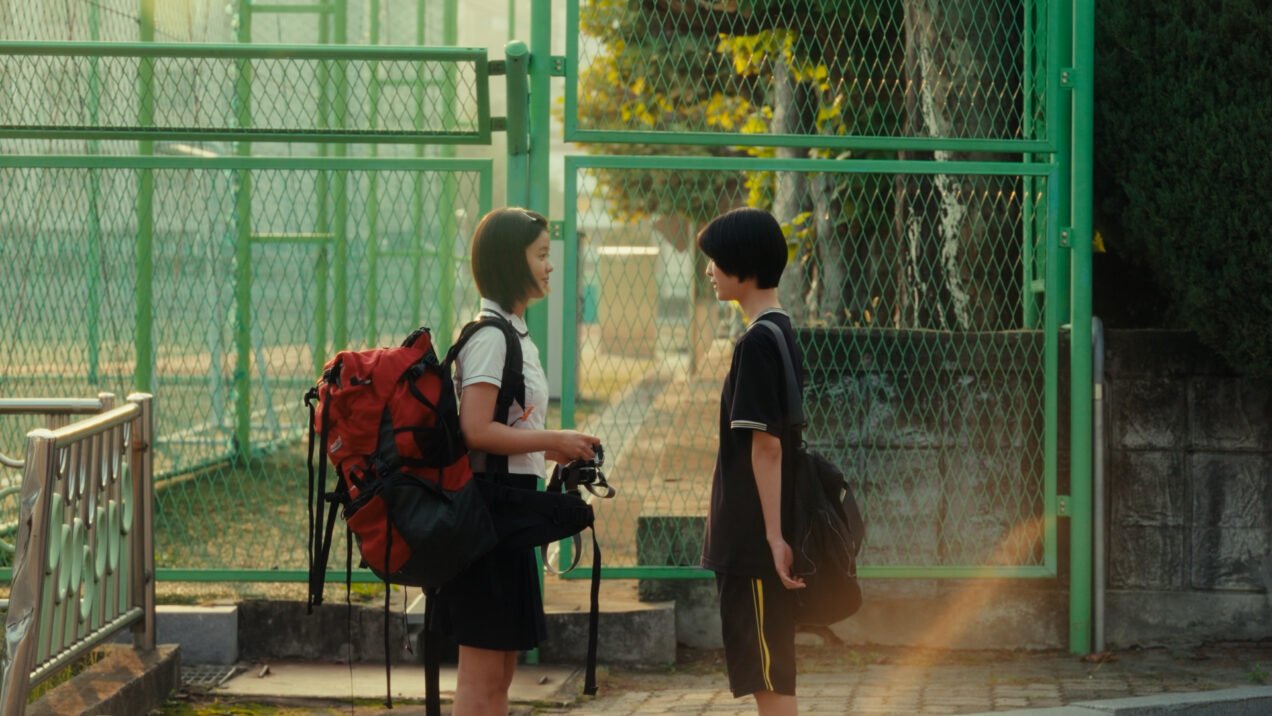
Summer can’t bring herself to press the shutter button on the last four exposures left on the unfinished roll of film her father left behind. Her unwillingness to do so and seeming abandonment of their shared passion for photography hints at her difficulty to come to terms with his passing along with her own sense of adolescent confusion. But just as her father had told her she would, she learned to hear the shutter for herself and took three of her four remaining photos without thinking, all of Yeonwoo, the star of the school’s football team by whom she is unexpectedly captivated.
Well, perhaps not all that unexpectedly. Summer appears to already be aware of her queerness even if she hasn’t explored it yet and quickly finds that her interest is returned by Yeonwoo who immediately responds to her roundabout confession of love by asking her out. Which is all to say, this world is quite different from that Summer’s father Jihoon inhabited in his youth even if it’s rosier than the still conservative reality of contemporary South Korea. Summer’s direct announcement to her best friend that she likes girls is met with a simple “I know,” having noticed that she never took photos of guys and only a little hurt that she never said anything before and hasn’t let her in on her recent dating news.
But what Summer discovers after taking one very deliberate photo of Yeonwoo and having the film developed is that her father also took pictures of someone he liked and that someone was a boy, Maru. Of course, this revelation is quite destabilising for her. She can’t get her head around her father’s relationship with herself and her mother if he was gay though as her friend points out, he may have been bisexual which actually didn’t occur to her. In a quest for answers, Summer approaches the now middle-aged Maru and eventually like her friends did of her simply accepts this unknown fact about Jihoon while finding in Maru someone who’s gone through the same things she’s experiencing and with whom she can discuss the things she can’t yet talk about with her mother or friends.
In her recollections, we never see the face of the adult Jihoon. He always appears with her back to her or just out of frame reflecting the ways in which she no longer feels as if she knew her father and has lost sight of her relationship with him in the wake of her loss. Though told it was a traffic accident, Summer wonders if in reality he might have taken his own life and chosen to leave her behind. Through re-embracing photography, she begins to rediscover him and come into herself gaining not only the confidence to be who she is but to believe that loss is something she can bear while like Yeonwoo’s running hobby which apparently can alter the flow of time, photography is also a means of trapping a memory which means that nothing’s ever really gone.
With the universal love and acceptance that seems to surround Summer, the film implies that the world has moved on and if her father chose conventionality over love that’s a choice that she may not need to make. Even so, in Maru she finds a strong queer role model who even in his own sadness and grief in his lost love for Jihoon is able to help her move forward in showing her a different side of her father which she had never known. He helps her navigate young love and offers a safe space for her to be herself until she’s ready to confront the unresolved past and make peace with it. Though perhaps tinged with melancholy and longing, Summer’s world is otherwise bright and sunny. Filled both with the giddiness of first love and the deep sadness of a catastrophic loss, it is nevertheless warm and beautiful as Summer sees it through the camera lens. With the shutter button as her guiding light, Summer learns to see in new ways peering both back into the past and ahead into her future now less fearful and more certain of herself having reclaimed both something of the father she lost and the one she never knew.
Summer’s Camera screened as part of this year’s BFI Flare.
Trailer (English subtitles)
 Windows on Worlds