The Land of Peach Blossoms (世外桃源, Zhou Mingying, 2018)

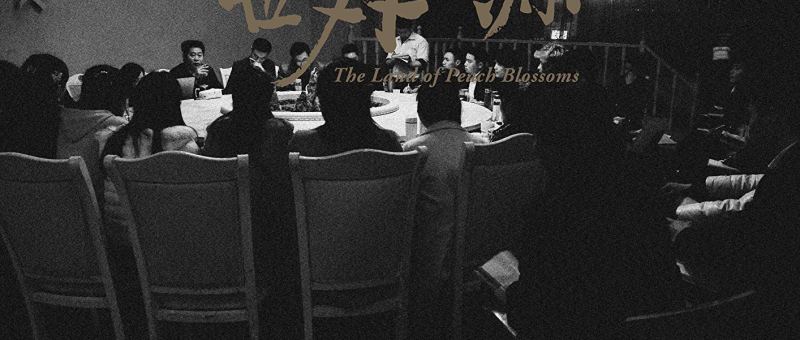
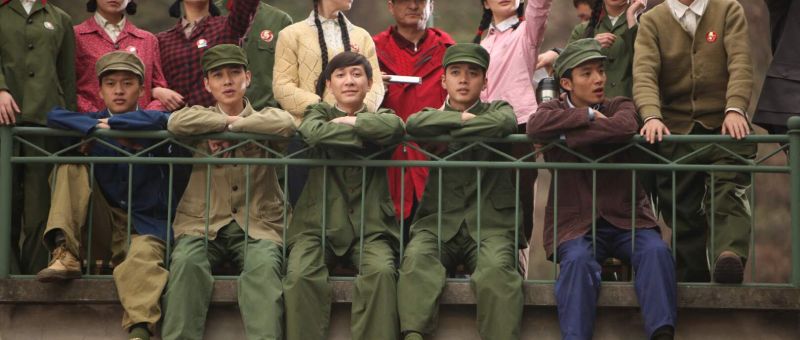
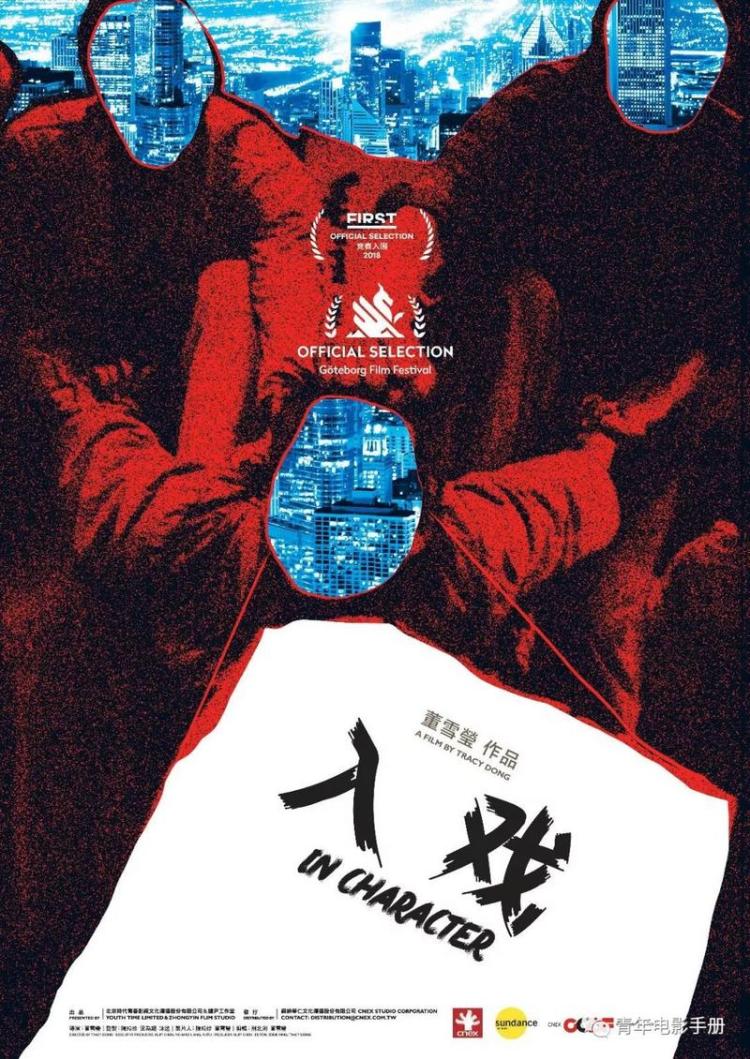
Land of Peach Blossoms posterIn Tao Yuanming’s 5th century fable, The Land of Peach Blossoms (世外桃源, Shìwàitáoyuán) is a mythical utopia where people live in peace and harmony knowing nothing of the outside world. Zhang Derong, the founder of the Feast of Flowers restaurant, saw himself as creating something similar – a place beyond the outside world founded on collectivist principles where they make healthy people healthier through “emotional catering”. If it were not immediately obvious, the founder of Feast of Flowers is not entirely on the level but has promised great things to the young men who work in his restaurant and look up to him as if he were some kind of more ethical, caring Jack Ma.

His most devoted pupil, Tang Guangbin used to work in a nuclear power plant and had a sea view from his company dorm but he likes it here better because he feels “free” in his heart and soul. Like Guangbin, Zeng Qi also feels that as long as they follow The President’s teachings they will make the Feast of Flowers bloom all around the world spreading health and happiness as they go. The Feast of Flowers is indeed a cheerful place filled with dancing and a faux ancient fantasy Chinese village atmosphere. There is also, however, a dark side which will become apparent to the young hopefuls the longer they stay in the garden.

The truth becomes apparent first to the practically minded Wang Peiyuan who turned down more lucrative jobs to work at the Feast of Flowers because he bought into Zhang’s ambitious business plan and assumed there would be more opportunities down the line. Not only is his pay cheque lower than promised because of all the “training” he has to pay for, but it’s so far below market rate that he’s worrying about paying his mortgage and being able to feed his wife and child. Meanwhile, Zhang waxes lyrical about work ethics and insists that “training” his workforce until 5am and then starting again at 8 is all part of his grand plan to turn them into top entrepreneurs.

Guangbin excuses himself to a friend on the phone in case he sounds as if he’s been “brainwashed” as he fiercely sells Zhang’s philosophy as not only a way to become rich and successful but to make the world a better, more caring place – the kind of place he perhaps assumes China was before the ‘80s reforms which opened it up to Capitalism. Of course, Guangbin is too young to remember what it was like back in the ‘70s, but hears people tell him about solidarity and job security and he’s understandably envious. He’s made a big investment in Feast of Flowers and so it takes a long time before he’s prepared to accept that he is being exploited by an unscrupulous charlatan. Once he and some of the other guys figure out there won’t be any expansion of Feast of Flowers, prime jobs, or bonuses, they want to quit but they can’t because they’re in hock for all this “training” and will lose their unpaid salary because, ironically, they don’t have effective work place protections. 

Zhang runs the place as if it were a work cadre and himself the Chairman. He commands absolute loyalty and requires employees to self criticise, running regular hunts to find the most “self centred” of the workers with many keen to jump at the bait and even to accuse others on cue. Those who disagree and want to leave are dismissed as having “too many personal thoughts and opinions” when they should be concentrating on understanding The President’s philosophy. Guangbin once felt free inside the Feast of Flowers, but later came to feel that outside was “a world of freedom” and inside “a prison full of darkness” from which there is “no escape”.

As if to ram his point home, Zhang makes the workers listen to Red Detachment of Women and has a bizarre obsession with “retaking” the Diaoyu Islands (also known Senkaku islands) from the Japanese, even staging a surreal play in which the Feast of Flowers soldiers personally defeat the Japanese army and capture Japanese prime minister Shinzo Abe while Moon Over Ruined Castle plays mournfully in the background. Disillusioned by modern China’s lurch towards soulless consumerism and yearning for a simpler time in which people supported each other in common endeavour (but secretly still wanting to get ahead), the youngsters at Feast of Flowers bought into Zhang’s duplicitous nonsense and allowed themselves to be brainwashed into serving his ideals rather than their own. The parallels are obvious, but Guangbin may sadly be right in believing that there is no escape from the soul crushing exploitation of the modern economy which promises so much and yet delivers so little.


The Land of Peach Blossoms screens as part of the 2019 Chinese Visual Festival at King’s College London on 5th May, 7.15pm.

Original trailer (English subtitles)
Stammering Ballad (黃河尕謠, Zhang Nan, 2018)

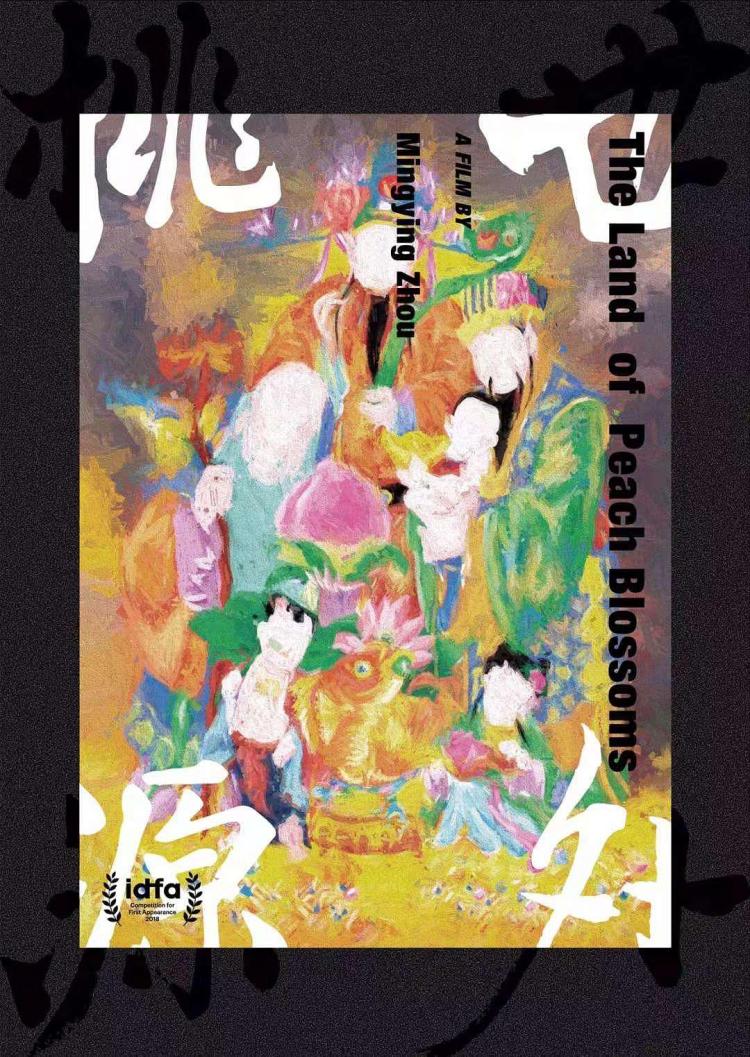
Stammering ballad poster“We all live our lives in silence” according to the subject of Zhang Nan’s Stammering Ballad (黃河尕謠, Huáng  Gǎ Yáo). A love song to a disappearing rural landscape, Zhang’s beautifully composed documentary follows an aspiring folksinger whose dreams of fame have taken him away from the land he loves so much as he tries to ensure the survival of traditional village culture by singing in the cities.

A college dropout, Zhang Gasong embraced his love of folk music while too embarrassed to return home. Honing his craft as he goes, he’s been travelling around the country for the last seven years going wherever someone wants to hear him play – though occasionally they might have to front him the train money to help him get there. Gasong is, it has to be said, an eccentric young man. A former bandmate laments Gasong’s “poor social skills” which led to the band’s breakup, while also remaining exasperated that Gasong just up and left, disappearing for years on end without a word, with little regard for their friendship. Still, he seems to have forgiven him enough to agree to play for Gasong’s big shot on China’s Got Talent.

China’s Got Talent might seem like a left field move for a traditional folk musician, but Gasong has his eyes on the prize. He wants to be the kind of star where everything gets done for him and all he has to do is play, but for the moment he’s busy touring small music venues and festivals singing for his supper and hoping the youth of China who have, like himself, abandoned their village homes for the convenience of city life, will eventually re-embrace the song of the earth.

That aside, Gasong has a conflicted attachment to the pastoral past. He always hated farming and ironically claims to loathe the familiar smell of wheat germ and freshly tilled soil, not to mention the physical toll of of the work. Nevertheless he maintains an attachment to the landscape and views it almost as an inheritance of which he has been robbed by the modern China. The place where he grew up is now largely in ruins after having been relocated to avoid a drought, and though he bitterly misses the familiar black donkey that once lived in the village he has to remember that it’s long been sold. A traveller now himself, Gasong is losing connection with his land and with his family, but desperately clinging to his ancestral legacy through the medium of song.

In the end, China’s Got Talent didn’t really get Gasong, but perhaps that’s for the best. Cameramen expecting disappointment found only relief when they came to interview the band afterwards. Though it’s a shame that the performance will never be aired, and the beautiful rural folksong will not be heard by the millions of Chinese viewers almost certainly tuning in for more energetic fare, Gasong remains undaunted. Wandering off once again he loses touch with his band members and resumes his nomadic travels as an itinerant musician. The grand irony is that these songs, so intrinsically linked with place, are themselves travelling and echoing in new locations looking for new pastures in which to take root as the modern China flattens mountains to build factories and moves families on from their lands while sending its young into the cities all alone.

Gasong, who has stammered since childhood, has found his voice through music though often struggles to make that voice heard in boisterous modern society. Like many of his generation he too has realised he cannot stay in his pastoral paradise, but has also discovered that the city doesn’t suit him. Most at home in the wide open spaces of his native Gansu, Gasong roams the land singing the song of the soil as he goes in the hope that it will one day echo and send the sound of home all around the world.


Stammering Ballad screens as part of the 2019 Chinese Visual Festival at King’s College London on 5th May, 1pm.

Original trailer (English subtitles)

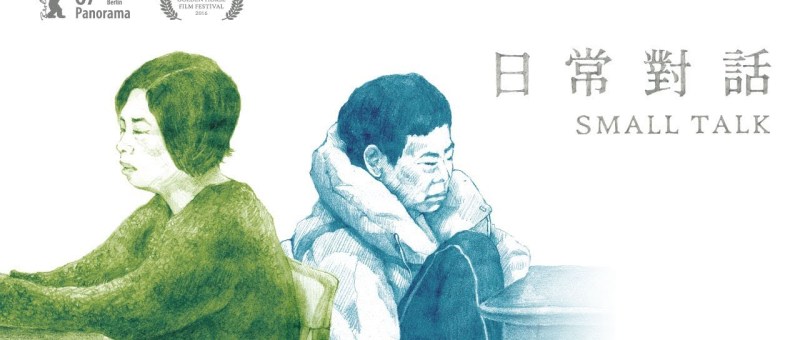
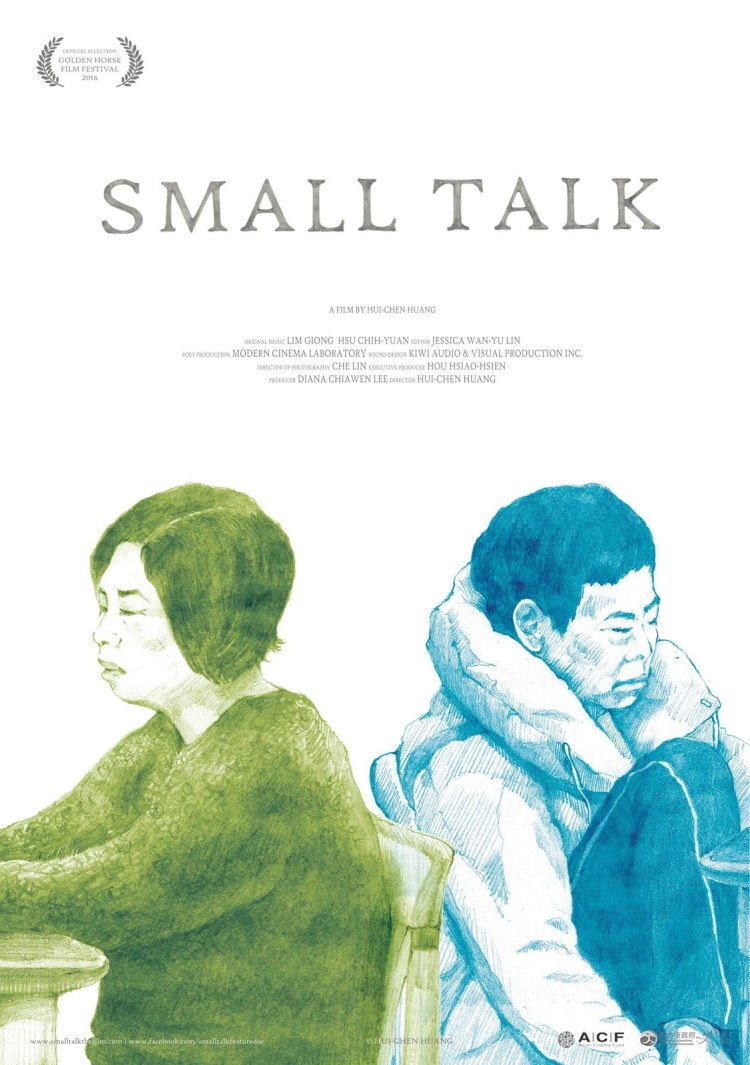
Small Talk (日常對話, Huang Hui-Chen, 2016)

Small talk poster“Who would want to understand me?” asks the laconic mother of filmmaker Huang Hui-Chen early in her autobiographical documentary, Small Talk (日常對話, Rì Cháng Duì Huà). “We do” the director replies, “but you won’t let us”. Huang’s film is, in a sense, an attempt to break through an emotional fourth wall in order to make sense of her complicated relationship with her distant mother Anu if only to ensure that her own daughter never feels as rejected or isolated as she herself has done living under the same roof with a woman she cannot quite claim to know.

In fact, Huang’s childhood memories of her mother are mainly to do with her absence. Even her younger sister eventually remarks that she always felt as if her mother was uncomfortable at home, preferring to spend time out with her friends rather than with her children. Forced to join her mother in her Spirit Guide business rather than attend school like the other kids, Huang began to resent her but also longed to be close to Anu despite her continuing distance. This desire for closeness is, ironically, only achieved through the introduction of the camera, acting as an impartial witness somehow uniting the two and making it possible to say the things which could not be said and ask the questions which could not be asked.

For Huang, the central enigma of her mother’s life is why she married man and had two daughters if she always knew she was gay. That her mother is a lesbian is something Huang always seemed to just know – it’s not as if Anu ever sat her down and explained anything to her, she gradually inferred seeing as her mother had frequent female partners and seemed to prefer spending time with groups of other women. Putting the question to her extended family perhaps begins to illuminate part of an answer. Like Anu, they will not speak of it. They claim not to know, that they do not want to know, and that they would rather change the subject. Even Anu, who otherwise seems to have no interest in hiding her sexuality, remarks that it “isn’t a good thing to talk about”. Nevertheless, her marriage seems not to have been a matter of choice. In those days marriages were arranged by the family, which is perhaps how she ended up with a man her sister describes as “no good” who later became a tyrannical, violent drunk she eventually had to flee from and go into hiding with her two young daughters.

Abusive marriages become a melancholy theme as Anu briefly opens up to recall throwing away sleeping pills her own mother had begun to stockpile in desperation to get away from her violent husband. A former girlfriend also mentions having divorced her husband because he was abusive, but seems surprised to learn that Anu had been a victim too. According to her, Anu had told her she was married once but only for a week and that her two children were “adopted”. Of course, this is mildly upsetting for Huang to hear, but seems to amuse her in discovering her mother’s tendency to spin a different yarn to each of her lovers to explain the existence of her family while also distancing herself from it. This seems to be the key that eventually unlocks something of Anu’s aloofness. Humiliated by her capitulation to marriage and then by her mistreatment at the hands of her husband, she cannot reconcile the two sides of her life and has chosen, therefore, to reject the idea of herself as a mother. Something she later partially confirms in admitting that though she does not regret her daughters, given the choice she would not marry again, not even if same sex marriages were legal believing herself to be the sort of person best off alone.

Huang interrogates her mother with a rigour that is difficult to watch, often to be met only with silence or for Anu to walk away with one of her trademark “I’m Off”s. It may be true that most people have something they would rather not talk about, and perhaps Anu is entitled to her silence but if no one says anything, then nothing will change and the cycle of love and resentment will continue on in infinity. Using the camera as a shield, Huang brokers some painful, extremely raw truths to her elusive mother and does perhaps achieve a moment of mutual catharsis but is also too compassionate to satisfy for laying blame, exploring the many social ills from entrenched homophobia to persistent misogyny and even the class-based oppression hinted at by the use of native dialect rather than standard Mandarin which help to explain her mother’s complicated sense of identity. Yet she does so precisely as a means of exorcising ghosts more personal than political in the hope that her own daughter will grow up to know that she is loved, unburdened by a legacy of violence and shame, and free to live her life in whichever way she chooses.


Small Talk was screened as part of the Taiwan Film Festival UK 2019.

Original trailer (English subtitles)
Father (紅盒子, Yang Li-Chou, 2018)

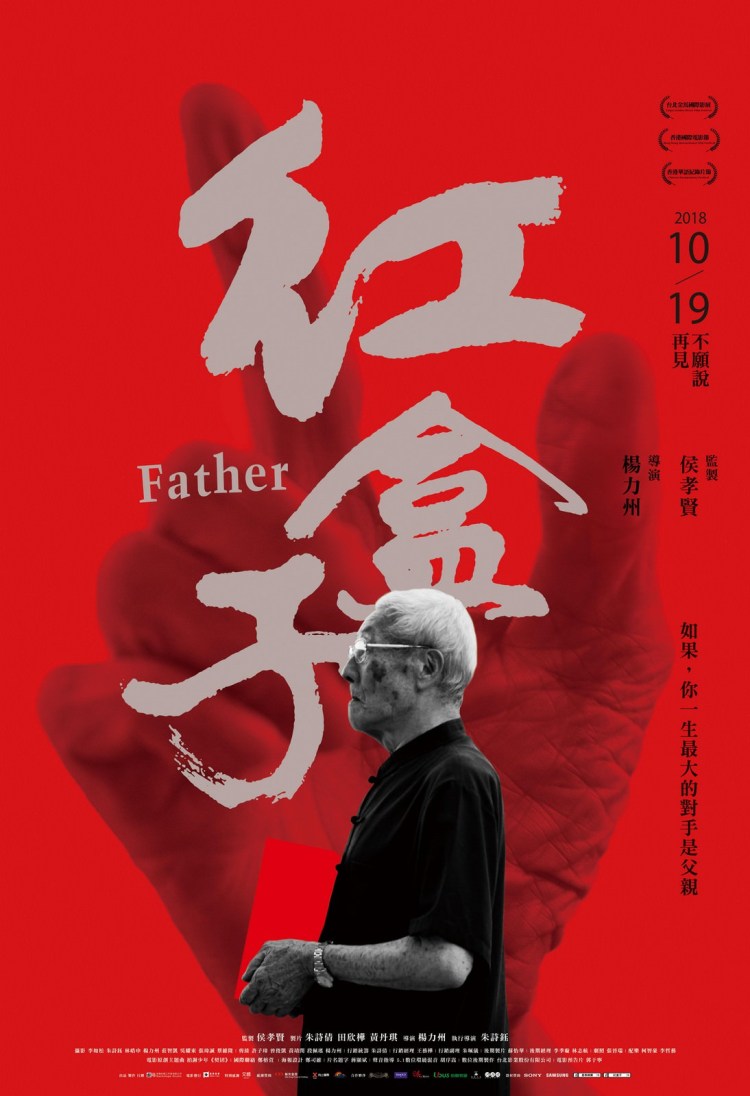
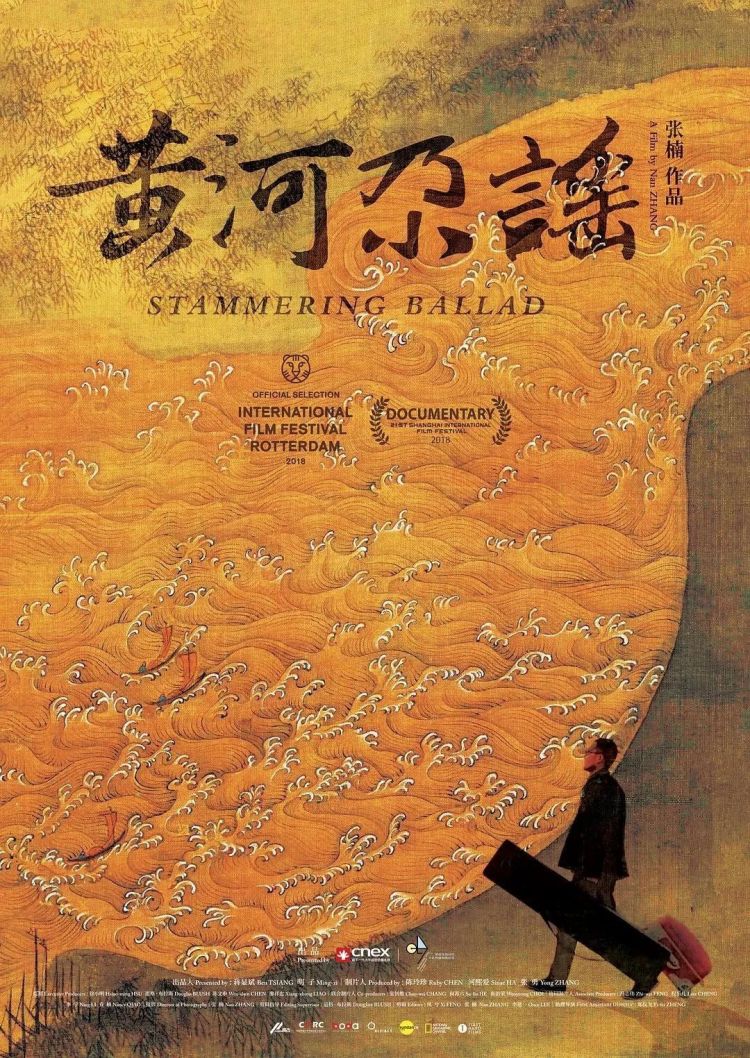
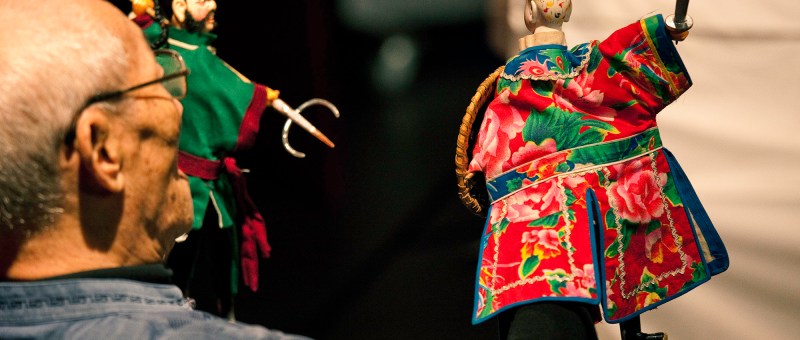
Father posterBudaixi, the art of traditional Taiwanese puppet theatre, is a form that’s fast dying out – not least because of the persistent erosion of the native Taiwanese dialect with which it is most closely associated, but there are those desperately trying to save it despite the relative lack of interest from audiences and the cultural sector. The “father” of the art, Li Tien-Lu, will be familiar to many as the inspiration behind Hou Hsiao-Hsien’s The Puppetmaster, as well as several appearances in Hou’s films including his memorable role as the grandfather in Dust in the Wind. It is not Li, however, who is the subject of Yang Lichou’s documentary but his son – Chen Hsi-huang.

Chen Hsi-huang, now very elderly, is an exiled master of the art who has dedicated his remaining time to ensure its survival by attempting to teach the next generation. Chen is not fussy – he will teach anyone who wants to learn including those from abroad and frequently tours his shows around the world often pairing them with local examples of puppet theatre. His standards are, however, high and he does not entirely approve of the “modernisation” of the art believing that while innovation is one thing technique is another and what he sees in the next generation often disappoints him.

Yang opens with a hypnotic sequence of Chen’s naked hand rehearsing doll movements against a black screen, showcasing his now gnarled fingers bearing the effects of a lifetime’s experiences. Yet despite his various successes, Chen still feels himself slighted and as if he has something left to prove – perhaps ironically, he cannot seem to emerge from the shadow of his late father even now himself in advanced old age. Yang’s subtle suggestion lays the blame for Chen’s internalised resentment on the confucian society and its patriarchal obsession with the “father”. Li had married into his wife’s family and so, as is the custom, his first son took his mother’s surname – Chen, something which seems to have placed a wedge between parent and child leaving Chen more or less rejected by his father simply for having the wrong name. For this reason, he was prevented from inheriting Li’s puppetry company (that honour went to his younger brother surnamed Li) which might, in a way, have been a blessing in giving him the opportunity to remove himself and start again with his own company under his own name were it not for the fact that he is almost always introduced as the son of Li Tien-Lu.

In the traditional arts, it is not uncommon to think of a master as a “father” to his pupils and this does seem to be something Chen took to heart for good or ill. His own father had been extremely strict, often beating him with the head of a doll when he made a mistake. Chen is careful not to make the same mistake with his pupils, but is demanding none the less and often disappointed. His fatherly fixation is perhaps mirrored in his mild rejection of his own first pupil, standing in for a son (his own child did not follow him into the profession), whom he declined to name as a successor despite knowing that he is the most skilled member of the troupe. Somewhat embittered, Chen struggles to escape from the traps set by his father both in terms of his life and of his art.

Chen’s story feeds into that of Budaixi, set against 50 turbulent years of political history which saw it banned by the Japanese for being too nationalist, then defacto banned because of a prohibition on native dialects only to be resurrected in Mandarin to be used for anti-communist propaganda and then the same but pro-China. Chen just wants to be a craftsman perfecting his technique and serving the patron god of puppeteers as best he can. As one of his pupils suggests, regarding Budaixi as an “art” and its practitioners “artists” may perhaps have been a mistake in encouraging the wrong kind of competition and thereby weakening the industry as a whole just when it should be uniting in a shared mission to save Budaixi from disappearing completely.

Chen too struggles to emerge from his father’s shadow, perhaps gripping on too tightly to traditional Budaixi while rejecting its progeny in the burgeoning world of contemporary puppet theatre. Nevertheless, he was able to become a master of the art and to pass his knowledge on to a new generation committed to preserving it even in the face of mild opposition to a supposedly difficult, if infinitely beautiful, art form.


Father (紅盒子, Hóng Héziwas screened as part of the Taiwan Film Festival UK 2019.

Original trailer (English subtitles)
Four Springs (四个春天, Lu Qingyi, 2018)

Four Springs poster“Time flies. Life is so short, isn’t it?” a cheerful relative remarks lamenting that the family only comes back together once a year during the first of Lu Qingyi’s Four Springs (四个春天, Sì gè Chūntiān). Rather than follow his family through four seasons for one year, Lu Qingyi observes his ageing parents at yearly intervals as time both moves on and doesn’t delivering joy and sadness in equal measure.

Beginning in the spring of 2013, Lu Qingyi returns home to the remote small town of Dushan where his parents have lived for decades. The family comes together again, if only briefly, to ring in the New Year much as they always have. During the second New Year, Qingyi is joined by his sister Qingwei but there is sadness on the horizon as we discover she is coping with serious illness though the family once again celebrate joyously recalling the past more than dwelling on the future. Subsequent reunions are born both of joy and sorrow as family illnesses take hold, bringing people back together again if only to unite them in sadness and anxiety. Yet life, as always, rolls on just the same.

Briefly including shots of himself, Qingwei focusses on the figures of his parents – retired teacher Yunkun and mother Guixian. Though they must have lived through some turbulent times, the couple are blissfully happy in each other’s company and used to taking pleasure in the simple things such as the swallows which occasionally nest in their roof, or making a new hive for some migratory bees come to visit. The natural world is very much a part of their existence as they make time for hiking out in the mountains, tending graves and enjoying the scenery singing always as they go.

Music, indeed, seems to be an important part of life in Dushan and song is never far away from the lips of of Qingwei’s parents who find themselves humming folk tunes or stretches of traditional opera. Yunkun makes use of his computer to listen to and edit tracks while the rattling of his wife’s manual sewing machine echoes from the next room. Though many things here are “traditional”, the couple are not so much trapped in the past as happy with what they have. Yunkun has embraced his computer, but a later attempt to introduce the couple to smartphones and teach them to use the WeChat app ends in hilarity as they attempt to process the extreme modernity of instant communication.

Technology is both a privilege and a curse, as the family discover one New Year in being deprived of watching the spring gala thanks to an ill timed power cut which also leaves them inside in the cold but perhaps makes the fireworks a little brighter. As the New Year becomes marked by its absences – the empty chairs and increasing silences, technology also provides a path back to happier times through the home videos filmed in previous years by Qingyi and his father which provide a record of ordinary family life both happy and sad in recalling past springs never to come again.

Time itself becomes a theme as it marches on invisibly. Qingyi’s cheerful parents are thankfully in good health, though his mother wishes they could dance again like they did in the old days and worries what will become of the one left behind when the inevitable happens. Nevertheless, the New Year arrives as it always does, preparations are made, too much food is cooked, the family eats, and sings, and remembers. Lu Qingyi’s Four Springs is a touching evocation of the joys and sorrows of being alive in his loving tribute to his goodhearted parents who have learned to find the tiny happinesses in the every day even in the midst of unbearable sadness.


Four Springs screens as part of the eighth season of Chicago’s Asian Pop-Up Cinema on April 7, 2pm & 5pm, at Heritage Museum of Asian Art, 218 West 26th Street.

Original trailer (English subtitles)
Up the Mountain (火山, Zhang Yang, 2018)

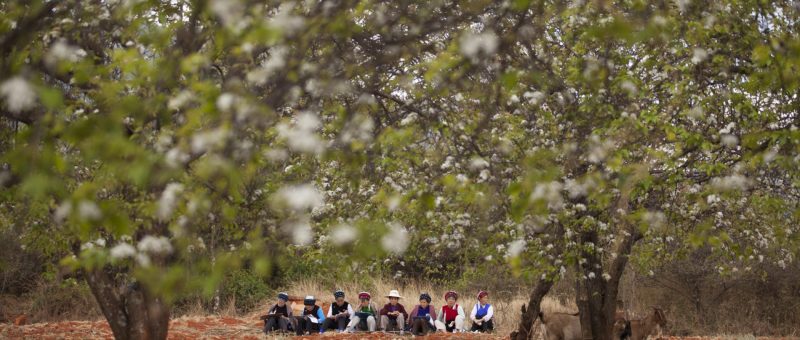
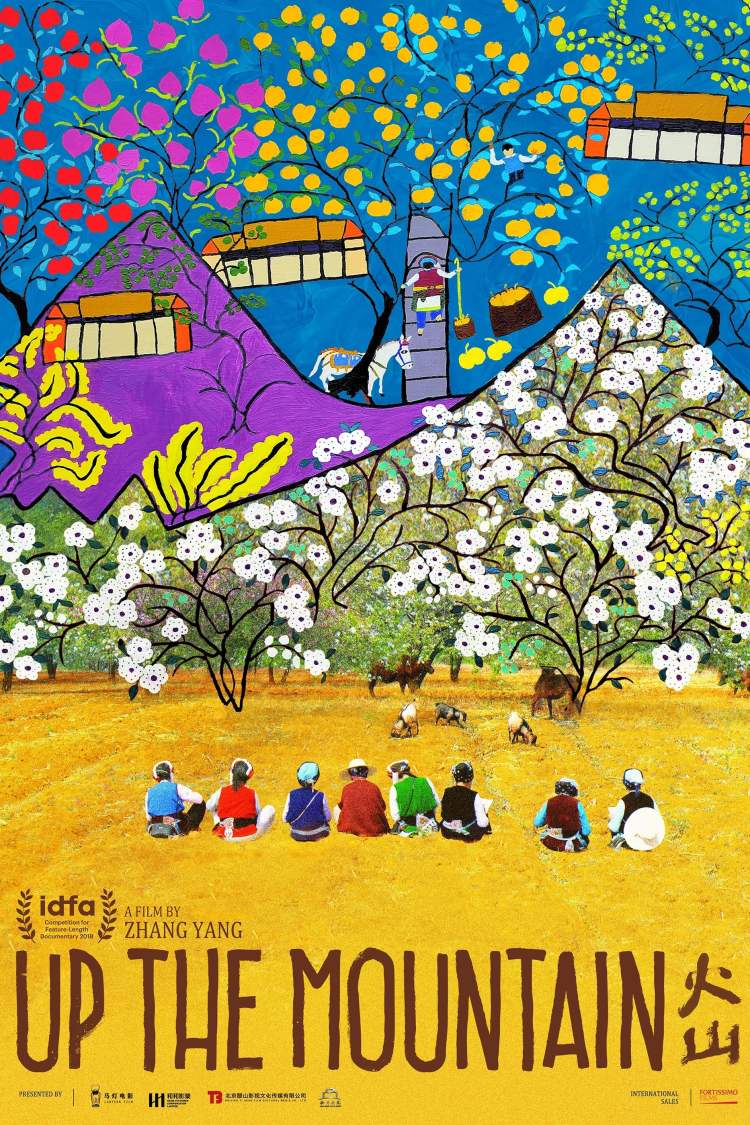
Up the Mountain posterThe story of modern China has often been one of migration as the young find themselves pulled towards the cities, sending their children back to the countryside to be raised by relatives while they earn what they can away from home. As the economic situation improves, however, there may be motion the other way. Successful artist Shen Jianhua moved from the bustling metropolis of Shanghai to a remote mountain village where he practices his art and opens his home to all who have an interest in learning from him.

Shen’s mountain home is an interesting exemplification of a blend of old and new. Though he seems to prefer the simple life, the renovated property is decorated in a modern, though fairly minimalist, style and the family do not appear to want for anything. Their living is not austere and Shen does not object to the idea of modernity, as the toys bought for his baby son seem to testify while his apprentice chats on an iPhone and his teenage daughter listens to music while she runs.

Nevertheless, life in the mountains is lived slowly and there are things which must be done which is why we see apprentice Dinglong continually chopping firewood while the gaggle of old ladies who make up the majority of Shen’s pupils come back and forth with vegetables preparing tasty food to be shared communally by the small family that has grown up around Shen’s art practice. It does not appear that the ladies pay anything for Shen’s instruction or that he draws much of an income for it, but all seem to benefit from a shared sense of creative community. One old lady describes her life before art as “stagnant, like old water”, but now she feels reenergised and happily gives away her finished paintings to her bemused children as something to remember her by when she’s not around.

Not everyone is as happy for the old women as they seem to be for each other, however, as we notice in the persistent discord between one older bickering couple. Dinglong too remains conflicted. Still young, his parents are beginning to pressure him to give up painting and the mountains to settle down. Dinglong, like many young men, doesn’t really want to and so is surprised and dismayed when Shen’s advice is more conservative than he might have expected, encouraging him to obey his parents’ wishes and reminding him that good art is founded on a wealth of life experience. Truth be told, Dinglong has a girlfriend already and is perhaps edging towards marriage but the snag is that her parents are from a nearby city. They’d rather their daughter marry nearby and would worry about her living in a remote village they perhaps assume is much more rustic than it really is. The other problem is that artists don’t earn much and Dinglong admits he only paints one picture a year with no guarantee it will sell. As a son-in-law, he’s not a particularly good catch.

Dinglong’s dilemma is perhaps unusual, most of the other youngsters are desperate to leave the country for a better life in the cities no matter how illusionary it might turn out to be. Then again, his resistance is perhaps more understandable as he complains to Shen that he is being given almost no choice in his future as everything is being sorted out by his fiancée and the parents with him the only one in favour of his staying in the mountains. His future wife has a point, however, when she objects to raising children in the village without access to a good school. Shen and his wife are educated people and they’ve been able to teach their teenage daughter at home but Dinglong is a rural boy and they won’t have the resources to give their children the best start in life unless they travel to a place those resources might be found.

Reluctantly, Dinglong is forced away from the simple, traditional life which seems to suit him best while his wife remains unsympathetic to his attachment to the village and its guardian god. Meanwhile, Shen’s life carries on much as before even after the birth of his baby son who put in an appearance a month early to be born in the middle of New Year. Zhang captures the ancient rhythms of the traditional village through its rowdy, colourful festivals filled with joy and excitement but also sees the ways in which it is changing. One older lady enlists Shen’s help to build a bathroom on her property because her daughter was too embarrassed to bring a prospective husband home to a house without one (and a daughter getting married is after all the most important thing), creating a beautiful space dedicated to modern ideas of relaxation and serenity rather than the efficient austerity usually associated with rural life. The young might not be able to stay, but given time they may return and the mountain will be waiting for them with patient warmth.


Up the Mountain (火山, Hshān) screens as part of the eighth season of Chicago’s Asian Pop-Up Cinema on April 6, 2pm, at Heritage Museum of Asian Art, 218 West 26th Street.

Original trailer (dialogue free)

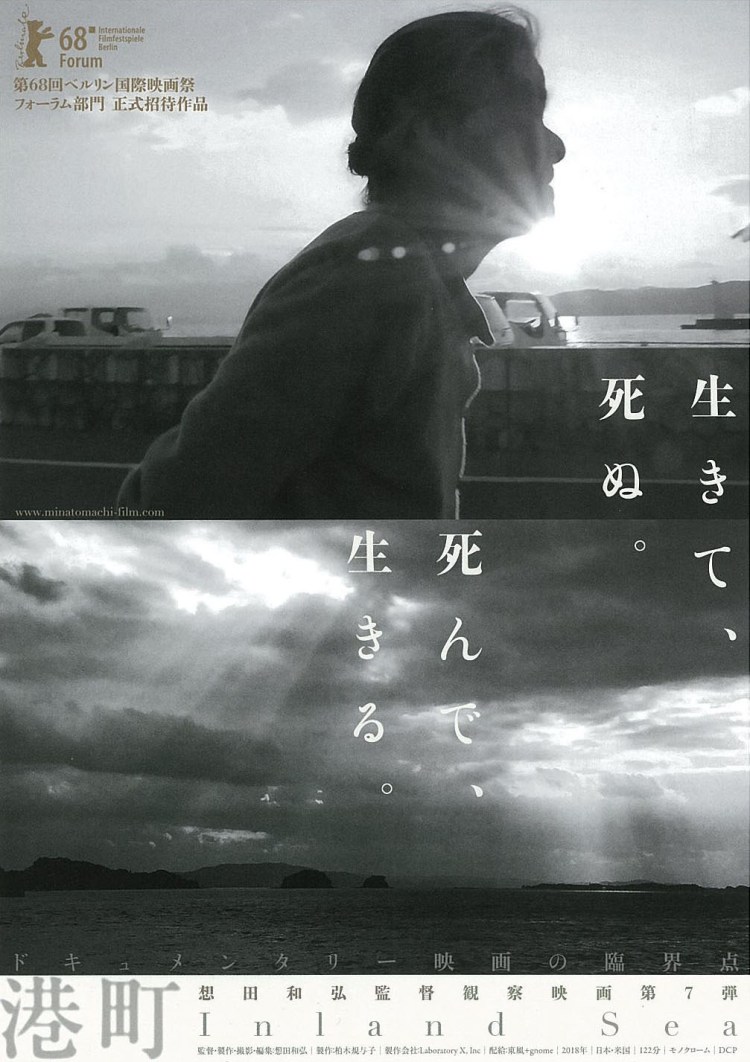
Inland Sea (港町, Kazuhiro Soda, 2018)

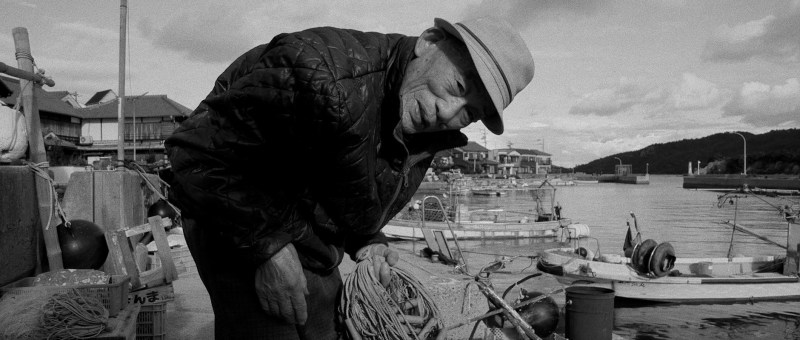
Inland sea posterJapan’s ageing population continues to provoke shifts in the social fabric, not least in small rural towns where the elderly now dominate and have been largely left to fend for themselves as if time had simply left them behind. Following his previous documentary Oyster Factory, documentarian Kazuhiro Soda returns to small town coastal Japan with Inland Sea (港町, Minatomachi). Focussing on the village of Ushimado, he observes those still clinging on to an archaic way of life despite advanced age and increasing hardship.

The first of Soda’s primary subjects, Waichiro, is now 86 years old and hard of hearing yet he still takes his boat out every day to fish in the hope of returning home with a prime catch. His living is, as he explains, precarious given that his equipment is now expensive while the price of fish has severely declined. A later meeting with fishmonger Koso makes plain that not every catch is equal – live(ly) fish fetch the most money, while dead ones bring in in only half and like everything else the price of fish is also dependent on demand.

Koso refuses to tell us her “real” age outside of amusingly describing herself as a “late stage elderly” which sounds like something she probably read on a well meaning but somewhat patronising government leaflet. In any case, she is a sprightly, energetic woman who seems far younger than her years and is something of a neighbourhood hub as she makes her rounds delivering fresh seafood to the mostly elderly residents who eagerly await the next tasty catch.

Most of the other residents are, however, more like Waichiro in advanced old age and mostly left to their own devices now that their children have left for the cities never to return. Kumiko, an 84-year-old widow who still works by the waterside preparing fish is just one such woman with a heartbreaking post-war story she later relates in a typically matter of fact fashion. Becoming a kind of guide for Soda and his producer as they explore the small village, Kumiko often attempts to steal the spotlight – bad mouthing her neighbours live on camera while they stand right behind her as in the case of her apparent bestie whom, she insensitively tells us, has “no friends” and a poor relationship with her family despite having eight children which most of the other lonely older people might consider as something of a luxury.

Relating her sad life story in which she laments a feeling of disconnection from the place in which she lives owing to having lost her family in the war and been adopted at age four by a fisherman and his wife who denied her an education (as was the thinking in those days), Kumiko lays bare a melancholy underside of the post-war boom which seems to have left towns like these (the ones that survived at all) almost untouched as if frozen in time. The world has pulled away, leaving Ushimado behind like a rock pool filled with water long after the tide has gone out.

Soda’s decision to regrade the film in black and white after shooting in colour adds a poignant touch to his casting of Ushimado as a place somewhat out of time. Wandering around, Kumiko begins to point out empty houses, mostly belonging to the recently deceased, which make up the bulk of the town and it’s true that the vast majority of the people we meet are older save perhaps for a younger woman helping at a cafe and a middle-aged one who takes care to feed the many stray cats who are the area’s other main residents with leftover fish offal. There is, however, perhaps fresh hope for towns like Ushimado as evidenced by the mild surprise expressed in discovering the range of dishes on offer at the local coffee shop seeing as technological advances and better transport links may help to draw some of those who left for the city back to the country even if not to fishing. At the very last, colour returns to the screen reminding us that there is life in this place still and that its stillness should not be mistaken for transience.


Streaming almost globally via Mubi until 1st April 2019.

Original trailer (English subtitles)
A Way Out (出路, Zheng Qiong, 2016)

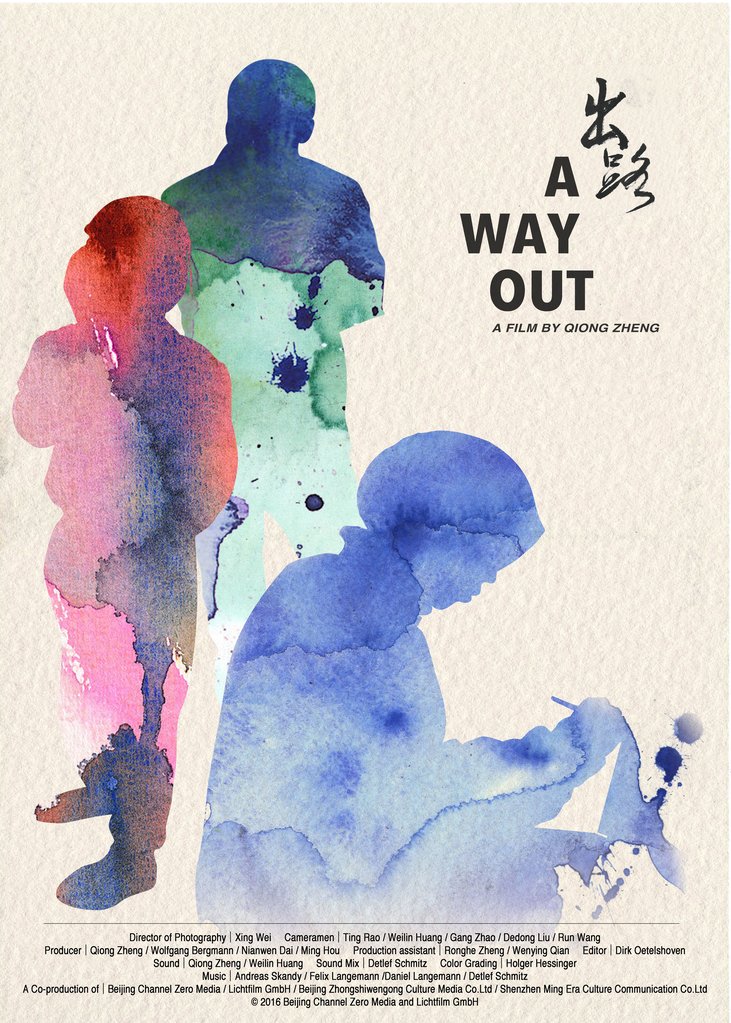
a way out posterThe duplicitous dichotomies of the modern China have become a permanent fixture in the nation’s cinema though mostly as a symbol of conflicted ideologies as some yearn for a return to an imagined past egalitarianism and others merely for a brake on the runaway train of capitalist materialism. Zheng Qiong’s documentary A Way Out (出路, Chūlù) follows the lives of three youngsters chasing the “Chinese Dream” albeit in their own particular ways only to discover that, in the end, despite the best intentions of those who might seek to lessen the advantages of privilege, birth may be the biggest factor in deciding one’s destiny.

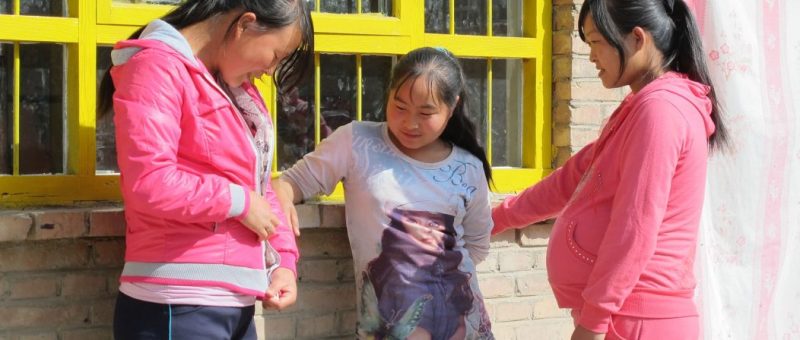
Zheng opens with a little girl, Ma Baijuan, in rural Gansu. Her sing-song voice playing over her cheerful stride to school through the narrow mountain paths hints at a natural curiosity, a desire to know the “why” of everything, but Baijuan is only reciting by rote what it is says in her school book. Her education, which is received at a village school segregated by sex where she is one of only two little girls learning simple facts about the world around her while the boys next-door get a crash course in elementary maths, is largely a matter of questions and answers rather than thought or enquiry. Nevertheless, she excitedly tells us that she will soon be going on to the middle school in the nearest town and then hopefully to a college in Beijing after which she will make a lot of money and buy a new house for her family with a proper well so they can get water.

Meanwhile, 19-year-old Xu Jia has already repeated the final year of high school twice in the hope of bettering his exam grades to get into a good university. Like many of his contemporaries, Xu sees a degree from a reputable institution as the only “way out” of small town poverty. He is willing to sacrifice almost anything to make it happen and thinks of little else than achieving his dream of a getting a steady job at a stable company and then getting married in order to reduce the burden on his ageing single mother.

Xu may think that a white-collar job is the only path to success but others do not quite see things the same way. Yuan Hanhan is introduced to us as a 17-year-old “high school drop out” but is in fact a talented artist and bona fide free spirit. After brief stint in a hippy cafe, she eventually achieves her dream of studying abroad at art school in Germany where she struggles to adapt to the relatively laidback quality of European society, affirming that in a developed nation like Germany no one sees the need to go on developing. She complains that Germans only need to do their routine jobs like little stones arranged in a line by the country – perhaps an ironic statement given the restrictive nature of Chinese society but also one with its own sense of logic which places the insistent work ethic clung to by Xu on parallel with an economic model which may already be out of date.

Xu gets his start as a telephonist making cold call insurance sales where the staff are drilled like a military cadre to regard their pencils as machine guns as their mics as grenades, their jobs not means of survival but an enterprise for the common good which drives tax receipts to benefit the entire nation. In a sense he has found his “way out” though his life will be one of soulless corporate drudgery, a fact brought home by his mother’s casual appraisal of his wedding album which features her son in a series of intensely romantic photographs in which he has “absolutely no expression”. Meanwhile, Hanhan remains a free spirit. Even if she never quite felt at home in Germany, she maintains a healthy interest in the wider world and is determined to forge her own path rather than become simply one of many identical “little stones”. For Baijuan, however, the future is much less rosy. Her grandfather, commiserating that perhaps she didn’t have the kind of aptitude for schooling that she might have liked, regards a woman’s education as unimportant, as Baijuan’s only “way out” is a “reliable” man whom they would like to find for her as soon as possible.

As Hanhan puts it in her philosophical closing speech, when it comes down to it birth is the most important factor of all. Simply by being born wealthy in Beijing she had advantages that others do not have. Baijuan’s fate is sealed in being born to a poor farming family in a remote rural region, while Xu constantly refers to his “family situation” as the reason he feels he has to become a success as soon as possible, hitting all the social landmarks at all the expected junctures. Each of our protagonists is looking for a “way out” of their unsatisfactory circumstances, and each of them finds it, but perhaps not quite in a way everyone would view as ”satisfactory”. Zheng’s vision of the new China is one in which the old ideology has failed, leaving behind it only an entrenched social hierarchy from which there may be no “way out” save a willing refusal to comply.


A Way Out was screened as part of the Chinese Visual Festival’s New Year programme at the BFI Southbank and is also available to rent online via Vimeo.

Trailer (English subtitles)
Dead Souls (死靈魂, Wang Bing, 2018)

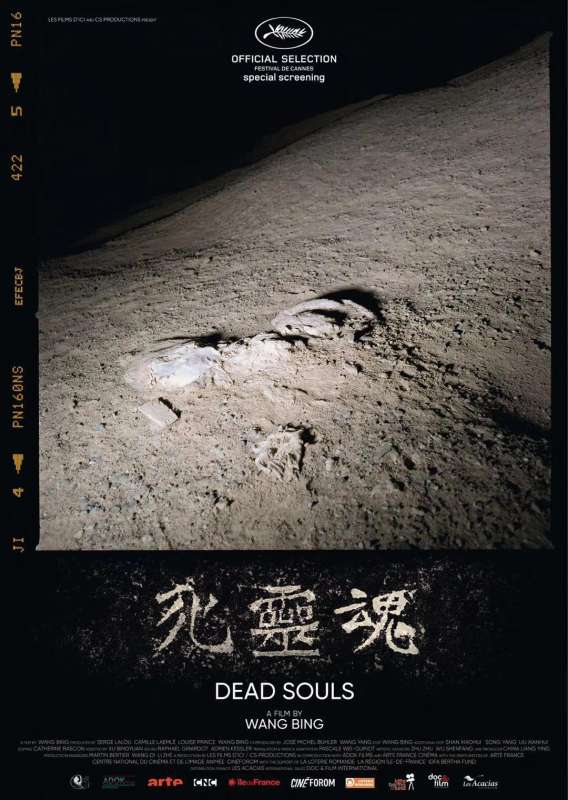
Dead Souls posterFor his eight hour exploration of China’s painful past, Wang Bing borrows a title from Gogol’s famous 19th century Russian novel which aimed to poke fun at the various flaws in contemporary cultural norms. “Dead Souls” (死靈魂, Sǐ Línghún), in Gogol’s case, referred to serfs which had passed on but were still included in a landlord’s register of property and therefore liable for taxation (the novel’s protagonist, a corrupt former civil servant, is keen to “buy” these “virtual” serfs as part of a mysterious money making scam). Wang Bing’s aims are about as far from comic as it’s possible to be, but he too is intent on unmasking national hypocrisy in ensuring the testimonies of the hundreds of men and women who survived Mao’s “Anti-Rightest Movement” of the late 1950s are finally heard. The alleged rightists became “dead souls” in more ways than one – having lost their party affiliation they no longer quite existed in the intensely conformist post-revolutionary world where they found themselves betrayed and abandoned by an increasingly oppressive regime that eventually robbed them of their humanity.

In 1956, the Communist Party had announced the Hundred Flowers campaign in which ordinary people were encouraged to voice their innermost thoughts about the state of the revolution. After a short lived period of liberalism, the Hundred Flowers campaign was exposed as a ruse to root out so called reactionary elements. The Anti-Rightist Movement which began in 1957 rounded up those who had offered up constructive criticism of the party as well as capitalists, intellectuals, and just about anyone with a vaguely questionable history, and packed them off for “re-education” at various labour camps throughout China.

Mostly offered through lengthy direct to camera monologues, Wang presents a first hand account of the Jiabiangou Labor Camp from those who managed to survive (around 500 of 3200 internees) after famine and disease took hold. Many of the alleged “rightists”, most “rehabilitated” after the Cultural Revolution and subsequent economic reforms, affirm that they have no idea what it is they did “wrong” but are convinced that it was petty jealousies and personal resentments that landed them in hot water rather than a political dispute. Many found themselves at the mercy of an official they’d already reported for incompetence or corruption, disappeared for reasons of expediency or convenience. Others were told that their re-education was for the public good and they’d be back in a matter of months in their old job with their old salary, or else their family could come live with them on the utopian farm that would arise from their efforts in the camp.

Of course, the reality was very different and the harrowing stories recounted by the now elderly men with a mix of retrospective black humour and deeply held resentment speak of death on a mass scale, starvation, walking corpses, and rampant disease. With famine intensified by the failure of the Great Leap Forward, food supplies grew increasingly short while numbers of “rightists” in need of re-education only increased thanks to a kind of quota system. Those most likely to survive were the ones who made themselves the most useful – the physically strong, the tenders of horses, and the kitchen staff who could survive by pinching food when no one was looking. One strangely gleeful old man calmly recounts how he finagled his way into the kitchen and then set about pilfering the best of the supplies for himself with the help of the other cooks (seemingly without remorse), while another man recounts spotting a similar practice and taking the greedy to task by reminding them that the food they were scoffing came out of someone else’s mouth. Those who survived did so either because their families were able to smuggle in food for them, or else they were lucky.

Breaking away from the rigorous, sometimes oppressive interviews, Wang wanders the grounds of the former camps now levelled in an attempt to erase their existence but still painfully visible in the arid, scarred landscape. Bones litter surface as if squeezed out of the earth while human skulls rest eerily in the middle of barren land. A group of survivors attempts to identify remains through stones placed atop the bodies of those who died when those left behind still had the strength to bury them, but fail to read the faded names while their attempt to erect a monument to those who lost their lives to a malicious failure of government ends with only more destruction. What they were not permitted to do Wang accomplishes if intangibly in creating an indelible monument to human suffering through the first hand testimony of a persecuted generation finally able to break the long decades of silence and give voice to a truth still so painfully hidden.


Short clip from the beginning of the film (English subtitles)

Bitter Money (苦钱, Wang Bing, 2016)

Bitter money poster“Bitter Money” (苦钱, Kǔ Qián), according to director Wang Bing, is a phrase on the rise. It may be that money is rarely sweet, but this kind is particularly hard to swallow. Not only is the youth of China thrown out of its villages towards the inferno of city industry, living alone and away from home, but finds nothing more than exploitation, drudgery and false promise when it gets there. Wang’s trademark immersive detachment captures the frustrating inertia of the young men and women of the modern China who find themselves very definitely at the bottom of a heap and consistently betrayed by a failed ideology.

Wang opens in the country with a trio of hopeful youngsters about to leave everything behind for the bright promise of a better life for themselves and their families bought with city money. They board a bus, and then a train, and then interminable hours later arrive in Huzhou, the centre of the modern garment trade. The girls find work in a small workshop which, all things considered, might not seem so bad save that it provides only extremely low pay and offers no guarantees.

Shifting away from the recent arrivals, Wang’s camera locks onto the melancholy figure of 25-year-old Ling Ling who wants to borrow it as ally in confronting her coldhearted husband who threw her out after she complained about his beatings and is now so resentful that she’s stayed away too long that he refuses to talk to her. Ling Ling’s attitude to her unhappy marriage speaks volumes about the oppressive, patriarchal world of Huzhou where physical strength and dexterity are the only real currencies.

Lamenting her fate to coworker, Ling Ling affirms that domestic violence is just a part of life and believes that women have a duty to “submit” to their husbands’ rages – after all, “no woman can beat a man”. Her husband, Erzi, is proud and insecure. He views his wife’s behaviour as a slight against him and is resolved to be rid of her, loudly threatening her life in front of half the neighbourhood guys each of whom gets up and abandons their mahjong game after sensing that something is about to kick off. Despite the disdain with which the other men treat his overt violence towards his wife, Erzi is convinced his “manly” behaviour is impressive and thinks nothing of grabbing his wife by the throat in full view of Wang’s camera which remains a purely passive presence despite this ongoing threat.

Ling Ling, however, has few real choices left to her. She can’t survive alone in this environment and has nowhere else to go. In a pattern repeated across the nation, Ling Ling’s son is being raised in the country while she and her husband try to make a go of things in the city. Her major argument with Erzi is that he kicked her out with no money and won’t even give her anything for their son. Yet a later scene shows them together again, seemingly “happier” even whilst they to continue to bicker about money if in a less obviously destructive way.

Most of the other workers are not quite as trapped as Ling Ling, but are caught by a feeling of threat and desperation which encourages them to push themselves beyond the limits of human endurance while their bosses reap the profits. One minute the garment workshop is in the hole because they backed a product which isn’t selling, and the next it’s doing so well that the “slow” workers are being laid off in favour of the more “efficient”. It goes without saying that work in these small workshops is almost entirely unregulated with very few enforceable labour rights which means the boss is free to hire and fire as he sees fit. Some consider “investing” in pyramid schemes despite an awareness of their risks in the belief that they could beat the system if they get out fast enough while others resolve to give up and go home to the comparative comforts of the country.

One worker retreats into drink, only for his boss to tell him he’s holding back his wages for his own good which seems like a dubious claim at best. The workers regard the “big factories” with fear and awe, enemies of their current establishments but perhaps also offering better opportunities if also requiring a further fall into the industrial inferno. With little else on offer, “bitter money” is all there seems to be but its rewards are scant and its toll heavy. The teenage girl we first meet full of excitement and enthusiasm is eventually worn down, realising she’s worked all these months and earned barely anything. Wang’s detachment mirrors that of his protagonists who find themselves at the mercy of a cruel and indifferent social system the ongoing violence of which it proves almost impossible to escape.