Change was in the air in the Korea of 1979. Park Chung-hee, who had seized power in 1962 by means of military coup and thereafter ruled as a repressive dictator, was assassinated by the head of the KCIA for reasons which remain unclear. A brief window of possible democratic reform presented itself but was quickly shutdown by a second military coup by general Chun Doo-hwan who doubled down on Park’s repression until finally forced out of office in the late ‘80s. It’s into brief moment that Chung Ji-young’s White Badge (하얀 전쟁, Hayan Jeonjaeng) drops us as a traumatised reporter finds he is being given permission revisit the painful past now that they are finally “free” to speak their minds, but remains personally reluctant to open old wounds.
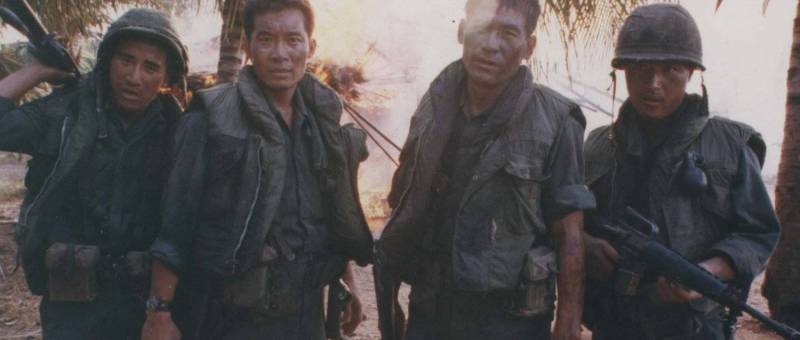
Han Gi-ju (Ahn Sung-ki) is a functioning alcoholic whose wife has left him and remarried though he still spends time with his small son who appears to adore his dad. In the wake of Park’s assassination, his boss wants him to write the true story of his experiences as a soldier in Vietnam, but Gi-ju is not convinced. He’s still haunted by nightmares of his time in the army and has no desire to go delving into his own painful memories even if it is perhaps the right time to let the people know how it really was. A little while later, however, he starts getting nuisance phone calls which turn out to be from an old war buddy, Byeon Jin-su (Lee Geung-young), who remains too shy to get in touch but later sends him a collection of photos and, somewhat worryingly, a pistol taken as a war trophy from the Viet Cong.
We only come to realise the significance of the pistol’s passing at the film’s conclusion, but the fact remains that both men have been permanently changed, perhaps damaged, by their experiences in Vietnam only in different ways. Displaying obvious symptoms of PTSD, Jin-su has reverted to a childlike state, somewhat unsteady in his mind, and quickly flying into a panic on hearing loud noises such as helicopters or fireworks which return him to the battlefields and the terrible things he saw there. Gi-ju, meanwhile, is brooding and introverted. He drinks himself to sleep but is woken by nightmares. His marriage has failed and his only friendship seems to be with his editor who drags him to a karaoke box to schmooze a wealthy friend from school who, somewhat ironically, made most of his money manufacturing weapons used in Vietnam while never having to serve himself. “What’s wrong with that?” he asks, “We made money thanks to President Park. When President Park died, my dad cried.” unwittingly outlining the entire problem and in fact embodying it as he continues throwing his money about with the excuse that the only thing to do with dirty money is spend it dirtily.
Prior to that, he’d criticised Gi-ju’s manhood by betting that he’d never actually killed a Viet Cong soldier. Gi-ju laments that all anyone ever wanted to know about Vietnam was how much money he made and whether he bedded any Viet Cong women. They never wanted to know the reality of it, that he found himself increasingly disillusioned not just with his country and the war but with “human values and history”. While in Vietnam he witnesses street children chasing soldiers for candy and flashes back to his own days as a street orphan after the Korean War tugging on the sleeves on American GIs who crudely threw him only empty packets of cigarettes. The colonised is now a coloniser and it’s an uncomfortable feeling. On a long march, Gi-ju and another soldier pass an old man along the wayside who keeps shouting “pointless” and explains to them that in his 70 years he’s seen many people walk along this road. First it was the Chinese, and then the French, the Japanese, the Americans, and now the Koreans. If you truly want to help, he says, go home and leave us in peace. “We don’t care who wins, we just want to farm and nothing else. So please leave us alone”.
The utter senselessness of their presence is further brought home to Gi-ju when his unit panics and fires on what it thinks is a huge unit of Viet Cong soldiers, but actually turns out to be a field full of cows. The locals are obviously upset, demanding compensation, but his Staff Sergeant is unrepentant, little caring that they’ve just destroyed the local economy and the ability of these ordinary people to feed themselves in their panic and incompetence. Yet in his first few pieces for the paper, Gi-jun recounts that the first six months were ones of ambivalent tedium in which they mostly dug ditches and bonded over beer. They were torn, hoping it might stay this way but also embarrassed by the thought of going home with no combat experience.
As time goes on, however, they find themselves on ever more dangerous missions only to discover that they have been used as decoys, their heavy casualties dismissed as “small sacrifices of war”. Betrayed by their country, these men were also forced to betray themselves. After firing on civilians in panic, the Staff Sargeant orders his men to kill the survivors to cover up his mistake, threatening them at gun point. One is never quite the same again, and the other finally kills his superior to avenge his transgression. Gi-ju is not witness to these events, only to their effects, but is obviously aware of the cruelty that his service entails.
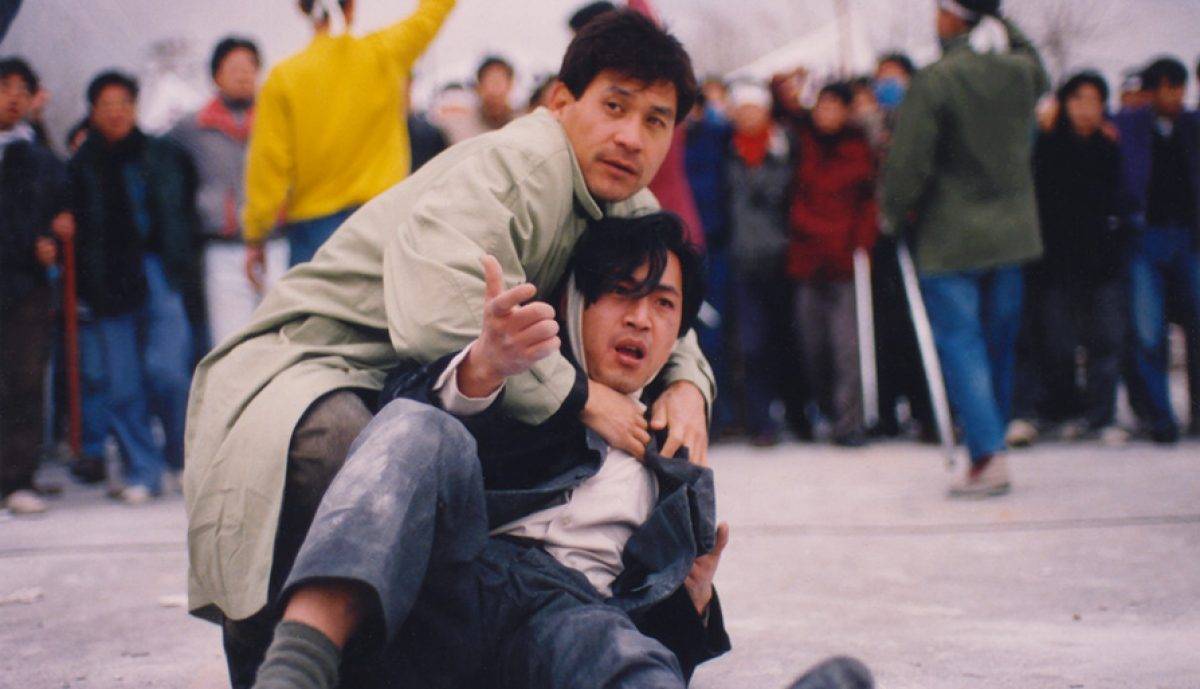
Dissatisfied with his first manuscript recounting a humorous episode from the early days, Gi-ju’s boss tries to curate his memories, asking him for a cliched anti-war tract about how combat turns intellectuals into cowards while the ignorant are reborn as heroes. Something much the same happens with a documentary crew on the ground who actively ask the soldiers to re-stage the action for the camera. Everyone has their Vietnam narrative, and no one is quite interested in the full horror or the present pain of these wounded men. Reuniting with Jin-su whose mental state is rapidly declining, the pair are caught up in a democracy protest by students who actively resist the draft and the militarisation of education, ironically on the other side, targeted by men like they once were. Abandoned by a country which essentially sold them as mercenaries to curry favour with the Americans, Jin-su and Gi-ju struggle to gain a foothold in this strange moment of hope in which martial law, the force which dictated the course of their lives, may be about to fall. That was not to be, but for the two men at least, something has perhaps been put to rest if only with the terrible inevitability of a bullet finally hitting its target.
White Badge screens 22nd October as part of this year’s London East Asia Film Festival


 Windows on Worlds