The Missing (Iti Mapukpukaw, Carl Joseph E. Papa, 2023)

The title of Carl Joseph E. Papa’s meta animation The Missing (Iti Mapukpukaw) most obviously refers to the hero’s uncle with whom his mother has lost contact, but in a deeper sense refers to the protagonist himself and the various things he too is missing which notably includes his mouth. Shot in a rotoscope style, Eric’s (Carlo Aquino) mouth is literally blurred out as if it had been erased and smoothed over. He can no longer speak but uses a dry erase board to communicate with those around him.

His troubles start just he’s about to go on a sort of date with coworker Carlo (Gio Gahol) which ends with them discovering the body of his uncle who has apparently passed away in a lonely death. It’s it at this point that Eric is plagued by an alien who keeps trying to abduct him claiming that they have unfinished business. Eric later asserts that he’s afraid the alien is trying to take over his body, hinting at a deeper childhood trauma and anxiety over bodily autonomy and intimacy. The alien’s attacks seem intensify as he grows closer to Carlo, frustrating their tentative romance as if it actively trying to obstruct it. 

The alien’s presence leads to what may seem to others like strange or inconsiderate behaviour. He disappears on Carlo, locks him out of his flat, and seemingly drops out of contact for days on end causing him not an inconsiderate degree of worry given he’s just lost his uncle and appears to be in a state of emotional distress. Yet the most surprising thing is even on being told about the alien Carlo decides to just go with it, taking Eric’s explanation at face value and trying to help him evade it for as long as possible. He eventually admits that he can’t see what Eric sees and they aren’t where he thinks they are but otherwise provides a safe and non-judgmental presence that quietly supports him while he battles his internal demons. His mother Linda (Dolly De Leon) does something similar apparently aware of the alien’s existence, but not what lies behind it or what it really might mean.

Just as reality and fantasy begin to blur for Eric, Papa uses the medium to express his mental state as the world seems to literally crumble around him. The alien steals parts of his body and they literally disappear, a missing ear and blurred out eye along with a blankness where his hand should be. When Eric begins to recall his childhood memories, the animation style switches from the sophisticated rotoscoping of the rest of the film to something much simpler echoing a child’s drawings. In these sequences, the face of Eric’s uncle is always scribbled over in black pen echoing his more literal refusal to see and accept the past. He has been literally silenced by his trauma but now finds it banging on the doors of his mind demanding to be let in.

Yet the reason he is able to overcome it is precisely because of the love an acceptance he receives from his mother and Carlo who never question his reality or attempt to break him out of it, instead deciding to join him there and help him in his quest to get rid of the alien that has plagued him since his childhood. Only this way can he begin to reclaim the parts of himself that were missing, digging through the buried past to retrieve what was taken from him and eventually recovering his voice. 

His quest has a gently absurd quality as parts of him suddenly detach themselves and run away, leaving it unclear for much of the film if Eric’s alien is “real” in a more concrete sense or merely a representation of his childhood trauma and very much inspired by logics and aesthetics of a small child who has been forced to keep a secret out of fear and shame and thereby unable to communicate his pain. In the end it’s love that brings him out of it, a gentle, patient and unconditional love that takes him as he is and gives him the space to find his own way out his trauma. Filled with a sense of warmth despite the darkness of its centre Carl Joseph E. Papa’s strangely poignant film for all its talk of aliens and destruction is remarkably human allowing its protagonist to finally begins to recover himself thanks to the loving support of those around him.


The Missing screened as part of this year’s Osaka Asian Film Festival.

Original trailer (English subtitles)
History of Ha (Historya ni Ha, Lav Diaz, 2021)

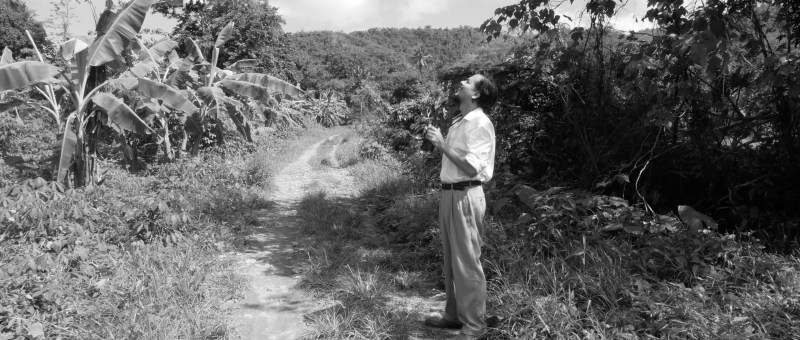
“We became victims of our time but I won’t let this situation destroy me” a wandering poet finally writes in a letter to his lost love, finding again a sense of purpose though having perhaps surrendered his illusions. Shot in a crisp monochrome and set ostensibly in 1957 but bearing several small anachronisms which bring us closer to the present day, Lav Diaz’ 4-hr absurdist fable History of Ha (Historya ni Ha) finds an exile returning in the hope of a more peaceful future only to find his dreams of a simple life dashed while the land is once again in turmoil. An exploration of lingering feudalism, its links to dangerous demagoguery, and the ease with which populist leaders manipulate despair, Diaz’ timely drama sees its hero once again a self-exile but resolving at least to sow the seeds of a better future in work and education. 

Four years previously, disillusioned marxist poet Hernando (John Lloyd Cruz) was arrested with the Socialists after the failure of the Huk Rebellion and has since been touring Asia as a successful vaudeville act in the company of his ventriloquist puppet, Ha. Having saved enough money, he’s retired from showbiz and is heading home to marry his sweetheart, Rosetta, to whom he is writing while on the boat. The first sign of trouble begins, however, when Hernando is approached by a journalist who happens to be a fan and invites him to dine with a congressman. President Magsaysay, the anti-communist president backed by the US, is missing later to be declared dead in a plane crash. Though presumably no fan of Magsaysay, Hernando worries for his country recalling a song penned by a civil servant suggesting that should Magsaysay die democracy would go with him. 

The journalist is equally ambivalent, describing Magsaysay’s rise as a mix of reality and myth making, a cycle he fears will repeat itself endlessly in the history of the Philippines in which “the masses will vote for false prophets and leaders”. Hernando, meanwhile, discovers on his arrival home that not everything is as he left it. Though Rosetta had been writing to him earnestly throughout his travels, his twin sister Hernanda (Gabuco Eliezl) tells him that following the death of her mother she has become a prisoner of her father’s house and is to be married to a local nobleman in payment of a debt. Her final letter confirms this to be true, instantly shattering his belief in future possibility while raging against the lingering feudalism of the post-war nation. “I’ve accepted that as long as a powerful few possesses the vast lands of this barrio the poor will remain sinking in poverty and helplessness” , he explains heading out on an aimless journey no longer speaking directly but only through his dummy, Ha. 

Ha becomes in a sense his alter ego, voicing what he himself cannot say, but also giving rise to a sense of absurdity as those around him begin to invest in Ha’s personhood talking directly to him rather than Hernando while asking him incongruous questions even wondering if he might be hungry. Yet much of Ha’s monologuing is pure nonsense rhyme, and while the pair of them are alone he sometimes reflects Hernando’s inner cynicism suggesting he accept money from a pair of women he reluctantly agreed to help travel to a nearby fishing village from which they hope to gain passage to an island in the middle of a gold rush, one a nun intending to start a mission (Mae Paner) and the other a woman wanting to open a business (Dolly De Leon). A boy he’d met along the way, Joselito (Jonathan O. Francisco), had the same destination in mind, explaining that there was no other way to alleviate his family’s poverty. When they arrive at the village, however, they discover that the journalist’s prognosis was painfully true. The self-appointed leader of the settlement, Among Kuyang (Teroy Guzman), is a narcissistic populist harping on nationalism while mercilessly exploiting the desperation of the less fortunate in charging impossible sums for transportation. 

Ha advises the trio not to go, fearing that the island is dangerous, but fails to dissuade them, the difficulty of living under Among Kuyang’s repressive regime only increasing their desire to leave. Eventually he decides to help them by performing one of his old shows for Kuyang who turns out, uncomfortably, to be a fan, but worries he may have “saved them from the devil but delivered them to hell”. “It hurts how we let people like him rule over our country” another failed revolutionary laments, while Kuyang himself offers prophesies of Marcos and Duterte, echoing this ugly cycle of myth making and deception which just as he has weaponises desperation while doing nothing to alleviate it. Yet in his cynicism perhaps Hernando too is guilty of belittling the masses,  declaring them too ignorant to understand their oppression. “Their emptiness is not their fault, sacrifices are not enough to emancipate them.” he laments, while echoing the journalist that decades from now they’ll go on “enthroning despots and tyrants, leaders like Among Kuyang, leaders who are foolish, greedy, disrespectful, deranged”. 

Ironically enough he tries to be the “good cat” of the story Ha had told his niece and nephew, cautioning them against populist and consumerist fallacy in warning them not to walk into a golden cage and thereby lose their freedom, but to accompany the good cat to the shore and salvation. Hernando tries to save the trio from the lure of the island, sure it promises only fruitless exploitation, but fails to save them from Among Kuyang or from the true enemy which is ceaseless poverty, a sense of futility, and feudal privilege. “Gold is not the only solution to poverty” he’d told Joselito, but to him it was all that was left. Beginning and ending with a letter, Diaz’ absurdist parable follows its disillusioned hero through loneliness and tragedy but finally allows him to find the boat that grants him freedom if only in new purpose in undermining the roots of populism where they first propagate.


History of Ha made its World Premiere as part of this year’s BFI London Film Festival.

Original trailer (dialogue free)

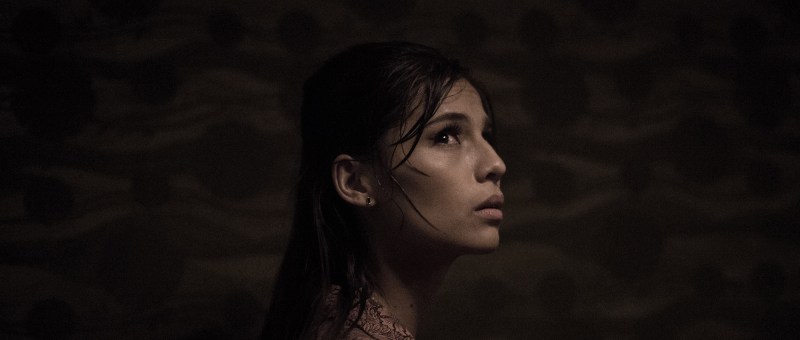
Midnight in a Perfect World (Dodo Dayao, 2020)

“It doesn’t matter what’s happening as long as nothing’s happening to me” a middle-aged woman exasperatedly exclaims, irritated by a young man’s naive curiosity. A dark exploration of the legacy of Martial Law, Dodo Dayao’s surrealist horror movie Midnight in a Perfect World asks how much of your freedom you’re prepared to sacrifice for security and if the illusion of a “perfect world” in which everything “just works” is worth the price of your complicity. 

In a near future Manila in which all of the city’s infrastructural problems have been solved, conspiracy theorist Tonichi (Dino Pastrano) is convinced that a mysterious force is disappearing people in random parts of the city after midnight, a theory which is only strengthened after his friend Deana rings him in a panic convinced she’s become a victim of his “blackouts” and insisting that someone’s stolen the moon. Tonichi’s other friends, the sensible Mimi (Jasmine Curtis-Smith), reckless Jinka (Glaiza de Castro), and melancholy hospital worker Glenn (Anthony Falcon), are less convinced but caught in the street after midnight the gang have no option but to look for a “safe house” in order to escape the creeping darkness. For unexplained reasons, Tonichi is unable to enter with his friends and finds himself trapped outside in “God’s Blindspot”, as the mysterious Alma (Bing Pimentel), a middle-aged woman and safe house veteran, describes it. 

Alma might in a sense be seen as the embodiment of the Martial Law generation, holing up in her safe house minding her own business and defyingly not caring what’s going on outside determined only to make it through the night. She offers cryptic words of advice to the youngsters, but does not really try to help them outside of trying to prevent them from interfering with her own survival. The so-called safe house has a hidden upper floor apparently invisible from the outside and hiding its own secrets. When one of the gang manages to break open the door and pays a heavy price for their curiosity, Alma merely creeps forward fearfully and closes it again ensuring she is safe from its myriad horrors even in her wilful ignorance. 

Still, you have to ask yourself why if this world is now so “perfect” the youngsters seem so unhappy. Their drug use appears not to be particularly hedonistic but may offer them a degree of escape from a society which has become oppressive in its efficiency. Sensible Mimi cautions Jinka against associating with smarmy drug kingpin Kendrick (Charles Aaron Salazar) who spins bizarre stories of weird aliens while proffering a new drug which supposedly feels “like dying and going to heaven.” On her way from Kendrick’s Jinka passes a group of intense men and immediately pegs them as a hit squad, realising that Kendrick’s hideout has been exposed and she herself may now be in danger in an echo of the extra-judicial killings which have become a grim hallmark of Duterte’s Philippines. “Beta version Martial Law” is the way Jinka later describes it, drug users now taking the place of “activists” as targets not solely of legitimate authority but vigilante bounty hunters. The rumours of strange disappearances, people “erased” from their society, are yet another means of control inviting complicity with an unofficial curfew for a population ruled by fear.  

As if to ram the allegory home, Dayao ends the credit roll with the Martial Law era slogan “Sa ikauunlad ng bayan, disiplina ang kailangan” or “For the nation’s progress, discipline is needed” followed by the English phrase “Never Again”. Yet, it is happening again, the extra-judicial killings of the Duterte era no different from the disappearances of “activists” under Marcos. Jinka refers to the old Manila as the world capital of malfunction, its transformation seemingly brought about by a mysterious force but unlike Mimi who seems otherwise prepared to accept complicity in her “everything works” conspiracy theory remains dejected and suspicious. None of these young people is happy with their new utopia or prepared to pay the price demanded to live in it yet there appears to be no real way to resist and their eventual decision to brave the darkness exposes nothing so much as their naivety. Scored with eerie sci-fi synths and often shot in total darkness, Dayao’s surreal horror show offers a bleak prognosis for the contemporary society unable to escape from the permanently haunted house of an authoritarian legacy. 


Midnight in a Perfect World screened as part of this year’s Neuchâtel International Fantastic Film Festival (NIFFF).

Original trailer (English subtitles)