Natchan’s Little Secret (ひみつのなっちゃん。, Yasujiro Tanaka, 2023)

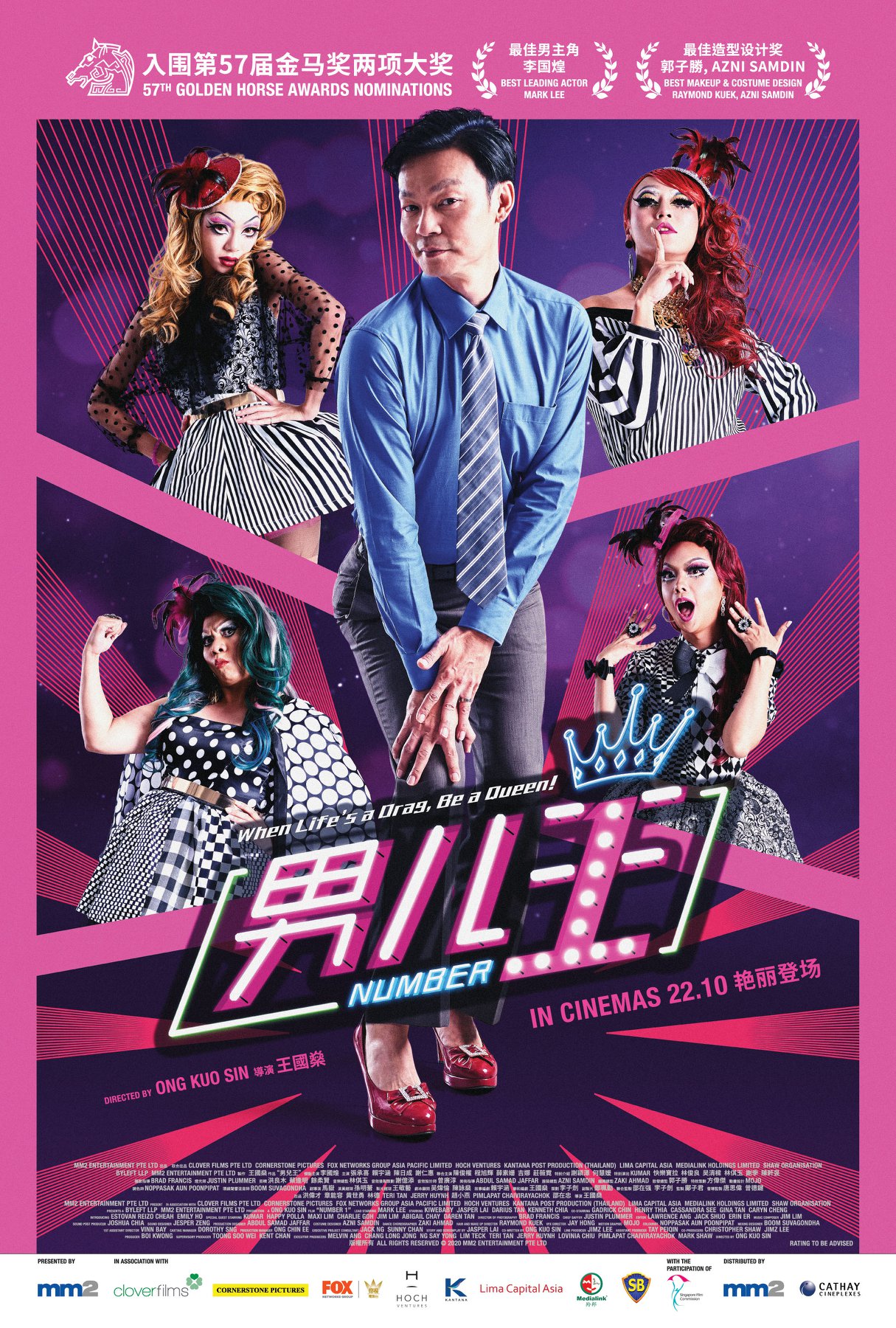
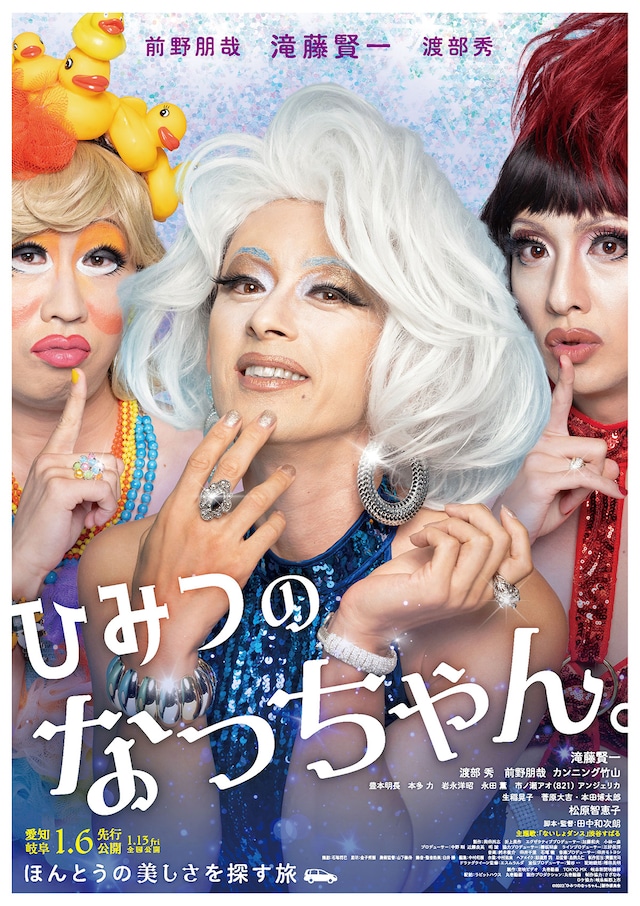
On learning that their friend and mentor has died, a trio of drag queens vows to do whatever it takes to fulfil her wishes and ensure her family never know about her sexuality in Yasujiro Tanaka’s road trip comedy Natchan’s Little Secret (ひみつのなっちゃん。, Himitsu no Natchan). In some ways it may seem old-fashioned, that rather than ensuring her family knew who she really was they decide to honour Natchan’s desire for secrecy but nevertheless meditate on the nature family while finally landing on a poignant sense of loss for all that secrecy entails.

Virgin (Kenichi Takito), an accountant by day and former drag queen who’s lost the taste for dancing, and Morilyn (Shu Watanabe) who works at the bar Natchan owned, are forced to confront the fact that in many ways they didn’t even know Natchan at all. They don’t know her address or hometown and have only the vague idea that she was estranged from her family. Virgin reflects that she was “secretive”, but in the end none of them really know what to do now that she’s gone. Another drag queen turned TV celebratory, Zubuko (Tomoya Maeno), laments that some take their secret to their grave realising that’s exactly what Natchan has done. That’s one reason why the trio become obsessed with the idea of cleaning out Natchan’s flat to make sure that her family don’t find anything they weren’t expecting. 

But then again, the trio frequently refer to the gay community as their family while claiming Natchan as their own. Without really thinking about it, Morilyn allowed hospital staff to assume he was family in a more legal sense and started making funeral arrangements. He also packs up some of Natchan’s property without realising he could be accused of theft while trying to tidy up her life. They may feel that the birth family are in a sense intruding, reasserting ownership over someone they never accepted in life and preventing those who truly loved them to honour their wishes. Yet Natchan’s mother (Chieko Matsubara) turns out to be sweet old lady who is in her way hurt that she and her son became estranged wishing that they could have been closer while he was alive.

It’s she who eventually invites them to Natchan’s rural hometown which is famous for a particular kind of festival dance. None of them are sure they want to go, partly because they fear accidentally blowing Natchan’s cover but also the social attitudes of what they imagine to be a more conservative, traditional area. Only it appears quite the reverse is true. Residents at the inn where they stay actually have a fierce curiosity about drag and enthusiastically enjoy a risqué routine performed by Morilyn and Zubuko while even a manly man later shrugs his shoulders and claims it’s not so different from Gujo Odori which also makes people sparkle. 

Maybe Natchan’s little secret is that she was a person who had learned to see the beautiful things in life and wanted others to see that they were beautiful too even if some told them that weren’t or they didn’t feel that they were. Virgin describes Morilyn’s straightforward living as a beautiful thing, especially as he recounts being made to do karate by conservative parents afraid of what the neighbours would think of their effeminate son, an experience he describes as emotionally destabilising and has led to a degree of repression as an adult. Virgin is out at work and well liked by a collection of female colleagues but now only dances alone at home and keeps it as her own kind of secret. Yet through their various adventures on the road the trio begin to come to new acceptances of themselves as they prepare to say goodbye to Natchan while comically affecting the tropes of conventional masculinity in an attempt not to give the game away. They wander through queer spaces in search of her and rediscover their own sense of family realising that they did know Natchan after all or at least all that was important to know as did others even if they pretended not to because that seemed to be how she wanted it. Finding liberation amid the Gujo Odori, the trio finally say goodbye but also discover a new sense of solidarity and self-acceptance joining the dance at which all truly are welcome. 


Natchan’s Little Secret screened as part of this year’s Camera Japan.

Original trailer (no subtitles)
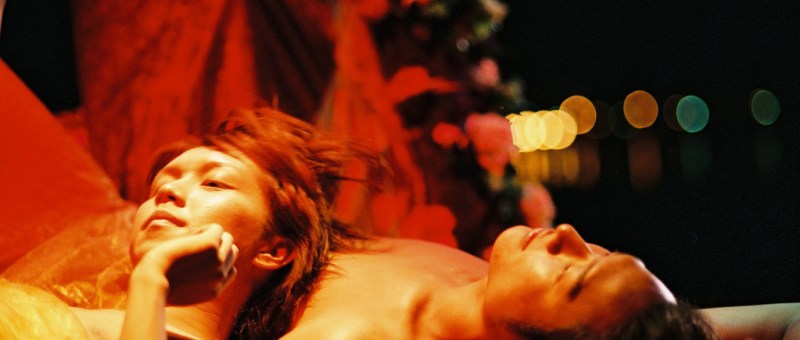
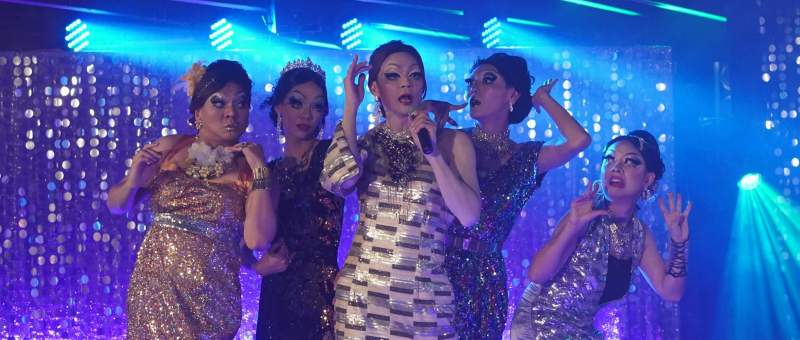
Splendid Float (豔光四射歌舞團, Zero Chou, 2004)

A lonely taoist priest with a sideline as a drag artist falls for the siren song of a drifting fisherman in Zero Chou’s mystical vision of love and loss, Splendid Float (豔光四射歌舞團, Yàn Guāng Sìshè Gēwǔtuán). One of very few out lesbian filmmakers currently working in East Asia, Chou’s films more often deal with love between women but her second narrative feature is a melancholy meditation on grief and impossibility revolving around a performer with an itinerant drag act as she struggles to understand why the man she loved couldn’t stay with her forever. 

A taoist priest performing death rituals by day, by night Roy (James Chen Yu-Ming) becomes Rose a drag performer singing sad songs of lost love from the makeshift stage of converted pickup truck with a rainbow roof. It’s one evening when the van breaks down that she first meets Sunny (Chung Yi-Ching), a handsome swimmer who soon becomes her lover only to disappear the next morning leaving behind only a note saying goodbye and a yellow flower. Heartbroken, Rose tries to find him and begins to suspect the worst later discovering that Sunny has apparently drowned at sea. 

The minor irony is that Rose’s day job is as a taoist priest which to say bound up with the rituals of death and grieving yet she struggles to come to terms with Sunny’s absence and is unable to let go of a tragic, fleeting love. Following the rather lengthy opening sex scene, Rose asks Sunny to stay with her longing for a place to settle down together looking for conventional domesticity as a couple, something about which Sunny appears unsure not it seems because of societal pressure but because he is not made for a settled life. Often seen swimming, Sunny is a kind of mermaid happiest in the water which lends his death by drowning an additionally poetic quality but also perhaps aligns his sexuality with a sense of impossibility suggesting Rose will never be able to achieve the fulfilling romance of which she dreams. 

This is further brought home in her frustrated attempts to make contact with Sunny’s spirit, often seeing his ghost but refusing to let him go. Ironically brought in to conduct a death ritual on behalf of Sunny’s mother and sister, she unwittingly hints at their relationship by using the t-shirt he left behind to summon him and thereafter determines to split his soul taking a funeral tablet with her after tossing coins to try and gain his consent only to ignore the result when it implies Sunny chose to leave her and does not want to be possessed by her in death. “We live amongst tradition but still there’s no place for people like us” one of Rose’s fellow performers laments, “look at you and Sunny, together for so long but what are you, just ordinary friends? It’s not like you can just go and tell everyone you’re his widow and take his icon with you.”

Even Roy’s family members are apparently ambivalent, suspecting he might be gay but unsure how to respond to it. They avoid sending him to funerals because he has a reputation for being overly emotional earning the nickname of “the wailing girl “and feel bad about him being teased while also confused that seems so “effeminate”, “not like a man at all”. His aunt, however, a fairly butch older woman asks if she doesn’t look “like a man” while in her full taoist priest outfit, suggesting perhaps that gender is an irrelevance at least in the course of their work. 

Rose, meanwhile, struggles to come to terms with loss while unable to voice her grief. In this quasi-musical, Rose’s songs are the only way she can express her suffering. “No one knows the pain I must face” she sings in a repeated refrain, “smiling and swallowing my tears secretly casting my sorrows to the sea.” Exploring both the vibrancy of traditional taoist practice, the soul guiding ritual described as the last dance of life, along with the precarious existence of the itinerant drag queens, Chou crafts an etherial fairytale of love and loss in which Rose herself becomes a kind of wandering ghost trapped in a rootless existence while yearning to settle down in perpetual search for safe harbour amid stormy seas. 


Splendid Float streams in the UK until 31st October as part of this year’s Taiwan Film Festival Edinburgh.

Original trailer (no subtitles)

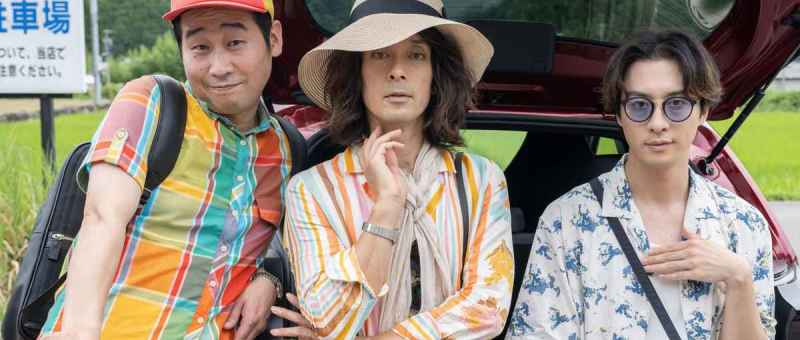
Number 1 (男儿王, Ong Kuo Sin, 2020)

“What I don’t understand is your so-called rules and traditions. Just what good does it do?” a newcomer ironically asks of a veteran drag artist, having perhaps shed but not yet quite acknowledged his original prejudice towards those different from himself. Ong Kuo Sin’s cheerful drag dramedy Number 1 (男儿王, Nán’ér Wàng) examines attitudes to the LGBTQ+ community in the comparatively conservative nation of Singapore where sexual activity between men remains illegal even if the law is not heavily enforced, while subtly undermining oppressive group think as to what constitutes a “successful”, “normal” life. 

44-year-old Chow Chee Beng (Mark Lee Kok Huang) is a successful general manager at a construction firm where he’s worked for the last 17 years which is the entirety of his working life. It comes as quite a shock to him therefore when he’s unceremoniously let go, passed a letter of termination seconds after entertaining everyone with a song at the office New Year party. Given his experience, he perhaps feels that getting another job won’t be too difficult, but as various employers tell him he’s either “too old” or “too expensive” for the competitive Singapore job market. Faced with the prospect of telling his wife they’ll have to sell their luxury detached home because he can’t make the mortgage payments, Chee Beng is forced to accept the last resort offer from his recruitment advisor which happens to be as an AGM at local drag bar Number 1. 

Like many men of his age, Chee Beng has a rather conservative mindset and had been living a very conventional life of suburban, middle-class success. His wife Marie (Gina Tan) even complains to her sister-in-law that their new swimming pool is a little on the small side and she’s thinking of swapping it for a bigger one. Yet as his performance stint at the company party implies, he is perhaps holding a part of himself back thinking that his love of singing is frivolous or even a little taboo given his wife’s mild embarrassment. The drag bar is therefore firmly outside his comfort zone. Not only does he lack experience managing an entertainment venue, but finds it difficult to overcome his sense of discomfort with those living lives so different from his own. When one of the drag artists turns out to be a deserter from the army and is carted off by the military police, Chee Beng finds himself press-ganged into performing and discovers that he is something of a natural though he doesn’t understand why they have to lip-sync to pre-recorded tracks rather than singing live. 

Chee Beng’s point seems to hint at a concern about the ability to completely embody the performance and fully express himself, yet he’s also a straight man wading into a predominantly LGBTQ+ community he knows nothing about and insisting on having his own way. That brings him into an additional conflict with former number one Pearly (Kiwebaby Chang) who dragged him on stage in the first place because with only four performers she wouldn’t be able to stand in the middle. Pearly might feel that lip-syncing completes her performance because she lacks the ability to sing in a feminine register, yet Chee Beng ironically accuses her of mandating a no singing rule in order to mask her own weakness while simultaneously attempting to mandate live singing in order showcase his strength as a performer. 

But even if he’s come to feel at home in the drag community, Chee Beng continues to keep his new life a secret from his socially conservative wife. When a video of him singing at the club goes viral, Chee Beng’s wife and sister-in-law react by taking the children’s phones away as if seeing it is in some way harmful. Later on seeing a poster for the Queens she irritatedly tells Chee Beng they should be banned by the government for giving children “wrong ideas”. Meanwhile their son Mason is conflicted in being a boy asked to play the part of Mulan in the school play, claiming he dislikes the character of Mulan because she “lies” about who she is while his father can only sympathise offering the justification that sometimes people have to lie in order to protect those they love. When Chee Beng’s identity is exposed, little Mason begins receiving vile hate mail online and all his friends stop playing with him. Yet he doesn’t see anything wrong in “wearing a dress” and can’t understand why everyone, including his mother, seems so upset. Marie complains that Chee Beng’s new life is “confusing” for Mason, but he doesn’t seem confused at all because he hasn’t yet had time to absorb the “wrong ideas” from the conservative world around him. 

That conservative world has been a very dark place for some of the Queens, Pearly revealing that she believes her coming out drove her parents in Taiwan into an early grave, while bar owner Fa’s brother took his own life, and the gang experience homophobic harassment from a man who turns out to be the high school bully who made one of their live’s a misery. Nevertheless, the sudden and otherwise unexplained reversal in the attitudes of some seems more than a little contrived for an otherwise uncomplicated happy ending despite Chee Beng’s defiant message that he wants his son to grow up “different” in that he learns early on not to be prejudiced against those different from himself and goes on to be happy with whoever he is rather than blindly following the rules of social conformity. Drag is for everyone, and becoming a member of the supportive drag queen community even helping out fundraising for a local LGBTQ+ friendly nursing home, Chee Beng begins to see a different way life that opens his eyes to the constraints of the way he lived before swapping the trappings of extreme consumerism for personal fulfilment and compassion for others. 


Number 1 screens at London’s Genesis Cinema on 18th September as part of this year’s Queer East.

Original trailer (English subtitles)