The Abandoned (查無此心, Tseng Ying-ting, 2022)

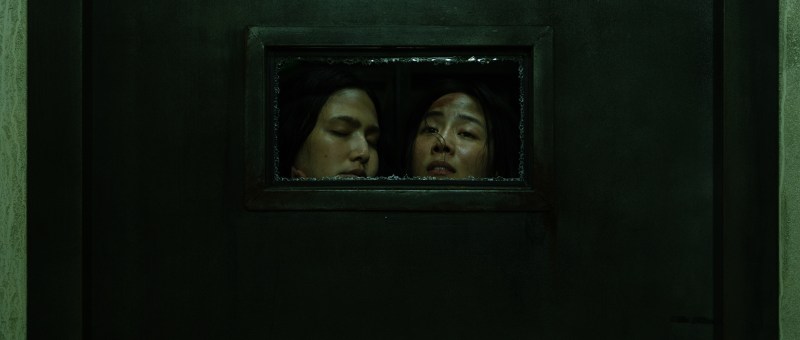
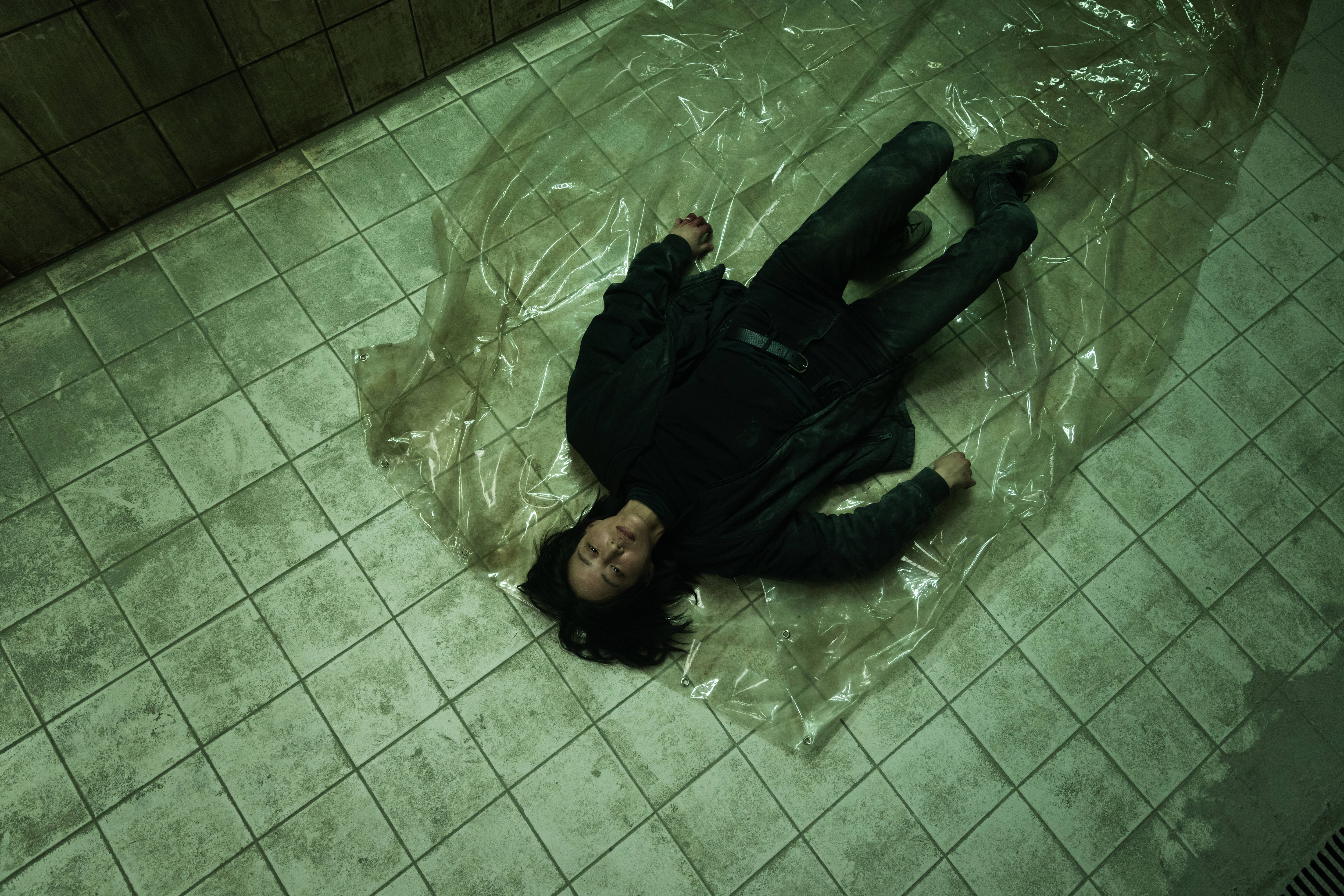
Just about everyone in Tseng Ying-ting’s psychological thriller The Abandoned (查無此心, Chá wú cǐ xīn) has been in some way left behind. The title most obviously refers to the body of a murdered woman unceremoniously dumped in a local river though as we later discover she wasn’t so much abandoned as returned, but the investigating officer is also battling her grief in feeling abandoned by her husband who took his own life and it could as well apply to the liminal status of migrant workers in Taiwan who have been largely abandoned by a society that is increasingly dependent on their labour. 

As policewoman Wu Jie (Janine Chang Chun-ning) points out to rookie Wei-shin, if she found a body she’d obviously call the police but if you can’t call the police because you’re afraid they’ll deport you you might have no other option than to make it go away. But the strange thing is that Waree’s body was left where it would be found and Jie will later claim that it is in a sense Waree who “saved” her by unwittingly frustrating her attempt to take her own life while consumed by grief and guilt over her husband’s death. Later it seems as if the killer of these women, each of whom has their heart and ring finger removed, intended to send the bodies back to their exploitative employers making a grim a point while leaving them with an impossible choice knowing that they can’t very well go to the police and risk undermining their entire business enterprise which relies on the labour of workers of who’ve either left the positions the visas they were granted were originally for or never had any in the first place.

Waree’s former boyfriend You-sheng (Ethan Juan) is left with just such a dilemma when the body of another woman, Yeti, is delivered to their factory calming the worried workers while secretly burying her himself in the mountains little knowing that a similar fate has befallen Waree whom he’s been looking for ever since she dropped out of contact as has her sister Saipin, also an undocumented worker from Thailand. The killer seems to target these women because he knows it’s unlikely anyone will look for them though they also have personal motives in their own sense of abandonment, resentful in feeling as if they’ve been deceived in love while unable to see how the other party may have felt trapped and exploited while their passport was held captive depriving them of the free choice to leave. 

As it turns out, the person who left Waree’s body in the water did it because they were worried she wouldn’t be able to return home, not wanting her to be disappeared in the way their employer might have wished her death hushed up like so many other anonymous workers whose families never hear of them again but at least acknowledged. Wu Jie is also unable to return home, mostly sleeping in the car directly below the bloodstained bullet hole under which her husband shot himself. Her boss ironically tells that if her heart remains in the car she’ll never escape, echoing the missing hearts of the murdered women taken as grim trophies by the heartless killer. 

Ironically enough, to solve the case Wu Jie must regain the desire to live finally facing her abandonment along with her grief and guilt for her inability to save her husband while working with the conflicted You-sheng who similarly feels both abandoned and guilty in the failure of his relationship with Waree whom he was reluctant to marry and might have saved if he had. Tseng aptly demonstrates the precarious position of undocumented migrant workers in Taiwan who are often exploited by their employers and rendered invisible by a society which largely treats them with disdain while left vulnerable to crime and violence in being unable to turn to the authorities for help. He also hints at a degree of misogyny present in the police force as Jie is at one point asked to leave the case as the higher ups don’t like the idea of two women working together while Jie simultaneously feels pressured to stay knowing that the situation is too complicated for an earnest rookie to manage on her own. Exploring the grimy underbelly of an otherwise prosperous nation, the film has only sympathy for those have in one way another been abandoned and can see little prospect of escape from their fear and loneliness. 


The Abandoned screens July 26 as part of this year’s New York Asian Film Festival.

Original trailer (Traditional Chinese / English subtitles)

Images: @Renaissance Films Limited. Love Me Tender Production Company

Detective Dee: The Four Heavenly Kings (狄仁杰之四大天王, Tsui Hark, 2018)

Detective Dee four heavenlu kings posterMaybe we could use a Detective Dee or two in this bold new age of fake news and powerful ideologies. Tsui Hark at least finds another case for the famed Tang Dynasty detective though this time one which sees him at the centre of a conspiracy, a bug in the system which must be squashed in order to pave the way for someone else’s revolution. The Four Heavenly Kings (狄仁杰之四大天王, Rénjié zhī Sìtiānwáng) of the title (no, sadly Andy Lau has not returned with a few of his friends in tow) refers to the four Buddhist deities which ought to tip us off to the kind of story this is as personal desires, of one sort or another, threaten to destabilise a state.

At the end of the previous film, Young Detective Dee: Rise of the Sea Dragon, Dee (Mark Chao) was “rewarded” with a place in the inspectorate and guardianship of the Dragon Taming Mace. However, scheming consort Wu Zetian (Carina Lau) is not particularly happy about her husband’s grand gesture and still has her doubts about Dee. Claiming that she fears such a powerful weapon/symbol being in the hands of someone who may betray the crown, Wu instructs Dee’s Sworn Brother and head of the Justice department Yuchi Zhenjin (Feng Shaofeng) to retrieve the Mace at any cost. Yuchi is reassured that Dee is not in danger and so agrees to work alongside Wu’s handpicked troop of “magical” crooks (who have actually been hired to take care of Dee to stop him messing up Wu’s grand plan). Needless to say all is not as it seems and Wu has fallen under the influence of nefarious forces who are merely using her lust for power as a convenient mechanism for facilitating their own agenda of revenge for a past era’s betrayal and oppression.

Dee’s methods are, more or less, inspired by Sherlock Holmes, granting him almost supernatural powers of foresight and observation though this time he is not occupied with one specific case so much as solving the mystery of the hidden insurrection within the Tang. The Mace may seem like a MacGuffin but its power is real and eventually holds the key to defeating the forces of chaos which threaten to bring down the state. Wu’s quartet of “Taoist” magical mercenaries are quickly exposed as expert wielders of tricks and trinkets rather than supernaturally charged avengers, but the state can’t help being captivated by the “magic” which finally puts paid to their ambition and is rocked by the power of the false images which continue to assault their senses.

Tellingly the big bad here is a foreign cult which makes extensive use of “hypnosis”, strange potions, and smokescreens in order to create the illusion of magic. Illusion, however, is as good as or perhaps better than the truth when it comes to political manipulation. The cult’s powers apparently aided the creation of the Tang state but once they were no longer needed, they found themselves cast out, tortured, and humiliated. Unsurprisingly they want their revenge and will settle for nothing less than the humiliating fall of the nation they helped to build.

Good old fashioned deduction and rationality are useless in the battle to free infected minds from the hypnotic power of fake news perfectly tailored to embrace one’s darker instincts. Wu, secretly or otherwise, lusts for power of her own and was easily manipulated by the promise of support in her campaign to seize the throne. Meanwhile, the leader of the Wind Warriors is infected with an intense desire for violence and killing to ease his deep seated rage over the misuse of his people. The answer is, of course, Buddhism. Life is too beautiful to be marred by hate while the act of forgiveness is the ultimate show of strength. Nevertheless, Tsui abandons Dee’s cool, analytical approach for a strangely spiritual final battle in which the fake news machines wielded by the Wind Warriors are pitted against the intense calm of a finely tuned mind (and the slightly moodier one of a giant white gorilla). Hell is full of suffering, Dee reminds the monk, enlightenment will have to wait. Perhaps “enlightenment” is merely another selfish desire won at the expense of blocking out the calls for help from those in need.

The Dragon Taming Mace is the ultimate symbol of justice, literally able to cut through the spell of illusion to expose the truth below. Wu had reason to fear it, even if she was not in the position to understand why. Dee is indeed a worthy guardian and unsullied soul, committed to the pursuit of compassionate justice wherever he goes even if he does so as a representative of the authority. Wu may have regained her senses, but that doesn’t mean she’s cured of the underlying causes of her possession as the large statue of Guan Yin which looks mysteriously like her seems to prove. Dee may have another mystery on his hands, but in any case his work is far from done in a land of intrigue and duplicity in which justice hangs by a slippery thread.


Detective Dee: The Four Heavenly Kings is currently on limited UK cinema release courtesy of Cine Asia. Find out where it’s playing near you via the official website.

Original trailer (English subtitles)

The Liquidator (心理罪:城市之光, Xu Jizhou, 2017)

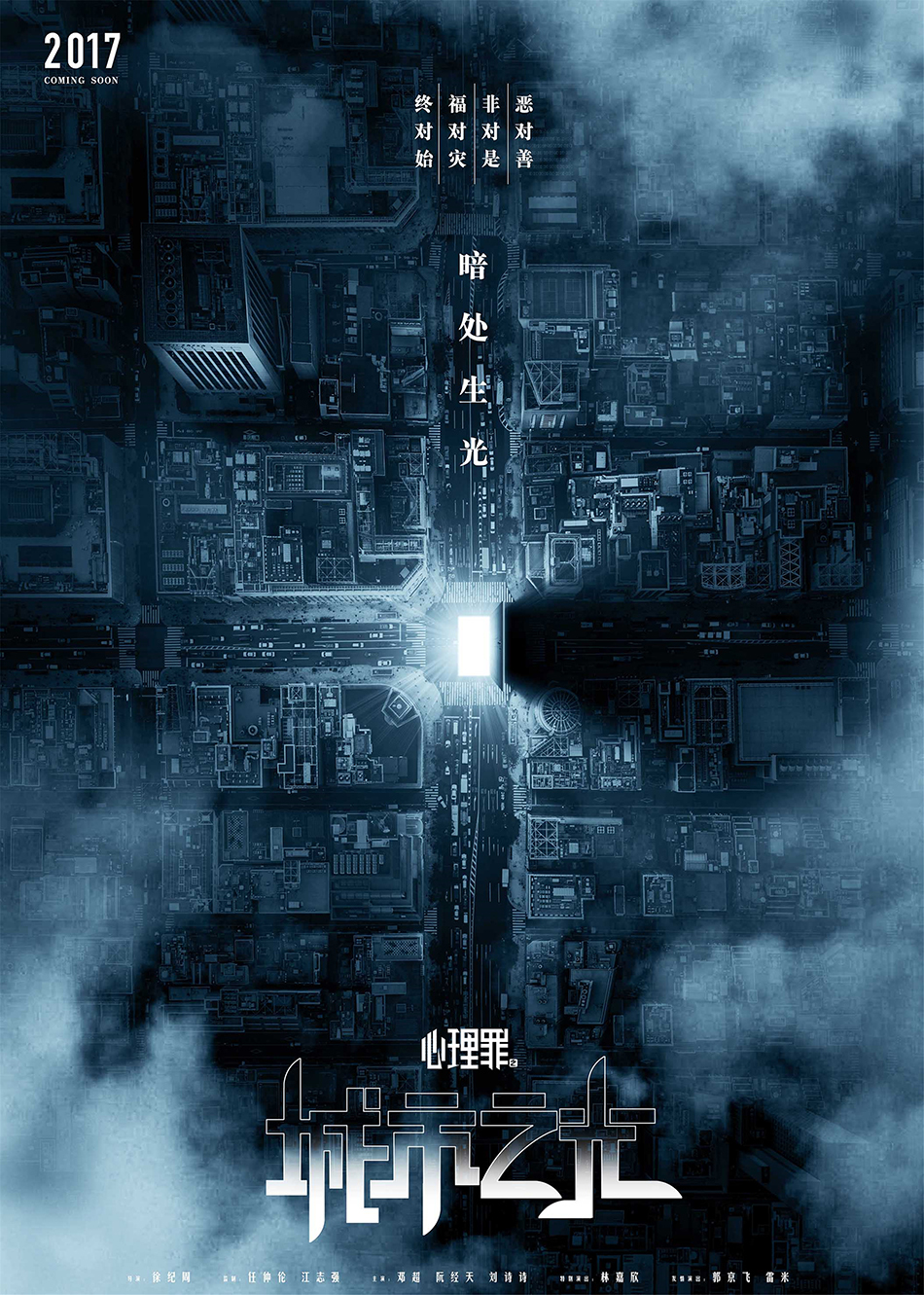
The Liquidator posterGiven a strangely ‘80s nonsensical two word title, Xu Jizhou’s The Liquidator (心理罪:城市之光, Xīnlǐ Zuì: Chéngshì Zhī Guāng) is a retro throwback to the lurid macho pulp which has largely faded from the crime procedural since its ‘90s heyday. Adapted from a novel by Lei Mi, the film follows last year’s Guilty of Mind as the second in the Fang Mu series only this time the eccentric profiler is played by marquee star Deng Chao rather than Guilty Mind’s Li Yifeng or Chen Ruo Xuan who starred in the Fang Mu TV drama, Evil Minds. A pulpy battle of wits between a crazed vigilante and a world weary cop, The Liquidator is already treading on some overly familiar territory but its main target is the rule of law apparently under threat of mob justice now that China too has entered the social media age.

Fang Mu (Deng Chao) is no longer a police officer after becoming the prime suspect in the disappearance of a man who escaped justice through judicial corruption, but he’s pulled back into the law enforcement fold when young policewoman Mi Nan (Cecilia Liu) is dispatched to get his profiling opinion on a difficult murder case. Calling himself “The Light of the City”, a vigilante killer is already amassing a collection of dedicated online followers thanks to his choice of targets which, to put it bluntly, are not law breakers just terrible people that most would like to get revenge on for one reason or another.

Originally reluctant, Fang Mu is soon hooked on the case only to realise that the crime scenes are being created entirely for his benefit – the killer is attempting to pull him into a battle of wits and taking innocent lives to do it. As it transpires the killer’s name, Light of the City, is inspired by something Fang Mu said in his graduation speech to the effect that the police are the light that shines in the darkness. The killer thinks the law doesn’t go far enough – his targets are bullying teachers, impious sons, and greedy lawyers, the immoral rather than the criminal. He exposes their transgressions online and then allows “netizens” to have their say. Netizens, as they have often been in the “real” world, are not a particularly understanding bunch and are firmly behind the “entertainment” the killer is providing, even down to the decision to live stream a murder.

Fang Mu’s defining trait is his liminal status as a law enforcement officer often pulled towards the dark side – hence why many of his colleagues think it’s perfectly possible that he’s guilty of the crime that got him kicked off the force. The vigilante’s “plan” is to pull him over the line by forcing Fang Mu to execute The City of Light and thereby become the thing he most fears. The Liquidator posits that a robust judicial system free from interference from both government and people is a prerequisite of a well functioning society and the police must be the shining beacons of these laws – if not even law enforcement obeys the law, then all is lost.

What transpires is a battle of minds between the brainy Fang Mu and the psychotic killer, but it’s also a battle for the soul of “society” which ought to place compassion and rationality over the sensationalism of trial by media and arbitrary mob justice. The killer works out his frustrations by proxy through attacking those who committed the same “crimes” which have led to their feelings of frustration and humiliation – chief among them being Fang Mu who has, apparently, offended solely in his continued excellence, but the killer’s personal vengeance is harsh and unforgiving, handing down a death sentence simply for unpleasant or anti-social behaviour.

Beginning in a promising vein, Xu nevertheless introduces his dedicated female cop only to sideline her in favour of Fang Mu before turning her into a mild love interest, potential victim, and sometime comic relief. Filled with macho histrionics (including, at one point, a gun fired in the air followed by a manly wail of grief), The Liquidator is an old fashioned action drama filtered through pulp noir and ‘90s horror with its grimy walls and dingy basements, but it straddles a fine line between ridiculous slasher serial killer thriller and serious cerebral procedural, landing somewhere around heroic bloodshed without the bromance. Ridiculous and melodramatic, Xu’s debut feature boasts excellent production design and innovative photography, but its slick aesthetic cannot overcome the more outlandish elements of the otherwise generic script.


Currently on limited release in UK cinemas courtesy of Cine Asia

Original trailer (Mandarin with English subtitles)