The Periphery of the Base (基地之侧, Zhou Tao, 2024)

Periphery is a strange word. It automatically suggests a border and that the speaker is on one side of it, yet unlike a horizon it implies an end point beyond which there is something or perhaps nothing. The periphery is where one kind of authority begins to fade out, a place where you can no longer quite say you are proximate to another place but now definitively at a distance from it and within a liminal space between one place and another. In the vast emptiness of the Gobi Desert, where and how could anyone really draw this line?

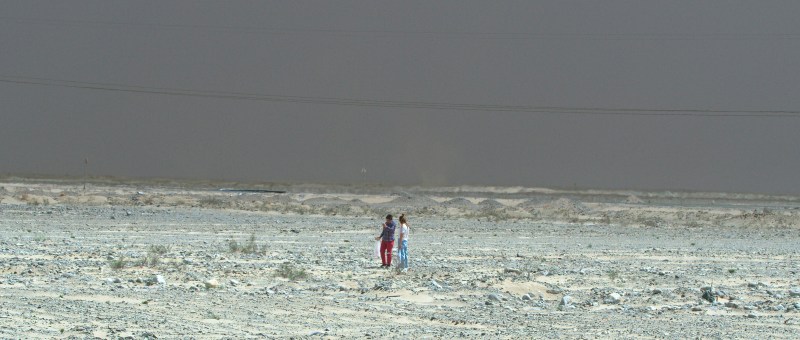
Distance and abstraction are at the centre of Zhou Tao’s experimental documentary Periphery of the Base (基地之侧, jīdì zhī zhāi) as his camera roams around the edges of a construction site somewhere in the desert. We don’t know what they’re building or why they’re building it, only that industry continues mindlessly as if it were almost automatic. The people, fractionally seen, are like worker ants busily beavering away on an unknown purpose. We observe two workmen on a break chatting idly about a dissatisfying work environment, swapping stories about the hatching of a baby goose and the supernatural powers of snakes which one of the men blames for the death of his mother after he killed one and abandoned it at a crossroads. They become excited about such an ordinary thing as cucumber to enliven their working day while sitting alone in a concrete trench as trucks rocket by in front of them and disrupt our ability to overhear their conversation.

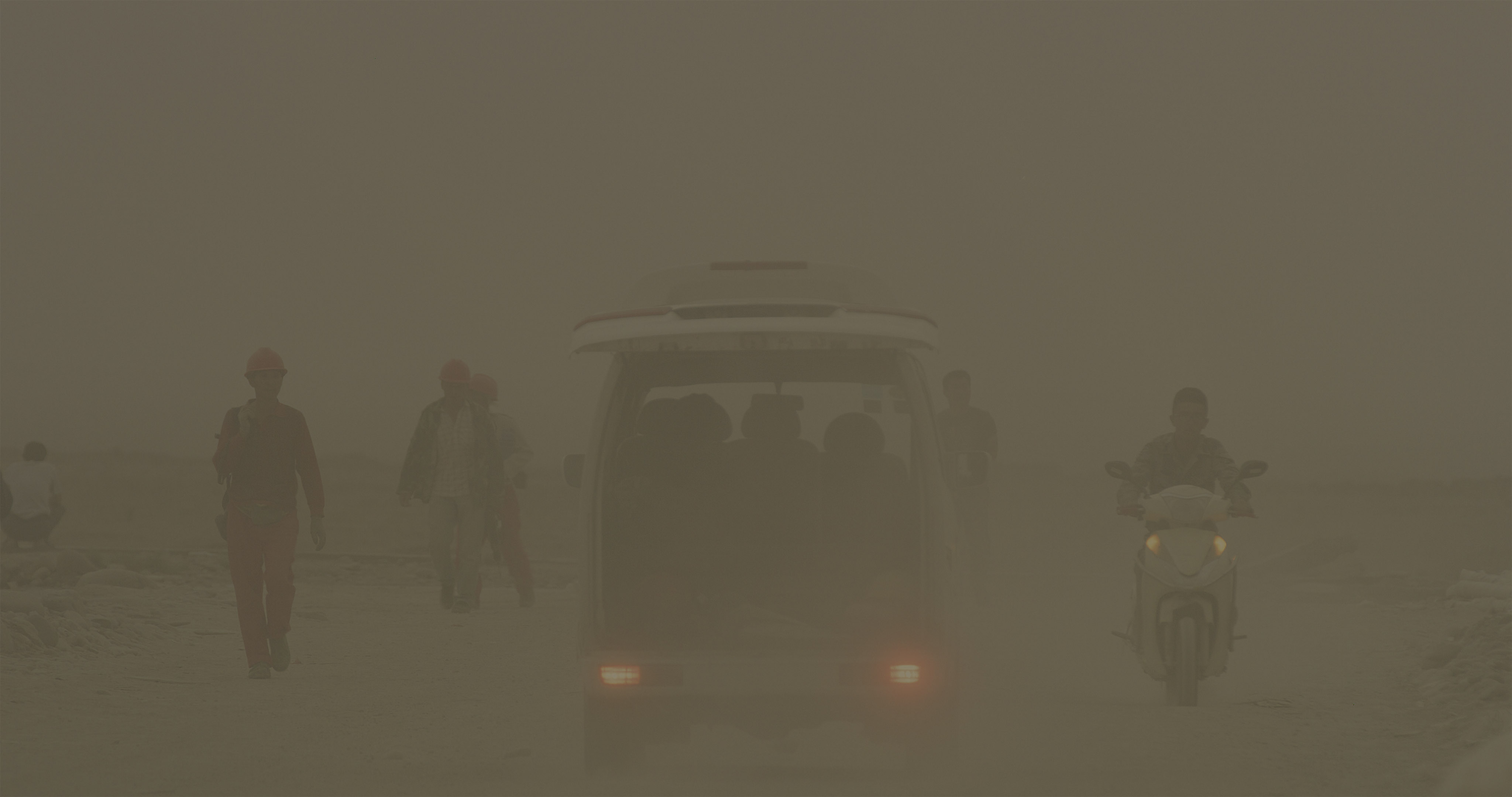
Zhou captures other people talking about various ordinary things like the price of sheep, but otherwise follows figures in the landscape often obscured from view like shadows on the horizon. Some of them wear military uniforms, though the vastness of this environment and the dehumanising nature of the construction project seem to rob them all of identity. As the film continues, the sandstorms intensify and it becomes increasingly difficult to see through the mists and darkness. The figures lose their form. We only discern their general outlines as if this landscape had swallowed them or we were standing on the periphery of some other world gazing across a hazy horizon almost impenetrable to us.. We catch their voices on the breeze, but cannot quite discern their language while the camera remains at a distance in the permanent periphery of photography.

But the camera is also part of this world too. The images become hazier, as if the camera itself had sand in its eye, its gait less steady as if it stumbled against the wind. Having begun in documentary realism,  Zhou soon descends into abstraction. The darkness is broken by the flashing red beacons of the construction machine and we are blinded by its light to enter almost another world of dust and shadows that takes on a dreamlike and hypnotic sensibility until we once again discover a figure to lead us out of the darkness and step back from the periphery. What we see now is only blue skies and white birds, a vision of peace and serenity in which the eerie sounds of construction are absent. The camera turns and looks in another direction. We exist on the periphery of destruction, a vast human machine busily undermining its foundations for no clear purpose while wandering through the desert alone beaten by wind and sand in search of the blue sky on which we in our foolishness willingly turned our backs.


The Periphery of the Base screens at Museum of the Moving Image 15th March as part of this year’s First Look

Trailer

Museum of the Moving Image Announces Complete Lineup for First Look 2025

New York’s Museum of the Moving Image has announced the complete programme for this year’s First Look which takes place March 12 – 16. As usual there are a number of East Asian films on offer including an experimental documentary from mixed media artist Zhou Tao, docufiction in which two Indonesian men spend an evening in a park in Taiwan, and a quietly enraged character study from Yoko Yamanaka.

Park (Taman-taman)

Enchanting improvised docufiction in which two Indonesian men meet in a park in Taiwan to talk about their lives along with poetry and the awkward transactionality that exists between the two nations.

Desert of Namibia

An aimless young woman struggles to understand herself or the world around her while finding release only in watching videos of the Namibian desert in Yoko Yamanaka’s quietly enraged drama. Review.

The Periphery of the Base

Experimental documentary from mixed media artist Zhou Tao exploring the area around a large construction site in the Gobi Desert.

First Look runs March 12 – 16 at New York’s Museum of the Moving Image. Full details for all the films as well as the complete programme can be found on the official website where tickets are already on sale. You can also keep up with all the latest news by following the Museum on X (Formerly Twitter)Instagram, and Facebook.

The Clinic (ဆေးခန်း, Midi Z, 2023)

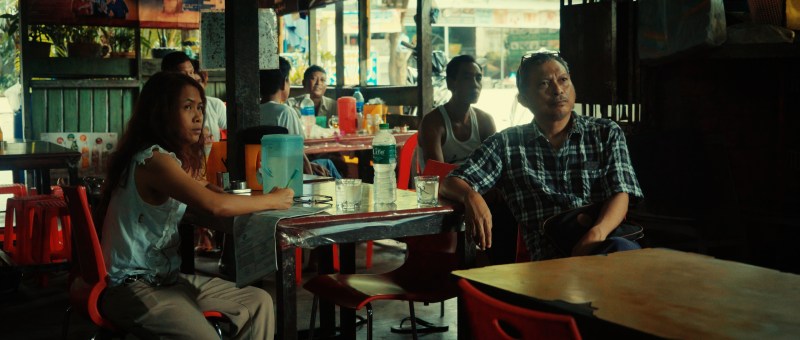
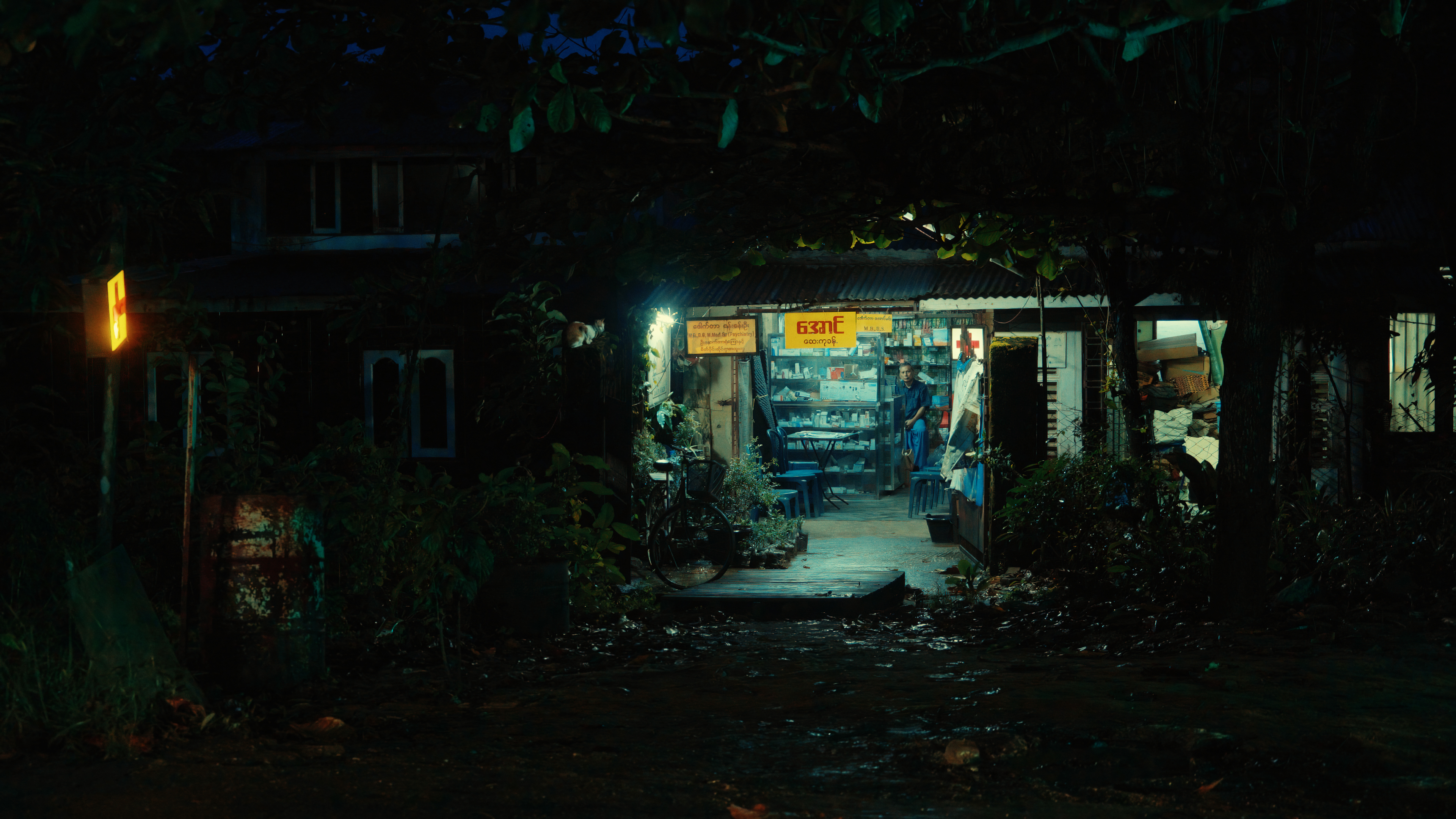
The title of Midi Z’s documentary The Clinic (ဆေးခန်) most obviously refers to that run by the two doctors at its centre providing a safe haven in the midst of chaos, but the director apparently envisaged secondary meaning in which the entire nation is a clinic filled with those in desperate need for treatment. It does seem that there is a lot of sickness and despair in this small corner of Yangon, the husband and wife doctors largely treating conditions related to alcohol and mental illness while otherwise powerless to do much more than treat their symptoms. 

It’s clear that there is little medical provision otherwise available in the local area. One woman has brought her sister from several towns over, explaining that there aren’t many doctors as kind as these ones are. They even invite their patients to return for dinner. The woman’s sister, however, has picked up head lice after a stay in hospital and seems to be under what they assume is a delusion of having been tried by the army for joining the Rohingya and rebelling against the Burmese state despite living in completely the wrong part of the country to have any contact with the conflict. Later the doctors sit in a cafe and listen to a speech by Aung San Suu Kyi about the Rohingya crisis which ends with an announcement for the delegates to head to a post-conference party. Doctor Aung Min quips that apparently they are not invited.

Aung Min is not invited to the party in many ways as he discovers when a film he’s made is screened at a human rights film festival but he’s harangued by a pro-military audience member who found his work offensive. A filmmaker as well as a doctor, he’s planning a film about an actor with fractured cultural identity as a Buddhist Rakhine taken to Bangladesh by the Rohingya. The actor is conflicted while considering whether to accept a film role that requires him to have a beard knowing that he may be mistaken for a Rohingya and will face social censure. In a meta touch, Aung Min’s film is like this one somewhere between documentary and narrative, incorporating photographs of the felling Rohingya in anguish and agony.

Meanwhile, Aung Min and his wife San San Oo treat similar ailments in their clinic, notably one middle-aged man with an infected leg wound originally caused by a drunken accident. Aung Min tells the man he might have to cut his leg off, but struggles to convince him when he says he’ll have to avoid alcohol for a few months to try to save it. San San Oo also answers the phone to reports of people in severe mental distress threatening to harm themselves or others. In quieter moments they offer art therapy to some of their patients and otherwise attempt provide a safe and comforting space. Both artists themselves, San San Oo is a keen painter while Aung Min has his film career. 

The film follows them in the midst of the military coup, the famous video of the woman filming a yoga session as the soldiers head towards the seat of government, during which the doctors and the clinic seem to stand firm while overseas radio reports reflect on the dire situation in the nation. Yet they are largely powerless to treat the wider sicknesses around them, the fear, the anxiety, guilt or indifference in a divided society. Instead, they take solace in their art but also in its capacity to heal while keeping the clinic open as a beacon of hope for wounded locals and those from further afield. 

Midi Z films with a detached naturalism that sometimes adds to a sense of absurdity echoing the outside chaos of the society mired in anxiety and confusion. “What’s in a film isn’t real,” Aung Min and a potential actor reflect, but even if this were not a documentary that is never quite true. Midi Z hints at the wider sicknesses in the society but in the end finds only powerlessness to treat it if tempered by the resilience of the doctors who keep their clinic open even in the darkest hours allowing the illumination of their signage to stand as a small beacon of hope amid so much despair.


The Clinic (ဆေးခန်း, Midi Z, 2003) screens in New York 17th March as part of this year’s First Look.

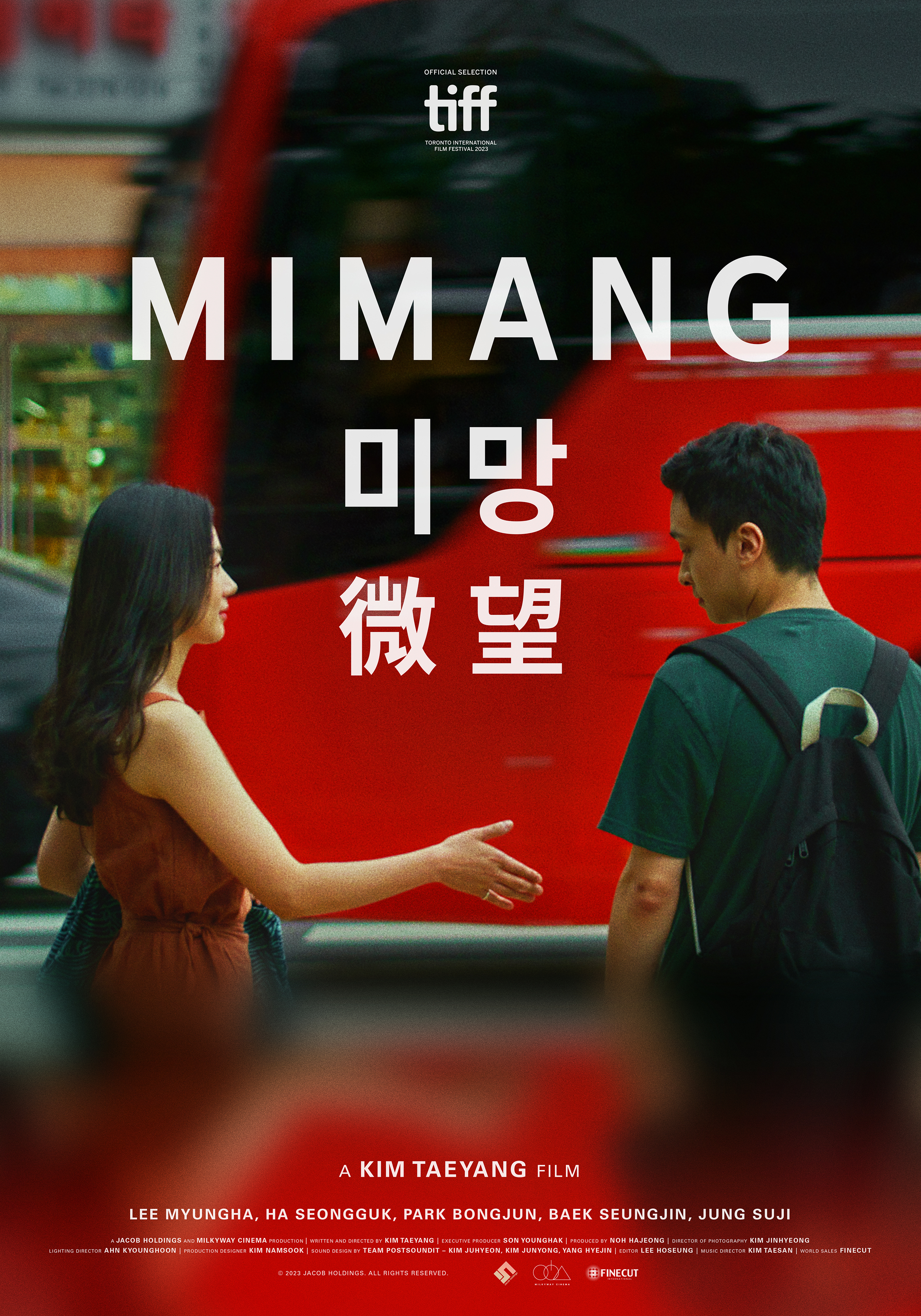
Mimang (미망, Kim Tae-yang, 2023)

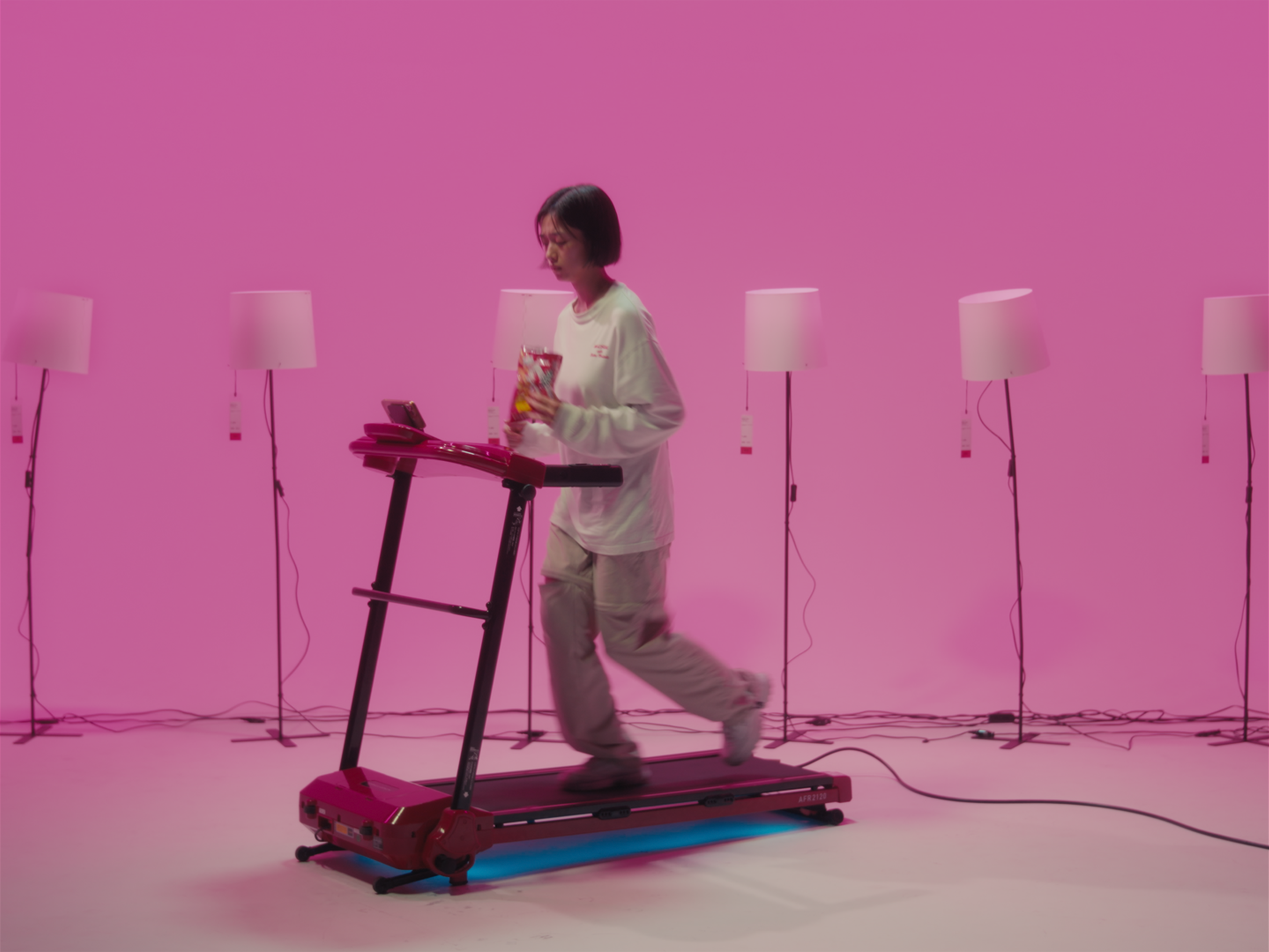
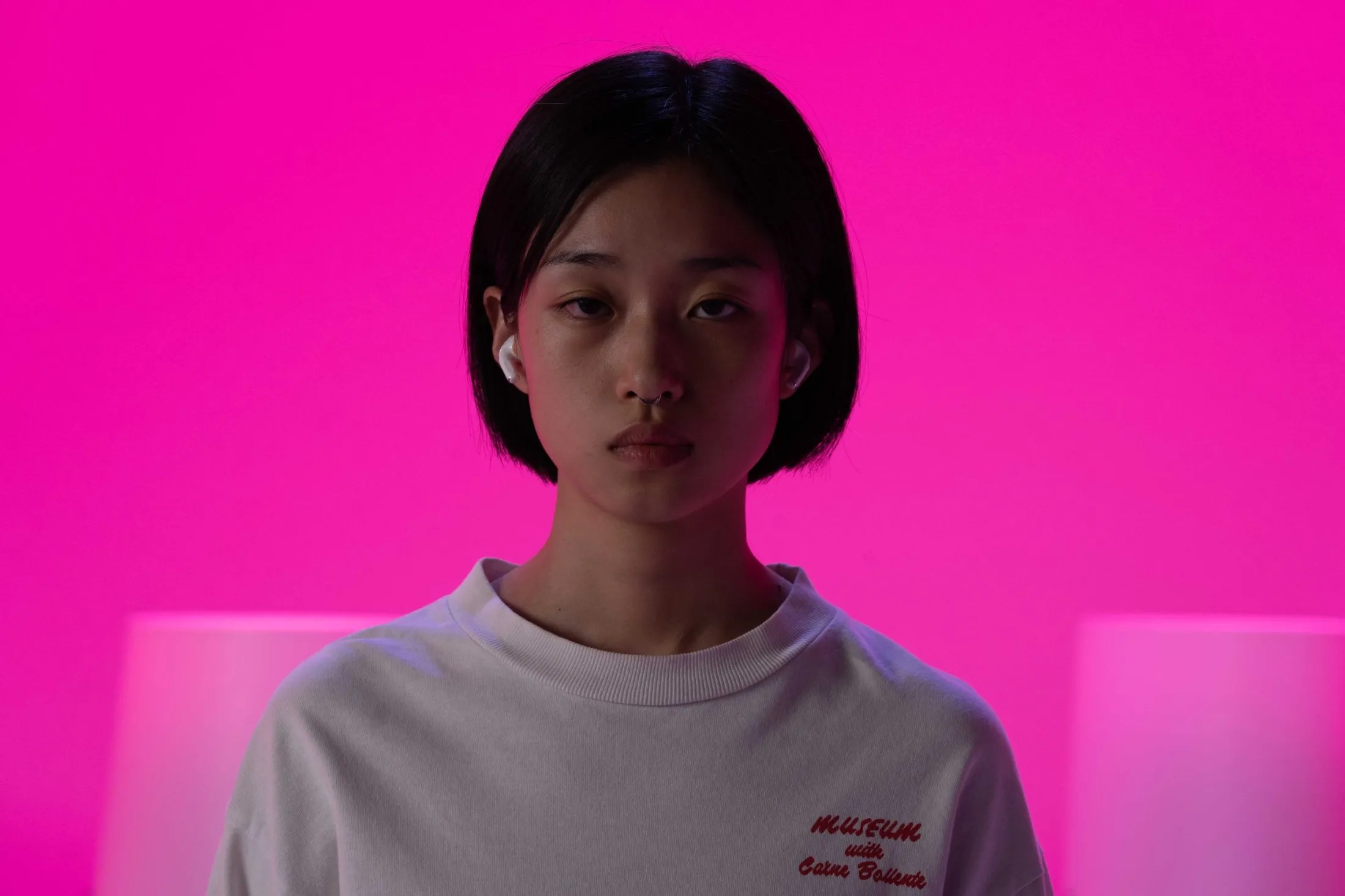
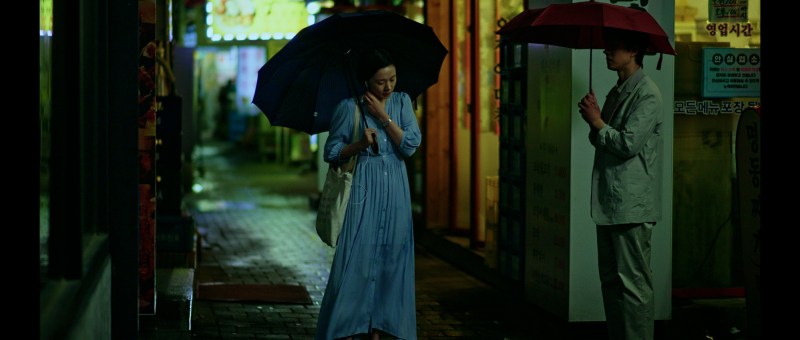
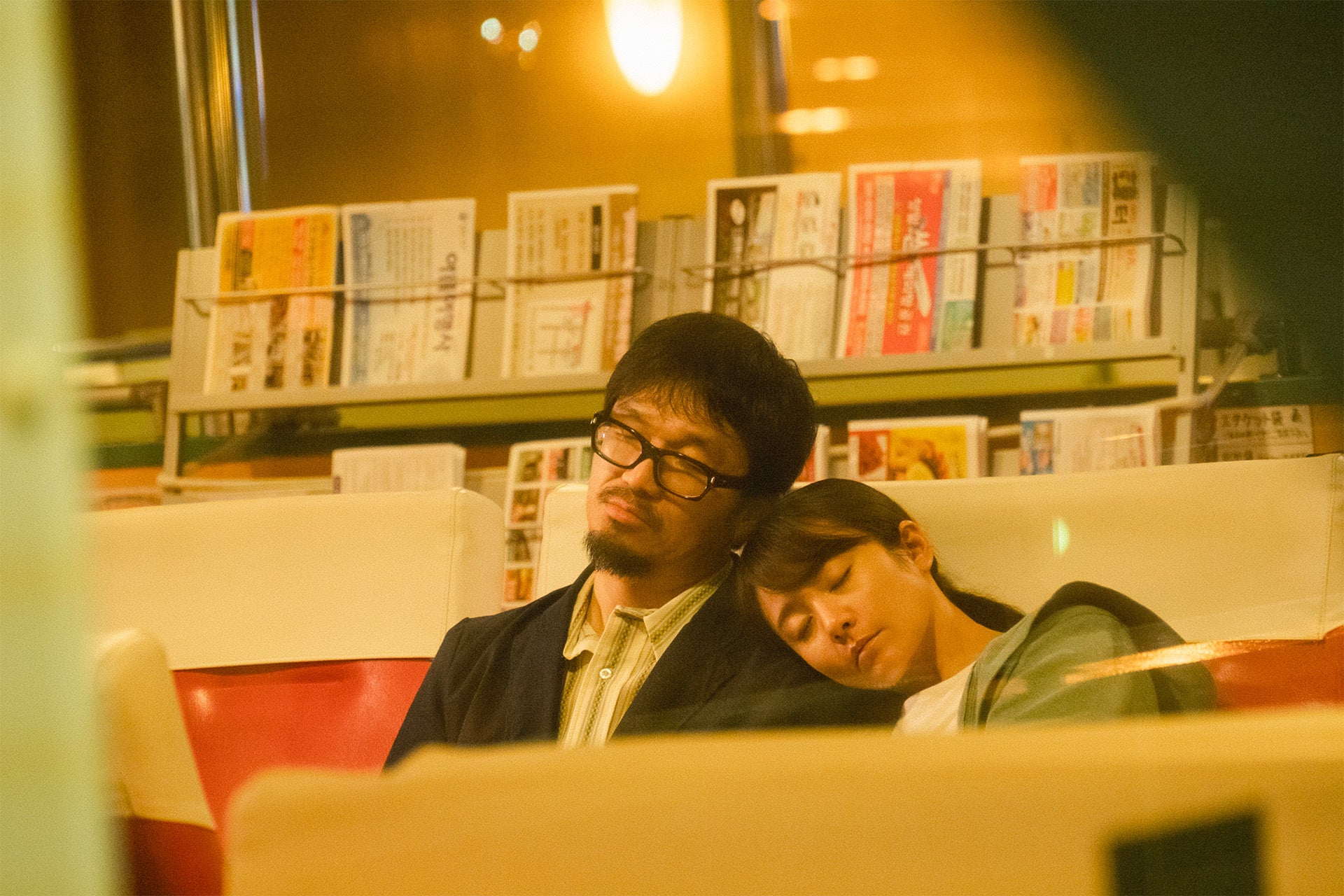
Part way through Kim Tae-yang’s Mimang (미망, Mimang), a woman giving a talk about a classic Korean film the ending of which is lost to time remarks that the audience will walk out onto the same Seoul streets the protagonists of the film once trod in 1955. They are literally the same streets, but of course they aren’t. On her way there, she’d talked to an old friend she’d bumped into along the way about the imminent redevelopment of the area which will lead to the cinema she’s on her way to being torn down. A statue of Admiral Yi they frequently refer to as a meeting point and landmark will be moved to accommodate the new road structure leaving them even less certain of direction than they were before.

In fact, the statue itself is compromised in that it depicts Yi holding his scabbard in his right hand which implies he was left handed in contrast to all the other statues of him that suggest otherwise. The woman claims her friend, the man, told her this before a long time ago and insisted that this sculptor did his homework and got it right though another woman he later meets, his current girlfriend, claims the reverse is true. A man the woman later meets, the organiser of the event she was appearing at, offers another interpretation which insists the only answer is uncertainty. There’s no historical record as to whether Yi was right or left handed, and in any case given the stigma towards left-handed people he may have been forced to behave as if he were right-handed even if he were not.

The conversations themselves are meandering and circular, offering no real conclusions and like the classic film missing an ending. The word “Mimang” can have many connotations some of which are outlined by title cards appearing throughout the film though all echoing a sense of being lost, wandering in a literal but also intellectual sense unable to reconcile oneself to an ever changing world that in other ways never changes. The man complains that everything repeats itself and that life is just a cycle that revolves from noon to midnight which is indeed what happens in the parallel conversations of the man and woman as they travel through the city in the company of their respective partners each revolving around the shortly to be (re)moved statue of Admiral Yi. 

In any case, we can feel a sense of loss between them that perhaps they were once together and then parted or almost but never were. In the third arc of the film which occurs some years later they re-encounter each other at the funeral of a university friend, someone their age who has passed away though as another friend points out they’re all still too young to see each other only at funerals. They make an arrangement to visit a bar they used to go to, near the statue of Admiral Yi, though something comes up, someone leaves, and they part again without really having said anything much at all. Moments pass without noticing, and as the song the man sings in memory of his friend suggests, were really “nothing special” after all. 

The organiser of the event the woman takes part in has a habit of saying “that happens” as if nothing really surprises him amid the mundanity of an ordinary life. As the film opened, the man had got off the bus at the wrong stop which is how he meets the woman to whom he explains that often finds his way by getting lost, a sentiment echoed in what he tells her learned in drawing class that things which seem like mistakes can actually be interesting diversions which take you somewhere new. A less comfortable motif sees both men confidently give the woman directions, assuming they know where she wants to go and somewhat unwilling to let her walk her own way though she in turn seems lost for direction and unsure which way to turn. We too can see the passage of time in the differing quality of the photography, the ADR’d dialogue and gentle ageing even the various ways the man and women dress though obviously more formally in the final sequence. Like the classic film this one has no ending either, just a gentle fade in which we can’t be sure if the man the woman will ever meet again or what might pass between them if they do only that they will continue to wander these ever-changing yet familiar streets in search of something they know not what.


Mimang screens in New York 17th March as part of this year’s First Look.

Trailer (English subtitles)

R 21 aka Restoring Solidarity (Mohanad Yaqubi, 2022)

The occupation had ended in 1952, but America’s influence on Japanese society continued in other ways not least among them defence. 1960 saw the biggest protest movement Japan has ever experienced against the renewal of the security treaty with the Americans that underpinned the pacifist constitution, though the treaty was eventually signed anyway in defiance of public opinion. Student protestors and radicals came to feel oppressed by American imperialism and objected to the hypocrisies of Japan’s role in America’s foreign in policy in Asia. For these reasons, those on the political left came to feel a solidarity with the Palestinian struggle against colonialism and began to travel to Palestine in order to learn and share support often filming what they’d observed for those back home. 

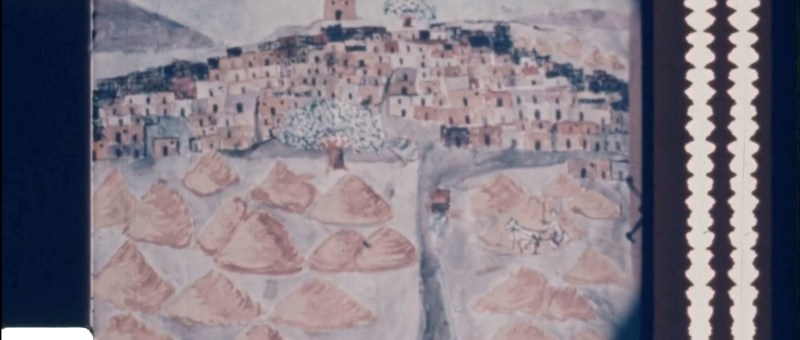
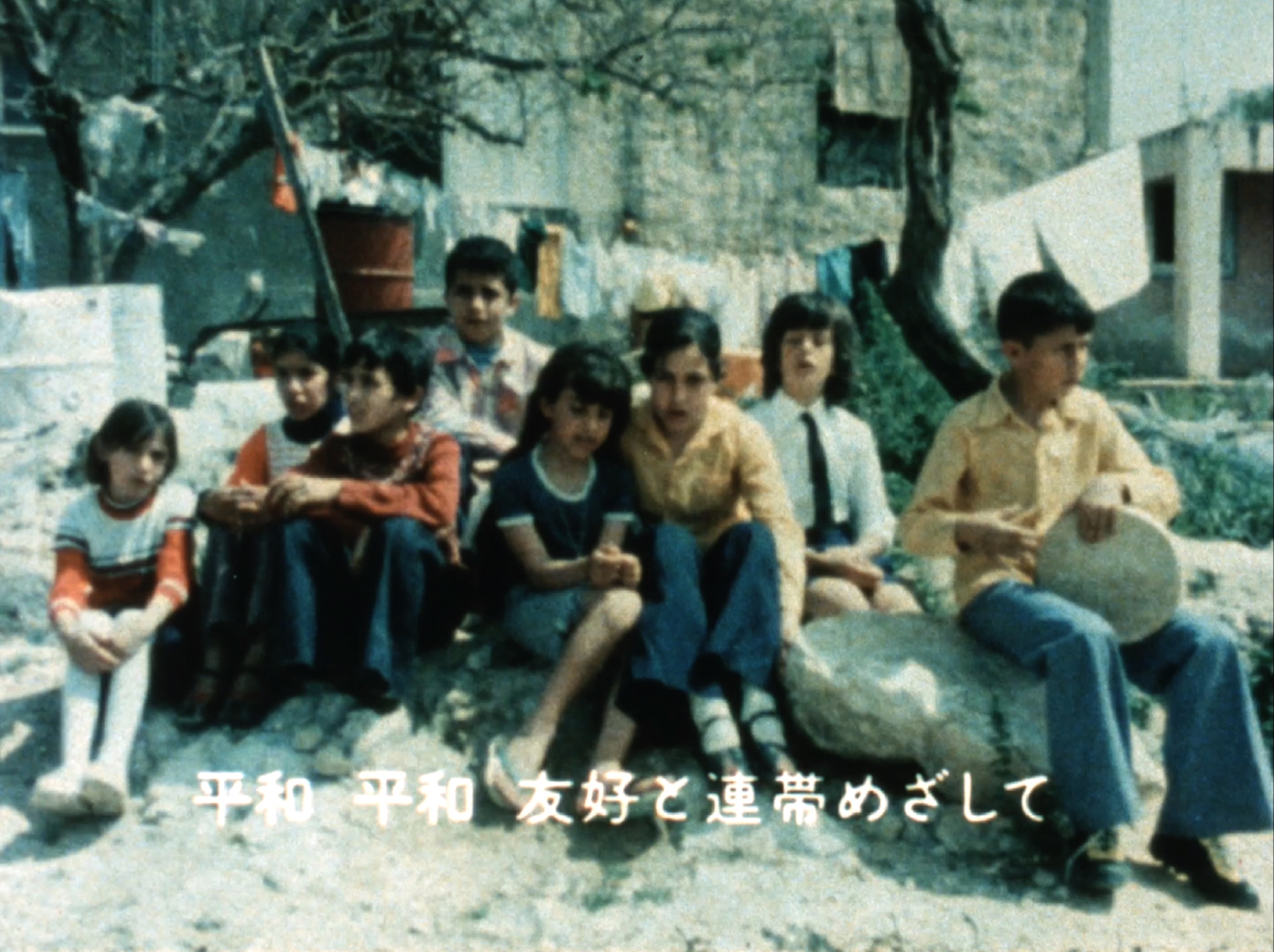
R 21: Restoring Solidarity is a collection of 20 such films kept safe in Japan and later handed to the director, Mohanad Yaqubi, after a screening of his previous film, Off Frame. Film number 21 is the film itself intended as a message of solidarity in the overarching contemporary voice over narration in Japanese. The films themselves are in several languages, many of them subtitled or dubbed for audiences in Japan, some shot by Japanese activists in Palestine and others produced by news organisations or other observers. A few feature upsetting footage of bodies and rubble, tanks on the streets, and shoes without owners while others record children singing cheerfully about peace or displaced students talking about their hopes of one day restoring their country.  

A lengthy sequence contains an interview with an old woman recounting how her village was slowly erased to a British reporter, a more obvious parallel with Japan occurring with the direct allusion to the devastation of the atom bomb in ruined landscapes now devoid of all human life existing only as the symbol of societal collapse. The old woman tells the reporter that they should leave the town the way it is as a reminder of the evils which have gone before. Yet also included in the archive is footage from a programme with a British voice over which seems to be much more propagandistic in tone, raising questions of the purpose and objectivity of the videos and the role they were intended to play. 

Perhaps the most interesting segment features a short film starring a collection of children who come across an abandoned missile launcher and start playing with it only to be confronted with the realities of conflict on coming across the body of another child. The children then appear in military uniforms, radicalised to avenge their friend by fighting for their country. The reels also include direct to camera statements and interviews from prominent people that may also in their own way contain a degree of artifice. Yaqubi frequently cuts in with images of the reels themselves or restoration process reminding us that what we’re seeing is a constructed image that’s being reconstructed before our eyes and quite literally repurposed but also “restored” and repaired as an archive of struggle. 

The voice over reminds us of the struggles still ongoing, the indifferent self-interest of global powers that led to the early ‘70s oil crisis which threatened to derail the Japanese economic miracle and itself fostered a desire for closer relationships with Middle Eastern nations. A reporter for a Japanese newspaper, however, states that he thinks most people in Japan would be broadly in favour of the Palestinian cause if superficially knowing little of it while political support can be fickle and lacking in depth. As the voice over suggests, video is and was a powerful way of keeping memories alive but also of expressing solidarity with an otherwise distant cause in the shared struggle against colonial oppression.


R 21 aka Restoring Solidarity screens March 18 at New York’s Museum of the Moving Image as part of this year’s First Look.

Huahua’s Dazzling World and its Myriad Temptations (花花世界, Daphne Xu, 2022)

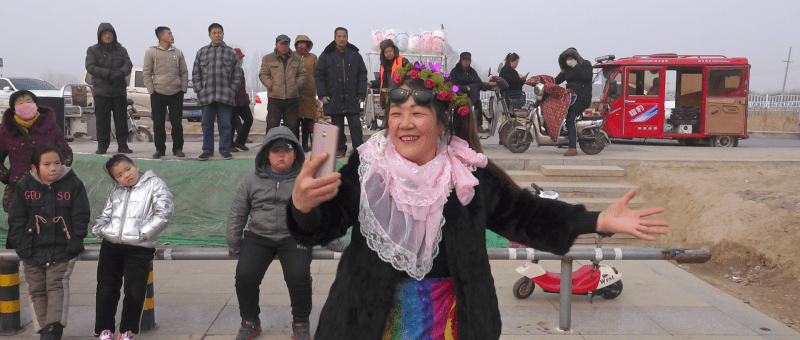
“If there were no live streaming platforms, I don’t think I’d know anyone” a middle-aged grandmother turned unexpected online star admits, laying bare the sense of isolation and impossibility she feels in her life in rural China. Daphne Xu’s largely observational documentary Huahua’s Dazzling World and its Myriad Temptations (花花世界, huāhuāshìjiè) follows Huahua as she goes about her ordinary days, Xu’s camera filming her as she films herself so, she claims, that those like her “won’t lose hope” gaining their own kind of courage in witnessing her optimism and positivity. 

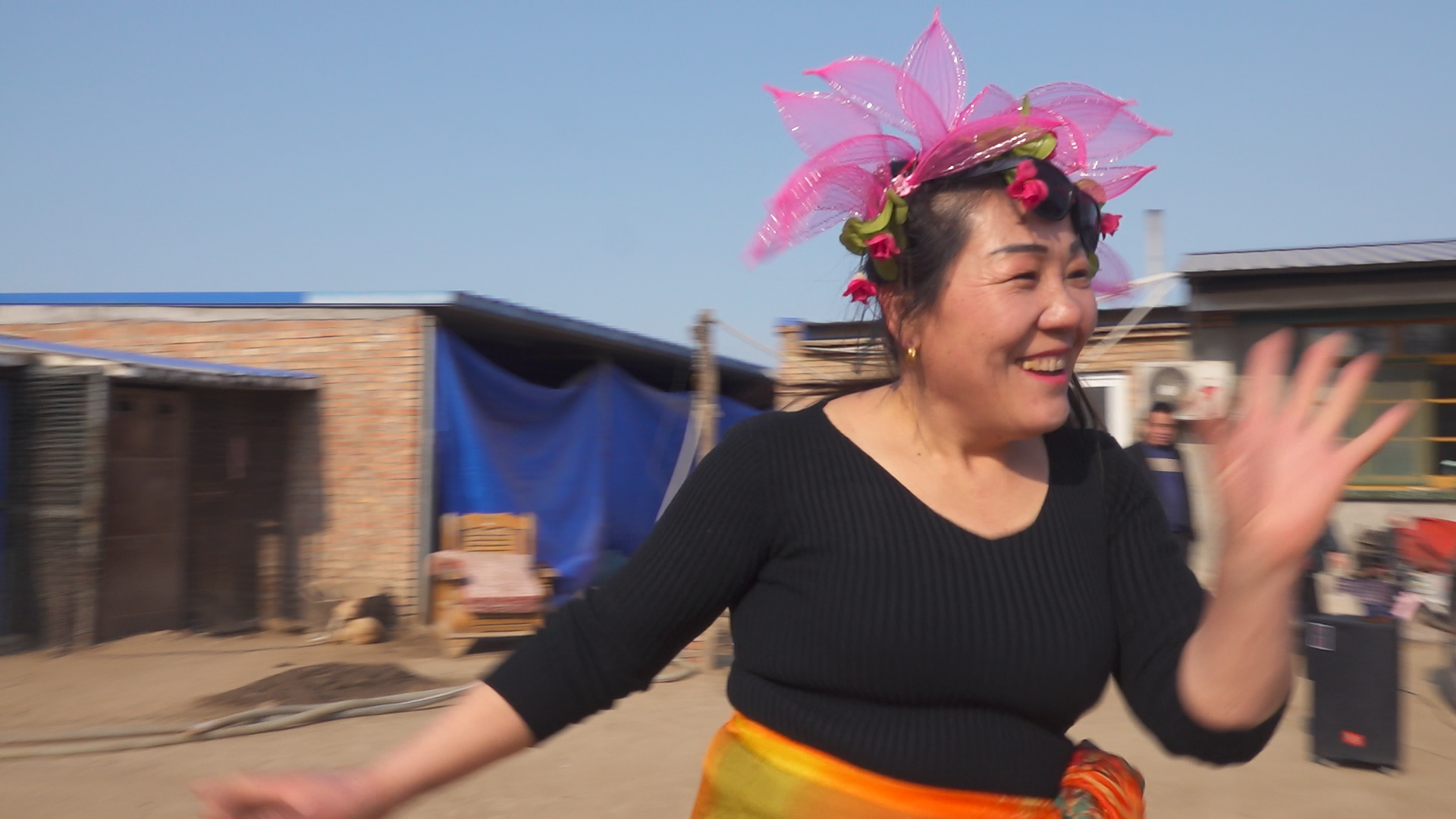
Huahua’s most popular activity is her furious dancing, often wearing a distinctive floral headband if adding a beauty filter to her videos as a means of altering her realities. Reality might not, however, be that far away. During one particular dancing video she suddenly stops and picks up a box of oranges currently on sale at her store and begins peddling them to her followers who often support her monetarily by sending hearts online. As Huahua admits, live streaming is a learning curve for a woman like her who is illiterate and was given little education. While driving home from a nearby commercial area, she emphasises the importance of early education for all children while suggesting that kids from the city learn faster not just because their schools are better resourced but simply because they interact with more people. Children in rural areas might go days without seeing anyone and only have regular contact with the same few family members and acquaintances limiting their ability to learn from each other which also in its way informs her appreciation for live streaming in the community it has given her access to which she might otherwise be denied. 

Meanwhile, she’s clear on the importance of education for women in particular explaining that she’s dedicated to supporting her daughter’s studies so that she will have a better future than she has had not least because she will be financially independent which means she will be at less risk of becoming trapped in an abusive relationship. Huahua’s relationship with her husband seems to that extent to be unhappy, Huahua complaining that she has to cook his meals after working all day while no one cooks for her. During a later live-streaming session, she characterises him as violent but says that she gives as good as she gets suggesting that this is the way she mediates the power differential in their relationship. Then again, she also uncomfortably remarks that women who are killed by violent partners or continue to suffer domestic abuse bring it on themselves by being too “weak” to fight back lending a darker shade to her messages of no-nonsense self-sufficiency in implying that her drive is largely fuelled by a desire to be free of male violence and subjugation. 

On her live streaming platform, she is very much in charge but also offers a fairly egalitarian sensibility in which each of her viewers is free to contribute as little or as much as they want whenever they choose without needing to think about hierarchy. China’s live streaming networks are also subject to a heavy degree of censorship, but Huahua declares herself unafraid to speak her mind and frequently uses profanity which might otherwise incur a ban given the prohibition against “vulgar” behaviour. Her followers seem to appreciate her frankness along with her willingness to offer advice and commentary on the things that might be bothering them.

It’s the idea of exchange which might in the end be the most valuable. Huahua’s videos are as much about sharing as they are showing off, allowing her to connect with others in the otherwise isolated environment of rural China. This sense of openness seems to have rubbed off on her daughter who dreams of studying languages and eventually becoming a diplomat channeling her mother’s “optimism” into an international career. She does though worry about the declining opportunities available in her community in which a new commercial development offers no promise of employment but in fact its reverse. “There won’t even be a place for you to buy jianbing” her teachers somewhat dismissively warn, speaking of an age when everything is automated. They even have robots to mix cocktails, what will the local people do to support themselves in the future? Like Huahua they may need to find alternative means not only to make money but to create new worlds in their own image free of geographical and social constraints.


Huahua’s Dazzling World and its Myriad Temptations screens March 18 at New York’s Museum of the Moving Image as part of this year’s First Look.

Museum of the Moving Image Announces Complete Lineup for First Look 2023

New York’s Museum of the Moving Image has announced the complete programme for this year’s First Look which takes place March 15 – 19. As usual there are a number of East Asian films on offer including a documentary following a streaming star in rural China, the latest drama from Koji Fukada, and an experimental film featuring restorations of footage shot in Palestine in the 1960s and 70s dubbed or subtitled in Japanese for sympathetic audiences in Japan.

Huahua’s Dazzling World and Its Myriad Temptations

Documentary following a middle-aged woman in rural China who has carved out a niche for herself as popular video streamer well known for her cheerful dancing and distinctive outfits.

Love Life

Heartrending familial drama from Koji Fukada in which the cracks in a recent marriage are exposed following unforeseen domestic tragedy. Review.

R 21 aka Restoring Solidarity

Experimental documentary featuring pro-Palestinian footage dubbed or subtitled into Japanese and intended for a sympathetic audience in Japan which felt oppressed by US influence and identified with the Palestinian’s struggle for self-determination.

First Look runs March 15 – 19 at New York’s Museum of the Moving Image. Full details for all the films as well as the complete programme can be found on the official website where tickets are already on sale. You can also keep up with all the latest news by following the Museum on TwitterInstagram, and Facebook.

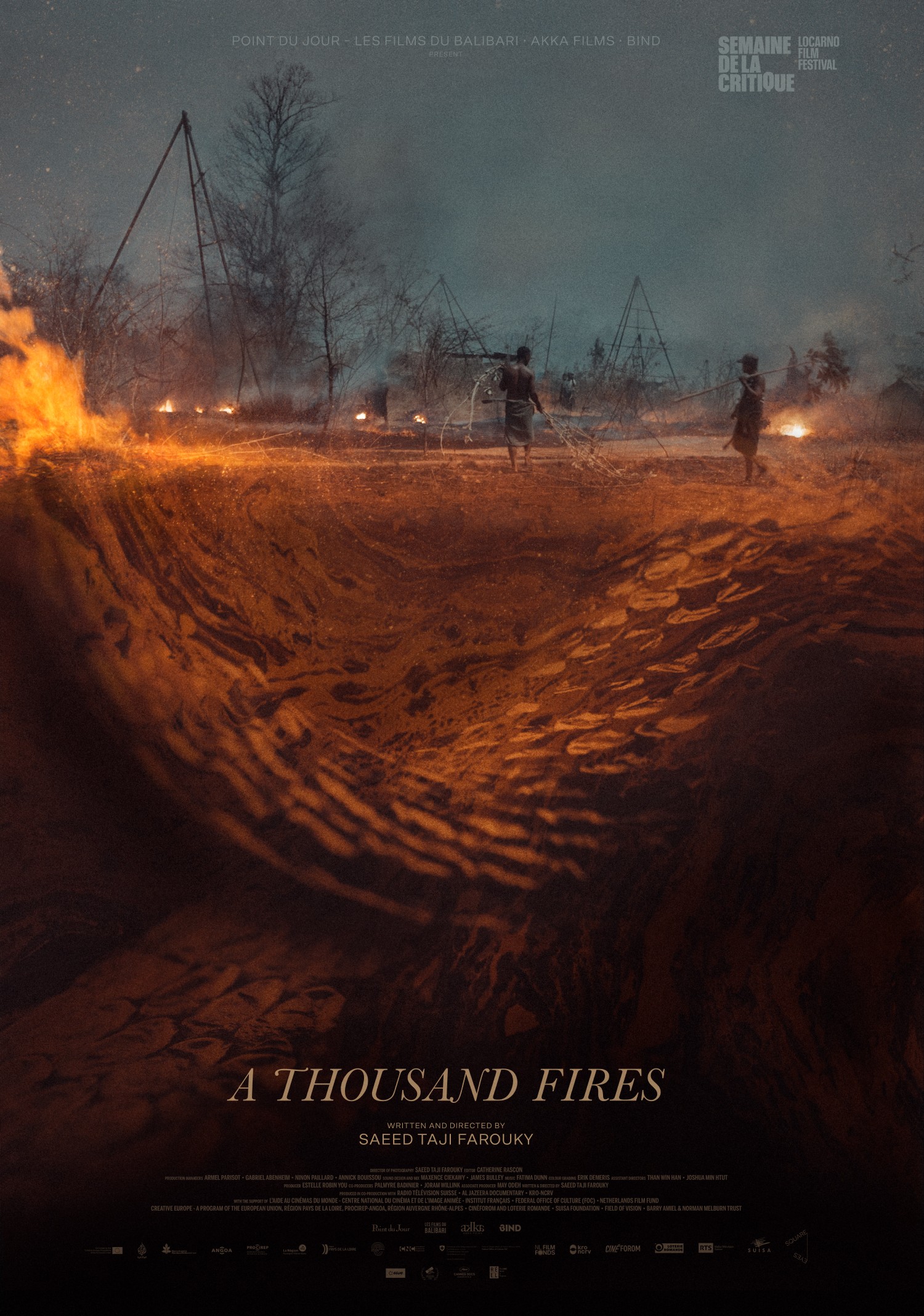
A Thousand Fires (Saeed Taji Farouky, 2021)

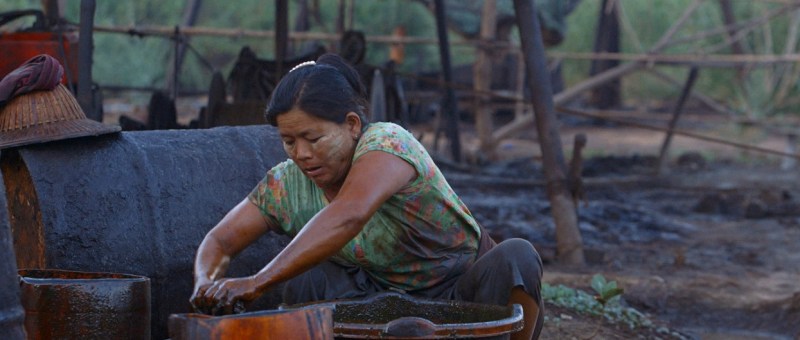
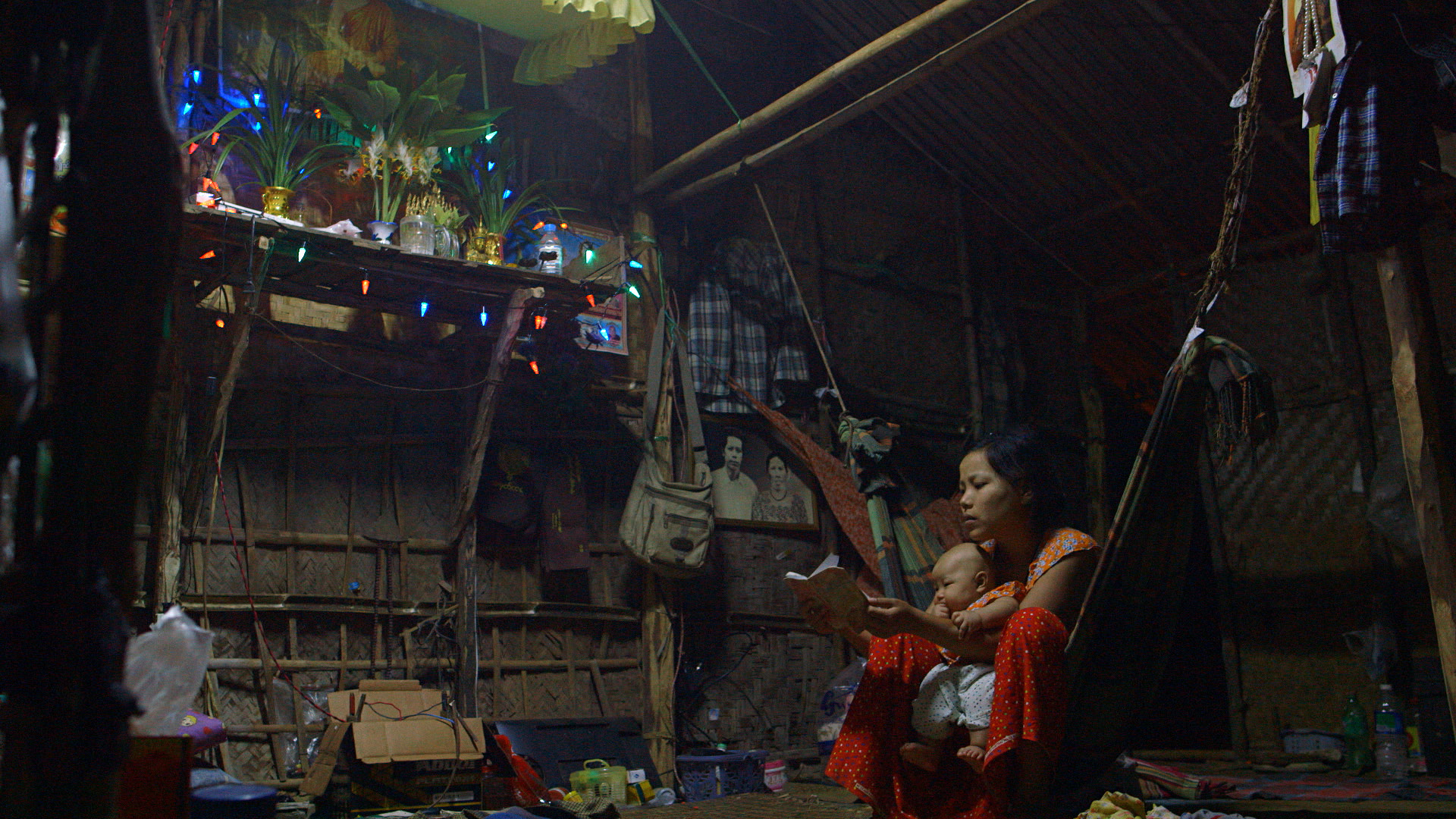
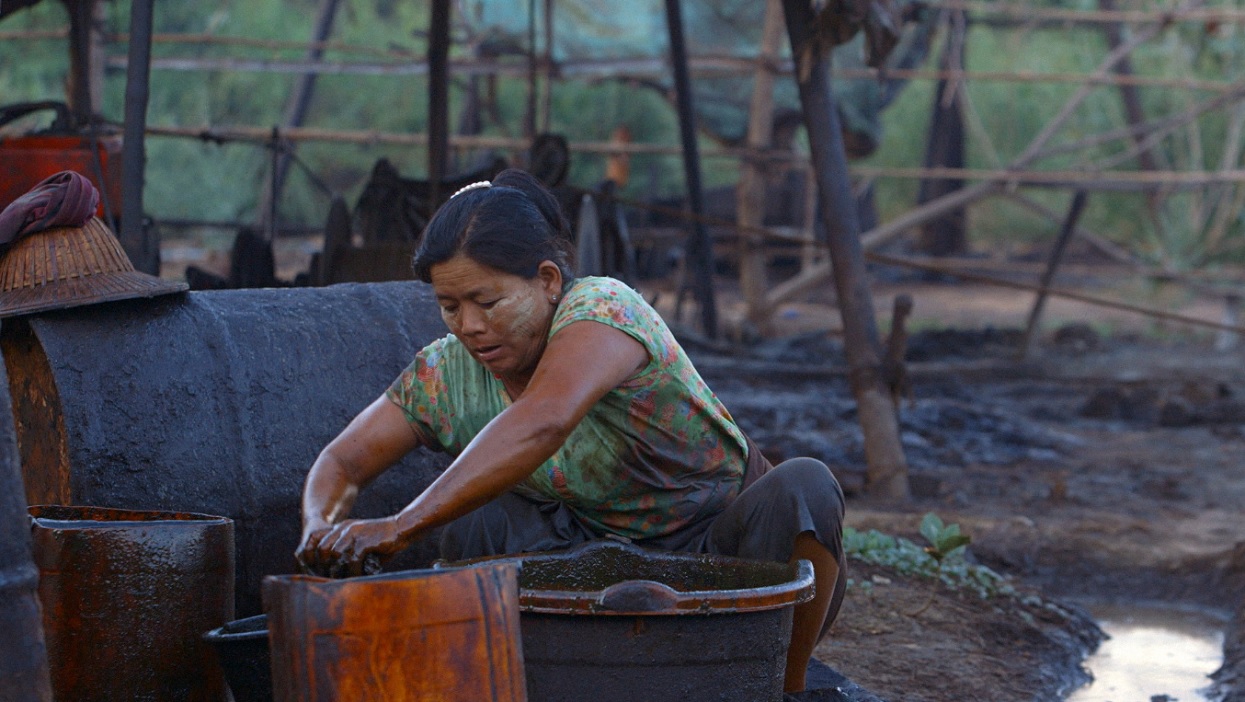
The whole world turns on oil, but most of us give little thought to where it comes from to the extent that we never really think of oil at all aside from that which it powers. Saeed Taji Farouky’s elegantly lensed observational documentary A Thousand Fires follows a small family in Myanmar who support themselves through unregulated oil digging, operating the kind of hand cranked wells one might associate with 19th century prospecting and getting barely a barrel a day but still fetching more than they might be able to get through farming. Yet this intrusion of modernity continues to disrupt their otherwise traditional existence as they ponder better lives for their children that will necessarily take them far away from their parents and their home. 

As they later reveal Thein Shwe and Htwe Tin once made their money through farming but now they only draw oil. You might think it would be a less intensive occupation, but the rigs require constant supervision and the machinery often breaks either needing immediate repair or resulting in a day’s lost work. Yet Thein Shwe is worried most about his oldest son, Zin Ko Aung, who is wilful and rebellious rarely helping his parents out to the extent the he worries if his son would even be able to start the engine for the well if no one were available to do it for him. 

His mother meanwhile makes slightly passive aggressive comments about a young woman his age who finished high school and now has a good job as the manager of a textile factory in the city. It might not be that there is no way out for him, but the parents worry that as he seems to have rejected both education and inheriting the oil wells he will be left with nothing at all. Their daughter, by contrast, is currently staying with them along with their baby granddaughter having married and moved to another town. Perhaps a part of them knows that in order to give their children better lives they must effectively send them away while worrying if they’ll be alright, if their sacrifices will have been worth it and these other lives are indeed better than theirs. 

To quell some of this anxiety we see them consult a fortune teller to find out if Zin Ko Aung will achieve success only to be told that he’d be better off if they changed his name from the one they gave him at birth to the one the fortune teller suggests. Capitalising on his talent for football they send him to the city to apprentice with a youth team for a year with no way of knowing if it’ll pay off and Zin Ko Aung will be able to make it as a sportsman, as his sister jokes becoming the first famous person from their village able to support the family with his newfound riches. The family also take part in several traditional festivals, praying for a “prosperous life” while eerily paying homage to a god of oil by “feeding the dragon” pouring liquid into a greyish swamp which bubbles and snorts as if burping in gratitude. 

Then again another passerby reveals that a Buddhist priest in their area cleared a hole and set fire to it causing an explosion that rocked the mountain. In an ironic touch, we witness a festival in which young children have their heads shaved in preparation for being ordained as monks before cutting directly Zin Ko Aung enjoying his new city life by getting a fancy haircut drenched in a red smock which strangely resembles religious robes. Another fortune teller the couple visit in the city warns Thein Shwe that his lifeline is short and he must be careful to remember his religion, while adding at that no matter one’s good intentions the only place you’ll find an honest man is in a cemetery.  Simultaneously he tells Htwe Tin that she is the leader of her family and admonishes her that women are overly materialistic and simply want too much. In any case all she seems to want is for her son to find his way even if he has to leave his family to do so. Poignantly as the film ends the couple are left alone, their son-in-law arriving to take their daughter home and their son away in the city while all they’re left with is more of the same dredging oil up from beneath soil and feeding the ever hungry dragon of the contemporary society that barely knows of their existence. 


A Thousand Fires screens in New York March 19 as part of Museum of the Moving Image’s First Look 2022

Trailer (English subtitles)

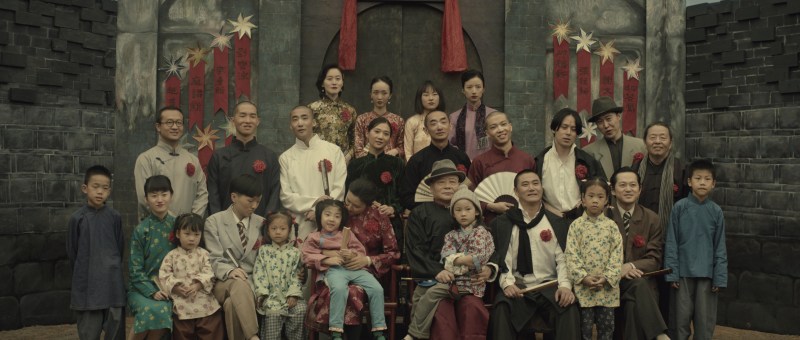
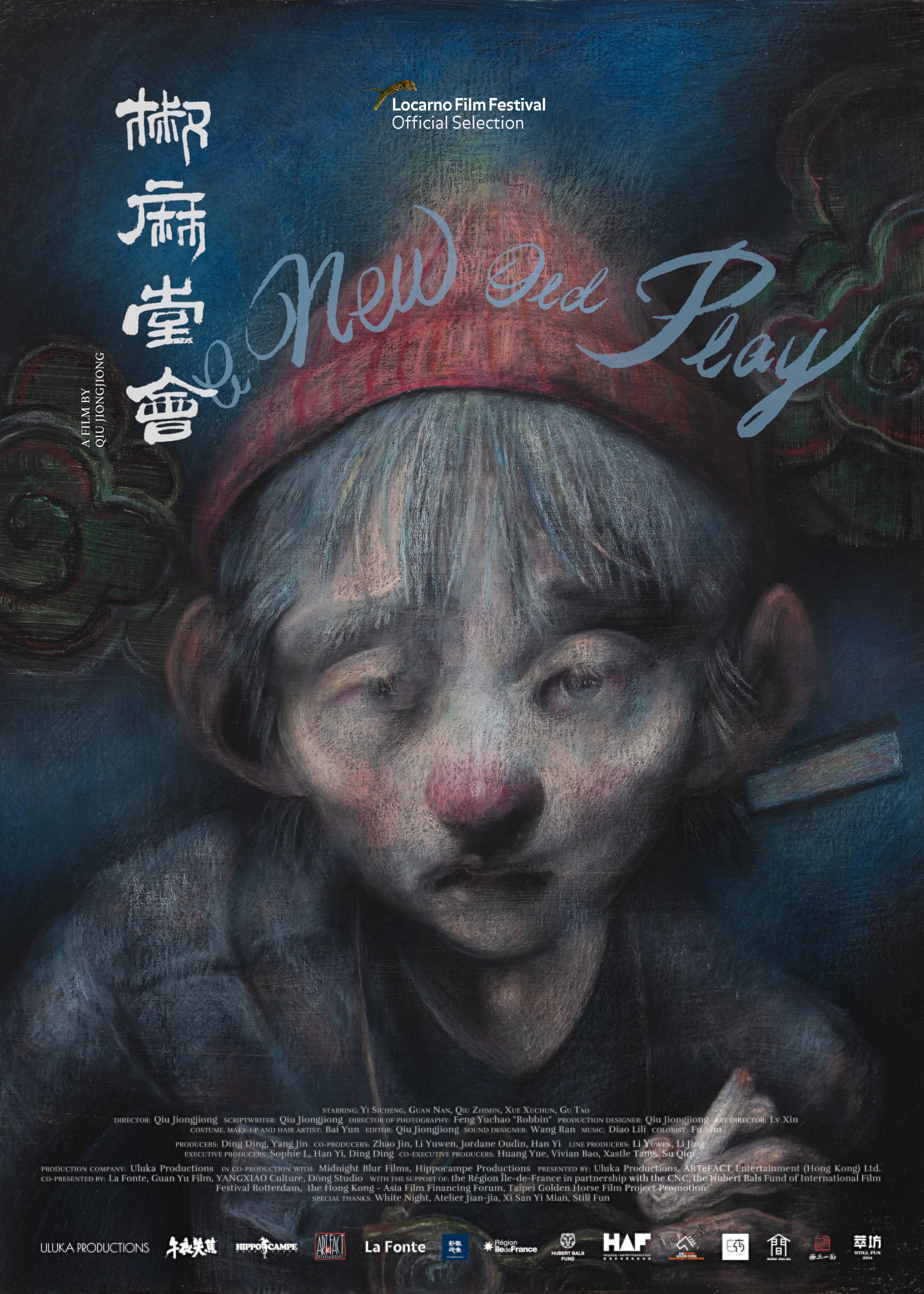
A New Old Play (椒麻堂会, Qiu Jiongjiong, 2021)

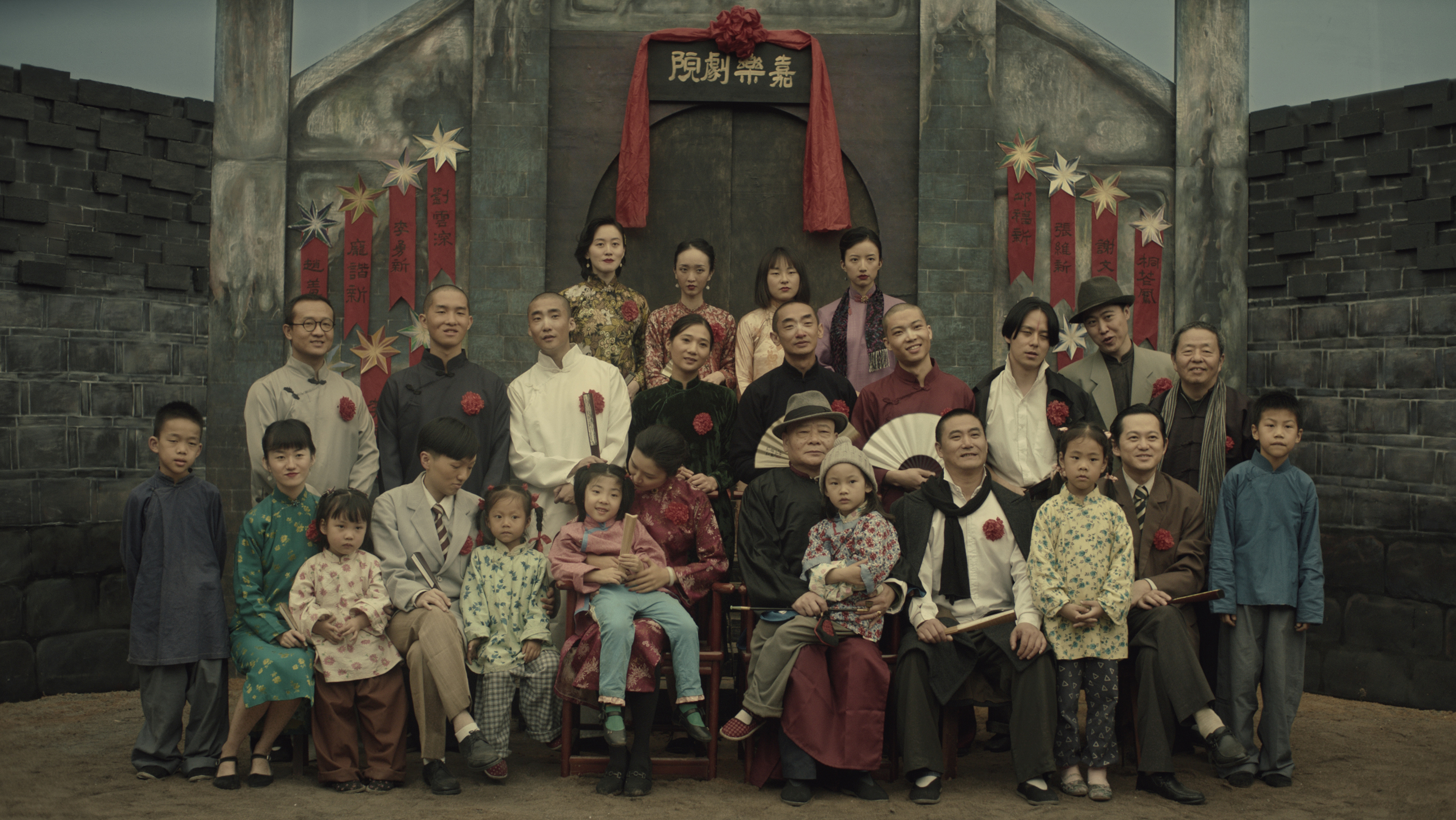
“A new play always tells an ancient tale” according to an intertitle a little more than half way into Qiu Jiongjiong’s three-hour Brechtian epic of mid-20th century Chinese history as witnessed by a Sichuan Opera performer, A New Old Play (椒麻堂会, Jiāo Má Táng Huì). Inspired by the life of his grandfather, Qiu’s absurdist drama is a cradle to grave journey through turbulent times but also a questioning of the nature of art at the intersection of politics and commerce, its uses and misuses in a constantly evolving society. 

As the film opens a pair of grim reapers kick start a pedal bike rickshaw and deliver a summons from the King of Hell to Qiu Fu (Yi Sicheng), now in his 70s one of the finest clowns of the Sichuan Opera. Qiu Fu does not want to accept that he is dead and tries to run away but running away from death will always be a futile endeavour. Oxey and Horsey will escort him to the Ghost City and the afterlife where he will be relieved of all his pain and suffering after drinking Mother Meng’s Soup of Oblivion. But if it all just disappears in the end, what was the point of it all? Two young lovers discuss between them their immediate fate and decide to stay on in limbo where they still remember their love. Qiu Fu wonders how he’s supposed to perform Sichuan Opera for the King of Hell if all his memories and long years of perfecting his craft have been taken away, but is told that each of us has a “secret code” that can never be erased his presumably being clowning. When everything else is gone, Sichuan Opera will survive. 

Then again Qiu Fu has found himself playing many different roles in the course of his life beginning with plucky orphan, convincing former nationalist soldier turned stage performer Pocky (Qiu Zhimin) to train him up as an apprentice. Pocky meanwhile will turn out to be on the wrong side of history, a Nationalist loyalist quickly outmanoeuvred by the times in which he lives. One moment, the troupe is performing pro-Nationalist patriotic fare with titles such as “The Patriot Beggar” and “Behead Ma Miao” crying “down with traitors” in front of signs which say “save the nation fight communism” only to find them replaced by those which read “save the nation down with Chiang Kai-shek”. A fearful Pocky sends the troupe to Taiwan but discovers Sichuan Opera doesn’t travel as well as he’d assumed, the actors quickly reduced to begging and finding even that somewhat competitive. 

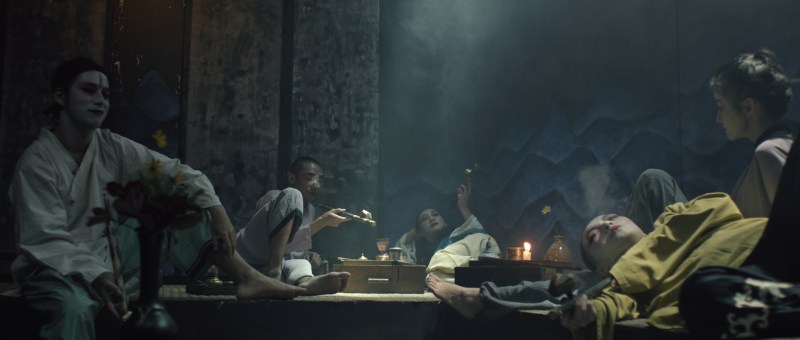
Qiu Fu’s greatest performance may even have been when dragged onstage by the communists as an example during a lecture on opium addiction having been forced to endure going cold turkey, claiming that his Lenin suit is far superior to the fine robes he once wore as an opium addict. The “theatre of joy” is now “the people’s theatre” but the promised new era almost immediately disappoints. Red brick buildings sit incongruously amid the traditional houses with their ornate tiled roofs while Oxey and Horsey lurk forever in the shadows waiting to escort those succumbing to the famines provoked by the Great Leap Forward though even they are afraid to use their rickshaw in this age of austerity. No longer the representatives of a new world, the troupe finds itself on the wrong side of the Cultural Revolution, Pocky branded a reactionary warlord while others are forced to wear signs reading “theatre tyrant” or “gangster” only for Qiu Fu to turn his humiliation into a show clowning for the local children who giggle at them in their funny hats as they stand in the courtyard in front of the theatre displaying their sins for all to see. Before too long Qiu Fu is forced to brick himself up inside a pig sty while his wife (Guan Nan) is encouraged to divorce him testifying to his faults before a judgemental panel of ideological purists. Once rehabilitated he must once again play the beggar, cast as a villain forevermore. 

Qiu Fu’s memories seems to end soon after the Cultural Revolution though he must have lived on a little longer, the story of his life told to a series of ghosts caught up in a kind of bureaucratic hell apparently undocumented in the land between life and death. Now you see him, now you don’t, Qiu Fu’s life both eternal and gone an instant. Using a series of deliberately theatrical stage sets, Qiu’s beautifully ethereal production design is somewhere between Roy Andersson and Arthur Rackham’s Brothers Grimm in its oneiric mists and pale-faced ghosts, Qiu Fu always sporting a bright red nose and gnome-like little red beanie accompanied by a pair of oversize glasses to remind us of his age. Imbued with an ironic sense of humour, the tale is sometimes broken by a series of Brechtian intertitles written in the rhythms of Sichuan Opera the techniques of which Qiu repurposes to fantastic effect, boats travelling on seas of silk, or small boys floating away on clouds above model cities and armies at war. Is it life or death that’s a dream? Both or neither perhaps it’s all the same a cyclical opera to be performed in perpetuity telling an old story in a new way from here until eternity. 


A New Old Play screens in New York March 18 as part of Museum of the Moving Image’s First Look 2022

Original trailer (English subtitles)

Museum of the Moving Image Announces Complete Lineup for First Look 2022

New York’s Museum of the Moving Image has announced the complete programme for this year’s First Look which takes place in person March 16 – 20. As usual there are a number of East Asian films on offer including the latest short from Tsai Ming-Liang, an absurdist voyage through mid-20th century China as seen through the eyes of a Sichuan Opera performer, a documentary focusing on the lives of Burmese oil drillers, and a surreal Indonesian parable about the corrosive effects of toxic masculinity and its links to oppressive authoritarianism.

The Night

(Screening alongside opening night feature Murina)

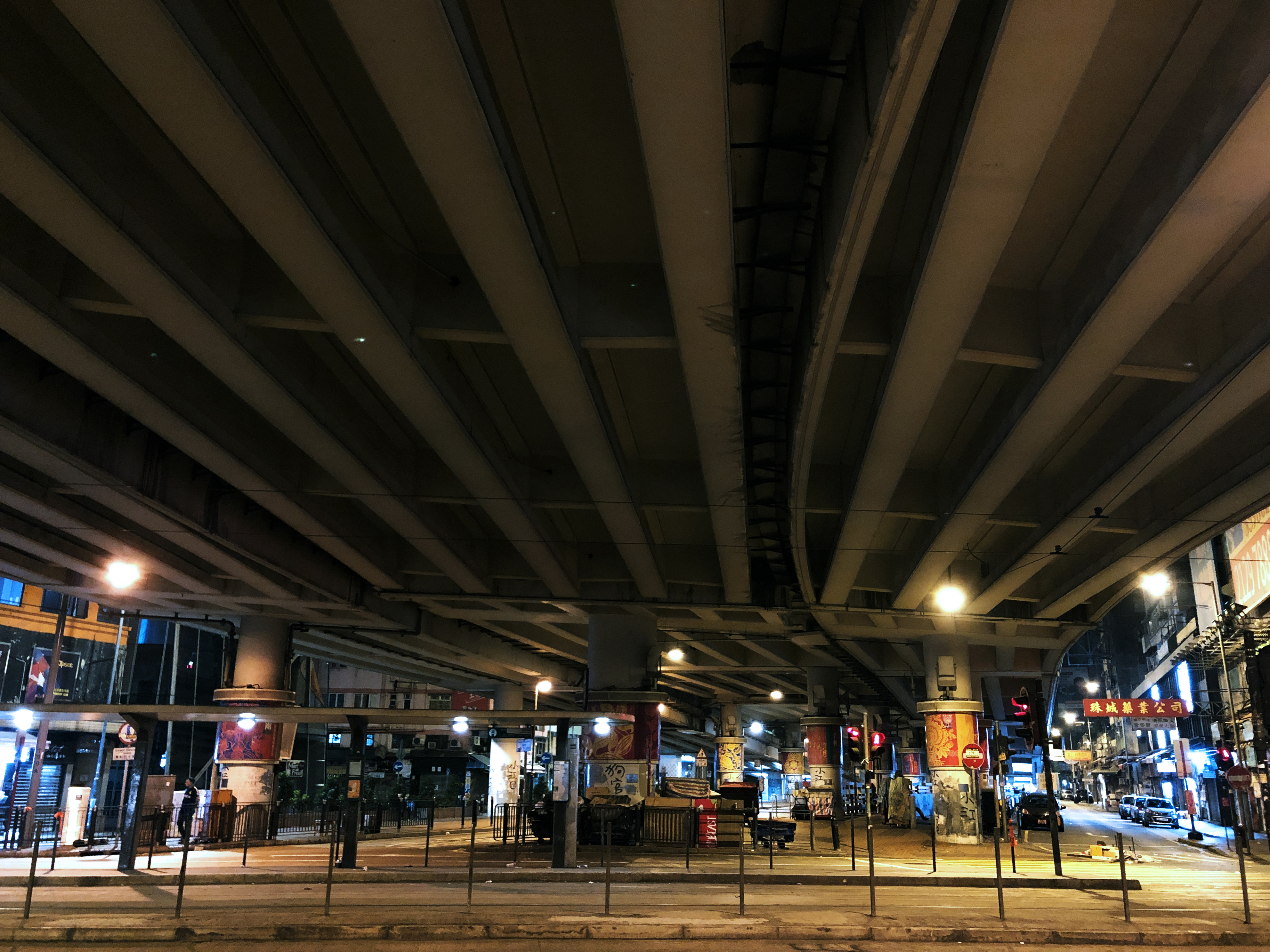
This 20-minute short from Tsai Ming-Liang captures the atmosphere of nighttime Hong Kong during the 2019 Anti-Extradition Law Amendment Bill Movement protests.

A New Old Play

Qiu Jiongjiong’s absurdist epic charts China’s mid-20th century history through the eyes of a Sichuan Opera performer on his way to the afterlife beginning with his childhood in post-Imperial china through to the dark days of the Cultural Revolution.

A Thousand Fires

Director Saeed Taji Farouky will be attending in person March 19

Saeed Taji Farouky’s beautifully shot documentary explores the lives of a family of independent oil drillers in Myanmar as a mother and father consider whether or not their son might be better off playing for a youth football team in the city.

Vengeance Is Mine, All Others Pay Cash

Lead Actress Ladya Cheryl will be attending in person March 19

An absurdist parable about the corrosive effects of toxic masculinity and its links to oppressive authoritarianism, Edwin’s outlandish retro grindhouse drama sees a young man contend with literal and societal impotence through the medium of violence while falling in love with a woman equally in desire of revenge against her misuses at the hands of a misogynistic society. 

First Look runs March 16 – 20 at New York’s Museum of the Moving Image. Full details for all the films as well as the complete programme can be found on the official website where tickets are already on sale. You can also keep up with all the latest news by following the Museum on Twitter, Instagram, and Facebook.