Voice of Silence (소리도 없이, Hong Eui-jeong, 2020)

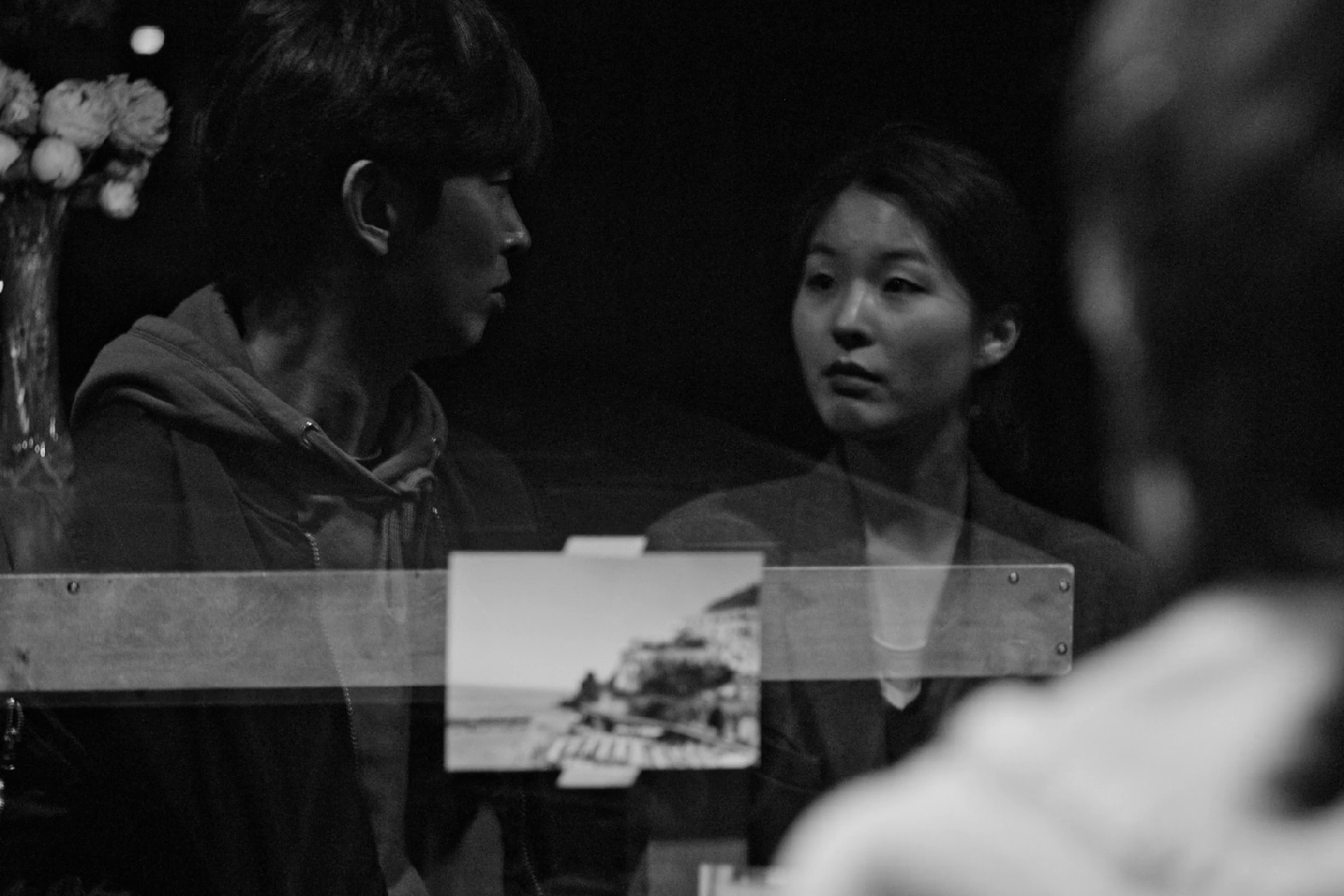
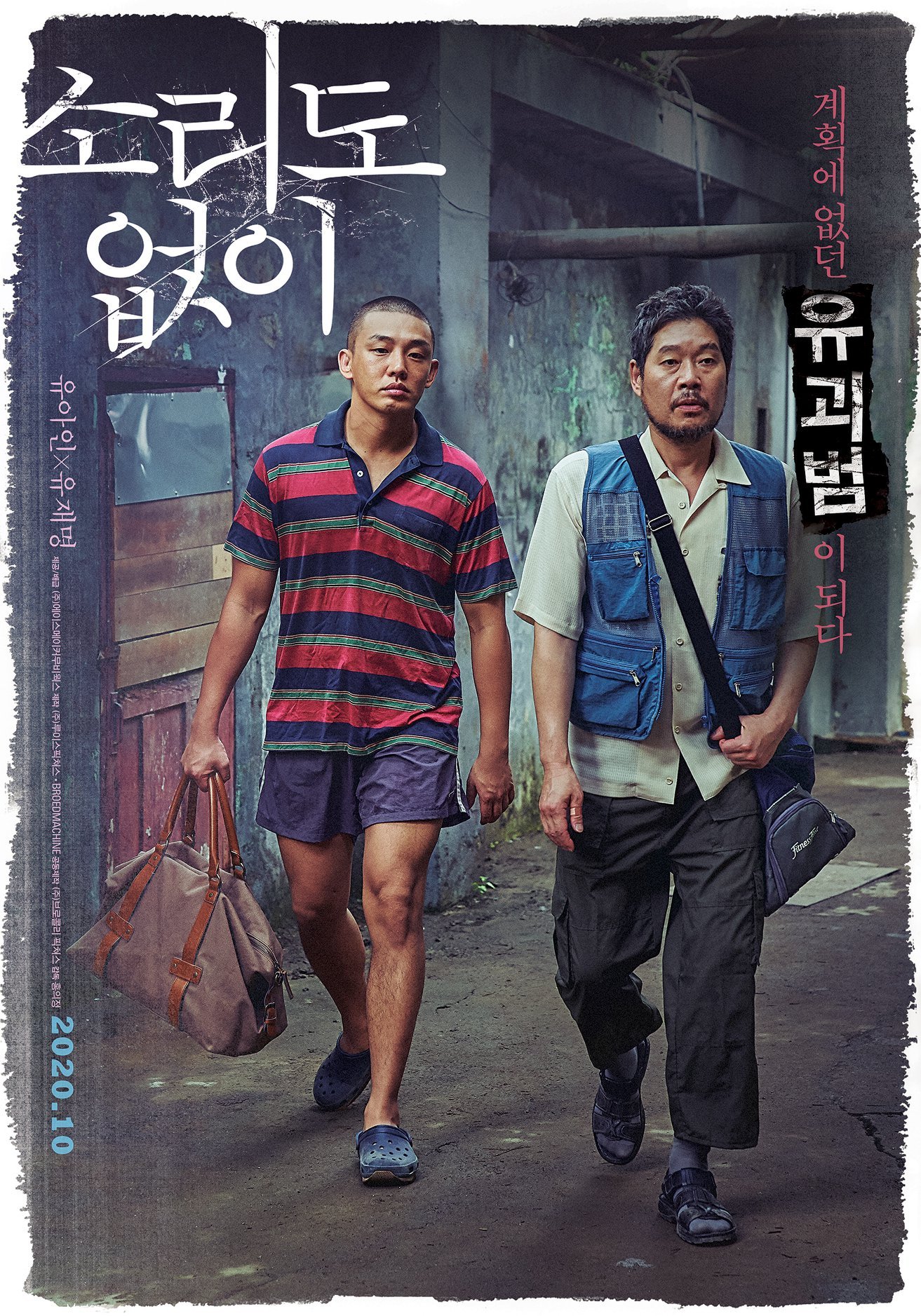
“Once you join a family, you have to pitch in, right?” the aphorism-loving protagonist of Hong Eui-jeong’s disturbingly warmhearted crime caper Voice of Silence (소리도 없이, Sorido Eopsi) explains to a little girl who has recently come into his “care” as she dutifully begins massaging the earth towards a half-buried body. Partly an exploration of the family bond and its propensity to arise even in the most duplicitous of circumstances, Hong’s ironically cheerful drama is also a mild condemnation of the modern society and its capacity to push good people to do bad things in its infinite oppressions. 

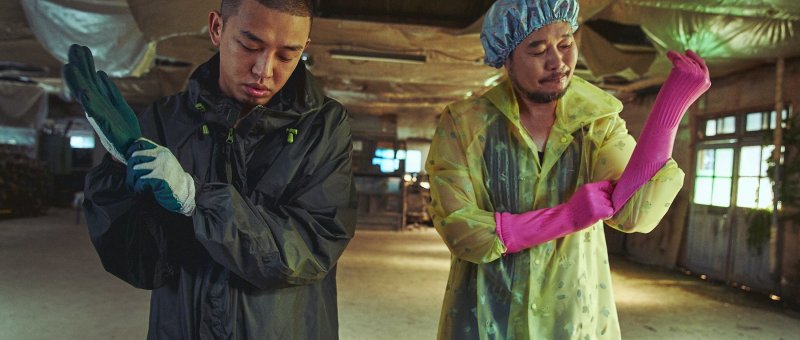
Egg farmer Chang-bok (Yoo Jae-myung), for example, is a man of faith who places great stock in protestant virtues of hard work and humility. Yet he sees no irony in the sign reading “Today’s honest sweat is tomorrow’s happiness” on the wall of a disused barn where he carries out his second job preparing torture victims for gangsters and then disposing of the bodies even going so far as to say a little prayer for them, bible in hand, as he places them into shallow graves in the forest. He and his mute partner Tae-in (Yoo Ah-in) dutifully wait outside as the violence takes place, rejecting entirely their sense of complicity with the corruption of the gangster world viewing themselves only as providing a service and taking pride in providing it well.

Nevertheless, when their “manager” pays them an unexpected visit and gives them an unusual assignment of “looking after” a person for a few days they can hardly refuse even as Chang-bok reminds him it’s not in their job description. Contrary to expectation, however, the “person” turns out not to be sequestered gangster but an 11-year-old girl, Cho-hee (Moon Seung-ah), whose father is haggling over a ransom payment. When the manager is consumed by the same system he previously operated, it leaves them with a problem. They can’t simply let the girl go because the kidnappers want their cut, but the father won’t pay up and so the only other option is handing her over to child traffickers. Chang-bok and more particularly Tae-in would rather that didn’t happen, but on the other hand they aren’t really doing too much to actively prevent it. 

Just as Chang-bok and and Tae-in are “egg farmers”, the child traffickers run their business out of a moribund chicken farm. The rural economy is apparently not faring so well in the modern society. Yet Hong’s countryside vistas are presented as an idyllic paradise with bluer than blue, cloudless skies and fields of verdant green. Then again those who live off the land are perhaps most aware of its compromises and of the price of survival. Chang-bok is fond of spouting vaguely religious aphorisms such as “whatever you do, do your best and be humble. Always be thankful for what you have”, later blaming his predicament on his recent laxity in attending church, but evidently sees no contradiction between his creed and way of life. He doesn’t want to hand Cho-hee over the child traffickers, but he won’t resist it either merely seeing it as an inevitable consequence of events already in play in which he is but a passive participant. 

Tae-in, meanwhile, though literally voiceless is beginning to reject his passivity. Apparently raised by Chang-bok from infancy, he is currently a guardian to a mysterious “sister”, Moon-joo (Lee Ga-eun) around 15 years younger than he is though no mention is made of their parents or what might have happened to them. Charged with taking care of Cho-hee he finds himself developing a paternal fondness for her while she quite unexpectedly slides neatly into his home, bringing a strangely maternal if perhaps in its own way problematic order in tidying the place up and giving Tae-il a more concrete sense of familial rootedness. When the pair picked her up, they wondered if Cho-hee’s father was haggling over the ransom amount because the kidnappers took his daughter when they meant to take his son. Chang-bok is morally outraged, believing sons and daughters should be treated the same and shocked a father would’t immediately do everything he could to protect his little girl. But Cho-hee knows only too well that they value her brother more and in fact doubts her father will help her. She carries these old fashioned patriarchal values into Tae-in’s village home, brushing Moon-joo’s rather feral hair, teaching her to fold clothes away neatly, instructing her to speak more politely to her brother and not to start eating until he has taken his first bite. 

Despite themselves, the four become an accidental family cheerfully enjoying ice lollies on a hot summer’s day trying to figure out a polaroid camera which has been bought for a slightly less happy purpose. There is perhaps an idea that Cho-hee might simply not return to her wealthy, urban family in which she feels unwanted and inferior but stay here in the more “innocent” countryside where the people are “honest”, value their daughters the same as their sons (even the child traffickers apparently charge the same discriminating only by age and blood type), and bury their bodies together. Chang-bok and Tae-in aren’t bad people, just members of a corrupt society who’ve internalised a sense of powerlessness that encourages them to be “humble” and complicit doing what they can to survive. Each marginalised by disability, Chang-bok walking with a pronounced limp and Tae-in rendered impotent by his inability to speak, they do not want to turn to “crime” but are trapped at the bottom of the social hierarchy and dependent on the illicit economy. Is Cho-hee any worse off with them than with the father who wouldn’t pay to get her back? The jury is most definitely out. 


Voice of Silence streamed as part of the Glasgow Film Festival.

Original trailer (English subtitles)
Our Midnight (아워 미드나잇, Lim Jung-eun, 2020)

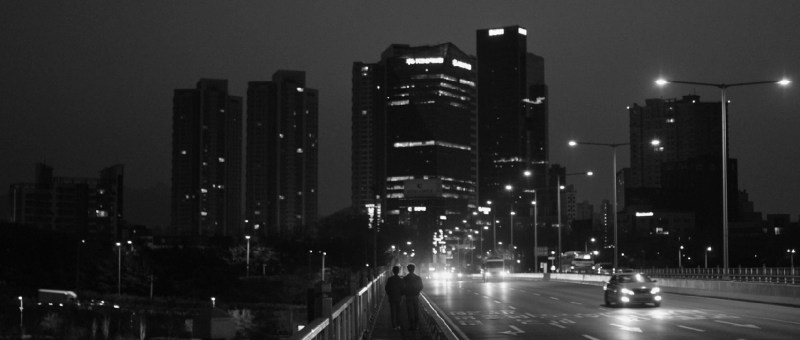
Should you continue following your dreams or accept defeat and “grow up” into a conventional adulthood with a steady job, marriage, and comfortable home? The hero of Lim Jung-eun’s Our Midnight (아워 미드나잇) is reluctant to give up on his acting dreams while his friends look down on him in bemusement, all secretly miserable in the regular corporate careers they’ve opted for partly for practical reasons but also because of intense social pressure. Meanwhile, across town a young woman finds herself dealing with the other side of the same problem struggling under the weight of patriarchal norms in which it becomes impossible to separate the personal and the professional. Approaching the same bridge from opposite directions, the pair of youngsters begin to find a sense of peace in shared anxiety emerging from the heavy gloom of a midnight city into a brighter light of day. 

Now in his 30s, Jihoon (Lee Seung-hun) is still an “aspiring” actor trapped in exploitative part-time work in which he has to actively fight to be paid the money he is rightfully owed. He finds himself hanging out in the old rehearsal room from his student days as if nothing had changed in the decade since he graduated. Meanwhile, his nine-year relationship with Areum (Han Hae-in) which began when they were both student actors is about to come to an abrupt end. She’s already “grown up” with a regular job earning real money and is sick of Jihoon’s fecklessness. Areum wants to get married and settle down, but not with Jihoon. Approaching another uni friend now apparently a civil servant (Lim Young-woo), Jihoon is offered a strange new job which ironically reflects the pressures of the world in which he lives. In order to combat Seoul’s notoriously high suicide rate, an experimental programme is being set up in which a squad of samaritans will patrol the local bridges overnight looking for people who seem to be in distress and may be thinking of taking their own lives. 

As one of the other employees points out, if you’re in a dark place perhaps the last thing you want is some guy turning up with a series of platitudes about how you’ll feel better in the morning but all Jihoon has to do is wander round at night so he might as well give it a try. His new role, however, may also feed into his hero complex while allowing him the opportunity to rehearse for real life in the streets. It’s on one nighttime voyage that he first encounters Eunyoung (Park Seo-eun) as she collapses on the bridge after mournfully peering out over the edge. As he later discovers, Eunyoung is a lower grade office worker who is facing workplace discrimination and career insecurity after experiencing domestic violence in her relationship with a co-worker. After reporting the matter to the police, she finds her own job in jeopardy, the older male bosses concluding she is the one at fault for causing embarrassment by dragging this taboo matter into the light while her abuser presumably gets a free pass to continue his career without further penalty. 

In any case, it seems that Jihoon’s friends aren’t faring much better in the world of work, one lamenting that Jihoon has it made because he’s living the way he chooses while another exclaims that his life is about to end because he’s getting married. In a coffee shop, he overhears a cynical businessman on the phone to his boss about scapegoating a middle-aged woman for a workplace mistake presumably to avoid keeping her on the books. Still in his hero mode, Jihoon eventually decides to say something and let the woman know she’s being manipulated, but his intervention is of little use. Like Eunyoung, the woman realises her lack of agency in the corporate hierarchy and accepts that she’s losing her job whatever happens so she might as well take the blame with the money. After all, she’s unlikely to find another position very easily in Korea’s famously difficult employment market. 

All in all, it isn’t difficult to understand why so many people are pushed towards ending their own lives, crushed by the various pressures of Hell Joseon. Yet through their midnight walk through the strangely empty streets the pair begin to generate a kind of solidarity, literally role playing their way out of mutual despair as they each stand up to those who try to keep them down be it an abusive partner and internalised shame or dismissive friends and family who disapprove of those who refuse to follow the accepted path to conventional success. A black and white odyssey through a depressed city, Our Midnight throws up its strangely colourful title card in a vibrant yellow and purple at the half hour mark, allowing its wandering heroes finally to board the train out of despair through mutual acceptance crossing the bridge together into a brighter, less oppressive existence. 


Our Midnight streamed as part of the Glasgow Film Festival.

Back to the Wharf (风平浪静, Li Xiaofeng, 2020)

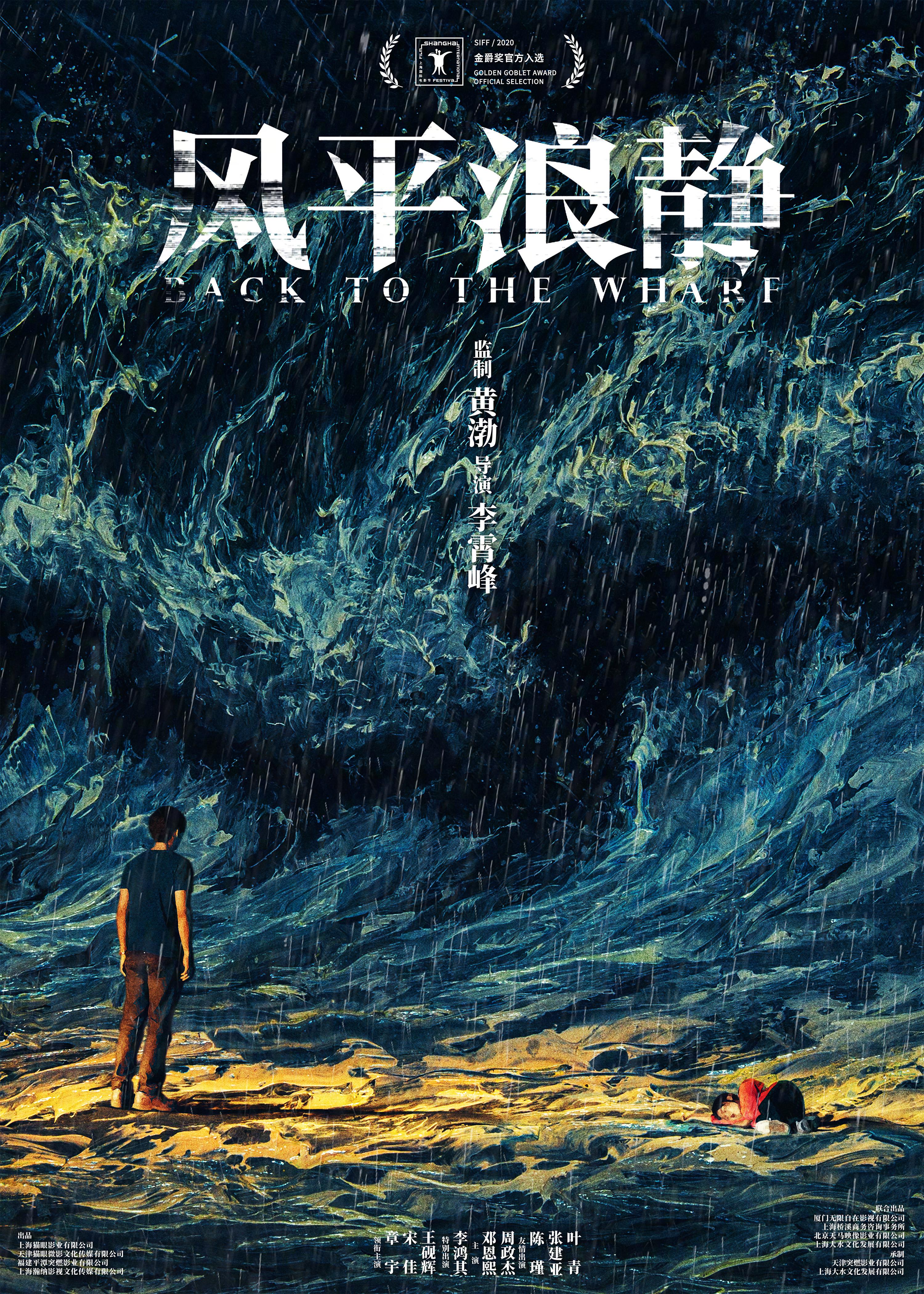
“How dare you want to live when your existence is pointless” a father admonishes his blameless son, deflecting his own willing complicity in the persistent decline of the modern China. Repeatedly abandoned and betrayed firstly by his society, then by his friend, and finally by his father, the hero of Li Xiaofeng’s moody neo-noir Back to the Wharf (风平浪静, Fēngpínglàngjìng) first chooses self-exile only to eventually return and wonder if his crime has been forgotten allowing him to live again before discovering that nothing really changes, there is no escape from the whims of the rich and powerful in an increasingly feudal society. 

Quiet and studious, Song Hao (at 17: Zhou Zhengjie / at 32: Zhang Yu) first wakes up to life’s unfairness in 1992 when he’s called into school on a holiday by his headmaster who breaks the news that he’s losing his guaranteed university place supposedly because his grades are good enough to get there on his own and others need it more. “I like to prioritise the collective over the individual” he explains, reminding him that an extra person from the school going to a top uni can only be a good thing though it’s obviously a blow to Hao not to mention his ambitious father Jianfei (Wang Yanhui) who immediately rings up to complain and discovers that the place is going not to a needy student but Hao’s best friend Li Tang (Lee Hong-chi), son of the local mayor. Angry and confused, father and son set off on circular journeys to confront their respective counterparts, but there’s a storm raging and Hao accidentally wanders into the wrong house after noticing the door flapping in the wind. After walking past a baby sleeping upstairs he runs into an old man who mistakes him for someone else and soon lashes out, shoving fruit into his mouth and trying to suffocate him at which point Hao picks up a knife and stabs his attacker in the belly. Taking flight in terror Hao believes he has just killed a man and orphaned a little girl, never knowing that his father arrived a few minutes later and finished the old man off to stop him talking or that Li Tang was watching the whole thing from a window in the opposite building. 

Returning 15 years later for his mother’s funeral, it’s Li Tang who is most pleased to see Hao when he runs into him by chance at the ruins of the scene of his crime now a future development site for the young real estate tycoon, that is if the now young woman (Den Enxi) the orphaned baby has become whom Hao had been following out of guilt-ridden curiosity would agree to vacate her family property. While Hao has been languishing as a lonely construction worker, Tang has prospered off the back of the 90s economic boom largely thanks to an entrenched network of local corruption that runs from his father the mayor through Hao’s father Jianfei who was handed a fat promotion presumably to placate him over the uni places scandal. Tang has, in a sense, stolen his future leaving him quite literally displaced wandering in the ruined landscape of a haunted past while his father, he discovers, had divorced his mother and remarried in order to have another son. “Your upbringing was a failure” he cooly explains, he needed another male heir to salvage the family reputation and restore his name. Jianfei has, however, done pretty well out of the arrangement now a wealthy man with a separate apartment Hao is not welcome to visit but planning to send his wife and child abroad and retire to Australia. 

Intending to leave as soon as possible, Hao nevertheless starts to wonder if it hasn’t blown over and he might in a sense be allowed to seek happiness, bamboozled into a romance with an old school friend (Song Jia) apparently carrying a torch for him all this time. The past, however, will not let him go. The corruption runs deeper than he even suspected as does Li Tang’s insecure greed and duplicity, attempting to force friendship through blackmail. An embodiment of post-70s fuerdai Li Tang is an amoral capitalist willing to do anything it takes in pursuit of wealth, but at heart a coward ashamed that he owes everything to his father’s machinations and perhaps projecting all of his resentment onto his old friend Hao whose future he so casually stole.   

Yet the message seems clear, men like Hao will always be at the mercy of men like Tang. Perhaps this is the bargain his father has made, but it’s one that Hao can no longer tolerate once Tang forces him to destroy the roots of his redemption. The only sane response to the madness of the modern China, he seems to say, is to go mad in one way or another. Even so, this being a Mainland movie, the nihilistic fatalism of the inevitable conclusion is somewhat undermined by the brief coda in which a policeman reassures a young woman that the crime has been investigated and the wrongdoers punished while the now familiar title card explains to us who went to prison and for how long for their many and various moral transgressions. Hao’s existence is rendered “pointless” because he is unable to live by the rules of a corrupt society, yet his self-destructive act of rebellion does perhaps bring about change if only in the names involved. Beautifully shot with brief flashes of expressionism amid the rain drenched streets of a decaying city to the melancholy strains of a noirish jazz score, Li’s fatalistic takedown of the inequalities of the post-90s society is an exercise in style but one which lets few off the hook as its nihilistic conclusion stabs right at the heart of patriarchal corruption. 


Back to the Wharf streamed as part of the Glasgow Film Festival.

Original trailer (simplified Chinese subtitles only)

The Swordsman (검객, Choi Jae-hoon, 2020)

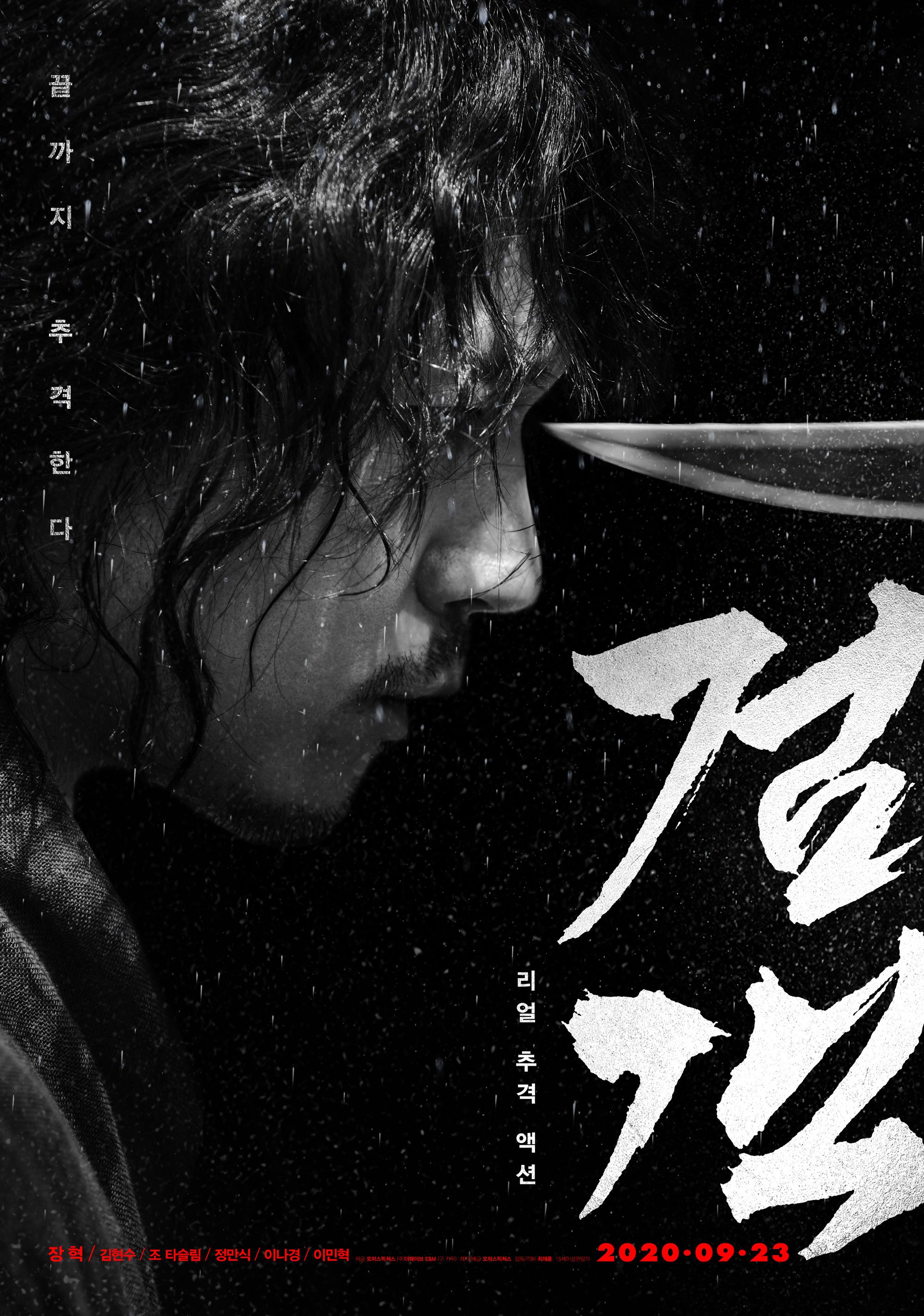
“Is this all there is to being a soldier?” a jaded young man asks of an apparently reluctant mentor as he, also reluctantly it seems, prepares to betray his king merely because the balance of power has shifted. Drawing heavily from wuxia and chanbara, Choi Jae-hoon’s The Swordsman (검객, Geomgaek) once again takes on the futility of violence as the two men who might each lay claim to the title attempt to escape the complicated world of Joseon politics but find themselves unable to escape the legacy of the blade while facing an internal debate as to how to protect that which is most precious to them.

Loosely “inspired by true events” as the opening title card insists, the action opens in 1623 with King Gwanghae (Jang Hyun-sung) fleeing the palace in the wake of insurrection. Like pretty much every other ruler, he’s been accused of murdering his siblings to usurp the throne and has lost the the support of the army, including his personal swordsman Min Seung-ho (Jung Man-sik), after instructing his generals to surrender to the enemy. Valiantly protected by lone defender Tae-yul (Jang Hyuk), Gwanghae makes the ultimate sacrifice for his people and agrees to go quietly pausing only to secretly entrust his infant daughter to the last man standing. 

Flashforward 15 years or so and Tae-yul is now a mountain recluse raising his teenage daughter Tae-ok (Kim Hyun-soo) alone in hiding from nefarious forces. The problem is that his eyesight is now failing and a trip to the physician to acquire medicine proves fruitless when it turns out such rare substances are available only to those with connections. Tae-ok wants to take up an offer from a local lord to become his foster daughter in order to get her father the medicine, but he is understandably reluctant. Meanwhile, a new threat has arrived in town in the form of thuggish Qing slave traders apparently intent on further disrupting the already unbalanced Joseon political situation which is divided in support of the Ming. 

The political context in itself is only subtly conveyed, though this is a rare period drama in which the focus is only tangentially on courtly intrigue in the suggestions that constant machinations by ambitious lords have undermined the notions of soldierly honour and loyalty that ordinarily support the feudal system. The conflicted Min, a man of the sword, retires from the court because he isn’t certain he acted correctly in his actions towards Gwanghae and fears he was merely manipulated as he later is by bloodthirsty slave trader Gurantai (Joe Taslim). Gurantai and his henchmen seem to be on the look out solely for a worthy opponent to satiate their boredom, threatening an entire kingdom in the process. Tae-yul, by contrast, has renounced the way of the sword altogether and attempted to isolate himself from worldly violence in order to better protect his daughter only to find himself dragged down from the mountain by her love for him in insisting he find the means to fix his eyes. 

When Tae-ok is kidnapped by Gurantai who has figured out who she is (in one sense or another), Tae-yul enters full on Taken mode determined to save both the girl herself and reclaim this relic of an earlier, purer world to which she is perhaps the heir pausing only to free a few slaves on his way. Operating on a much lower budget than your average period drama, Choi shoots mainly in a shaky handheld maintaining an indieish aesthetic in keeping with the rough and ready quality of the narrative which seems to draw equally from Hollywood westerns, Hong Kong wuxia, and Japanese samurai movies in its relentless drive towards the final showdown. Making a few points about he changing nature of the times and the futility of violence, the minions of a venal lord are eventually cutdown by rows of Qing armed with rifles while they flounder helplessly with only their blades, swordsmanship itself now an obsolete art though apparently one still valuable to bored, insecure leaders such as Gurantai. Nevertheless, the expertly choreographed action scenes have a mounting intensity from Tae-yul’s early refusal to unsheathe his distinctive double-edged blade to the merciless killing of a female bystander at the film’s conclusion. Ending with an ironic return to the world, apparently now changed, The Swordsman kicks back against feudal hypocrisies while its blinded hero uses the only weapons available to him in order to protect what he considers to be worth protecting. 


The Swordsman streamed as part of the Glasgow Film Festival.

US trailer (English subtitles)

Dreams on Fire (ドリームズ・オン・ファイア, Philippe McKie, 2021)

“A dancer must always be careful” the heroine of Philippe McKie’s Tokyo odyssey Dreams on Fire (ドリームズ・オン・ファイア) is warned, though her passage may prove smoother than that of many small town girls coming to the big city in search of fame and fortune. Nevertheless, her progress will take her through the unseemly underbelly of the entertainment industry rife with exploitation and duplicity to the relatively comforting world of fringe subcultures where mutual support is a way of life and failure merely another kind of opportunity. 

As a young girl, Yume (dancer and model Bambi Naka in her first leading role), whose name literally means “dream”, is captivated by an avant-garde dance performance and determines to become a dancer herself though her authoritarian father (legendary butoh dancer Akaji Maro) does not approve of her artistic ambitions and attempts to forbid her from leaving for Tokyo but she defies him and leaves anyway. Once there, however, she finds herself struggling to survive living in tiny cubical rooms and able to support herself only by working on the fringes of the sex trade in a cosplay hostess bar dressed as a schoolgirl. She pursues her dancing dream by visiting underground hip hop clubs but receives the first of many setbacks when she’s voted out of a dance off in the first round in favour of a talented child in an improbably snazzy outfit. 

Nevertheless, as the first of her teachers, who happened to see and admire her performance, tells her the humiliation of losing only smarts so much because you care which is the kind of pain you can easily repurpose for motivation. This is a motif which will be repeated in Yume’s life which proves nowhere near as dark or depressing as one might assume though it’s true she continues to experience setbacks and disappointments while occasionally doubting her vocation as a dancer in the face of seemingly constant failure but always rescued by another hopeful who saw and liked her performance even if the judges might have preferred someone else. 

Yet as she finds out, dance talent isn’t all it takes in the contemporary arts scene. An audition she might otherwise have booked is lost at the last moment when she confesses she’s not got many followers on social media, the interviewer patiently explaining that she might be a better dancer than anyone in their current troupe but their business is built on “image” and dependent on their online reach so someone with no profile is of not much use to them though they’d love to see her again once she’s successfully built her “brand”. Conversely, a client at another job working the floor show at an S&M-themed bar gets her a job coaching an aspiring underground idol who apparently can’t dance for toffee, but once she gets there Yume quickly realises the young woman’s lack of aptitude is a result of her exploitative treatment at the hands of the idol industry. Apparently not allowed to change her outfit even if it smells she’s been instructed not to eat to keep her weight down which of course leaves her lightheaded and low in energy, an unhelpful combination for learning complicated dance routines. On the way out, Yume hears the other members of the band bullying her though there’s nothing she can do to help. 

Meanwhile, she finds it increasingly difficult to weigh up the degrees of exploitation she’s willing to accept from her increasingly manipulative boss at the hostess bar (Masahiro Takashima). Her first friend, Sakura (AV actress Okuda Saki), had taught her the ropes cautioning her never to let anyone touch her in ways that make her uncomfortable but herself quits abruptly in embarrassment after a customer brings up her past as an AV star thereafter disappearing without trace. Sakura had explained in an ironic paradox that she wasn’t in hostessing for the money but was essentially lonely, introducing Yume to the first of her experiences of the more unusual aspects of the Tokyo subculture scene in a metal bar where she fondles a lizard over drinks but is herself perhaps slightly lost in an internalised and unwarranted shame because of her past in the porn industry. This seems to be a fate Yume is keen to avoid, eventually telling her exploitative manager where to go rather than consent to his control after narrowly escaping a dangerous encounter with “important” yakuza clients. 

Going by “Asuka” at the club and eventually assuming the dancer name of “Karasu” (crow), Yume searches for an identity while continuing to pursue her dream but perhaps unrealistically meets only good and supportive people outside of the exploitative Kabukicho bar world discovering in her various subcultures from fetish clubs to the dance studio only dreamers like herself eager to see others succeed. Capturing the neon night life of the contemporary city, McKie’s camera perhaps leans too far towards the ethnographic in its slight exoticisation of the underground Tokyo scene even if admittedly seen through the eyes of country girl Yume but also allows her to find within it freedom and self-actualisation while her talent takes her in new, sometimes unexpected directions, as she continues to pursue her dream in an atmosphere of positivity and mutual support.


Dreams on Fire streams from 6th March as part of the Glasgow Film Festival.

Da Capo (다시 만난 날들, Shim Chan-yang, 2020)

Do what you love and never work a day in your life is what everyone says, but turning your passion into a job can be a soul-destroying process. The hero of Shim Chan-yang’s Da Capo (다시 만난 날들, Dasi Mannan Naldeul) is beginning to wonder if it’s all worth it and whether the reason he’s not getting ahead is his own pig headedness or the increasingly soulless music industry apparently only interested in “catchy tunes” and “simple love songs”. Feeling maudlin he’s beginning to dwell on what it was he loved about music in the first place and realising perhaps it wasn’t about the tunes after all. 

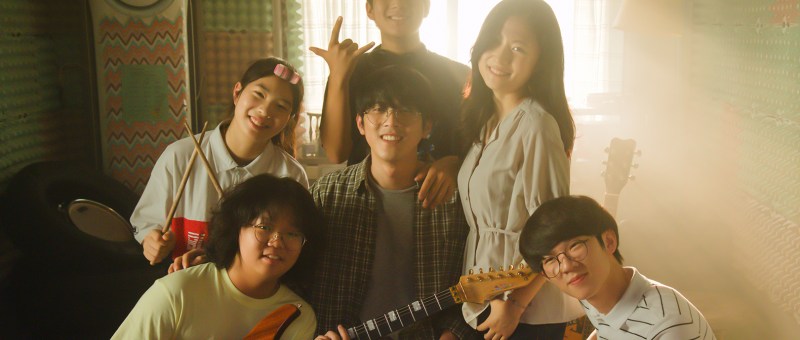
Approaching 30, Tae-il (Isaac Hong) has recently returned from abroad and is currently slogging it out as a singer-songwriter in Seoul. Handed a potential opportunity in a card from a powerful A&R woman best known for managing a top idol, he ponders trying to write a generic pop song but keeps stumbling over a simple lyric about the sea thinking back on his days in a high school band and the friends he may never see again. Taking a visit back to his home town for inspiration brings him into contact with former bandmate Ji-won (Jang Ha-eun) now working as a guitar teacher at her uncle’s music academy, and a collection of nerdy yet passionate kids hoping to hit no. 1 on the Billboard charts with their innovative fusion of nu-metal, post-grunge, and traditional Korean instrumentation (to be added at a later date). 

Though perhaps harbouring a little resentment over Tae-il’s apparently abrupt departure overseas, Ji-won allows him to stay on her sofa while helping him figure out how to finish his simple pop song, a plaintive ballad about lost love and regret. Secretly, he may be looking down on her a little, thinking she’s failed in someway slumming it as a guitar teacher in their old home town but unlike him Ji-won has maintained her passion for music while honing all her skills. She later reveals that she once had a recording contract but eventually decided against it, having realised it wasn’t all about the music and apparently not wanting the rubbish that goes with chart success. Tae-il, however, isn’t so sure especially after the song they wrote together is optioned by the A&R woman though attending the meeting means breaking a promise to the kids he helped to mentor to be there for them at their big concert. 

Like Ji-won, the kids are all full of the joy of music even if they’ve slightly contradictory ideas, lead singer Deok-ho (Seo Young-jae) simultaneously penning grisly death metal lyrics yet wanting mainstream acclaim. Deok-ho apparently decided rock was his thing because the girl he liked liked it, but now she likes hip hop and an older, thuggish sort of boy. He doesn’t take kindly to Tae-il’s taking their metal beat and reconfiguring it as coffeeshop lo-fi, but eventually comes round and takes his advice about authentic songwriting, allowing each of his buddies the chance to shine in putting the track together as a team. 

Meanwhile, Tae-il finds himself relegated to the back of a music video in a garish New Wave outfit, standing in front of an inflatable flamingo, and handed a guitar with no strings in a pointed piece of symbolism especially as he realises they’ve added a rap section just to spice it up a bit. Observing the kids at the beginning of their musical journey and thinking back on his days in a high school band he begins to realise that what he liked about making music was the excitement of collaboration and the gentle camaraderie of after-jam dinners. Perhaps Ji-won has it right and all the rubbish isn’t worth it when you can just stay home and make music with your friends without caring too much about pleasing the commercial aspirations of A&R execs looking for the distinctive generic. Not quite a romance and surprisingly uninterested in the band’s concert journey, Shim’s soulful drama allows its two old friends the space to find new equilibrium brokered by their shared love of music while gleefully ceding ground to the eager youngsters as they too bond through common endeavour discovering the pure joy of creative connection and emotional harmonies. 


Da Capo streamed as part of the Glasgow Film Festival.

Original trailer (English subtitles)