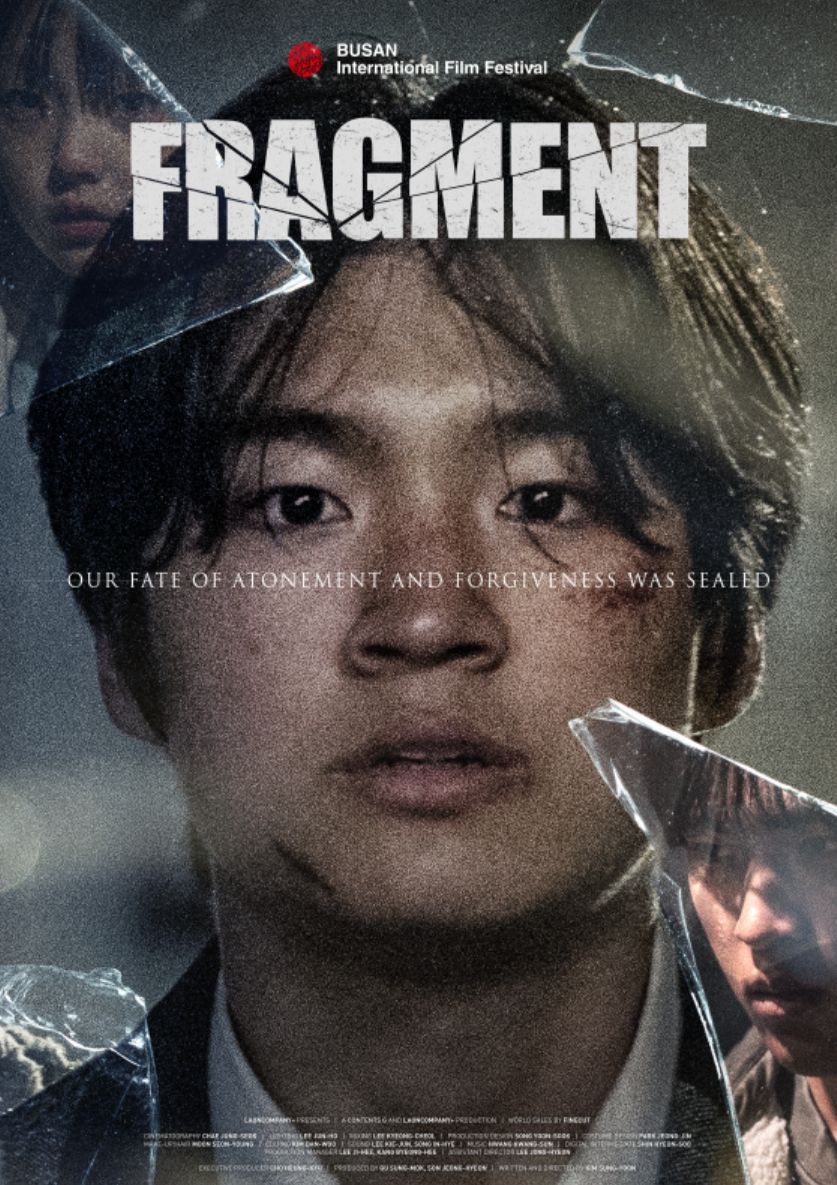
Fragment (파편, Kim Sung-yoon, 2024) [Fantasia 2025]

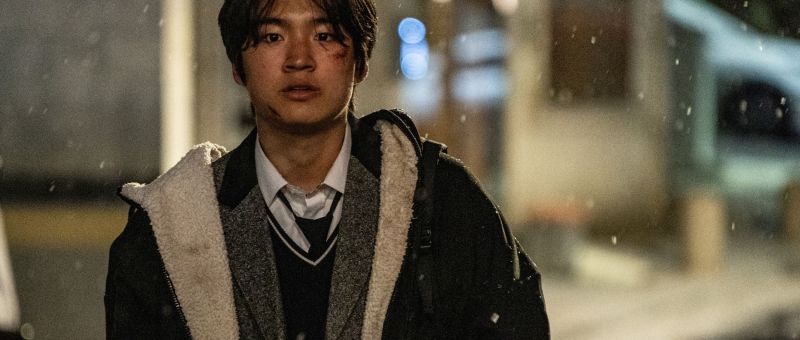
People often think of crime as something linear that ties together villain and victim but is otherwise an isolated event. The truth is that crime reverberates through the world around it, shattering the lives of others in the backdraught of its irrational violence. Son of the murdered couple, Gi-su is fond of saying that he’s the victim as if trying to reclaim this role and make it his identity while it remains to that Jun-gang and his sister Jun-hui are victims too for they have also lost their father who is now in prison.

Indeed, while Gi-su may face overbearing care from his well-meaning relatives, Jun-gang is burdened with the stigma of being a murderer’s son while trying to protect his sister from the fallout of this awful situation. His most pressing problem is that they don’t have any money. His father did not appear to have any before either, but now their utilities are about to be cut off and their landlady’s sick of being strung along. Yet these aren’t problems a 15-year-old boy can fix on his own. He tries to get a job in a local convenience store but is first turned away because boys his age should be in school, and then offered a job but only on parental consent which he can’t get for obvious reasons. His teacher, Mr Park, is one of the few people to know the truth and keen to help him but has few real ways of doing so. As the son of the murderer, most are content to leave him to his fate and believe that he simply doesn’t deserve support because of what his father has done.

Jun-gang too feels guilty, though none of this is his fault. He knew what kind of man his father was and is always eager to prove that he is different. But the fact that he seems nice, honest, and polite doesn’t really matter. He’s still chased and bullied with kids at school going on about killer genes and actively singling him out for a beating. Jun-hui too is ostracised by her friends who’ve been told not to play with her because of what her father did. Gi-su tries to ease his frustration on him, breaking into their apartment and smashing the place up after coming to school to find him. As much as Gi-su tries to insist that he’s the victim, Jun-gang is a victim too and unlike Gi-su has no further family to support him and no one else to turn to for help. He fights back with decency, but largely finds it thrown in his fate.

Gi-su, meanwhile, is broken by his trauma and in the midst of a nervous breakdown exacerbated by exam stress. Like Jun-gang he blames himself as a means of asserting control over the situation and struggles to accept the new world he now inhabits following his parents’ deaths. His sympathetic aunt tries her best to get through to him, but his well-meaning uncle is a font of toxic masculinity screaming at him that he’s wallowed in his grief long enough and needs to man up and get over it. Though they’re cast in the roles of killer and victim, the boys are really much the same, each having lost their homes and families and now being essentially displaced from within their new lives.

The battle is really whether they can hang in there long enough to begin to see the other side and that there are still possibilities in their lives. The reason for the killing is never revealed, nor is it particularly important, if hinting at the constant pressures of the outward society. Jun-gang’s father’s behaviour implies long years of paternal failure, domination, and abuse from which Jun-gang is trying to emerge unscathed while Gi-su must on the other hand come to terms with the implosion of a seemingly perfect family life. That they each come to recognise that none of this is their fault and they’re really just the same is testament the boys’ innate goodness and growing sense of solidarity in the midst of so much acrimony. Hard-hitting though it may be in its exploration of how societal prejudice can allow people to slip through the cracks, Kim Sung-yoon’s film is also in its way uplifting in the presence of those are willing to help and Jun-gang’s refusal to give in to what the world tells him he should be,


Fragment screened as part of this year’s Fantasia International Film Festival.
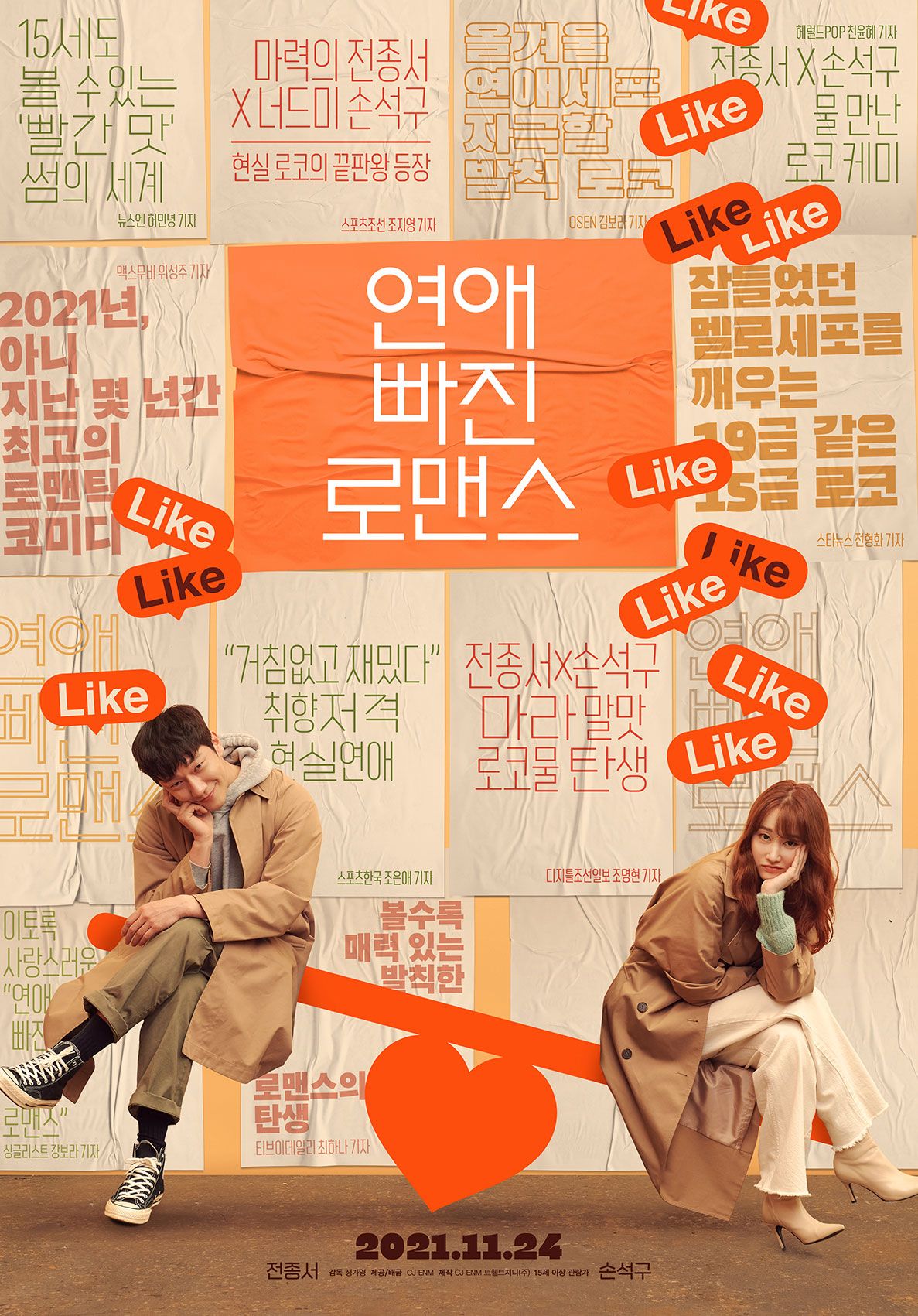
Nothing Serious (연애 빠진 로맨스, Jeong Ga-young, 2021)

Through her first three features in which she also played the lead, Jeong Ga-young had established herself as a provocative indie voice casting herself as an often unsympathetic if transgressively frank heroine contending with the vagaries of the modern society. Nothing Serious (연애 빠진 로맨스, Yeonae Bbajin Romance), by contrast, marks her debut as a commercial film director and perhaps softens some of her harsher edges but nevertheless maintains her characteristic saltiness and often witty dialogue in what is otherwise closer to Nora Ephron than Hong Sang-soo. 

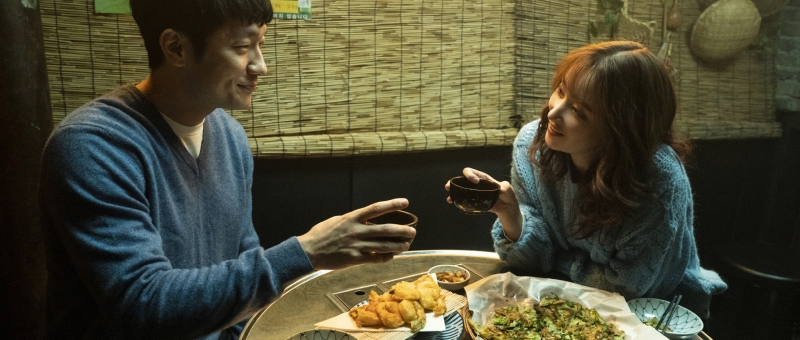
Though played by Jeon Jong-seo rather than the director herself, 29-year-old Ja-young is a classic Jeong heroine transgressively frank in terms of her sexuality and finding herself in something of a tailspin as she approaches her 30th birthday as a single young woman drowning in debt with neither career nor relationship success to boast of. Meanwhile across town nerdy magazine staff writer Woo-ri (Son Suk-ku) finds himself having to write almost all of the magazine himself in part he suspects as punishment for having helped a friend leave to start up their own online publication. His particular problem is that his boss has asked him to take over his friend’s sex column which is really not his thing especially as he’s in an on again off again non-relationship with colleague Yeon-hee (Lim Sun-woo) who has just informed him she’s getting engaged to her old boyfriend. 

Inevitably the pair end up meeting through dating app Love Bridge to begin with just for a no strings New Year one night stand only to inconveniently realise they quite like each. Even so, their personal issues continue to overshadow the relationship, those being Ja-young’s hurt and anxiety on hearing that an old boyfriend who treated her badly and broke her heart is getting married, and the fact Woori signed up to Love Bridge mainly to find inspiration for his column which becomes an unexpected hit with readers who prefer the slow-burn tease of their romance to the X-rated content of Woo-ri’s predecessor. 

While not really “dating” the couple continue to share their relationship woes with each other, Ja-young continually fed up with her attempts to meet “normal” men who don’t invite their mother on dates, turn out to be married, or are just plain odd. Her previous boyfriend branded her an insanely jealous “alcoholic nymphomaniac” while she simply tells it like it is as a sexually liberated young woman who refuses to feel ashamed for feeling desire but is also in her own way lonely and looking for companionship as perhaps is Woo-ri while conflicted in his betrayal of her even if he is careful not to use any identifying details in his column. 

Along with their romantic woes, the pair also share a sense of hopelessness about the future, Woo-ri disappointed in himself for his lack of success as a serious writer and Ja-young staking her hopes on a career in podcasting after being forced to leave a job at a radio station because of the awkwardness between herself and a colleague she’d previously dated. Interviewing her grandmother and a series of other women she fears were denied the right to become the protagonist of their own lives, always someone’s wife or mother looking after children or in-laws, she wonders if she’s managed it herself or if things are really as different now as she had thought them to be while she continues to struggle drowning in debt and loneliness with very little hope for the future. 

Jeong’s prognosis is, however, a little more hopeful than in her previous films Ja-young and Woo-ri each flawed but basically good falling in love despite themselves only to see their connection undermined by its superficial inauthenticity. If nowhere near as caustic, she retains her sense of playfulness, even throwing in a reference to her first film Bitch on the Beach not to mention the tiny animated heads emerging from the pair’s phones, through sophisticated dialogue instantly capturing a sense of the everyday life of the average 20-something in the contemporary society longing to overcome their sense of cynicism and believe in a genuine romantic connection. Strangely charming in its breeziness, Jeong’s commercial debut loses none of her wit but gains a little in warmth as these crazy kids learn to put their anxieties aside and give love a chance even if it turns out to be nothing serious after all. 


Nothing Serious screens at UltraStar Cinemas Mission Valley, San Diego April 23 as part of this year’s SDAFF Spring Showcase.

International trailer (English subtitles)

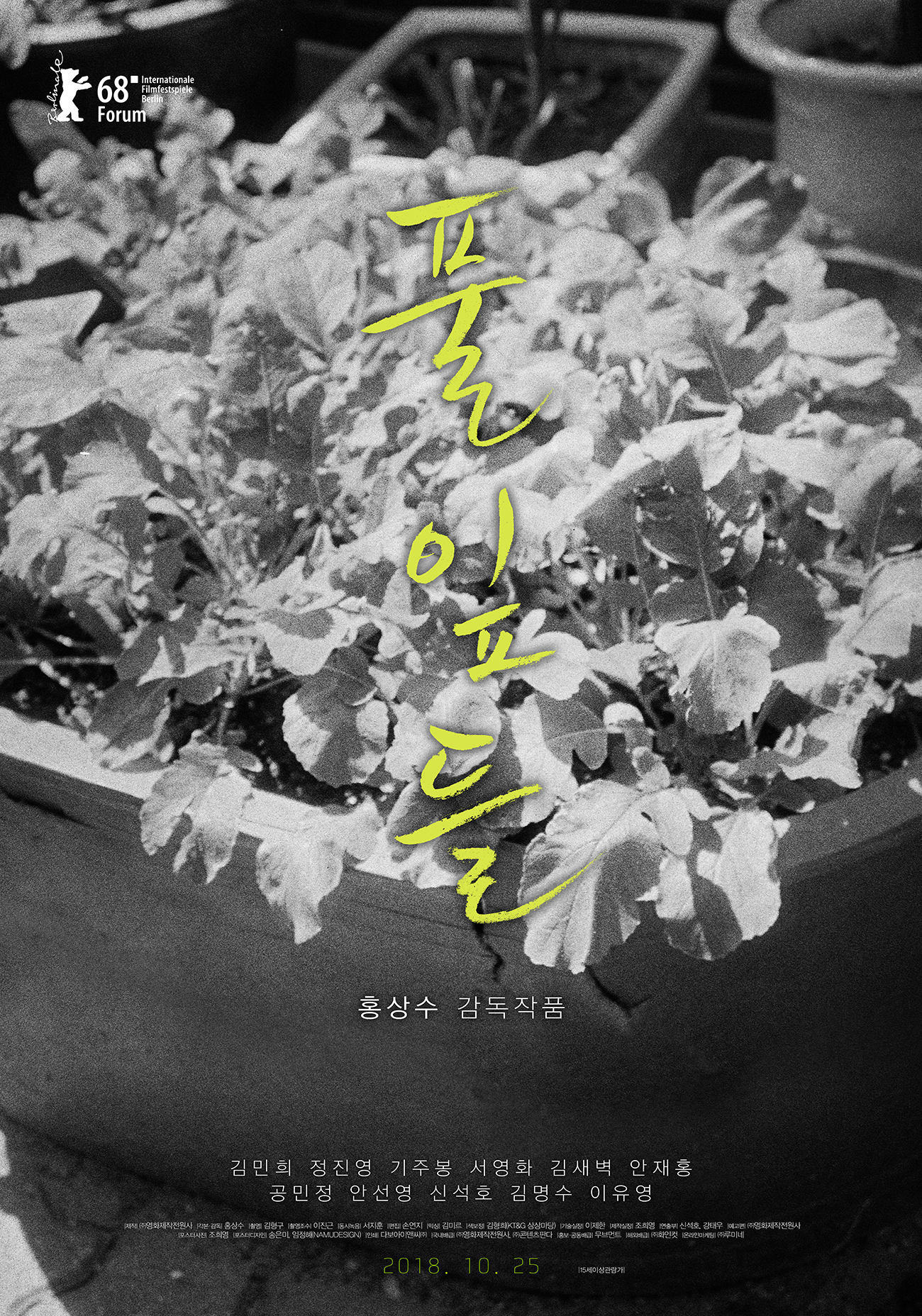
Grass (풀잎들, Hong Sang-soo, 2018)

Grass poster 1You don’t meet nice girls in coffee shops, at least according to the melancholy narrator of a Tom Waits song recalling the flighty lover too free spirited for his wholesome hometown. Like one of the rundown dive bars in Waits’ conceptual universe, the cafe at the centre of Hong Sang-soo’s Grass (풀잎들, Pul-ip-deul) attracts its fair share of lonely drinkers looking for somewhere quiet to pour out their sorrows. Ostensibly a tale of simple eavesdropping abetted by the presence of a laptop, Hong’s narrative is at his most defiantly reflexive as it forces us to question the order of its reality and, in passing, our own.

Unnamed until the closing credits, Areum (Kim Min-hee) sits in a quiet cafe, tucked away in a corner tapping on her laptop and convincing herself she is an invisible observer of the world around her. Listening in on the various conversations of the other customers, she waxes philosophical on life, love, death, and distance by means of a beautifully poetic interior monologue but tells a fellow patron that she is not a writer, only writing, sort of a diary, but not a diary, something unusual for now. The irony is that though Areum feels herself to be far removed from those she is observing, they often complain that they feel “watched” or at any rate anxious under her intense yet abstracted gaze, sometimes challenging her but backing down when faced with her almost total lack of interest in interaction.

The patrons, almost echoes of themselves, are comprised of three couples – one in youth, one middle-age, and one approaching their twilight years. The men drink something cold in a tall glass with a straw, and the women something warm from a pleasantly round cup and saucer. Each of the men is an actor, while at least one of the women is a writer, though all of their conversations have their particular quality of awkwardness with the men largely trying to extract something from the women be it love, or forgiveness, or relief.

Finding herself in an awkward situation familiar to any woman who’s ever tried to work in a coffee shop on her own, Areum is approached by the middle-aged actor (Jung Jin-young) apparently trying to write a screenplay, and propositioned for advice. Having tried and failed to lure his wily writer friend (Kim Sae-byuk) on a 10 day retreat to “collaborate”, he asks Areum if he can come and “observe” her. She turns him down by saying she has a boyfriend, only for the actor to ask to talk to him for his permission, to prove he’s “not some kind of strange guy”.

The older actor (Gi Ju-bong), meanwhile, casually tells his companion (Seo Young-hwa) that he’s recently come out of hospital following a suicide attempt after trying to kill himself for love. Trying to move the conversation on, she tells him that she’s recently moved to a small house near the mountains, but realises her mistake when he fixates on the incidental detail that she’s got a spare room. Brushing off her reticence about a roommate, he repeatedly states that he’s got nowhere else to go in the hope that, as Areum says in her caustic voiceover, she will take pity on him and allow him to live the life of Riley on her dime. The friend is clearly distressed, she doesn’t want this man in her house (her equally strained looks when someone else tries to offer him a room suggest she’s reason to believe he’s trouble) but feels obliged to keep apologising for her refusal to acquiesce to his quite unreasonable request.

According to the maybe fiancée of Areum’s brother, men are cowards when it comes to pain or the need to end things. Areum seems to agree, but has a fairly cynical view on the entirety of human relationships, berating the pair for irresponsibly intending to marry on “love” alone. “We only loved each other” another sad young woman insists while harangued by a drunk middle-aged man intent on blaming her for the suicide of her late lover, neatly reversing the dynamics of the young couple from the cafe arguing about their shared sense of guilt over the death of a friend.

Areum wonders if it’s possible to fall in love with an innocent heart if you’re carrying the weight of someone else’s death. “You insignificant things” she warns the youngsters newly in love “you’ll die someday”, neatly ignoring the fact that so will she. Or perhaps this world will die with her. We begin to wonder if any of this is real or merely a series of manifestations of Areum’s cafe musings, reconstructions of the lives of others imagined from snippets overheard from adjacent tables. Adjacent tables is where Areum’s preferred to be, observing not partaking, a lonely ghost in this haunted cafe where lost souls come to ease their burdens. Yet, finally her resistance crumbles. She accepts an offer of soju and joins the gathering, abandoning her lofty pretensions of distance for a taste of togetherness. “In the end people are emotions…And I long for them now” she realises. “Is it real? It would be nice if it were”.


Grass was screened as part of the 2019 London Korean Film Festival.

Original trailer (English subtitles)