The Beast (비스트, Lee Jung-ho, 2019)

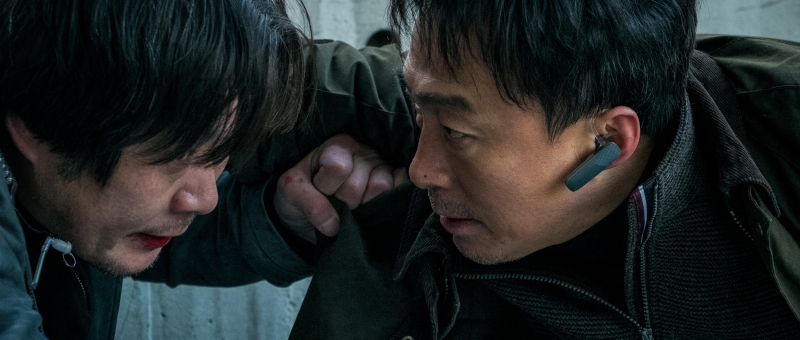
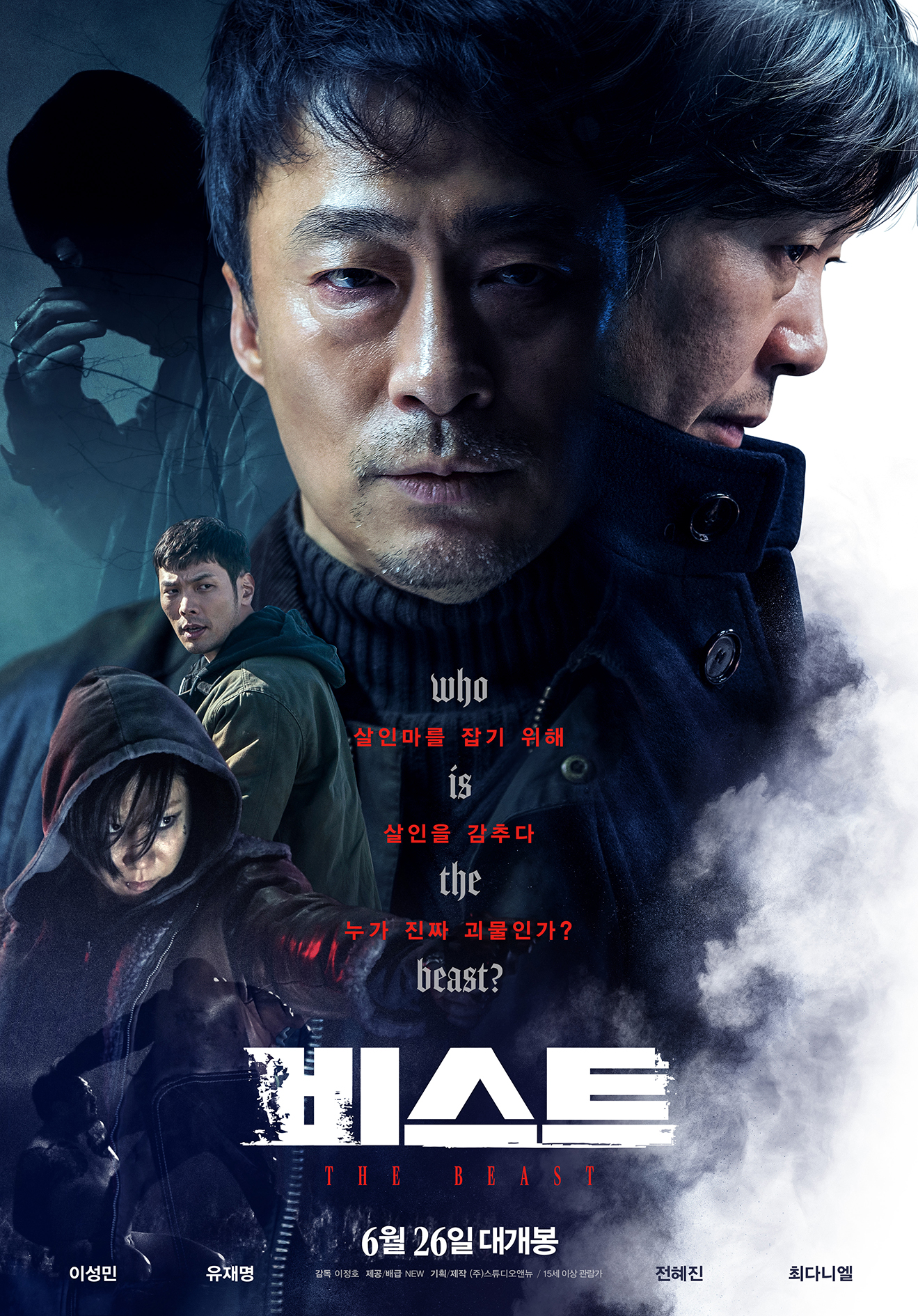
Internal police politics frustrate the hunt for a potential serial killer in Lee Jung-ho’s dark social thriller, The Beast (비스트) inspired by Oliver Marchal’s 36 Quai des Orfèvres. As a pathologist suggests, we all may have a hidden beast and it’s certainly true of the film’s conflicted protagonist, thuggish policeman Inspector Jung (Lee Sung-Min) who finds himself dragged ever deeper into a mire of corruption as a natural result of a series of bad decisions that started long ago, while his rival, Captain Han (Yoo Jae-Myung), presents the facade of efficient modern policing but inevitably turns out to be little better. 

As the film opens, Jung and his subordinate Yang are each wearing balaclavas while driving a heavily tattooed man out into the middle of nowhere though only for the purposes of frightening him so that he’ll back off their informant, local bar owner Madame Oh (Kim Ho-jung). Jung’s inner conflict is palpable as stares at his bloodied, shaking hands asking himself how it is it’s come to this while Yang later reminds him not to become too attached to his sources because once they’ve exceeded their usefulness they’ll simply be arrested. While all of this is going on, the police force is under immense pressure and receiving a lot of negative press over their handling of the case of a missing teenage girl, Mi-jin. Unfortunately, the girl later turns up dead with the murder enquiry split between two teams, those of Jung and Han each of whom are in the running to take over from the superintendent who before all of this happened was about to be promoted which is why he is desperate to solve the case as soon as possible. 

It might at first be tempting to read Jung and Han as representatives of different kinds of policing with their rivalry representing a battle for the soul of the police force only as it turns out each is merely corrupt in their own way. Jung is very much of the jaded veteran cop school, wanting to shift the case off his books as soon as possible by pushing the most likely suspect to confess. In this case that’s a shady pastor at a church Mi-jin used to frequent who was found in possession of her underwear and a series of photos of very young girls. Jung pushes the pastor to “confess” by selling him a story that a woman he was accused of assaulting in university took her own life as did her mother while her father later developed cancer as a result of all the stress and tragedy. Of course the pastor breaks down insisting that he killed her and it’s all his fault, only he’s talking about the other girl not that Jung cares too much about that. Han meanwhile quickly exonerates him by doing actual investigating, but only really so that he’ll still be in the running to solve the case and get the big promotion thereby besting his former partner turned rival. Jung had been the first to mention the possibility of an active serial killer only to be shut down because that would mean they’d lose the case to Major Crimes and therefore the personal opportunities for career advancement solving it would present. 

Both men eventually end up at the showdown by each of their respective routes implying there’s little practical difference between them. Han jeers that he can’t tell anymore if Jung is a bad guy or a cop but all he can answer is that it might be a matter of perspective, while he is also aware of Han’s backdoor deals and willingness to compromise himself in order to win advancement. In the midst of all this jockeying for power, it gets forgotten that a young woman lost her life in the most heinous of ways while whoever really did it may still be out there looking for the next girl to torture and kill. Everyone may indeed have a beast inside them, Jung already acquainted with his in his morally compromised soul while Han battles his internal ambition but the real beast may be the contemporary city and the infinitely corrupt hierarchies of the modern Korea along with the toxic masculinity that forces these men to betray their ideals simply not to be accounted a failure trapped at the bottom of the pyramid by their own problematic righteousness. When they’ve served their usefulness, the system chews them up and spits them out but until then it’s only hanging on as long as they can in the utter futility of a morally bankrupt existence. 


International trailer (English subtitles)

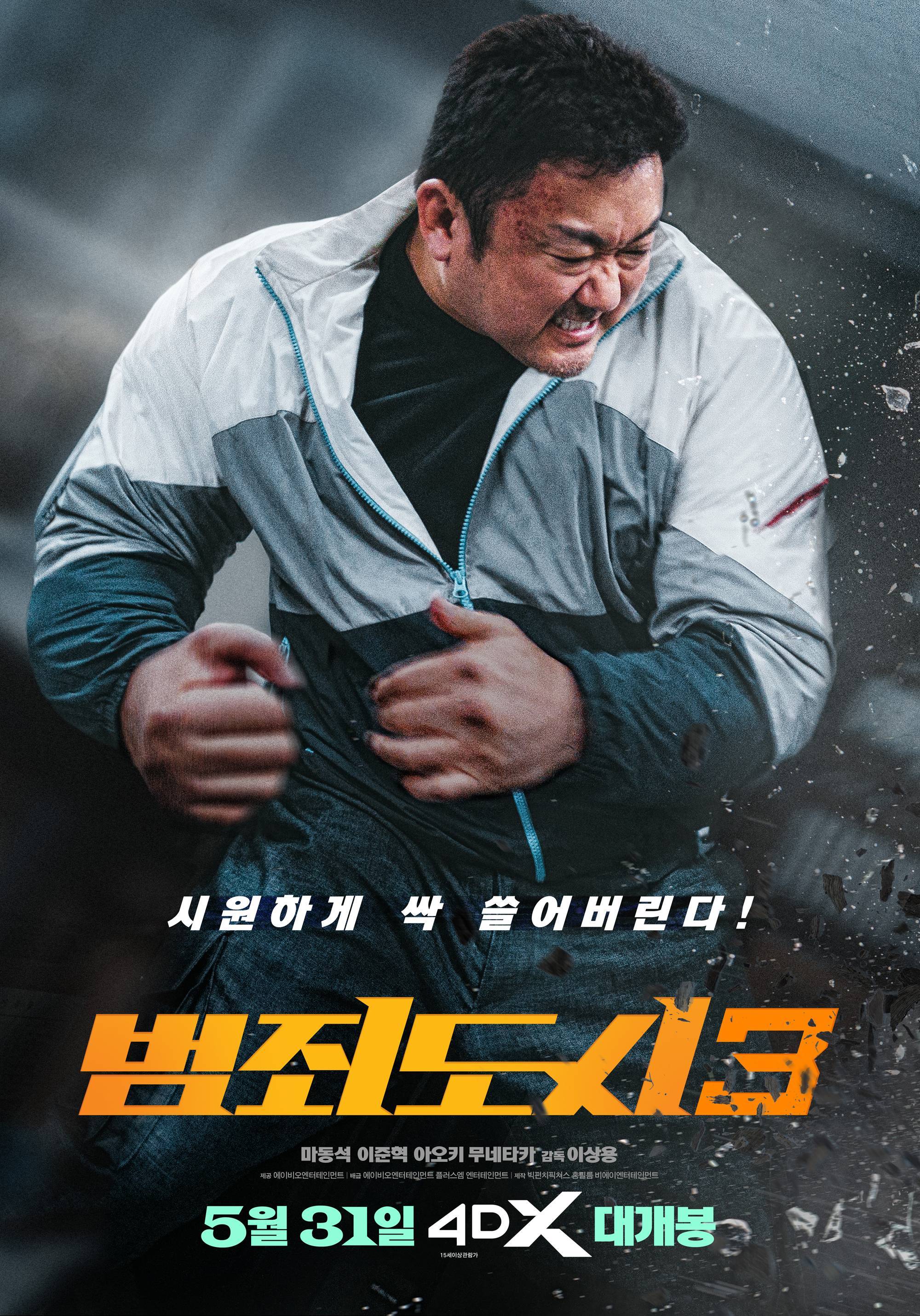
The Roundup: No Way Out (범죄도시 3, Lee Sang-yong, 2023)

Ma Dong-seok has been cultivating an image of himself as an action star for quite some time. The kind of marquee name who generally plays the hero, Ma looks back to the genre’s heyday presenting an uncomplicated vision of righteous masculinity, a bruiser with a heart of gold. The Roundup: No Way Out (범죄도시 3, Beomjoedosi 3) is the third in a series of films that began with The Outlaws and is projected to total at least eight instalments each starring Ma as the maverick detective his superiors hate to love. 

It’s true enough that you can’t get away from the more problematic elements of his unreconstructed good bad cop persona. We often see Seok-do (Ma Dong-seok) beat information out of suspects which the film treats as a cheeky joke in an otherwise tacit endorsement of police brutality that suggests red tape is the reason the guilty often evade justice. Meanwhile, in a step back from other Ma vehicles there are almost no women in the film and none in the police force. The heart of the case is the death of a 28-year-old woman who “fell” from a hotel room window and is later discovered to have died of a heart attack after being drugged in a club and dragged off by a random man who then literally threw her away to distance himself from the crime. The murder which Seok-do is supposed to be investigating is totally forgotten in his all encompassing drive to find out where the drugs are coming from which eventually descends into a battle of wits with a corrupt police officer who’s teamed up with a Korean-Japanese yakuza to skim his boss’ supply of new designer drug Hiper. 

There is a distinctly uncomfortable thread of xenophobia that runs through the series even if in this case the villainy is discovered closer to home in the form of police corruption. This time around, the threat is once again Japan which is apparently where Hiper originated though petty yakuza Tomo (An Se-ho) now manufactures it in Korea where he’s cut a freelance deal with dodgy cop Joo (Lee Joon-hyuk) to distribute it in the local night life scene without the knowledge of his boss back in Japan, Ichijo (Jun Kunimura). Joo has also cut a deal to sell the drugs to a Chinese gang, so it’s quite bad news for him when Ichijo gets wind of the situation and Tomo takes off with a suitcase full of pills for his own protection. Unluckily for him, Ichijo has already sent his most intimidating assassin, Riki (Munetaka Aoki), to find out what’s been going on behind his back. 

Problematic as it may be, Ma’s retro take on the action star is undeniably entertaining with his frequent hero moments and penchant for one liners. The first time he appears, we see him break up a street fight but mostly interested in finding out if the guy on the ground started it the implication being that perhaps if he did it’s none of his business but otherwise he’s going to have to intervene. Then again as he tells his exasperated boss, his personal motto is “punish and serve” and he’s here to get the job done even if that means wading in all fists blazing without much thought for regulations or procedure. At one point Seok-do and his guys stumble on a crime scene and walk around it touching everything in sight without bothering to even put on so much as gloves. 

In any case, Lee makes every punch land and quite literally as the screen seems to vibrate on contact almost as if the camera itself were taking a blow. Ma’s thunderous fists clash with the sound of justice as he all too easily disables hardened gangsters with one well placed slap. At times, his invincibility borders on the ridiculous but he does eventually allow himself be “defeated” if only temporarily as in his miraculous recovery from being run over by a gangster’s car. In many ways, Joo is Seok-do’s mirror, a bad bad cop with crazy eyes who kills without a second thought and behaves with narcissistic recklessness, overconfident in his abilities to sort his problems through his status as a law enforcement officer. Bruiser he may be, but Seok-do likes arresting people and never uses lethal force even when the opportunity is presented to him, symbolically snapping Riki’s katana and then proceeding to slap him seven ways to Sunday leaving the ice cool assassin collapsed amid a display of Japanese parasols. An end credits scene set three years later in 2018 sets up a fourth instalment and the return of a familiar face besides that of Seok-do himself who continues to charm as the world weary bruiser slapping down crime wherever it rears its ugly head. 


The Roundup: No Way Out is in UK cinemas now.

International trailer (English subtitles)