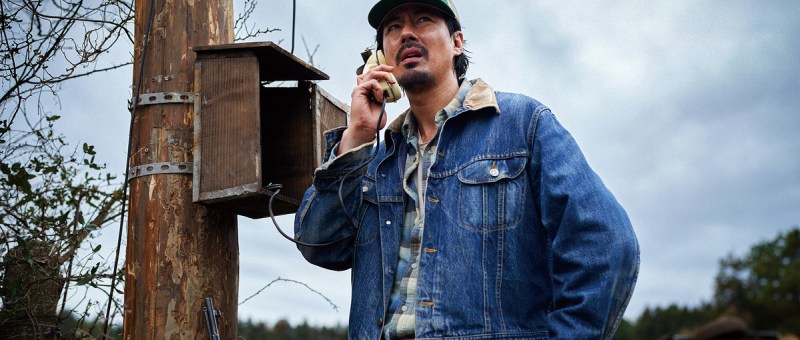
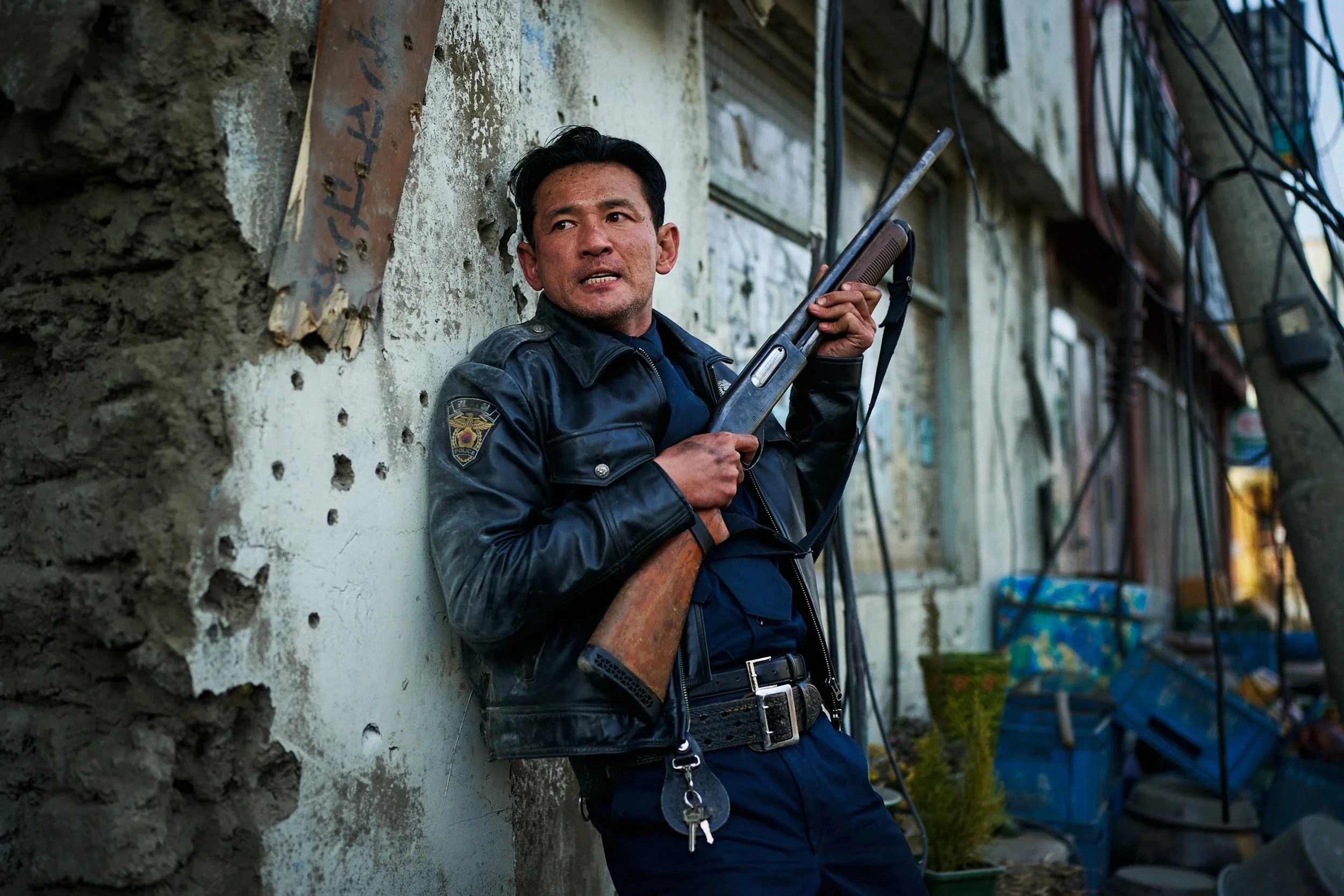
A decade on from The Wailing, Na Hong-jin returns with a piece of baffling hokum, Hope (호프), in which a small town close to the DMZ is assaulted by humanoid giants during the 1980s. Playing out like a satire of Hollywood monster movies, by the film’s abrupt cliffhanger ending we begin to get the impression that we’ve been watching from the wrong side of the screen. The “real” movie was a space fantasy revolving around the fall of an alien empire and the fate of a “chosen one”, while we’ve been seeing things from the perspective of an indigenous community witnessing the arrival of strange, new beings.
In any case, the first indication that something is “wrong” is the discovery of a mutilated cow by police chief Bum-seok’s (Hwang Jung-min) cousin Sung-ki (Zo In-sung). Sung-ki’s gang of hunters seem to think a tiger could be responsible, convincing Bum-seok that local wise man Hae-sul (Im Hyun-sik) said he saw one out in the mountains. Hae-sul did indeed see something, but according to his own reports, it was not a tiger. In any case, the hunters split off to investigate the mountains while Bum-seok returns to the town and finds it in a state of chaos. Bodies line the streets while buildings have been destroyed. Occasionally, he hears strange roars and sees cars flying overhead, thrown by some unknown force.
The town itself has a frontier aesthetic like something out of an American western and unlike the Korea usually seen in the movies. There are signs reminding people to report spies and frustrate infiltration, reminding us that this is a paranoid place that has been on a war footing for around 30 years. Most of the residents are elderly and were, therefore, adults during the Korean War which explains why so many of them are so familiar with military weaponry and why there’s so much of it around including things like grenade launchers which aren’t generally used by the police. This is clearly not an invasion attempt from the North, though it explains why everyone is so keen to shoot first and ask questions later after decades of fearful vigilance.
This is first the hint we have that perhaps the heroes are the bad guys after all. While the first half sees Bum-seok and gung-ho policewoman Seung-ae (Jung Ho-yeon) desperately chasing the monster in their patrol car, Bum-seok begins to feel pity for it after looking into its human-like eyes and noticing that it appears to be crying. The idea that the real monsters maybe the heroes and, by implication, we in the audience isn’t a particularly original idea and is played with such unsubtlety that Na appears to be poking fun at the trope. There’s an unpleasantness to the degree with which the hunters in the particular rejoice in the idea of killing something so unusual. They aren’t so much brave young men of the village going off to kill the monster, as bloodthirsty animals little different from their prey.
In fact, this whole mess started because one of the village’s more unusual residents killed something he shouldn’t have. Outside of the action sequences, the film is at its best exploring the weirdness of the small-town environment. There seems to be a running gag that where the men are panicked and confused, the women are ready to meet this moment with crazed determination such as Sung-ae turning up announced with machine guns, grenade launchers, and even a missile, or the female pathologist hacking away at the body of a fallen “monster” with a chainsaw. As the film concludes, the humans are on the run and in a panic with Bum-seok admitting he has no idea what to do, while Sung-ae at least as a kind of a plan even if it might not have much chance of success. There is, then, a rather thin line between defence aggression. In some respects, they may already have crossed it in their determination to fend off this “incursion’ and expel the “foreign elements” from the town. Nevertheless, there is a small ray of hope I the residents’ sudden coming together to resolve the unknown threat, even if their initial response to it is motivated by fear and ignorance.
Trailer (English subtitles)
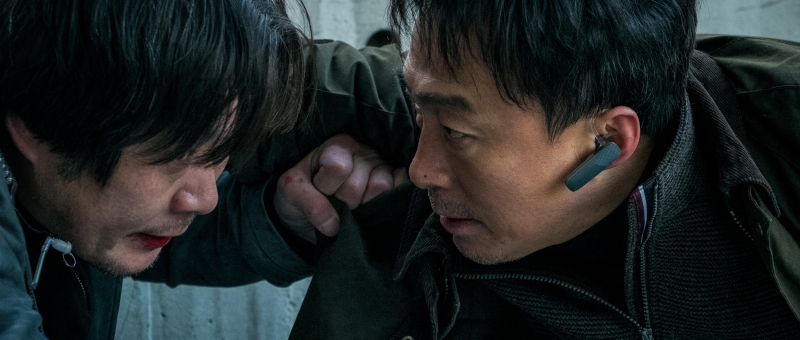
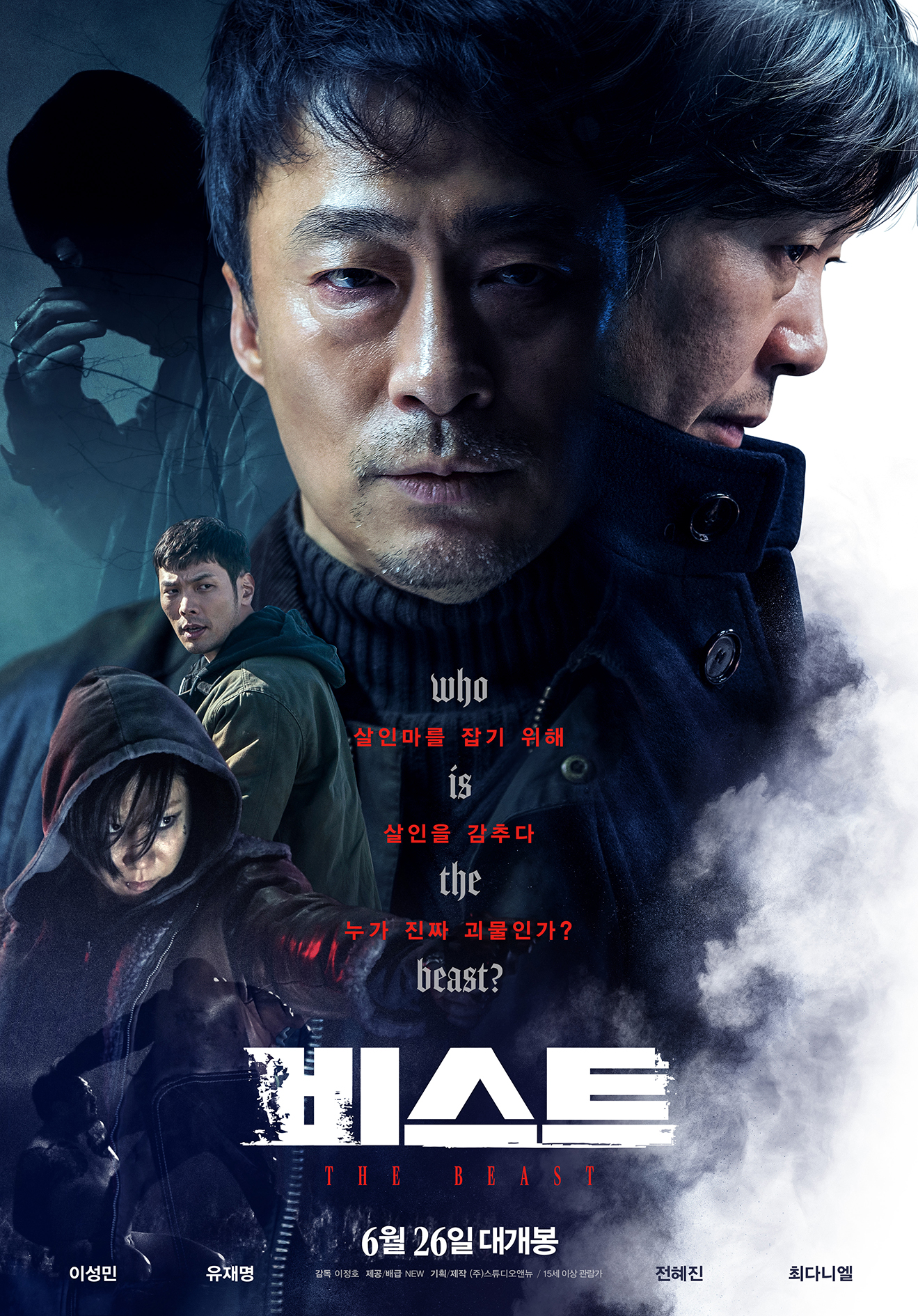







 When it comes to law enforcement in Korea (at least in the movies), your best bet may actually be other criminals or “concerned citizens” as the police are mostly to be found napping or busy trying to cover up for a previous mistake. The Chaser (추격자, Chugyeogja) continues this grand tradition in taking inspiration from the real life serial murder crime spree of Yoo Young-chul , eventually brought to justice in 2005 after pimps came together and got suspicious enough to make contact with a friendly police officer.
