We’re Millennials. Got a Problem? International (ゆとりですがなにか インターナショナル, Nobuo Mizuta, 2023)

Seven years on from the hit TV series, the guys find themselves dealing with the problems of early middle age along with increasing internationalisation as members of the so-called Yutori generation in Nobuo Mizuta’s We’re Millennials Got a Problem? (ゆとりですがなにか インターナショナル, Yutori desu ga, naninka Internationa). Now they’re in a different place and increasingly confused by the youth of the day while reconsidering their own life choices and facing a series of impromptu crises.

Among them would be that both the yakiniku restaurant where the guys worked in the TV series and the company that used to distribute the sake produced by Masakazu’s (Masaki Okada) family brewery have been taken over by Korean conglomerates. To make matters worse, the company tells Masakazu at an online meeting he’s embarrassingly turned up to in person because no one thought to tell him it was remote that they’re shifting production entirely to makgeolli because no one drinks sake anymore and his takings are about to fall off a cliff. The only way he can keep the contract is by agreeing to introduce a new product, either makgeolli or alcohol free sake. 

Meanwhile, his friend Maribu (Yuya Yagira) has returned after seven years in China with a Chinese wife and three children but apparently no job prospects. Masakazu offers him a job at the brewery, forgetting that it’s a bit awkward because he used to date his sister, Yutori (Haruka Shimazaki), who has quit her corporate job to start a business selling nordic knickknacks. It’s Maribu’s live streaming of the moribund brewery that unwittingly exposes the cracks in Masakazu’s marriage when Chinese netizens starts sending aphrodisiacs through the post to help him overcome the problems of his sexless life with wife Akane (Sakura Ando) who is herself struggling with the demands of looking after two small children and taking care of all the domestic chores with no help.

Later Akane tells mutual friend Yamaji (Tori Matsuzaka) that she’s worried she has post-natal depression and is fed up with her home life. We see can how stressful it is in the opening sequence in which Masakazu (ironically) tries to become a YouTube sake star but is repeatedly heckled by offscreen calls from Akane asking him to bathe the children and otherwise help out before she finally has no choice but to bring the kids to him. When they go to city hall to apply for a place in childcare they’re immediately dismissed, Akane somehow told that she doesn’t have as many “points” as her husband even though they’re both self-employed and there are many more needy candidates before the (probably well-meaning) civil servant not so subtly checks their daughter’s arm for signs of abuse or neglect. It’s not that surprising therefore that when the aphrodisiacs start piling up at home she wonders if Masakzau’s having an affair placing further strain on the relationship. 

Shin-hye (Haruka Kinami), the Korean-Japanese-American CEO of the company that bought out their old distributor (for whom Akane was once a regional manager) also a expresses a similar anxiety about the place of women in the workplace on the one hand coming from Korean corporate culture and finding that Japan might not as be “as bad” at least in its every increasing list of harassment which at least admit there’s problem with workplace bullying, sexist culture, and unwanted sexual advances from men in positions of power. Yamaji, meanwhile, finds his well-meaning attempts to foster diversity in the classroom floundering when the kids declare themselves unable to understand the intricacies of LGTBQ issues explaining that at their age “dating” just means hanging out though they’re unexpectedly accepting of the Thai transfer student with an inexplicable crush on the incredibly obnoxious American boy who transferred in the same time as him. 

In other ways, however, Yamaji is the same as ever. On his first appearance he’s on an awkward date with a woman from a dating app which he largely spends talking to his mentor on an iPad and making sexist remarks. They are all struggling with the demands of a more concrete adulthood in which much is already decided while their settled lives are undermined by unexpected crisis from the fallout from the conravirus pandemic and ongoing economic malaise to marital discord, the demands of caring for small children, and a friend a they had no idea was a top star live-streaming star in China. A recurring gag sees people undertake zoom meetings dressed in a suit jacked with sweatpants underneath. Yutori eventually exclaims that there’s no point even having dream while her family have a lot of sensible questions about her new business like where all the stock is whether it was worth the risk leaving her stable job that was presumably subject to all the harassment and otherwise oppressive corporate culture of contemporary Japan. Nevertheless, the millennials eventually come to a kind to acceptance and understanding of where they are in their lives along with a re-appreciation of everything they already have.


We’re Millennials. Got a Problem? International screened as part of this year’s Nippon Connection

Original trailer (English subtitles)
Nagi’s Island (凪の島, Masahiko Nagasawa, 2022)

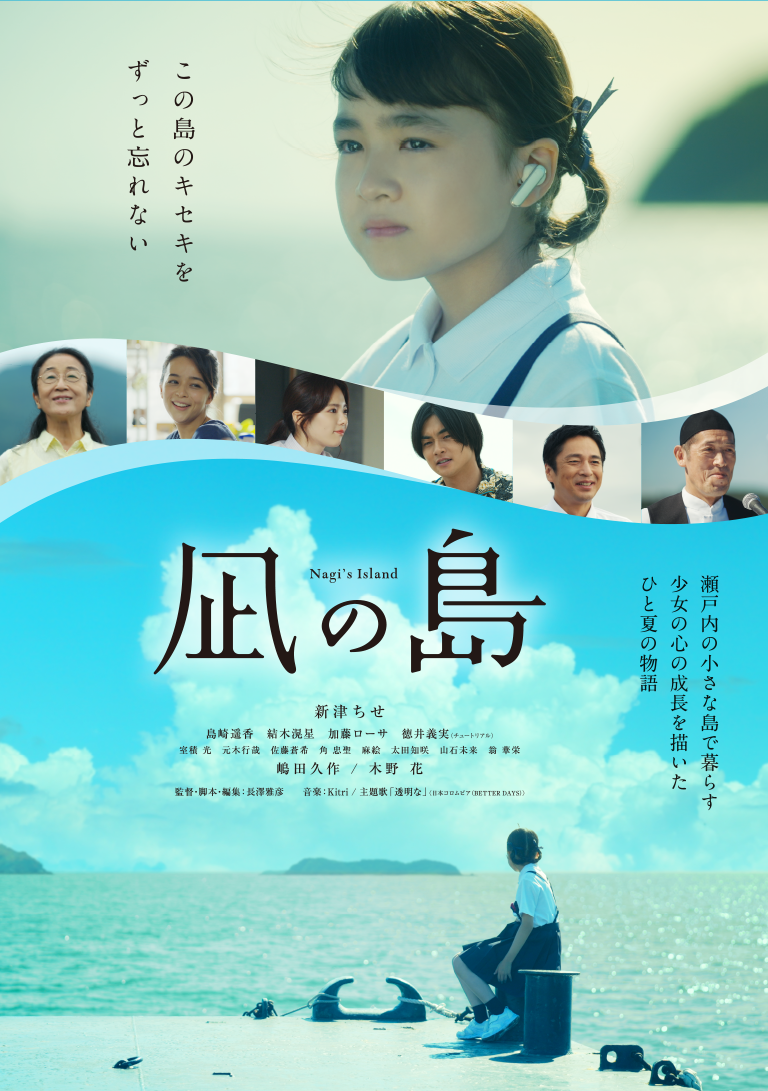
“Doctors don’t heal patients. We just help them heal themselves” according to the kindly grandmother at the centre of Masahiko Nagasawa’s warmhearted drama Nagi’s Island (凪の島, Nagi no Shima). In many ways an island film, Nagasawa’s gentle tale of the power of community support and mutual compassion celebrates the healing power of laidback island life while simultaneously lamenting its decline amid rural depopulation and an ageing society which it leave it in someways vulnerable without the protections of big city infrastructure. 

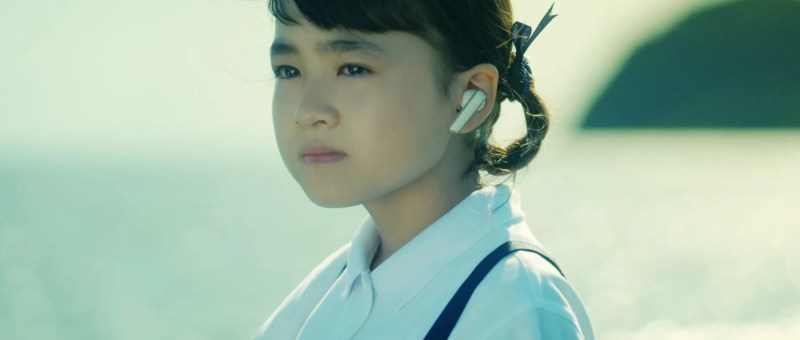
For young Nagi (Chise Niitsu), however, it’s a kind of haven. Following her parents’ divorce she’s returned to live with her grandmother Yoshiko (Hana Kino) who runs the island’s only medical clinic while her mother (Rosa Kato) has a secured a job as a nurse at the hospital on the mainland. Nagi has adjusted to island life fairly quickly, but is also haunted by her past and suffers from panic attacks when witnessing small acts of violence and aggression that recall painful memories of her father’s drunken rages. In any case it seems that Nagi has maintained contact with her dad, Shimao, through social media while he is trying his best to undergo treatment for alcohol abuse and repair his relationships with his family. 

As Yoshiko puts it, history has in a sense repeated as she too came to the island with her daughter, Mao, after leaving her husband and was comforted by the total acceptance of the island community who asked few questions and never attached any social stigma to the fact she was a single mother. Many people here are, however, also suffering such as Nagi’s new friend Raita who is touched by her relationship with her mother while missing his own. Irritated by his grandfather’s refusal to explain to him what’s happened to her other than that she’s in a hospital, he determines to find out dragging Nagi along for an adventure but perhaps discovers something he wasn’t quite prepared for only to be comforted by a frank yet compassionate outlaying of the facts from a sympathetic doctor and the gentle support of his friends and family. 

Nagi’s arrival also begins back painful memories for the school’s janitor who is nicknamed Grumpy Grandpa (Kyusaku Shimada) by the kids (of whom there are only five) because of his morose appearance and the fact he never smiles. Having lost his own daughter to a heart attack, he worries for Nagi who in turn becomes determined to make him smile and eventually succeeds in making him feel a part of the community allowing him to begin making peace with his daughter’s death. 

That sense of community is however threatened by the realities of contemporary island life. Nagi’s new friends Kengo and Raita are secretly worried that Mao will decide to remarry and Nagi will leave the island leaving them alone again as the only children of their age. In the local school all the kids are taught together because there are only five of them, the other two being an older boy and his younger sister. Life on the island may seem so idyllic that it’s difficult to see why anyone would want to leave, but with few jobs available younger people often seek better futures in the city while there’s no denying that because of the decreasing population there are few resources available. Yoshiko is the only doctor on the island and her clinic is only a regular GP’s office meaning those who require more serious medical treatment will have to travel to the mainland which is possible only by small fishing boats in good weather. 

In any case the island provides a healing environment of its own, allowing Nagi and her mother to begin putting the past behind them while offering a chance of redemption for Shimao who may be able to start over in a kinder place free of the pressures of city life. As the islanders celebrate the first marriage taking place in the village in 30 years, there is promise of new life and new beginnings despite the prevailing narrative that communities such as these have little future in a continually evolving society. What is clear is that Nagi has found her place to belong along with a purpose in life in the gentle lull of the island’s seas and its welcoming shores. 


Nagi’s Island screened as part of this year’s Camera Japan. It will also be screening at Japan Society New York on Nov. 20 as part of The Female Gaze: Women Filmmakers from JAPAN CUTS and Beyond.

Original trailer (no subtitles)

Fly Me to the Saitama (翔んで埼玉, Hideki Takeuchi, 2019)

Fly Me to the Saitama posterThe suburbia vs metropolis divide can be a difficult one to parse though there’s rarely a culture that hasn’t indulged in it. In England, for example, suburbia is to some a byword for quiet respectability, an aspirational sort of village green utopianism built on middle-class success as opposed to frivolous urban sophistication. Then again, city dwellers often look down on those from the surrounding towns as “provincial” or even dare we say it “common”. Saitama, a suburban area close enough to Tokyo to operate as a part of the commuter belt, has long been the butt of many a joke thanks to a quip from an ‘80s comedian which labeled it “Dasaitama” in an amusing bit of wordplay which forever linked it with the word “dasai” which means “naff”.

“Dasaitama” is a label which seems to haunt the protagonists of Hideki Takeuchi’s adaptation of the popular ’80s manga by Mineo Maya. Fly Me to the Saitama (翔んで埼玉, Tonde Saitama) opens in the present day with an ordinary family who are accompanying social climber daughter Aimi (Haruka Shimazaki) to Tokyo for her engagement party. While dad is quietly seething over this perceived slight to his beloved homeland, someone turns on the local radio station which is currently running an item on an “urban legend” about a long ago (well, in the ‘80s) period of oppression in which residents of Saitama (and other neighbouring “uncool” towns) had to get a visa to travel to Tokyo where they were treated as second-class citizens fit only for the jobs regular Tokyoites didn’t want to do and forced to live in hovels (which the snobbish city dwellers somehow thought made them feel more at home). The legend recounts the tale of a brave revolutionary who convinced the Saitamans to rise up, shake off their internalised feelings of inferiority, and reclaim their Saitama pride!

Shifting into an imagined fantasy of 20th century Japan which is in part inspired by warring states factionalism, Fly Me to the Saitama is, in the words of Aimi, a kind of “boys love” pastiche which riffs off everything from The Rose of Versailles to Star Wars while indulging in the (happily) never really forbidden love of mayor’s son Momomi (Fumi Nikaido) who has a girl’s name and feminine appearance but is actually a guy, and the dashing would-be-revolutionary Rei (Gackt) who has just returned from studying abroad in America and inevitably brought back some original ideas about individual freedom and a classless society. Having been born and raised in Tokyo, Momomi has a fully integrated superiority complex which encourages him to look down on Saitamans as lesser humans, almost untouchables, whose very existence is somewhat embarrassing. Only after being humbled, and then kissed, by Rei are his eyes opened to the evils of inequality and the ongoing corruption within his own household.

It goes without saying that much of Fly Me to the Saitama’s humour is extremely local and likely to prove mystifying to those with only rudimentary knowledge of daily life in Japan at least as far as it extends to regional stereotypes and ambivalent feelings towards hometown pride in a nation in which many still find themselves taking care not to let their accent slip after having moved to the capital lest they out themselves as an unsophisticated bumpkin. Yet there is perhaps something universal in its fierce opposition towards ingrained snobberies and petty class hierarchies which pokes fun both at the social climbing small-towners like Aimi desperate to escape the “dasai” countryside for the bright lights of Tokyo, and her proudly “dasai” dad, while asking the hoity-toity Tokyoites to get over themselves, and making a quiet plea for a little peace, love, and understanding along the way.

Then again, the Saitamans may have had a little more than freedom on their minds. If the “Saitamafication” of the world resulted in an expansion of mid-range shopping malls and chain restaurants filled with peaceful, happy people would that really be such a bad thing? Saitama might not be as “exciting” or as “cool” as Tokyo but it’s a nice enough place to live when all’s said and done. Perhaps that’s a frightening thought, but if the Saitama revolution ushers in a brave new world of freedom and equality then who really could argue with that?


Fly Me to the Saitama is screening as the opening night movie of the eighth season of Chicago’s Asian Pop-Up Cinema on March 12 at AMC River East 21, 7pm where director Hideki Takeuchi will be present in person for an introduction and Q&A.

Original trailer (English subtitles)

Nazeka Saitama – a novelty record released in 1981 and somewhat appropriately recorded in a style popular 15 years earlier.