Lonely Glory (わたしの見ている世界が全て, Keitaro Sakon, 2023)

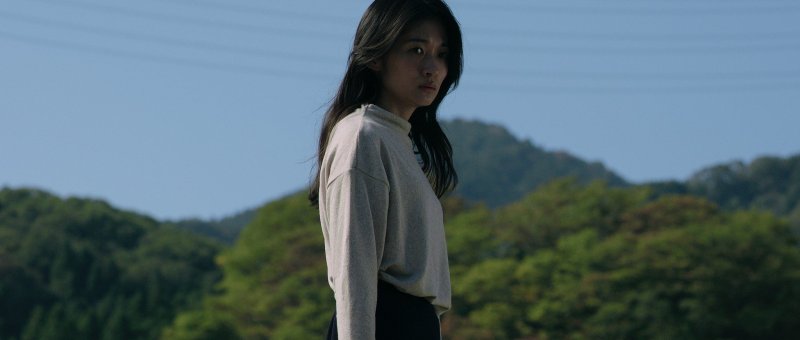
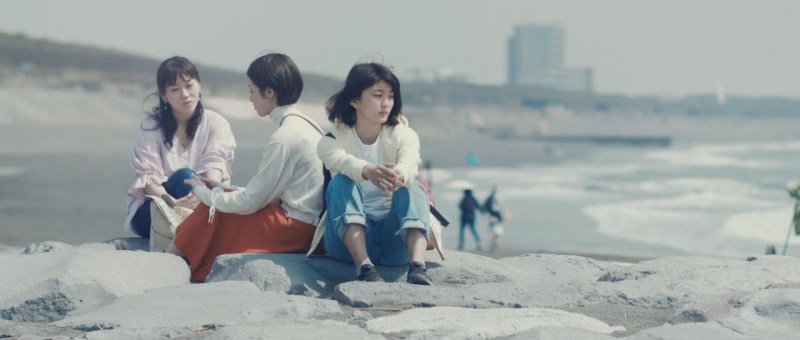
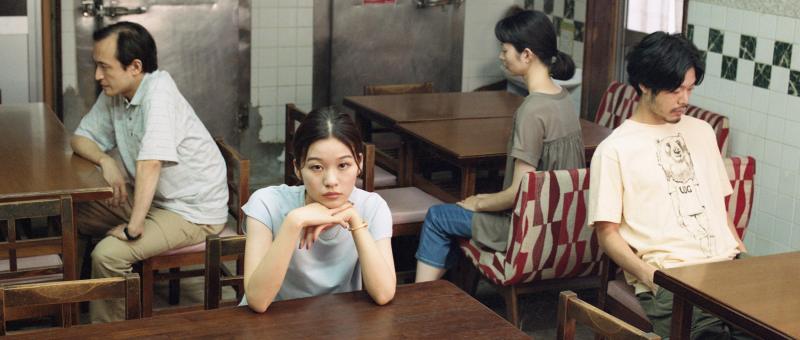
A thoroughly unpleasant young woman gradually begins to realise that other people have feelings too and she has no idea what she’s doing with her life in Keitaro Sakon’s indie drama Lonely Glory (わたしの見ている世界が全て, Watashi no Mite Iru Sekai ga Subete). Haruka currently runs a startup geared towards helping people maintain good mental health which is ironic in the extreme because she has no understanding of or regard for the feelings of others. Yet as she says during a role play with an employee, the basic principle of their business is helping people identify their problems which she ironically does on returning home to her estranged family if not entirely for altruistic reasons. 

Before that, however, we see her be unnecessarily harsh during a staff evaluation later justifying herself to the boss that they needed to clear out those who are of no use. To her, the staff member’s feelings were irrelevant, she just informed them of their subpar performance. Her boss isn’t buying it. He tells her that her management techniques are counterproductive and that with multiple accusations of bullying behaviour she herself says she is unwilling to work on (because she doesn’t understand she’s done anything wrong) he has no option other than to ask for her resignation. Unfazed, Haruka decides to start her own startup, but is soon confronted with another crisis on learning that her mother has passed away. 

On arrival at the hospital and despite being the youngest sibling Haruka immediately takes over, seemingly unmoved, and opts for the cheapest funeral plan available. She didn’t come to her father’s funeral and her siblings didn’t expect to see her for this one either, but now she has an ulterior motive in that she wants to sell the family home and business to finance her new business venture despite the fact all three siblings still live there and two of them are financially dependent on the cafe/greengrocers for their living. Haruka is incredibly judgemental about her small-town siblings’ life choices branding them as delusional and generally carrying on with an air of superiority but it’s also true enough that they are all to a degree trapped, unable to move on with their lives while afraid to leave the safety of their childhood home. 

As she says, sometimes people just need a little push which is something that she can give them but it’s never quite clear if she genuinely cares or is motivated solely by the desire to manipulate her siblings into agreeing to sell the house. Divorced sister Miwako is fairly unfussed either way but oldest son Keisuke is consumed with shame in the idea of giving up the family business while Takuji has self-esteem issues and thinks everyone looks down on him for never managing to get a job since he finished university four years previously. Challenged by Keisuke’s much younger farm girl girlfriend Asuka on the nature of success, Haruka replies that it’s having everyone around you admit you were right which lays bare her own insecurity and need to dominate every situation that she’s in. But then ironically enough she does help each of her siblings identify their problems and then gain the courage to begin moving forward. 

The dissolution of the family business and the erasure of the family home becomes in its way liberating, less the glue that bound them together than that trapped them in a perpetual adolescence. Haruka begins to realise she’s not much better than the life coach scammer who sold her vulnerable brother false promises of easy success, and that the way she treats others can have unintended consequences but in the end she’s the one left rootless and bereft of direction after closing the shop. Perhaps that’s her lonely glory, the knowledge that she helped each of her siblings do what she now can’t (or maybe just that she got what she wanted and doesn’t know what to do with it). Told with a down to earth naturalism, Sakon’s indie drama is also a lament for the changing nature of small-town life and a loss of community as the closure of the store robs the locals of another neighbourhood hub ironically leaving Haruka all alone in the now empty space of her family home with a newfound sense of loneliness still searching for the right words and a new direction. 


Original trailer (English subtitles)
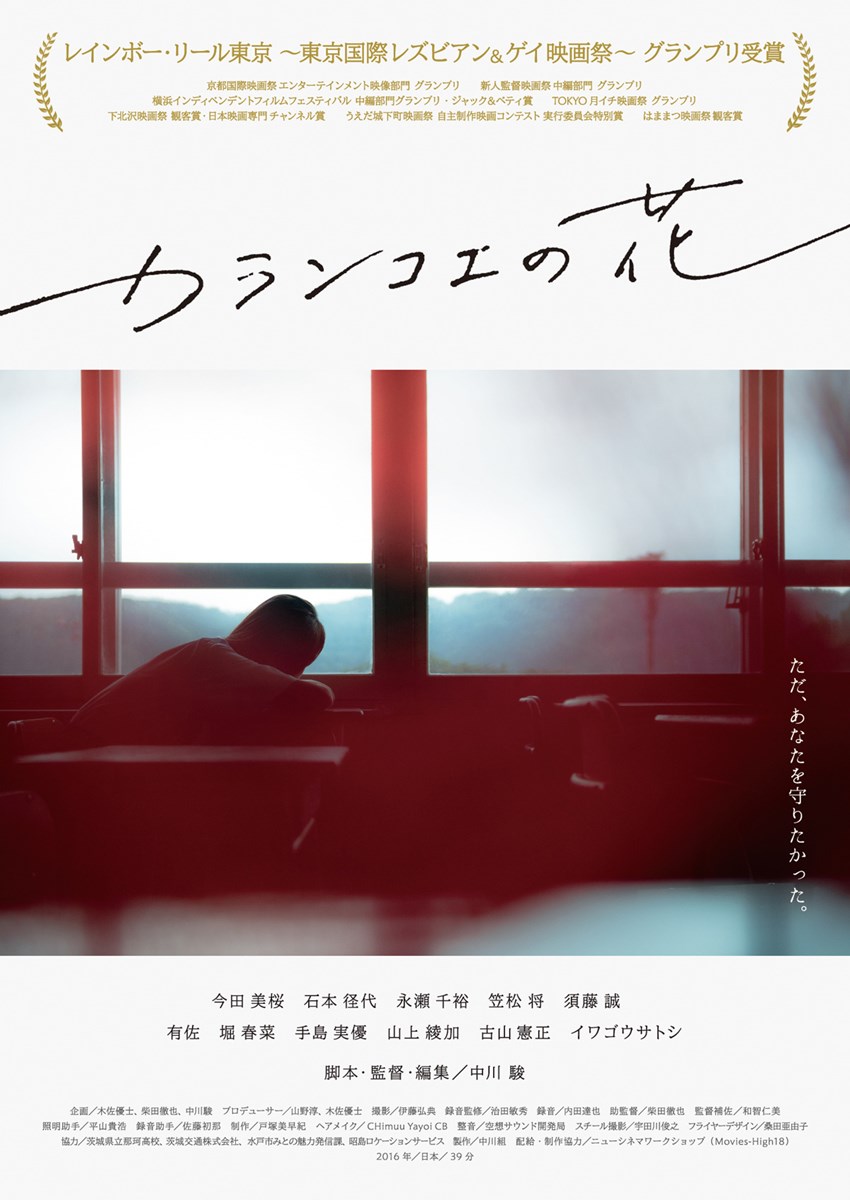
Kalanchoe (カランコエの花, Shun Nakagawa, 2017)

The truth is, most people genuinely mean well but they often make mistakes. They make them because they don’t think things through, fail to consider perspectives outside of their own, or act on assumptions that they later realise were incorrect (or tragically do not). Most people will come to understand where they went wrong and resolve to do better in future, but you don’t always get a second chance and a momentary lapse in judgement can do untold and sometimes irreparable harm.

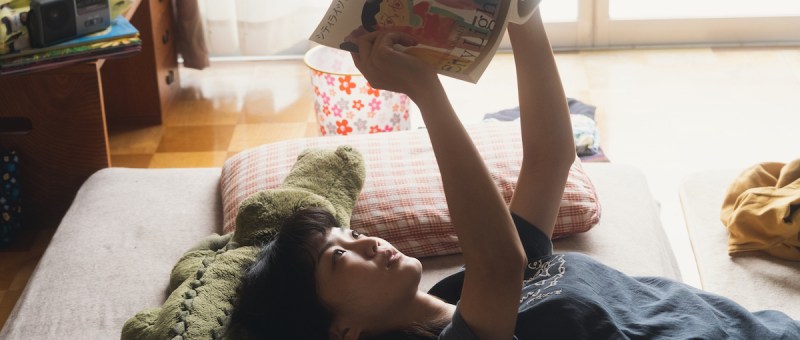
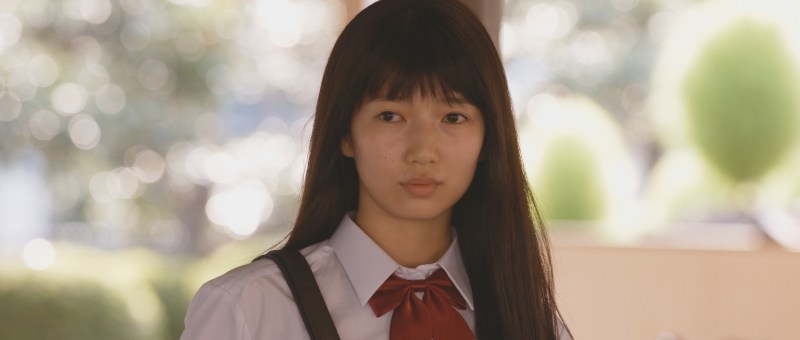
Perhaps that’s just a lesson you learn as a part of growing up, but it doesn’t make it any less painful or indeed shocking at least for the heroine of Shun Nakagawa’s 40-minute mid-length film Kalanchoe (カランコエの花, Kalanchoe no Hana). The film’s title refers to a bright red plant that in the language of flowers means “I will protect you.” But protection can be a double-edged sword, and Tsuki’s (Mio Imada) later attempt to do just that for her friend seriously backfires well meaning though it may have been. The same is true of an ill thought out decision by the school nurse to give a mini lecture on LGBTQ+ issues to Tsuki’s class when their English teacher’s off sick. Because it was only their class that received this talk, some of the students assume it must mean that one of them is gay and begin a kind of witch-hunt trying to figure out who it might be which is completely the opposite of the reaction the talk was supposed to provoke.

Of course, the nurse meant well but it probably should have occurred to her to make sure the class wasn’t singled out and support was available for any students who might be experiencing anxiety surrounding their sexuality or gender identity rather than doing something essentially superficial to make herself feel better. Though most of the students are indifferent to the talk, the class clown bears out the latent homophobia of the current society in badgering the nurse to find out if there are any gay people “or other creeps” in their class while vowing to root them out and making it a kind of game to catch one. The girls, meanwhile, engage in some aggressive heteronormativity talking about boys and pretty much making it impossible for any of them to declare themselves for whatever reason uninterested. 

As it turns out, one student overheard the conversation in the nurse’s office that provoked the talk and knows that one of the students is indeed gay, perhaps inappropriately telling Tsuki who it is in an effort to relieve the burden on herself of carrying this explosive information. When Sakura (Arisa), the student in question, begins to tell Tsuki that she’s gay, Tsuki firstly reacts well patiently waiting rather than admit she already knows though in the end Sakura cannot go through with it despite having said that Tsuki was the person she most wanted to understand. Sakura had admired Tsuki’s red scrunchie that she herself had worried was too bold, prompting her to turn over in her hands and consider it as if thinking over how she intends to react to this information and how she herself may or may not feel.

But on her second opportunity she missteps. Fearing Sakura has been outed, she loudly and clearly says it isn’t true even though she knows it is in a mistaken attempt at “protection” as if she were clearing her name which is also an expression of her own latent belief that it being true is in someway bad. In its way, it echoes the fateful moment in William Wyler’s The Children’s Hour in which Shirley MacLaine tells Audrey Hepburn there’s some truth in the rumour, but Audrey Hepburn tells her she’s lost her mind and though the outcome may not be quite as devastating it’s still a crushing blow with the brutal conclusion implying nothing more than Tsuki will have to live with her bad decision and the pain it caused for the rest of her life. Nakagawa skips between idyllic scenes of the girls on a bike, head gently resting on a shoulder, and scenes of regular high school life but ends on a note of quiet tragedy that feels somehow casually cruel.


Kalanchoe is available to stream via SAKKA from 20th September.

Sumiko 22 (スミコ22, Sawako Fukuoka, 2024)

22-year-old Sumiko is beginning to fear that she’s losing her sense of self. Even when she hangs out with her friends, she can’t think of anything interesting to say nor does anything they say spark much of an interest. Sawako Fukuoka’s breezy, New Wave-inspired dramedy captures the sense of malaise among young people today who are quickly disillusioned with the conventionality of a stereotypical adulthood while becoming aware that all that awaits them is the constant exploitation of eternal overtime and compulsory afterwork socialising.

That might be one reason why Sumiko (Haruna Hori) quit the job she got after graduating university after only a few months. But then by contrast, her friend describes her 9 to 5 office job as “wonderful,” though adding that she works for a more benign company who have a minimum overtime policy and seem to care about her work/life balance. Her other friend is not so lucky, explaining that he’s expected to work from 7am to 11pm, though can take half the month off. He breaks down in a karaoke booth, in tears screaming that he wants to quit his job. It’s all a bit too much for Sumiko who makes a quiet exit to grab some fresh air. 

Though Sumiko puts a cheerful face on it, we often see her seemingly caught motionless in moments of complete and total despair. She doesn’t seem to know what she’s doing with her life and has no real sense of direction. Nevertheless, we can see that through her sometimes strange enoucounters she begins to regain an interest in the world along with a desire for forward motion, taking an active role in her life by offering a slice of pizza from the restaurant where she works to a man who plays the recorder in the underpass she’s sometimes fantasised about dating.

We see her gleefully draw a little cat in the sauce on top of her salisbury steak only to be middle rebuked by a radio host who can’t abide such childishness, but in a sense this is exactly what Sumiko is striving for the freedom to be cheerful and creative rather than a soulless drone valued only for her productivity. Another of her roommates also has his quirks, displaying a toy dinosaur called Tom on his bike that so impresses the proprietor of a restaurant that she makes him a little bow tie.

Sumiko lives a relaxed life, working at the pizza restaurant and otherwise spending her days wandering the neighbourhood, playing frisbee with her roommate Hana, or hanging out with friends. A female convenience store worker flirts with her awkwardly, first bonding over a shared love of cats and then admiring the line of her arms and the way they bend at the elbow. She watches a couple fight at a vending machine and then worries that she’s been rude in informing a woman wearing white jeans that her underwear line was visible when she bent down to tie her laces. The woman later seemingly becomes a friend, appearing in a short film Sumiko makes capturing the quirky surreality of her life.

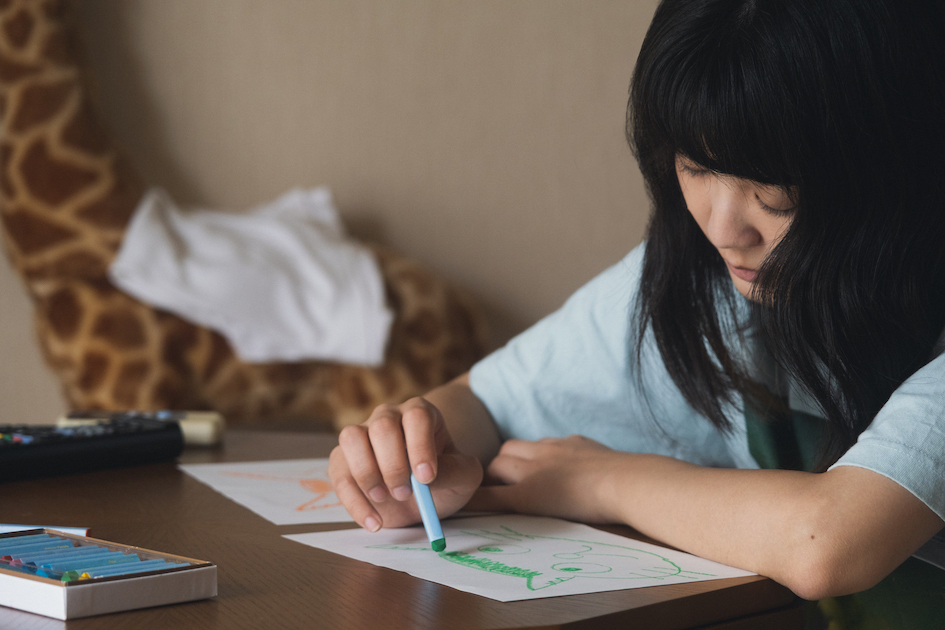
Drawing inspiration from the French New Wave, Fukuoka adds a deadpan voiceover to narrate Sumiko’s aimless days each broken into sections from her diary complete with an adorable crayon doodle. Sumiko might be hit by small moments of despair but otherwise remains cheerful, embracing the simplicity of her life along with the company of her friends even if it is sometimes a little hard to bear. She thinks she was born to eat cake and is obsessed with salmon, finding the moments of small joy in her life and along with them a new sense of purpose and direction that might in its own way be simply to stay still, living as she pleases and embracing her aimlessness as freedom rather than anxiety. Cute and quirky in its surreality the film captures something of life’s absurdity, but also displays a boundless empathy for those like Sumiko who aren’t so much lost as aimlessly on their way to the place they were they were always supposed to be.


Sumiko 22 screened as part of this year’s Osaka Asian Film Festival.

Original trailer (no subtitles)

Beyond the Night (夜のそと, Natsuki Nakagawa, 2019)

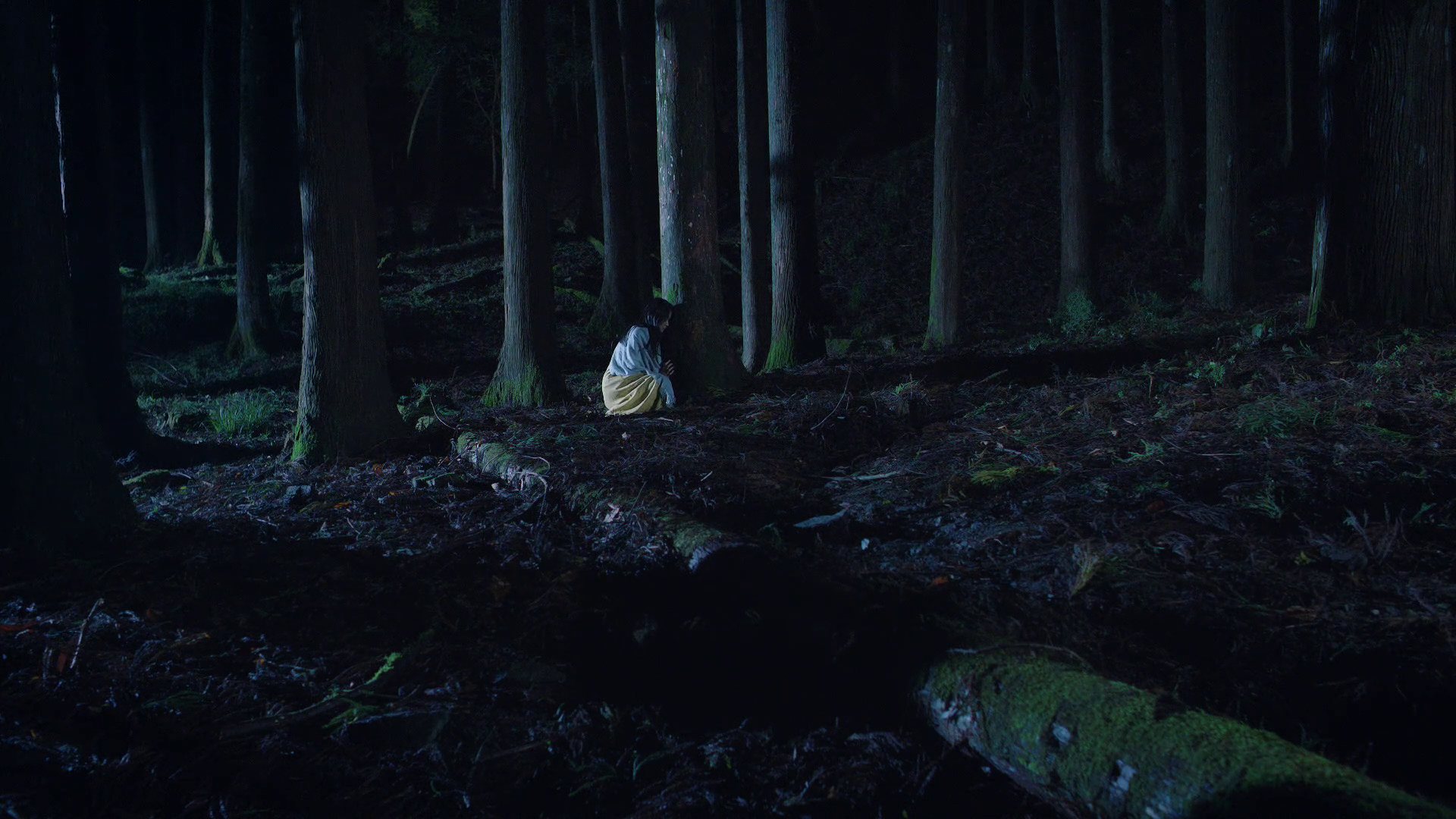
“I’m leaving this place” a traumatised woman declares, trying to free herself from an oppressive environment but discovering that escape is not necessarily synonymous with freedom. Completed at Tokyo University of the Arts’ Graduate School of Film and New Media, Department of Film Production, Natsuki Nakagawa’s Beyond the Night (夜のそと, Yoru no Soto) locates itself somewhere between Wuthering Heights and The Postman Always Rings Twice as its traumatised heroine struggles to assert herself, trapped in the black hole of incestuous small-town life while yearning for a return to a more wholesome existence.

When we first meet Sotoko (Saki Tanaka), she is trying to run away only to stumble in the forest and be dragged back by her husband, Atsuya (Yasuhiro Isobe), whom she was presumably trying to escape. At work the next day, she’s wearing a large bandage on her cheek, but her colleague, Yuki (Haruka Konishi), has little sympathy for her. It’s at that point that she encounters mysterious drifter Mikiro (Kenta Yamagishi) on a delivery job to the office. Taken by her melancholy, Mikiro begins watching over her, concerned that no one else in the town seems to care that Sotoko is a victim of domestic violence. He learns from an old man that Atsuya is from the village’s most powerful family and therefore can do whatever he likes, while Sotoko, according to Yuki, is a “worthless” woman, an orphan who lost her family in a mysterious car accident. In addition to beating her, Atsuya has been pimping Sotoko out for money and influence, forcing her to sleep with a dirty old man, Tokyo-based politician Ishikawa (Hiroaki Kono), who later turns up dead in extremely suspicious circumstances. 

Atsuya claims that he treats Sotoko the way he does because he’s responding to her desires, pointing out that she’s tried to leave many times but has never been able to move beyond the forest. She lives surrounded by memories of the family she has lost, pictures drawn by her little brother Shota tacked on the wall, hugging his fluffy teddy for emotional support. Atsuya however wants to be her only family, destroying his totemic rivals in order to dominate her more completely while also taking from her the hope of forming a more complete family of her own. We learn that Atsuya has been shielding her from the consequences of involvement with a previous crime which is one reason she can’t leave him, but another is her battered psyche as she tries and fails to convince herself that she has the right to a better life or to her freedom. 

Mikiro, meanwhile, seems like an unlikely saviour, carrying a dark secret of his own as he plays the benevolent stalker wandering around Sotoko’s home when no one’s around and leaving little calling cards to remind her of his presence. Where Sotoko wants freedom, Mikiro wants love and is willing to go to great lengths to get it. “If I kill him will you love me?” he asks, while Sotoko explains to Yuki that she cannot simply leave Atsuya because their souls are entwined and someone needs to cut her free. “You can’t go anywhere, I’m the only one who can protect you” Atsuya counters, “She’ll never love you” he adds to Mikiro, “You’ll end up like me, you’re my replacement”. 

“We can’t change anything” a friend of Mikiro’s insists deepening the sense of fatalism, “one rotten person dies and nothing changes” echoing his own assertion that “there are bad people everywhere”. Sotoko declares her love for Mikiro as a symbol of the freedom she now desires, but at the same time reveals that there is nowhere she wants to go. To her Mikiro seems like a visitor from another world come to take her away from all this, but her salvation is not another perhaps equally problematic man but an awakening to her own agency, finally choosing a clear destination in the fullness of her “freedom”.

Nakagawa shoots her noirish tale with deadpan realism and a healthy respect for the ancient borders of the natural world, amping up the Lynchian sense of dread with ominous musical cues as Sotoko attempts to navigate her life in this strange little town where misogyny rules that seems to stand in for the prison of her trauma. Literally named “child of beyond”, she looks for the new world somewhere on the outside but struggles to extricate herself from an internalised sense of shame and worthlessness in order to find it. “Wherever you go you won’t be satisfied” a threatening policeman (Tomoki Kimura) had told her, but if you never leave the village then how would you ever know?


Beyond the Night streamed as part of this year’s Japan Cuts.

Trailer (English subtitles)

Jeux de plage (浜辺のゲーム, Aimi Natsuto, 2019)

105104a28dul1sw021sqjl“Listen, men are nice to all women, because sex is the only thing they think of” a young woman warns her friend as she recounts a casual encounter on the beach with a man they seem to have collectively decided to declare a bad idea. It’s not all fun and games by the sea for the romantically confused heroes of Jeux a plage (浜辺のゲーム, Hamabe no Game) which owes a fair bit to the French New Wave in its easy, breezy exploration of young love and an intensely sexist society. Produced by Kiki Sugino’s Wa Entertainment, Aimi Natsuto’s Rohmer-esque debut continues the internationalist vibe the studio is fast becoming known for in bringing together a disparate group of travellers each “invited” to a small seaside guest house by the mysterious Miwako.

The central psychodrama plays out between three young women, not quite friends, who are apparently engaged in some sort of revolving love triangle. Yui (Juri Fukushima) has brought her uni friend Sayaka (Haruna Hori) on a trip to her hometown where they’ve hooked up with her high school friend Momoko (Nanaho Otsuka), but the atmosphere is beginning to sour. Sayaka increasingly feels like a third wheel while secretly pining for Yui who seems to have regressed into a more vacuous version of her teenage self while obsessing over Momoko who only talks about guys despite later claiming to be pansexual.

Meanwhile, the three women find themselves constantly bombarded by (largely) unwanted male attention – firstly from another guest at the hotel, Akihiro (Shinsuke Kato), who seems to have completely messed up his personal and professional lives with an ill-advised love affair. Akihiro’s eyes are out on stalks when he spots the three pretty women though they, while admitting that he’s “cool”, declare him a little sleazy, maybe even creepy seeing as he’s probably “as old as 35” and giving the eye to a bunch of college girls. Even so, Akihiro is not the only lothario on the prowl. Korean student Min-jun (Koo Hyunmin) has brought a Korean girl, Yona (Li Taun), who’s come to visit him, to stay in the hotel after getting a recommendation from Miwako. It seems Yona is just a friend who came to find out about studying film, but Min-jun keeps making awkward passes and intermittently reminding her about an introduction to his professor which occasionally seems like a creepy sort of pleading.

All that’s aside from the randy professor (Kentaro Kanbara) who might as well be a escapee from a Hong Sang-soo film, having started the picture without his trousers in the empty hotel swimming pool after apparently being seduced by the ever absent Miwako the night before. Despite being profoundly sorry, he turns up the next day to return the clothes he had to borrow and makes a worryingly aggressive play for the previously sympathetic manageress all while his suspicious wife (Kiki Sugino) watches from behind a nearby hedge, presumably following him after doubting whatever story he told her to explain not having arrived home the previous evening. Meanwhile, Sayaka, sick of feeling like a spare part, takes off for the beach where she’s quickly hit on by two different creepy guys, one of whom turns out to be a film director (A cameo from Edmund Yeo) who wanted to hire her for a movie though she wasn’t particularly interested.

Matters come to a head right there on the beach where the women collectively take out their frustrations with the male sex on the cocksure Akihiro, who is not really at fault in this instance save insensitively mocking other people’s romantic distress. Unfortunately, however, the incident does not seem to have relieved the pressure on the central trio who continue to dance around their romantic confusion without talking about anything “real”. While Sayaka looks for advice in asking random strangers if they’ve ever had a same sex crush, Yui becomes increasingly stressed and as irritated by Momoko’s gravitating towards the guys as Sayaka is by her intimacy with Momoko. Meanwhile, the only “nice guy” – a sympathetic Thai filmmaker (Donsaron Kovitvanitcha) observing from the sidelines, fails to add to the drama when attempting to make his own romantic confession (a sweet and innocent one with flowers and poetry) at an extremely inopportune moment. Bookended by time cards with chapter headings taken from classics of the French New Wave, Natsuto’s approach is one of detached playfulness tinged with farce as she observes this collection of flawed but very human protagonists fail to plainly express their desires, becoming ever more frustrated and confused as they struggle to orientate themselves around each other in a repressive and infinitely sexist environment. 


Jeux de plage was screened as part of Japan Cuts 2019.

Original trailer (English subtitles)