Chaos (カオス, Hideo Nakata, 2000)

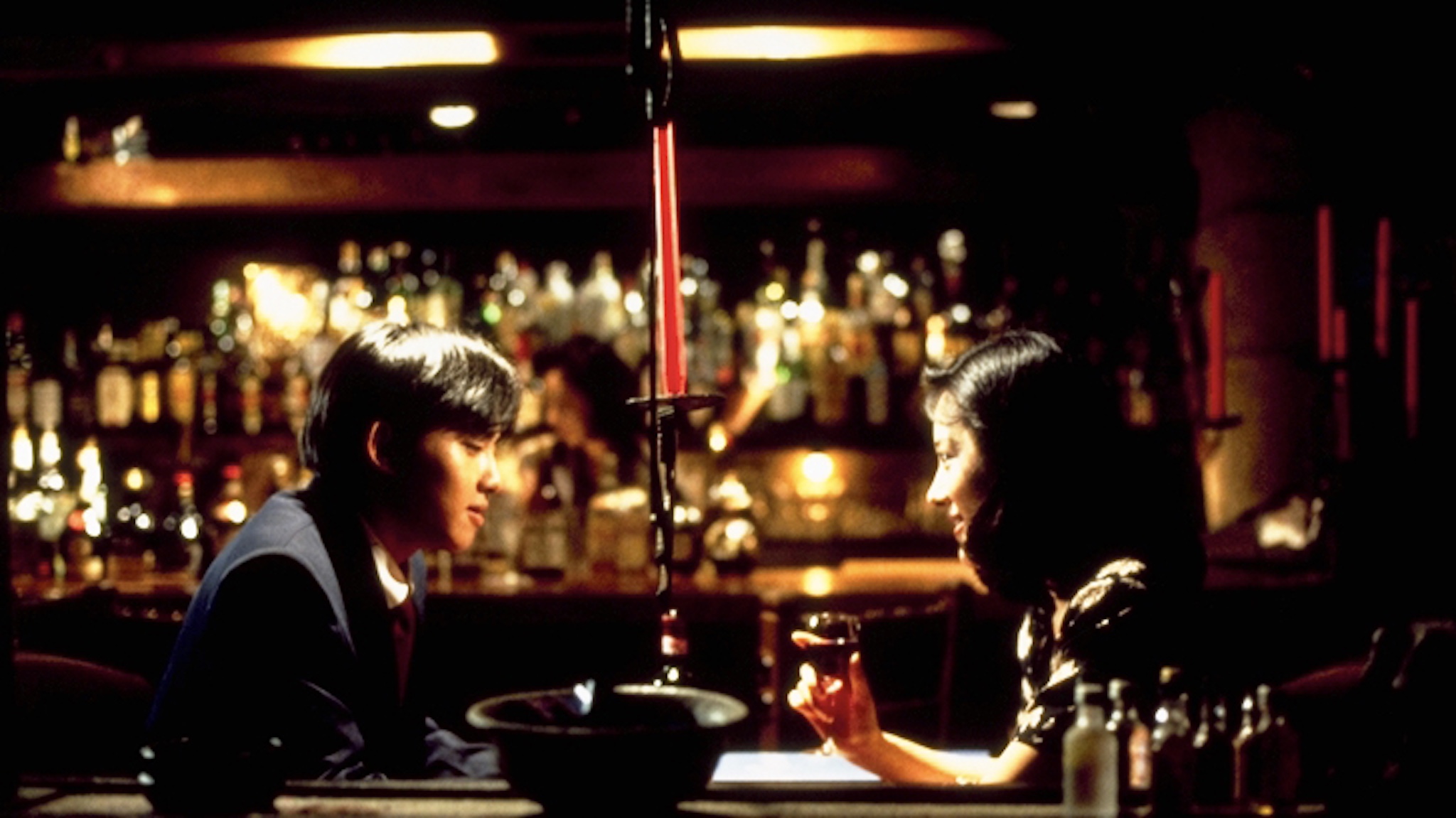
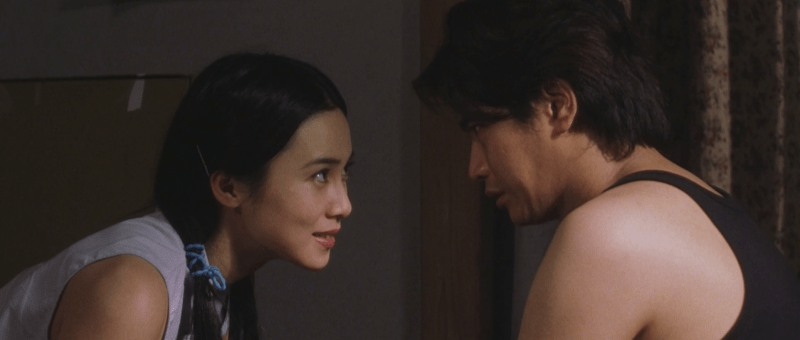
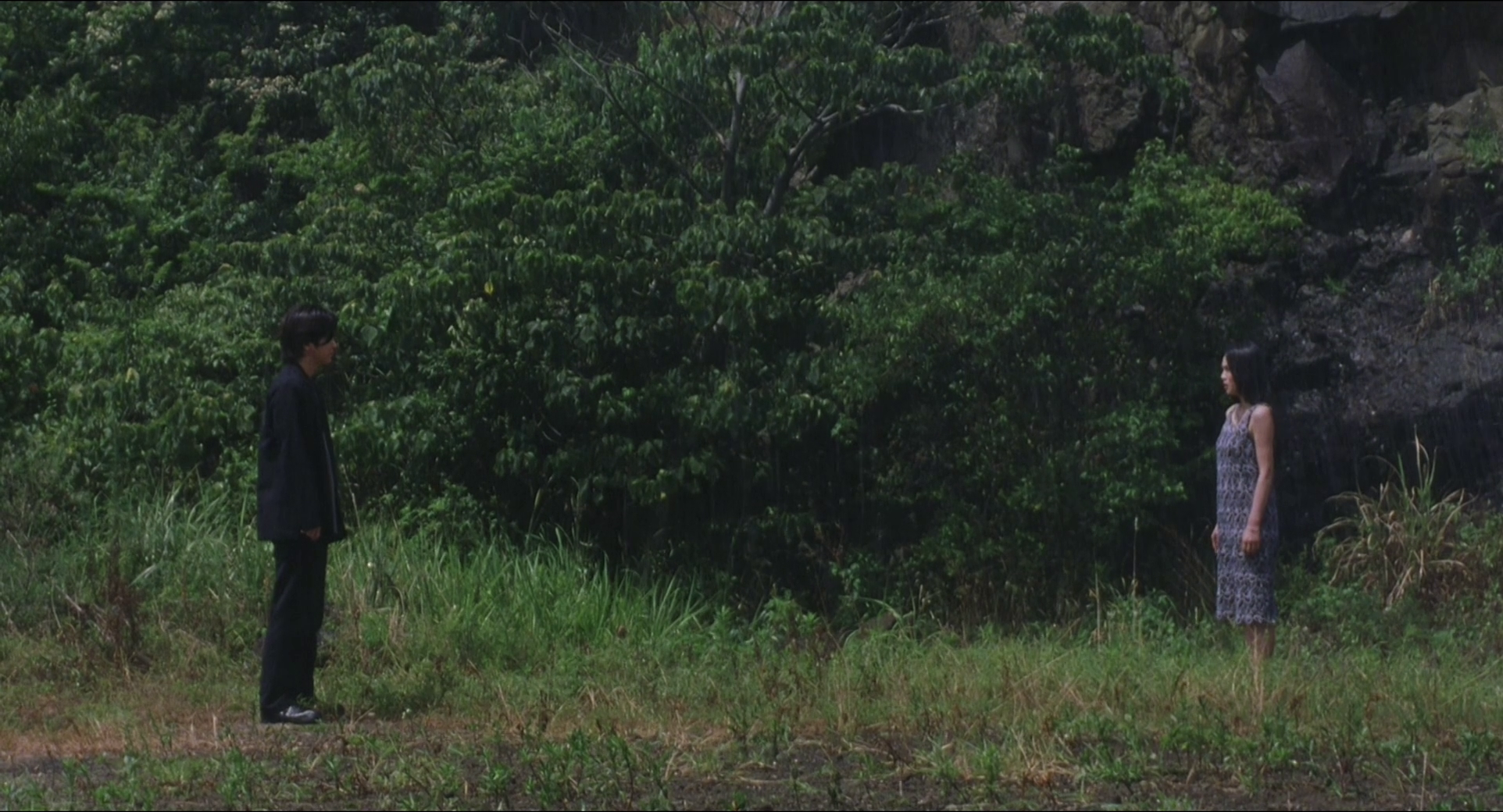
A down-on-his-luck handyman finds himself swept into intrigue when he agrees to a help a pretty young woman fake a kidnapping in Hideo Nakata’s noirish drama Chaos (カオス). Chaos is certainly what unfolds in the non-linear narrative as we try to piece together this fracturing tale of multiple betrayals and double crossings in which nothing and no one is quite as it seems and we can never really be sure just what game anyone is playing.

Goro (Masato Hagiwara), for instance, seems to be a bit of a sap. His ex-wife accuses him of being incapable of thinking of others, though his young son Noboru comes to him after having been bullied at school. He doesn’t seem to be very invested in his life of odd jobs which includes requests from lonely old men to play go as well as to visit the apartments of pretty women who’ve encountered some kind of plumbing disaster. Perhaps it’s no surprise he’s convinced to help Saori (Miki Nakatani) stage a kidnapping to test her husband’s affections seeing as she suspects he’s started an affair with a younger woman who is just nicer than she is, so she can’t compete.

What is surprising is that Goro turns out to be some sort of kidnapping expert. He explains to Saori that she should wear rope bindings for added authenticity when she’s released as well as refrain some taking showers. She should also not feed the tropical fish her friend asked her to, because if she’s been kidnapped then she’s not available, but then the fish will die, which means she’s sacrificing the life of living creatures just to prove a point. Though Goro treats her with tenderness, he frighteningly turns on after he’s helped her tie herself up, threatening rape. This is then revealed to be a ruse in order to get a real reaction of fear and terror for when he rings her husband Komiyama (Ken Mitsuishi) with the ransom request. 

This reversal makes clear to us that we don’t know who we’re dealing and anyone could suddenly change at a moment’s notice. We’ve just been told, for instance, that Saori tied the ropes so she could easily untie them by herself to go to the bathroom, which means that she could have done so anytime while she thought Goro was attacking her but didn’t. Obviously, she may have been too frightened to think of it, but then again perhaps she is also playing along with her own game too. When Goro extorts Koniyama’s sister, it looks like a cunning double bluff to lend authenticity to the original kidnapping plot while simultaneously pulling off a different scam, but maybe it’s also Goro going rogue and doubling his pay packet.

Despite his circumstances, however, Goro doesn’t seem to be in this for the money so much as white knighting for Saori even though he obviously knows she’s already married. On realising she may have betrayed him, Goro goes into a fairly convincing detective mode, posing as a policeman in order to investigate. He discovers that Komiyama’s mistress was a model who’d recently been cast aside by the agency because of a rumour she slept with a client while they also seem to have a repressive rule about dating. One of her colleagues says she hardly ever goes home to the flat her agency rents for her because she’s secretly living with a boyfriend. This is, perhaps, a world in which a woman can’t really be all of who she is because men are always trying to imprint their vision of idealised femininity on them. Womanhood is, after all, a kind of performance and one which Saori may be manipulating for her own ends. 

Yet it’s not clear where, if anywhere, the performances end and the authentic begins. Even having discovered at least a degree of the truth, Goro isn’t sure he can really trust Saori, while she may not really know either. What he resolves is that that might not matter, but what each of them is really looking for is a kind of escape from the constraints of their lives either through love or money only to discover that there is none, or else it lies only in death either literal or figural in a total reinvention of one’s persona. With shades of Vertigo, Nakata piles on the confusion and uncertainty to create an atmosphere of pure dread in which nothing, really, is quite as it’s assumed to be.


Trailer (English subtitles)
Female Teacher: Forbidden Sex (女教師日記 禁じられた性, Hideo Nakata, 1995)

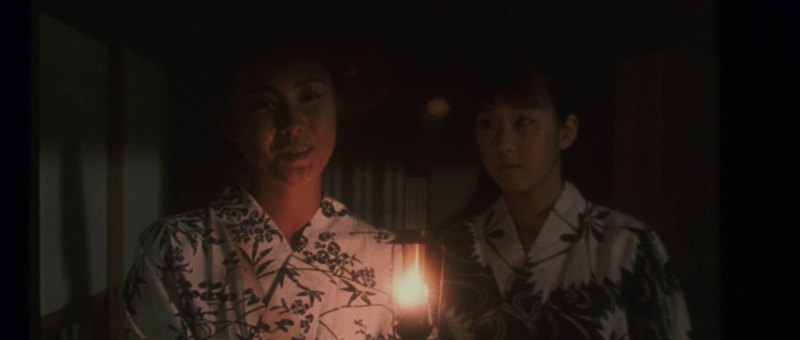
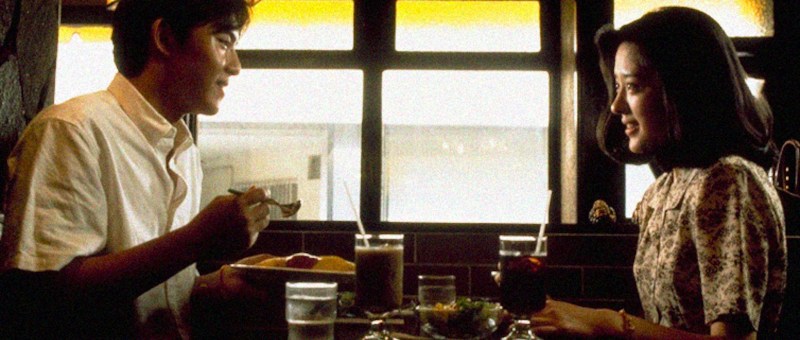
Hideo Nakata maybe best known for his films in the horror genre, but he made his feature directorial debut for Toei’s V-Cinema with a tale of forbidden love between a besotted high school boy and his Japanese teacher. Though with a title like Female Teacher: Forbidden Sex (女教師日記 禁じられた性, Jokyoshi Nikki: Kinjirareta Sei), one might expect something fiercely erotic or sensationalist, the film is really a sensitive melodrama in which a young man who feels suffocated by his doting single mother and a female teacher who feels constrained by patriarchal social codes fall into an impossible love. 

Then again, it does have its troubling themes. Lovelorn Mitsuru (Kosuke Kawana) has been leaving mildly ominous messages on Noriko’s (Hitoe Ohtake) answerphone declaring his love and pleading with her to notice him. Noriko knows that the messages are from one of her students, but she doesn’t know which. In any case, the messages make her uncomfortable on several levels given her position as a teacher. Meanwhile, she’s in a relationship with another teacher at the school, Morimoto (Hiroyuki Okita), who is popular with female students. Noriko obviously thinks the relationship is serious as she asks Morimoto to meet her parents, but he appears reluctant in part because Noriko wants to continue her teaching career after marriage and Morimoto is presumably after more of a traditional housewife.

In fact, despite his status as an alpha male PE teacher, Morimoto is rather insecure and actively threatened by Mitsuru when he catches him having dinner with Noriko. This is right after a rumour has begun to spread around the school that he’s slept with a female student, Yumi (Asami Sawaki), who faked a story about being raped to get him to take her to a hotel where she tried to seduce him. It seems that he did not actually sleep with her, but took things father than he should have in an attempt to scare her off doing the same thing again. As such, his conduct is extremely questionable, but he is never questioned about it in the same way that Noriko is even though she only took Mitsuru for dinner even if Yumi’s friends might have a point in suggesting she’s getting back at Morimoto. She did, however, give him alcohol which is not an appropriate thing for a teacher to do, though nothing about this entire situation is really appropriate. The legal drinking age in Japan is 20 and Mitsuru could have been suspended from school just for underage drinking if his teachers found out. 

The real mystery might be why Noriko suddenly takes to Mitsuru, who was after all stalking her. But the reasoning seems to be that he’s the opposite of Morimoto. He treats her with kindness and respect and never tries to constrain her in the same way that Morimoto does even if the natural consequence of their affair is that she will lose her teaching career which had been her dream since high school. She seems to know on some level that their affair is wrong, but gets swept up in the moment and the false hope of escaping the pressures of her life such as the patriarchal expectations of marriage. While Morimoto drags his feet, her friends call inviting her to mixers and her parents try to set her up for arranged marriage meetings to hurry her along to a seemingly inevitable rite of passage. 

Mitsuru, meanwhile, feels hemmed in. He’s on track for a place at the prestigious Tokyo University and under immense pressure while resentful of his mother whom he finds overbearing though mainly just appears caring and interested in his future if a little possessive while chasing after the fugitive Mitsuru and Noriko. What he might paradoxically be looking for is an escape from adulthood, as is Noriko in a way, though his reasons for loving her are otherwise superficial and only to do with her physical beauty. Nevertheless, he resents Morimoto for his boorish, ultra-masculine attempts to dominate Noriko and thinks he’s rescuing her while unaware that in other ways he’s ruining her life. He too railroads her into staying with him, insisting that he’ll look after her by getting a job which only bears out his naivety and makes him little better than Morimoto.

Perhaps with a little male wish fulfilment, the film treats the love story as if it were pure and innocent and it’s only society that’s in the way as reflected in Noriko’s wish for time to run faster but only for Mitsuru. Nevertheless, it too acknowledges that the love is impossible because it is inappropriate given Mitsuru’s youth and Noriko’s position as his teacher, so they can only really be together in death. As such, the film ends on a melancholy note and is filled more with romantic tragedy than the purely erotic content suggested by the misleading title.


Screened as part of the International Film Festival Rotterdam’s Focus on V-Cinema.

Don’t Look Up (女優霊, Hideo Nakata, 1996)

“Have you ever seen an old movie and not been able to get it out of your head?” For those of us who grew up in the pre-internet age, daytime television was a treasure trove of classic cinema where unexpected discoveries were made. Maybe you only caught a few minutes of a film whose title you never knew, but the images are burned into your brain like nothing before or since. It’s tempting, then, to wonder if it isn’t Muroi (Yurei Yanagi), the nascent director, who’s projecting the darkest corners of his mind onto this haunted celluloid, though as it turns out this film was never actually aired.

If Muroi saw the haunted film as a child, it was because the ghost within it chose to broadcast herself by hijacking the airwaves. As his friend points out, however, perhaps he just saw a newspaper report about an actress dying in an on-set fall and saw it in his mind, creating a movie of his own or perhaps a waking nightmare that continues to plague him into adulthood. In any case, the film he’s trying to make is a wartime melodrama rather than a ghost story, but it’s one that’s clearly built around dark secrets and hidden desires. Hitomi (Yasuyo Shirashima) reveals that her character killed her mother in the film to take her place and later kills a deserting soldier with whom she’s been in some kind of relationship that the younger sister threatens to reveal in fear that should the villagers find out they’ve been hindering the war effort by hiding a man who’s shirked his duty to the nation they’ll be ostracised and people will stop sharing their food with them.

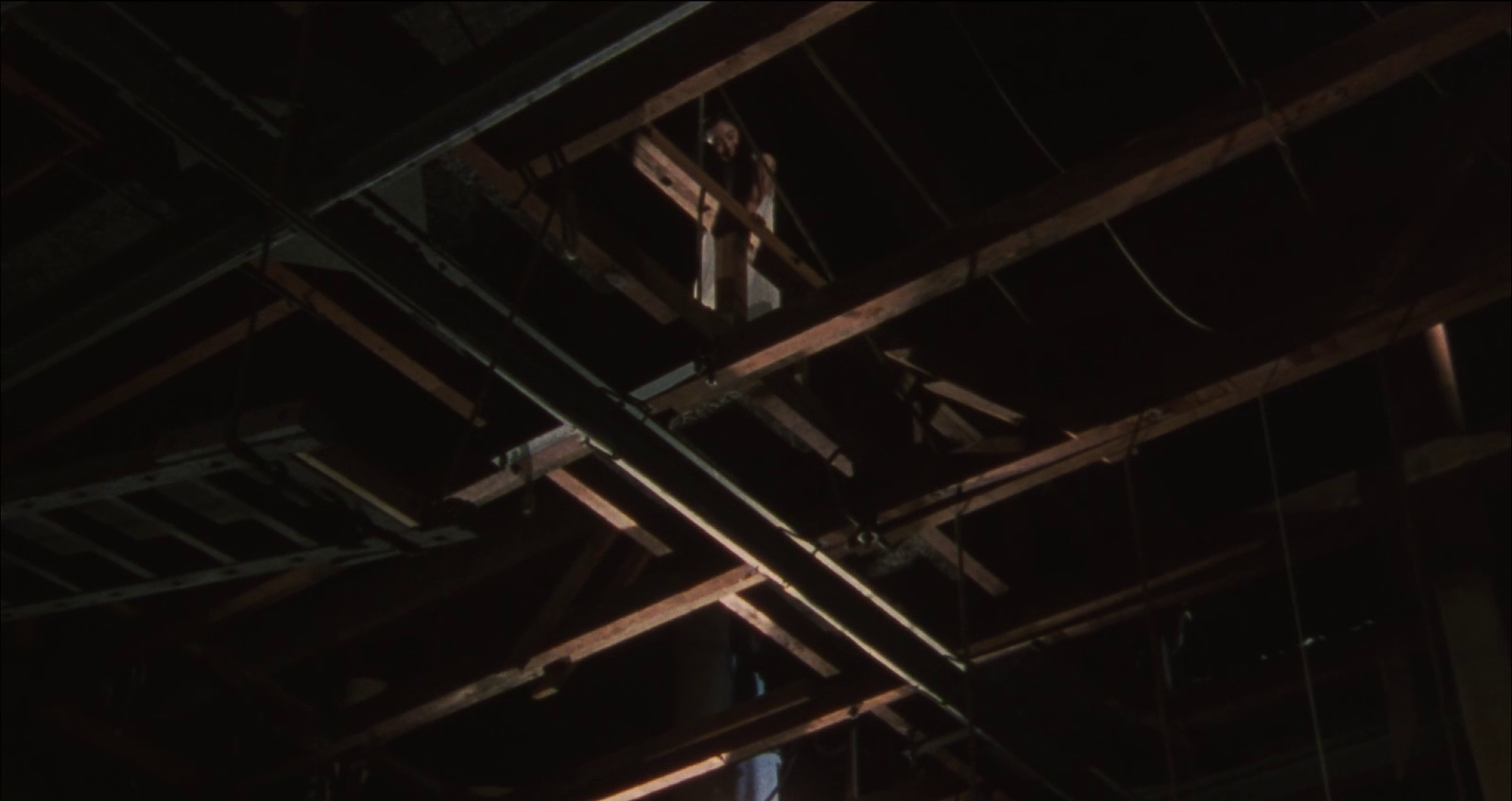
But Hitomi has real-world issues too. There’s something going on with her overbearing manager who seemingly didn’t want her to do this film which is why she’s not on set with her. When she eventually turns up, she seems to have some psychic powers. After handing Hitomi an amulet, she runs from the studio screaming. Hitomi agrees there’s something eerie about this place. As the projectionist remarks, this studio is 50 years old, built during the post-war relaunch of the cinema industry. Many things have happened here. But Nikkatsu is now a ghost itself and these disused production facilities are a haunted spaced. The floorboards creak and the rigging may give way any moment, bringing down with it the dream of cinema.

That’s one reason Muroi is advised not to look up and break this sense of allusion, along with recalling the more recent tragedy of an actress’ accidental fall. As much as Hitomi and Saori (Kei Ishibashi) begin to overlap with the image of the ghostly actress, it’s Muroi who is eventually swallowed by his dream of cinema in his determination to climb the stairs and find out what horrors are lurking in the attic before being dragged away to some other world. Nevertheless, this is a film that could only be made with celluloid. Nakata slips back and fore between the film that we’re watching and the cursed negative with its ghost images from previous exposure. This is evidently a low-budget production too, made using end cuts from other reels. As someone points out, this unused footage would usually be thrown out but has somehow mysteriously ended up infecting their film and releasing its ghosts. The projectionist burns it, describing the film as “evil” and suggesting that it’s better to let sleeping dogs lie.

But Muroi seems unable to let it go, chasing his childhood nightmare in trying to explain the mystery behind the footage. Hitomi describes herself as being haunted by a role long after the film as ended. It’s the same when someone dies, she says. They hang on for a while. The actor too remarks that he feels like the camera hates him, as if he were feeling the ghost’s wrath directly but otherwise unable to see her. Yet we have this sense of history repeating and a curse that’s sure to recur while this film too will remain unfinished and linger in the realm of the unrealised. Nakata too only undertook this film after losing his job to Nikkatsu’s collapse and trying to finance a documentary about Joseph Losey as if captivated by his own dream of the cinematic past and the haunting images of a bygone world.


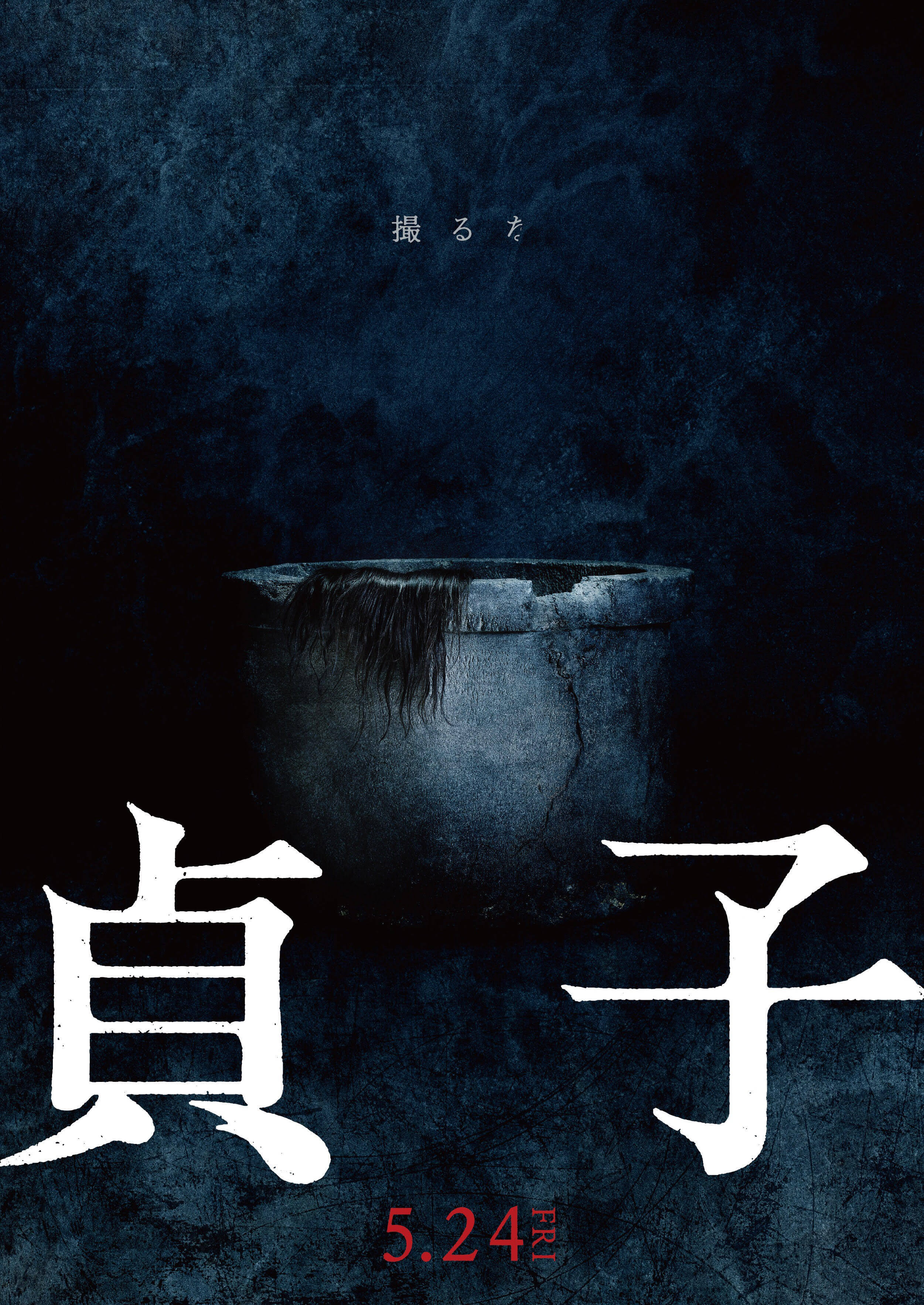
Sadako (貞子, Hideo Nakata, 2019) [Fantasia 2019]

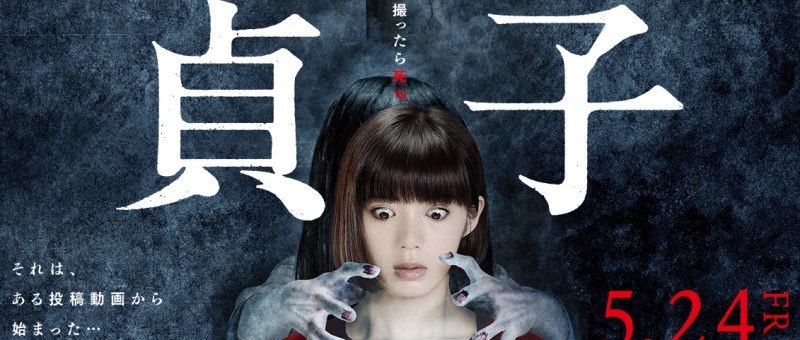
(C)2019 "Sadako" Film PartnersJust over 20 years ago, Hideo Nakata’s Ring became an international phenomenon and kick started a J-horror boom that continued to define the nation’s cinematic output for the following decade. The J-horror boom, however, eventually imploded after a series of diminishing returns turned the figure of the long-haired ghost into something of a self parody. Even so, Sadako has continued to haunt Japanese cinema like the malevolent spirit we all know her to be and now she’s back with a brand new curse.

Adapted from the 2013 novel Tide by Ring author Koji Suzuki (though in actuality an almost entirely original story), “Sadako” (貞子) is set firmly in the present day and twenty years after the mysterious chain video curse took so many lives. Our heroine, Mayu (Elaiza Ikeda), is a clinical psychologist working in a regular hospital where she tries to help those with physical ailments maintain their mental health. New to the job, she is currently struggling with a doctor’s major dilemma in figuring out how to keep a personal distance from her patients who have a natural tendency to latch on to a caregiver even while knowing that the relationship must necessarily remain a professional one.

The trouble starts when a mysterious, mute young girl is brought into the hospital. Mayu is unable to get through to her and she doesn’t even seem to know her name but the mystery is partially solved when the police turn up with evidence that suggests the girl is the daughter of a woman who set fire to her apartment, killing herself and five others in a danchi blaze. Prompted by the detectives, the girl reveals that the woman was indeed her mother who referred to her as “Sadako” though the girl states that it is not her name. In any case, the police are none the wiser. Meanwhile, Mayu is also dealing with a personal problem as her feckless younger brother Kazuma (Hiroya Shimizu), who had given up his studies to become a YouTube star, has gone missing after filming himself exploring the “creepy” abandoned apartment building where Sadako was kept in confinement by her apparently “freaky” mother, a failed psychic.

The original Sadako curse might have been well and truly played out, but Sadako once again decides to get out of her well and shame mankind with a very particular mission of highlighting persistent child abuse and neglect which, sadly, continues to be a pressing social issue in contemporary Japan where several child abuse scandals have made headline news in recent months. This time she doesn’t really appreciate being caught on video which is where Kazuma gets himself into trouble, but is busying herself calling the souls of all abandoned children to a creepy cave which used to be a shrine for the souls of ascetic monks who died while undergoing spiritual training on the island.

Meanwhile, Mayu bonds with the little girl who seems to sense her own innate sense of loneliness as a woman who was herself “abandoned” as child. Raised in secret by her mother who was convinced she is the reincarnation of the legendary “Sadako” and feared her strange powers, the little Sadako remains somehow trapped between the human world and the supernatural, in need of rescue by a sympathetic, maternal figure.

Perhaps in keeping with the 20th anniversary celebratory nature of the project, Nakata sticks largely to late ‘90s aesthetics complete with a familiar J-horror score, muted colour scheme, dimmed lighting, and generally eerie atmosphere. He is not attempting to reinvent the wheel but only to turn it a few more times, even having one of his victims baldly recite the “original” Sadako legend for Mayu’s benefit before adding a few new details as she goes about her investigation of the creepy cave. Nevertheless, the archetypal long-haired ghost maintains her appeal as she evolves once again, revamped for a new generation’s anxieties and re-emerging from the well of despair with rage and vengeance on her mind. Filled with creepy dolls, scattered sutras, and a healthy amount of plot holes, Nakata’s return to the Ring franchise cannot recapture the magic of the original but does its best to ape its charms with yet another exploration of flawed motherhood retooled for more a more anxious age.


Sadako screened as part of the 2019 Fantasia International Film Festival.

Singapore release trailer (English / Simplified Chinese subtitles)

Images: (C)2019 “Sadako” Film Partners

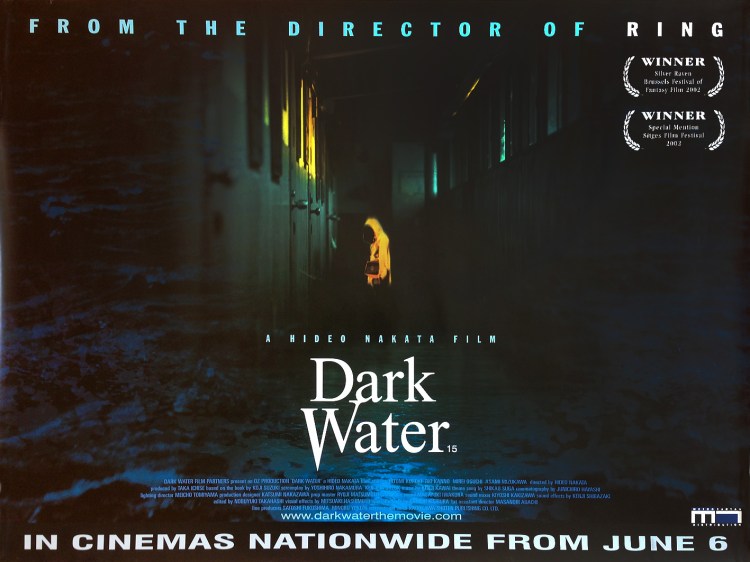
Dark Water (仄暗い水の底から, Hideo Nakata, 2002)

dark-water

Review of Hideo Nakata’s Dark Water first published by UK Anime Network.


For good or ill, the J-horror boom came to dominate Japanese cinema at the turn of the century and if anyone can be said to have been instrumental in ushering it in, director Hideo Nakata and novelist Koji Suzuki, whose landmark collaboration on The Ring has become symbolic of the entire genre, must be at the head of the list. Dark Water (仄暗い水の底から, Honogurai Mizu no Soko Kara) finds the pair working together again on another supernaturally tinged, creepy psychological thriller. Neatly marrying the classic J-horror tropes of freaky children and dripping wet ghosts, Dark Water also embraces aspects of the uniquely Japanese “hahamono” or mother movie which prizes maternal sacrifice and suffering above all else.

Yoshimi (Hitomi Kuroki), a nervous middle aged woman, is in the middle of a messy divorce with her exceedingly smug salaryman husband. Despite having been less than present during the marriage, Yoshimi’s husband now wants full custody of the couple’s five year old daughter, Ikuko (Rio Kanno). In order to aid her case, Yoshimi quickly finds an apartment and starts looking for a job. All seems to be going well except for the mysterious dripping stain on the ceiling which the building manager doesn’t seem very interested in fixing. Before long, strange events begin unfolding including unexplained puddles, a mysterious red children’s shoulder bag which keeps reappearing after being thrown out, and brief sightings of a little girl in a yellow raincoat….

Nakata opens the film with what is in effect a flashback sequence as Yoshimi waits for her own mother to pick her up from primary school. It quickly becomes apparent that Yoshimi’s relationship with her birth mother was an imperfect one which later ended in neglect and abandonment. Yoshimi continues to have frequent flashbacks to her childhood and harbours and intense fear of inflicting the same kind of damage her mother inflicted on her onto her own daughter. Ikuko is also left waiting at school when Yoshimi is kept late at a job interview – something which is eventually used against her in the court case. Though Yoshimi’s aunt reassures her that she’s doing a much better job than her mother did for her, Yoshimi is filled with doubts as to her suitability as a mother which are only further compounded by her intense love for her daughter and fear of losing her.

On top of her maternal worries and residual abandonment issues, Yoshimi also has a history of mental distress which her ex-husband uses to discredit her. It’s open to debate exactly how much of what appears to be happening is actually happening and how much a manifestation of a possible nervous breakdown, but aside from the supernatural shenanigans there are also real world dangers to consider including the missing posters for a girl who was around Ikuko’s age when she disappeared two years previously. The primary school headmaster is convinced that the girl was abducted by a third party but it also transpires that Mitsuko, like Yoshimi and as Yoshimi fears for Ikuko, was abandoned by her mother.

When it comes right down to it, Dark Water lays the blame for its supernaturally tinged evil firmly at the feet of divorce and family breakdown. The supposedly progressive primary school in which the main aim is to allow children freedom of expression is quick to tell the already overwrought Yoshimi that the “strange behaviour” they’ve been witnessing in Ikuko is essentially all her fault because of the divorce and disruption to Ikuko’s home life. Similarly, the central supernatural threat is born of maternal neglect, a symptom of the selfish individualism of the mother who has chosen to leave her child behind. Yoshimi has been jettisoned by her controlling ex-husband and her only thought is to keep her daughter with her, yet she is being made to pay for a social prejudice against atypical families such as those resulting from a “selfish” decision to dissolve a marriage.

Dark Water cleverly recasts Yoshimi as an idealised mother willing to sacrifice all to protect her child. As the situation intensifies, Yoshimi begins to feel as if she’s becoming a toxic presence in her daughter’s life. Rather than risk the same fate befalling her own daughter as has befallen her, Yoshimi opts to make herself the last link in the chain of abuse, freeing her daughter from her own baggage. In contrast with both Yoshimi and Mitsuko, Ikuko will always know that her mother loved her and will always be with her even if protecting her from afar.

Nakata conjures up a supremely creepy atmosphere filled with everyday horrors. The run down apartment complex in which Yoshimi finds her (presumably very reasonably priced) apartment is an unsettling world of its own with its strangely moist, dripping walls, eccentric residents, and rapidly decaying exterior. One of the most effective and visually interesting entries in the J-horror genre, Dark Water perfectly mixes creepy, supernatural horror with psychological drama culminating in a final sequence which doesn’t stint on the scares but proves emotionally devastating in the process.


Original trailer (English subtitles)

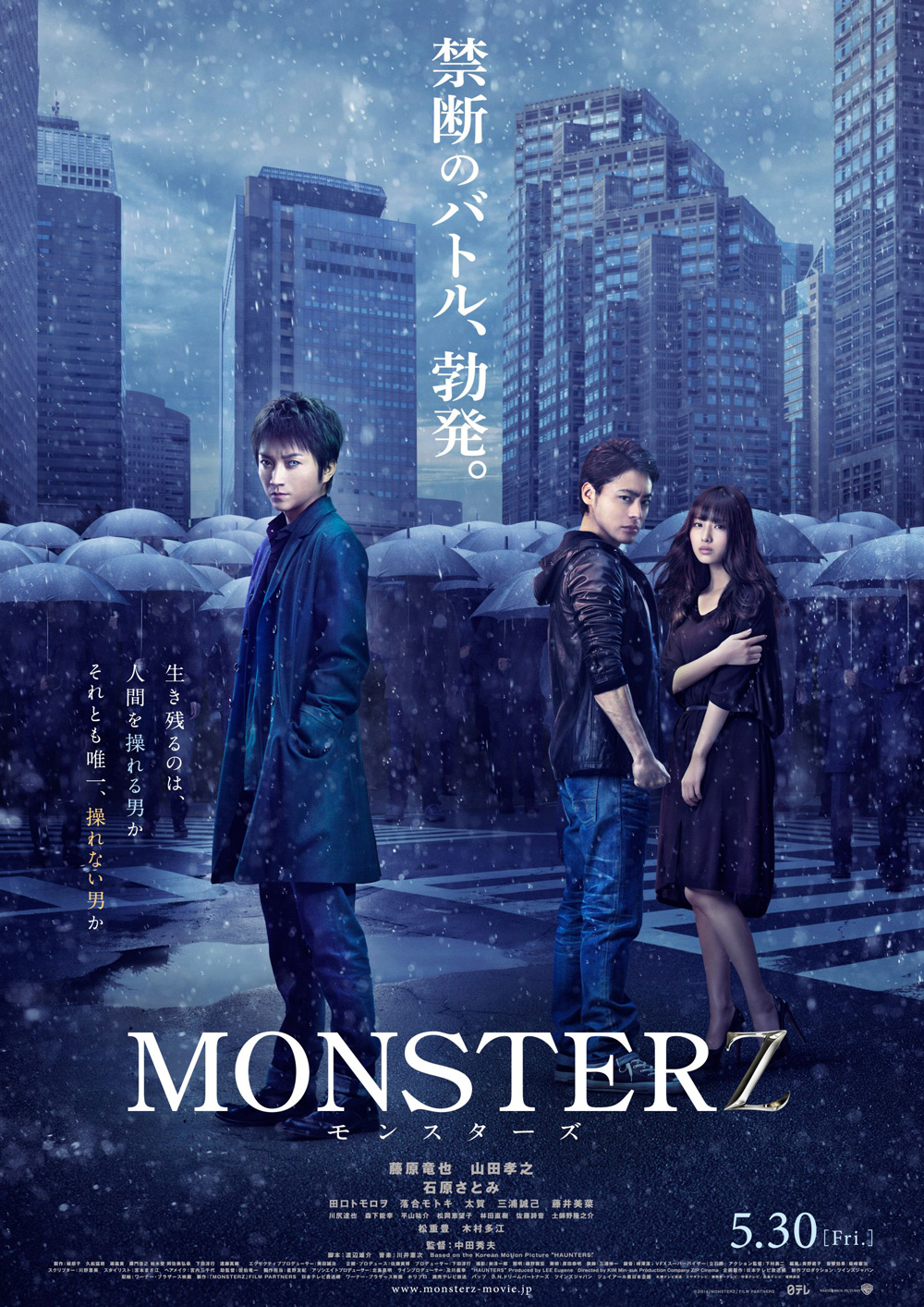
Monsterz (2014)

Monsterz_2014Hideo Nakata is best remembered as one of the driving forces of the J-Horror boom of the late ’90s thanks to his hugely influential Ring movies. However, despite a few notable hits including Dark Water, his career has seen something of a slump following a foray into American filmmaking with The Ring 2 – a sequel to the remake of his own Ring (though entirely different from his Japanese language Ring 2 completed in 1999). Monsterz sees him helming a remake of another foreign property – this time the Korean sci-fi thriller Haunters.

The film begins from the POV of Monster no. 1 (played by Tatsuya Fujiwara), who narrates much of the story and refers to himself solely as “monster”. Blindfolded, a small boy is dragged home by his mother only to be discovered by his abusive father who beats him and berates his mother whilst insisting “the monster” needs to die. At this point the blindfold comes off and the boy controls his fathers actions eventually persuading him to snap his own neck. Beginning to also control his mother, the boy stops short of giving her the same treatment and wanders off into the rain. Fast forward 20 years and the monster is now a criminal mastermind who uses his time freezing and mind control capabilities to make a living as a bank robber. However, one day he discovers someone who seems to be immune to his powers (Takayuki Yamada) and his whole world is shaken. The monster sets about removing this threat to his supremacy but it appears his opponent is also “a monster” – a man with super healing properties who cannot die! It takes a “monster” to fight a monster but which one will come out on top?

Yes, lots of predictably comic book style action adventures begin as the two guys with opposing super powers face off against each other. The most interesting aspect of the film is that it’s mainly told from the point of view of the otherwise unnamed “monster” though Nakata’s attempts to make him a sympathetic anti-hero never quite work out despite Fujiwara’s committed performance. The film’s ending is also unconventionally unresolved (though also very true to its American comic book roots) with a pleasing note of tolerance and inclusivity thrown in. However, that is in part facilitated by the lack of tension in the central dynamic – the two opposing forces are at a perpetual stalemate which only ends up feeling, well, stale – in a word. The monster’s freezing and mind control powers are impressive but the action sequences are much of a muchness and just get bigger rather than more interesting.

Having said that the action sequences aren’t unexciting, there are some impressive moments (bar the odd use of dodgy CGI and green screen). The main problem with the film is a slight mismatch in tones between Nakata’s portentous doom laden fatalism and the playful lightness of its comic book inspiration. The conventional hero, Shuichi, takes second lead here with his gang of sidekicks – otaku Akira and flaming queen Jun offering odd moments of comic relief. Though actually the role of Jun is another interesting inclusion as, despite offering a stereotypically “gay” character camping things up spectacularly, Jun is also presented fairly normally as a valued friend and comrade of the hero. His sexuality is merely a character trait, never a joke in itself which is a refreshing element particularly in a Japanese film. In the end, Monsterz aims to offer a message of tolerance and inclusiveness – that, oddly, there are no monsters and would be no villains if we could all just learn to accept each other’s differences and live together in harmony. However, the message is a little hamfisted and clumsily delivered and, some might feel, out of place in an action orientated film such as this.

Very typical of the comic book movie genre (though perhaps more Fantastic 4 than Dark Knight), Monsterz is middling mainstream fare which, while mildly diverting, fails to offer anything particularly memorable. A fine way to spend 90 minutes, Monsterz never outstays its welcome and offers generally high production values plus Nakata’s trademark visual flair but is unlikely to satisfy more genre savvy fans.