Hideo Nakata maybe best known for his films in the horror genre, but he made his feature directorial debut for Toei’s V-Cinema with a tale of forbidden love between a besotted high school boy and his Japanese teacher. Though with a title like Female Teacher: Forbidden Sex (女教師日記 禁じられた性, Jokyoshi Nikki: Kinjirareta Sei), one might expect something fiercely erotic or sensationalist, the film is really a sensitive melodrama in which a young man who feels suffocated by his doting single mother and a female teacher who feels constrained by patriarchal social codes fall into an impossible love.
Then again, it does have its troubling themes. Lovelorn Mitsuru (Kosuke Kawana) has been leaving mildly ominous messages on Noriko’s (Hitoe Ohtake) answerphone declaring his love and pleading with her to notice him. Noriko knows that the messages are from one of her students, but she doesn’t know which. In any case, the messages make her uncomfortable on several levels given her position as a teacher. Meanwhile, she’s in a relationship with another teacher at the school, Morimoto (Hiroyuki Okita), who is popular with female students. Noriko obviously thinks the relationship is serious as she asks Morimoto to meet her parents, but he appears reluctant in part because Noriko wants to continue her teaching career after marriage and Morimoto is presumably after more of a traditional housewife.
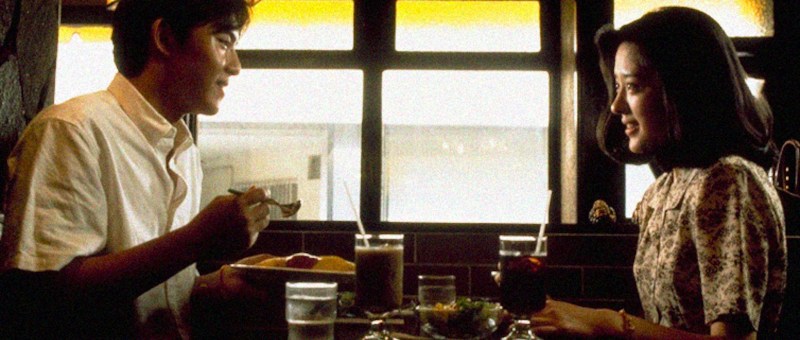
In fact, despite his status as an alpha male PE teacher, Morimoto is rather insecure and actively threatened by Mitsuru when he catches him having dinner with Noriko. This is right after a rumour has begun to spread around the school that he’s slept with a female student, Yumi (Asami Sawaki), who faked a story about being raped to get him to take her to a hotel where she tried to seduce him. It seems that he did not actually sleep with her, but took things father than he should have in an attempt to scare her off doing the same thing again. As such, his conduct is extremely questionable, but he is never questioned about it in the same way that Noriko is even though she only took Mitsuru for dinner even if Yumi’s friends might have a point in suggesting she’s getting back at Morimoto. She did, however, give him alcohol which is not an appropriate thing for a teacher to do, though nothing about this entire situation is really appropriate. The legal drinking age in Japan is 20 and Mitsuru could have been suspended from school just for underage drinking if his teachers found out.
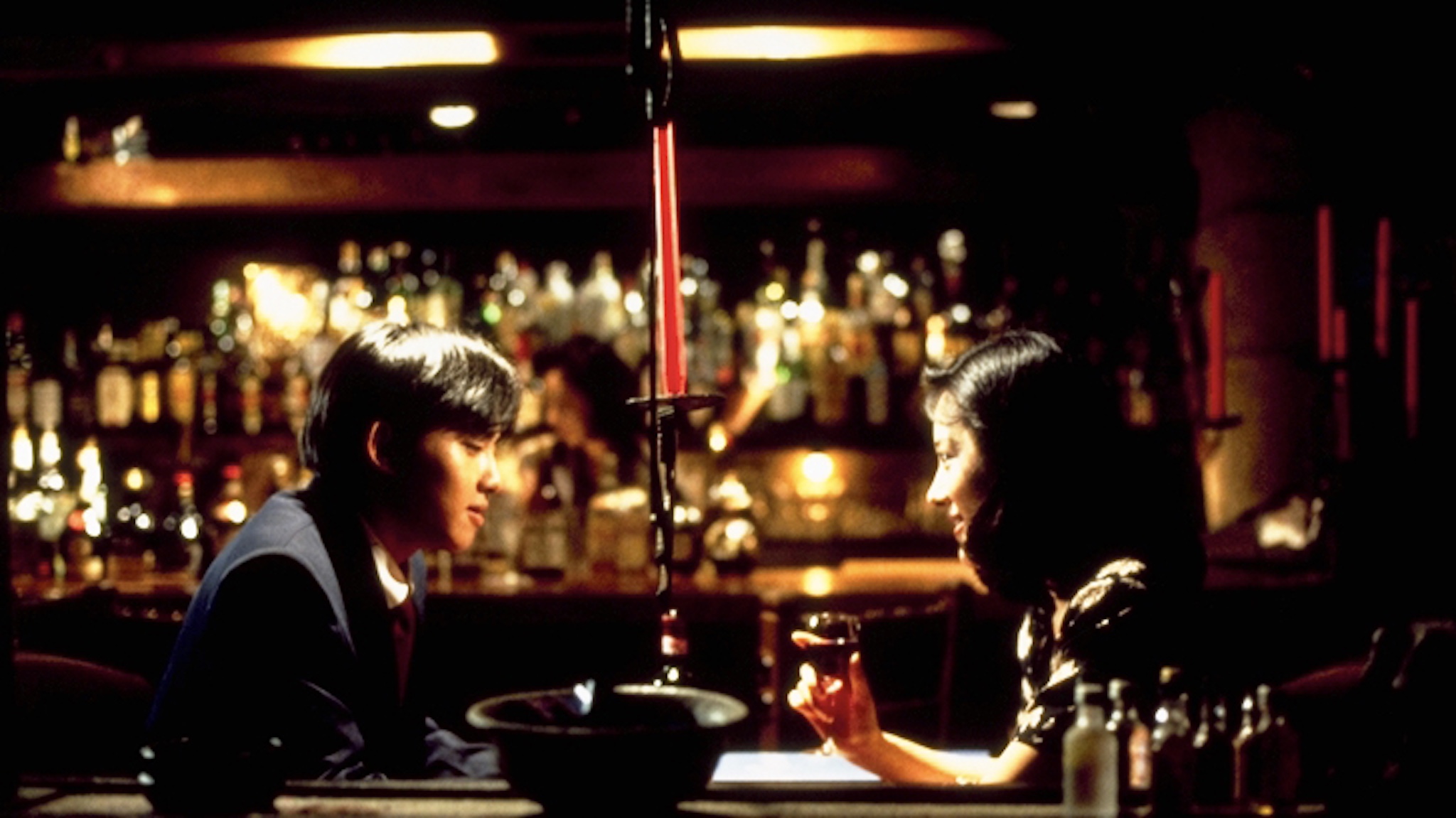
The real mystery might be why Noriko suddenly takes to Mitsuru, who was after all stalking her. But the reasoning seems to be that he’s the opposite of Morimoto. He treats her with kindness and respect and never tries to constrain her in the same way that Morimoto does even if the natural consequence of their affair is that she will lose her teaching career which had been her dream since high school. She seems to know on some level that their affair is wrong, but gets swept up in the moment and the false hope of escaping the pressures of her life such as the patriarchal expectations of marriage. While Morimoto drags his feet, her friends call inviting her to mixers and her parents try to set her up for arranged marriage meetings to hurry her along to a seemingly inevitable rite of passage.
Mitsuru, meanwhile, feels hemmed in. He’s on track for a place at the prestigious Tokyo University and under immense pressure while resentful of his mother whom he finds overbearing though mainly just appears caring and interested in his future if a little possessive while chasing after the fugitive Mitsuru and Noriko. What he might paradoxically be looking for is an escape from adulthood, as is Noriko in a way, though his reasons for loving her are otherwise superficial and only to do with her physical beauty. Nevertheless, he resents Morimoto for his boorish, ultra-masculine attempts to dominate Noriko and thinks he’s rescuing her while unaware that in other ways he’s ruining her life. He too railroads her into staying with him, insisting that he’ll look after her by getting a job which only bears out his naivety and makes him little better than Morimoto.
Perhaps with a little male wish fulfilment, the film treats the love story as if it were pure and innocent and it’s only society that’s in the way as reflected in Noriko’s wish for time to run faster but only for Mitsuru. Nevertheless, it too acknowledges that the love is impossible because it is inappropriate given Mitsuru’s youth and Noriko’s position as his teacher, so they can only really be together in death. As such, the film ends on a melancholy note and is filled more with romantic tragedy than the purely erotic content suggested by the misleading title.
Screened as part of the International Film Festival Rotterdam’s Focus on V-Cinema.
 Windows on Worlds