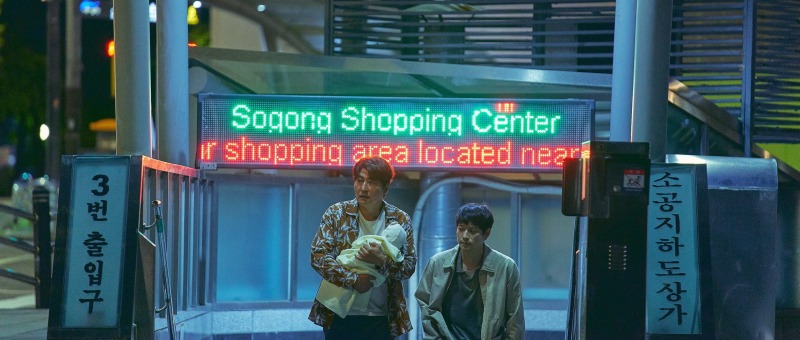
Broker (브로커, Hirokazu Koreeda, 2022)

Perhaps more than any other contemporary director in Japan, Hirokazu Koreeda has persistently interrogated the concept of the modern family asking what exactly the word has come to mean and how it is or should be defined. In Nobody Knows he showed us a case of parental neglect as abandoned siblings attempted to get by on their own in the absence of maternal care, while the separated brothers of I Wish struggle to define the nature of their relationships in the wake of their parents’ divorce. In Like Father, Like Son, Koreeda asks whether it’s blood relation that defines a family tie or whether it is forged more by mutual affection and shared memories, and in festival hit Shoplifters, he showed us a family who were not related by blood but had found in each other a home and a place to belong. 

Billed as a kind of companion piece, Broker (브로커) once again features a found family “brokered” by criminal activity but goes a step further, asking once again what the rights and responsibilities are when it comes parenthood and if the choice to abandon a child can ever be justified. Set in Korea where Christian morality has a greater influence, the film opens with a young woman leaving her infant child in front of a church yet abandoning him on the floor rather than placing him inside the “baby box” in the church’s wall. A policewoman staking out the church in the belief that someone is using the baby box to traffic children gently places the infant inside with what looks like maternal care but then we start to wonder, perhaps she only does so in order to see what happens when someone picks up him from the other side. 

Indeed, the policewoman will later concede that perhaps she herself was the one who most wanted the baby, Woo-Sung, to be sold so that she could catch the traffickers redhanded. We might feel a degree of revulsion towards the idea that a baby could be exchanged for money, but then perhaps we don’t stop to wonder who might buy and for what purpose. Sang-hyun (Song Kang-ho), a dry cleaner with gambling debts, and his partner Dong-soo (Gang Dong-won) who himself grew up in an orphanage, later recount selling a baby to two gay men who would otherwise be unable to adopt in the still conservative country suggesting in part that it’s a repressive society that forces people into this morally questionable underground trade in human children. It’s also societal conservatism that necessitates the existence of something like the baby box in that often very young women who bear children but cannot keep them either out of shame or simple economic impossibility have few other options than to abandon their child in the hope that someone will take it in. 

Detective Lee (Bae Doona) nevertheless brands these women as “irresponsible” and blames the baby box for tacitly encouraging their behaviour. An abandoned child himself, Dong-soo also struggles with his attitude towards the mother, So-young (Lee Ji-eun), who against all the odds does come back to reclaim her son after changing her mind. He and Sang-hyun justify their actions that they’re “saving” Woo-sung from being placed into the care system by finding him a loving home with parents who can give him a comfortable life. After taking to the road, the trio arrive at the orphanage where Dong-soo was raised which is less a home for him than a painful reminder of all he’ll never have and will never achieve as someone without a clear idea of a place to belong.

The man running the orphanage even concedes he’s not doing so well after the losing the subsidies for a few of the kids who have left, though few people adopt kids over six and the law makes it more difficult at eight which is a particular problem for football enthusiast Hae-jin (Im Seung-soo) who ends up climbing into Sang-hyun’s van and demanding they take him in. “Blood is thicker than water” the man sighs, explaining that kids are often sent back when it doesn’t work out or even end up suffering abuse despite the supposedly rigorous processes for vetting potential parents which causes some to simply buy a child on the black market instead. 

Despite the image of Dong-soo and Sang-hyun as heartless child traffickers they nevertheless take good care of Woo-sung and are up to a point careful that they should give him to someone responsible, mindful of those who might want a baby for untoward purposes or are intent on selling him on. A visual motif of tangling threads from the cotton on Sang-hyun’s sewing machine to the rope that pulls the busted back door of the van closed hints at the various ways these five dispossessed people are slowly bound together, becoming an accidental family forged through a process of mutual understanding in which Dong-soo is able to re-evaluate his feelings towards his mother through bonding with So-young and realising that in abandoning her child she may only have been trying to protect him and give him the better life that she never had. 

So-young tells Dong-soo that she sometimes has a dream in which the rain washes away her life until now, but on waking she realises it’s raining and nothing’s changed. He tells her perhaps all she needs is an umbrella that’s big enough for two, a metaphor for the protective quality of family he could perhaps have given her. Even she later concedes that had she met them earlier, none of this would have been necessary while Detective Lee’s more sympathetic partner (Baek Hyun-jin) likewise asks why they couldn’t have intervened earlier and done something to help this struggling young woman whose only problem was her aloneness before it came to this. What emerges is an unexpected compassion and the extension of an umbrella from an unexpected source in the acknowledgement that nothing’s ever quite as simple as it might seem. Koreeda leaves us with an outcome that is possibly as happy as it could be in an imperfect world, which might in itself be a little unrealistic but nevertheless in its own way hopeful in having reclaimed a notion of “family” brokered by selflessness and mutual compassion if not quite love for the orphans of an indifferent society.


Broker opens in UK & Irish cinemas on February 24th. For more information head to http://broker.film/

UK release trailer (English subtitles)

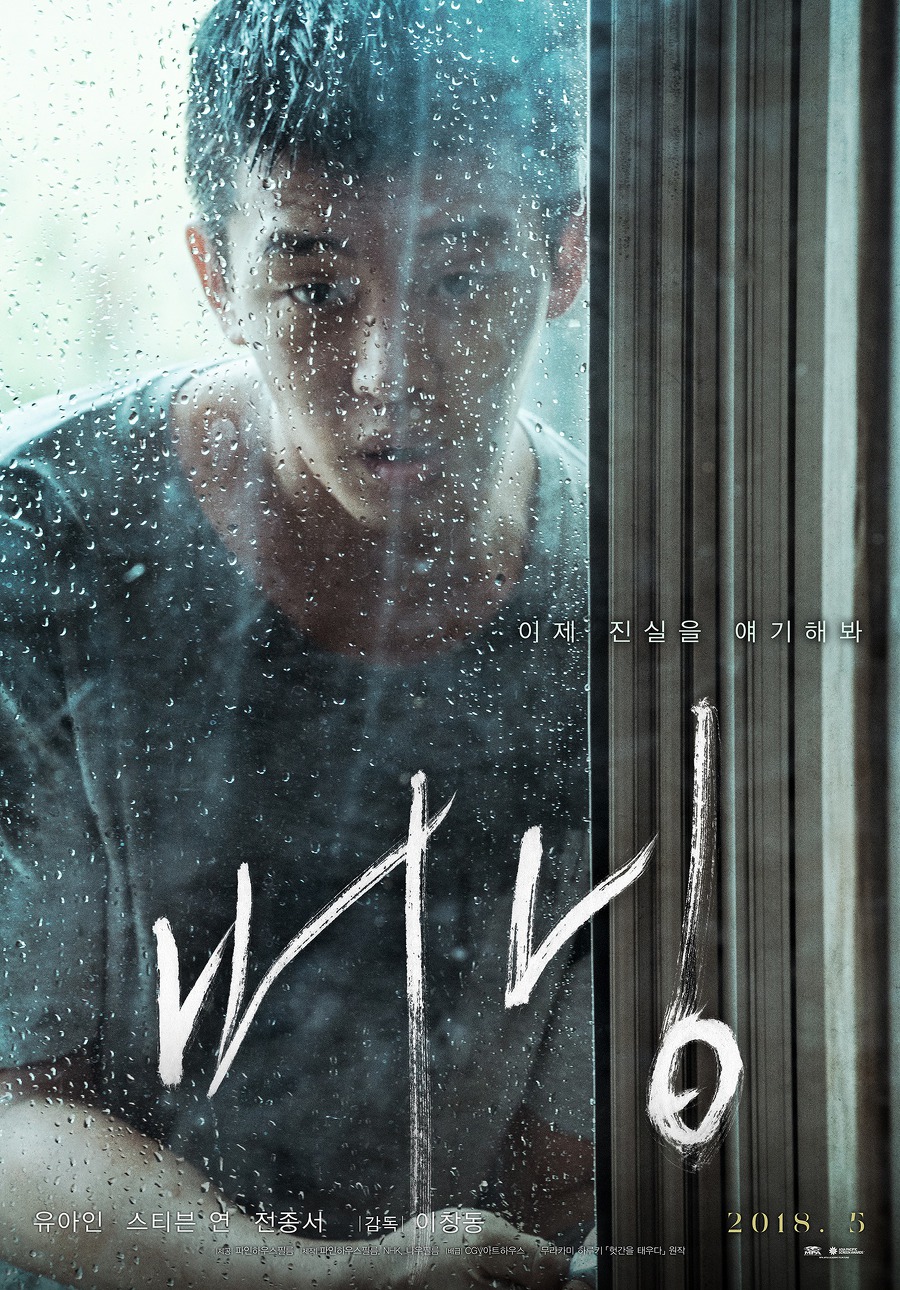
Burning (버닝, Lee Chang-dong, 2018)

Burning posterWith the world the way it is, it’s no wonder young people everywhere find themselves lost and confused, unable to find a sense of greater purpose when all they see is futility. Eight years on from Poetry which revolved around a grandmother’s growing sense of disquiet on realising no one cares about the victim of her grandson’s transgression, Lee Chang-dong returns with a story of frustrated youth as three conflicted souls are drawn into a spiral of resentments, jealousies and forlorn hopes.

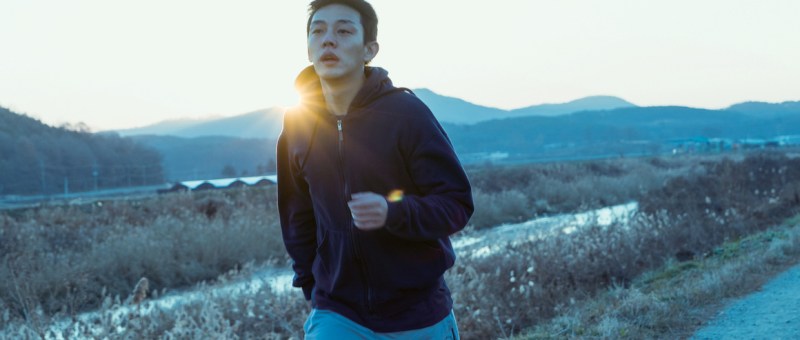
Our hero, Jong-su (Yoo Ah-in), is an aspiring writer currently working a series of casual blue collar jobs to get by in the city. One such job unexpectedly brings him into contact with Hae-mi (Jeon Jong-seo), a childhood friend from his home town he didn’t quite recognise. “Plastic surgery” she quips, though she seems happy enough to see him which comes as a surprise to Jong-su, awkward as he is. Hae-mi invites him for drinks over which she asks him a favour – to look after her cat while she goes off to Africa for a bit in response to the call of “great hunger”. Jong-su agrees, but has also agreed to go home to Paju to look after the family’s last remaining cow seeing as his dad, whom he hates, has got himself arrested after getting into a fight with a public official. Before she leaves for Africa, Jong-su begins a sexual relationship with Hae-mi which he seems to think is a sign of a deeper attachment, but when she rings and asks him to pick her up from the airport he is dismayed to find she’s in the company of another man – Ben (Steven Yeun), a handsome, sophisticated, and very wealthy Korean she was accidentally marooned with for three days in Nairobi waiting for a plane.

A man like Ben is an existential threat to one like Jong-su. He doesn’t even put up a fight when Ben, whose friend has been secretly following Jong-su’s rundown pickup all the way back to the city in his Porsche, offers to take Hae-mi the rest of the way. A farm boy from rural backwater Paju, he feels himself inferior, bumpkinish, and unrefined as Ben subtly undermines his self-confidence in order to boost his own sense of superiority. Jong-su, invited to Ben’s upscale condo for “pasta”, is instantly uncomfortable. Eventually unable to mask his rising resentment, he rudely lays into his host while smoking with Hae-mi out on the balcony by musing on how a man in early middle age can afford to live like this – cooking pasta and listening to music, driving a Porsche, owning a Gagnam apartment. In the first of many barbed comments which won’t help his cause, Jong-su asks Hae-mi what exactly she thinks Ben is doing with someone like her. She replies that he says he finds her “interesting”, but the sadness in her eyes implies that she’s already given this question more than a degree of thought.

Ben remains a cypher. Though his manner is charming, even superficially kind, there’s something unsettling about him, a kind of creeping hollowness coupled with unpredictability. Rattled, Jong-su starts going through his bathroom cupboards and finds a ladies’ makeup box and a draw full of trinkets which seem to have belonged to several different women. At the very least, Ben has not been honest with Hae-mi, but Jong-su doesn’t say anything. Jong-su, less naive, is also well aware of the way Ben has been trotting them out for entertainment value at dinner parties frequented by his wealthy friends who take in the country bumpkin freak show with cruel superiority. Ben, however, is already bored – yawning ostentatiously but making a conspiratorial show of locking eyes with Jong-su who he knows is on to him in more ways than one.

Unexpectedly rocking up at Jong-su’s rundown Paju farmhouse, Ben plants a kernel of intrigue in Jong-su’s fragile mind by telling him about his “hobby” of burning down random “greenhouses” just for the hell of it. Despite his literary pretensions, Jong-su takes Ben’s words at face value and misses the obvious subtext. Whatever Ben is or might be, men like him delight in destroying fragile things to mask their own fragility. Jong-su takes the bait and the “metaphorical” fire Ben has lit within him begins to catch.

Ben, who finds Hae-mi’s tears “fascinating” because he has never cried, says he burns things to feel his soul vibrate. Hae-mi, meanwhile, remains frustratingly distant to both men. She talks about spiritual hunger and longs to find some kind of meaning in a world of futility but also longs to disappear like an all too brief sunset. She “reminds” Jong-su of a childhood incident in which she fell into a well behind her family’s farm and eventually found salvation in the sudden appearance of his face, but Jong-su doesn’t even remember. Hae-mi is in a sense still living at the bottom of a well, staring at the sky and waiting for rescue only to find herself continually abandoned, friendless and alone.

Then again, perhaps nothing she’s told Jong-su is true. Hae-mi’s answer to want is imagination, a simple ability to “forget” a desired object does not already exist. She asks Jong-su to look after a cat who is so shy he begins to wonder if it’s real, reassured only by an empty food bowl and full litter tray. Jong-su is our “writer”, but the only thing he writes is a petition letter to get the father he can’t stand an appeal for crime he knows he committed. He is our guide to “truth” but his job is to engineer narrative – the story is his to direct and the ending his to choose. He writes because “the world is a mystery” to him, but remains trapped within his own petty preoccupations in which the full weight of his rage levels towards Ben whose existence seems so unfair.

Burdened by a strangely feudal deference, Jong-su is a fuse slowly catching light. Failed by family, he and Hae-mi are abandoned children looking for a way out. They thought they wanted out of Paju, but perhaps they were meant to be together in this place if the world were better and there were no more playboy kings like Ben, eager to do “anything for fun” in order to escape the emptiness of their existence in which inherited wealth has left them purposeless and hugely insecure despite the superficial confidence of class. Jong-su and Hae-mi chase brief moments of sunlight bounced back from the gleaming spires of an inaccessible city but find no relief or promise in its greying skies. Adapting a short story by Haruki Murakami, Lee Chang-dong paints a dizzying picture of a tinderbox world in which the rage of the oppressed little guy threatens to engulf us all while those best placed to help only want to fan the flames.


Screened as part of the 2018 BFI London Film Festival.

US trailer (English subtitles)