Tony Takitani (トニー滝谷, Jun Ichikawa, 2004)

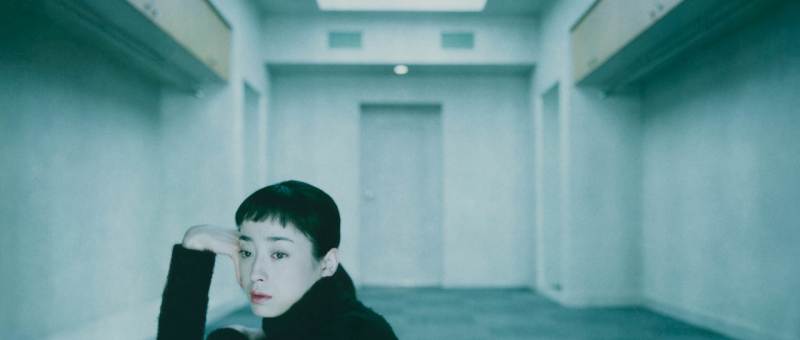
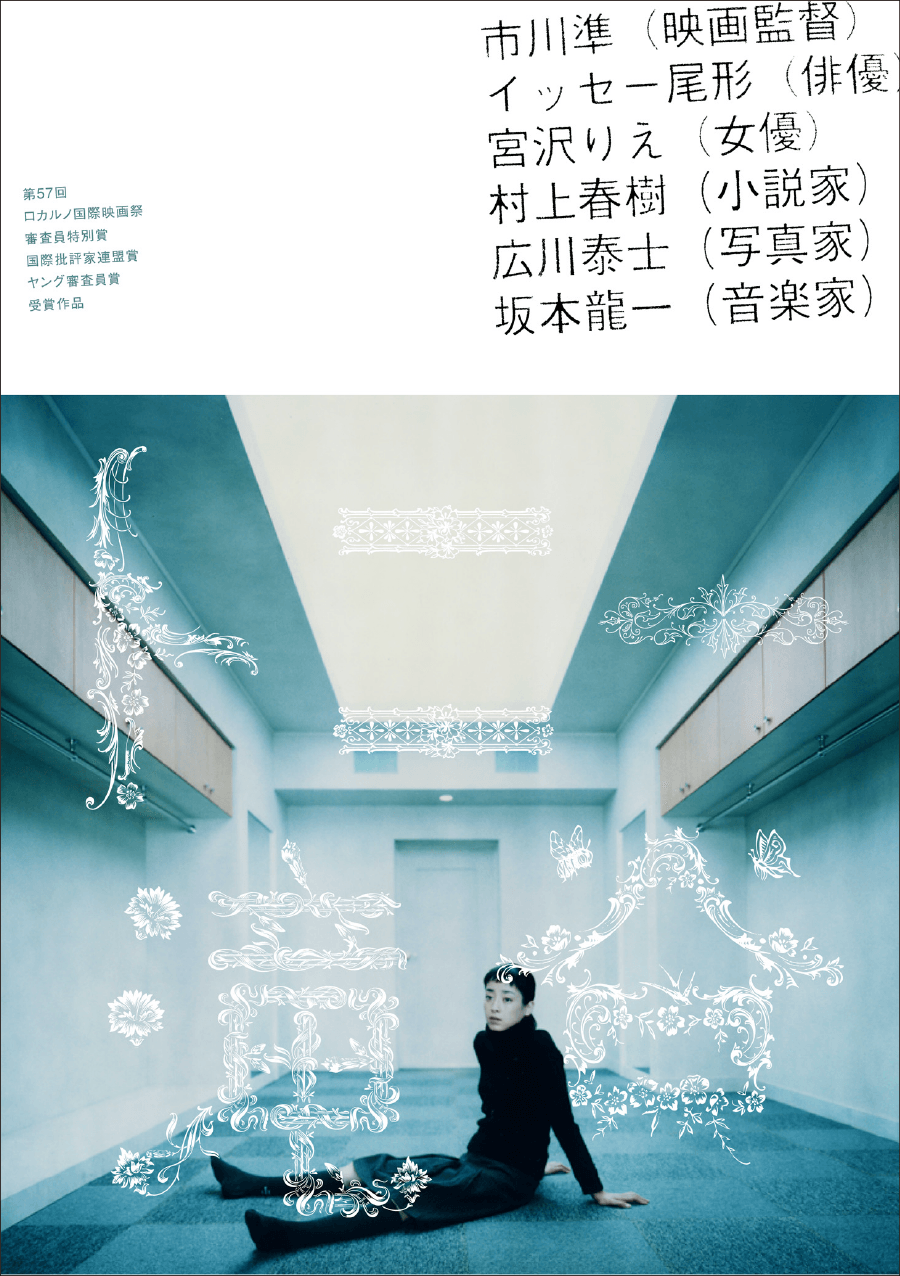
Do we wear the clothes, or is it more like the clothes wear us? There is something haunting about the sense of absence contained within an outfit that no longer has a body to wrap itself around, as if it were the flesh remaining long after the spirit has departed. This is, in a way, how the titular Tony Takitani (Issey Ogata) comes of see them, as shadows of his now departed wife never to be inhabited again.

Adapting a short story by Haruki Murakami, Jun Ichikawa maintains a gentle lateral motion of the camera as he proceeds through Tony’s early life as if we were gradually unrolling scroll painting. The motion seems to come to a stop on Tony’s unexpected marriage to a woman 15 years younger than himself who was already seeing another man when he proposed to her after only five dates. For a time, his life of loneliness comes to an end, if giving way to an anxiety that he will not be able to bear being alone again. The only cloud in his otherwise blissfully happy life is that Eiko (Rie Miyazawa) has an obsession with clothes that is not only a financial drain but potentially unhealthy. 

Tony himself says it’s as if she was born to wear them, as if Eiko existed solely to be the soul within the fabric. She says that the clothes, in turn, fill a hole inside her. It’s like an addiction. Tony asks her if she really “needs” so many, and she accepts that perhaps she doesn’t, but in other ways the clothes to her are something without which she cannot survive in the same way she could not survive without food or water. Tony’s mere asking her if she would consider reining her spending in is akin to breaking the spell, asking her to reject the very thing she is which may not be so different from dying anyway.

After her death, Tony hires another woman, Hisako (also played by Rie Miyazawa), to wear his late wife’s clothes clumsily explaining that seeing this simulacrum of Eiko will finally convince him that she is gone. Another being is now inhabiting the clothes, filling the void where Eiko once was. On seeing the room full of orphaned outfits, Hisako breaks down in tears. She tells Tony that she has never seen so many beautiful clothes and is overwhelmed by the sight. But perhaps she too is affected by this space that has become a manifestation of loneliness and the unfillable void that exists within us all. 

Tony’s void was perhaps forged by his lonely childhood. His mother died not long after his birth, and his father (also played by Issey Ogata) was a jazz trombonist ill suited to fatherhood who was always on the road. He gave him his unusual name anticipating an era of American dominance, but mostly it brought him nothing other than loneliness and isolation. Though he has made a successful career for himself as an illustrator, some say that his drawings lack warmth hinting at his inability, or perhaps lack of desire, to connect with other people before meeting Eiko.

Ichikawa too employs this distancing effect in having the tale narrated by an anonymous third party with the actors breaking in to speak a few lines of their own while trapped within a kind of dreamscape in which they are isolated and alone. The muted colour palette similarly hints at the colourlessness of Tony’s existence without the possibility of human connection. The ambiguous conclusion is either a tragedy or sign or new possibilities as Tony appears to want to reach out once again, but finds his call unanswered. Perhaps he will try another time, or otherwise remain mired in loneliness longing for connection but continually denied. In any case, Ichikawa’s film has a kind of elliptical quality, a poetic cycle of grief and longing that is at once filled with melancholy and enduring sadness but also a kind of transcendence in the rare moments in which two people fully connect no matter how brief or fleeting they may turn out to be.
Drive My Car (ドライブ・マイ・カー, Ryusuke Hamaguchi, 2021)

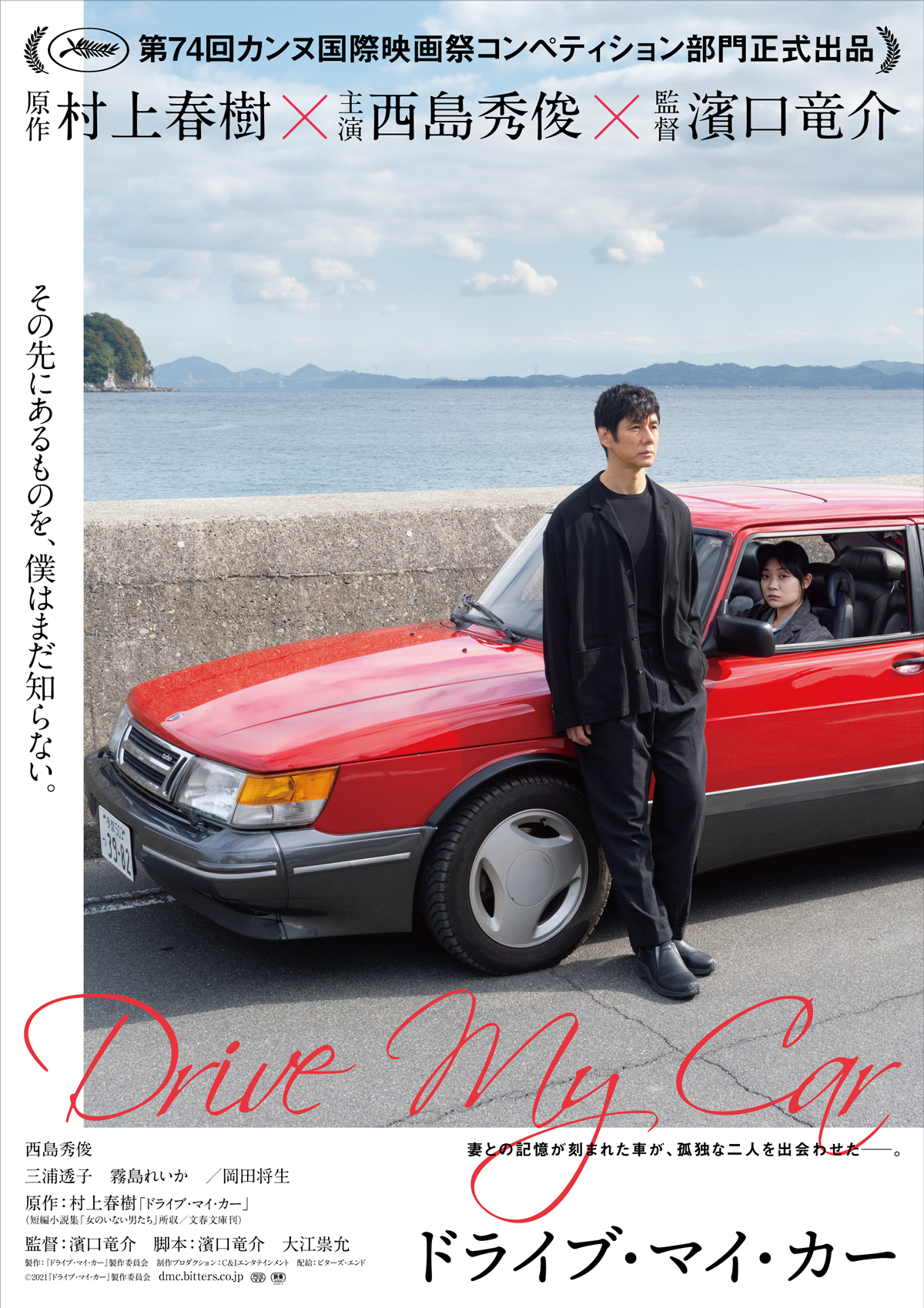
“What can we do? we must live our lives” comes a constant refrain echoing the closing words of Chekhov’s Uncle Vanya offered by the self-sacrificing Sonya resolving to find joy in suffering if only in the promise of a better world to come. Freely adapted from a short story by Haruki Murakami, Ryusuke Hamaguchi’s profoundly moving Drive My Car (ドライブ・マイ・カー) is study in grief, loss, and how you learn to live after the world has ended but also of how we pull each through, finding new ways to communicate when words alone can’t help us. 

Words are, however, where we begin with a woman half in shadow an accidental Scheherazade spinning a bizarre tale of a high school girl’s first love. Oto (Reika Kirishima) claims the story is not about her, but as we’ll later discover in some ways it is if perhaps not literally. A long-married couple, this is part of their marital routine, screenwriter Oto telling stories to her theatre director husband Yusuke (Hidetoshi Nishijima) she asks him to remember and repeat back to her in the morning. Only one day, having accidentally stumbled in on his wife and her lover only to leave quietly saying nothing, Yusuke claims not to remember. She tells him she wants to talk, but he is afraid of what she’ll say and delays coming home, finding her collapsed in the hallway on his return having passed away from a cerebral haemorrhage. The story remains incomplete, a perpetual cliffhanger never to be resolved. 

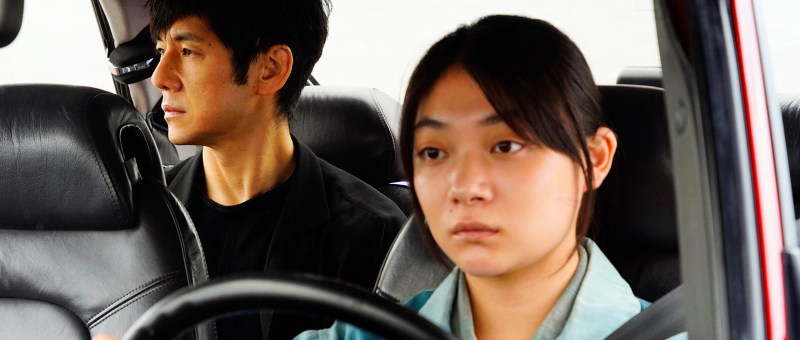
Two years later Yusuke is a haunted man still listening to the cassette tape Oto left for him of her reading all of the other lines of Chekhov’s Uncle Vanya save for those of the title character which he was to play himself. This time he’s been selected as an artist in residence at at a theatre in Hiroshima where he’ll once again stage Vanya in his signature multilingual performance style. He’s specifically asked for accommodation an hour’s drive away with the intention of maintaining his usual routine of listening to the tape on his way to rehearsal but, following previous incidents, the theatre has a policy of hiring their own drivers in this case a young woman, Misaki (Toko Miura), who eventually wins him over through her capability and care while, ironically, mimicking the very qualities he demands of his actors in her wounded stoicism. 

The car in a sense represents an inviolable space of intimacy, a space that Yusuke had been reluctant to allow anyone to enter, even Oto remarking on his discomfort with her in the driver’s seat as she took him to a doctor’s appointment where he learned he was losing the sight in his left eye, clarifying with the doctor that for the time being at least he’d be OK to drive himself. Misaki assumes he doesn’t want her to drive his car because she’s a young woman, but thereafter is careful to maintain distance respecting his space for her sake as much as his own mindful of her role as a “driver” until he begins to invite her in if originally more out of politeness or consideration than a desire for company. 

Misaki has her own story, a story she too is originally reluctant to share but in its way echoes his as someone trapped in grief and guilt ironically unable to move forward but driven by the quality of Oto’s voice and the ritualistic call and response implied by its lacunas. Too afraid of its implications to take the role himself, Yusuke casts Oto’s lover, Takatsuki (Masaki Okada) a young TV actor with impulse control issues whose career has apparently been ruined by scandal, as Vanya a man approaching 50 whose illusions are painfully shattered, forcing him to realise that he’s wasted his life on a futile ideal. The three of them, each eventually entering the confessional space of the car, share more than they might assume but it’s Takatsuki who holds the key revealing another piece of the puzzle with unexpected profundity that in its own way lays bare a truth Yusuke had been unwilling to see about his relationship with his wife, the shared grief that both bound and divided them, and the poetic import of her death. 

Rather than Vanya, the film’s prologue saw Yusuke perform in a multilingual production of Beckett’s Waiting for Godot, the author’s well-known phrase “I must go on, I can’t go on, I’ll go on” perhaps equally apt even as Yusuke moves slowly away from the role of Vanya before finally assuming that of Sonya in echoing her words while comforting the filial figure of Misaki even as she explains to him that as in Vanya the fault was not in his convictions but in himself that he couldn’t accept the contradictions of his wife and in that sense had not understood her or himself well enough to know he should have braved the hurt of confrontation. Yet as Takatsuki had said, you can’t ever really know another person, there’s always a part of them forever out of reach all you can do is try to make peace with your own darkness. 

For Yusuke communication occurs indirectly, through allegory or half-truth, and through the unspoken or unintelligible. His multilingual approach in which lines are read coldly at half-speed is intended to draw out the feeling that lies beneath them, the final most profound moment delivered in silence as a former dancer breaking free of her bodily inertia delivers Sonia’s closing monologue with all of its melancholy serenity in Korean sign language her arms draped angelically over Vanya’s shoulders in a gesture of the utmost comfort. Touching in its ambiguities, Hamaguchi’s quietly devastating emotional drama for all of its eerie uncanniness finally places its faith in simple human empathy as its haunted souls learn to live with loss finding in each other the strength to go on living.


Drive My Car screened as part of this year’s BFI London Film Festival.

International trailer (English subtitles)

Burning (버닝, Lee Chang-dong, 2018)

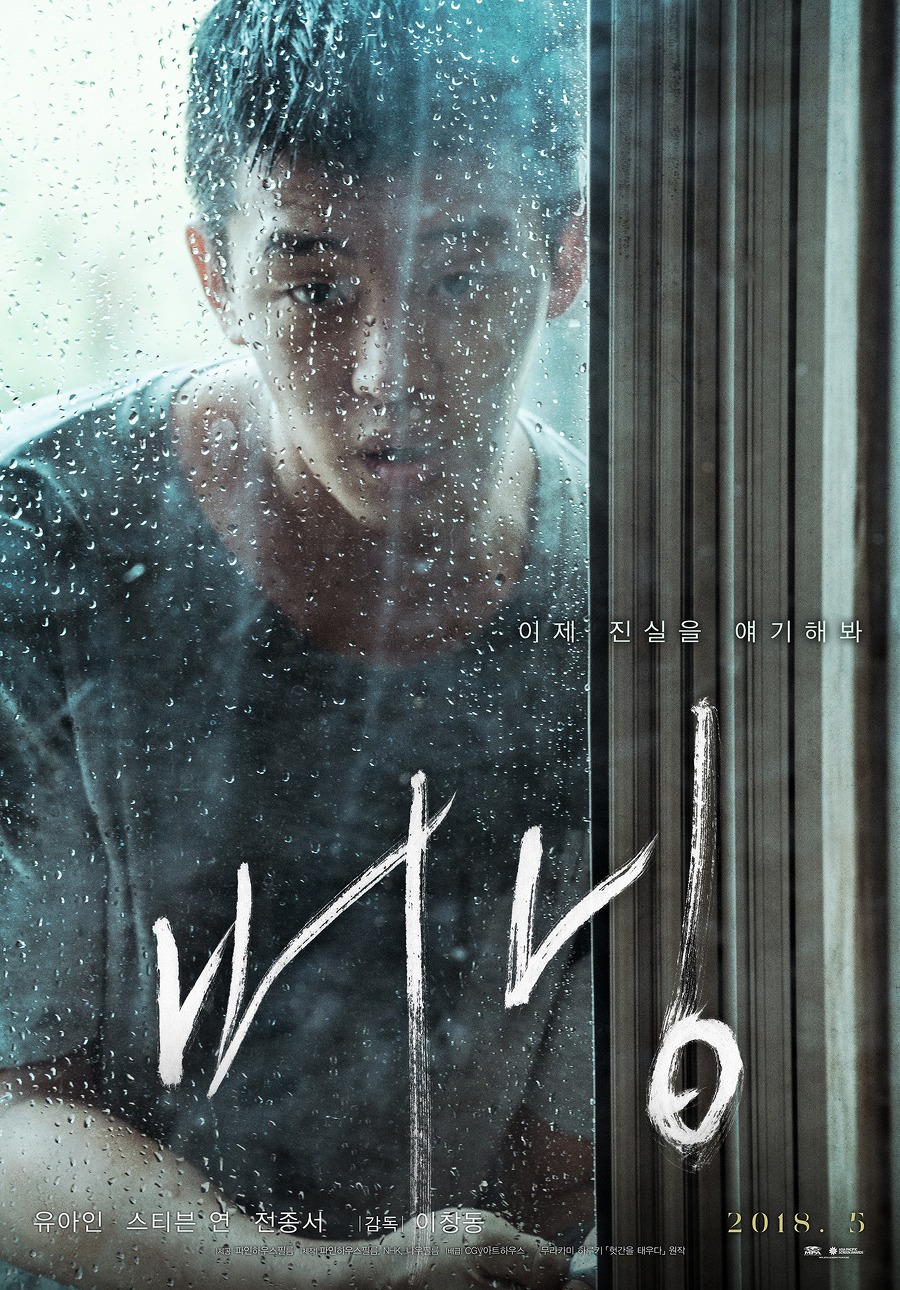
Burning posterWith the world the way it is, it’s no wonder young people everywhere find themselves lost and confused, unable to find a sense of greater purpose when all they see is futility. Eight years on from Poetry which revolved around a grandmother’s growing sense of disquiet on realising no one cares about the victim of her grandson’s transgression, Lee Chang-dong returns with a story of frustrated youth as three conflicted souls are drawn into a spiral of resentments, jealousies and forlorn hopes.

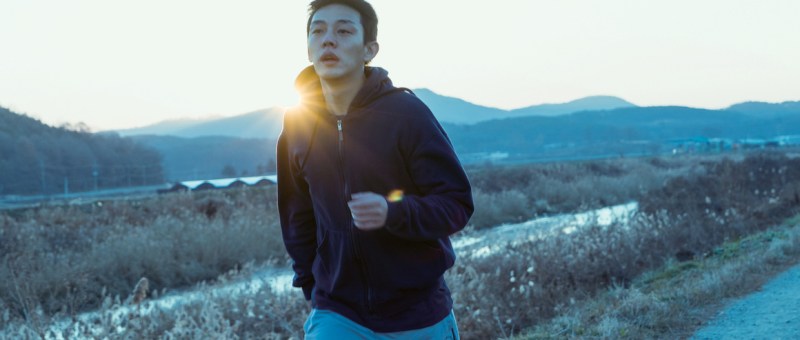
Our hero, Jong-su (Yoo Ah-in), is an aspiring writer currently working a series of casual blue collar jobs to get by in the city. One such job unexpectedly brings him into contact with Hae-mi (Jeon Jong-seo), a childhood friend from his home town he didn’t quite recognise. “Plastic surgery” she quips, though she seems happy enough to see him which comes as a surprise to Jong-su, awkward as he is. Hae-mi invites him for drinks over which she asks him a favour – to look after her cat while she goes off to Africa for a bit in response to the call of “great hunger”. Jong-su agrees, but has also agreed to go home to Paju to look after the family’s last remaining cow seeing as his dad, whom he hates, has got himself arrested after getting into a fight with a public official. Before she leaves for Africa, Jong-su begins a sexual relationship with Hae-mi which he seems to think is a sign of a deeper attachment, but when she rings and asks him to pick her up from the airport he is dismayed to find she’s in the company of another man – Ben (Steven Yeun), a handsome, sophisticated, and very wealthy Korean she was accidentally marooned with for three days in Nairobi waiting for a plane.

A man like Ben is an existential threat to one like Jong-su. He doesn’t even put up a fight when Ben, whose friend has been secretly following Jong-su’s rundown pickup all the way back to the city in his Porsche, offers to take Hae-mi the rest of the way. A farm boy from rural backwater Paju, he feels himself inferior, bumpkinish, and unrefined as Ben subtly undermines his self-confidence in order to boost his own sense of superiority. Jong-su, invited to Ben’s upscale condo for “pasta”, is instantly uncomfortable. Eventually unable to mask his rising resentment, he rudely lays into his host while smoking with Hae-mi out on the balcony by musing on how a man in early middle age can afford to live like this – cooking pasta and listening to music, driving a Porsche, owning a Gagnam apartment. In the first of many barbed comments which won’t help his cause, Jong-su asks Hae-mi what exactly she thinks Ben is doing with someone like her. She replies that he says he finds her “interesting”, but the sadness in her eyes implies that she’s already given this question more than a degree of thought.

Ben remains a cypher. Though his manner is charming, even superficially kind, there’s something unsettling about him, a kind of creeping hollowness coupled with unpredictability. Rattled, Jong-su starts going through his bathroom cupboards and finds a ladies’ makeup box and a draw full of trinkets which seem to have belonged to several different women. At the very least, Ben has not been honest with Hae-mi, but Jong-su doesn’t say anything. Jong-su, less naive, is also well aware of the way Ben has been trotting them out for entertainment value at dinner parties frequented by his wealthy friends who take in the country bumpkin freak show with cruel superiority. Ben, however, is already bored – yawning ostentatiously but making a conspiratorial show of locking eyes with Jong-su who he knows is on to him in more ways than one.

Unexpectedly rocking up at Jong-su’s rundown Paju farmhouse, Ben plants a kernel of intrigue in Jong-su’s fragile mind by telling him about his “hobby” of burning down random “greenhouses” just for the hell of it. Despite his literary pretensions, Jong-su takes Ben’s words at face value and misses the obvious subtext. Whatever Ben is or might be, men like him delight in destroying fragile things to mask their own fragility. Jong-su takes the bait and the “metaphorical” fire Ben has lit within him begins to catch.

Ben, who finds Hae-mi’s tears “fascinating” because he has never cried, says he burns things to feel his soul vibrate. Hae-mi, meanwhile, remains frustratingly distant to both men. She talks about spiritual hunger and longs to find some kind of meaning in a world of futility but also longs to disappear like an all too brief sunset. She “reminds” Jong-su of a childhood incident in which she fell into a well behind her family’s farm and eventually found salvation in the sudden appearance of his face, but Jong-su doesn’t even remember. Hae-mi is in a sense still living at the bottom of a well, staring at the sky and waiting for rescue only to find herself continually abandoned, friendless and alone.

Then again, perhaps nothing she’s told Jong-su is true. Hae-mi’s answer to want is imagination, a simple ability to “forget” a desired object does not already exist. She asks Jong-su to look after a cat who is so shy he begins to wonder if it’s real, reassured only by an empty food bowl and full litter tray. Jong-su is our “writer”, but the only thing he writes is a petition letter to get the father he can’t stand an appeal for crime he knows he committed. He is our guide to “truth” but his job is to engineer narrative – the story is his to direct and the ending his to choose. He writes because “the world is a mystery” to him, but remains trapped within his own petty preoccupations in which the full weight of his rage levels towards Ben whose existence seems so unfair.

Burdened by a strangely feudal deference, Jong-su is a fuse slowly catching light. Failed by family, he and Hae-mi are abandoned children looking for a way out. They thought they wanted out of Paju, but perhaps they were meant to be together in this place if the world were better and there were no more playboy kings like Ben, eager to do “anything for fun” in order to escape the emptiness of their existence in which inherited wealth has left them purposeless and hugely insecure despite the superficial confidence of class. Jong-su and Hae-mi chase brief moments of sunlight bounced back from the gleaming spires of an inaccessible city but find no relief or promise in its greying skies. Adapting a short story by Haruki Murakami, Lee Chang-dong paints a dizzying picture of a tinderbox world in which the rage of the oppressed little guy threatens to engulf us all while those best placed to help only want to fan the flames.


Screened as part of the 2018 BFI London Film Festival.

US trailer (English subtitles)