The Extremists’ Opera (過激派オペラ, Junko Emoto, 2016)

Junko Emoto ironically explores Tokyo’s fringe theatre scene in adapting her semi-biographical novel. Shot with a roving, handheld camera, The Extremists’ Opera (過激派オペラ, Kagekiha Opera) situates itself within an all female, avant-garde experimental theatre company but quickly makes plain that even those with high-minded artistic intentions are not free of the usual human flaws as the borderline abusive, womanising female director finds herself sabotaging everything she’s built through a mix of hubris and wandering desire. 

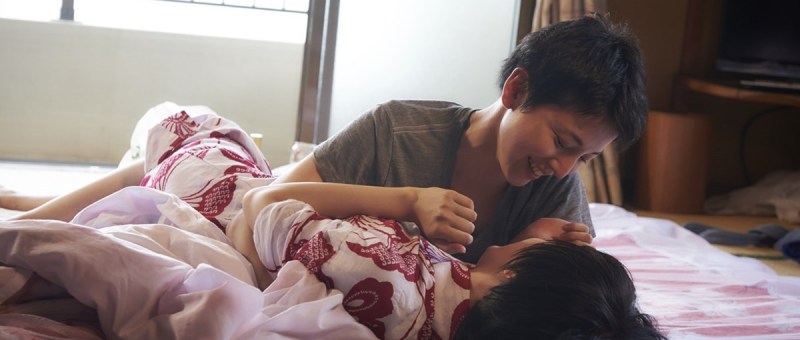
Blanket Cult are a popular company on the fringe theatre scene with a small following devoted to their art. Former banker Ayako bursts into their office determined on an audition and subsequent career change precisely because she can’t get enough of director/playwright Nao’s experimental plays which, she explains, she believes can stop wars. Nevertheless, it’s not Ayako the team are struck by, but the intense young woman who came in behind her, Haru, who more or less demands to be taken on. Nao is captivated, hiring both women on the spot and vowing to write a new piece with Haru in the lead. Of course, she does this partly for not altogether altruistic reasons. Immediately after the first script meeting she asks Haru to stay behind and then propositions her, directly declaring her love with the justification that she’d rather be upfront rather than waste time during the rehearsal process. Haru tells her that she’s not into women, but Nao doesn’t take no for an answer seemingly oblivious to the fact that what she’s doing is harassment and really she’s no better than any other sleazy male director handing out parts to women she wants to sleep with. 

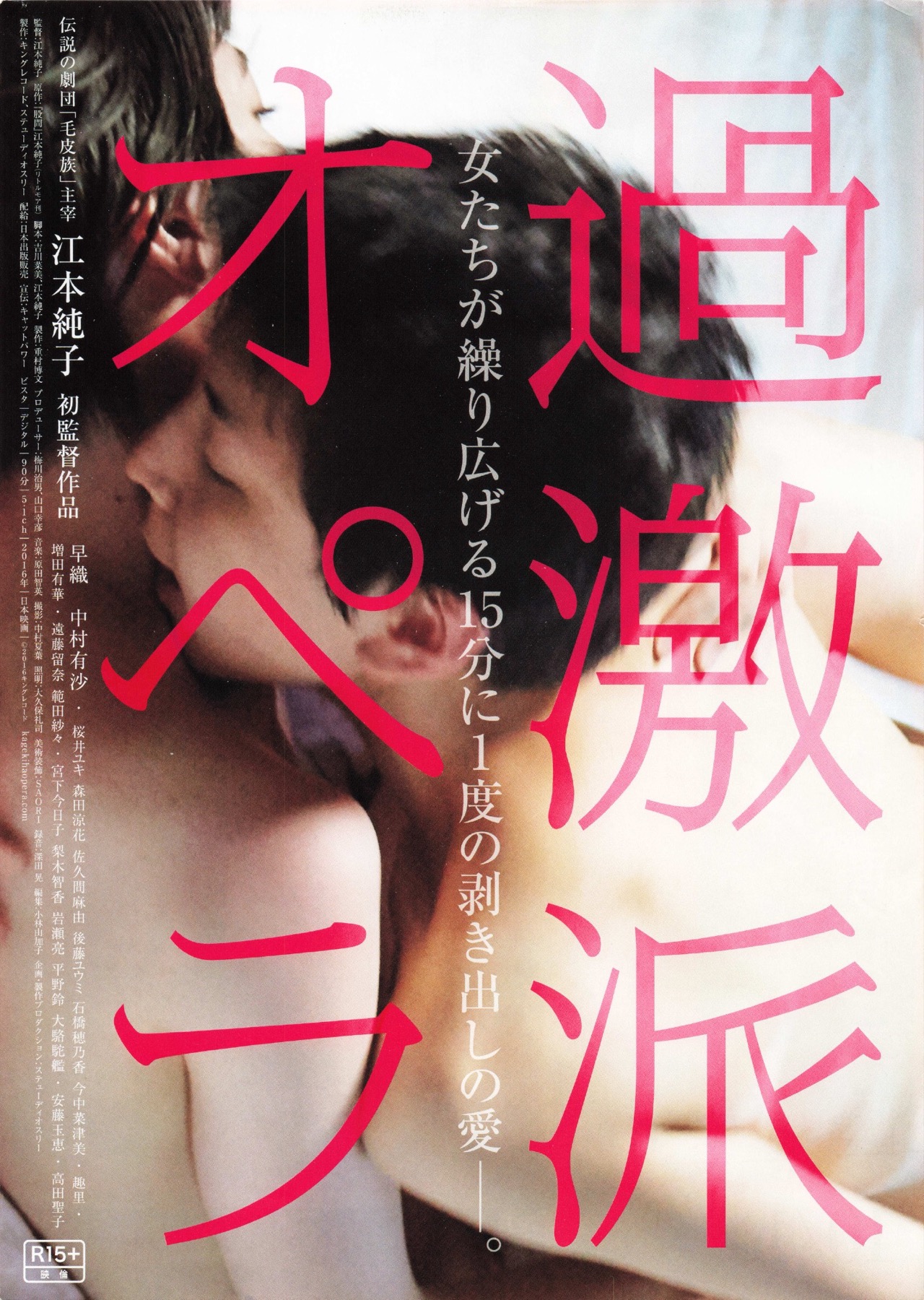
Nevertheless, her persistence even with its undignified pleading eventually pays off. Haru relents, either because she’s fed up of fending off Nao’s advances or discovering that she is on some level receptive, finding that she does in fact enjoy sex with another woman. She agrees to start dating Nao who declares Haru her muse and the pair move in together but their relationship is threatened by their working environment with its petty jealousies and temptations. Emoto opens the film with a graphic sex scene of two naked women 69-ing, rolling around in the empty environment of the garage the troupe uses to rehearse. The two women are Nao and her previous squeeze, a former leading lady she throws over because of her attraction to Haru whose own desire is perhaps signposted after she walks in on them going for a second round and makes a passive aggressive scene that leads the other woman to warn her that Nao is a heartless womaniser with a habit of bedding her leading ladies, sometimes in the wings. 

Yet it’s not only Nao’s misplaced desire that endangers the troupe but her arrogance and abusive directing style. After their play proves a success, she unwisely gives in to ambition and sells out by allowing a mainstream professional actress, Yurie, to join the troupe, a move which disrupts their dynamic while also inflaming Haru’s jealousy as she begins to wonder if she’s already being replaced. Nao snaps at her team and stops giving them proper direction in favour thinly veiled insults. She repeatedly instructs an actress to lose weight while increasingly allowing Yurie to dominate the rehearsals, accepting all of her ideas even while the other members sceptical. She even goes so far as to abandon her usual thriftiness, purchasing elaborate props such as a large vertical tank which leads her into another possibly inappropriate relationship with an older woman who had been pursuing her. Needless to say, the whole thing blows up in her face, ruining not just her relationship with Haru but that with her theatre company who are now all thoroughly fed up with her mistreatment and have entirely lost respect for her as a person and an artist. 

“If you want to pick a fight with society live in it first,” her benefactor irritatedly tells Nao after she’s thoughtlessly caused offence, reminding her that she lives in a kind of bubble that is the fringe theatre scene. Her only real interaction with someone outside of it is with the estate agent who finds her and Haru a flat and is extremely confused as to why they only need one room if they’ll be living together, concerned that female roommates are a liability because sooner or later one gets a boyfriend and leaves the other in the lurch unable to make the rent alone. Unable to learn her lesson, Nao has furiously energetic sex with an apparently wealthy starstruck fan and then immediately asks for money, perhaps getting a taste of her own medicine when she assures her there’s plenty more where that came from as long as she sees her again and also gives her a part in a play. Playfully ironic with its whimsical score and slightly detached gaze, Emoto’s refreshingly explicit drama is both a mild satire of the avant-garde fringe theatre scene and a takedown of its self-involved director whose inability to separate the creative from the carnal proves her downfall both artistic and emotional. 


Trailer (English subtitles)

Blindly in Love (箱入り息子の恋, Masahide Ichii, 2013)

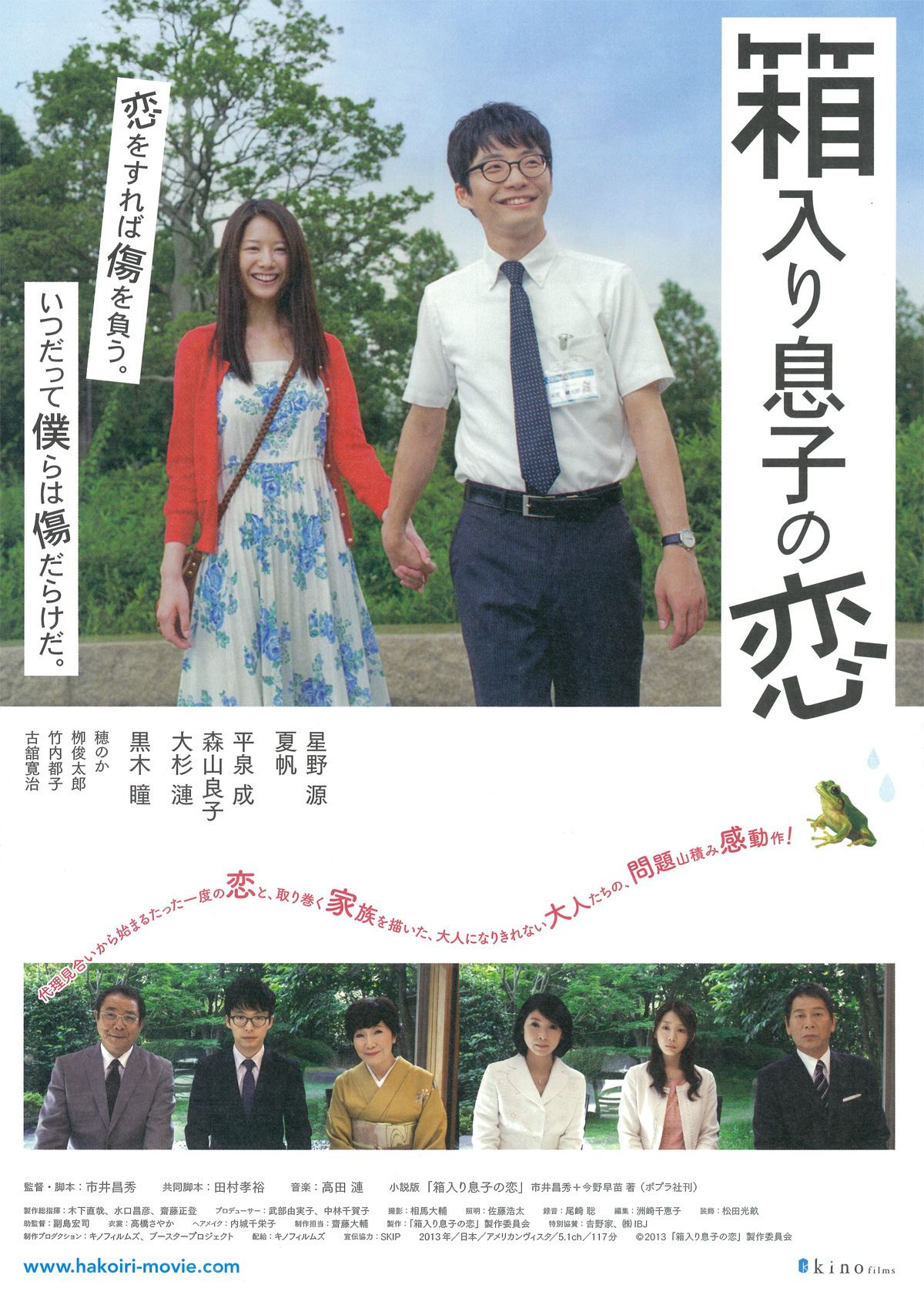
Blindly in love posterPost-war Japanese cinema was intent on investigating whether father really did know best while his children strived to find their place in a changing society. Contemporary Japanese cinema may feel as if the question has been more than well enough answered already but then again Japanese society remains conformist in the extreme and arranged marriage still an option for those who find it difficult to find a match on their own (remaining single, it seems, is still an option requiring intense justification). The protagonists of Blindly in Love (箱入り息子の恋, Hakoiri Musuko no Koi) find themselves in just this position as their well meaning (to a point) parents attempt to railroad them into the futures they feel are most appropriate while perhaps failing to deal with the various ways their own behaviour has adversely affected their children’s ability to function independently.

Kentaro (Gen Hoshino) is 35. He has a steady job as a civil servant and still lives at home with his parents which is hardly an unusual situation in contemporary Japan save for the fact he is not married and seems to have no interest in dating. Rather than eat with his colleagues, Kentaro comes home for lunch every day and returns straight after work, retreating into his bedroom to spend quality time with his pet frog and play video games. His parents, worrying that he may be lonely when they are gone, decide to find him a wife by effectively going speed dating on his behalf with a host of other parents in a similar position.

There they meet the Imais who are keen to marry off their 23-year-old daughter Naoko (Kaho). The elephant in the room is that everyone at this meeting is there because they believe there is something “wrong” with their children that makes them difficult prospects for marriage. Consequently, the Imais have decided not to disclose the fact that Naoko is blind until later in the negotiations.

The Imais’ ambivalent feelings towards their daughter’s disability speak to a persistent social prejudice which views those who have different needs as somehow less. Mr. Imai is a high flying company CEO who puts on a show of only wanting the best for his little girl, but he’s also a snob and a bully. He keeps trying to set Naoko up with “elites” like him, but those elites will also share his own prejudices in feeling that his daughter is “imperfect” and therefore not a prime match in the arranged marriage stakes. Kentaro, who unbeknownst to everyone except Mrs. Imai has already enjoyed a love at first sight meet cute with Naoko, is the only one brave enough to call Mr. Imai out on his hypocrisy when he accuses him of neglecting his daughter’s feelings in favour of asserting his own paternal authority. As you can imagine, Mr. Imai is not happy to have his faults read back to him.

Making the accusation at all is extremely hard for Kentaro who has just spent the last ten minutes getting a dressing down from Mr. Imai who has read out a list of his perceived imperfections from his unbreakable introversion to his lack of career success. Mr. Imai wants to know if a man like Kentaro who has basically been the office coffee boy for the last 13 years can keep his daughter in the manner to which she’s been accustomed. Kentaro has to admit that he probably can’t and that Imai has a point, but unlike Imai he is thinking of Naoko’s happiness. He sees her disability but only as a part of her personality and respects her right to a fully independent life which is something her father seems to want to deny her, not out of a paternalistic (or patronising) worry for her safety but simply as a means of control.

Conversely, Kentaro is attracted to Naoko precisely because he feels as if she might be able to see him in greater clarity in being unable to judge him solely on appearance. In a rare moment of opening up as part of his defence against Mr. Imai, Kentaro reveals the pain and suffering that have led him to withdraw from the world, admitting that after years of being taunted or ignored, branded an oddball and mocked for his rather robotic physicality he simply decided it was easier to be alone. It might be safe to say that Kentaro’s parents are being overly intrusive, that they are trying to impose their idea of a “normal” life on their son who may be perfectly happy playing video games alone for the rest of his days. Kentaro, however, is not quite happy and as is later pointed out to him had merely given up on the idea of any other kind of existence as an unattainable dream.

Giving up has been Kentaro’s problem and one that recurs throughout his awkward courtship. Like his pet frog, Kentaro has been perfectly contained within his own tank and somewhat fearful to crawl outside but is slowly finding the strength thanks to his bond with Naoko who struggles to overcome her conservative patriarchal upbringing and escape her father’s control. Yet it isn’t only the youngsters who have to learn to leave the nest but the parents who have to learn to let them go. Kentaro’s mum and dad have perhaps enabled his sense of disconnectedness by keeping him at home with them as a treasured only son, while the Imais’ problems run deeper and hint at a deeply dysfunctional household with a father who is controlling and eventually violent while Mrs. Imai tries to effect her daughter’s escape from the same patriarchal conservatism which has succeeded in trapping her. Blindly in Love refuses either of the conventional endings to its unconventional romance but edges towards something positive in affirming its protagonists’ continued determination to fight for their own happiness even if opposed at every turn.


Blindly in Love was screened as part of the 2019 Japan Foundation Touring Film Programme.

Original trailer (English subtitles)