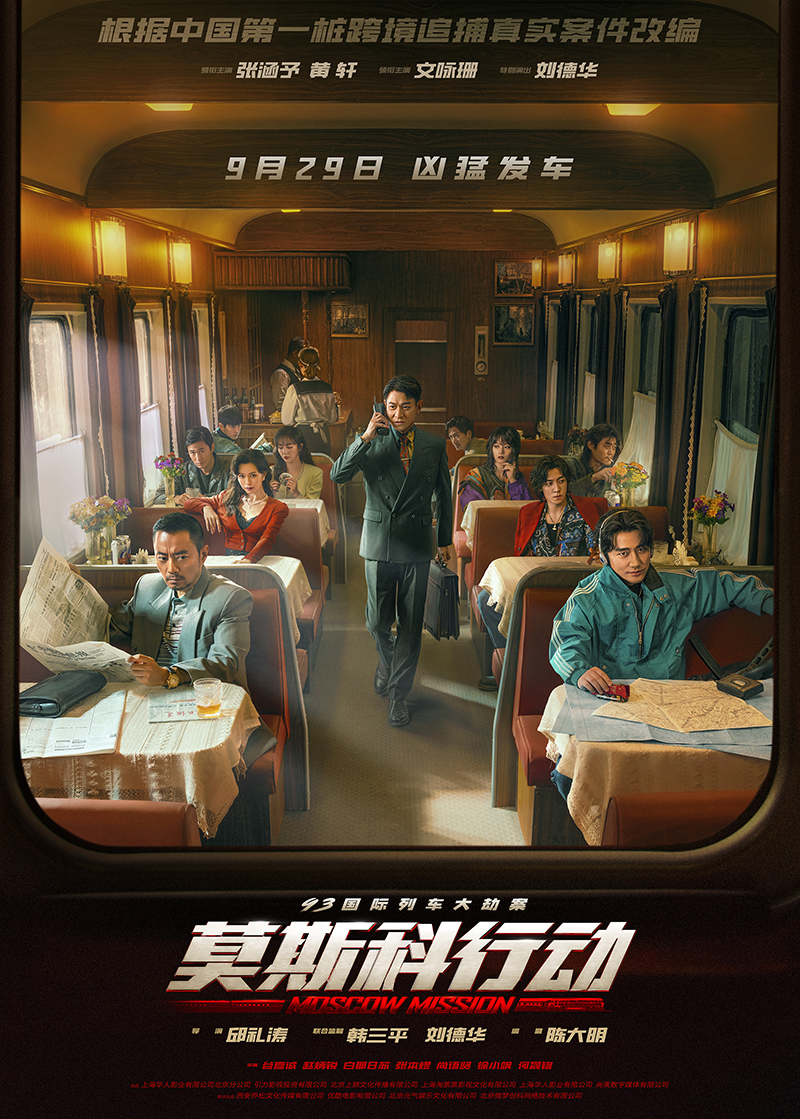
Moscow Mission (93国际列车大劫案:莫斯科行动, Herman Yau, 2023)

In the early 1990s, China and Russia were each struggling to accommodate new political and economic realities. This is at least one reason offered in explanation for the nexus of crime that overtook the long distance train connecting the two capitals in Herman Yau’s action drama Moscow Mission (93国际列车大劫案:莫斯科行动, guójì lièchē dà jié àn Mòsīkē xíngdòng). Inspired by a real life train heist in 1993, the film suggests that China was pulling ahead free of the labour protests which appear frequently in Moscow amid the collapsing Russian economy but equally insists that the bandits must be stopped because they not only endanger China’s international reputation but its trading relations with the former Soviet Union.

In truth there’s no real reason given for the mysterious D’s (Huang Xuan) heinous crime spree save a later allusion to a troubled childhood and the sudden death of his sensitive musician father when he was only 13 (which would put it shortly before the end of the Cultural Revolution). In any case, those around him have more complex motivations such as those of Zhenzhen (Janice Man Wing-San), a former sex worker employed by the gang to identify wealthy passengers and inform the rest of the crew by note, who needs the money for a sick relative. In any case, nearly everyone on this train is concealing vast amounts of hard cash, mostly in their underwear. Not content with the money, D also stops to rape a woman who had resisted but was found with a large amount of money stuffed in her bra. 

In short, there’s nothing noble about D’s gang or any implication they’re rebellious outlaws just thuggish crooks taking advantage of a geopolitical vulnerability. Local fixer Vasily (Andy Lau Tak-Wah), however, is otherwise depicted as a victim of circumstance cruelly separated from a then newborn daughter for whom he is continually searching. He made his money digging a tunnel from Shenzhen to Hong Kong and using it to smuggle luxury goods in much the same way many now use the train as is evident by the scenes at Russian station when passengers suddenly start leaning out windows flogging pairs of jeans. Vasily’s in on that trade too, as well attempting to broker a deal for a wealthy man to buy a former Soviet fighter jet, but seems unhappy with his life of petty crime selling fake passports to dodgy people and also has an ongoing non-romance with Zhenzhen who is trapped in an abusive relationship with D’s brother-in-arms Zhiwen (Jason Gu Jiacheng). 

Intense police captain Cui (Zhang Hanyu) is dispatched to catch the train robbers and avenge China’s international reputation by bringing order to the train but also stumbles on another crime in progress in the Russian capital. He has an opposite number in Sergey (Andrey Lazarev), a former KGB now FSB officer who hints at a new world order if also at a society very much in flux. In some ways the film suggests Cui’s inevitable victory is aided D’s hubristic overreach and the cooperation of the Russians rather than his own powers as a Chinese policeman, but also that China will clean up after itself taking down a Chinese gang while technically on foreign soil and making sure they return to China for justice. 

Yau opens strong with the high impact sequence of the original heist as the camera first pans along the inside of the train before finding Zhenzhen and then rest of the gang, while otherwise continuing to escalate the action with a climax at an abandoned rocket base and then a final shootout at the train depot where the carriages must quite literally change the gauge to shift from the old Soviet railways to the modern China. The gang members may implicitly be among those who’ve lost out in the face of new economic realities, though aside from D’s possibly duplicitous musing on the life he might have led if his father had not died leaves them little justification for the cruelty of their crimes. Meanwhile, Cui’s justice is not implacable, taking pity on both Zhenzhen and Vasily and promising to treat them fairly in acknowledgement of their cooperation as opposed to D who had problematic gang members bumped off by the possibly the worst hitman in Moscow and has been using Vasily’s daughter to manipulate him for last few years with no certainly that he actually knows where she is. Making a minor point about empty consumerism in the constant references to stolen watches, Yau goes big on spectacle but also homes in on the smaller stories of trauma and displacement that eventually provoke it.


International trailer (Simplified Chinese / English subtitles)
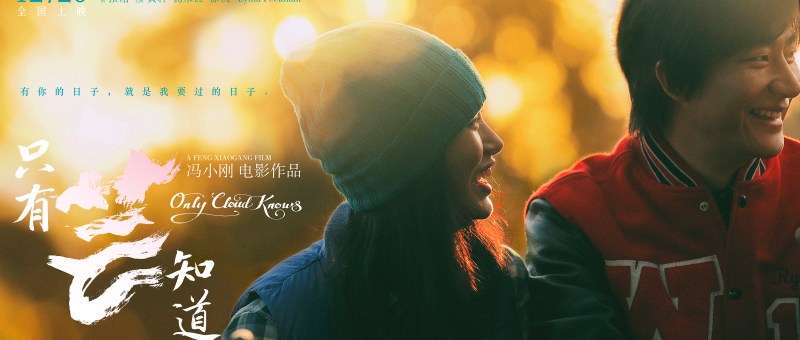
Only Cloud Knows (只有芸知道, Feng Xiaogang, 2019)

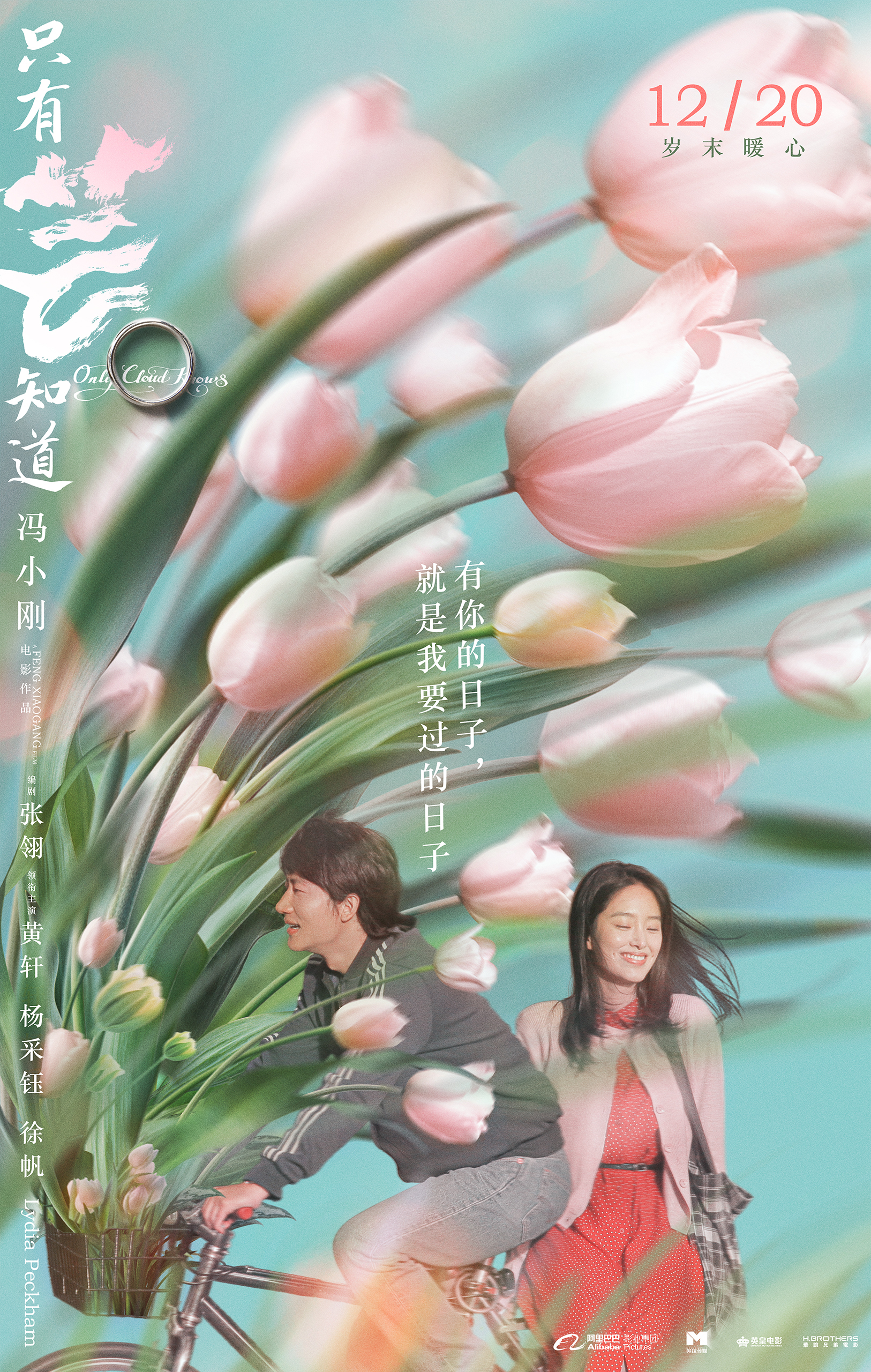
930161b9ca654d4cac056b550c6d0542If contemporary Chinese cinema has one message, it’s come home to China. Feng Xiaogang, however, has never been keen to go with the flow for all of his occasionally problematic affection for the nation as it was before the ‘80s reforms. A co-production with New Zealand, unabashed romantic tearjerker Only Cloud Knows (只有芸知道, Z Yǒu Yún Zdào) seems primed to speak directly to the diaspora audience, asking if perhaps the meaning of the word “home” has changed, less place than people and, therefore, infinitely portable.

In the present day, recently widowed Dongfeng/Simon (Huang Xuan) prepares to say goodbye to his late wife, Yun/Jennifer (Yang Caiyu), by travelling back through their long years together facing many ups and downs as they strove to make a life for themselves in the laidback greenery of the New Zealand countryside. Dongfeng travels first to the small town where they started a humble restaurant, cooking the kind of food Westerners expect rather than the authentic Chinese dishes they fear no one will try, and using their English names “for convenience”. While there they employ a friendly waitress, Melinda (Lydia Peckham), who is something of a free spirit saving up money to travel to distant lands, touring Asia and Africa.

Though they are blissfully happy, life is not without its difficulties. Working so hard to make the restaurant a success leaves them with time for little else and wondering if they’ve perhaps lost sight of something important. Dongfeng no longer plays his flute, and Yun worries that he’s sacrificed a part of himself to provide for her, becoming a slightly different person in the process. Obsessed with blue whales, Yun craves protection and security, the kind of things many associate with a building a stable home, but she also yearns for freedom and for something more than ordinary happiness. Minor resentment creeps in born of that central contradiction. Dongfeng wants to give Yun the kind of security he assumes she needs by betting everything on the restaurant, but all she really wants is him.

Nevertheless, protection and security were the things which attracted her to Dongfeng in the first place as symbolised by her obsession with blue whales. Somewhat improbably, his hotheaded decision to start a fight with a man who cut them up in a carpark and then insulted Yun only endears him to her further and also gets him a commendation from a local policeman who even tells him he might be cut out for life on the force, but to ease back on the violence because New Zealand is a peaceful place. There are things, however, that one cannot be protected from and as much as fate gives it also takes away. Yun craves protection because she feels insecure in an existential sense, convinced that she is “unlucky” and originally reluctant to agree to Dongfeng’s proposal in fear that she is destined to make him unhappy.

Sadly, that prediction eventually proves correct though through no fault of her own. Lucky in love, the couple face their share of hardships from an inability to start a family to losing beloved pets and dealing with illness, but there’s no joy without sadness and if your time together is shorter perhaps it is equally sweet. In his opening monologue, Dongfeng muses, quoting poetry, that time moved slower in the past and there was only enough of it to love one person before telling us that his life has been about one woman. Only Cloud Knows is the story of how he learned to say goodbye, but also of a 20-year love that endures to transcend time.

Apparently inspired by the true life love story of one Feng’s friends and collaborators, Only Cloud Knows has a rare kind of authenticity in its deeply felt romance which somehow seems all the more real for its clichéd genesis. Foreshadowings of partings echo throughout, reminding us that all love ends one way or another and it’s the ones left behind who mind it most, but rather than dwell on the maudlin, Feng shows that life goes on even in the midst of heartbreak. Houses change hands, old owners with teary eyes making space for bright-eyed youngsters full of hope for the future, while those who are leaving bequeath their unlived years to those they love with hopeful generosity. What Dongfeng discovers is that home is where the heart is, even if the heart is forever in the past.


Currently on limited release in US/UK cinemas courtesy of China Lion.

Original trailer (English subtitles)

Blind Massage (推拿, Lou Ye, 2014)

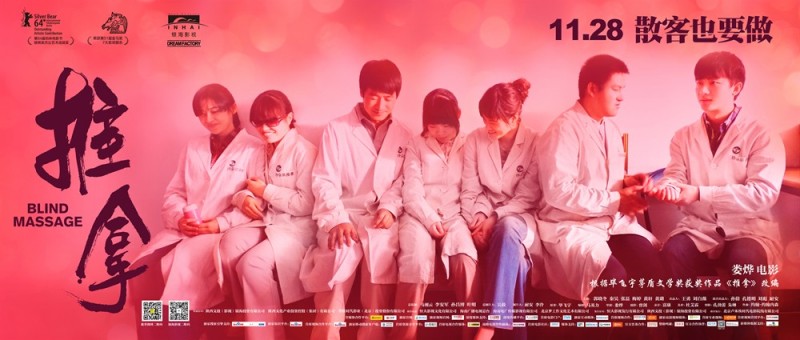
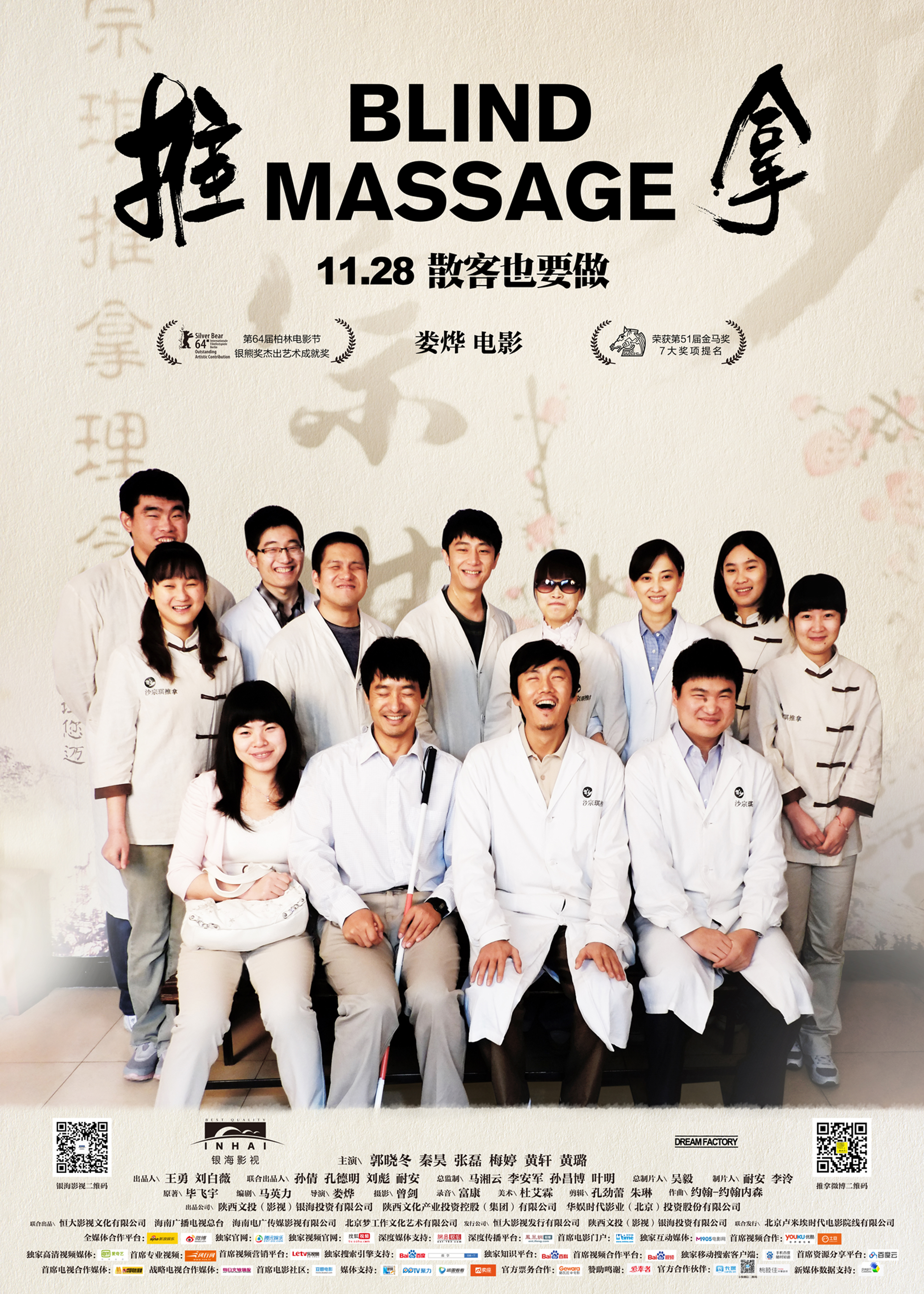
Blind Massafe poster 1Lou Ye, defiantly controversial, has made those who cannot, for one reason or another, embrace their own desires the centre of his cinema. Seeking connection, his protagonists reel desperately from one traumatic event to the next but resist full commitment, no longer able to believe in the truth of their feelings in a society which has so often betrayed them. Blind Massage (推拿, T), a radical departure from the provocative politicisation that has hitherto marked his cinema, takes this one step further in setting itself inside what it sees as an entirely isolationist world – that of the blind who occupy a particular liminal space within modern Chinese society.

Lou begins with a voiceover and fractured vision of our most prominent protagonist, Xiao Ma (Huang Xuan), as he emerges from a childhood accident which killed his mother and cost him his sight. Though he is assured that his condition is only temporary and his eyes will eventually be healed, Xiao Ma later attempts suicide when he comes to understand that his doctors have been deceiving him and his sight will never return. Surviving, he learns to accept his blindness and attends a special school for those with disabilities where he learns to read braille and is trained as a masseuse – a traditional occupation for the blind in Chinese society. Once qualified he gets a job at the Sha Zongqi Massage Center which is staffed exclusively by those with visual impairments who live together on site and exist as a small and exclusive community.

The trouble begins when the two partners, Sha Fuming (Qin Hao) and Zhong Zongqi (Wang Zhihua), invite an old colleague, Dr. Wang (Guo Xiaodong), to join them. Wang brings with him his fiancée, Xiao Kong (Zhang Lei), with whom the young Xiao Ma eventually develops a fascination. Meanwhile, Fuming has also developed a fascination for another newcomer, Du Hong (Mei Ting), who, he has been told, is very “beautiful”. Du Hong, in turn, is attracted to the morose figure of Xiao Ma but perhaps understands that for one reason or another he is unable to “see” her (which might be one of the reasons she continues to pine for him).

As in his previous films, Lou centres himself in a question of haptic connection. The residents of the clinic feel themselves cut off from what they see as “mainstream society” which they believe belongs exclusively to the sighted. Mainstream society, unadaptable and perhaps unwelcoming, has seen fit to exile them to the extent that they are unable to survive outside of the specific career track it has laid down for them and without the support of their own community. Yet their occupation also depends on deep sensory perception on a level deemed inaccessible to the fully sighted and the ability to “see” the things which can’t be “seen”.

Fuming, outgoing and sociable, looks for outlets outside of his own community but is criticised by those within who worry that he is in someway attempting to deny his blindness by adhering to the conceptual world of the sighted which he is otherwise unable to comprehend on a sensory level. His “love” for Du Hong is rooted in ideas of “conventional” beauty which is, in fact, more an expression of his vanity as he longs to possess the “best” girl as Du Hong points out when she reminds him that he has no idea whether she is “beautiful” or not or even what visual “beauty” might be, and that in becoming obsessed with these incomprehensible ideas he has in fact missed all of the things which might be “beautiful” about her on another level than the visual.

Meanwhile, another resident at the clinic has become worried about Xiao Ma’s fixation on Kong and decided the best way to sort him out is to take him to a brothel (ironically, also a kind of “massage parlour”). Though originally reluctant Xiao Ma begins to develop a relationship with sex worker Mann (Huang Lu) which is forged through touch but occurs on a deeper level. A fight with one of Mann’s other clients has the ironic effect of restoring some of his vision, leaving him stumbling and confused but also excited and drunk on a kind of sensory euphoria as he tries to reconcile his differing kinds of perception to make his way home. Yet by this point in his life Xiao Ma’s entire identity and existence revolves around being a blind person – he cannot tell anyone at the clinic that his vision has begun to return for fear of losing his place in their community as well as his ability to support himself.

Eventually the community of the clinic becomes scattered as its residents begin to reassert themselves as individuals re-entering “mainstream society”. Casting visually impaired actors alongside familiar faces, Lou treats his subject with the utmost respect and demonstrates that many of the problems faced by those at the clinic are exactly the same as those faced by the protagonists of his previous films while also reflecting the various ways that society remains intolerant to those who have differing needs. Asking quite profound questions about the nature of “beauty” and “connection” when images have been absented from the frame Lou attempts to “visualise” what it might feel like to “see” without “seeing” in an exploration of defiant hidden realities which often go wilfully unseen in our own blinkered perceptions.


Original trailer (English subtitles)

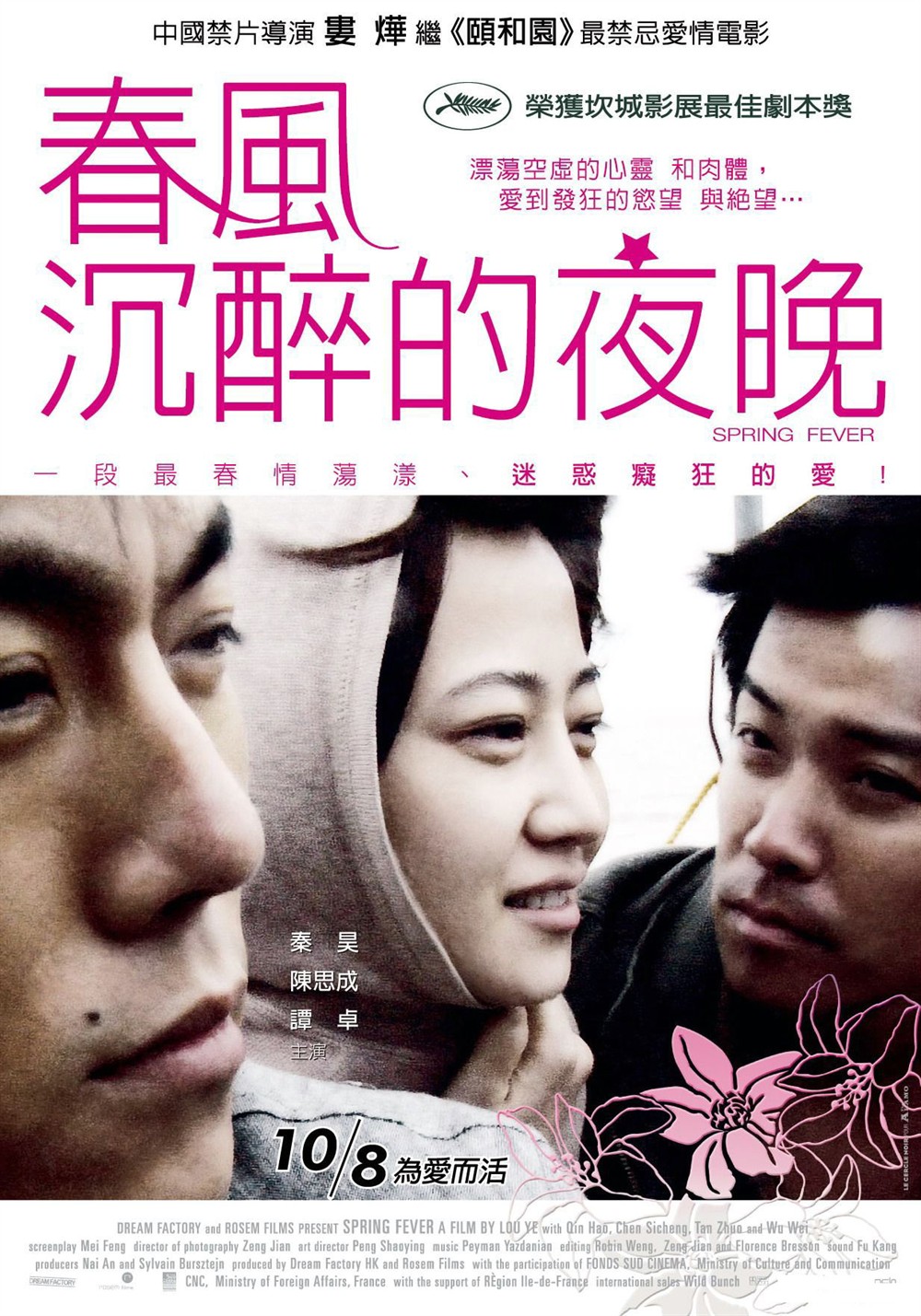
Spring Fever (春風沉醉的夜晚, Lou Ye, 2009)

Spring fever posterLou Ye has never especially cared for the views of China’s famously draconian censorship board. 2006’s Summer Palace earned him a five year ban for its scenes of full frontal nudity and references to Tiananmen Square Massacre (or, as later claimed, for “failing to meet appropriate standards for sound and picture quality”). 2009’s Spring Fever (春風沉醉的夜晚, Chūnfēng Chénzuì de Yèwǎn) was therefore shot on the fly in Nanjing in direct contravention of the director’s loss of official status – something he later got around by listing the film as a Hong Kong/France co-production so it could be entered in the Cannes Film Festival in a move which can’t have done him any favours with SARFT. Once you’ve been banned, you might as well go all in and there can be few better ways of reminding China’s “conservative” censors that you didn’t ask for their opinion than opening with a lengthy and extremely matter of fact love scene between two men.

Lou opens with floating spring flowers giving way to two men in a car whose hands delicately brush as they approach their destination – a remote cottage in which they intend to have a secret tryst. The tryst, however, will not be so secret as they assume. Private investigator Luo Haitao (Chen Sicheng) has been tailing the men on the behest of a suspicious wife, Lin Xue (Jiang Jiaqi), who suspects her husband, Wang Ping (Wu Wei), is hiding a secret but never guessed it was another man, Jiang Cheng (Qin Hao). Luo dutifully reports his findings to Lin, but urges her not to look too closely at the photographs. Finally he points out her husband’s lover at his workplace, a travel agents with a conveniently large glass frontage. Wang Ping, in a motif that will be repeated, wants to introduce his wife to his lover, perhaps hoping to ease the blow or smooth a path towards maintaining both relationships simultaneously. Seeing as Lin Xue has already seen Jiang and knows perfectly well who he is, the plan goes wrong and provokes a confrontation which eventually sends Lin Xue storming into Jiang’s workplace to out him in front of his colleagues, at which point Jiang decides he’s had enough and breaks up with Wang. Wang, however, can’t seem to get over him.

Meanwhile, Luo has continued following Jiang even though the investigation is over. Through extended trips to drag bars and underground music venues, Luo eventually becomes involved with “the other man” but he too has a girlfriend, Li Jing (Tan Zhuo), who works in a factory and seems to have something going on with her shady, Cantonese-speaking boss.

Abandoning the overt political contexts of his previous films, Lou circles around two concentric love triangles each of which has Jiang Cheng in the centre. Though it’s unclear whether Jiang Cheng is living as an “openly” gay man – the reaction at his workplace to Lin Xue’s outburst would suggest not though it doesn’t seem to cause him any problems with his employment, he is the only one of the three men to exclusively embrace his homosexuality. He does not have a girlfriend, is well known as an artist at a local drag bar, and makes no real effort to hide who he is even if not making a particular point of it. Both Wang and Luo seem to struggle with the nature of their feelings for and relationship with Jiang, neither one quite able to give up on the idea of “conventional” life. Wang, apparently infatuated with Jiang and unable to live without him, still seems to want to remain within his marriage despite his wife’s increasingly possessive behaviour, dreaming of an arrangement where he could perhaps have the best of both worlds. Luo is less conflicted. He pursues Jiang while his relationship with Li Jing flounders, but feels himself responsible for her wellbeing and unable to abandon her entirely in the knowledge that she is in a fragile state.

Quickly fed up with all these girlfriend problems, Jiang never asks either man to make a choice even if he eventually feels there is no way either relationship can continue. As Jiang’s story, the women perhaps get short shrift with Lin Xue’s villainy eventually turning violent as she becomes the embodiment of a repressive society intolerant of homosexual relationships, berating Jiang for corrupting her husband, humiliating her, and ruining her marriage all in front of his gawping colleagues in an act intended to destroy his life completely. Li Jing, meanwhile, has a much more sympathetic reaction to discovering the true nature of the relationship between the two men, allowing the three to continue as a trio until she eventually decides she is probably a third wheel and needs to get on with her own life. Nevertheless, the three options available to our heroes appear to be suicide, violence, and melancholy. Jiang, remembering the painful poetry of Yu Dafu read to him by the now long absent Wang, laments that he has perhaps “missed the love” that was his “destiny” like a flower blooming in the wrong season.

Despite being among Lou’s most straightforward narratives, Spring Fever lacks the cohesion of the fractured Purple Butterfly and allows its minor political contexts to melt into a background of generalised melancholia as if in echo of a generation’s apathy and confusion, caught on the cusp of change but unable to decide on a direction. Jiang’s sadness endures as a romanticised notion of impossible loves, but floats away on a spring breeze, devoid of hope or purpose.


Available to stream on Mubi UK until 24th September 2018.

US trailer (English subtitles)

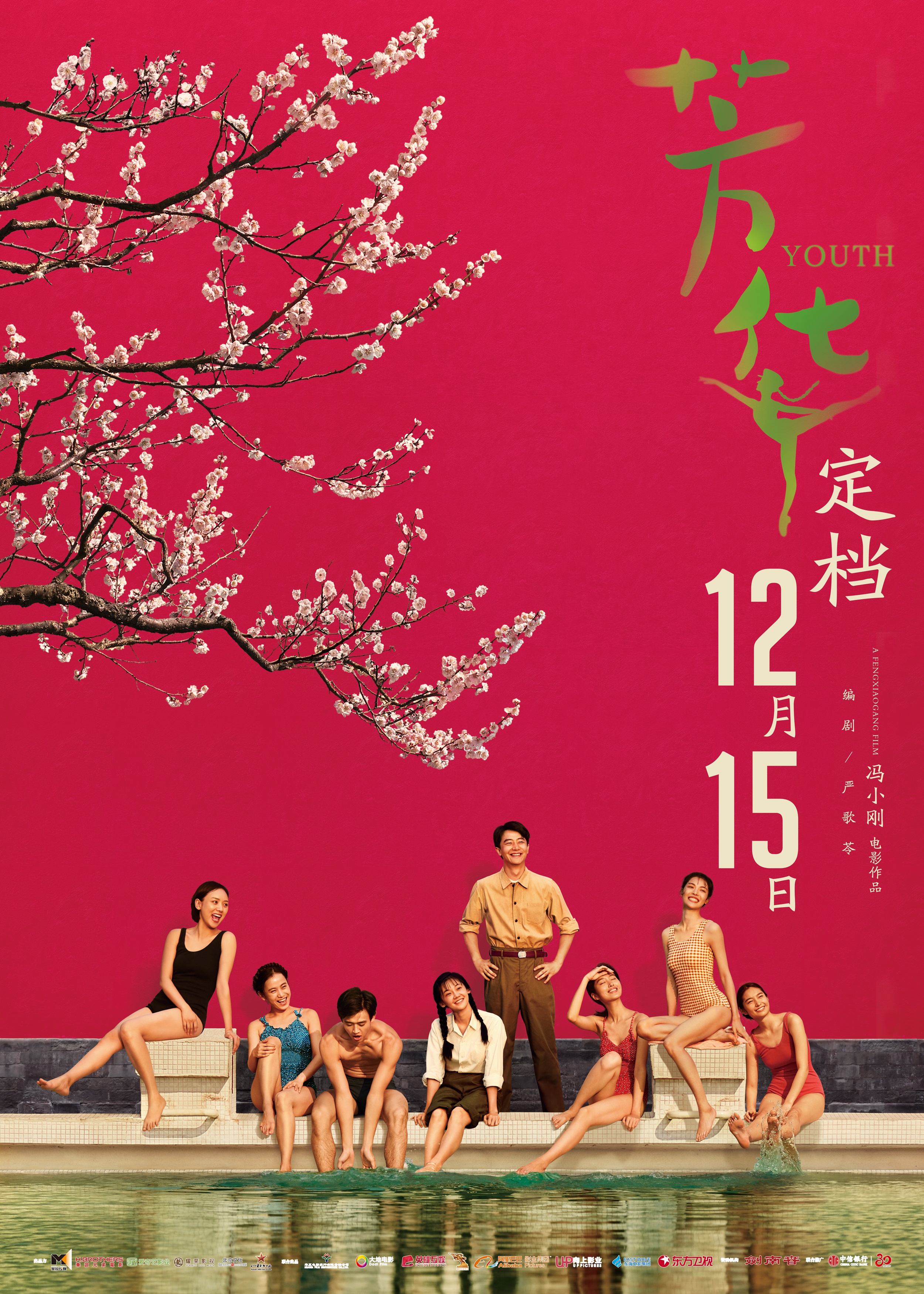
Youth (芳华, Feng Xiaogang, 2017)

youth posterOn the surface of things, one might be forgiven for thinking that Feng Xiaogang, “China’s Spielberg” – the director of such fluffy hits as If You Are the One and the prestige picture The Banquet, might not be the one to look to for nuanced takes on the state of his nation but, as he proved with the irony filled I am Not Madame Bovary, there has always been a persistent resistance in his superficially crowd-pleasing filmography. The exact nature and extent of that resistance is however harder to assess. Youth (芳华, Fāng huá), Feng’s latest historically probing epic, made headlines when its mainland release was blocked at short notice immediately before its international premiere at the Toronto International Film Festival and in some respects it’s easy to see why it may have raised an eyebrow or two at the censor’s board. A literal story of “youth” and the various ways that the concept becomes romanticised even when one’s own coming of age took place in otherwise difficult times, Feng’s film is also the story of modern China, baptised in the fire of the Cultural Revolution only to finally succumb to the consumerist one 15 years later.

Narrated by bystander Suizi (Zhong Chuxi), later a successful author apparently looking back on her own “youth” with a writerly eye, the tale begins in the early 1970s with two pillars of the arts division of the People’s Liberation Army. Suizi informs us the the protagonists of this story are Lui Feng (Huang Xuan) – a model soldier, and Xiaoping (Miao Miao) – a poor girl mercilessly tormented by everyone throughout her entire life. Xiaoping’s birth father has long been languishing in a re-education camp but as she’s taken her step-father’s name, Liu Feng assures her that he’s kept her bad class background off her record and will make sure no one else knows about it.

Performing propaganda ballets, the arts division is at its zenith at the height of the Cultural Revolution. The troop as a whole enjoys extreme privilege – they are well fed and cared for, evade the dangerous front line work many other members of the armed forces are subject to, and receive the respect due to them as the embodiment of a revolutionary ideal. They are, however, still guilty of the various hypocrisies coded into the system. Though many of the dancers have family members with “bad class backgrounds”, undergoing re-education or otherwise better not mentioned, the top guys and girls are the ones with parents high up in the party who use their untouchable status to paper over cracks in their own development with inherited superiority.

Lui Feng is perhaps an aberration. Nicknamed “Lei Feng” – a mythical figure created for propaganda purposes to embody the “ideal” revolutionary soldier in his selfless dedication to his comrades and communist virtues, Lui Feng is indeed a model party member whose goodness and kindness know no bounds. Unlike Lei Feng, however, he is a real man of flesh and blood not some far off and untouchable god. Having sanctified him in this way, the collective has effectively raised Lui Feng up to an unfair and unattainable ideal and is then “betrayed” on realising that Lui Feng is a man with a man’s hopes and desires. Lui Feng’s transgression is inappropriate to be sure but also somehow innocent in its naivety and his counter betrayal by the system to which he has dedicated his life all the more difficult to bear because of the unfair deification his better qualities have earned him.

Xiaoping meanwhile, who expected only betrayal, betrays the system through passive resistance in resentment of the way it has treated her friend. “Abandoned” by the collective which is the arts troop, Xiaoping exiles herself from a society she thinks has little need of her yet she then continues to serve it fully as a frontline nurse. The “youthful” idealism of Lui Feng and Xiaoping is tested as they find themselves caught up in a far off war while their former comrades dance around with wooden swords on a painted stage. Wounded in body and mind, the pair continue onwards even as their nation conspires to leave them behind.

Shifting into the ‘90s and then the 21st century, Feng’s messages become muddier and harder to grasp. In one sense what is celebrated is “youth” itself which, in this case, happened to take place against the backdrop of terrible events (albeit it ones from which many of the protagonists save Lui Feng and Xiaoping were largely shielded) enabling the growth of a generational family destroyed by a change in the political wind. It is however hard not to infer that everything was better during the turbulent ‘70s in which the delusion of innocence, if not its actual existence, was easier to bear than the soulless march into the future of Coca-Cola signs, Transformers toys and fathers who never come home because they’re too busy making money. Feng’s heroes are the ones who exiled themselves from the reality of China as a modern economic superpower, holding fast to their innate senses of honour and justice, yet in this Feng does to them exactly what he criticises his society for doing – he makes them martyrs, mythologises them as embodiments of revolutionary ideals, a pair of real life Lei Fengs all over again. In telling a story of how the revolution betrays and is betrayed, Feng makes the heroes emerge damaged but unbroken, chaste children trapped by the “innocence” of the pre-capitalist age, but whether their survival is victory or defeat remains unclear. 


Youth is currently screening at selected cinemas across the UK courtesy of CineAsia.

UK release trailer (English subtitles)