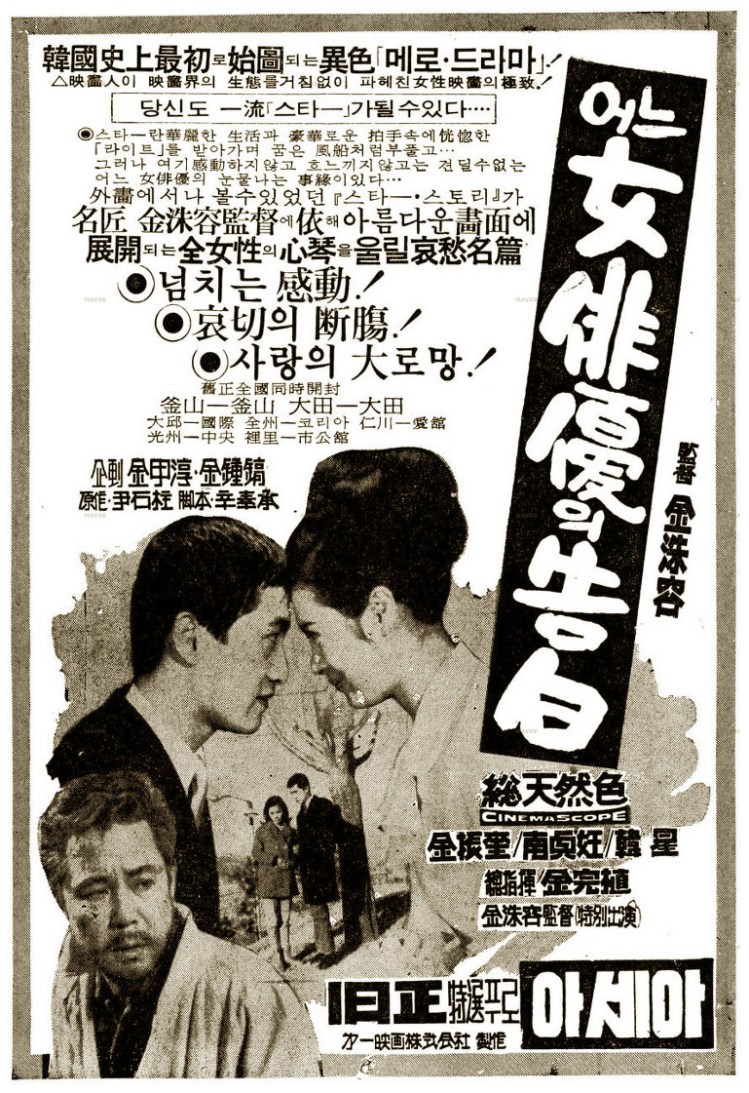
Confession of an Actress (어느 여배우의 고백 / 어느女俳優의告白, Kim Soo-yong, 1967)

Confession of an actress posterKorean filmmaking of the 1960s is sometimes referred to as a “golden age”, but the reality is that films were often churned out at a rapid pace for immediate distribution. Producers got an advance from local distributors, picked a scenario, assigned a suitable director and slotted in big name stars they already had under contract. For this reason production values are often low, but performance standard high despite the fact that many stars are bouncing around from one film to another shooting a scene here and a scene there. Director Kim Soo-yong filmed 10 features in 1967 – including his masterpiece Mist. Confessions of an Actress (어느 여배우의 고백 / 어느女俳優의告白, Eoneu Yeobaeu-ui Gobaek), inspired by a novel by Yun Seok-ju, is the kind of straightforward melodrama that was going out of style – a virtual remake of Chaplin’s Limelight with a little Phantom of the Opera thrown in, but Kim neatly repurposes it as a meta take on the Korean film industry of the day.

Kim Jin-kyu (played by the actor of the same name) was once a famous movie star, but heartbreaking tragedy ruined his career and now he’s a washed up drunk dreaming of the past. Hearing the dreaded “hey mister, didn’t you used to be somebody?”, Jin-kyu wanders into a film shoot and is thrown back to a happier time when he starred in prestige pictures with his regular co-star who was also his lover. Sadly, Miyong died of an illness leaving their last picture unfinished. The studio producers wanted to replace her and complete the movie, but Jin-kyu wouldn’t have it. They sued him for obstruction and his career was ruined. Jin-kyu was told that the child Miyong was carrying had died, but unbeknownst to him, a daughter was born and Miyong asked her friend Hwang Jung-seun to give the baby up for adoption and save it from the stigma of being illegitimate. Running into Jung-Seung at the shoot, Jin-kyu finds out his daughter is alive and determines to turn her into a great star – the only thing he can do for her as her father now that he is in such a sorry state.

Almost all of the characters in the film are named for their actors, though they are obviously not playing themselves in any biographical sense. Nevertheless, there is an intentional reflexivity in Kim’s decision to shift away from his literary source to towards one more immediately cinematic. Much as in Chaplin’s Limelight which does seem to provide a blueprint for the narrative, the arc is one of tragedy and redemption as Jin-kyu attempts to make up for lost time by imparting all his professional knowledge to the daughter he never knew and ensuring her success even at the cost of his own. Ashamed to introduce himself to her as a father given that long years of lonely drinking have reduced him to a broken old man, Jin-kyu gives his advice via letter and avoids seeing Jeong-im, longing to embrace her but afraid he’ll bring shame on her growing fortunes.

When Jin-kyu gets Jeong-im into show business, Kim gets a chance to put the Korean film industry on screen. He starts with a mildly sleazy producer and the established star who’s getting too old for ingenue roles but is desperate to hang on to her leading lady status. Nevertheless, she does have the option, as she points out, of a dignified escape through marriage should her career fail – something that is not an option for her male co-stars. As a young hopeful with no experience and nothing to recommend her beyond a pretty face, Jeong-im’s entry into the world of film is a baptism of fire. Rushed through makeup with its uncomfortable fake eyelashes and into an unfamiliar costume, Jeong-im’s rabbit in the headlights performance does not endear her to the director or more particularly the producer who is looking on from the wings in exasperation quietly calculating how much all of these extra takes are costing in wasted film. Nevertheless, the film is a success and, thanks to Jin-kyu’s careful tutoring, Jeong-im is on track for stardom.

Kim fetishises the camera, the process of filming with its bright artificial lights, tricks and techniques from the ice cold studio shoots to the difficult trips out on location. He makes full use of the relatively rare colour format utilising frequent superimpositions and montages, overlaying the bright neon lights of Seoul with the interior journey of our leading lady as she begins to find her voice. Making a final self cameo, Kim gives in to the inherently melodramatic quality of the underlying narrative but he does so somewhat ironically, rolling his eyes at the need for overly dramatic emotionality while actively embracing it, and lamenting the hardships of filmmaking while churning out his third picture in as many months. Confession of an Actress is not the salacious exposé promised by the title, but it is an illicit look at the decidedly unglamorous side of film production a world away from the bright lights and glossy magazines. 


Available on DVD as part of the Korean Film Archive’s Kim Soo-yong box set. Not currently available to stream online.

The Seashore Village (갯마을, Kim Soo-yong, 1965)

The Seashore village posterKorean cinema of the 1960s was a tightly controlled affair. The authoritarian government of Park Chung-hee had instituted the Motion Picture Law of 1962 which insisted on a studio system with stars under contract and a turnover of at least 15 films a year. The law intended to increase the amount of films produced for mass consumption, giving free reign to the melodrama and thereby accidentally undermining its more censorious aims. Nevertheless, The Seashore Village (갯마을, Gaenma-eul), adapted from a novel by Oh Yeong-su and part of the “literature film” genre for which director Kim Soo-yong would remain famous, goes much further than one would reasonably expect given the conservative nature of Korean filmmaking across the ages. A story of village life with all of its various superstitions and primitive practices, Kim’s film is a daring exploration of female sexuality and the collective power of women away from men.

An opening voice over introduces us to a melancholy fishing village where the life is hard and the people resigned to loss. The boats depart to great fanfare, but just as they are leaving someone remarks that he’s had a bad dream – bad dreams are one of many bad omens for sailors. New wife Hae-sun (Ko Eun-ah) doesn’t wait to watch her husband disappear over the horizon, she takes to the clifftop shrine of the Dragon King and prays for his safe return.

Her prayers are unanswered. A typhoon strikes and Hae-sun’s husband, along with another sailor, is killed. So young a widow, Hae-sun becomes an awkward problem for the villagers. Sang-su (Shin Young-kyun), a shady drifter, begins making subtle overtures which eventually turn into outright harassment and attempted rape. Hae-sun likes the family she married into and wants to stay true to her husband’s memory, but the forces of nature conspire against her.

While Hae-sun is a classically “good” woman who rejects the advances of Sang-su, the other village wives feel rather differently. Everyone except Hae-sun’s widowed mother-in-law (Hwang Jung-seun) knows about Sang-su’s obvious desire for Hae-sun but they see nothing wrong in it. Rather than the conservative atmosphere of the middle-class urban melodrama in which bodies of surrounding middle-aged women act as enforcers of moral discipline, these literal fishwives are of an earthier disposition. Many of them have been widowed with husbands lost at sea – the way they see it, you’d best take your pleasures where you can and there’s nothing wrong with a quick roll in the hay if it eases frustration and aids productivity. They laugh at Hae-sun’s prudery and marvel at her ability to carry on as normal after losing her husband not because of the grief, but because of the lack of intimacy.

It might be 1965 outside of the village, but the old ways still rule here even if they’re on their way out. In the old days, women did not remarry – a serious problem in a small village with few men around to replace those lost at sea. Hence, women have learned to live alone, supporting each other in place of men and often forced to do without them. In a surprising development, Kim flirts with the taboo of lesbianism – something which is addressed half-jokingly by the gossipy widows but eventually gives way to a literal roll in the hay with half the village women looking on in hilarity rather than horror. The women joke about living together but lesbianism does seem to be presented as an imperfect solution to their present problem in the lack of satisfaction available to them due to the absence of men. Far from a taboo, sexual desire is a normal part of life in the village – something ranked alongside eating and sleeping and no more or less embarrassing than any other bodily function. The widows crave men and are unafraid to say so even if some of them are content to make do with each other in resignation to their awkward status as older single women.

Hae-sun is in a slightly better position given that remarriage is apparently no longer so much of a taboo. Unfortunately that presents a problem for her as all she wants to do is stay with her family just as she is. She doesn’t like Sang-su and his increasingly aggressive behaviour towards her is unlikely to change that but nevertheless she eventually finds herself given to him almost against her will. Despite becoming a wife once again, Hae-sun’s beauty continues to curse her by causing problems between men wherever she sets foot. The problems, however, are definitively on the male side – men long to possess her, with violence if necessary, and ruin themselves in their immoral pursuit of a “pure” woman. The village widows rejoice in their earthy pleasures, finding comfort and release in each other but the male impulse, by contrast, is always towards conquest and control, domination rather than mutual support.

Life in the village is hard and often sad, but the women are happy and optimistic. They live the lives that are given to them, and do the best they can with what they have. The very antithesis of the lurch towards modernity, the simple life of the villagers harks back to something purer and more honest without the pretension of urban civility and apparently free from the political concerns of the day. Bold in its outlook, The Seashore Village is a surprisingly progressive effort from the Korea of 1965, subverting its “primitive” setting to present a positive picture of female power and sexuality.


Available on DVD as part of the Korean Film Archive’s Kim Soo-yong box set. Also available to stream for free via the Korean Film Archive’s YouTube Channel.

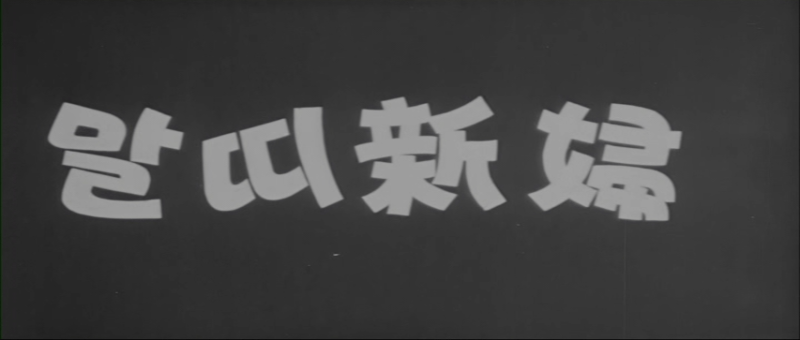
Horse-Year Bride (말띠新婦 / 말띠신부, Kim Ki-duk, 1966)

In the relatively conservative Korean society of 1966 it’s surprising that film like the Horse-Year Bride (말띠新婦 / 말띠신부, Maltti Sinbu) could have been made at all. On the one hand it embraces and subverts common notions of gender by positioning its “horse year women” as somehow deviant from the norm, difficult to deal with and undesirable, but also places them centerstage as individuals making independent choices in their own lives rather than simply trailing along behind their men. Technically the second in a trilogy of films, the first and last being directed by Lee Hyung-pyo, Kim Ki-duk’s Horse Year Bride is a raucous sex comedy, tame by modern standards but transgressive by those of the time. Adopting a mild, if ironic, issue movie stance, Kim also satirises social attitudes to “horse year women” and councils against a trend of aborting babies set to be born in the year of the horse lest they be female and turn into vicious harridans.

The film opens with a wedding in which middle-aged (presumably 35 or 36 year old) Bok-soon (Hwang Jung-seun) marries the extremely miserable looking professor Seok-du (Park Am). The wedding photographer who later turns out to be a horse woman herself and a private eye is surprised to notice that Bok-soon has horse’s hoofs rather than fancy shoes under her wedding dress. A fortune teller (Kim Hee-kap) then introduces us to his matchmaking service and claims the wedding we have just witnessed is a result of his best ever match before introducing us to two more couples – Soo-in (Nam Mi-ri) whose husband Sang-won (Yoon Il-bong) has gone full on domestic to look after her while she’s pregnant, while Mi-hae (Um Aing-ran), also pregnant, fends off the sexual advances of her frustrated husband Keun-ho (Shin Seong-il). The two as yet unmarried horses include the aforementioned private detective, Young-hee (Bang Seong-ja), and a dancer, Suk-ja (Choi Ji-hee), who is engaged but not above making use of her sex appeal for material gain.

Bok-soon, one horse cycle ahead of Soo-in and Mi-hae, laments her long period of matronly virginity and is keen to make up for lost time. Seok-du, however, is not exactly a love machine and is completely worn out by his wife’s appetites, even going so far as to return to the fortune teller and complain that his excellent matchmaking has turned him into an exhausted sex slave. The matchmaker suddenly grabs a picture of Napoleon and has a novel explanation for where the famous general’s hand might be. Anyway, his advice is to practice yoga to increase stamina and keep Bok-soon happy.

Meanwhile, Soo-in and Mi-hae have both lied to their husbands about being pregnant in order to avoid sex so that they don’t conceive a daughter that, like them, will be born in the year of the horse. This particular “White Horse” year is thought to be especially inauspicious and daughters born as White Horses will apparently be total nightmares and have terrible lives. The two relationships send up various culturally accepted norms of martial gender roles as the women both manipulate their husbands to get their own way. Soo-in’s Sang-won is so solicitous about the pregnancy that he’s put Soo-in on virtual bed rest and blossomed into a mother hen clucking around doing the housework but making a total mess of it (because, after all he’s a man, and men aren’t “built” for this sort of thing). Mi-hae’s problem is the opposite in that Keun-ho’s sexual needs are a constant source of frustration to him in which he resorts to pounding a giant mortar in an unsubtle attempt to relieve his pent-up energy. Bok-soon too is subtly manipulating Seok-du by feeding him an “aphrodisiac” and secretly practicing yoga herself to get the most out of her married life.

Unmarried Suk-ja attempts to manipulate men by promising more than she means to give but finds herself in hot water with a grumpy salaryman (Joo Sun-tae) who seems determined to take what he thinks he’s owed. Suk-ja later pays heavily for her rejection but the other women rally to her side to take revenge on the lecherous businessman whom they regard as “human scum” and intend to “re-educate” to treat women better. The vengeful band of women taking revenge on the male sex with each of its various double standards and chauvinistic assumptions derives part of its humour from the relative lack of power available to them but does manage to make a sensible point about the sexist world they inhabit.

Eventually, when the women have given up their power and allowed themselves to become pregnant by their men, even the doctor at the hospital assumes they will want abortions to avoid the threat of White Horse daughters. By this point the women have also resolved that there’s nothing wrong being Horse Women or even White Horse Women, with women excising power (even if in necessarily feminine ways), or with enjoying full relationships with their husbands, but they’re still bound by otherwise typical ideas of female gender roles in the importance of maternity and dream their daughters will be Miss Koreas rather than great scholars or forces for good in the world. The doctor raises an interesting point when he suggests the fear of White Horse Women is an unwelcome foreign import from Japan which both paints it as another symptom of colonial corruption and ignores the fact that the reasons for the ongoing stigma are part of the essential social fabric of Korea. He does, however, find some darkly comic reasons against abortion in citing the economic effects of empty schools and lonely classrooms while also suggesting the women’s daughters may have an easier ride thanks to the lack of competition.

In contrast to his previous films, Kim adopts a youthful, pop-culture infused approach which makes frequent use of domestic and foreign pop music with a lengthy animated title sequence plus extended scenes of music and dance often unconnected to the main drama. Extremely frank in its treatment of modern sexual relations, Horse-Year Bride is an unlikely ‘60s Korean sex comedy filled with silly gags and slapstick humour but proves an extremely effective satire of the complicated social mores of ‘60s Korea.


Available on DVD as part of the Korean Film Archive’s Kim Ki-duk box set. Also available to stream online for free via the Korean Film Archive’s YouTube Channel.

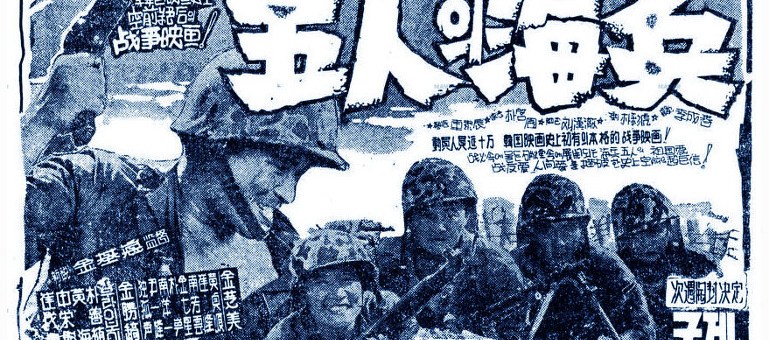
Five Marines (五人의 海兵 / 5인의 해병, Kim Ki-duk, 1961)

Five Marines posterKorean War films have a very particular tone and flavour often absent from those from elsewhere. As sad and despairing as they can be across the world, war films are generally the realm of macho heroism, men bravely holding back tears and charging forth with unrestrained rage in a quest to avenge their fallen comrades. Korean War films, however, like the majority of the nation’s cinematic output, are tinged with melodrama. These men wail, talk about their mothers, and worry for the future while forging intense bonds of homosocial brotherhood and becoming a battlefield family. The debut feature from Kim Ki-duk, Five Marines (五人의 海兵 / 5인의 해병, O in-ui haebyeong) is a prime example of this approach, eschewing combat scenes for behind the lines ensemble drama as ordinary men attempt to come to terms with the extraordinary situation of war.

Stock footage of the battlefield eventually gives way to a small squadron of marines digging trenches and at constant risk of ambush by Chinese forces. The main drama revolves around lieutenant Deok-su (Shin Young-kyun) who is the son of the company commander but there has long been bad feeling between the two men as Deok-su has always felt that his father favoured his brother, Deok-han (Choe Bong), and never really loved him. Meanwhile we’re introduced to another four marines – intellectual Jeong-guk (Choi Moo-ryong), Ju-han (Flyboy / Gwak Gyu-seok) – a father of five from Seoul, farm boy Yeong-seon (Park Nou-sik), and mother’s boy with anger issues Hun-gu (Hwang Hae). Following the death of two comrades, the squad of five is sent on a daring missing into enemy territory to blow up an arms depot through which they aim to make the sacrifice their friends have made in some way meaningful.

Made just eight years after the end of the Korean War and apparently commissioned by the Marine Corps in the wake of the May 16 military coup which initiated the dictatorship of Park Chung-hee, Five Marines takes a very different approach to that seen in other contemporary war films such as Lee Man-hee’s The Marines Who Never Returned. Though in no way particularly jingoistic or warmongering, it would be difficult to describe Five Marines as an “anti-war” movie, not least because it avoids depicting scenes of combat until the final mission in which, as expected, some or all of the heroes will fall valiantly defending their fellow Koreans as well as their friends.

Jeong-guk, the college educated enlisted man, originally considers himself to be taking part in the pantomime of war, going along with the ridiculous sham of soldiering, but when a fellow soldier – a young boy who spends his time rewriting a poetic confession of love he doesn’t quite have the nerve to send to the girl he left behind, falls in front of him, Jeong-guk suddenly wants to join the fight for real. The idea of militaristic patriotism is then subtly reinforced if not quite sold with patriotic fervour. The necessity of the sacrifice is never questioned and the idea of doing one’s duty remains paramount even if it is also clear that the war has taken these men out of their familial environments leaving their women at home alone and, perhaps, defenceless.

Kim explores the peacetime lives of each of the men through flashback with the consequence that we get to know and care for them as people rather than as combatants. We rejoice with Jeong-guk when he hears he’s going to be a father, share Ju-han’s amused frustration when his wife includes all their bills in his mail, and worry with Hun-gu when his usual letters have not arrived. During their down time, the men discuss women but with more tenderness than expected – save for Yeong-seon’s rather lewd (and apparently fabricated) story of his wedding night for which he is rightly taken to task by his stern company Sergeant. Rather than focussing on the negatives of military service, Kim emphases the warmth and friendship among the men who forge deeper and stronger connections precisely because of the ever present threat of death.

When the final mission rolls around, Kim allows the action to take centre stage as the five man squad plots and executes a daring raid which does not quite go to plan and eventually erupts into a more conventional fire fight. Marrying the demands for macho battle scenes with the emotional quality of melodrama, Kim allows the men to sort out their emotional difficulties, shedding both blood and tears in equal measure. More emotional drama than action packed celebration of the glory of war, Five Marines may not quite be what the Marine Corps had in mind but perhaps serves their purpose anyway in reinforcing the positive ideas of camaraderie and patriotism whilst telling the stories of ordinary men and extraordinary heroism.


Available on DVD as part of the Korean Film Archive’s Kim Ki-duk box set. Also available to stream online for free via the Korean Film Archive’s YouTube Channel.

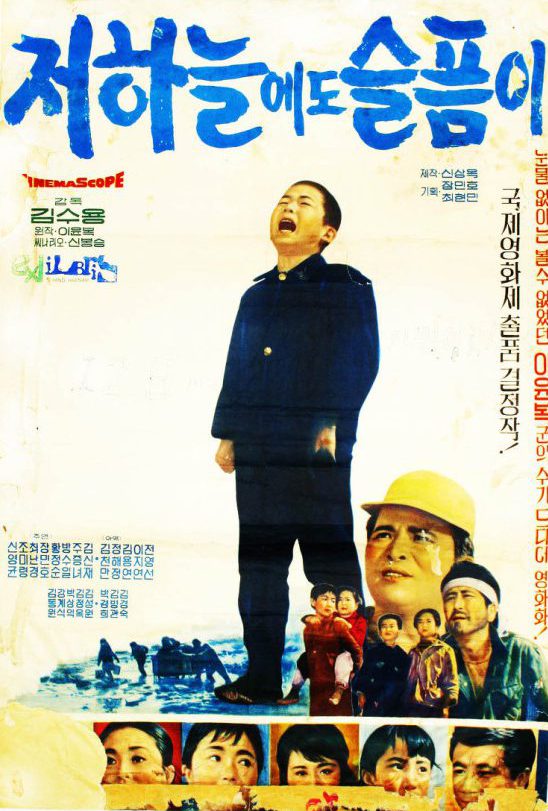
Sorrow Even Up in Heaven (저 하늘에도 슬픔이, Kim Soo-yong, 1965)

It’s a sorry enough tale to hear that many silent classics no longer exist, regarded only as disposable entertainment and only latterly collected into archives and preserved as valuable film history, but in the case of South Korea even mid and late 20th century films are unavailable thanks to the country’s turbulent political history. Though often listed among the greats of 1960s Korean cinema, Sorrow Even Up in Heaven (저 하늘에도 슬픔이, Jeo Haneuledo Seulpeumi) was presumed lost until a Mandarin subtitled print was discovered in an archive in Taiwan. Now given a full restoration by the Korean Film Archive, Kim’s tale of societal indifference to childhood poverty has finally been returned to its rightful place in cinema history but, as Kim’s own attempt to remake the film 20 years later bears out, how much has really changed?

11 year old Yun-bok has been forced out of his home and into a makeshift hovel near the river thanks to his gambling addicted invalid father’s inability to look after his four now destitute children. Yun-bok likes to narrate his life as a kind of letter to his absent mother who seems to have abandoned the family for unclear reasons possibly related to her husband’s drinking and gambling problem. Attending school as normal in an attempt to work hard and get an education so he can take care of the family in an adult world, Yun-bok, along with his younger sister Sun-na, spends his free time selling sticks of gum in the streets to try and earn enough money to feed everyone before his father drinks and gambles it all away.

Despite his obviously difficult circumstances, Yun-bok remains steadfast in his desire to stick by his family and take care of his siblings. Berated by the teacher for arriving late, Yun-bok finds an ally in a schoolmate who just wants to help even though many of the others shun him because of his raggedy clothes and lice infested hair. Eventually a teacher notices Yun-bok’s distress and urges him to write his struggles in a diary – which he does much as he’d been narrating his days in his imagined conversations with his mother. Moved by Yun-bok’s heartending descriptions of his life on the starvation line, the teacher manages to get the diaries to the newspapers who begin publishing them as a public interest column but just when it looks as if things maybe looking up for the family, Yun-bok loses heart and hops a freight train to look for Sun-na who has run away from home after an argument.

Korea in the 1960s was a difficult place, still bearing the scars of both WWII and the Korean War not to mention the resultant political turmoil. Nevertheless, by 1965 things had begun to pick up as seen in the flip side to Yun-bok’s sorry state of affairs – the various bars and drinking establishments he manages to work his way into in order to sell a few more sticks of gum. These places are filled with the sound of popular music where affluent young couples dance The Twist and salarymen in dark suits cement their business relationships over drinks. For some, everything is going fine but a concerted effort is being made to unsee the kind of unpleasantness which lurks below growing economic prosperity as manifested by 11 year old boys somehow responsible for the maintenance of a family of five.

As one teacher puts it, you can’t break the mirror because you don’t like what you see. Though there are some willing to help Yun-bok (at least to an extent) including his school friend who comes from a well to do family only too glad to set some food aside for Yun-bok and his siblings, out in the real world he finds only other desperate people willing to stoop to theft and violence against a child for nothing more than a few pennies. Many of these episodes are distressing as Yun-bok has his shoeshine kit stolen by an older boy or is violently beaten by a grown man at the harbour but the most serious occurs in the city when he is accused of pickpocketing by some louts who kidnap him and strip him naked for otherwise unclear reasons.

Though Sorrow Even Up in Heaven has a broadly positive ending as Yun-bok’s circumstances seem set to improve thanks to his accidental fame, Kim is quick to point out that there are many Yun-boks out there who can’t all become media sensations. Like many child heroes of classic Korean cinema, Yun-bok remains morally good – the idea of theft occurs to him but he remembers his teacher saying that everything will work out as long as his heart is pure, and his only transgression lies in spending a few pennies on himself to get something to eat and thereby work harder for his family (and for this he pays a heavy price). Even so his circumstances are portrayed in a naturalistic rather than melodramatic fashion neatly undercutting the inherent sentimentality of the material. Though Kim’s approach is closer to neorealism in the early scenes, he mixes in touches of magical realism with the ghostly appearances of Yun-bok’s mother which, alongside impressive montage and superimposition sequences, lend Yun-bok’s story an elevated cinematic quality. Remade several times over the last forty years, Sorrow Even up in Heaven remains sadly timeless in its depiction of an earnest young boy who knows only kindness and honesty even while those around him remain wilfully indifferent or actively cruel in the face of his continued suffering.