Visitor Q (ビジターQ, Takashi Miike, 2001)

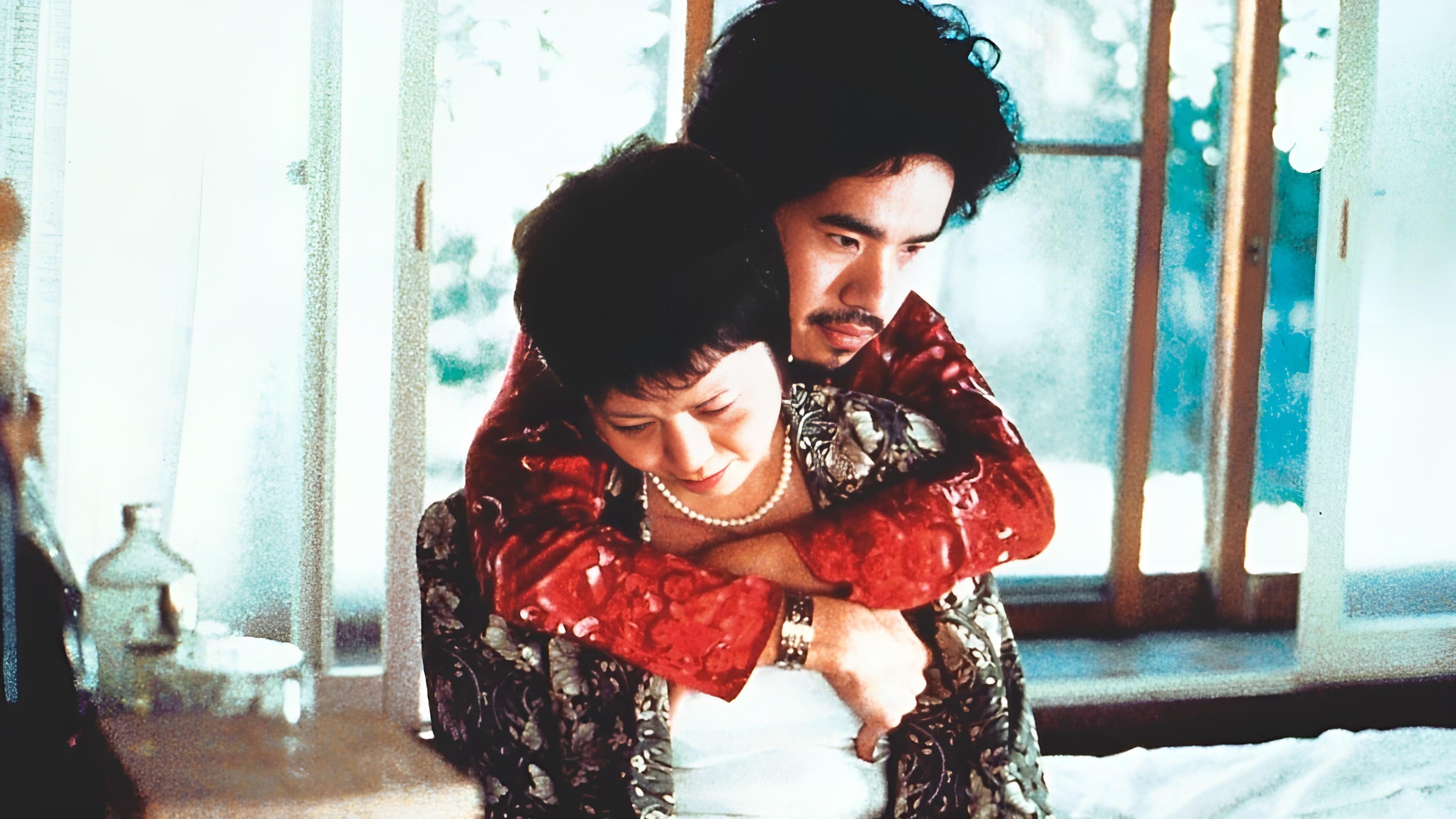
As Japan emerged from post-war privation into bubble-era comfort, the family underwent something of a reassessment. Remoulding Teorema, Yoshimitsu Morita’s The Family Game had punched a hole through the concept of the family in sending in a mysterious teacher who slowly proved to them all they were merely involved in a prolonged act of performance unpinned by social convention rather than genuine feeling. Sogo Ishii’s The Crazy Family did something much the same but ultimately opted to save the family unit by allowing them to find peace literally “outside” of the contemporary rat race. And then there comes Takashi Miike who, ever the ironist, runs the whole thing in reverse as Visitor Q (ビジターQ) comes to put the family back together again by giving them permission to bond through satisfying their previously unanswered emotional needs.

As the film opens, however, patriarch Kiyoshi (Kenichi Endo) is in a hotel room interviewing a young woman as part of a documentary investigating the youth of today. She replies only that what the youth can tell him about the future of Japan is that it’s hopeless, before getting back to business and elaborating on her price list for a menu of sex acts. Though originally unwilling, Kiyoshi ends up having apparently very exciting sex with her, but comes to his senses after climaxing too early. The girl, we later learn, is his runaway daughter, Miki (Fujiko), who has been living a life of casual sex work in the city. Kiyoshi determines to pay her in full, but explains that that he’ll give the rest of the money to her mother and she must keep everything that happened between them in that room a secret (a minor problem being Kiyoshi left the camera on and ended up documenting the whole thing, something that he will repeat later but quite deliberately). 

Stunned by his transgressive encounter, Kiyoshi looks on at a happy family with a degree of confusion while a strange young man leans through the window of the train station waiting room and whacks him on the head with a rock. Before he finally arrives home, the man hits him again just to be sure, but eventually follows him for dinner where he is introduced as an “acquaintance” who will be staying with him for an unspecified amount of time. 

Kiyoshi’s household is already falling apart, and quite literally seeing as the shoji are full of holes, partly because of the attacks of the “big bullies” who torment his teenage son Takuya (Jun Muto) by launching fireworks into his bedroom, but also because the boy takes his humiliated frustration out on his mother Keiko (Shungiku Uchida) who is covered in scars from previous beatings and has taken to using heroin to escape the misery of her family and doing part-time sex work to pay for it. 

Like the intruder of The Family Game, Visitor Q gradually infiltrates the family by usurping a place within it but begins to reawaken and reinvigorate each of the members as he goes. The first thing he takes hold of is Kiyoshi’s camera, literally observing the family and helping to document the Japan of today through the eyes of this very strange yet “ordinary” family. A man of the post-bubble era, he’s another failed provider whose career continues to flounder while his home spirals out of control, shorn of paternal authority. He feels insecure in his manhood, humiliated by his tendency towards premature ejaculation, and is raped with his own microphone by the “youth of today” while trying to interview them, which leaves him, according to his boss and former lover, looking like a fool. 

Kiyoshi is convinced he can get his mojo back through career success in making himself the subject of his own documentary, or more accurately his observation of his son’s bullying which he later reveals perversely turns him on. When his boss shuts his idea down, he rapes her, feeling humiliated again in complaining that she dumped him because of the premature ejaculation and vowing to prove himself but accidentally strangling her. Meanwhile, Visitor Q is back home getting busy with the under appreciated Keiko who describes herself as neither special nor pathetic but an ordinary woman, longing to be loved and wanted. Even one of her clients, exclaiming surprise to discover that a “nice woman” like her does stuff like this, appears to have a disability fetish remarking that is feels different with someone who has a limp. Visitor Q gets her juices running again, literally, reactivating her maternity and perhaps allowing her to reclaim her position within the household. 

“I’ve never seen her so competent since we married,” Kiyoshi exclaims after she employs some top housewife logic to help him deal with his dead body problem, after which they take a rather more active stance against Takuya’s snotty bullies, pulling together to protect him in a way they never have before. Takuya may remain outside of the family hive, but he’s drenched in mother’s milk and perhaps the only one to truly recognise Visitor Q for who he is. Nevertheless, the Yamazakis are an “ordinary” family, just taken to extremes. Dad’s an emasculated salaryman broken in spirit by economic failure, mum’s an unhappy housewife lonely in repressed desire, son is an angry young man like his dad humiliated by the big boys, and daughter is a melancholy runaway who has tried to seize agency through using her body as a weapon but still feels that the future is hopeless and that her gesture may be one of self harm. Nevertheless, through the exposure of their myriad transgressions, they begin to bond in shared perversity. Thanks to Visitor Q, the family is “restored”, not “cured” but reaching its natural state of being as a collection of individuals assume their complete selves and in mutual acceptance rediscover a home.


Trailer (English subtitles)
Vital (ヴィタール, Shinya Tsukamoto, 2004)

“There is the vast realm of the unconscious,” one of the professors explains to vacant medical student Hiroshi a soon-to-be physician attempting to heal himself from a trauma he doesn’t fully understand. Perhaps as the title implies, Vital (ヴィタール) sees Tsukamoto branch out from his vistas of urban alienation to find a new paradise in nature albeit one that it exists largely in the mind and that the hero can never fully return to because this place of life is also one of death which exists inside a kind of eternity.

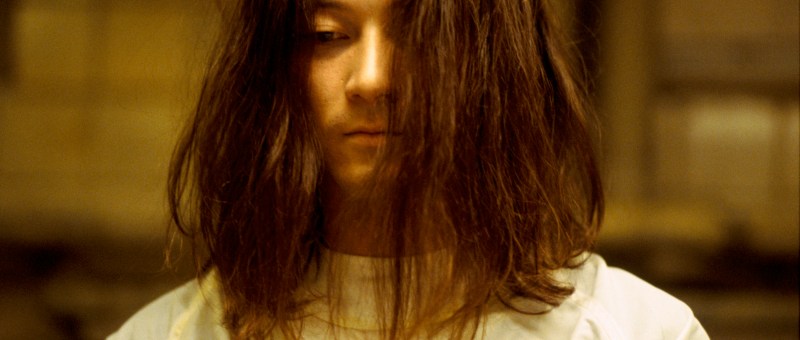
This explains to some extent Hiroshi’s (Tadanobu Asano) temporal confusion. Having lost his memory following a car accident in which he later learns his girlfriend Ryoko (Nami Tsukamoto) was killed, he shifts between “reality” and what first seems to be flashbacks of his unremembered past but are actually taking place in a kind of alternate, perhaps idealised reality in the “vast realm of the unconscious” as Hiroshi attempts to reconstruct his image of Ryoko along with that of himself. Another of his professors more philosophically asks were lies the seat of the soul in the human body and is this something that Hiroshi maybe unconsciously looking for during his anatomy classes in which he is coincidentally assigned Ryoko’s body to work on only realising when he sees her tattoo in one of his visions. 

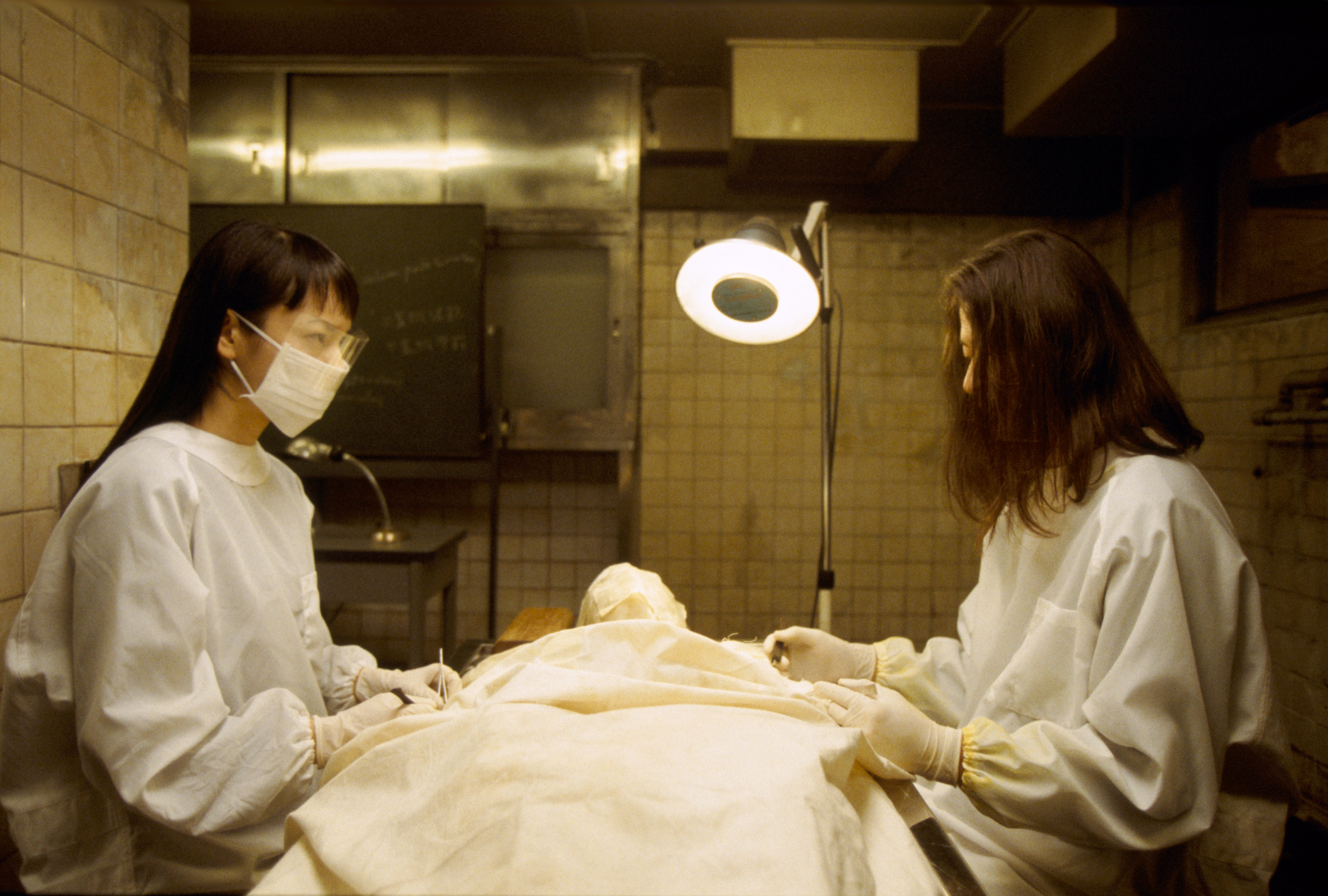
In some ways this grim task of dissection is a bid for greater intimacy, to take Ryoko apart and then put her back together as the students diligently do at the end their studies reassembling the bodies and placing them in coffins in keeping with culturally specific death rituals. The faces of the cadavers are covered with a bag until the students are instructed to remove them, but they are always reminded to treat the dead with dignity and that their role here is one of understanding as they attempt to work out not only how these people died but also how they may have lived. Hiroshi causes conflict with some of his fellow students on just this point, seeming rather creepy in his vacant intensity over the body while also wanting to take ownership over that of Ryoko rather than work as part of the group complaining that the others are too clumsy and it’s affecting his ability to learn. 

Ryoko’s father comes to say that though he once blamed Hiroshi, his daughter had been in a way dead for a long time before she died, the light apparently going out of her eyes when she was still in high school. Only in Hiroshi’s unconscious does she say that she didn’t want to die despite an apparent obsession with death in Hiroshi’s other resurfacing memories/visions of her as symbolised in her repeated requests for him to strange her during in sex. Another of the professors had said that the suppressed desires of the unconscious could create conflict and this alternate reality is also in some senses Hiroshi’s own latent desire for death, to be with Ryoko in this new paradise that is founded on an idyllic beach rich with nature and sunshine where they are free to be together liberated from the oppressions of civilisation. 

Indeed, it’s been raining all through the film as if in expression of Hiroshi’s gloomy mental state but we later learn that Ryoko’s most treasured memory was simply standing in the rain with him and breathing in its scent. Verdant nature is aligned with the vitality that is often absent from the soulless concrete of a city in which everyone seems to exist in tiny, separate worlds which only border on but never join each other. Ikumi (Kiki), a strange female student who develops a fascination with Hiroshi, has an illicit conversation with a professor she’s apparently been sleeping with each of them speaking into mobile phones while standing steps apart. Tsukamoto often isolates the protagonists, placing them in corners or blurring the periphery as if they alone existed in this moment. In Hiroshi’s idealised alternate reality, these barriers disappear as he and Ryoko share an entire world in love and freedom. 

The irony is that he resurrects himself through the process of dissecting Ryoko’s dead body. His Da Vinci-like sketches begin to shift as do the ink-like shadows on the wall amid the reflection of the rain as Hiroshi stares vacantly trying to reassemble his past. Through accepting Ryoko’s death, he rediscovers life and is in a sense reborn insisting he will continue medicine even though his professor and parents advise him not to given what he’s just been through though his parents had also said that before the accident they didn’t really think he had it in him to become a doctor. Their disapproval may explain some of the pressures he was experiencing as perhaps was Ryoko that may have urged them to long for death. In any case, what the film presents is the archaeology of grief, a prolonged period of introspection and loneliness and a seeking of intimacy no longer really possible but discovered only in the vast realms of the unconscious.


Vital is released on UK blu-ray 30th September courtesy of Third Window Films.

Original trailer (English subtitles)

Dangan Runner (弾丸ランナー, SABU, 1996)

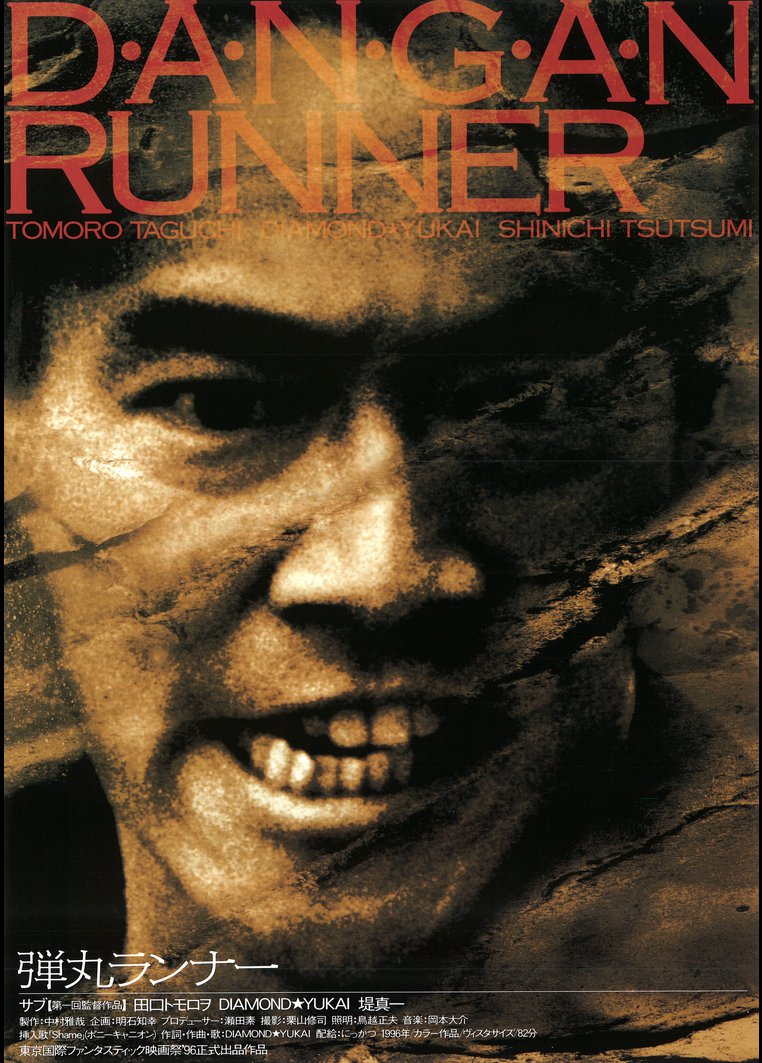
Dangan Runner posterIt’s not difficult to see what might send three young men running like stray bullets from a random gun in the Japan of the mid-90s, but each of the various protagonists of SABU’s debut feature Dangan Runner (弾丸ランナー, AKA Non-Stop) is reaching for a different target. Like much of the director’s later work, Dangan Runner pivots on random circumstance which somehow conspires to bring our three runners together as if bound by cosmic thread while they too are chased by an oncoming storm in the form of vengeful yakuza and the bumbling cops hot on their trail.

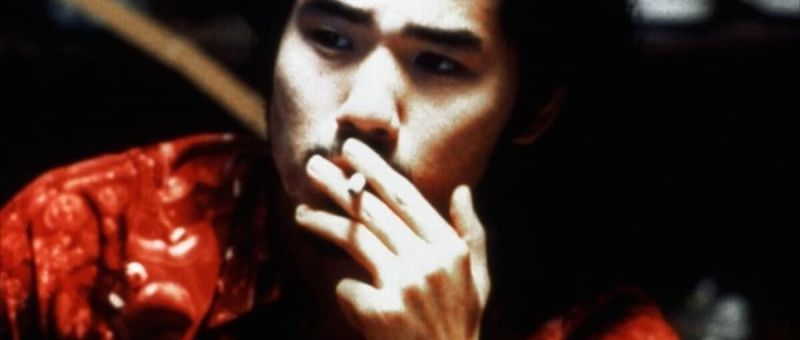
Kickstarting the whole affair, lowly restaurant worker Yasuda (Tomorowo Taguchi), fed up with the petty humiliations of his life, decides to rob a bank. He has everything planned, even rehearsed and choreographed down to the second, but when the time comes he makes a mistake. Having left his mask at home, he decides to buy one from a local combini but panics and accidentally shoplifts instead, attracting the attentions of bullet two – Aizawa (Diamond Yukai), who is wounded in the arm by Yasuda’s nervous shot when his gun accidentally goes off. A drug addict and former rockstar, Aizawa, intent on revenge for the disrespect he’s just been paid, retrieves the gun dropped by Yasuda and chases him through the streets of Tokyo. Aizawa in turn continues the chain reaction when he bumps into a yakuza, Takeda (Shinichi Tsutsumi), who is “triggered” by a deep seated trauma into chasing off after Aizawa, knife in hand. Meanwhile, a rival yakuza clan is also after Takeda because of gangland politics while they too are being monitored by the police who have gotten wind of a gang war in the offing.

Though SABU’s film is not in the least political, it is like much of his work a mild satire even if its sympathy lies firmly with its three central heroes each desperately trying and failing to outrun themselves. Yasuda, a small man with a slight frame, is the lowest of the low. He has a terrible job as a kitchen assistant in a small restaurant where he is constantly bullied by the head chef and belittled by the other kitchen staff who are all much taller and stronger than he is. It’s not difficult to see why he might bristle so much when one calls him “good for nothing”, yet he’s not the type to offer more than an angry stare in return. To make matters worse, he runs into an old girlfriend who appears to have moved on and up. Walking arm in arm with a wealthy salaryman, she has apparently jettisoned the “common” name of “Midori” for the relatively more sophisticated one of “Yasuko”, presumably hoping to hook someone who is indeed the polar opposite of a “loser” like Yasuda.

Aizawa also has his share of woman troubles though his are of an opposing dimension. A failed musician with a drug problem, Aizawa alienated his loving girlfriend while hoping his addiction would save him from his unattainable dreams. Of course, it’s an entirely different “shot in the arm” that starts him running, but like Yasuda in the end all he can think of is the girl and how he did everything wrong. Takeda, by contrast, is a yakuza through and through. His regrets are bound up with homosocial bonding and male loyalty, mourning the death of the trusted superior he failed to save in dodging the blows of a random assassin. Yet as his superior tells him, all living beings run towards the same thing. A yakuza cannot control his death but he can control his life and the effect he has on others. He urges Takeda to run and find life in the process, but perhaps Takeda’s destination is the run itself rather than where it will eventually take him.

Indeed, Yasuda, accidentally landing up in the middle of the yakuza gang war, affirms that he never felt so alive as when he was running for his life. All three men, running fast from failure, finally achieve the freedom they’d dreamed of through the intense exertion of their flight which later literally becomes orgasmic as all three fantasise about a pretty woman seen on the side of the road. Like bullets fired from a gun powered by social impossibility, each is destined to explode on reaching its chosen target. Like many of SABU’s later protagonists, these are men brought low by life and circumstance, driven slowly mad by a conspiracy of cosmic coincidence, mere playthings of fate without power or agency. Angry young men are a powder keg waiting to ignite, but in SABU’s whimsically surreal universe they usually sort things out amongst themselves. For the Dangan Runners, they only need to look in the mirror to figure out where it is they need to go.


Dangan Runner is available on dual format DVD & blu-ray from Third Window Films. On disc extras include a video essay on the history of V Cinema from film scholar Tom Mes, and an expansive audio commentary by Jasper Sharp providing detailed background on SABU’s career and the Japanese cinema landscape of the mid-90s.

Original trailer (English subtitles)