
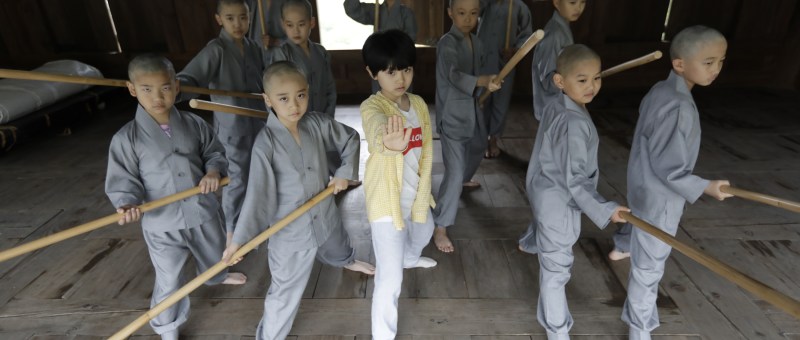
Action Dongja (액션동자, Yongminne, 2020)

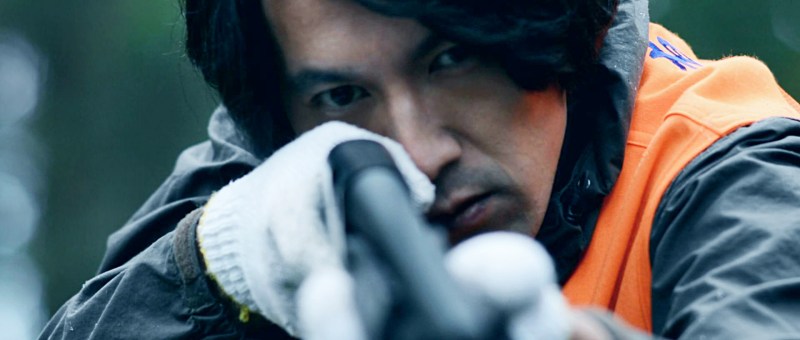
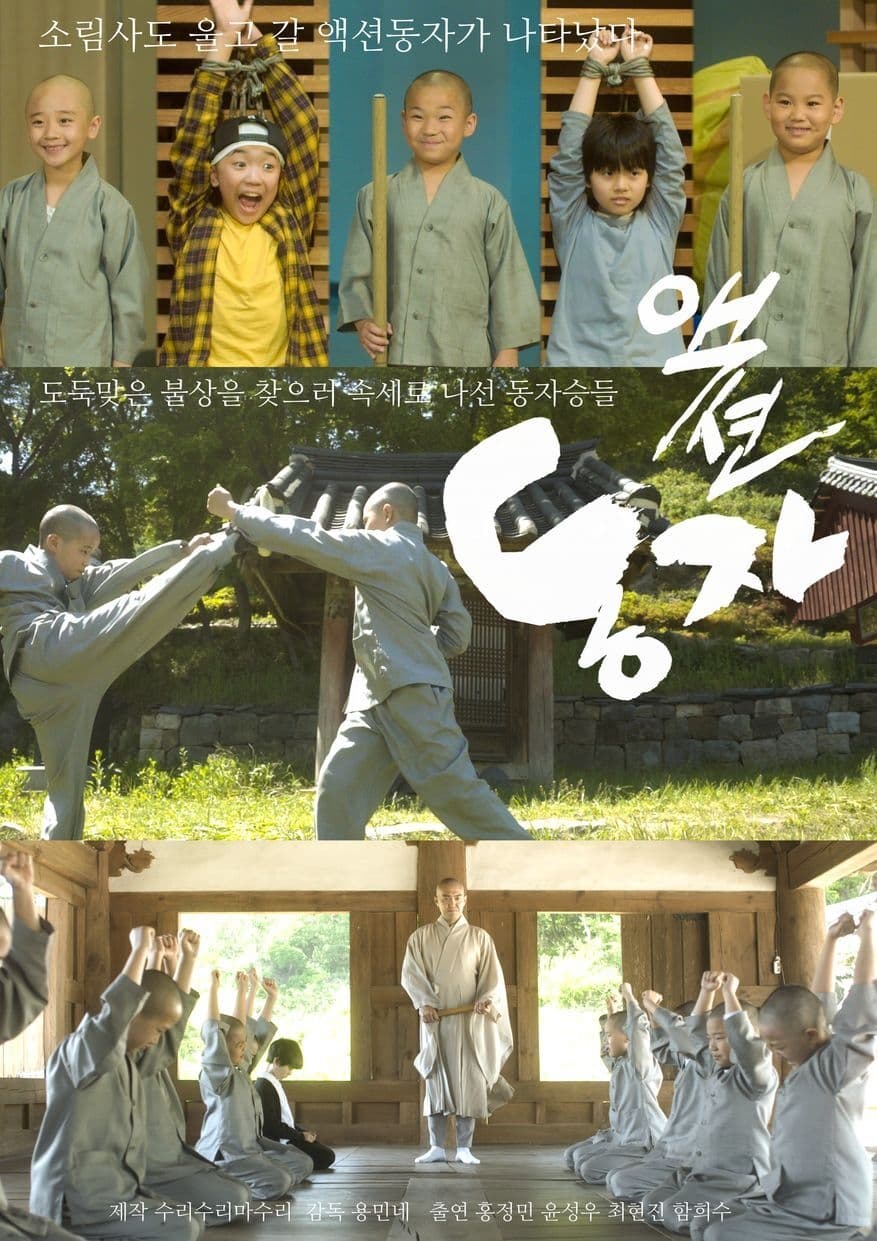
Four little monks discover brotherhood in their shared sadnesses as they valiantly chase down a gang of evil robbers specialising in thieving ancient relics from Buddhist temples in Yongminne’s slapstick kids adventure movie Action Dongja (액션동자). Exposing a societal prejudice against orphans along while upending a few stereotypical notions about monks, Yongminne’s warmhearted drama is equal parts a coming-of-age tale for each of the pint-sized monastics and Home Alone-style heist movie as the kids plot how to take down the crooks using their unique skillsets.

Little Jingu has had it tough. He lost his parents at a young age and has been separated from his younger sister. Now his grandmother who was raising him has died and another woman whom the grandma had apparently asked to take care of him has decided to dump him at the temple instead. Apparently Christian, the woman planned to leave him at an orphanage but thought the temple might be better because he’ll be near his grandmother’s resting place. As might be expected, Jingu does not take well to his new life. Not only is he overcome with grief having lost all of his family members, his home, and everything he knew but he didn’t ask for this very regimented existence and it’s obviously an extreme adjustment which might explain why he’s become mute, sullen, and withdrawn. Nevertheless, one very cheerful and friendly boy nicknamed “piggy” because of his bottomless stomach, extra sensitive nose, and obsession with food keeps trying to make friends with him even coming to his aid when he’s hazed by a couple of local kids at school and later bailed out by two top martial artists, the kind and sensitive Jeongbeop and the exceedingly mean and authoritarian Gajin. 

Jeongbeop explains to the bullies that it’s not right to bully those weaker than yourself and so they had no choice other than to defend themselves, asking for forgiveness as they leave. That doesn’t make much difference to the monks, however, when the boys’ parents turn up to throw their weight around insisting that they don’t want kids like these at their sons’ school virtually accusing the temple of training up little thugs. “Kids without parents are the ones who lie” one fires back, unwilling to believe her good little son could have misrepresented himself while reflecting a societal prejudice towards those who have no family. The younger of the two monks tries to defend the boys, insisting that it’s hardly their fault they’re orphans, but the chief monk is quick to placate the parents while perhaps sending mixed messages punishing Jingu and the other boys but later taking them out for Korean barbecue. Though many Buddhist monks are vegetarian, it is not strictly required and in any case the boys are too young to be expected to adhere entirely to asceticism yet the group’s presence once again arouses a degree of suspicion and resentment as opposed to mere surprise in an irrationally annoyed couple on a nearby table. 

Meanwhile, the boys are also rejected by their peers who unfairly blame them when their temple is robbed, the chief monk stabbed, and a precious picture scroll stolen. Jingu happened to see the face of the man who did the stabbing, but is unable to say anything later telling his new friends when they hatch a plan to catch the thieves themselves as a way of regaining the respect of the other boys and getting justice for the chief monk. In true heist movie style, Jingu who has not yet had his ordination takes the other kids shopping so they can better blend in, the gang even becoming temporary street performers Piggy rapping sutras while the other two do a martial arts display, to pick up extra cash after getting pickpocketed in the big bad city. Unexpectedly it’s Piggy who saves the day with his famously well-attuned sense of smell, picking up the scent of incense on a suspicious man at the port. Bonding during their mission, the boys come to an understanding of their various traumas and the ways in which they inform some of their behaviour generating a sense of brotherhood as they band together to take down the robbers. An old-fashioned kids adventure with a monastic twist, Action Dongja is a charming tale of unconventional found family in which the lonely hero learns to find his place while chasing bad guys and solving crime.


Action Dongja streamed as part of Yubari International Fantastic Film Festival 2021.
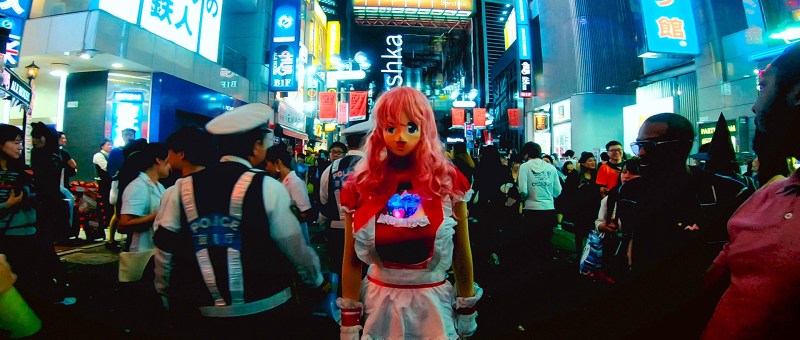
Scherzo (スケルツォ, Takayoshi Shiokawa & Kanta Tomatsu, 2021)

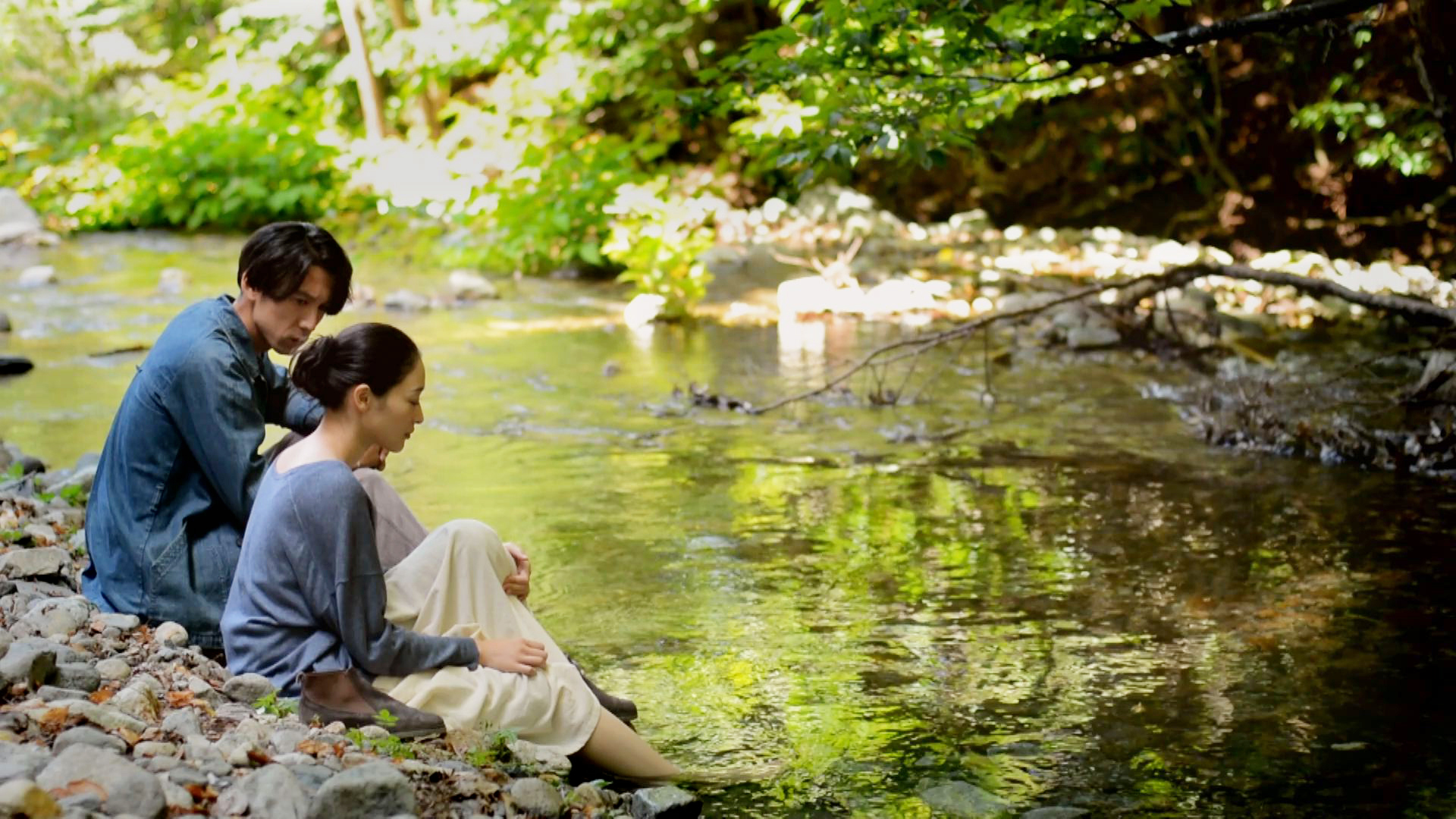
It may be one thing to live profoundly in the moment, but if you have no memory of yesterday and know you’ll have no memory of today tomorrow can you really say that you “exist”? The hero of Takayoshi Shiokawa & Kanta Tomatsu’s Scherzo (スケルツォ) believes that he’s born every day and dies every day, his mind wiped clean each time he sleeps but how can you learn to find meaning in a life so defiantly brief in which you have no past or future?

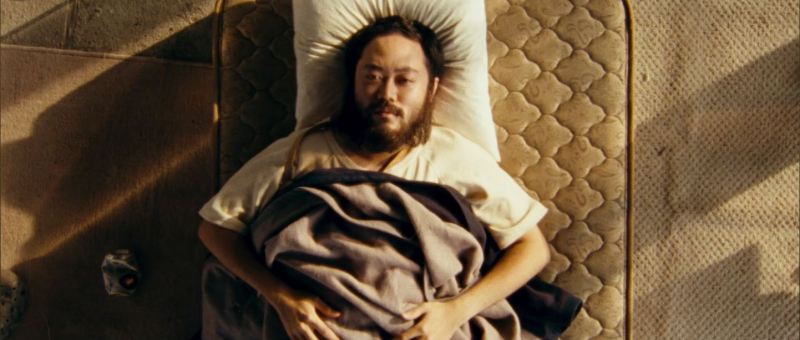
Then again, according to a random man in a laundrette people only start thinking about the value of life in order to avoid thinking about how bad their lives are currently when the real answer is to concentrate less on whether your current life has value and more on how to lead a better one. For “Koji” however, a name he chose for himself, the question may be moot. He wakes up every day on a stained mattress in a partially exposed rooftop flat with a sign above telling him to look at the wall where he’s explained to himself that his memory resets every day. A selection of polaroid photos feature the same young woman who also appears in a video tape playing on a nearby TV though Koji doesn’t know who she is. Taking the video camera with him he walks out into the town recording his every movement in lieu of his ability to remember and lives as if there’s no tomorrow because in a sense there isn’t. His first few days he hangs out in a hostess bar where he can’t pay the bill, robs a pizza man, and visits a sex worker for some existential chit chat abandoning the rules of morality in the knowledge that there can be no consequences because he dies by night and his existence is futile. 

All that begins to change, however, when he encounters a woman, Hinako, who looks like the one in his photos and appears to be suffering from the same condition as himself. Bonding with her slowly though neither of them can recall the other, Koji suddenly wants to find a way to remember certain that logically they are here today because of something that happened yesterday because of all the yesterdays that came before. 

Scherzo literally means “joke” in Italian, and you could indeed read Koji’s predicament as a bizarre cosmic prank otherwise unexplained in its absurdity. Yet it’s perhaps also a metaphor for the mutability of memory and elusiveness of love as much as in its usage in classical music a playful allusion to the self-contained brevity of his daily lives. He feels an innate connection to Hinako, as if he must have known her before but simply can’t remember. Even the most essential of emotions, love, can it seems be forgotten or gently fade away even if, as in the bar hostess’ melancholy ballad, something of it remains when everything else is gone. This is in one sense at least, a story of a couple who’d fallen out of love, or perhaps taken it for granted to extent that they’d almost forgotten it was there, rediscovering their feelings for each other and discovering in them a meaning for life. 

Meanwhile, Koji obsessively records all of his actions, filling 40 DV tapes of a sleepless road trip with Hinako, as if a physical recording could be more accurate than an organic memory. Memory is of course subjective and you can never know what it is you’ve forgotten whereas a tape maybe tampered with or faulty but supposedly contains objective truth though even that has a subjective quality simply by virtue of who recorded it and how. Nevertheless, if you can forget love, does memory really count for anything at all? Koji thinks he dies every day, but like Alice in Wonderland no one except for Koji is the same person they were yesterday or will be tomorrow. He can’t change or grow and has only the same version of himself to offer imperfect guidance. Nevertheless it’s love that in a sense restores his identity, gives him the will to remember, and makes it possible for him to live in the shadow of tomorrow rather than in an eternal present. Shot with a deadpan absurdism, Takayoshi Shiokawa & Kanta Tomatsu’s dryly humorous drama eventually concludes that it’s the memory of love, even if old or faded or failed, that gives life meaning allowing its anxious hero to move forward in finally regaining a sense of self if reflected in the eyes of another.


Scherzo streamed as part of Yubari International Fantastic Film Festival 2021.
The Basement (지하실, Choi Yang-hyun, 2021)

Two weeks doesn’t seem like a very long time. You might think you can stick anything out for two weeks if you know it will definitely be over in 14 days, but what if you don’t know when or if it’ll end and 14 days turns into 28 with no sign it might not turn into 42? In some ways that might seem like a familiar situation at the present moment, but it’s one that comes to define the lives of an affluent upper-middle class family in Choi Yang-hyun’s pandemic allegory The Basement (지하실, Jihasil). 

When the alert goes out that South Korea is under attack with a nuclear missile apparently on its way the Choi family dutifully obey the emergency text on their phone and take refuge in the basement intending to stay the advised two weeks until the radiation will have decreased to acceptable levels. Unfortunately, however, once down there they realise their preparations have not been thorough enough, the power is out and they’ve left the suitcase containing clothing and emergency supplies upstairs. With phone lines jammed, no radio reception, and no way of keeping in contact with the outside world they have no idea if the strike actually took place or if their friends and family members made it to safety. 

Placed under such strain, it’s understandable that small grievances and tensions in the family are quick to arise. Wife Hayeon seems particularly irritated by her practically minded husband Dongbaek, describing him as “immature” and complaining that he’s never really put his family first preferring to spend his weekends playing golf with the boys. Not helping matters, Dongbaek sadly reflects that he “probably” won’t be able to go on that work jolly golfing in Thailand the following week which whatever way you look at it is not a primary concern in the present moment. She also complains that he made such a fuss buying all this expensive camping equipment that he hardly ever used but at least it’s paying off now during their accidental holiday in the dank and depressing basement of their well-appointed detached home in the suburbs of an area described as “Korea’s Silicon Valley”. Dongbaek meanwhile reflects that he’s glad they sold their Gangnam flat for a spacious house (even if they’re trapped in one room of it) because even if they’d probably have made a bundle on the housing market if this hadn’t happened, they’d be gonners as inner-city apartment dwellers. 

Nevertheless, the first crisis occurs when the family begin hearing the sound of a neighbour frantically calling to them from outside apparently unable to reach her husband or son and looking for some kind of human support. Teenage daughter Jiseon wants to open the door, but her mother is conflicted and Dongbaek dead against it. The woman’s distress clues them in to the fact that something bad really has happened on the surface, but they’ve only so many resources and Dongbaek apparently doesn’t want to share while Jiseon can’t understand how he could be so heartless as to listen to someone screaming for help and not open his door. 

He meanwhile is more invested in finding practical solutions, trying to solve the bathroom problem they neglected to think of previously while setting up a water still to catch moisture from the wooden ceiling beams, repeatedly making reference to his time in the army and disaster preparedness training. Yet the problem they can’t solve is the anxiety, how will they ever know if it’s really safe to come out especially as the radio, once it’s working, gives contradictory messages either suggesting everything’s fine or that North Korea has occupied Seoul. Practically speaking, they can’t stay down here forever, there’s only so much food and some of them are already beginning to experience ill-effects from staying so long in the dark and damp. Sooner or later they’ll have to overcome their growing sense of anxiety for the unknown outside and brave the new reality. A claustrophobic chamber drama starring only three actors with occasional outside voices, Choi’s pandemic adjacent drama explores how one family attempt to come to terms with impending apocalypse while combatting boredom in equal measure to fear and despair but discovers that togetherness and endurance are perhaps the key skills for survival. 


The Basement streamed as part of Yubari International Fantastic Film Festival 2021.
International trailer (English subtitles)

The Albino’s Trees (アルビノの木, Masakazu Kaneko, 2016)

A young man is forced to face up to the nature of existential struggle when tasked with killing a god in Masakazu Kaneko’s meditation on land, modernity, and the taking of a life, The Albino’s Trees (アルビノの木, Albino no Ki). Filled with a sense of unease, Kaneko’s parabolic drama asks if it’s right to force others to live in the way you think is best, if it’s right to take the life of an animal simply because it’s inconvenient to you, and if it’s right to assume ownership over the natural landscape as if it’s yours to do with as you wish. To the young man at the film’s centre, these questions are ones he thinks he can’t afford to ask but is eventually confronted with in committing what to some may be an unforgivable transgression. 

Yuku (Ryohei Matsuoka) used to work in removals but times being what they are, his boss has taken a left turn accepting lucrative contracts working as animal control agents on behalf of local councils carrying out culls of wildlife deemed out of control. His colleague Imamori (Shuichiro Masuda) remains conflicted. He isn’t completely happy with this kind of work but has been persuaded that it’s necessary though it still seems cruel to him if not morally wrong to hunt and kill healthy animals solely for existing. Nemoto (Hiroyuki Matsukage), their boss, is keen for them to take on a well paid “confidential” job but with so little information the guys are reluctant, something about it seems shady. Nevertheless, with his mother seriously ill and needing money for medical treatment Yuku agrees as does Imamori only to discover that not even the local councillor who hired them wants to explain what the job is. 

The councillor does, however, begin to outline the economic history of the town once dependent on coal mining now pivoting towards innovative farming. With barely concealed disdain, he replies to Yuku’s inquiry as to whether the mountain in question is inhabited by briefly remarking on a traditional village on the other side the existence of which seems to fill him with such disgust one half wonders if Yuku’s contract job is even darker than it seems. He laments that they have “no desire to develop”, continuing to live a traditional rural existence rather than succumbing to the dubious conveniences of modernity. On meeting up with their contact (Hatsunori Hasegawa), another hunter living on the ridge, the pair discover that their assignment is to eliminate an albino deer because, according to the hunter, the council is nervous that some may assume its mutation hints at corruption in the soil endangering the stability of their eco farming project. The problem is that the villagers believe the albino deer to be an embodiment of the White Deer God that protects the mountain as part of their Shinto animist beliefs and have been protecting it by dismantling all his traps. Imamori declines to go through with the job, feeling that it’s wrong to kill the deer just because it was born different but thinking only of his mother Yuku is determined to do whatever it takes.  

His dilemma is in a sense mirrored by that of Nagi (Kanako Higashi), a young woman from the village he rescues from an animal trap who tells him that she remains torn between the allure of modernity and a traditional rural existence. Yoichi (Yusuke Fukuchi), a young man making a living carving traditional wooden bowls, is determined to preserve ancient beliefs Yuku regards as backwards and superstitious convincing himself that killing the deer is also an act of liberation that will bring enlightenment to the villagers so that they won’t “need” to live in such an archaic and primitive way. But as Yoichi tries to explain to him, you can’t force people to conform to your own way of thinking, it’s not as if anyone is a prisoner here if they didn’t like it they’d leave as all of the other young people have already done. He asks him if a world in which you simply eliminate things which are “inconvenient” to you is one you really want to live in but Yuku isn’t here for such philosophical questions only baffled by what he sees as primitive superstition that stands in the way of progress. 

Yet, the village is largely untouched by the corruptions of the modern society. The water in its rivers is clean and sweet, the wood in its trees strong and beautiful. As Nagi explains to him, the White Deer God has given them permission to drink from these springs, and permission to harvest the trees. By contrast, there’s an unpleasant look of triumph in Yuku’s eyes as he shoots deer from a distance killing for no reason at all, man overcoming nature. He thinks only of his own survival, taking the lives of other living things in order to preserve his own, determined to save his mother but indifferent to the fates of others. When it comes to killing the white deer his hands shake, struck for the first time by the enormity of what he’s doing while literally preparing to kill a god. While Yoichi venerates and protects the natural environment in a process of symbiotic living, Yuku sides with those willing to exploit it for economic gain brainwashed into believing that living with the land is “backward” and that it’s only “natural” to eliminate “inconveniences” such as “vermin” which impede “modern life” in a capitalistic society. Capturing the natural beauty of the Japanese countryside Kaneko’s existential fable is filled with a quiet unease in the ambivalent relationship between man and landscape but also in the solipsistic struggle for survival that all too often defines human relationships. 


The Albino’s Trees streams in the US Dec. 3 to 23 as part of Japan Society New York’s Flash Forward series.

Original trailer (English subtitles)

Kim Min-young of the Report Card (성적표의 김민영, Lee Jae-eun & Lim Ji-sun, 2021)

Does surviving in the modern society necessarily mean sacrificing your essential self? The eponymous Kim Min-young of the Report Card (성적표의 김민영, Seongjeongpyoui Kim Min-young) says she wants to transfer from her regional uni to one in Seoul because her classmates are “too Korean” and she finds them tedious, but is simultaneously mean to and dismissive of the film’s heroine, Junghee (Kim Ju-a), who has defiantly decided to follow her own path rather than the one society lays in front of her. 

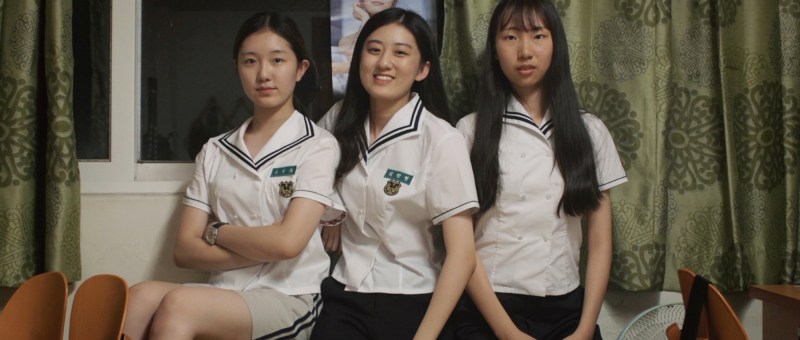
As the film opens, Junghee is one of three members of the “acrostic poetry club” along with her high school roommate Min-young (Yoon Seo-young), and a girl from down the hall Sanna (Son Da-hyun). Sadly, they’ve decided to wind the club up because they’re only 100 days out from the college entrance exams and need the extra time to study. We never find out exactly how well Junghee fared or whether her decision to lend her watch to an anxious boy (who does not pass) affected her grade, but in any case she does not attend university deciding instead to look for work while Min-young leaves to study nursing in Daegu. 

The third girl, Sanna, as we later discover did the best of the three and went all the way to Harvard. The trio had vowed to carry on the poetry club via Skype, Sanna making time for her friends even though the time difference makes it inconvenient while Min-young seemingly can’t be bothered to turn up. Nor can she really take time out for Junghee’s calls, her friend a little put out to hear loud party music in the background while trying to share important news. Even so, she’s delighted when Min-young suddenly invites her to visit her staying at her brother’s vacant apartment in Seoul during the summer holidays especially as she’d just been let go from the random job she’d managed to get manning the desk at a moribund tennis club. 

It’s in the Seoul apartment, a messy and chaotic place, that the differences between the two formerly close friends come to the surface. Despite having expressly invited her friend to come, Min-young isn’t really interested hanging out and is in the middle of some kind of crisis obsessing over a single bad grade on her end of term report card. Together they try to formulate a letter of complaint to the professor, Junghee doing her best to be supportive while privately wondering if Min-young isn’t being a little childish and that if she wanted a better grade she should have studied harder. Meanwhile, Min-young runs down all of Junghee’s life choices, constantly telling her she needs to be “realistic” and that she probably won’t get anywhere with her artwork in terms of financial viability. 

Junghee is visibly hurt by Min-young’s superior attitude, but in the interests of having a pleasant day chooses to let it go even while Min-young continues to ignore her. Even so the difference between them is perhaps at the heart of Min-young’s ironic “too Korean” comment about her new uni friends, criticising them for the conventionality to which she too aspires, singing the praises of Seoul but most particularly for its three floor claw game emporiums. A quick look at Min-young’s diary when she abruptly takes off leaving Junghee alone in the apartment reveals that in actuality she envies Junghee for her boundless imagination and willingness to be her true self rather than blindly trying to fit in while finding herself out of place among her new friends. Her opening poem hinted at low self-esteem and an insecurity about the future that perhaps leaves her a little self-involved, projecting her anxieties onto Junghee who is eventually forced to defend herself by pointing out that she has her own reality which is important to her no matter what those like Min-young may have to say about it. 

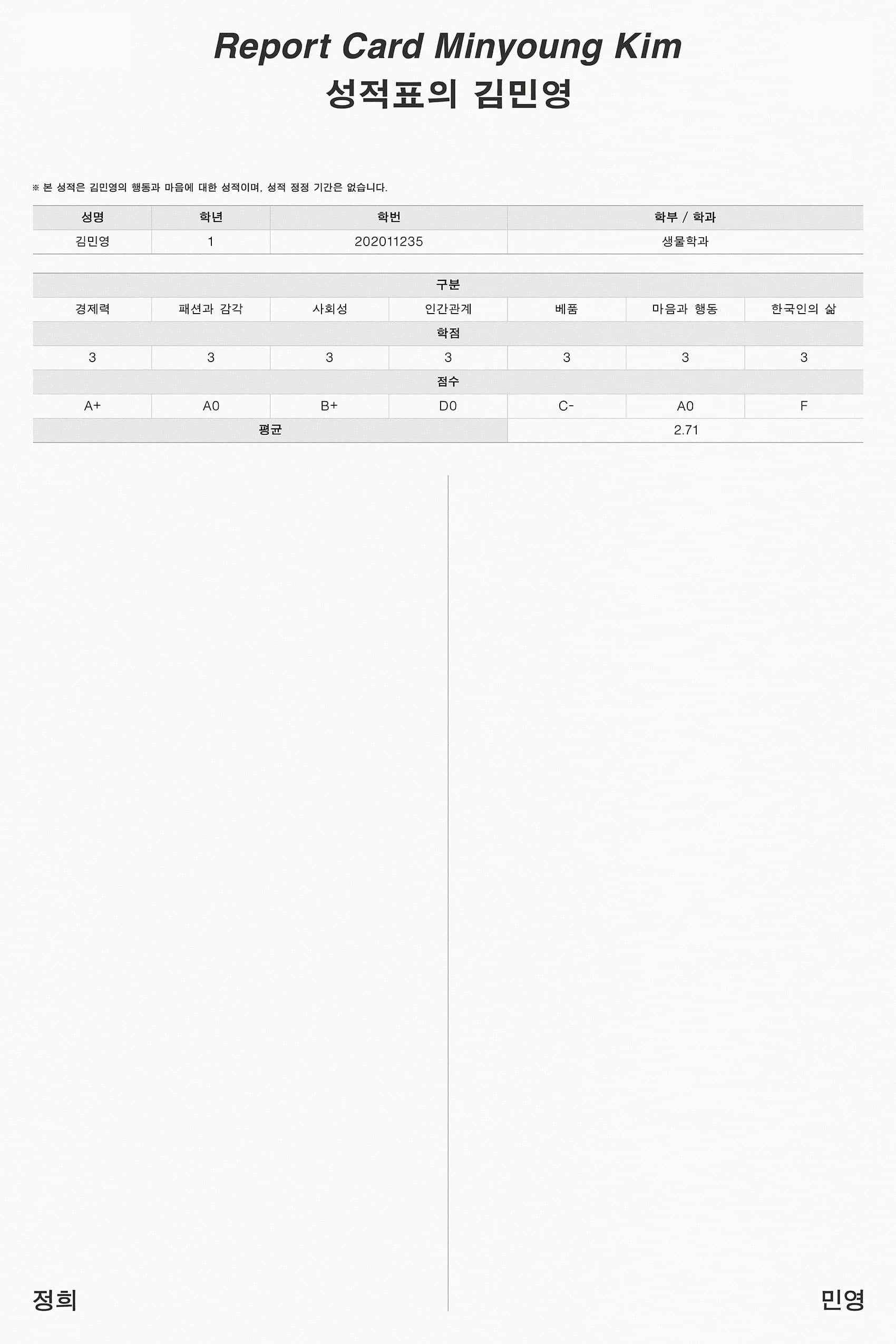
In the kindest of ways and with true generosity of spirit, Junghee writes the report card of the title praising her friend for her better qualities while pointing out her faults as supportively as she can. Giving her an “F” for “Koreanness” she advises her that she’s the one who is suffering because she worries too much about what other people think, searching for conventional “stability” rather than embracing her true self and ought to become “less Korean” in order to ease some of her anxiety. Offering a mild critique of a socially oppressive culture, Lee & Lim’s quirky drama with its random asides and flights of fancy makes a case for the right to dream positing the quiet yet free spirited Junghee as the more mature of the two women having embraced her true self and decided to follow her own path while being kind to those still trying to find their way. 


Kim Min-young of the Report Card screened as part of this year’s San Diego Asian Film Festival

Original trailer (English subtitles)

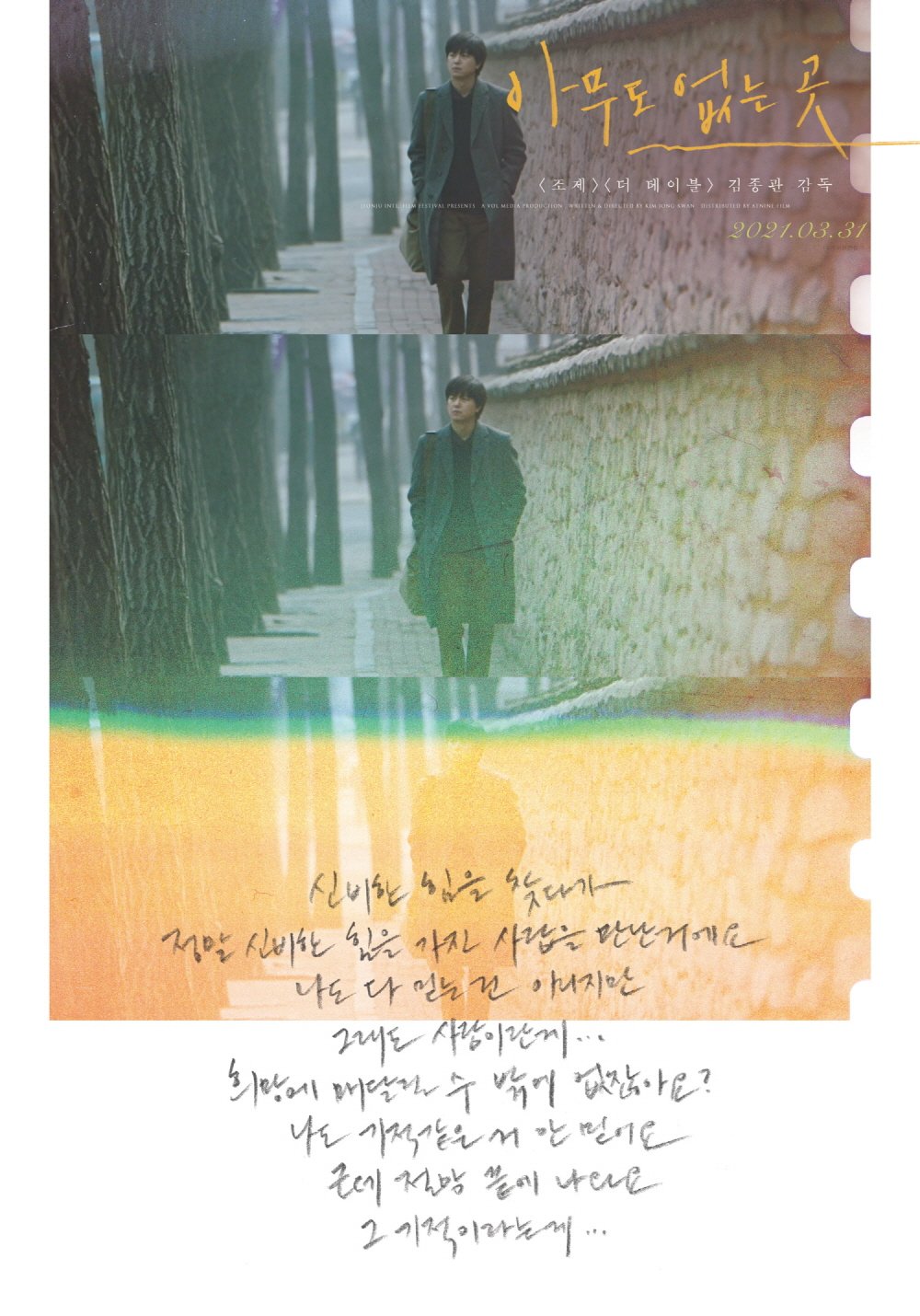
Shades of the Heart (아무도 없는 곳, Kim Jong-kwan, 2021)

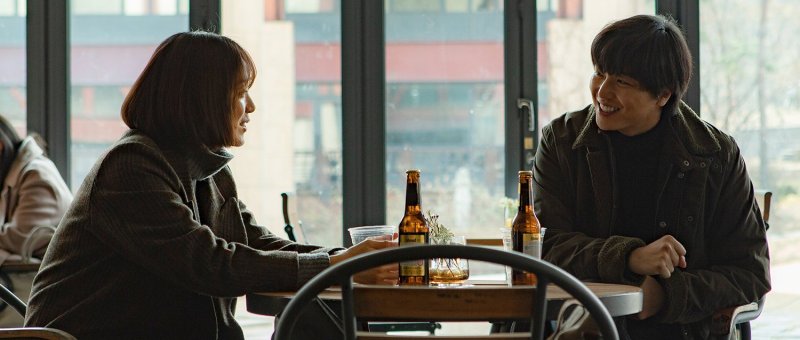
“I see hope! Let’s change direction” a distressed woman shouts in a park, “We should follow the wind, let’s hold hands that way you won’t get lost.” Her interjection is perhaps unexpected, in its own way sad, but also a sign offered to the melancholy protagonist of Kim Jong-kwan’s Shades of the Heart (아무도 없는 곳, Amoodo Eobneun Got), a man who has become without quite realising it “someone who waits” yet through encounters serendipitous and otherwise begins to see new paths in front of him, turning a corner into another story.

Novelist Chang-seok (Yeon Woo-Jin) has just returned to Seoul after seven years abroad following the breakdown of his marriage in the UK. He has begun to have strange dreams, seeing an older version of himself and presumably his wife walk away from him and eventually disappear. Yet each of the people he meets is also in someway burdened by a sense of loss or despair, his first meeting with his mother who appears to have some kind of dementia and does not initially recognise him thinking once again she’s on her first date with his father. Her sadness is the loss of past and present but also of future, telling her son on finally recognising him not to smoke so much so he won’t die young like his dad. 

Chang-seok had apparently given up smoking, but is motivated to start again perhaps seeing little point in extending his life, accepting some unusual Indonesian cigarettes from a former colleague now his editor who eventually tells him of her failed love affair with a young exchange student which apparently ended partly because he could not acclimatise himself to the harsh winters of Seoul. The other reason perhaps echoes something in Chang-seok’s own life though also tinged with a different sense of sadness. A serendipitous meeting with a former acquaintance meanwhile takes a turn for the strange, photographer Sung-ha (Kim Sang-Ho) somewhat manic in his ecstasy in having run into Chang-seok explaining that his wife is terminally ill yet a Buddhist monk had told him he’d run into someone he knew who would bring him luck. On the other hand, Sung-ha also shows him a vial of cyanide he’s managed to procure apparently planning to use it to take his own life after his wife dies but now filled with an almost certainly false hope in the strange power of religious mysticism. “I don’t believe in all that, but people.. they need to hang their hope on something” he explains.

Chang-seok may not have much of a sense of hope, but what little he has he’s hung on people or on art. He is forever “waiting” for someone who may or may not arrive or even exist, making notes in his notebook or wandering around the surprisingly lonely streets of Seoul after dark pausing by the now obsolete phone booths filled with the detritus of city life unsure whether or not to make a call. His final conversation is with a woman who tells him that she has no memories of her own, having been robbed of her past, and more, in an accident and now “buys” them off her customers swapping free drinks for personal stories while writing poems about their lives. “No one is coming, but he became someone who waits” she writes of Chang-seok, their meeting oddly mirroring his first in its mixture of fiction and reality along with relationships forged through the exchange of stories true or otherwise. As he’d said, sometimes a made up story can be the more truthful. 

“But they come in the depth of despair, miracles” Sung-ha had added hopefully seconds after saying he didn’t believe in them, each of Chang-seok’s encounters a tiny miracle in itself. Imbued with a deep sense of melancholy and loneliness, Kim’s delicately scripted ethereal drama is an exercise in grief and despair Chang-seok’s sense of fiction and reality beginning to blur even as he begins to find the urge to write again and with it perhaps to live again too. “I see hope!” the woman shouts once more, restored something as she takes her place in a new story, Chang-seok turning the corner and beginning once again to dream. 


Shades of the Heart screens 14th November as part of this year’s London Korean Film Festival.

Original trailer (English subtitles)

Awoke (복지식당, Jung Jae-ik & Seo Tae-soo, 2020)

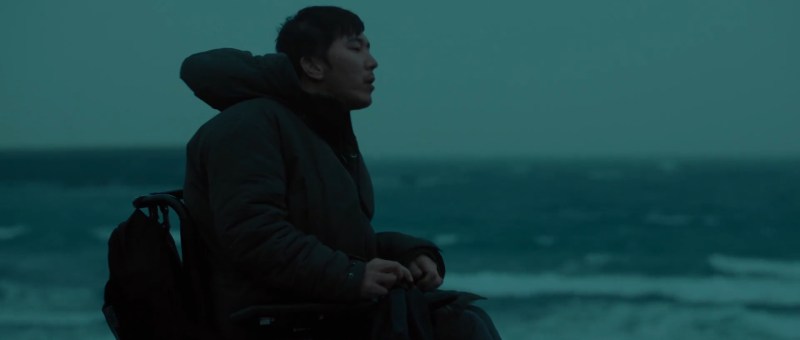
“Please let me live with dignity” the hero of Jung Jae-ik & Seo Tae-soo’s Awoke (복지식당, Bogji Sigdang) eventually pleads as a sole judge looks down on him from on high, advocating for himself but seemingly finding little support. Co-directed by Jung who is disabled himself and employing a mixed ability crew, Jung & Seo’s kafkaesque drama explores the vagaries of disabled life in the contemporary society in which there is still a degree of stigmatisation towards those with differing needs while the expanding welfare system also presents its own barriers preventing those with disabilities from leading full and fulfilling lives. 

This 34-year-old Jae-gi (Jo Min-sang) discovers when he suddenly becomes disabled after a traffic accident. As his mother died while he was in the hospital, he has only his cousin Eun-ji, who is a single mother to a teenage son, and an elderly landlord to look after him while it seems no one has fully explained the options he now has. His hospital roommate, Bong-su, seems to be an old hand, visited by a man in wheelchair, Byeong-ho whom he calls brother, who has evidently explained to him how to game the system which is why he is later rated level 2, the second most severe category of disability, despite being fully able to walk and perform everyday tasks with relative ease. Being an honest person, Jae-gi fully co-operates with the civil servant sent to assess his level of disability and as he is able to stand and make a few steps to transfer into a wheelchair independently he is put down as able to walk, and as the assessor is able to move his left arm which constantly tremors and has low functionality he is graded level 5 or “mildly disabled”. 

To anyone’s eyes, this is plainly ridiculous. Jae-gi needs an electric wheelchair in order to get around and can only manage basic every day tasks such as housework and laundry with assistance. He is also forced to move out of the flat his mother left him because it’s a walkup, meaning he has to rent an accessible room. He tries to apply for various schemes intended to help people like him so that he’d be able to use subsidised accessible taxi services and have access to a personal carer but is repeatedly told he doesn’t “qualify” because of his level five designation. Unable to claim for disability living allowance, Jae-gil wants to get a job but again on visiting a specialist service designed to help those with disabilities get into work finds himself falling between two stools. The first interviewer simply looks at him and explains he wants someone who can walk and lift heavy objects, which is incongruous with advertising jobs to people with physical disabilities. The second wanted to hire him right away only to rescind the offer on looking at his welfare card explaining her company only hires levels one to three. Byeong-ho, who happens to work there too, explains that’s because companies are given subsidies for hiring the “severely” disabled which on paper Jae-gil is not. 

Time and again, Jae-gil becomes the victim of officious bureaucracy. The services needed to help him exist, but he is prevented from using them because an over officious assessor was too literal with his form. He’s told that it’s difficult, perhaps impossible, to get one’s level changed, a claim which seems doubly unfair given that disability can of course change over time. Intensely vulnerable, he comes to over rely on Byeong-ho’s advice, little knowing that Byeong-ho is also exploiting him despite being aware that he has no money and is in danger of being evicted from his flat if he is not able to get his level changed to enable him to work, claim the assistance he is entitled to, and live a fulfilling independent life. 

Encouraged by Byeong-ho, Jae-gil is certain that he’s going to get his rating overturned, assuring his cousin there’s no need to sell his mother’s flat in which she is currently living after losing her house when her husband passed away from cancer because he’ll soon have a job and can pay the rent. Perhaps to a certain extent you can’t blame Byeong-ho for being the way he is given the way he has also experienced exploitation and discrimination not to mention violence at the hands of a father who couldn’t accept having a disabled son, but his almost sadistic glee in fleecing Jae-gil of the little he has is plainly unforgivable, reaching out in solidarity as one disabled person to another only to pass on his sense of oppression to someone even more vulnerable. Forced into a kafkaesque bureaucratic nightmare, all Jae-gil can do is repeatedly state his case only for those in positions of power to claim they are prevented from helping him because his card says level five despite the obvious evidence of their eyes. Nevertheless, through his traumatic experiences of betrayal and exploitation, he perhaps awakens to the injustice inherent in the contemporary society and is resolved to advocate for himself though the jury is it seems out on whether anyone is finally going to listen. 


Awoke screens 9th November as part of this year’s London Korean Film Festival.

Original trailer (English subtitles)

Pistol (手枪, Lv Huizhou, 2020)

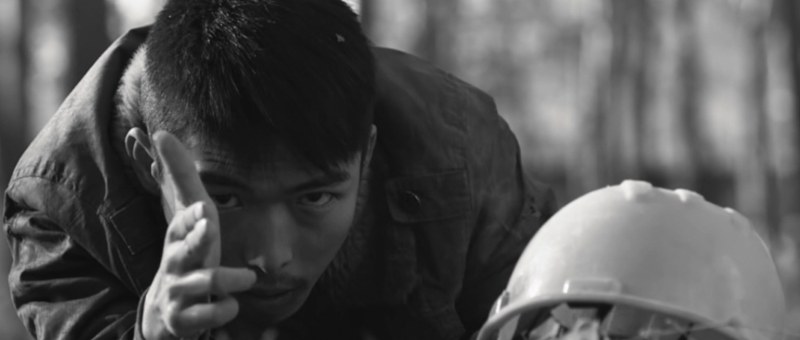
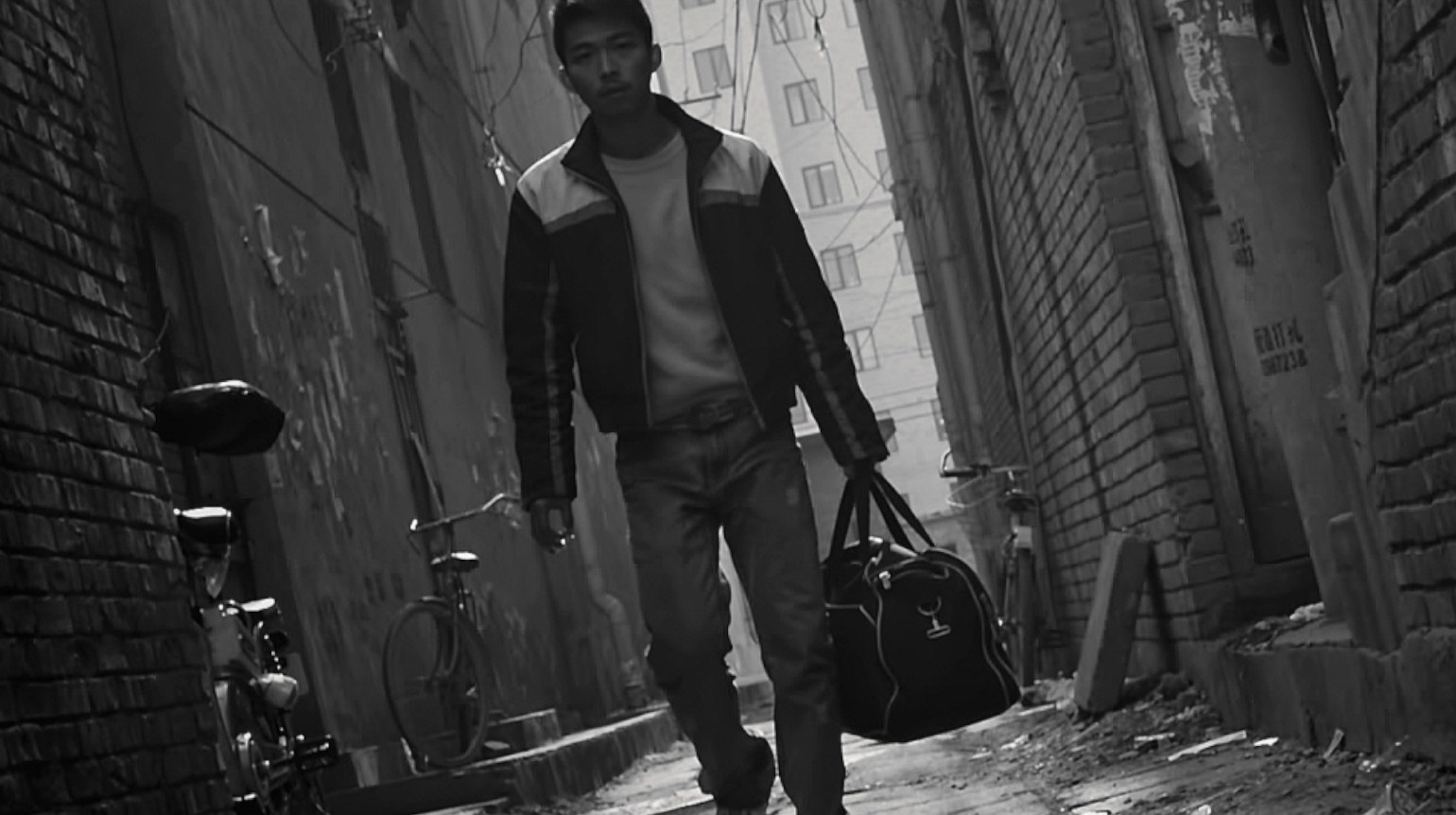
The contradictions of the modern China drive one young man clear out of his mind in Lv Huizhou’s elliptical street punk noir, Pistol (手枪, Shǒuqiāng). Shot in a washed out monochrome and seemingly set some time after the Beijing Olympics, Lv’s anarchic drama sees its hero develop unexpected superpowers as if to combat his sense of impotence and impossibility while constantly uncertain whether his newfound abilities are “real” or merely a figment of his declining mental state as he chases lost love through the rundown backstreets of a Beijing slum.  

Construction worker Mengzi (Zhang Yu) claims he likes Beijing, after all it’s an “international city” always busy with crowds. Many people long to come here, as perhaps he once did, though you can’t say the city has served him particularly well. He lives in a tiny room with a bunk bed and no functioning bathroom which is why he pees in a bottle into which he’s already discarded his cigarette and digs a hole in the woods every time he needs to do a number two. The only thing keeping him going is his doomed relationship with sex worker Yaoyao (Wang Zhener) who just wants to make as much money as she can while she’s young. Mengzi may have stolen the “international city” line from her, he often seems to repeat things said to him when he speaks at all, but Yaoyao also claims to like Beijing because of the opportunities it offers her, citing the story of a woman she knew who quit sex work after only three years with enough money to buy house in her home town, now walking around dripping with jewellery like the queen of all the land. When Yaoyao goes missing, Mengzi fetches up at the salon where she worked that’s really a front for a brothel run by a local gangster and raises hell, picking a fight with the gangster’s wife and in the first of many flashes of spontaneous violence smashing her mirror. 

The ill-advised rescue mission gets him nowhere, the gangster turning up at the restaurant where he’s once again adding to his tab to tell him she’s been sold on to a club before teaching him a lesson. This is where we came in, or it might as well be, with Mengzi chased through the narrow city alleyways until finally cornered and beaten. Mengzi is in many ways a man on the run from himself. His room is papered with posters for macho crime dramas such as Dirty Harry, The Man With No Name Trilogy, and A Better Tomorrow 2, Taxi Driver pinned incongruously between boy band Super Junior and a girl group in air hostess outfits. He is God’s lonely man, obsessing over misplacing his high school graduation certificate while failing to convince his boss to give him a better job. At his lowest point, he digs a hole and crouches down pointing his fingers at gaggle of chickens and pretending to shoot only to hear a gunshot and on closer inspection discover a very dead hen. 

In the days since losing Yaoyao, Mengzi hadn’t done much of anything save mope around, having a tourist day with streetwise kid Laizi (Hou Xiang) visiting Tiananmen Square and the Olympic stadium, both places Yaoyao lied to her mother about visiting trying to make her think her Beijing life was better than it was. His strange visions and violent meditations are often intercut with comforting memories of his time with Yaoyao alone in her bohemian flat, a poster of Chicken Run ironically hanging on her wall. Flashing into colour, the billboards around the stadium are filled with pretty pink flowers and play the Olympic song about being one big family, red solarised footage of the opening ceremony later filling Mengzi’s mind. Family seems to be something Mengzi doesn’t really have, a perpetual orphan wandering around unanchored and resentful of the society that won’t let him prosper. Losing Yaoyao he vows revenge with his new weapon, which for some reason only works with his rear end partially exposed, literally taking aim at social inequality in the midst of a trendy club from which he concludes he may never be able to retrieve his lost love. 

Shot in a washed out black and white reflecting Mengzi’s sense of despair, Lv’s frantic handheld photography mimics his paranoid psychology with its noirish canted angles and extreme sense of claustrophobia while introducing a note of psychedelic uncertainty as even Mengzi himself cannot be sure if his fingers really shoot bullets or he’s in the midst of a psychotic break possibility connected to the traumatic event that opened the film reflected in his own eventual solarisation. An elliptical, ethereal journey through the backstreets of Beijing as they exist in the mind of a crazed young man denied a future and the home he’s so desperate find, Pistol has few kind words for the modern China but perhaps sympathy for its frustrated hero. 


Pistol screened as part of this year’s London East Asia Film Festival.

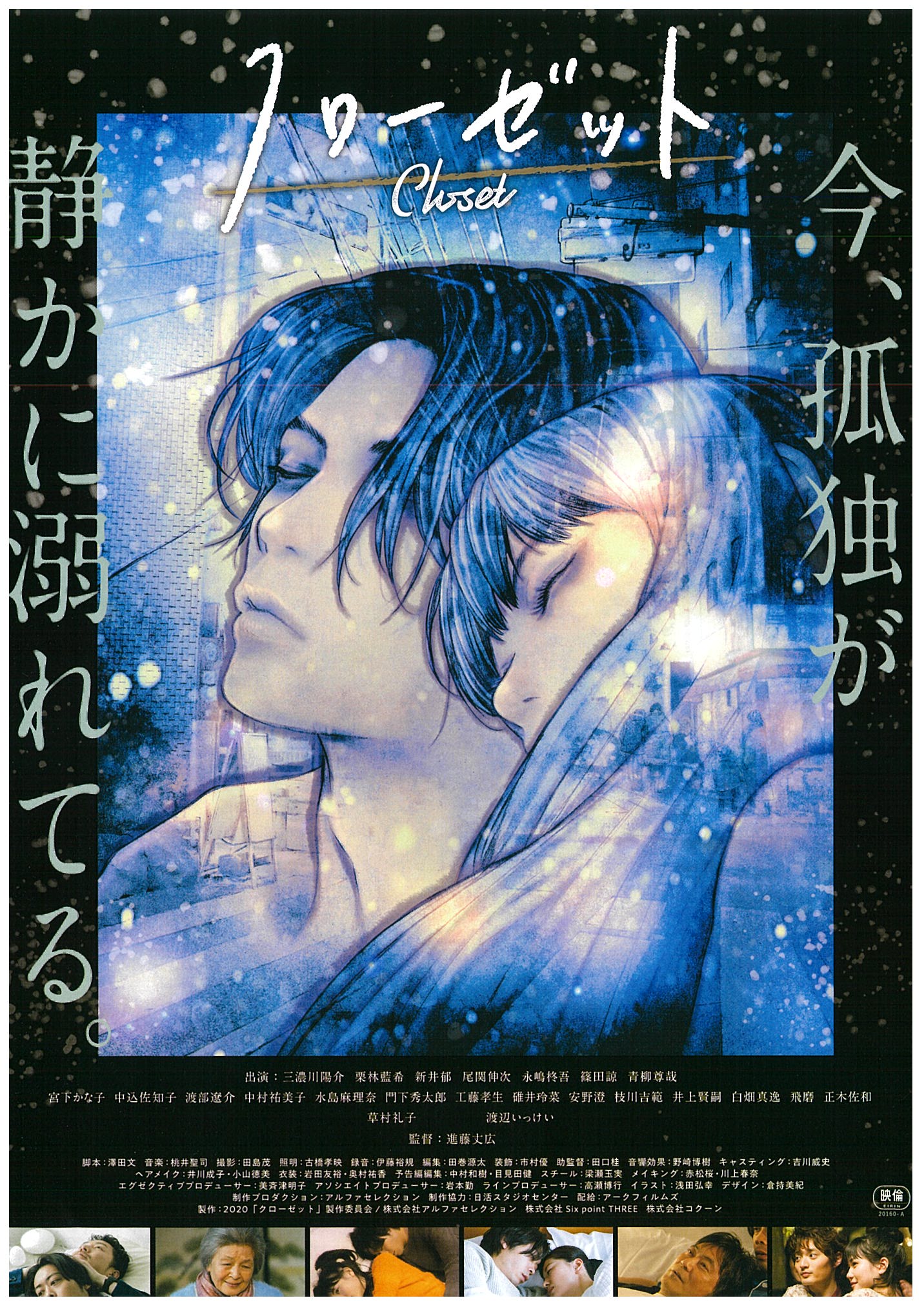
Closet (クローゼット, Takehiro Shindo, 2020)

“Everyone has their own closet” according to a bereaved older man sympathetically reflecting on a life half lived. The wounded hero of Takehiro Shindo’s Closet (クローゼット) is about to discover he may have a point as he works through his own issues, finally coming to an understanding of the true nature of intimacy before learning to open himself up to living life true to himself realising that perhaps his very ordinary dream is not as hopeless as he thought it was if only he can bring himself to put his male pride aside. 

Returning to Tokyo following a failed engagement, Jin (Yosuke Minogawa) finds himself taking on an unusual line of work on the invitation of an old friend, embarking on a career as a sleep companion. Essentially, he’s there to lie beside a lonely person offering a safe and supportive space where they can relax and be their authentic selves free from the judgement they may otherwise receive from a friend or a lover. Ironically enough, Jin is a man of few words, his fiancée once asking him to be a little more sociable when her parents visit, which means he’s a good listener but slow to adapt to the true purpose of his work. His first client, a harried hospital worker, seemingly just wants to destress but mostly through having someone listen to her rant about workplace concerns and nod along sympathetically rather than offer earnest advice. As his boss Takagi (Shinji Ozeki) reminds him, it’s all about empathy, or at least telling them what they want to hear which may sound insincere but in another sense may not be. 

As the old man says, everyone has something they don’t really want to let out but the presence of the sleep companion is intended to ease the burden and provide temporary relief. Jo Shimoda (Ikkei Watanabe), is grieving for his late partner who remained in the closet for the entirety of their relationship leaving him now with nothing but intangible memories. He asks Jin to put on the other man’s pajamas, experiencing the warmth and comfort he misses from his absent lover and gaining through it the ability to begin moving on. Kaori (Iku Arai), meanwhile, is a harried executive, or at least she claims, apparently in love with a slightly younger colleague but unsure if her crush is appropriate while worrying that she’s in danger of missing the boat both in love and in her career. 

A young student from the country, Nanami (Aino Kuribayashi), on the other hand, is in search of the kind of comfort she does not receive from her no good boyfriend, realising only too late that his treatment of her is abusive and their relationship is built on exploitation. Jin had in a sense experienced something similar, ruining his relationship in a crisis of masculinity. It is of course he who also receives warmth and support through his role as a companion, but the job also allows him to reconfigure his idea of what it is to be a man in providing a sense of safety, protection, and comfort while engaging in a true intimacy that is not defined by sexuality.

Through their shared experiences, both Jin and the sleepless companions begin to grow in confidence, accepting themselves for who they are and preparing to move on into a more authentic future even if for some the path turns darker before it reaches the light. Stepping out of their individual closets, they no longer feel so insecure finally gaining the courage to live as their true selves no matter what anyone else might have to say about it in the knowledge that others too are also suffering and might be led out of it by their example. A gentle tale of the simple power of human intimacy to overcome a sense of existential loneliness and individual despair, Closet allows its reticent hero to find new meaning in the ability to accept from and give to others comfort while coming to terms with his own traumatic past in realising that he is not and never was defined by conventional ideas of masculinity and that he is not worthless solely because he is no longer able to fulfil them. Perhaps that small yet infinitely ordinary dream is not so out of reach after all. 


Closet screened as part of this year’s Camera Japan

Original trailer (no subtitles)

Mari and Mari (彼女来来, Tatsuya Yamanishi, 2021)

How well do you really know your significant other, and is it possible that even you can be lulled into a false sense of security by the performative qualities of your relationship? The befuddled hero of Tatsuya Yamanishi’s Mari and Mari (彼女来来, Kanojo Rairai) is forced to reckon with the superficialities of his romantic life when he arrives home one day to discover that his girlfriend is nowhere to be found and in her place is another woman with the same name who seems intent on occupying the space she has just vacated. 

Casting agent Norio (Kou Maehara) is in a longterm, actually rather nauseating in its sweetness, romantic relationship with girlfriend Mari (Nao). Despite being a well established, not yet married but might as well be cohabiting couple, they have their own little song they like to sing about how great their lives are with each other while taking romantic walking dates along the river where they look lovingly into each other’s eyes. “You’ve been together for ages, but you act like it’s a first date” one of Norio’s colleagues unironically remarks, seemingly a little envious. After moaning about a workplace setback, Norio suggests taking a trip while Mari points out that he’s always too busy for holidays but seems pleased just with the thought. 

For all these reasons, Norio is especially confused when he arrives home after a tough day and finds Mari gone, understandably mistaking the figure of a woman sleeping on their sofa for his girlfriend only to realise his error when she gets up and turns around, the low evening light finally hitting her face. The woman, who is apparently also named “Mari” (Hana Amano) claims to have no memory of her life before waking up on the sofa, and declaring herself homeless announces that she’s moving in. Extremely confused, Norio embarks on a quest to try and out what’s happened to Mari but discovers few leads. Even her sister seems relatively unconcerned, certain that she’s just blowing off steam bringing up a childhood incident in which she “ran away” to stay with a friend whose family ran a sweetshop because she had a sweet tooth and they weren’t allowed sweets at home. 

This relatively innocent story perhaps highlights the possibility of cracks in Norio’s “perfect” relationship, that “Mari 1” might have been feeling the lack of something and has gone off to find it. Though we’re told that Norio and Mari had been happily coupled for some years, a surprise visit from Norio’s parents reveals they’d never met his longterm girlfriend which does indeed seem odd if the relationship is as serious and loved up as it seemed to be. The plot thickens further when he visits the bookstore where Mari was working and is told she quit her job a few days previously having said nothing to him. You have to wonder if Mari 2 is actually real or a merely a manifestation of his inability to accept the fact that his relationship has failed and his girlfriend has moved on. 

Could Norio be guilty of treating his romantic life like one of his auditions, simply slotting in a woman who looks the part to play the role of “girlfriend”? Maybe Mari 1 was so wrapped up in her relationship that she didn’t have any friends, but Norio doesn’t contact any outside of her sister and appears not to know very much about her interior life. He also appears oblivious to a sweet intern at the office, his work life beginning to suffer while he remains preoccupied with Mari 1’s disappearance, who seems to have a crush on him until becoming unexpectedly jealous on spotting her in a clinch with another coworker in the darkened break room. Missing Mari 1 he repeatedly rebuffs Mari 2, attempting to throw her out of his apartment and rejecting each of her attempts to get close to him but eventually warms to her presence and finally allows her to take Mari 1’s place as his live-in girlfriend. 

Are Mari 1 and Mari 2 interchangeable to him? His brief comment that Mari 1 looked like another person under different light hints at a slight fluidity in the nature of her identity, as does the repeated motif of the sunlight climbing towards her face in their darkened bedroom. Then again, could the memory of Mari 1 merely be the intrusive ghost of failed love that disrupts his subsequent relationships, suggesting that his relationship with Mari 2 is doomed to failure because of his obsession with the one who literally got away. Or are Mari 1 & Mari 2 actually the same and a reflection of the way people can sometimes change or you learn something new about them and they seem like a completely different person? Perhaps “Mari” is just a signifier for romantic partner, otherwise devoid of an individual identity. What seems clear at least is that Norio does not “see” the woman in his life because he only sees “Mari”, as the slightly melancholy, intensely lonely look on the face of the woman next to him at the film’s conclusion may seem to suggest. 


Mari and Mari streams in the US until Sept. 2 as part of this year’s Japan Cuts.

International trailer (English subtitles)