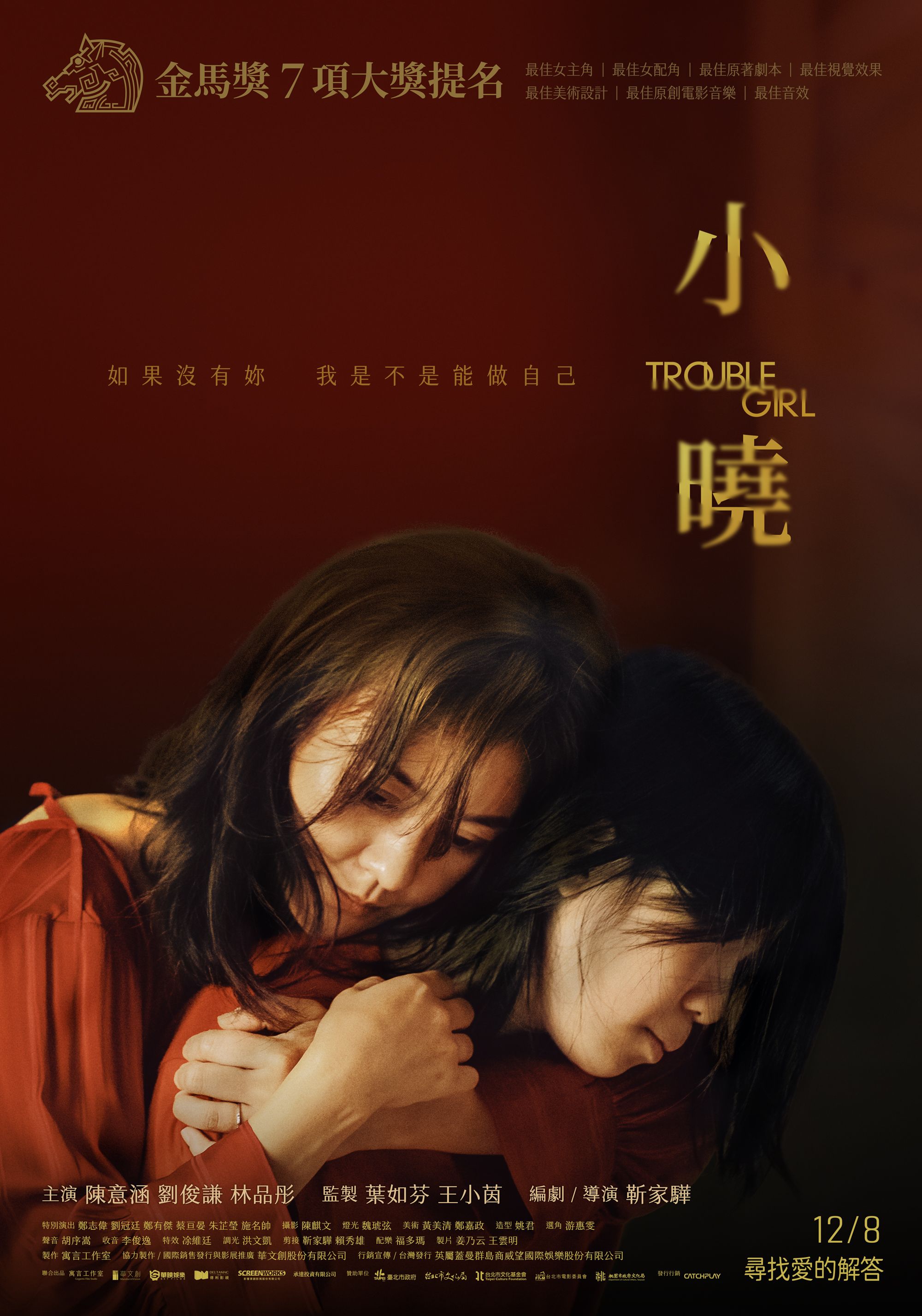
Trouble Girl (小曉, Chin Chia-hua, 2023)

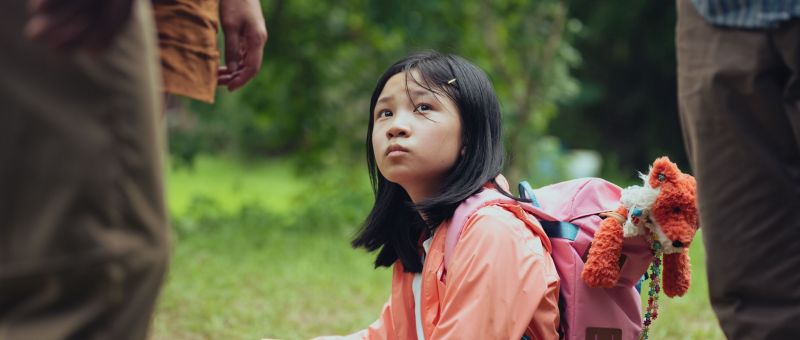
The sad thing about Xiaoxiao’s life is that everyone is so intent on making her just like everyone else rather than trying to find ways to allow her to be more of herself. The film’s English title, Trouble Girl (the Chinese being simply her name, 小曉, xiǎo xiǎo), might hint at the external attitudes towards her in which she is seen only as a disruptive troublemaker while largely friendless and bullied by the other kids in her class.

The irony is that it’s only her teacher, Mr Chen (Terrance Lau Chun-him), who is actively trying to help her but he does so from a place of corrupted paternity in that he’s been having an affair with her mother, Wei-fang (Ivy Chen Yi-han), which began as a consequence of their meetings to discuss Xiaoxiao’s ADHD diagnosis and how to manage it at school. Seemingly under stimulated, Xiaoxiao ignores her classes and plays video games instead while Mr Chen doesn’t really say anything before gently taking her aside to suggest it’s not a good idea. He’s a proponent of positive reinforcement but is also a regarded as a soft touch by some of the other parents who increasingly turn against Xiaoxiao, regarding her as a disruptive presence damaging their kids’ education. 

Then again, it’s mostly these kids who are bullying Xiaoxiao for being not quite like them. Mr Chen has started some kind of secret program in which kids can get stickers for being nice to her, but it’s largely backfired as they alternately provoke Xiaoxaio because they think it’s funny when she loses her temper and act friendly when the teachers are around. Rather than attempting to make some accommodations for her, the school is only capable of trying to force her to behave in exactly the same way as everyone else. On an awkward camping trip with her mother and Mr Chen, he suggests capturing a frog but despite her fascination with them Xiaoxiao rejects the idea. She wouldn’t want the frog to be trapped in a bottle, and later attempts to free an owl from a cage symbolising her own desire to be free to be herself. After being suspended from school, she heartbreakingly tells her mother that she just wants to stay home and learn not to take pills anymore.

But then Wei-fang has problems of her own. She’s trapped too. Her husband has been living abroad for some time and it’s clear the marriage is all but over while she struggles to bond with Xiaoxiao and is ill-equipped to deal with her needs, perhaps on some level ashamed that she isn’t living up to the middle class ideals professed by the other mothers. She even may even resent her for trapping her in a dissatisfying domestic arrangement but is alternately frustrated that Xiaoxiao does not really want to play with her and prefers her father or Mr Chen. We see her struggle with her emotions too, sometimes slapping Xiaoxiao and shouting at her for doing something wrong or getting into trouble. 

Her affair with Chen may be a kind of escapist fantasy, but he seems to take it seriously and provides a positive, paternal presence in the absence of Xiaoxiao’s father who though he seemed caring later offers quite a harsh critique of his daughter that suggests he regards her as a disappointment. Nevertheless, it’s quite troubling that her sort of friend Xiaoshan calls Mr Chen “Paul” and is friendlier with him than seems appropriate but then her parents are involved with running the school so perhaps she simply knows him on a more personal level. Even so, the connection seems to arouse an odd kind of jealously that interacts with her disapproval of her mother’s betrayal of her father in having the affair. 

When Xiaoxiao tries to free the owl, she is surprised to discover that it simply flies back to its porch as trapped as both she and her mother though no longer with any desire for escape. Sympathetic towards the film’s twin heroines, Chin shoots with a down to earth naturalism though through the eyes of Xiaoxiao who is really just looking to be accepted for who she is while observing that her mother is much the same but even approaching middle-age seems no closer to finding accommodation or fulfilment.


Trouble Girl screened as part of this year’s Osaka Asian Film Festival.

Original trailer (English subtitles)
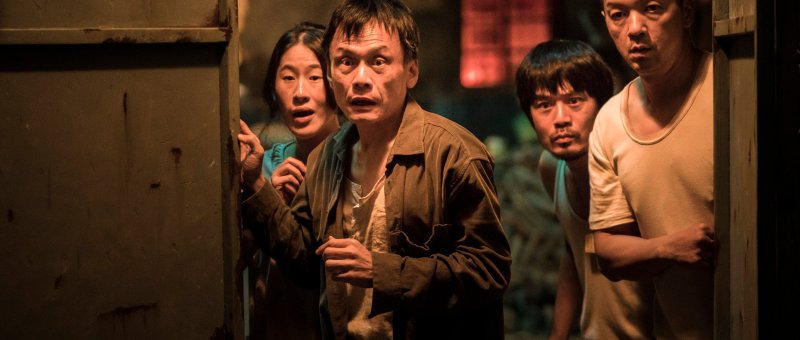
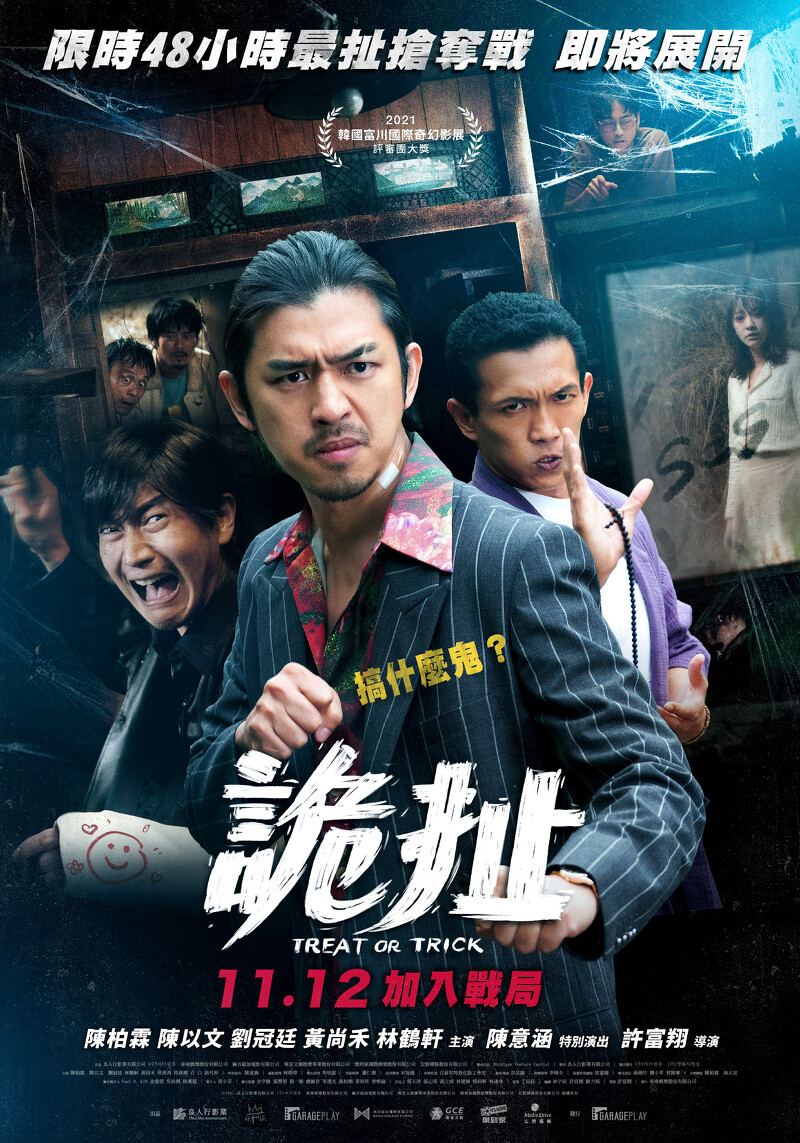
Treat or Trick (詭扯, Hsu Fu-Hsiang, 2021)

Diamonds, What it is it about them that makes everyone crazy? A bag of the elusive gemstones leads a series of corrupt cops towards a purgatorial hellscape deep in the mountains in Hsu Fu-Hsiang’s remake of the 2004 Korean film To Catch a Virgin Ghost, Treat or Trick? (詭扯, guǐ chě). The title could stand in for diamonds themselves which after all have little intrinsic value outside the illusionary desirability they evoke, but also hints at the “trickster” nature of its duplicitous hero. 

Corrupt cop Feng (Chen Bolin) admits that he didn’t join the police out of a fierce sense of justice, but because it was more convenient for his gangster lifestyle as he demonstrates in arresting a bunch of crooks only to stage a secondary robbery, getting his best friend Chiang (Yen Sheng-yu) to pose as a thief taking him hostage and running off with a bag of diamonds. Only, unbeknownst to Feng, Chiang has been picked as a fall guy for Boss Lin (Yu An-shun) to whom they were supposed to deliver the diamonds and has taken off with them. This is obviously a problem for Lin who takes cop Psycho hostage and charges Feng, his buddy Monk, and a guy from the gang Yang (Liu Kuan-ting), to track him down and bring the diamonds back. The trouble is that Chiang got into a car accident swerving to avoid the ghostly presence of a young woman and has wandered into a very weird village where everyone seems to be acting suspiciously. 

In many ways, you could see the village as a kind of purgatorial space inhabited by those trapped between two worlds towards which the gang of corrupt cops is beckoned to answer for their transgressions. Meanwhile, they’re also haunted by the figure of the mysterious woman whose presence is both help and hindrance hinting at dark goings on in this very remote area where visitors are a rarity. Having found out about the diamonds, the villagers are obviously keen to keep hold of them but then there are only so many to go round and it’s not as if you can cut a diamond in half, so the dilemma remains exactly who is going end up with the loot and how creating division on both sides. 

You couldn’t really say that either of these groups are the good guys, but it’s true enough that the villagers variously end up paying a high price for their greed usually caught out by their attempts to get one up on the cops, injured by backfiring weapons or caught in their own traps. Meanwhile, even Chiang falls victim to the essential weirdness of the village in succumbing to a freak accident which leads some to believe that he is dead though in a running gag he turns out to be more or less unkillable as if the eeriness of the place will not allow him to die no matter how many times he’s thrown off a hill, nailed in the head, crushed under falling objects, or set on fire. Yet Feng and his buddies remain largely untouched, outsiders in this strange world and completely by accident occupying some kind of murky moral high ground in trying to rescue their friend (along with diamonds which they need to get Psycho back and save their own lives by smoothing things over with Lin).

Hopping from the gangster movie to supernatural horror, martial arts, and mystery Hsu’s absurd morality farce throws in a series of running gags from “unlucky” Chiang’s strange ability to survive the unsurvivable to frequent allusions to the diamond sutra while possessing its own sense of karma as the greedy find themselves victims of their own scheming, but then perhaps not as the final twist might imply. Even so in this weird place, natures and destinies perhaps possess the ability to change, eccentric thug Yang getting far too into his role as a cop and finally deciding he’d like to be a “good guy” after all while guided by their brotherhood Feng and Monk too find themselves rediscovering a sense of justice in accidentally helping to solve a long dormant cold case. It’s all curiously circular, which is perhaps fitting for this farcical morality tale, but the jury seems to be out on whether even the brotherhood between Feng and his buddies not to mention their newfound sense of justice can survive the cursed allure of the stolen diamonds. 


Treat or Trick screens in Chicago April 9 as part of the 14th season of Asian Pop-Up Cinema.

Original trailer (Traditional Chinese / English subtitles)

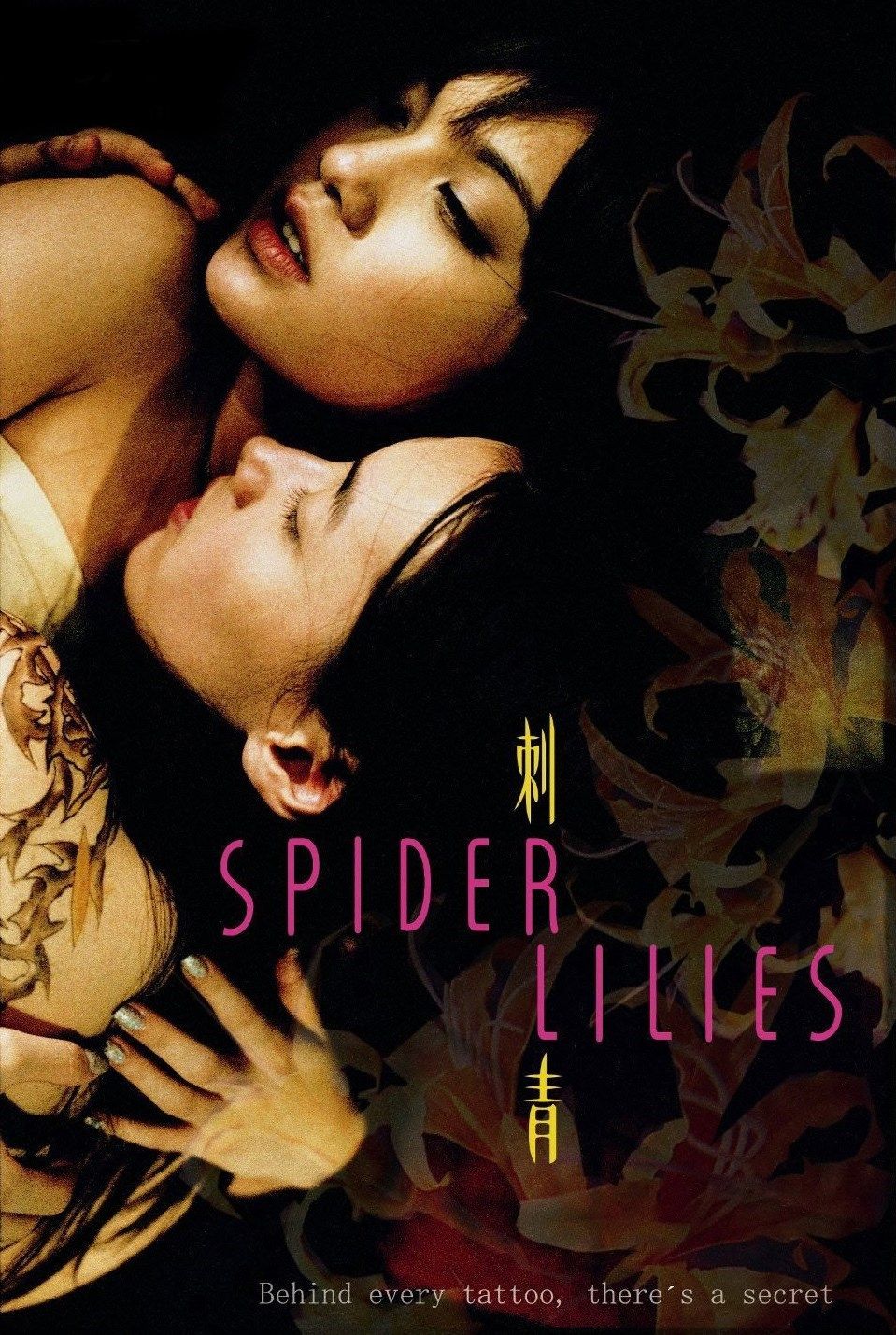
Spider Lilies (刺青, Zero Chou, 2007)

“I have no choice but to live in a virtual world” according to the lovelorn heroine of Zero Chou’s ethereal reflection on love and the legacy of trauma, Spider Lilies (刺青, Cìqīng). Two women connected by childhood tragedy struggle to overcome their respective anxieties in order to progress towards romantic fulfilment, eventually freeing themselves only by destroying the image of that which traps them. 

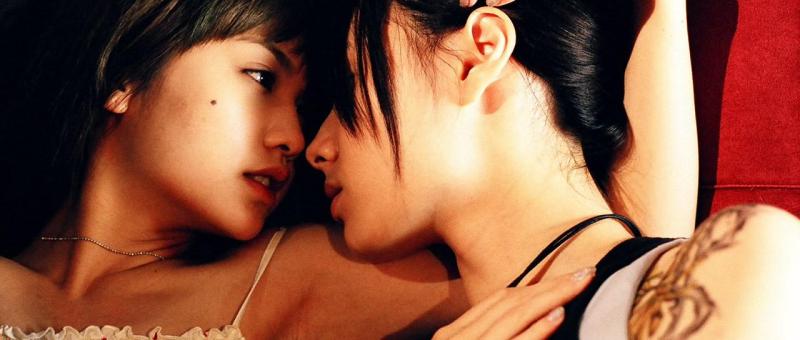
In the present day, Jade (Rainie Yang) is an unsuccessful camgirl with a habit of shutting down her clients on a whim which doesn’t play well with her boss. In an effort to spice up her live show, she decides to get a raunchy tattoo only to realise that the tattooist, Takeko (Isabella Leong), is in fact her long lost first love, a neighbour she took a fancy to at the tender age of nine. For her part, Takeko appears not to remember Jade but cannot deny the presence of her unusual spider lily tattoo, a version of which hangs prominently on her wall. Hoping to maintain contact, Jade decides to get the spider lily tattoo herself but Takeko is reluctant, explaining that the spider lily is a flower that leads only to hell. 

According to Takeko’s master, there is a secret behind every tattoo and the responsibility of the tattooist is to figure out what it is but never reveal it. Thus Takeko crafts bespoke tattoo designs for each of her clients designed to heal whatever wound the tattoo is intended to cover up, such as the ghost head and flaming blades she tattoos on a would-be gangster who secretly desires them in order to feel a strength he does not really have. Her tattoo, however, is intended as a bridge to the past, a literal way of assuming her late father’s legacy in order to maintain connection with her younger brother (Kris Shen) who has learning difficulties and memory loss unable to remember anything past the traumatic death of their father in an earthquake which occurred while she was busy with her own first love, a girl from school. Feeding into her internalised shame, the tattoo is also is a means of masking the guilt that has seen her forswear romance in a mistaken sense of atonement as if her sole transgression really did cause the earth to shake and destroy the foundations of her home. 

Then again, every time Takeko seems to get close to another woman something awful seems to happen. Jade, meanwhile, affected and not by the same earthquake is burdened by the legacy of abandonment and the fear of being forgotten. Living with her grandmother who now has dementia the anxiety of being unremembered has become acute even aside from the absence of the mother who left her behind and the father last seen in jail. “Childhood memories are unreliable” she’s repeatedly told, firstly by Takeko trying to refuse their connection, and secondly by a mysterious online presence she misidentifies as her lost love but is actually a melancholy policeman with a stammer charged with bringing down her illicit camgirl ring. The policeman judgementally instructs her to stop degrading herself, having taken a liking to her because he says he can tell that she seems lonely. 

A kind of illusionary world of its own, Jade’s camgirl existence is an attempt at frustrated connection, necessarily one sided given that her fans are not visible to her and communicate mainly in text. It’s easy for her to project the image of Takeko onto the figure of the mystery messenger because they are both in a sense illusionary, figments of her own creation arising from her “unreliable” memories. Jade wants the tattoo to preserve the memory of love as a bulwark against its corruption, at once a connection to Takeko and a link to the past, but the tattoo she eventually gets is of another flower echoing the melancholy folksong she is often heard singing in which the lovelorn protagonist begs not to be forgotten. 

“I am a phantom in your dream and you too live in mine” Jade’s mystery messenger types, hinting at the ethereality of romance and fantasy of love. Caught somewhere between dream and memory the women struggle to free themselves from the legacy of past trauma and internalised shame, but eventually begin to find their way towards the centre in making peace with the past in a sprit of self-acceptance and mutual forward motion.


Spider Lilies streams in the UK 26th April to 2nd May courtesy of Queer East

Original trailer (English subtitles)

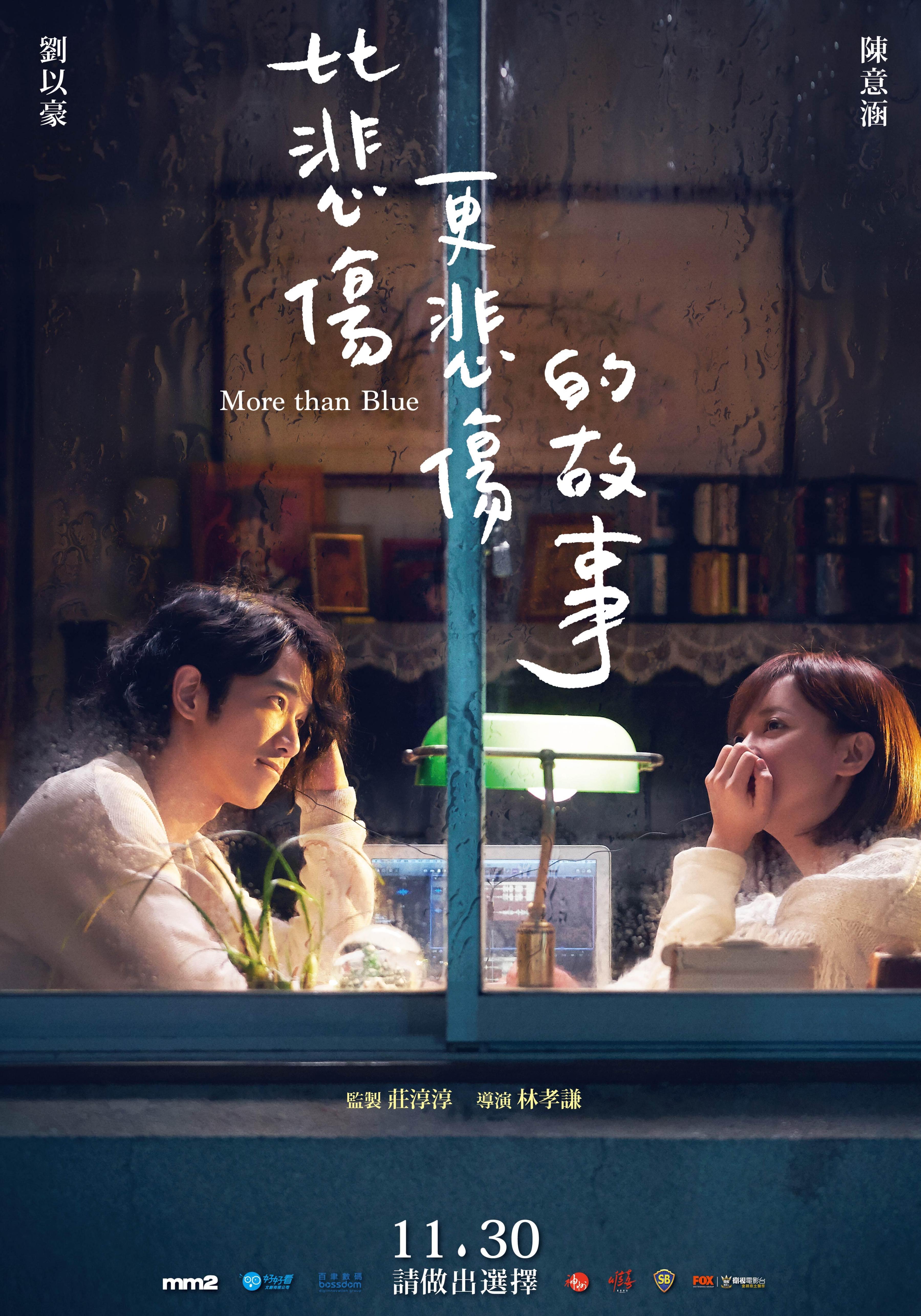
More than Blue (比悲傷更悲傷的故事, Gavin Lin, 2018)

More than blue poster“What’s so romantic about eternity?” asks the heroine of Gavin Lin’s remake of the 2009 Korean film More than Blue (比悲伤更悲伤的故事, Bǐ Bēishāng gèng Bēishāng de Gùshì). As the title, which literally translates as “a sadder than sad story”, implies More than Blue is another addition to Taiwanese cinema’s growing roster of melancholy romantic melodramas though this time one which rips a page from the “jun-ai” notebook as its selfless pair of lonely lovers engage in acts of mutual self sacrifice in an attempt to make each other “happy” while remaining quietly miserable as they contemplate a future which may not actually exist.

The hero, nicknamed K (Jasper Liu), lost his father to leukaemia when he was 16. His mother left shortly afterwards on learning that he too had the same disease, unable to cope with the pain of watching her son fade in the same way her husband had. Resigning himself to a life of loneliness, K eventually met “Cream” (Ivy Chen Yi-han), a cheerful and outgoing girl who lost her entire family in a traffic accident. The pair become friends, go to the same university, and eventually move in together but despite a brief fumble and innocent kiss their relationship remains entirely platonic. 10 years later, they’re working for the same record company where Cream is a lyricist and K in promotion. K’s illness is worsening and there’s no sign of a transplant. He has never told Cream about his medical history and now fearing that the end is near, he decides that the best thing to do is to push her towards a nice guy who can look after her after he is gone.

As someone else later points out, K’s decision is a little chauvinistic. Not only has he made it entirely alone, but he’s done so on fairly mercenary terms which imply Cream is not capable of looking after herself rather than solely of hoping to cushion the blow for the time when she must eventually lose him. After all, all relationships end one way or another and it’s impossible to live a life without loss without isolating yourself entirely from the rest of the human race. Then again, that had been K’s original reaction to his mother’s abandonment. Only Cream was able to bring him back into the world again through her goodhearted cheerfulness. K wants to spare her the pain of losing him and of being left behind alone, but perhaps that isn’t his decision to make.

Echoing the title of the movie, K affirms that it’s getting used to loneliness that is “sadder than sad” while also insisting that if anyone could understand the nature of love then no one in the world would suffer because of it. What K has is the wounded nobility of the jun-ai hero who has decided that it is his duty alone to suffer and that by suffering himself he can prevent his loved one from feeling the pain, but of course his emotional aloofness only makes things worse for everyone. Determined to make a brighter future for Cream, he smiles through the tears but neglects to consider that she may prefer a shorter present with him than a long life without. All his pointless romantic engineering amounts to is a silly waste of time during which they might both have been happy if only someone had found the courage for emotional honesty in the face of eventual heartbreak.

Lin wastes no time in letting us know this will be a tragic story through the slight disconnect of a framing sequence which casts the central romance as a lengthy flashback narrated by a peripheral figure to a frustrated music producer and her A-list idol star (played by real life singer A-Lin) who have fallen in love with an unrecorded track, “A Kind of Sorrow”, penned by Cream and performed by K. The song itself references the “darkness” within the pair born of their mutual losses, but also the light that love has brought into their lives. Cream gets into an argument with a poppy idol (who proves more astute than she at first seems) over the use of the world “eternity” within a love song. She doesn’t believe in the idea of eternity because love only lasts until one of the lovers is gone. Eternity, as we later discover, is found in the moment or more precisely in the moment of togetherness which is something both K and Cream have rejected in their escalating attempts at selfless nobility which have made them both individually miserable.

The lesson seems clear – just make the most of the time you have without worrying about the future and live honestly in the moment without regrets. Sadly, it’s a lesson the lovers of More than Blue fail to learn until it’s too late. Melodrama to the max it may be, and the strangely comic tone somewhat out of sync with the eventual destination, but there is real dark heart in More than Blue’s belief in the eternity of love even if also in its inherent tragedy.


Currently on limited release in UK cinemas courtesy of China Lion.

Original trailer (English subtitles)
A Kind of Sorrow as performed by A-Lin