Hello! Tapir (嗨!神獸, Kethsvin Chee, 2020) [Fantasia 2021]

“In this world, everything disappears eventually” according to the prophetic words of the absent father of young Keat in Kethsvin Chee’s charmingly retro children’s fantasy adventure Hello! Tapir (嗨!神獸, Hāi Shénshòu). At heart a tale of grief and a small child’s acceptance of death, Hello! Tapir is also one of gentle adventure as the hero and his two friends search for tapirs in the undergrowth but eventually discover an accommodation with loss in the knowledge that nothing’s ever really gone even if you can’t see it. 

Keat (Bai Run-yin) lives in a small fishing village with his fisherman father (Lee Lee-zen) and grandma (Lü Hsueh-feng) who sells seafood at the market. Captivated by his father’s improbabe tale of having encountered a tapir who eats people’s nightmares in the forest, Keat implores his dad to take him to see it too but Keat’s father Sheng is always too busy and often reneges on his promises. Ominous winds start to blow when news of a typhoon is broadcast over the radio while Keat is angry that no one woke him before his father left on the boat as he had asked them to do. Sure enough, not long after Keat discovers a commotion at the harbour and gathers there has been some kind of accident at sea. His father hasn’t come home and his grandma is frantic but he’s just a little boy and no one is telling him anything. 

Told from a child’s point of view, Chee’s melancholy tale perfectly captures the confusion and resentment of a small boy in the midst of crisis. Keat cannot conceive of the idea his father may never come home again, replying to his friend’s questions that he’ll be back maybe tomorrow or the day after that. After all, he was supposed to take him to see the tapir. Because he’s sure his dad’s coming back, he grows resentful towards his recently returned mother (Charlie Yeung Choi-Nei) who left the family some time previously and had been living in Taipei and his grandmother for taking his father’s place away by boxing up his clothes and preparing to sell the fishing boat which came back empty on its own for scrap. 

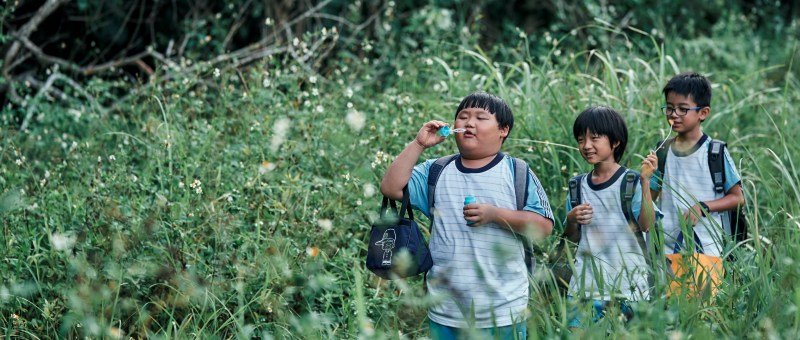
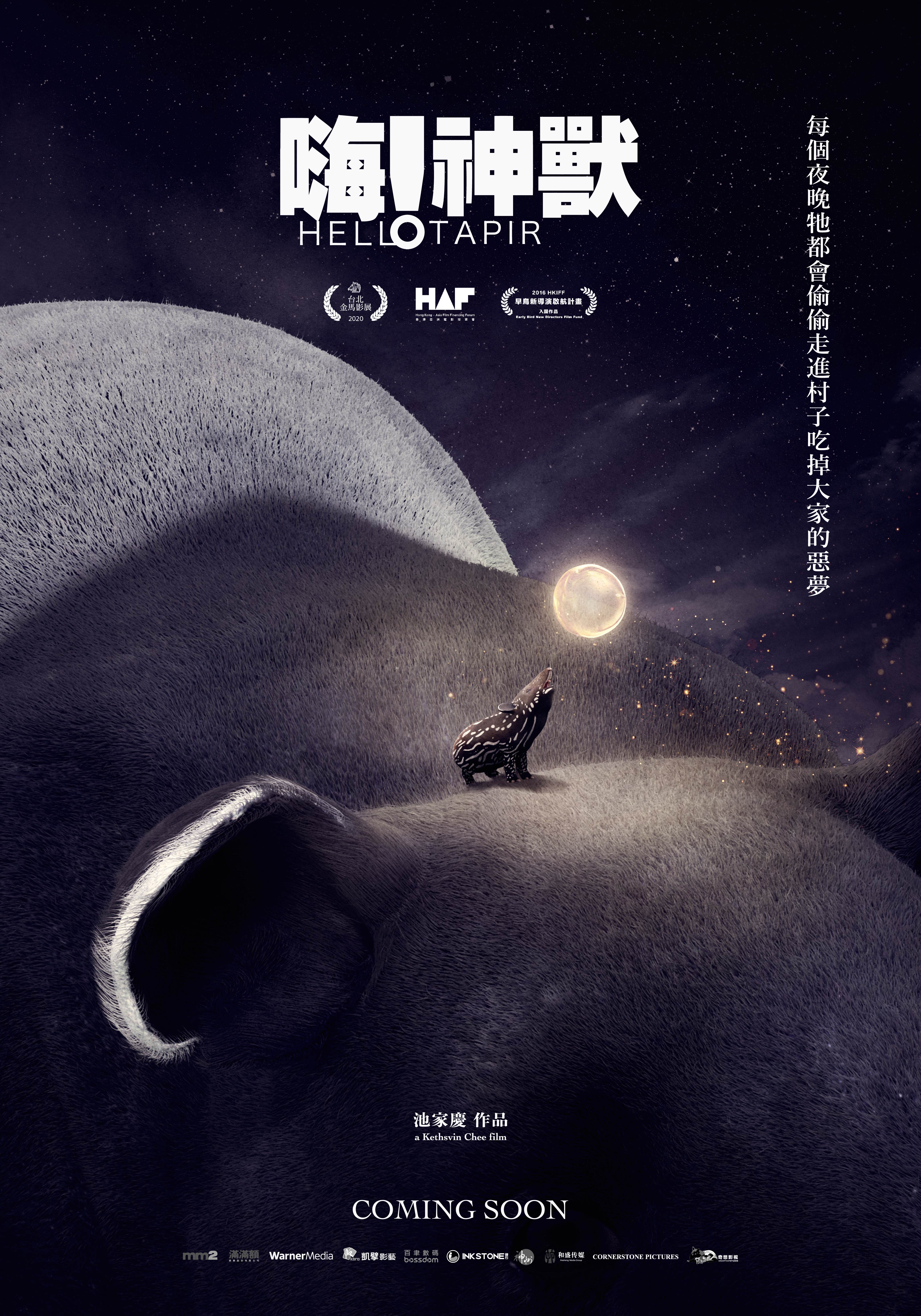
Meanwhile he attempts to secure his father’s legacy by searching for the tapir on his own, encountering a baby which later leads him into the forest and towards its giant parent sucking on golden nightmare orbs all the way. Tapirs are obviously not native to Taiwan and so their presence is as decidedly unexpected as their unusual appearance. You would’t expect to see one wandering through town unless it had recently escaped from a zoo, but they are perhaps Keat’s way of processing the loss of his father the adult tapir gently showing him what it was he most wanted but feared to know while comforting him with its reassuringly warm presence. 

On the cusp of adolescence, Keat finds himself squarely between two sets of overlapping worlds caught between the fantasy of nightmare-eating tapirs and the reality of his grief while also remaining firmly in the realms of childhood having innocent adventures with his two friends as they try all sorts of tricks to draw out the mystical creatures just as his mother deals with the difficulties of planning a funeral and making plans for the future without overburdening her son with impending change. Nobody tells Keat anything because he’s just a child and they think he won’t understand, but he understands that they’re not telling him and the knowledge further increases his sense of loneliness and alienation left entirely alone with his grief and anxiety. 

A beautifully drawn magical realist fable, Chee’s charmingly old fashioned kids fantasy adventure makes the most of its idyllic seaside setting replete with a warm and friendly atmosphere despite its concurrent tragedy. Keat is forced to face the reality of his loss, but does so while maintaining a sense of wonder for the natural world secure in the knowledge that all things disappear in the end, but it isn’t the end of the story and death is merely another part of life. Warm and empathetic, Hello! Tapir paints its coastal setting with an uncanny sense of magic coupled with a cosmological sense of security as its young hero begins to come to terms with his loss thanks to the gentleness of sleeping creatures. 


Hello! Tapir streamed as part of this year’s Fantasia International Film Festival

Original trailer (English subtitles)

Dear Tenant (親愛的房客, Cheng Yu-Chieh, 2020)

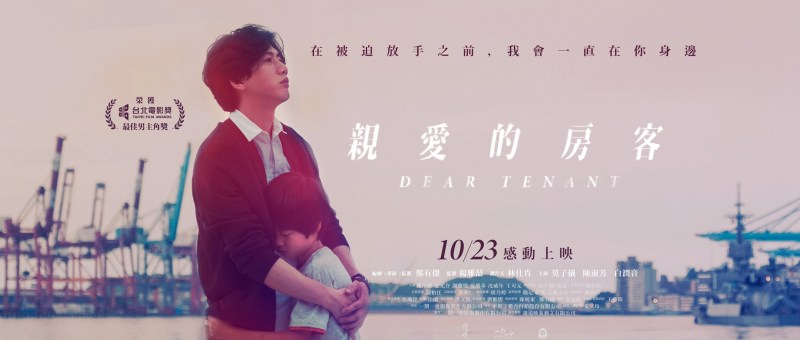
Taiwan introduced marriage equality in 2019 and is often regarded as the most liberal of Asian nations but that does not necessarily mean that it’s free of prejudice or homophobia whether internalised or otherwise. Cheng Yu-Chieh’s melancholy family drama Dear Tenant (親愛的房客, Qīn’ài de Fángkè) begins in fog, mirroring it seems the hero’s sense of numb confusion consumed as he is with guilt and grief but also perhaps reflecting the miasma of his life in which he is forced to remain silent, prevented from fully expressing himself by a persistent sense of shame and anxiety. 

Chien-yi (Mo Tzu-yi) has been caring for his mother-in-law Mrs. Chou (Chen Shu-fang) and Yo-yu (Bai Run-yin), the son of his late partner Li-wei (Yao Chun-yao), for the past five years, but is described by them merely as a “tenant”, a lodger occupying the upstairs annex not really part of the family. His liminal status is fully brought home during the New Year dinner which he cooks and serves but, as Li-Wei’s brother Li-gang (Jay Shih) has decided to make a rare visit home from an extended stay in China, later excuses himself from as if he were the help not entitled to sit at the family table. Mrs. Chou, meanwhile, grumpily invites him to stay low-key resentful of Li-gang suspecting he’s only come to ask for more money, suspicions which are deepened after he starts talking about retirement apartments. When Mrs. Chou passes away suddenly a few months later Li-gang returns again and is both annoyed to learn that Chien-yi has already adopted Yo-yu and distressed to realise that his mother put the house in Yo-yu’s name which means he’s not getting the inheritance he assumed would be his. Consequently, he accuses Chien-yi of killing his mother to get his hands on the house, a series of events complicated by the autopsy report which suggests Mrs Chou’s death may have been hastened by over medication. 

A shy and reticent man, Chien-yi perhaps has reasons for his silence and his reluctance to speak openly with the police, who are needlessly aggressive and belligerent in their treatment of him, is easily understandable. Questioned by the relatively sympathetic prosecutor he is pressed about his “relationship” with the family and remains somewhat coy, later explaining that Mrs Chou had asked him not to tell Yo-yu that he and his father were lovers continuing to refer to him only as her “tenant” even as he took care of the household. The prosecutor asks him why he didn’t leave after his lover died, a question Chien-yi rightly feels to be absurd asking her if she’d ask the same question of a woman who stayed to look after her husband’s family after her husband died. Of course she wouldn’t, it would be ridiculous and insensitive.

It’s impossible to escape the sense that Chien-yi falls under greater suspicion solely because of his sexuality, the lead police officer quite clearly getting a bee in his bonnet about this particular case. They find him evasive and uncooperative, insensitive to the reasons he may have not to trust them that are later justified by their treatment of him as they again make moral judgements about his use of a dating app they likely would not make if he were picking up women though they might perhaps make of a woman in the same situation. Incongruously hanging out in a gay bar they hassle a former hookup who happens to be a drug user, blackmailing him into incriminating Chien-yi while Li-gang has Yo-yu taken to a psychiatrist in the suggestion that he may have been abused, explaining that he doesn’t want him raised in an “abnormal” environment. Chien-yi finds himself in handcuffs less for the alleged crime than for being a “suspicious” person who must surely be guilty of something even if it’s only his existence. 

It doesn’t seem to matter that Chien-yi tenderly cared for Mrs Chou even while she rejected him, angrily sniping that no matter how good he is to her it won’t bring her son back, or that he’s the only father the nine-year-old Yo-yu has ever really known having lost Li-wei when he was only four, he is condemned for his silence and his “secrets” ostracised by the previously warm parents at the piano school where he teaches after being outed by the insensitive police investigation. Consumed by grief and guilt he does his best to care for Li-wei’s family in his place, but is continually othered by a society which recognises him only as a “tenant” denying him his rightful place as bereaved spouse and step-father. As the melancholy ending perhaps implies, justice and equality are still very much works in progress even a rapidly liberalising society. 


Dear Tenant streams California until May 2 as part of San Diego Asian Film Festival’s Spring Showcase.

Original trailer (English / Traditional Chinese subtitles)

Spider Lilies (刺青, Zero Chou, 2007)

“I have no choice but to live in a virtual world” according to the lovelorn heroine of Zero Chou’s ethereal reflection on love and the legacy of trauma, Spider Lilies (刺青, Cìqīng). Two women connected by childhood tragedy struggle to overcome their respective anxieties in order to progress towards romantic fulfilment, eventually freeing themselves only by destroying the image of that which traps them. 

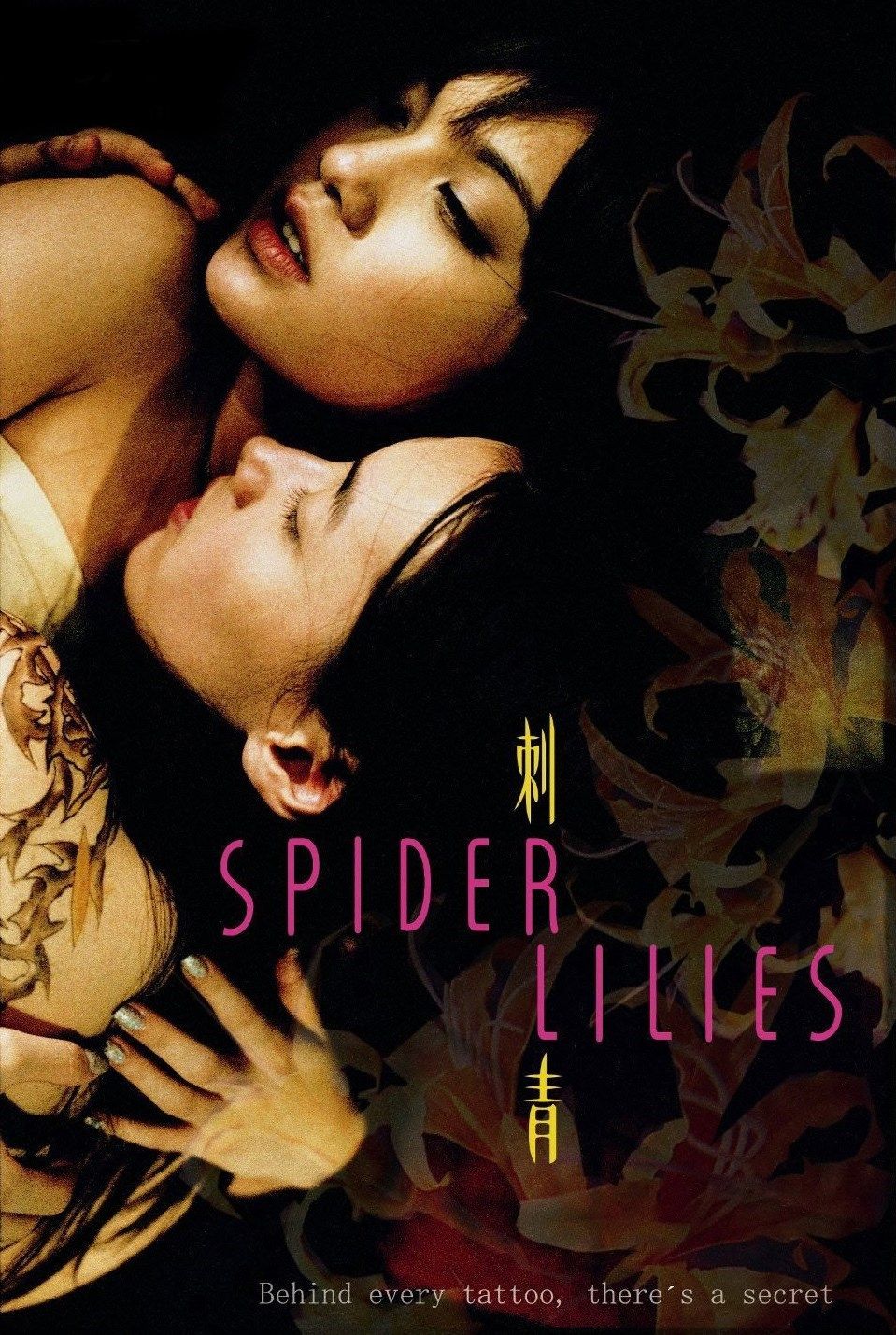
In the present day, Jade (Rainie Yang) is an unsuccessful camgirl with a habit of shutting down her clients on a whim which doesn’t play well with her boss. In an effort to spice up her live show, she decides to get a raunchy tattoo only to realise that the tattooist, Takeko (Isabella Leong), is in fact her long lost first love, a neighbour she took a fancy to at the tender age of nine. For her part, Takeko appears not to remember Jade but cannot deny the presence of her unusual spider lily tattoo, a version of which hangs prominently on her wall. Hoping to maintain contact, Jade decides to get the spider lily tattoo herself but Takeko is reluctant, explaining that the spider lily is a flower that leads only to hell. 

According to Takeko’s master, there is a secret behind every tattoo and the responsibility of the tattooist is to figure out what it is but never reveal it. Thus Takeko crafts bespoke tattoo designs for each of her clients designed to heal whatever wound the tattoo is intended to cover up, such as the ghost head and flaming blades she tattoos on a would-be gangster who secretly desires them in order to feel a strength he does not really have. Her tattoo, however, is intended as a bridge to the past, a literal way of assuming her late father’s legacy in order to maintain connection with her younger brother (Kris Shen) who has learning difficulties and memory loss unable to remember anything past the traumatic death of their father in an earthquake which occurred while she was busy with her own first love, a girl from school. Feeding into her internalised shame, the tattoo is also is a means of masking the guilt that has seen her forswear romance in a mistaken sense of atonement as if her sole transgression really did cause the earth to shake and destroy the foundations of her home. 

Then again, every time Takeko seems to get close to another woman something awful seems to happen. Jade, meanwhile, affected and not by the same earthquake is burdened by the legacy of abandonment and the fear of being forgotten. Living with her grandmother who now has dementia the anxiety of being unremembered has become acute even aside from the absence of the mother who left her behind and the father last seen in jail. “Childhood memories are unreliable” she’s repeatedly told, firstly by Takeko trying to refuse their connection, and secondly by a mysterious online presence she misidentifies as her lost love but is actually a melancholy policeman with a stammer charged with bringing down her illicit camgirl ring. The policeman judgementally instructs her to stop degrading herself, having taken a liking to her because he says he can tell that she seems lonely. 

A kind of illusionary world of its own, Jade’s camgirl existence is an attempt at frustrated connection, necessarily one sided given that her fans are not visible to her and communicate mainly in text. It’s easy for her to project the image of Takeko onto the figure of the mystery messenger because they are both in a sense illusionary, figments of her own creation arising from her “unreliable” memories. Jade wants the tattoo to preserve the memory of love as a bulwark against its corruption, at once a connection to Takeko and a link to the past, but the tattoo she eventually gets is of another flower echoing the melancholy folksong she is often heard singing in which the lovelorn protagonist begs not to be forgotten. 

“I am a phantom in your dream and you too live in mine” Jade’s mystery messenger types, hinting at the ethereality of romance and fantasy of love. Caught somewhere between dream and memory the women struggle to free themselves from the legacy of past trauma and internalised shame, but eventually begin to find their way towards the centre in making peace with the past in a sprit of self-acceptance and mutual forward motion.


Spider Lilies streams in the UK 26th April to 2nd May courtesy of Queer East

Original trailer (English subtitles)