The Cursed Land (แดนสาป, Panu Aree & Kong Rithdee, 2024)

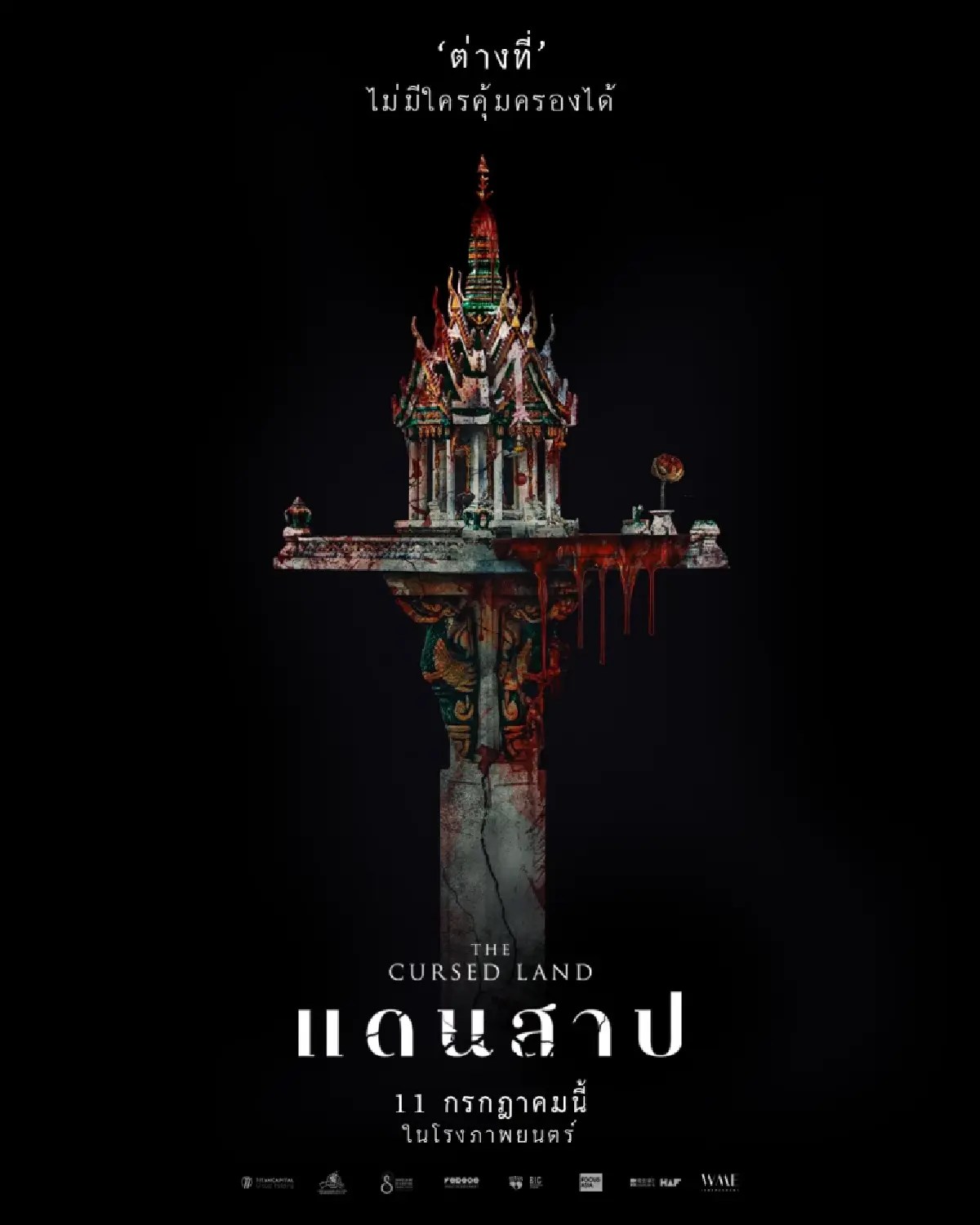
The architecture professor teaching a young woman in Panu Aree and Kong Rithdee’s The Cursed Land (แดนสาป) says that a house is like a machine with a person inside, but what’s inside the house at the film’s centre is not quite human at all but a supernatural creature who like the house itself seems straddle a divide both cultural and spiritual while standing itself at the nexus of the many layered historical curses which have given it its dark legacy.

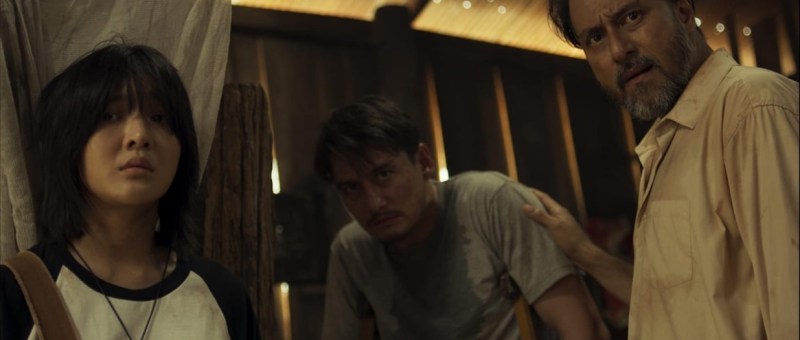
It’s in part a rejection of this difference and lack of respect for culture that creates a series of problems for Mit (Ananda Everingham), a middle-aged engineer moving into this rural backwater on the outskirts of Bangkok. Despite receiving a very serious warning to get rid of anything that’s in the house, he tears off a series of talismans thereby releasing some very dark energy and destabilising his new environment. Mit is also suspicious of those around him and does not really make much of an attempt to make friends with the local community who are largely Muslim. Though he may not think so, it is Mit who is the intruder here, an outsider walking into a traditional environment and finding himself isolated despite the ostensible friendliness of some of the locals to whom Mit takes offence after being told not to leave his dog outside because some of the Muslim community dislike them. 

But then again, Mit also seems to be a compromised figure apparently still suffering from shock and confusion some time after a car accident that killed his wife. He complains that his medication has been misplaced due to the move while seemingly increasingly paranoid and unreasonable. We also get hints that Mit’s previous life may not have been plain sailing either and part of his stress is down to a need to prove himself in his new job. He is in his way haunted by the car accident and struggling to overcome his guilt and regret. A shamaness later describes him as “weak-minded” and therefore a prime target for an evil spirit. 

This also seems to be implicitly reflected of an internal absence of the spiritual as Mit has renounced Buddhism and seems suspicious of Islam. His daughter May (Jennis Oprasert) eventually calls in a Brahmin to exorcise the house, installing Buddhist shrines and other talismans as if overwriting the those of the local muslim community though this only causes more problems. Later, May consults a Buddhist priest but is told that he can’t help because the problem is on a different system though she’s also told something similar by other members of the community. Running underneath the conflict between Buddhist and Muslim culture is echo of a much older spirituality in the references to “black magic” and shamans. 

What May learns is that this land has been cursed and counter cursed many times over, though they do perhaps manage to exorcise one particularly problematic spirit in literally digging up the past to learn the history of the house and that of the entities who seem to inhabit it but there are many other curses yet to be undone on this patch of scorched land that exists in a nexus between cultures, part of both and neither. What emerges is a kind of co-existence and a crossing of the streams as they must in the end marshal all of the spiritual powers to counter the  danger presented by this extremely disgruntled spirit. 

Panu Aree and Kong Rithdee conjure an atmosphere of intense eeriness rooted in a classic haunted house movie aided by the gothic environment of the Western-style home itself standing alone and isolated, not really part of a community yet not totally independent. What emerges is a kind of integration, the house as a machine with people inside it creating a home through diverse community and entrenched support systems that allow even the “weak-minded” Wit to shakes off some of his demons and begin to move forward with his life. Perhaps the key really is not to throw anything away, because everything belongs in the house and the house belongs to everything. Attempts at exclusion only invite fear and acrimony that cannot but eat away the foundations of a home built on cursed land.


The Cursed Land screened as part of this year’s New York Asian Film Festival.

Original trailer (English subtitles)
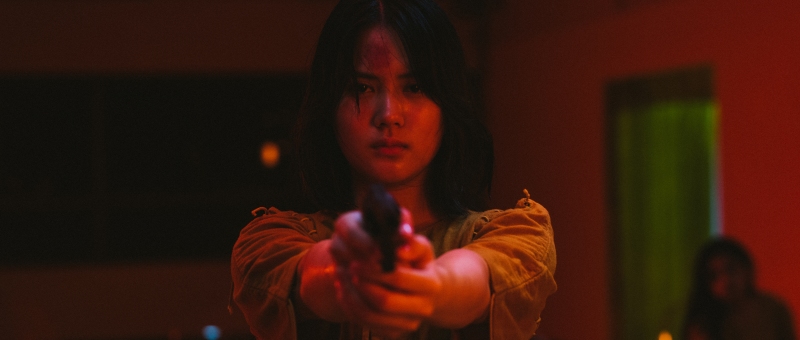
Faces of Anne (แอน, Kongdej Jaturanrasmee & Rasiguet Sookkarn, 2022)

A young woman wakes up in a grimy hotel room with floral wallpaper marked by damp stains. She discovers that the window is frosted over and won’t open while she has no idea of how she got there or who she is but otherwise instinctively knows that the face she sees in the mirror does not belong to her. She tries to call out and hears a voice from an adjacent room telling her to be quiet and that her name is “Anne”. Anne asks her how she knows if she can’t see her, but the voice just tells her that she knows her name is Anne with no further explanation. 

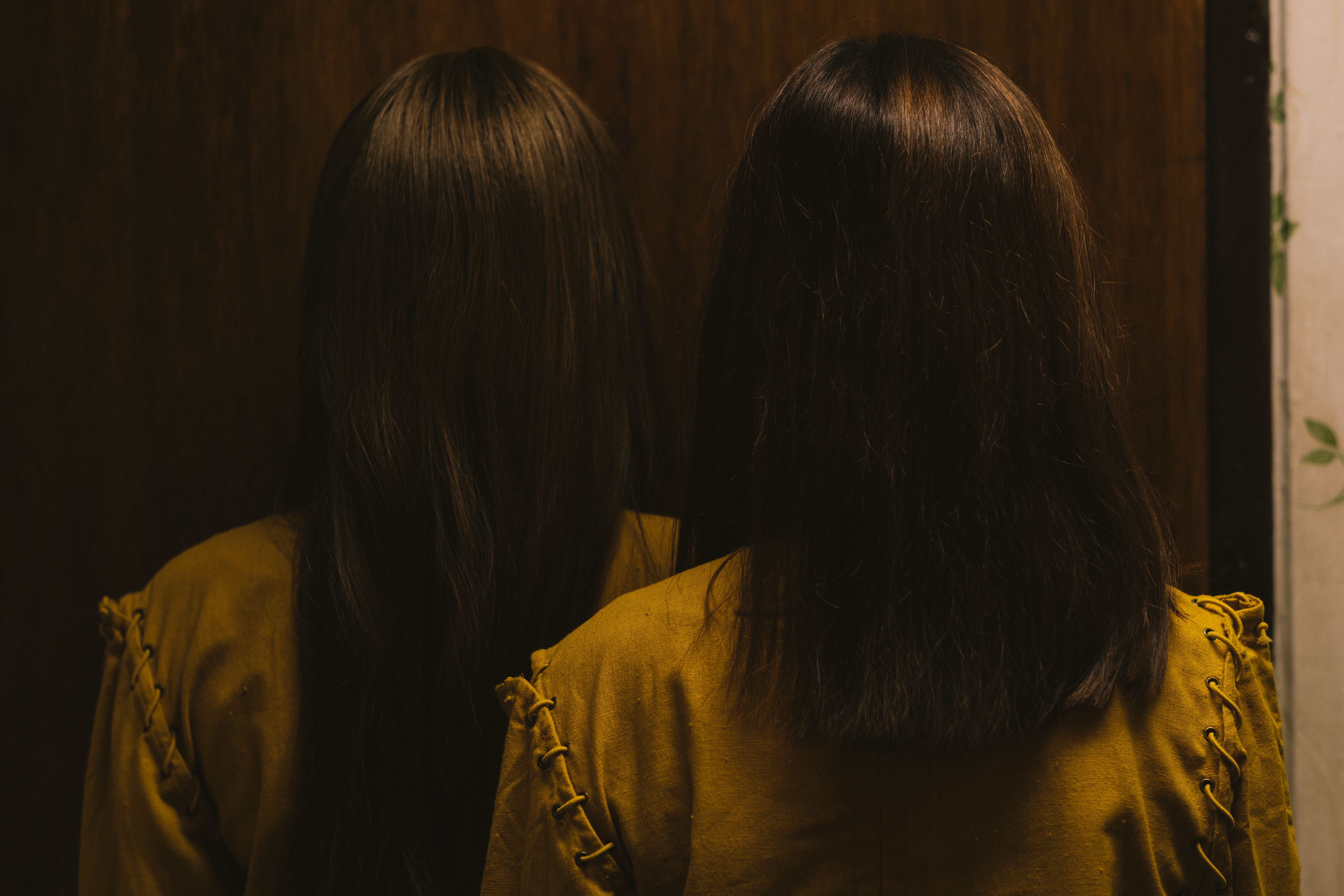
As it turns out in Kongdej Jaturanrasmee & Rasiguet Sookkarn’s Faces of Anne (แอน) every girl in the place has the same name and as gradually becomes apparent are all reflections of a single personality. The key Anne discovers that her face seems to change seemingly at random leaving her uncertain even within the bounds of her fractured identity. A psychiatrist tells her that a name is “not as important as who you are” while encouraging her to learn to accept the face she sees as her own, but she remains confused, abstracted from herself, and unable to reconcile her selfhood with its reflection. Meanwhile, she is stalked by a violent demon in the guise of a deer name Vitigo who wanders the hospital corridors taking out any Annes that it finds. 

What seems to be going on is an attempt to reintegrate the shards of a fractured personality into a coherent whole only it’s manifesting as a massacre of the self as the demon bumps off each of the multiple Annes insisting that only one, the “real” Anne, can be allowed to leave. But then no one is really only one person but presents a series of personas to the outside world all of whom can be said to be “real” even if otherwise inauthentic. In an illuminating flashback, high school girl Anne chats with another couple of girls about fake online profiles where they can share their “real” selves each of which of course have a completely different profile photo much as the serial Annes have a different face. What we can assume to be the key Anne expresses that she just wants to find a place where she can be completely herself and thinks she has one in a relationship with a boyfriend whose face we never see but had shades both of a man who might be her father and the hero of a video game the atmosphere of which seems to have coloured the aesthestics of her eerie mindscape. 

Some might find it easy to dismiss her identity crisis as teenage angst or to suggest that what she’s suffering from is a broken heart though Kongdej Jaturanrasmee & Rasiguet Sookkarn also make reference to a number of problems faced by young people in contemporary Thailand such as online harassment and bullying, sexual harrassment at school and the bad student movement protesting an oppressive educational environment laying bare the pressures on key Anne’s mind that might cause her to become estranged from herself. Asking probing questions about identity, the film wonders if Anne can learn to find herself as distinct from all of these images or if in the end identity and image are inextricably linked to the extent that they can no longer exist distinctly and Anne has no power to identify herself but must rely on the identification of others. Then again, the voice from the other room knows she is Anne without seeing her precisely as she is also Anne, identifying herself in the absence of image. 

Eerie and filled with a Lynchian dread in its hellish lightning and grimy hotel room setting, the film turns Anne’s psychodrama into an existential slasher in which she awaits the arrival of the Final Girl. Retracing her steps, she seeks escape in a pattern of trial and error unwittingly at war with herself even as tussles over identity and authenticity while trying to reconstruct a shattered identity by reclaiming the images of the past or perhaps as simply as the psychiatrist had put it learning to accept the face she now wears as her own. Haunting and empathetic, the film has only sympathy for the wandering ghosts of a fractured mind and the vague hope that together they can put Anne together again. 


Faces of Anne screened as part of this year’s New York Asian Film Festival

Original trailer (English subtitles)
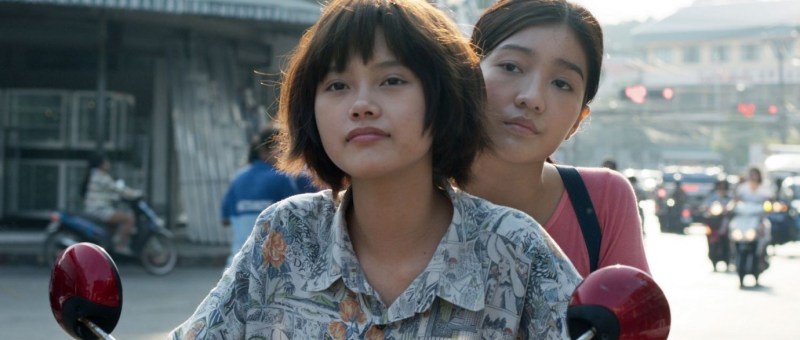
Images: © M Pictures Entertainment Public Company Limited.

Where We Belong (ที่ตรงนั้น มีฉันหรือเปล่า, Kongdej Jaturanrasmee, 2019)

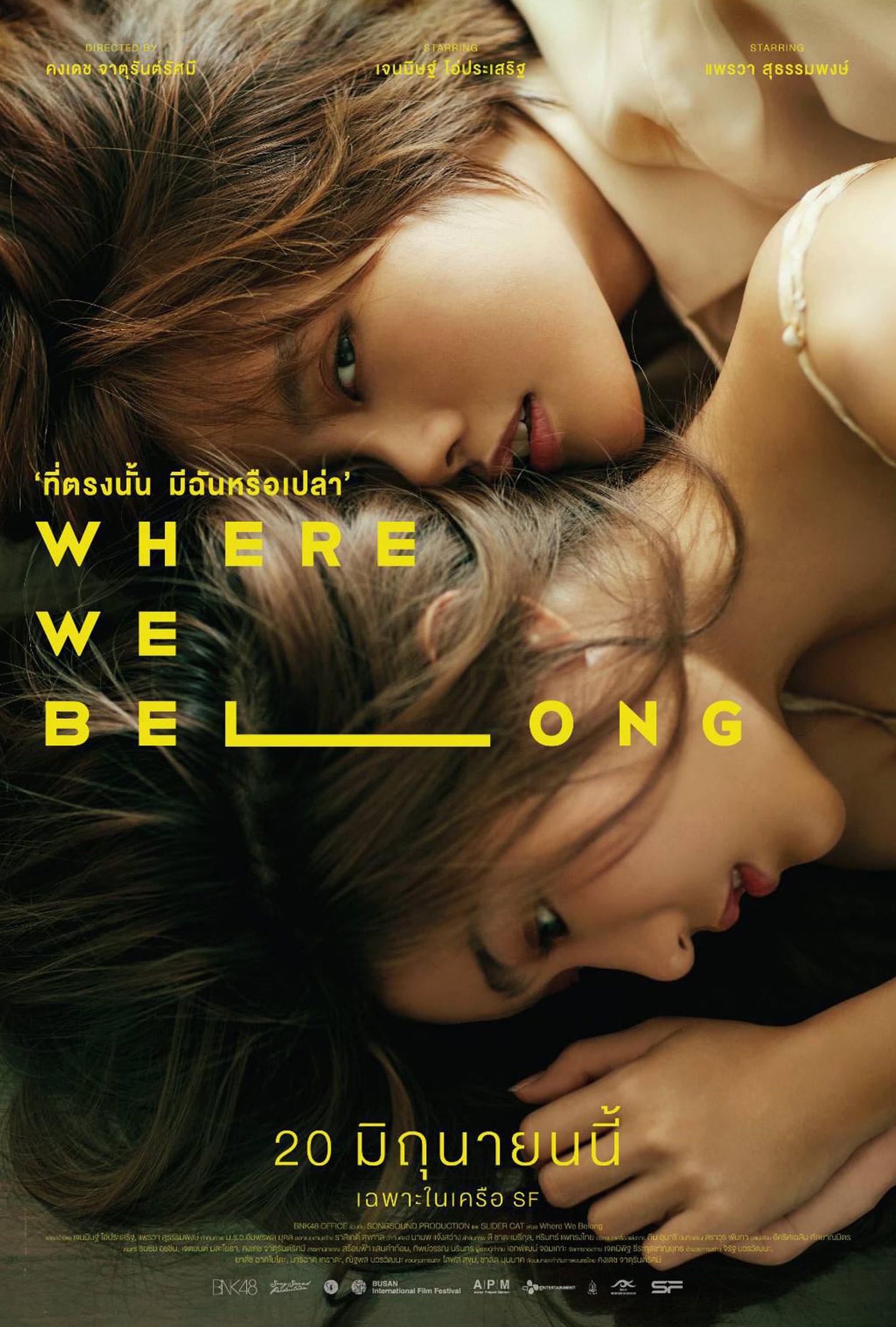
Where We Belong poster 1“I don’t understand, is life supposed to be this sad?” asks a dejected teen at the centre of Kongdej Jaturanrasmee’s Where We Belong (ที่ตรงนั้น มีฉันหรือเปล่า). Life is indeed sad, and the lesson she’s still too young to learn is that sometimes people don’t come back, things don’t get finished, and you just have to live with all your regrets while trying (but mostly failing) to do better next time. Starring members of Thailand’s BNK48 (the Thai offshoot of Japan’s AKB48 and the recent subject of a documentary by Nawapol Thamrongrattanarit), Where We Belong is part coming-of-age tale and part zeitgeisty take on contemporary Thai youth as it finds itself increasingly disconnected from the social conservatism of its parents’ generation but floundering when asked to find a new direction in which to strike out.

Highschooler Sue (Jennis Oprasert) is a case in point. Unbeknownst to her conservative father (Prawit Boonprakong), she’s applied for a scholarship to study abroad in Finland. Talented in English, she’s not much idea of what she wants to do with her life but knows that she has to get out of her small-town existence and away from the family noodle shop she feels is tying her to a future not of her choosing. Her best friend, Belle (Praewa Suthamphong), meanwhile is resolved to stay at home but doesn’t have much direction either save her attachment to her elderly grandmother (Saheoiyn Aophachat). Belle’s mother left the family a long time ago and lives a vacuous consumerist life in Bangkok, something which Belle is also keen to reject.

Meeting up with a friend at a local internet cafe, Belle is unsurprised to find it so full because nobody wants to go home to their parents right now owing to the intense pressure on them to succeed. That pressure is, however, slightly at odds with their traditional expectations for their children. No one expects much of young girls like Sue and Belle, even if they superficially want them to do well in their exams. Sue’s mother passed away some years ago, and her distant father is dead set against the idea of her travelling abroad, terrified that once she’s seen the world she won’t look back. Everyone expects her to take over the noodle shop, insisting that it’s an important part of the local culture and can’t simply be another sacrifice to progress like so many tiny eateries and family businesses abandoned by youngsters looking for a brighter future somewhere else.

Trying to defend her friend, Belle tells the customers in Sue’s restaurant that they can keep their “stupid heritage” to themselves, even while planning to stay home and be the good daughter. Unfortunately her words backfire, further placing her at odds with the conflicted Sue who is still trying to process the implications of her transnational move. While she remains in a kind of denial, it’s Belle who’s trying to sort everything out for her – returning old comic books to the library, getting their old band back together, and even trying to help her patch things up with a friend she’s fallen out with even though Belle herself is a little jealous of the close relationship they once had. She does these things because, as she hints to their friend at the library, she’s afraid Sue won’t come back and knows on some level that their present relationship, whatever happens after, is going to change even it doesn’t exactly end.

Belle’s grandmother has a strange habit of staring out the window, waiting for a boy who said he’d meet her the next day decades earlier but never came back. Belle doesn’t want to be her flighty mother living a superficial life in the city, but Sue doesn’t want to end up like grandma waiting around for something that’s never going to happen. At her interview, she’s honest in her replies, admitting that she currently has no dream other than getting out of Thailand, but cleverly adding that by going to Finland where they have the world’s best education she hopes to figure out what her life’s dream might be.

What the two girls discover is that life is a series of goodbyes. They’re on different paths, and that’s sad, but it’s just the way things are. Before she goes, Sue tries to put her affairs in order with varying degrees of success – trying to come to terms with her mother’s death, telling a boy she likes about how she really feels (but failing to take things further), and patching up old friendships while also accepting that sometimes they just end with no real resolution only a sense of regret. Eventually they figure out where they belong. Sue leaves, and Belle is alone surrounded by familiar absences, but life goes on, and it’s sad, but that’s how we live.


Where We Belong was screened as part of the 2019 Five Flavours Film Festival.

Original trailer (English subtitles)