Intimate Strangers (완벽한 타인, Lee Jae-kyoo, 2018)

Intimate Strangers poster 1Middle-aged malaise and technophobia collide with potentially catastrophic consequences in brutal comedy of manners Intimate Strangers (완벽한 타인, Wanbyeokhan Tain). The hugely popular Italian film Perfetti Sconosciuti has already been remade in several territories, proving the universality of its conceit. The Korean edition, cleaving closely to the original, demonstrates once again that nowhere is safe in the modern wired world where public and private personas are beginning to blur as lives lived online become realer than real.

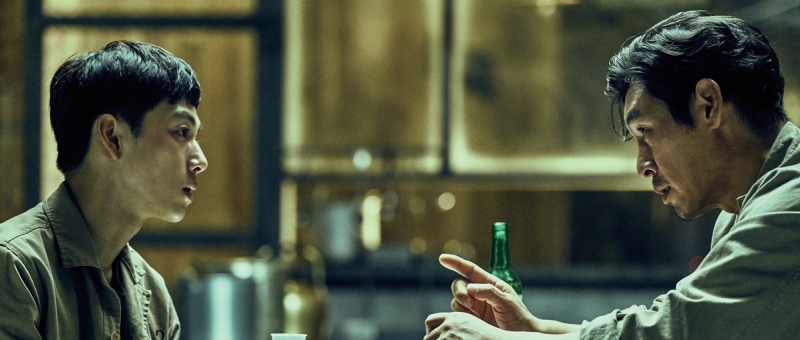
The action takes place (almost) entirely within a swanky Seoul apartment owned by plastic surgeon Seok-ho (Cho Jin-woong) and his psychiatrist wife Ye-jin (Kim Ji-soo). The couple, along with their teenage daughter (Ji Woo), have been living in the apartment for some time but haven’t gotten around to inviting their dearest friends so this evening’s celebration will be something like a belated housewarming. The other guests will be friends of Seok-ho’s from all the way back in elementary school – elite lawyer Tae-soo (Yoo Hae-jin) and his wife Soo-hyun (Yum Jung-ah), “entrepreneur” Joon-mo (Lee Seo-jin) and his much younger wife Se-kyung (Song Ha-yoon), and recently divorced Young-bae (Yoon Kyung-ho) who is supposed to be bringing his new girlfriend, but disappoints everyone by turning up alone. Part way through the evening, Ye-jin suggests a kind of party game in which they’ll all put their phones face up on the table and agree to share any messages or calls that come in. Of course, this is a game you can’t afford to refuse to play lest everyone think you’ve something to hide, but total honesty is not always advisable even amongst friends.

Despite their supposed intimacy built up over a couple of decades of similar evenings and get togethers, everyone is very much in public mode and maintaining appropriate levels of decorum. Which is why Tae-soo and Soo-hyun are at great pains to hide the fact their relationship is at breaking point thanks to the recent arrival of Tae-soo’s mother while Ye-jin and Seok-ho also have obvious problems, especially when it comes to the upbringing of their teenage daughter. Despite being a psychiatrist with full knowledge of boundaries and the harm that can be done crossing them, Ye-jin has been going through her daughter’s things and not liking what she finds. Nevertheless, everyone wants to have a pleasant evening, so the fights are on hold and politeness very much in the ascendent.

And then the phones start ringing. It might be a matter of debate exactly how much privacy one should want or expect in a marriage, with friends, or from the world in general, but everyone has something or other they’d rather wasn’t brought up at a dinner party and so showcasing one’s phone is likely to be quite a bad idea. That might be the attraction of the game, but no one seriously wants marital breakdown across the dinner table, nor do they want to hear about medical procedures, outings they weren’t invited to, workplace drama, or familial strife.

The messages, as pregnant with melodrama as they might be, begin to expose the simmering conflicts between this now disparate group of “friends”. The petty class resentments and awkward political differences that politeness sees fit to gloss over become harder to ignore when flashed up by an inconvenient notification or a call the other party is not aware is being broadcast (breaching their privacy too in the process). Realising secrets have been kept from you can be hurtful, but it’s even worse realising that you disappoint yourself in proving exactly why the secret was kept in the first place.

It’s tempting to blame everything on technology, that if no one had a phone no one would be hurt but the truth is that married or not everyone has a right to their secrets and a separate, individual life to which no one but themselves is privy. Perhaps it isn’t so much lies which are the enemy, but the expectation of intimacy and that sharing your life with someone necessarily means the entirety of it. In any case, the film (like the other incarnations) opts for an ironic ending which undoes everything which had gone before, erasing the awkwardness of exposed secrets with a return to a more comfortable reality in which everyone is superficially happier pretending to be happy in blissful ignorance. Perhaps sometimes it really is better not to ask too many questions.


Intimate Strangers was screened as part of the 2019 Udine Far East Film Festival.

International trailer (English subtitles)
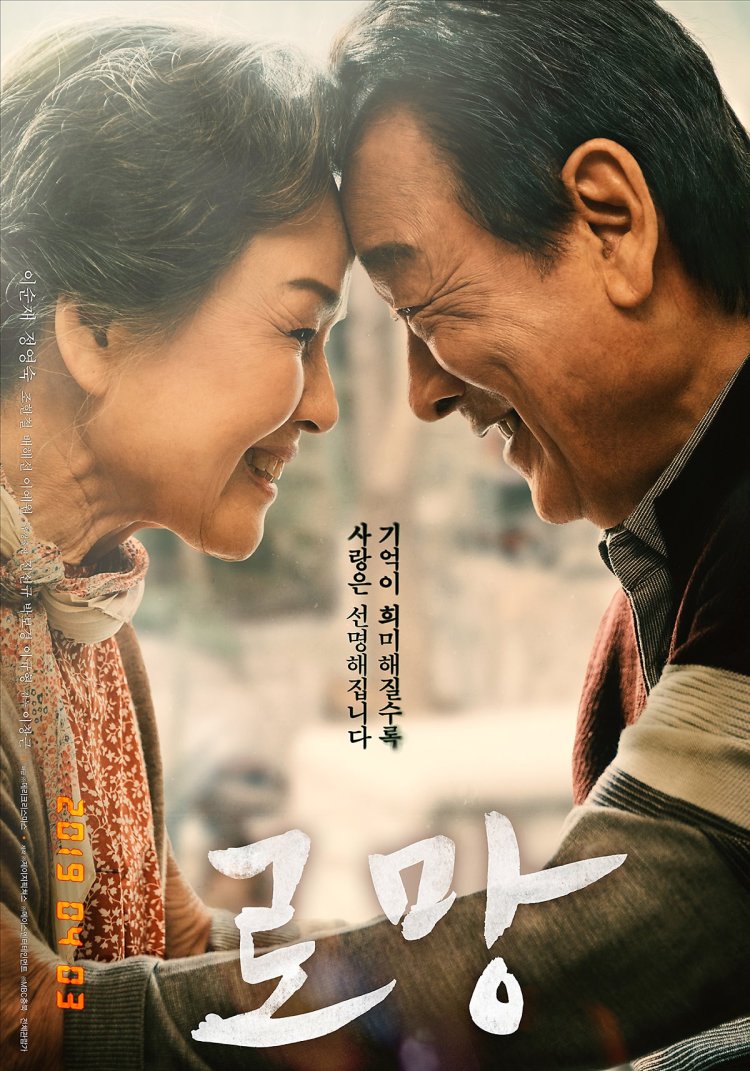
Romang (로망, Lee Chang-geun, 2019)

romang posterKorea, like many developed nations, is facing a demographic crisis as society continues to age at an unprecedented pace. While cultural norms demand deference to older people, the many problems they face in a society where welfare provisions are still minimal have often gone unaddressed in the assumption that family members have a duty to look after their relatives in their old age. This is, however, not always possible and there are occasions where considering opting for outside help becomes unavoidable.

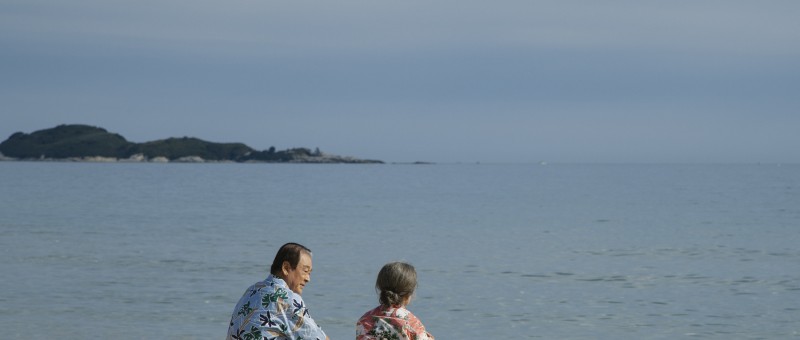
This is the dilemma faced by elderly taxi driver Nam-bong (Lee Soon-jae) as he gradually comes to the conclusion that his wife, Mae-ja (Jung Young-sook), is suffering from dementia. The couple share their house with grown-up son Jin-soo (Jo Han-Chul), his wife Jeong-hee (Bae Hae-sun), and their young daughter Eun-ji who had mostly been cared for by Mae-ja while Jeong-hee was the family’s only breadwinner seeing as Jin-soo is an out of work academic (not particularly actively) looking for a new position. Mae-ja’s condition gradually declines to the point at which she begins to pose a danger to her remaining family members causing Jeong-hee to leave Jin-soo and take Eun-ji to her parents’ out of the way.

Gruff and insensitive, Nam-bong decides to send Mae-ja away to a hospice despite Jin-soo’s pleas but eventually reconsiders and brings Mae-ja home where he is committed to care for her himself. However, he too begins to experience the early signs of dementia and is at a loss as to how to proceed in the knowledge that it will become increasingly difficult for him to look after his wife or she him.

The onset of dementia, the film seems to imply, perhaps allows the troubled couple to begin to move past a central moment of trauma in their relationship which has left a lasting thread of resentment between them. Nam-bong, a chauvinistic, difficult husband is not well liked by his family members and most particularly by his son while Mae-ja had, maybe reluctantly, stood by him physically at least if not emotionally. His decision to send Mae-ja away is then a double betrayal in his abnegation of his duties as a husband and in his spurning of all Mae-ja has had to put up with over the last 40 years.

The distance between the couple has also had an effect on Jin-soo who always felt himself pushed out as an accidental victim of his parents’ emotional pain. It is clear that Nam-bong, a traditionally minded patriarch, has little respect for his son who, in his view, is a failure for not having secured a steady career which can support a wife and child, “allowing” his wife to work in his stead. For Nam-bong, being a man is all about “supporting” a family but not actually having to be around very much. For Jin-soo, a modern man, it’s very different. He wants to be there for his wife and daughter so that they have good memories of him hanging out and having fun rather than being that guy who turns up at dinnertime to shout at everyone and then leaves again.

Nevertheless, Nam-bong is eventually forced to accept his emotional duty to his family when he decides to care for Mae-ja. While their mutual condition begins to bring old, negative emotions never fully dealt with to the surface, it also allows them to rediscover the innocent love they had for each other as a young married couple. When Jin-soo eventually leaves the family home to return to his wife and child, the couple decide to isolate themselves, holing up in the living room and communicating via a series of poignant post-its which remind them to care for each other as the darkness intensifies.

Yet it’s not quite all sweetness and light as the elderly romantics rediscover a sense of warmth and connection they assumed long lost. Despite the support shown for Jin-soo’s modern parenting, there is a notably conservative spin placed on the story of Mae-ja and Nam-bong which may very well mark them out as simply being of their time but a late poignant scene in which the young Mae-ja declares her dream to be having a good husband while Nam-bong’s is to support a family sits uncomfortably in its unsubtle defence of traditional gender roles. To make matters worse, the final moments seem to suggest that there is no place for the elderly couple in contemporary society in allowing them (well, Nam-bong) to take control of their destinies only in the most final of ways. Maudlin and sentimental, Romang sparkles when embracing the unexpected cuteness of the late life love story but too often opts for easy melodrama over emotional nuance in its refusal to address its darker elements and eagerness to romanticise the business of ageing.


Romang (로망) was screened as part of the 2019 Udine Far East Film Festival.

International trailer (English subtitles)
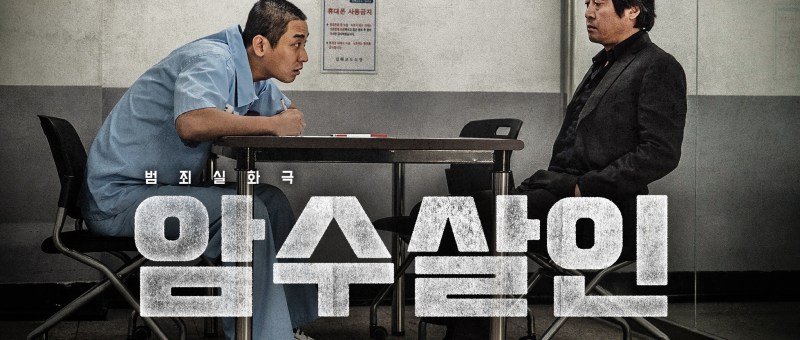
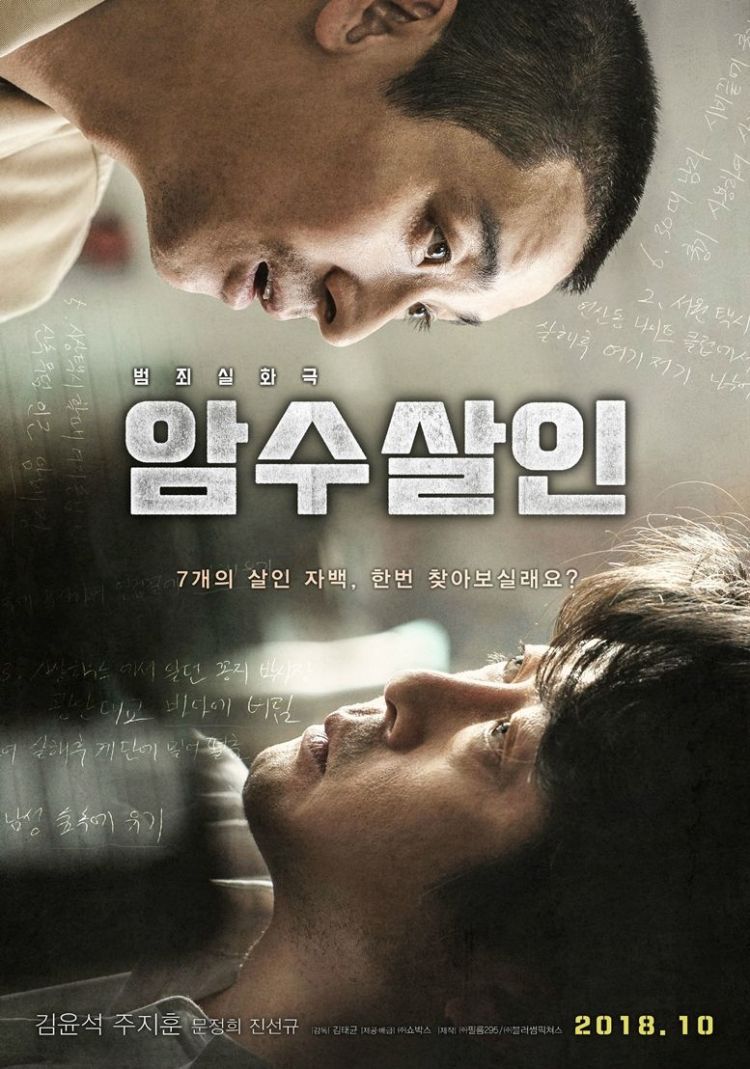
Dark Figure of Crime (암수살인, Kim Tae-kyun, 2018)

Dark Figure of Crime poster 1No matter how accurate statistics relating to criminal activity might be, there are many more acts of violence and immorality which, for various reasons, will go unreported. Criminologists refer to this phenomenon as the “Dark Figure of Crime”. Kim Tae-kyun’s cerebral thriller takes the strangely poetic term as its title (암수살인, Amsusalin) and does indeed revolve around the perfect murder and a man who claims to have completed six of them before abandoning his system and getting himself caught. Yet unlike many cops and robber dramas, Dark Figure of Crime is not about the killer but about the hidden victims who’ve lived a life haunted by the horrible uncertainty of whether their loved ones abandoned them but are alive and well somewhere else, or have fallen victim to some terrible event.

Narcotics officer Kim Hyung-min’s (Kim Yoon-seok) introduction to a new source of information takes a turn for the unexpected when he first starts telling him about having disposed of a body some years ago and then is promptly arrested by Homicide for the murder of his girlfriend. Tae-oh (Ju Ji-hoon) is convicted and sent to prison, but calls Hyung-min and complains that the police framed him when they didn’t need to. Tae-ho murdered his former girlfriend alright, but the evidence the police submitted was faked which has annoyed him. He draws Hyung-min a map to where he buried the “real” evidence just so he can catch the police out acting improperly and embarrass them as well as earn Hyung-min’s trust for the next part of his plan, which is vaguely confessing to another six murders. Hyung-min can’t know if Tae-oh is on the level or just messing with his head but feels as if he has to investigate all the same.

Not everyone understands Hyung-min’s commitment to this strange series of cold cases. After getting himself a transfer to Homicide, Hyung-min’s new boss warns him about another officer who was tricked by a bored felon and ended up losing everything – once a promising policeman he’s now a divorced carpark attendant. A meeting with the former officer yields another warning – men like Tae-ho know the law and they play with it. He’ll get you to investigate crimes B and C for which he knows there won’t be enough evidence, then he’ll use his acquittals to cast doubt on his original conviction. Hyung-min is wary but also hooked. He knows Tae-ho is playing him, but thinks he can win by giving him the opportunity to slip-up and give something away he didn’t quite mean to.

Tae-ho is certainly a dangerous, unhinged young man no matter how much of what he says is actually true. Hyung-min can’t know if any of this is real or just a bizarre game Tae-ho has cooked up because he’s got 15 years and no one ever visits him, but then he starts turning up suspicious absences. As he tells him in a tense conversation late in the game, none of this is really about Tae-ho. Hyung-min couldn’t care less about his big man act and is not impressed by his “crimes” or the ways in which he got away with them though he does want to make sure he never gets out to hurt anyone else. What Hyung-min cares about is the victims whose family members are living with the unresolved trauma of not knowing what happened to their loved ones. Something Tae-ho could quite easily help with if he had a mind to, but seeing as Tae-ho only wants to play games Hyung-min will have to find out on his own, and he will stop at nothing to do so even if he ends up manning a rundown police box in the middle of nowhere for his pains.

Living with a trauma of his own, not even Hyung-min has much faith in the police hence why he needs to complete this case himself – he simply doesn’t believe anyone else will bother. Police in Korean films are universally bumbling and incompetent if not actually corrupt and selfish. Hyung-min is an exception though his opinion of his profession may not be much different to the stereotypes you see in the movies. He doesn’t care about getting a big promotion or being the guy who catches the big fish, he just wants the truth to be known and the past laid to rest so the indirect victims can begin to move on with their lives. The “dark figure of crime” refers not only to the hidden and unresolved, but to the oppressive spectre cast over those left behind with only pain and worry. The terrifying thing is, there may be countless other dangerous people out there whose crimes go undetected not because they’re criminal geniuses but because no one really cares enough to stop them. Subtly subverting serial killer movie norms, Kim pulls the focus from the self-aggrandising villain to remind us of the very real costs of his actions while making a hero of the dogged policeman who refuses to to give in to a societal expectation of indifference.


Screened as part of the 2018 London East Asia Film Festival.

International trailer (English subtitles)
The Merciless (불한당: 나쁜 놈들의 세상, Byun Sung-hyun, 2017)

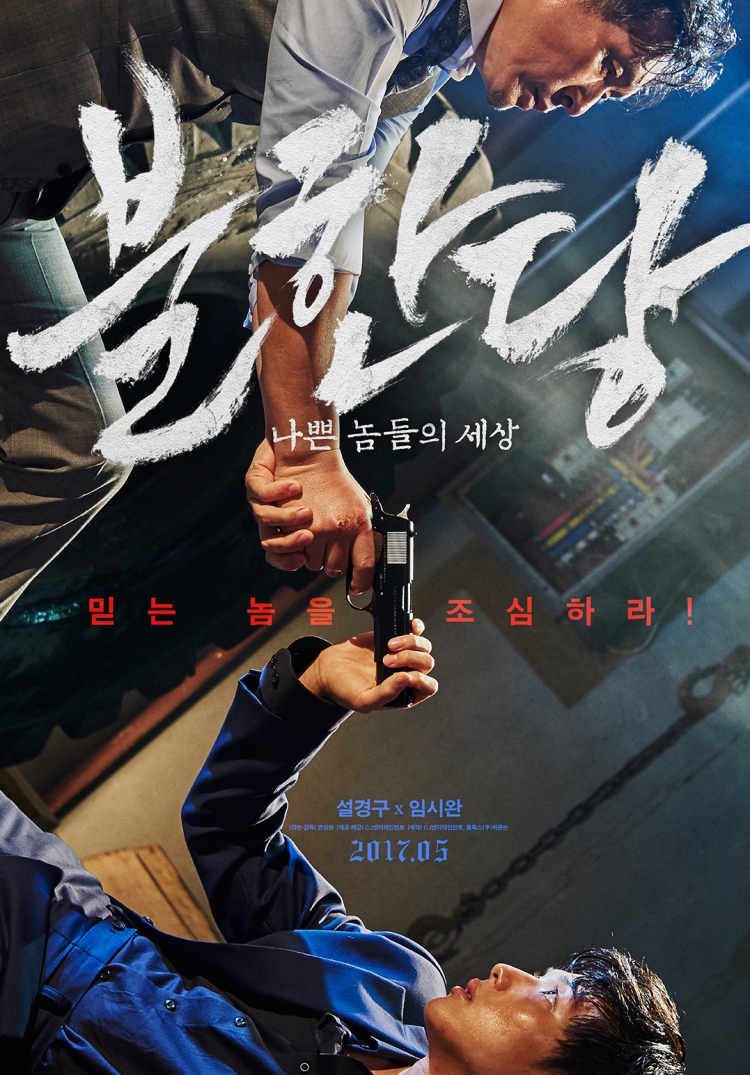
merciless posterHeroic bloodshed is alive and well and living in Korea. The strange love child of Na Hyun’s The Prison, and Park Hoon-jung’s New World, the first gangster action drama from Byun Sung-hyun (previously known for light comedies), The Merciless (불한당: 나쁜 놈들의 세상, Boolhandang: Nabbeun Nomdeului Sesang) more than lives up to its name in its noirish depiction of genuine connection undercut by the inevitability of betrayal. Inspired as much by ‘80s Hong Kong cinema with its ambitious, posturing tough guys and dodgy cops as by the more immediate influence of the seminal Infernal Affairs, Byun’s brutal tale of chivalry is, as he freely admits, an exercise in style, but its aesthetics do, at least, help to elevate the otherwise generic narrative.

That would be – the complicated relationship between young rookie Hyun-su (Im Siwan) and grizzled veteran Jae-ho (Sol Kyung-gu). Hyun-su proves himself in prison by besting current champions bringing him to the attention of Jae-ho – the de facto prison king. Sharing similar aspirations, the pair form a tight, brotherly bond as they hatch a not so secret plan to take out Jae-ho’s boss, Ko (Lee Kyoung-young), leaving Jae-ho a clear path to the top spot of a gang engaged in a lucrative smuggling operation run in co-operation with the Russian mob and using the area’s fishing industry as an unlikely cover.

We’re first introduced to Jae-ho through reputation in the film’s darkly comic opening scene in which Ko’s resentful, cowardly nephew Byung-gab (Kim Hee-won), has a strange conversation with a soon to be eliminated colleague. Byung-gab says he finds it hard to eat fish with their tiny eyes staring back at you in judgement. He admires Jae-ho for his ice cold approach to killing, meeting his targets’ gaze and pulling the trigger without a second thought.

Jae-ho is, indeed, merciless, and willing to stop at nothing to ensure his own rise through the criminal underworld. He will, however, not find it so easy to pull that trigger when he’s staring into the eyes of sometime partner Hyun-su. Neither of the two men has been entirely honest with the other, each playing a different angle than it might at first seem but then caught by a genuine feeling of brotherhood and trapped in storm of existential confusion when it comes to their individual end goals. Offering some fatherly advice to Hyun-su, Jae-ho recites a traumatic childhood story and cautions him to trust not the man but the circumstances. Yet there is “trust” of a kind existing between the two men even if it’s only trust in the fact they will surely be betrayed.

Byun rejoices in the abundance of reversals and backstabbings, piling flashbacks on flashbacks to reveal deeper layers and hidden details offering a series of clues as to where Jae-ho and Hyun-su’s difficult path may take them. Truth be told, some of these minor twists are overly signposted and disappointingly obvious given the way they are eventually revealed, but perhaps when the central narrative is so fiendishly convoluted a degree of predictability is necessary.

The Merciless has no real political intentions, but does offer a minor comment on political necessity in its bizarre obsession with the fishing industry. The police know the Russians are involved in drug smuggling and using the local fishing harbour as a front, but as fishing rights are important and the economy of primary importance they’d rather not risk causing a diplomatic incident by rocking the boat, so to speak. The sole female presence in the film (aside from Hyun-su’s sickly mother), determined yet compromised police chief Cheon (Jeon Hye-jin), is the only one not willing to bow to political concerns but her methods are anything other than clean as she plants seemingly vast numbers of undercover cops in Jae-ho’s outfit, only to find herself at the “mercy” of vacillating loyalties.

Heavily stylised, Byun’s action debut does not quite achieve the level of pathos it strives for in an underwhelming emotional finale but still manages to draw out the painful connection between the two anti-heroes as they each experience a final epiphany. An atmosphere of mistrust pervades, as it does in all good film noir, but the central tragedy is not in trust misplaced but trust manifesting as a kind of love between two men engulfed by a web of confusion, betrayal, and corrupted identities.


Screening as part of the London Korean Film Festival 2017 at Regent Street Cinema on 3rd November, 6.30pm. The Merciless will also screen at:

and will be released by StudioCanal on 13th November.

International trailer (English subtitles)
 

The Outlaws (범죄도시, Kang Yoon-sung, 2017)

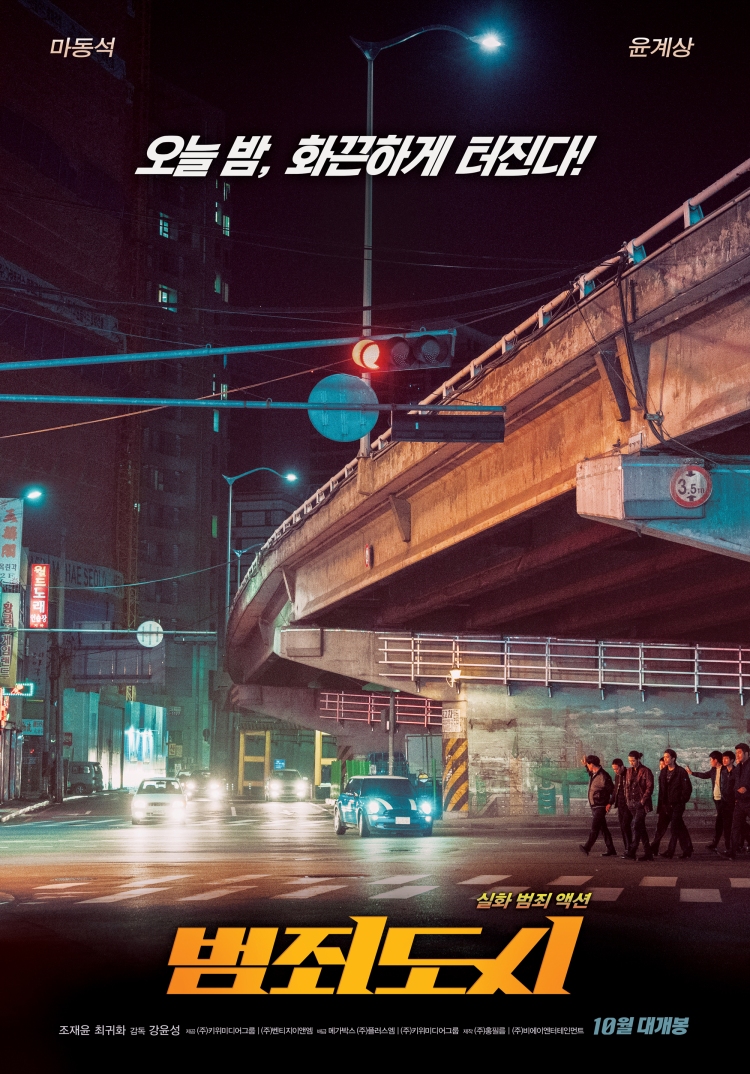
The outlaws posterBack in 2004, a hero cop made the headlines by cleaning up Chinatown when he took into custody 32 known gang members in Seoul’s Garibong district. Based on the real life case, The Outlaws (범죄도시, BumJoedoshi, AKA Crime City), is the debut feature from Kang Yoon-sung in which Ma Dong-seok adds goodhearted yet compromised policeman to his list of increasingly impressive leading performances. Truth be told the role does little to stretch his current range but fits comfortably into Ma’s well worn persona of noble bruiser as he plays fatherly commander to his fiercely loyal team and avuncular mentor to a brave boy in the district who wants to help free the area from the dangerous gang violence which leaves not just businesses but lives under threat.

Ma Seok-do (Ma Dong-seok) is the only force stopping Garibong from descending into a hellish war zone of gang violence and destruction. A local resident, Ma is well respected in the area and knows the territory well enough to navigate its various challenges. Rather than take on the gangs wholesale he attempts to placate them, brokering an uneasy equilibrium which keeps the violence contained and helps to protect ordinary people from its effects. All of that goes out the window when a new threat arrives in the form of vicious gangster Jang Chen (Yoon Kye-sang) and his two minions whose methods are unsubtle in the extreme, ending with rival gang bosses chopped up and placed inside suitcases over nothing more than a trifling gambling debt.

Jang is a new and terrifying threat because he sees no need to play by the “rules”. A peace cannot be brokered with him and he cannot be reasoned with. Ma knows the time has come for action but even with police resources behind him is ill equipped to become, in effect, Garibong’s latest gang leader. To this end he makes a surprising decision – asking the residents for help. The residents, however, remain terrified. How can he ask them to inform on gangsters to whom they’re still paying protection money? Ma’s promise is a big one – to do what no one thought could be done in neutralising the organised crime threat by conducting a mass arrest of foot soldiers from across the gangland spectrum.

Ma Dong-seok makes fantastic use of his trademark sarcasm as the regular neighbourhood guy who also happens to be a top cop. Kang mixes a fair amount of humour into an otherwise dark and violent tale such as the recurrent presence of two lowly pamphleteers who are eventually pressed into more serious service for Ma, his trickery and manipulation of a suspect (which is also a way to save him from a death sentence on being sent back to China), and Ma’s love of drunken karaoke and lamb skewers with the boys. Ma thinks nothing of arming a gangster with a stab vest, setting up another in a public bath, or playing gangland politics for all they’re worth, but when it really counts he’s as straight as they come, protecting the residents of Garibong like the lone sheriff of some outpost town, equal parts officer of the law and disappointed dad.

The incongruously comical tone harks back to the ‘70s maverick cop golden age in which the lines between law breaker and law enforcer were always blurred but you knew who the good guys were because they had all the best lines. If Kang is aiming for this branded mix of grit and humour he doesn’t quite find it and the comedy sometimes undercuts his more serious intentions but it is undeniably good fun all the same. Ma Dong-seok’s warmhearted maverick is quite rightly the star of the show, but his rivalry with Yoon Kye-chang’s Jang Chen fails to ignite with Chen never quite seeming as menacing as intended. Nevertheless even if Kang’s gangland action comedy has little to add to an already crowded arena, it does at least provide a fitting showcase for Ma’s talents in its sarcastic, world weary policeman who may have one foot on the wrong side of the law but always acts in the name of justice.


Screened at the London Korean Film Festival 2017.

Original trailer (English subtitles)