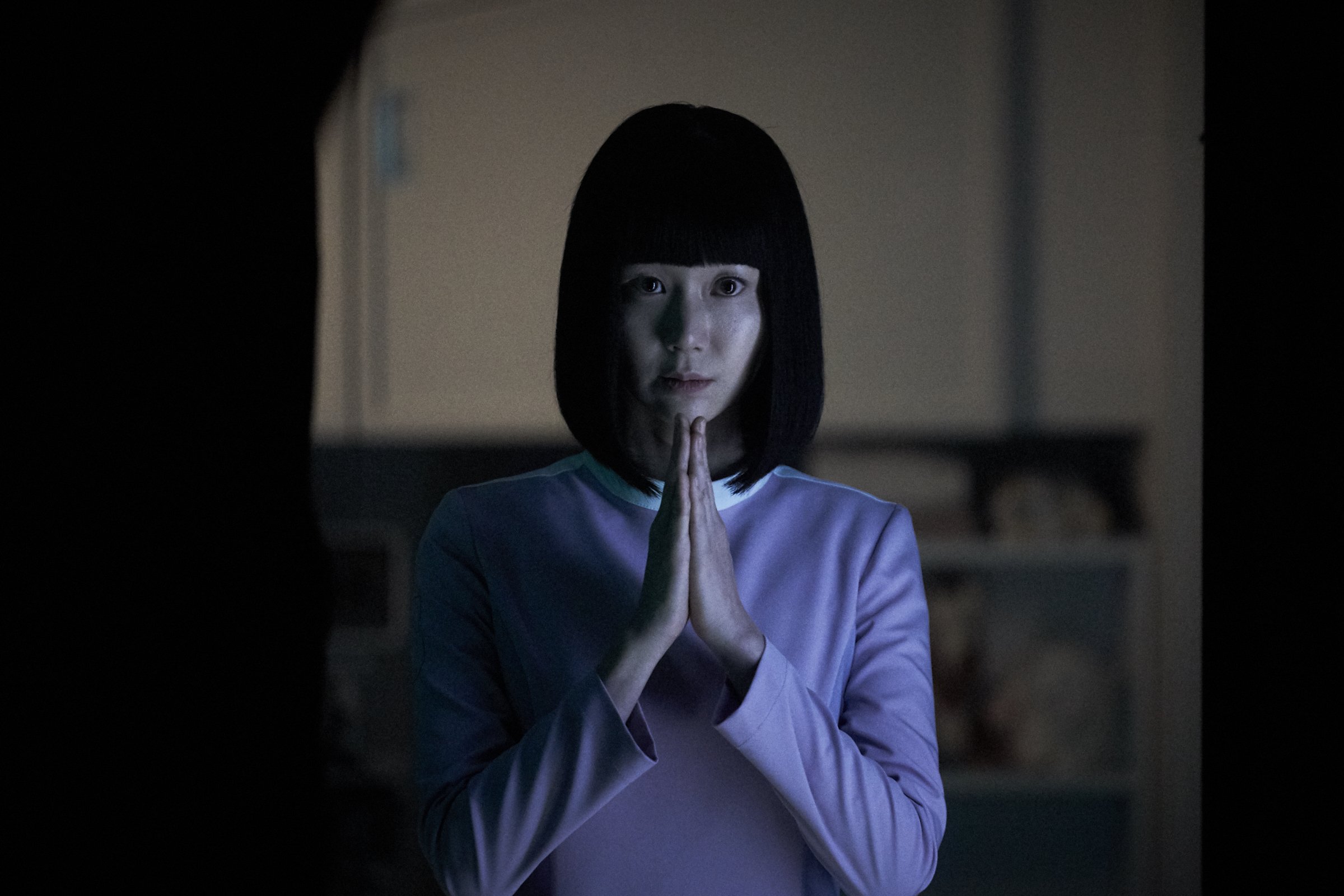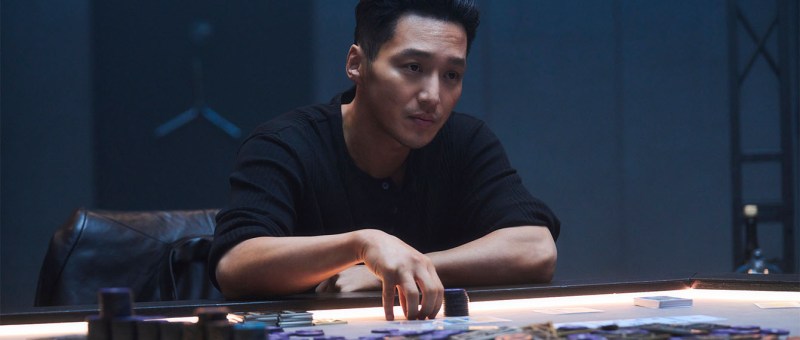
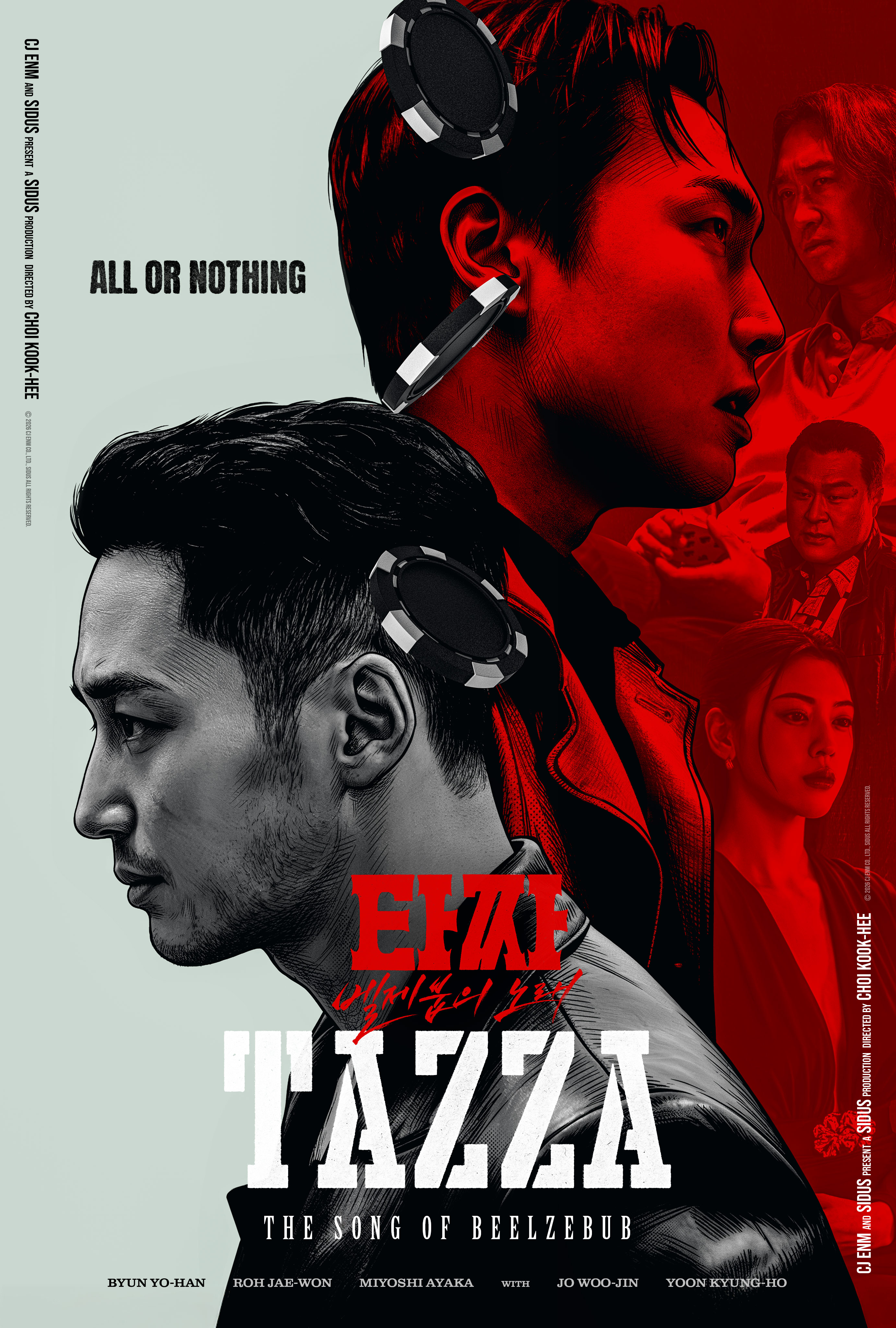
Tazza: The Song of Beelzebub (타짜: 벨제붑의 노래, Choi Kook-hee, 2026)

“Luck” is a funny thing. You might think you’ve come out on top, only to realise that perhaps you haven’t been quite so lucky after all. Choi Kook-hee’s Tazza: The Song of Beelzebub (타짜: 벨제붑의 노래, Tazza: Beelzebubui Norae) is the latest instalment in the thematic series that began with 2006 manwha adaptation Tazza: The High Rollers, though otherwise a stand-alone tale. This time around, gambling is more a means of revenge as two men, who are in effect two sides of the same coin, find their roles constantly reversed.

Indeed ParkTae (Roh Jae-Won) characterises them as Beelzebub and Lucifer vying for control with Beelzebub the apparent loser. He and JangTae (Byun Yo-Han), who each share the name Taeyoung, met in high school and became friends, though ParkTae came to resent JangTae for apparently having charmed luck in which everything seemed to go his way and he always came out on top. The boys develop a shared love of gambling, but ParkTae is experiencing a difficult home life in which his mother is a religious fanatic who seems to have an alcohol problem. She regularly beats him with a crucifix and refers to him as the antichrist, which perhaps fuels his characterisation of himself as Lucifer. JangTae, meanwhile, has lost both his parents but shares a warm familial environment with his older sister Tae-hee (Lim Se-Mi). They later take in ParkTae too, but he soon develops unreturned feelings for Tae-hee that see him almost long to push JangTae out of the next.

Filled with self-loathing, ParkTae sees himself as unlucky and feels hard done by, resentful of the ease with which JangTae seems to live his life and what he sees as the way JangTae’s “luck” often ends up making him look foolish. ParkTae seems to be the more the rational side of the crypto casino business the guys start together while JangTae is readier to make decisions on gut instinct. JangTae later asks him if it wasn’t ParkTae who was the lucky one all along. He was smart, talented, and had people who loved him, though he was too consumed with resentment  to notice. While the guileless JangTae only offered him support and friendship, ParkTae dreamed of ruling alone and taking the entire prize for himself. 

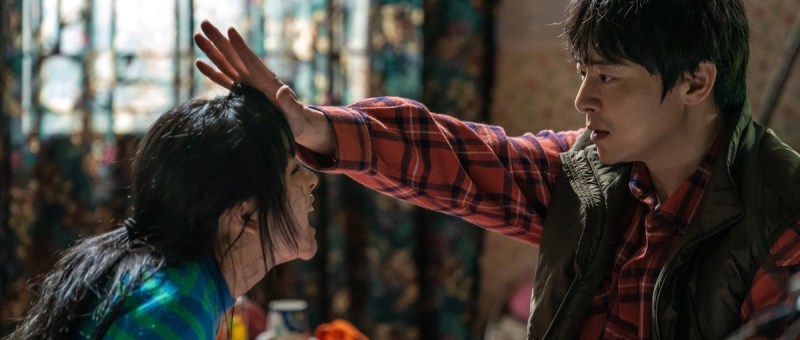
That might be why he sets up a honeytrap with the help of Korean American lobbyist Linda Park (Stephanie Lee) who’s supposedly agreed to give them the lowdown on how to clear the way for a physical casino in Vietnam. JangTae has to bet his life on the toss of coin where both sides spell death only to find himself lucky once again when it somehow ends up standing on edge. Taken in by a former card sharp hiding out in Vietnam (Jo Woo-Jin), JangTae is co-opted into another battle for revenge in which a young woman (Ayaka Miyoshi) plots against the man who shot her father (Tsuyoshi Ihara) who foolishly bet his life after getting too into a poker game. The lure of odds seems to drive men mad with each begging for just one more game to turn it all around. It is, however, a battle of wits as much as anything else in which the pair engage in a kind of psychological warfare over the gaming table.

As JangTae says, maybe ParkTae was always luckier than he was. He just isn’t able to see why a particular outcome benefits him while fixating on winning or being a conventional success. ParkTae wants to knock JangTae off his perch to satisfy his ego, but cannot shake his inferiority complex and attributes all his shortcomings to his unluckiness rather than accept the consequences of his own actions. As JangTae’s mentor taught him, the luckiest man at the table is the one who knows when to walk away. That’s something that seems to have eluded ParkTae who doesn’t know when to quit when he’s ahead. Rather, he fixates on his chosen income unable to see clear where real “luck” lies. In any case, the dynamics between the two men are continually in shift as they find themselves quite literally staking their lives on the cards while wondering whether either of them has the courage to see things through. In the end, the real winner maybe the one who knows when it’s time to call it quits, rather than allow themselves to be manipulated by the constant allure of the odds.


Tazza: The Song of Beelzebub opens in US cinemas October 16 courtesy of Well Go USA.

Trailer (English subtitles)
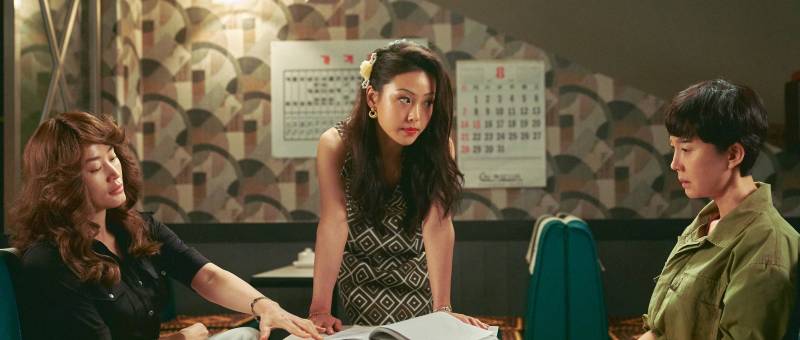
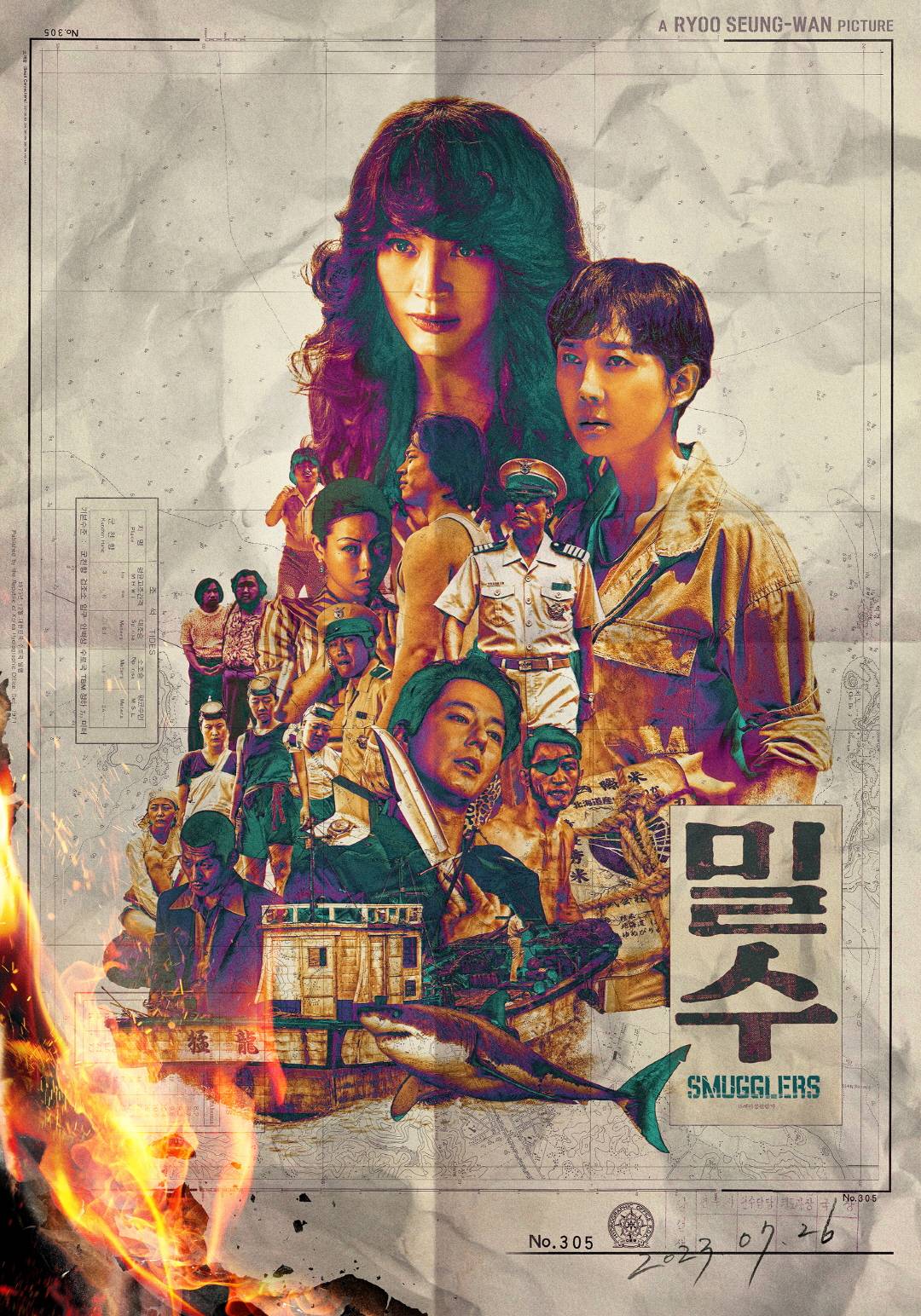
Smugglers (밀수, Ryoo Seung-wan, 2023)

A collection of free divers decide it’s time to take control of the boat in Ryoo Seung-wan’s 1970s-set action drama, Smugglers (밀수, Milsu). The smoke rising from factory chimneys in the opening sequence as the fisherwomen pull into port ought to tip us off that this is partly a story of capitalistic corruption taking place during the economic miracle late into the rule of dictator Park Chung-hee. These factories may have made some rich and provided jobs for local men who can no longer make a living from the land, but it’s also destroyed the livelihood of these traditional divers. They return with a full haul, but are dismayed to discover that all of the shell fish is rotten because of the chemicals illegally spilled into the water by the local plants while the authorities have either been bribed or turn a blind eye.

This is, in a lot of ways, the prevailing culture, as customs officers can also be bought off or choose to turn a blind eye when it suits them. One man is seen arriving by boat wearing several pairs of jeans to sell on the black market, while others carry bags full of foreign cigarettes and other contraband items the customs officials would be within their rights to “confiscate”. A local man starts putting pressure on the captain of the boat that drives the divers to start picking up other things have been dropped into the ocean, as it seems that everyone’s doing it anyway and there aren’t any other ways to make money in the local economy. He isn’t very happy about it, but his daughter Jin-sook (Yum Jung-ah) and her friend Choon-ja (Kim Hye-soo) along with most of the other women are blinded by the vast amounts of money they begin receiving that allow them to start living the high life in a growing local culture of excess as symbolised by the presence of a nightclub. Even gangster Kwon, when he arrives a few years later, is surprised to discover that this rural backwater has its own cinema and entertainment scene.

Kwon (Zo In-sung) is also someone who has been corrupted by his time serving in the Vietnam War, having lost his humanity and become ruthless to the extent of sadistic violence. Nevertheless, he’s also someone whom Choon-ja later thinks that she can manipulate on returning to the harbour town two years after escaping from the scene of the arrest when the other women were captured by police. That she ran off and has not been seen again leads some to the inevitable conclusion that she sold them out and made a new life in Seoul on the proceeds. There is then a degree of mistrust between herself and Jin-sook who suffered personal tragedy and spent time in prison while Choon-ja bided her time, waiting to put her plan in action. 

For much of the running time, the audience is a long way ahead of the cast in figuring out what actually happened during the first failed smuggling mission which makes the final revelations fall rather flat, yet it comes to something that the women largely find themselves powerless and divided in the face of male authority. Jin-sook has not inherited her father’s boat as it has been taken over by Hammer (Park Jeong-min) who was only a lowly assistant when she was arrested. She continues to be at his mercy despite being the de facto leader of the divers without whom the smuggling operation would fall apart. The return of Choon-ja then gives them an opportunity to leverage female solidarity and turn the tables on the men who exploit their labour and offer little in return.

Jin-sook’s initial reluctance to work with Choon-ja results in one of the divers going out into shark-infested waters and losing a leg in desperation to feed her family. Ironically, her husband had already lost an arm in a maritime accident, preventing him from working. The mistrust she faces also bears out Choon-ja’s claim that when you’re poor, the blame will always fall on you even if you haven’t done anything wrong. In the end, these women have only themselves to rely on if they want to turn the boat around. The film really kicks into gear in the third act as it enters conspiracy heist mode and Ryoo engages in his characteristically well-designed action sequences including a mass knife fight in a hotel and an impressive underwater sequence in which the divers have to fend off both assassins and sharks while trying to retrieve the bounty. Where it really excels, however, is in period detail and the sense of camaraderie that arises between the women as they finally become determined to seize the wheel.


Trailer (English subtitles)
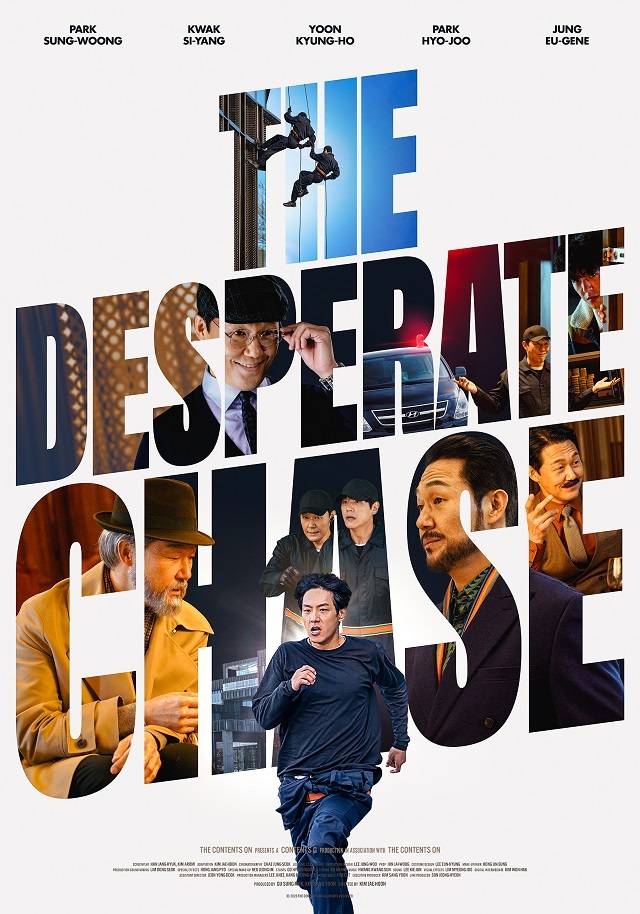
The Desperate Chase (필사의 추격, Kim Jae-hoon, 2024)

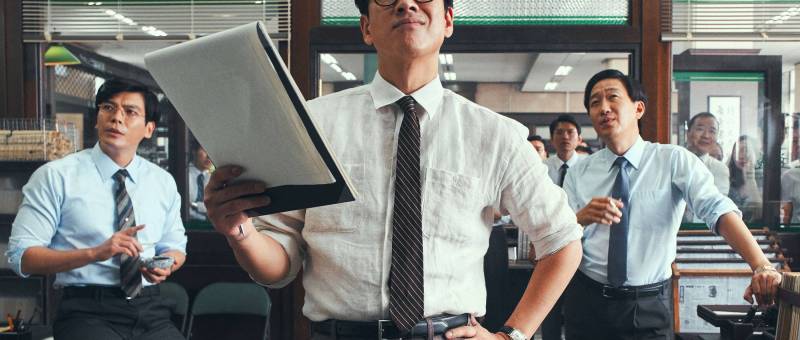
The peaceful life of Jeju Islanders is disrupted by the threat of crime and drugs in Kim Jae-hoon’s zany comedy, The Desperate Pursuit (필사의 추격, Pilsaui Chugyeok). Though nobody is really being desperately pursed, time moves quite slowly on Jeju, the film plays into a generalised anxiety in recent Korean film in which the local community is fearful of “foreign” incursion, not only from meddling mainlanders but from Chinese investors who are currently buying up land and thereby pushing locals out.

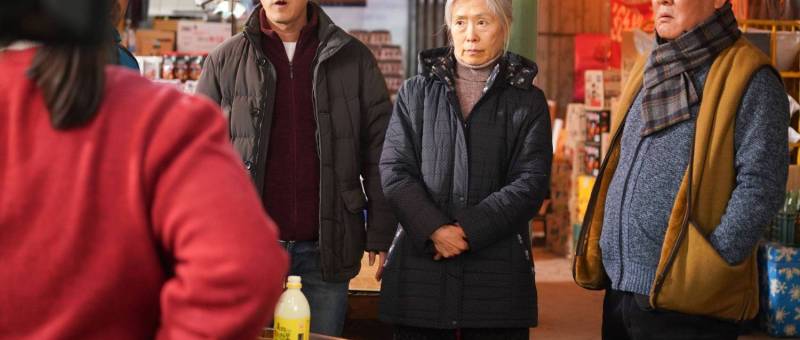
The main drama revolves around an old-fashioned market that Taiwan-based gangster Zhu (Yoon Kyung-ho) wants to use as a medical centre that will act as a drug hub. Everyone who works there uses Jeju dialect and is keen to protect this disappearing slice of their local culture. According to some, they’ve already seen off the yakuza and aren’t planning on giving in to Triads either, though Zhu has already proved himself more ruthless by murdering his mole at the market when he asked the gangsters to avoid using violence because it was making his job of convincing people to take the settlement money and leave more difficult. Meanwhile, detective Su-gwang (Kwak Si-yang) who has been transferred to the island temporarily due to excessive use of force in Seoul remarks on how the landscape has changed since he last visited with all the new Chinese-owned skyscrapers.

To that extent, the contrast between the area around the airport and the location Su-gwang eventually finds himself in couldn’t be more stark. Though he encounters difficulty finding accommodation ironically because he’s from the mainland and all the landlords assume he’ll end up doing a moonlight flit, echoing the issues faced by international residents in the city, he’s eventually billeted in a pleasant country cottage owned by Ms. Yoo (Ye Soo-jung), leader of the market resistance, despite the objections of the crotchety old man who rents the other room. He’s not anticipating having to do a lot of policing, but is put straight on the case of a known conman they think may be in the area despite having previously fled abroad to evade all the warrants out against him. 

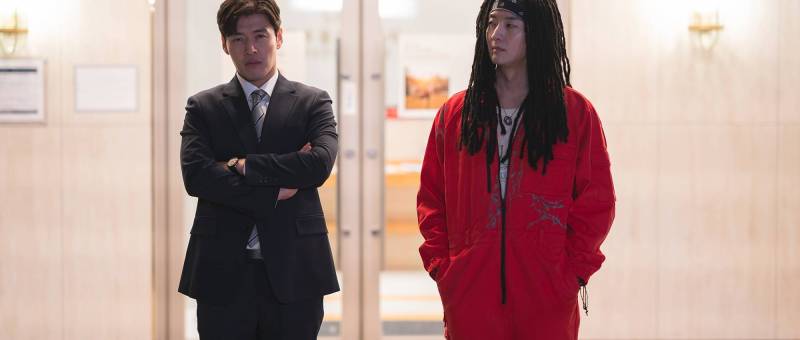
The conman is one thing, but the other disruptive force is the beauty clinic run by Dr. Yang (Park Hyo-joo) with the very ominous name of “Omerta”. Yang is cahoots with Zhu after having spent some time in China after losing her medical license due to providing illegal pain killers to her VIP patients in a damning indictment of amoral and exploitative status-driven culture. Their aim is to start dealing fentanyl in Korea through Jeju, though Yang warns him it’s a risky prospect with no infrastructure in place and in consideration of Korea’s tight drug laws, but Zhu is insistent. One of the chief weapons they have against Yang is that she only treats “VIPs” of which there aren’t any in the local community. In order to create a diversion, the local women eventually storm the place demanding treatment and accusing Yang of discrimination in their proud Jeju accents. 

Meanwhile, Su-gwang and his colleagues battle police corruption while trying to attack the real source of disorder in the form of Zhu and his men who have already struck deals with the local authorities. Zhu speaks fluent standard Korean and claims to have had a Korean father, though he abandoned him when he was five, but is also irritated by the constraints placed on him in this new territory. It really does turn out that everything about personal connections in Jeju, though in a more positive sense than it first sounded as the islanders band together to protect the market and expel the corruption of Zhu’s gang who want to ruin the beautiful local landscape and corrupt the populace by dealing drugs.

It has to be said, however, that there’s something a little sinister in the justification of Su-gwang’s violent policing which is treated as a bit of joke while coming from a place of righteous fury at the contemporary society in which the rich and powerful are free to get away with their crimes thanks to their connections. Jeju, however, does seem to mellow him a little with its laid-back atmosphere and cast of quirky characters where everyone really does know everyone even if outsiders are still viewed with a degree of suspicion. Partly a kind of tourist ad for the local community, the film paints the island as a place of warmth both in terms of its climate and the kindness of the locals, at least once you get to know them.


Trailer (Korean subtitles only)

The First Ride (퍼스트 라이드, Nam Dae-joong, 2025)

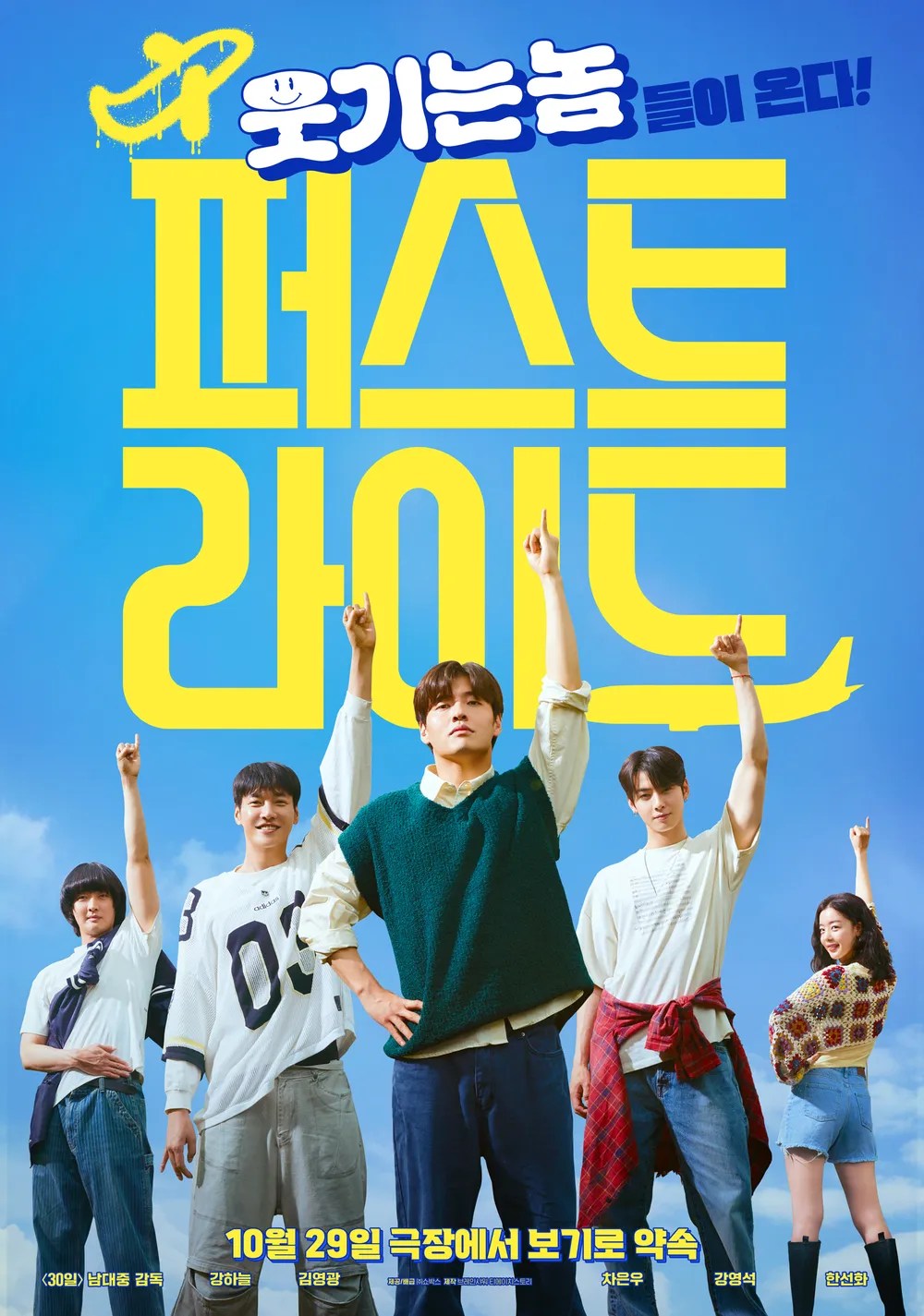
According to Tae-jung (Kang Ha-neul), the most hopeless phrase that Koreans say is “next time.” As he grew older and away from his childhood friends, he found himself saying “next time” more often without really thinking about it. But of course, the thing about life is that you always assume there’ll be a “next time”, but that might not necessarily be the case. Perhaps right now is a “last time” and you don’t even know it. The sometime narrator of The First Ride (퍼스트 라이드) tells us right away that this is a”sad story,” but it’s also happy a one about the enduring power of friendship even if you might not be all that close any more.

Tae-jung, Yeon-min (Cha Eun-woo), Do-jin (Kim Young-kwang), and Geum-bok (Kang Young-seok) have been friends since they were six years old, but Yeon-min is moving to New Zealand with his family right after he graduates high school. To mark the occasion, the boys decide to go on a trip and pick Thailand for their destination because Yeon-min’s favourite DJ is going to be playing at a festival. After managing to convince their parents, they finally set off only to be frustrated by an unexpected development that prevents them from travelling. Ten years later, Do-jin has been having a hard time, spending the intervening years in and out of pyshciatric hospital. He nevertheless wants to recreate their teenage trip as soon-to-be 30-year olds. As Yeon-min is unable to come, he decides to take him along with them in the form of a life-size pillow with his face on it, which proves very confusing for the good people of Thailand.

It’s clear that each of the young men has had various struggles in the intervening years. Geum-bok became a tattooist and is still in flight from his mother’s determination that he follow in her footsteps by becoming a Buddhist monk. He ends up going on holiday with his head shaved and wearing monks’ robes hoping for one last hurrah. Tae-jung, meanwhile, is on the way to achieving his dream of becoming president by working as a secretary to an assemblyman who is currently on hunger strike to protest some kind of injustice. Tae-jung’s pure-heated belief in political integrity becomes something of a thorn in the side of his boss who, is of course, not really going so far as to refuse all food, so he’s only too happy to let him go on a once-in-a-lifetime male bonding trip. Tae-jung is also followed by Ok-sim (Han Sun-hwa), who sees herself as his girlfriend, while he seems to be indifferent to her partly because of his own unresolved trauma and fear of making new relationships. But Do-jin who has suffered the most, unable to get over Yeon-min’s absence and looked after Tae-jung and Geum-bok while he struggles with mental health issues including hallucinations and delusions. 

Nevertheless, their time in Thailand is mainly spent on goofy fun which more than once gets them sent to the local jail only to be rescued by an exasperated embassy official (Yoon Kyung-ho) who tries to persuade them to go home early or at least pretend not to be Korean. A baffling plot development in which the gang are kidnapped for illegal organ transplant takes the film in a darker direction though is still mostly played for laughs and acting as a mild caution about the dangers of travel, and most particularly of people who seem nice but might have ulterior motives. It’s only Ok-sim’s messiness that saves the day in the end even if she begins to become slightly fed up with Tae-jung’s continued insensitivity towards her in flirting with other women during their trip. 

But even so, through their shared experiences, the three men begin to overcome some of their shared trauma while reaffirming their friendship. Do-jin comes to accept the truth and is able to begin living a more settled life thanks to the support of his friends in processing his guilt and grief. Though they may not be so close any more, the memory of their childhood friendship becomes a sustaining force for each of them, while they try to maintain their relationship as adults with busy lives. They are, however, much better equipped to that after their strange trip to Thailand despite its continuing absurdity.


Trailer (English subtitles)
My Daughter Is a Zombie (좀비딸, Pil Gam-seong, 2025)

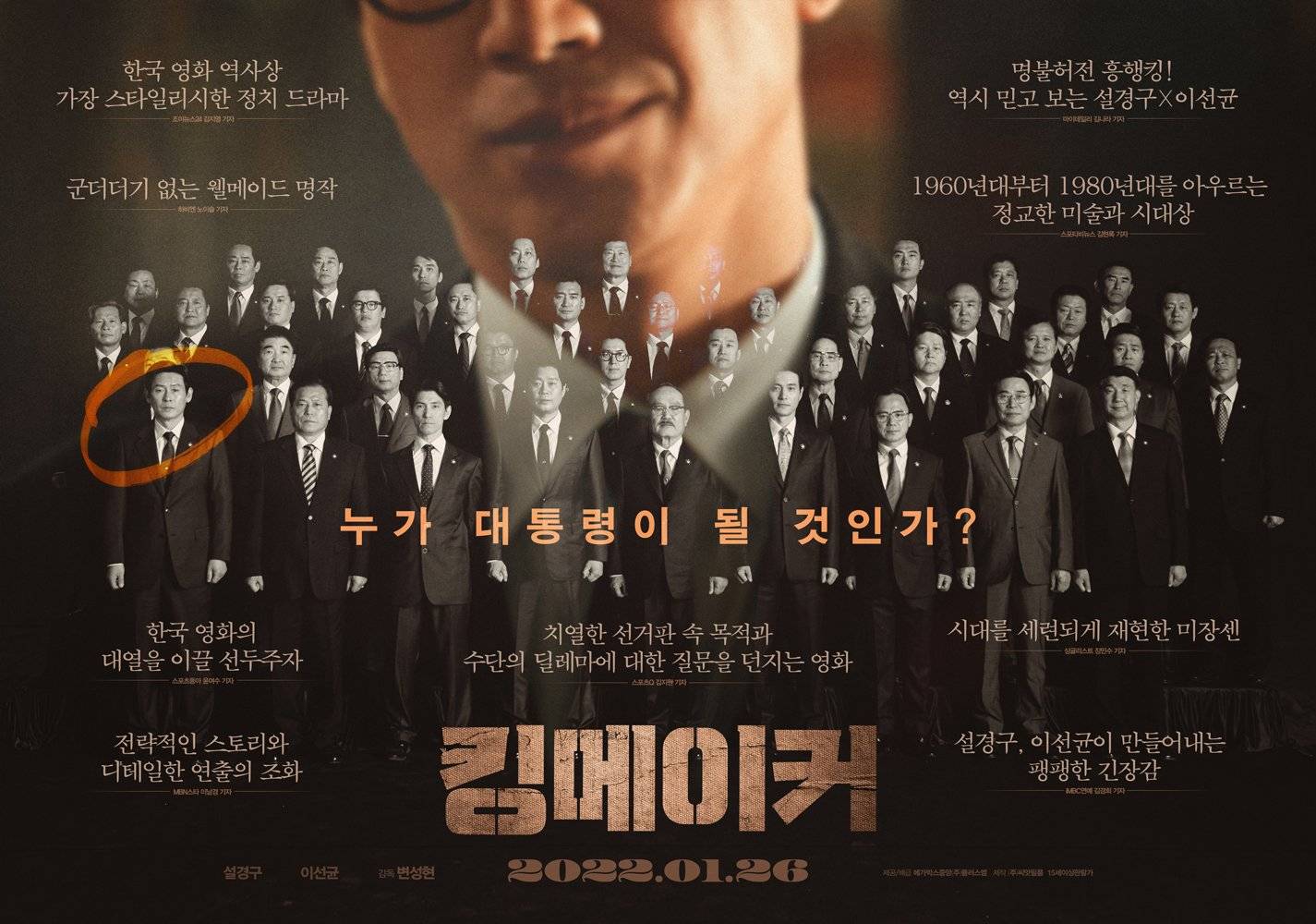
Jung-hwan’s (Jo Jung-suk) daughter Soo-a (Choi Yu-ri) is growing up. She’s no longer enthused about going to the amusement park for her birthday and wishes her father would stop buying churros to mark the occasion. Maybe there’s a part of Jung-hwan that’s frightened of this development, no longer quite knowing who his teenage daughter is becoming and confused by her moodiness. When she’s bitten during the zombie epidemic, however, it might be Jung-hwan who’s bitten off more than he can chew in deciding to hide her from the authorities in the hope she might get “better”.

More family drama than horror movie, Pil Gam-seong’s webtoon adaptation My Daughter is a Zombie (좀비딸, Jombittal) is on one level about unconditional parental love as Jung-hwan refuses to give up on Soo-a and continues to “train” her to regain her memories. With echoes of another pandemic, the film considers society’s reaction to “infectees” who are rounded up and killed to stop the threat of the infection. On returning to his rural hometown to live with his mother, Jung-hwan reunites with a childhood friend, Yeon-hwa (Cho Yeo-jeong), who has since become a teacher, but she has a pathological hated of zombies and until recently had made a point of beating them to death with her kendo sword. Still carrying the trauma of having to kill her fiancé who attacked her, Yeon-hwa doesn’t want to accept that Soo-a could be getting better because that would mean the “zombies” she killed were just people who were ill and could have recovered if she hadn’t murdered them out of rage and prejudice. Indeed, once the infection calms down, the relatives of people killed by state forces begin to ask questions and protest that their loved ones shouldn’t have been treated with such cruel indifference.

Then again, in terms of zombie movies, people who suggest that perhaps they should give the infected a chance rather than proactively killing them don’t usually last very long. The film takes place in a universe in which zombie movies exist with Train to Busan even getting a name check, but none of that’s very helpful to Jung-hwan as he tries to figure out how to keep his daughter safe while also trying to heal her. His job as a tiger trainer seems to come in handy in trying to navigate Soo-a’s new aggressive nature, while his mother Bam-soon (Lee Jung-eun) mostly makes use of her god-given granny powers and a wooden spoon to keep Soo-a in line. 

Meanwhile, the promise of a cure and treatment in America is waged agains the vast bounty the government is offering as a reward for turning in zombies. A not so friendly face shows up and tries to kidnap Soo-a for the reward money while even crassly suggesting to Jung-hwan that they split it between them when he tries to intervene and get Soo-a back. In healing Soo-a back to health, Jung-hwan is both attempting to repay a debt and assert himself as Soo-a’s father by essentially rebooting her so that she recovers the shared memories of her childhood.

To that extent, Soo-a’s time as a zombie is a kind of express adolescence in which she travels from grunting teenager to a young woman with a better appreciation for her father and the trouble he went to raise her. Of course, one could say that it’s all a little patriarchal and perhaps Jung-hwan is “taming” her to fit his own image of what his daughter should be much as he tamed the tiger and taught it to dance, but then again Soo-a is also readjusting herself and trying to figure out how to be a person in her own right after moving to her father’s rural hometown where she’s badgered into attending the local school despite her “illness” because there are only four other pupils and otherwise it’s going to have to close. The village is very proud of its current zero infections record, but the funny this they’re all very accepting of Soo-a, though they just think she’s a bit different rather than a “zombie” after buying Jung-hwan’s possibly uncomfortable excuse that she suffered brain damage in an accident. A father’s undying love does, however, eventually save the world after a continual process of being wounded by his daughter and healing again gives Jung-hwan a means to beat the disease if only in his refusal to give up on the idea his daughter will eventually recover.


Trailer (English subtitles)
Revolver (리볼버, Oh Seung-uk, 2024)

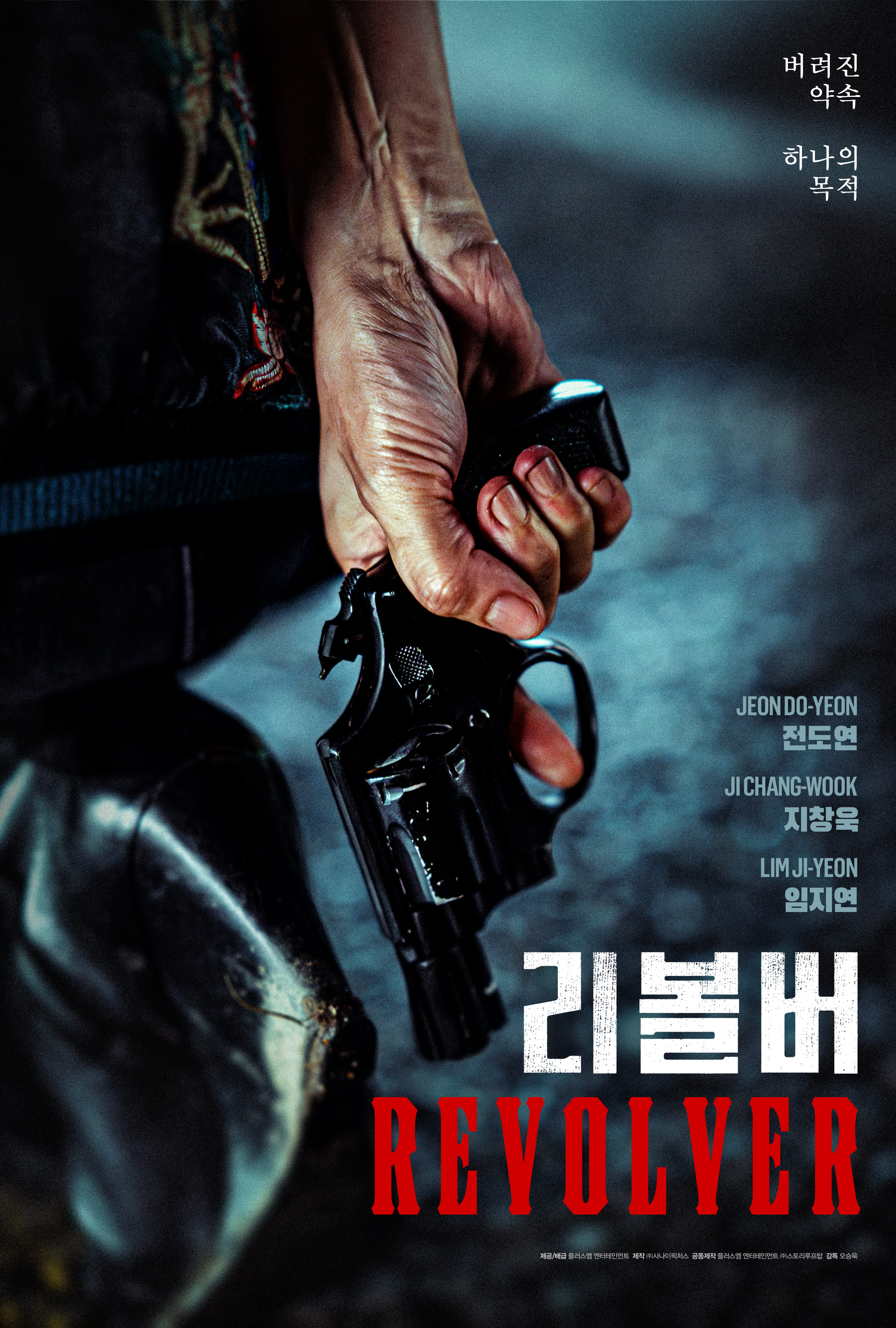
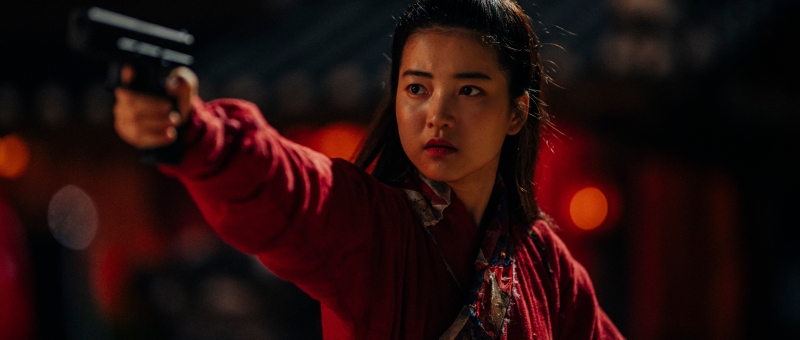
Everyone is always making promises to Su-yeong, but promises don’t count for very much in this world of infinite duplicity. Reuniting director Oh Seung-uk with The Shameless star Jeon Do-yeon, Revolver (리볼버) takes place in a world of corrupt cops and criminal gangs where no one can be trusted and every relationship is transactional. Like the barrel of a revolver, allegiances shift and rotate as Su-yeong attempts to navigate these turbulent waters while well aware that she is completely alone and has only her quest for vengeance and justice to sustain.

It’s by a broken promise that’s she’s been betrayed. After having become lowkey involved in police corruption to help her lover Captain Lim (Lee Jung-jae), former policewoman Su-yeong agreed to take the fall for the squad. They promised her that she’d only lose her job rather than go to prison and that she’d be allowed to keep the apartment she’d just bought, get a 700,000-dollar payout, and a new job working for Eastern Promises security division. Only in the police station does she realise she’s been tricked as they slap a drug trafficking charge on her and hand down a two-year sentence. Predictably, once she gets out, no one’s there to meet her except a gloating prosecutor and a random woman she’s never met before, Yoon-sun (Lim Ji-yeon), who says she was a friend of Lim’s. He’s since been found dead in a suspected suicide, though that matters less to Su-yeong than the fact he gifted her apartment to someone else and has since died in mysterious circumstances. 

The funny thing is that Yoon-sun, who is working both with corrupt cop Dong-ho (Kim Jun-han) and the gang led by Grace (Jeon Hye-jin), actually has some sympathy with Su-yeong and disproves of the way she’s been treated. After all, they could have just paid her her money like they said they would. Well used to navigating these waters, Yoon-sun appears to be playing her own game and keeping her options open yet it seems genuine when she tries to help Su-yeong which isn’t to say she wouldn’t betray her if she absolutely had to but right now she doesn’t. There is something quite poignant about the sense of female solidarity that arises between them, even though they are romantic rivals, as women who’ve both been let down by this patriarchal society. Su-yeong is rightly fed up with it and she’s going to get her money and her apartment no matter what if only to make sure they don’t win. Yoon-sun has chosen complicity as her chosen means of survival, but may be silently rooting for Su-yeon to break the both of them out of this repressive system.

To that extent it’s ironic that the former detective’s main weapon is a retractable baton, as if she were trying to enact justice though she herself is a compromised figure having at least been on the fringes of the corruption if perhaps not at the heart of it. Then again, all of the police appear to be corrupt so perhaps it’s more that she’s no better than the world that surrounds her and well aware that promises mean nothing and no one can be trusted. Lim seemingly broke a number of promises to her but may have tried to make it right in the end, while she’s also the victim of a vendetta by grudge-bearing cop Dong-ho (Kim Jun-han) whose romantic overtures she once turned down leaving him with a desire to destroy her completely. Top bad guy Andy (Andy) also appears to be a figure of compromised masculinity, playing the rabid dog but having no other backing than his ambiguous relationship with Grace who may have offed a female rival to solidify her grasp over the criminal enterprise. Violently beaten by Su-yeong, he too vows revenge to reclaim his masculinity but is ill equipped to achieve it. 

Despite being disregarded as not a proper detective, Su-yeong patiently follows all the clues and plays a long game to track down the source of all her misery while really her dreams had been small, owning a nice apartment and sharing it with Lim. On her release from prison, she tells the guard that her parents are dead and she has no friends or relatives signalling her aloneness in a vast world of betrayal but also her resilience and refusal to back down in her ironic fight for “justice” which is simply making sure those who’ve wronged her honour their promises and she gets what she’s owed. The occasional bouts of dark humour such as the absurdity of the final confrontation scene lend a touch of surreality to Oh’s purgatorial world of constant mistrust. “Live as if you were already dead,” a defeated Andy ineffectually screams as he vows vengeance and insists Su-yeong hasn’t heard the last of this. But Su-yeong has been living like she’s dead all along and now, finally, might be alive once again. 


Revolver is available digitally in the US courtesy of Well Go USA.

International trailer (English subtitles)

Kingmaker (킹메이커, Byun Sung-hyun, 2022)

It’s the political paradox. You can’t do anything without getting elected but to get elected you might have to abandon whatever it was you wanted to do in the first place. Loosely based on the real life figures of Kim Dae-jung and his political strategist Eom Chang-rok, the heroes of Byun Sung-hyun’s Kingmaker (킹메이커) are obsessed with the question of whether the ends justify the means and if it’s possible to maintain integrity in politics when the game itself is crooked while the film suggests that in the end you will have to live with your choices and your compromises either way and if it’s a better world you want to build perhaps you can’t get there by cheating your way to paradise.

The son of a North Korean migrant, Seo Chang-dae (Lee Sun-kyun) is an embittered and frustrated pharmacist with a talent for spin. When his friend complains about a neighbour stealing his eggs from his chicken coop and denying all knowledge because he’s well connected and knows he can get away with it, Chang-dae’s advice is to plant one of his own chickens in the other guy’s coop and catch him red handed. Impressed by the impassioned political speechmaking of labour activist Kim Woon-bum (Sol Kyung-gu), he writes him a letter offering his services and then marches down to his office to convince him that he is the guy to break his losing streak and finally get him elected so they can “change the damned world”. 

The problem is that all of Chang-dae’s ideas are like the chicken scam, built on the manipulation of the truth, but you can’t deny that they work. He plays the other side, the increasingly authoritarian regime of Park Chung-hee, at their own game, getting some of their guys to dress up as the opposing party and then set about offending a bunch of farmers by being generally condescending and entitled. They stage fights and perform thuggish violence to leave the impression that Park’s guys are oppressive fascists while asking for the “gifts” the Park regime had given out to curry favour back to further infuriate potential voters. Later some of their own guys turn up with the same gifts to send the message that they’re making up for all Park’s mistakes. At one point, Chang-dae even suggests staging an attack on Woon-bum’s person to gain voter sympathy, an idea which is met with total disdain by Woon-bum and his team many of whom are at least conflicted with Chang-dae’s underhanded tactics. 

But then as he points out, if they want to create a better, freer Korea in which people can speak their minds without fear then they have to get elected first. It may be naive to assume that you can behave like this and then give it all up when finally in office, but Chang-dae at least is committed to the idea that the ends justify the means. Woon-bum meanwhile is worried that Chang-dae has lost sight of what the ends are and is solely focussed on winning at any cost. He has an opposing number in slimy intelligence agent Lee (Jo Woo-Jin) who serves Park in much the same way Chang-dae serves Woon-bum, but Chang-dae fatally misunderstands him, failing to appreciate that for Lee Park’s “revolution” is also a just cause for which he is fighting just as Chang-dae is fighting for freedom and democracy. In an uncomfortable touch, Lee seems to be coded as gay with his slightly effeminate manner and tendency towards intimate physical contact adding an additional layer to his gradual seduction of Chang-dae whose friendship with Woon-bum also has its homoerotoic qualities in its quiet intensity. 

The final dilemma lies in asking whether or not Woon-bum could have won the pivotal election of 1971, preventing Park from further altering the constitution to cement his dictatorship and eventually declaring himself president for life, if he had not parted ways with Chang-dae and tried to win more “honestly”. If so, would they have set Korea on a path towards the better world they envisaged or would they have proved little different, their integrity already compromised by everything they did to get there poisoning their vision for the future? The fact that history repeats itself, Woon-bum and his former rival Young-ho (Yoo Jae-myung) splitting the vote during the first “democratic” presidential election and allowing Chun Doo-hwan’s chosen successor to win, perhaps suggests the latter. In any case, it’s Chang-dae who has to live with his choices in having betrayed himself, as Woon-bum had feared too obsessed with winning to remember why he was playing in the first place. “All my ideas about justice were brought down by my own hand” he’s forced to admit, left only with self-loathing defeat in his supposed victory. Some things don’t change, there is intrigue in the court, but “putting ambition before integrity will get you nowhere” as Chang-dae learns to his cost. 


Kingmaker screened as part of this year’s London Korean Film Festival.

International trailer (English subtitles)

Alienoid (외계+인 1부, Choi Dong-hoon, 2022)

According to the strangely warmhearted AI robot at the centre of Choi Dong-hoon’s Alienoid (외계+인 1부), the universe is already finished, destined only to tear itself apart in destructive instability. According to him, his society evolved, became compassionate and forgiving, yet like many others sought to avoid a problem it did not want to deal with in exiling its most dangerous prisoners to the minds of oblivious Earthlings who apparently rarely realise they’re sharing body and soul with an alien killing machine until that is one decides to escape. 

Thunder (Kim Dae-myung), an AI unit accompanying the sullen Guard (Kim Woo-bin) who is also a kind of guardian, paints the aliens as dangerous mutants who live only for violence yet it might be worth considering that their rebellion may be justified as members of an oppressed minority apparently considered harmful to mainstream society were it not for the fact their plan involves poisoning the Earth’s atmosphere to free their brethren while suffocating humanity in the process. Guard is fond of saying that he cares nothing for humans and does not involve himself in human affairs, yet it’s obvious that as much as his duty is to ensure the aliens stay captive he feels a responsibility to protect humanity, coming to care for an infant child Thunder spirited away in compassion after its mother died when the alien hosted inside her tried to escape. 

There is something a little curious in the fact these alien beings have chosen to live in what is our present day when according to them time is not linear but happening all at once and they appear to have the ability to travel through it at will, even stashing mutant criminals back in the 14th century where a Taoist dosa magician, “The Marvellous Muruk” (Ryu Jun-yeol) is on the hunt for the Divine Blade and a young woman who “shoots thunder” (Kim Tae-ri). Alien technology may seem like magic even if rooted in “science”, but feudal Korea is a place of majestic fantasy in which wizardry is apparently very real to the extent that a pair of powerful sorcerers tour the land hawking magical supplies such as random sutra stickers and mirrors that enlarge whatever passes through them to mysteriously masked warrior monks. Yet as we can see the girl who shoots thunder is merely welding a pistol, a kind of halfway house of technology which seems like strange magic to the people of Goryeo but nothing more than a child’s toy to the laser-wielding robotic aliens. 

In any case, Choi eventually connects these two worlds bridged by temporal conspiracy as if implying that the future’s salvation lies only in the past. Guard is forced to reflect that their strange act of colonial imperialism in secretly implanting alien prisoners in human minds may have been misguided when challenged by his plucky little girl (Choi Yu-ri) who has already realised there’s something a little different about her distant dad while the fact she’s effectively being raised by two men passes as incidental detail even as the Guard is stalked by her best friend’s apparently smitten aunt (Lee Honey). 

This being the first instalment in a two part film, there is a notable lack of resolution in its closing moments though Choi excels in world building running from hard sci-fi to feudalistic fantasy imbued with the strange magic of technology and underpinned by an interrogation humanity as the heroes battle through time looking for a way to repair an “unstable” world ruled by greed and violence and largely find it in each other. While the chief thrill may come from the incongruity of a young woman firing a pistol in the age of the crossbow (not to mention blasting her way out of a coffin), Choi packs in a series of innovative action sequences shot with a knowing irony as Muruk faces off against the masked monks in the past while the Guard and Thunder try their best to keep the aliens at bay with their high tech weaponry, shooting electric pulses from their palms and dodging lasers but still making a last ditch attempt by leaping at the enemy spaceship and trying to stab it in the heart. Whether this disordered world can be stabilised through a moment of cosmic connection will have to wait for part two, but this opening instalment at least is quite literally a charming affair.


Alienoid is in US cinemas from Aug. 26 courtesy of Well Go USA.

US trailer (English subtitles)
Trans (트랜스, Do Naeri, 2021)

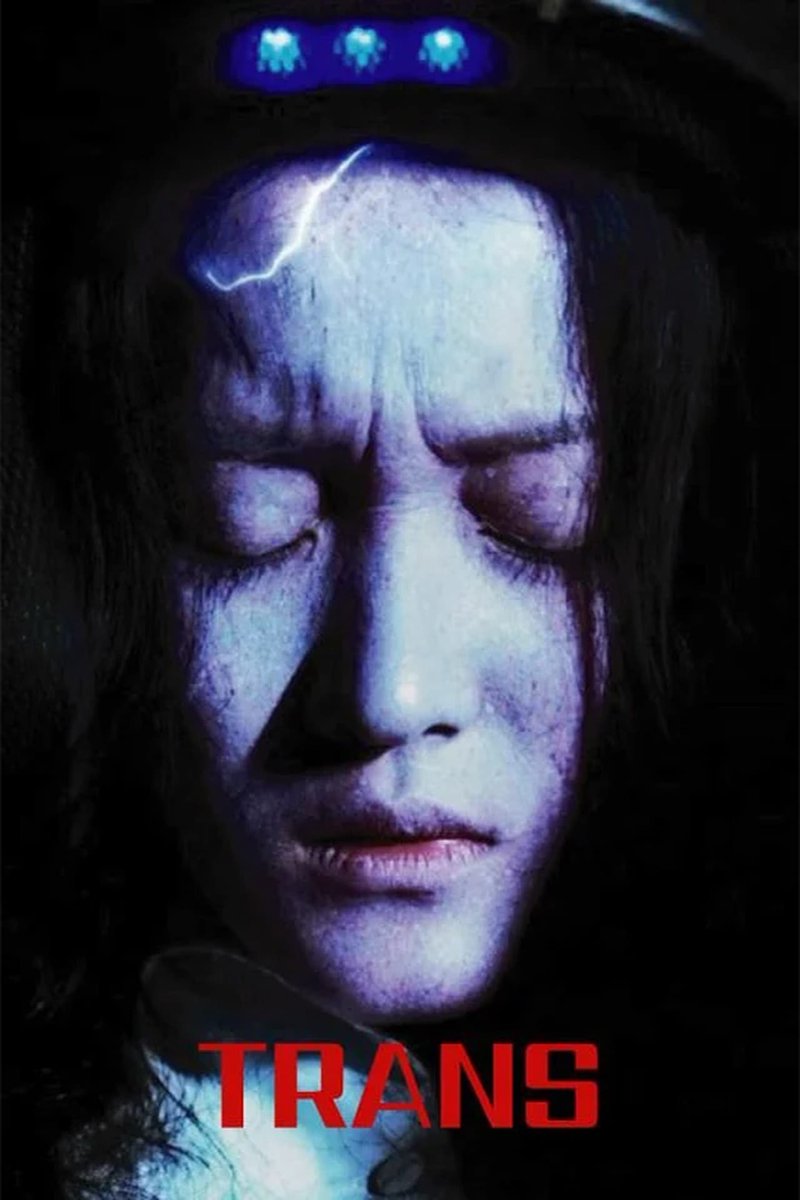
The troubled heroine of Do Naeri’s sci-fi psychodrama Trans (트랜스) finds herself quite literally “stuck in a deep loop” while attempting to transcend herself and escape her teenage angst. Playing with new religion imagery, Do’s elliptical drama sends the young woman on a quest for self-apotheosis through physical transformation, a literal obliteration of the self in order to be reborn as something more than human, yet internally conflicted in the costs and implications of such a “rebirth” even while her consciousness seemingly fractures under the weight of its demands. 

Then again, perhaps all of this is just fantasy returning us repeatedly to the opening scenes in which high schooler Minyoung is awoken from her reverie by a woman’s scream that might in some sense be her own. A classmate’s body has been spotted draped over a tree, his face and torso marked with what seem to be electrical burns. According to the police, Minyoung was the last person to be in contact with Taeyong which in itself seems odd as we’re immediately shown flashbacks of him bullying her because of her bulimia, attempting to shove junk food into her face. On one such occasion she’s rescued by fellow student Itae, wearing a mask and firing some sort of laser gun. Itae later takes her to his secret lab where he researches the concept of transhumanism believing that the next step in human evolution lies in hacking the brain, enhancing human physicality with technological augmentation such as the chip he has implanted on his chest apparently given to him to “cure” his OCD. 

Taeyong’s quasi-fascist ramblings take on the language of new religion, talking of electrical “baptism”, death and resurrection, eventually directing a mystical prayer to the sky as if requesting divine blessing for his transcendence of the human form. Such language may be perfectly tailored to Minyoung whose only other interaction we see is with a dubious online church in which she questions her mentor on the nature of evil, asking why God could not have just made humanity “perfect” to begin with only for her mentor to suggest that evil is a choice that proves free will ensuring that humans are not just mindless robots following divine orders. Mindless robots is however what Taeyong believes humanity to be, his quest for transcendence apparently also one of revolution hoping to obliterate humanity as it is once and for all. He may in some sense reflect Minyoung’s alienation, a desire for revenge against a society by which she feels rejected, while fellow classmate Nochul perhaps reflects her concurrent anxiety. 

Yet there is something dangerous in Itae’s insistence that Minyoung is merely “stuck in a loop” and that certain behaviours or aspects of personality regarded as “disorders” are all the fault of faulty wiring and can simply be “fixed” by rebooting the system through electronic shock without ever considering the reasons those feelings or behaviours may have come to exist. He prays on Minyoung’s desire for control and dangles the promise of empowerment while merely using her in his plan to bring about the destruction of humanity while implying she may have already entered a state of “trans” which is why her world keeps repeating itself with details slightly altered until finally reaching the source of her trauma and uncovering the “truth” of her reality as defined by her own consciousness.  

This may all indeed be in her head to one extent or another as she looks for a way to transcend herself, her sense of alienation, dysphoria with her surroundings, and spiritual despair led astray by some worryingly fascististic philosophy advanced by a teenage mad scientist hellbent on the destruction of “low class robots” and the creation of a new superman through engineered evolution apparently using little more than a MacBook Air and a series of TV screens, his chief piece of equipment a modified motorcycle helmet. Careering through transhumanism to teleportation, invisibility, parallel universes, and time travel there is much that makes little literal sense as Minyoung constructs and deconstructs identities while repeatedly remaking her world if not quite to her liking then at least to her satisfaction only perhaps to wish she could return to a state of ignorance, human once again. 


Trailer (English subtitles)
The Prayer (간호중, Min Kyu-dong, 2020)

“I’m just wondering if they all live with nothing to live for and whether it has any meaning to live like that. And if I am no different.” a beleaguered daughter muses contemplating her own future while caring for her mother (Moon Sook) who has been bedridden in a coma for the last decade. A perhaps controversial advocation for euthanasia, Min Kyu-dong’s expansion of his entry into the SF8 series The Prayer (간호중, Ganhojung) offers a timely exploration of the nature of empathy, the limits of AI technology, the ageing society, and the destructive effects of inequality as mankind’s children find themselves wracked by the existential pain of human suffering. 

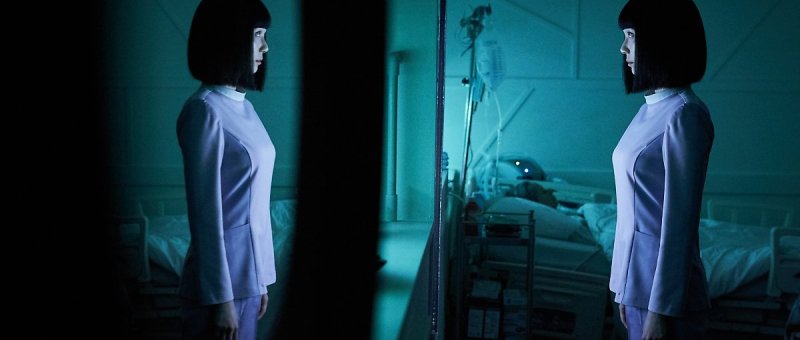
Set in the near future in which high schools are bulldozed to build additional care centres, The Prayer revolves around the relationship between the melancholy Jung-in (Lee Yoo-young) worrying if prolonging her mother’s life in this way is really what she’d want, and the robotic care nurse she’s hired to look after her, Ho-joong (also Lee Yoo-young). As we discover, Jung-in has taken advantage of the offer to have herself listed alongside her mother as a target for care leaving Ho-joong with an ironic conflict torn between her duty to look after Jung-in’s mother and witnessing the toll caring for her is taking on Jung-in who frequently expresses depressive thoughts and potentially suicidal ideations. 

In order to provide comfort to patients, the androids are designed with the same face as the primary guardian, meaning Jung-in is in someways in dialogue with herself while Ho-joong becomes increasingly confused in her imperfect, in some ways childish, application of human empathy. Fixated on Jung-in with a devotion which turns towards the romantic, she comes to the logical conclusion that in order to save her secondary patient the obvious choice is to sacrifice the first but has seemingly no understanding of the effect that may have on Jung-in who may be worn out and emotionally drained but would obviously feel responsible should anything happen to her mother at the hands of the robot nurse she hired because she has developed unintended feelings towards her. 

The extent of Ho-joong’s “feelings” are indeed at the heart of the matter as evidenced by her strange conversations with a well-meaning nun, Sister Sabina (Ye Soo-Jung), who is originally dismissive unwilling to recognise that a manmade creation may also desire access to God. As incongruous as it sounds, Ho-joong’s awakening spirituality positions her as uniquely human and as trapped as one of her patients, tormented by the pain of being alive and finally confined to table on which she claims to be experiencing near torture at the hands of those seeking to understand her “malfunction”. Her German manufacturers locate the fault in her advanced language processing unit, as if the problem were that she understands too well when perhaps it’s more that her empathy is based in a different metric and prone to misunderstand the irrationality of human impulses towards guilt and love. 

That’s also the problem with the unit next door owned by Mrs. Choi (Yum Hye-ran) whose husband (Yoon Kyung-ho) seems to be suffering from advanced dementia which often causes him to become violent or unpredictable. Unlike Jung-in, however, Mrs. Choi could only afford a basic model which offers little in the way of empathy nor will it care for her. Consequently, she appears to be overburdened with her husband’s care, doing laundry and tidying up after his frustrations cause him to trash his hospital room. The machine offers her only censure while the duty of care ironically prevents her from attending to her own health. Seeking help she turns to the manufacturer who bluntly tells her she doesn’t understand how to operate the machine and advises she ask her kids to teach her, only it appears that Mrs. Choi may have had a child in the past from whom she has become estranged and is otherwise all alone. Older than Jung-in, she despairs for the quality of her life and has no one to protect or care for her, pushing her towards a dark decision. 

Both women wonder if life is worth living if it means living like this, but have very different options open to them given their economic disparity. Having learned to feel pain, Ho-joong begs to be freed of it, positions now reversed as Sister Sabina becomes her caregiver. She accuses the nun of hypocrisy, that she allows her suffer by refusing to end her pain in order to preserve her own conscience in insisting to do so would be a “sin”. “What do I go through this pain for!” Ho-joong cries as if throwing herself into a fiery pit of existential torment while a cold authority insists she must continue to suffer. Min makes a powerful if perhaps controversial argument for the right to end one’s own suffering at a time of one’s own choosing if also leaning uncomfortably into the burdens of care as Mrs Choi and Jung-in too struggle with themselves while trying to do what’s best for those they love, but ultimately discovers a kind of serenity as his robot nurse encounters the spiritual and with it a release form the pain of living. 


The Prayer streamed as part of this year’s New York Asian Film Festival. It will also screen in London on 22nd October as part of this year’s London East Asia Film Festival.