Under the Light (坚如磐石, Zhang Yimou, 2023)

The irony at the centre of Zhang Yimou’s Under the Light (坚如磐石, jiānrúpánshí) is that it takes place in a neon-lit city of eternal visibility, though of course where you have light you’ll also find shadows. Even so, it appears he’s trying to make a point in the plain sight nature of political corruption and it’s connections with organised crime. At heart it’s a tense cat and mouse game between two men who share some kind of sordid past, but also of how it’s the next generation that often pay in the infinitely corrupted paternity of the contemporary society.

Zhang opens with a hostage crisis as a man hijacks a bus and threatens to blow it up if he doesn’t receive a visit from deputy mayor Zheng Gang (Zhang Guoli). Zheng attends but his policeman son Jianming (Lei Jiayin), currently assigned to the tech division, notices that the bomb can be detonated remotely and it doesn’t appear the hostage taker knew that it was real. In any case, all is not as it seems and as Zheng is soon squaring off against shady businessman Li Zhitian (Yu Hewei) who invites Jianming to dinner and puts on a show by blackmailing another business owner with a sex photo before forcing him to put his hand in boiling oil. 

In contrast to his ruthless exterior, Zhitian dotes on his grown up daughter currently pregnant with her first child and about to be formally married to his business heir David (Sun Yizhou). Jianming meanwhile has a complicated relationship with his father by whom he feels rejected in part because he’s adopted. Zheng also appears to be meeting with a mysterious young woman for unclear reasons, later hinting that she’s a kind of daughter figure someone at some point asked him to protect. In a strange and probably unintended way, it’s this parental quality of protection that has been disrupted by ingrained corruption and is then re-channeled in a desire to protect society in general. When it’s all over, Jianming asks his bosses why they trusted him to make the right decision, and they tell him it’s because he told them he wanted to be a “true policeman” for the people.

Apparently stuck in limbo for four years because of censorship concerns, the propaganda thrust of the film centres on the crackdown against political and judicial corruption. Zheng is engaged in a political project to target corrupt officials but is heavily implied to be on the wrong side of the fence himself which would explain his connection with Zhitian, a supposedly self-made man who keeps a heavy pole in his living room to remind him of his roots as a lowly porter in a rural town before taking advantage of the ‘90s economic reforms to make himself wealthy beyond his wildest dreams. 

They each have hidden secrets which Jianming becomes determined to drag into the light while working with the anti-corruption officers in his precinct, as well as old flame Hui-lin (Zhou Dongyu). Zhang adds in some distinctly retro comedy vibes not least in the frustrated romance of Jianming and Huilin who at one point dangle dangerously off a building while she later bites back, “don’t deprive me of the chance to protect you. It’s what they call love” when firing a pistol at a bunch or marauding bad guys. Yet the comedy seems incongruous with infinite bleakness of the resolution in which once again the children are made to suffer as Jianming comes to a greater understanding of his origins. 

In an ironic touch, the villains are later revealed to have been dyeing their hair which is in reality already white though they are not really all that old. Playing into the themes of duplicity, it also hints at the central message that the older generation must recede and the young, like Jianming, learn to find an accommodation with their failures in order to reclaim a sense of justice. Then again, the film itself is quite duplicitous with a series of glaring plotholes including a giant one relating to the DNA identification of a missing woman whose body is finally dragged into the light. Huiling warns Jianming that there are some boxes it’s better not to open. At the film’s conclusion he may wish he’d listened, but his job is to drag truth into the light and not least his own. In any Zhang’s infinitely bright, ever illuminated city of neon and glass has a host of hidden darkness only temporarily exorcised by the unusually lengthy parade of the now standard title cards explaining that the wrongdoers were caught and punished while deprived of their ill-gotten gains no matter how much it might seem that crime really does pay.


International trailer (Simplified Chinese / English subtitles)
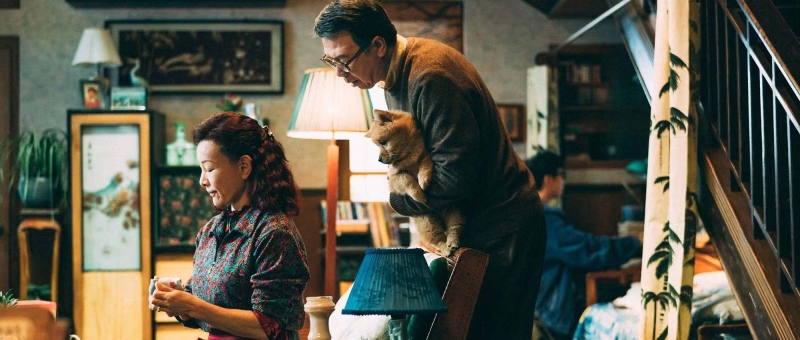
Hachiko (忠犬八公, Xu Ang, 2023)

The heartrending tale of a faithful dog who continued to wait for his late owner at a cable car station becomes a poignant symbol for a left behind China in Xu’s Ang’s reimagining of the 1987 Japanese film scripted by Kaneto Shindo, Hachiko (忠犬八公, zhōng quǎn bā gōng). Xu keeps the original title which translates as “faithful dog Hachiko” (Hachiko comprising of the characters for “eight” and “public” which when used in names conveys a note of nobility), but changes the puppy’s name to “Batong” which means “eight dots” and is taken from a mahjong title he naughtily runs off with after being taken in by kindhearted professor Chen Jingxiu (played by film director Feng Xiaogang).

The film opens, however, in the present day with Jingxiu’s wife (Joan Chen) and son (Bai Jugang) returning to Chongqing after many years living in Beijing and remarking on how much the city has changed. These days the cable car system across the Yangtze is a nostalgic tourist attraction with crossing the river increasingly easy thanks to a widescale bridge project. Jingxiu was a professor of engineering working on infrastructure projects, but despite the allure of progress the opening scenes suggest a quiet note of melancholy that runs underneath with constant references to the Three Gorges Dam project which led to mass displacement throughout the region as traditional villages were sunk beneath the reservoir. 

It’s in one of these villages that Jingxiu finds Batong, an abandoned puppy left behind when the village was evacuated. He brings him home with him despite knowing that his wife has an aversion to dogs owing to having been bitten as a child, and attempts to hide him from the rest of the family later suggesting that he’s just waiting to find a suitable owner to rehome him but clearly having no intention of doing so. The callousness with which some people treat animals is fully brought home when Jingxiu’s wife gives Batong away to a man who clearly intends to sell him for dog meat with Jingxiu managing to rescue him in the nick of time. 

In some ways, the professor and dog bond precisely because they are outsiders neither of whom is actually from Chonqing. Jingxiu’s family members often tease him for still not understanding the local dialect despite having lived there for decades while he often seems as if he feels out of place in his own home. When he’s asked to give up the dog, Jingxiu refuses insisting that some of their habits such as his wife’s obsession with mahjong, his son’s newfangled internet career, and his daughter’s grungy boyfriend, annoy him but he respects their right to be happy and would never try to stop them from doing something they love so he’s putting his foot down and Batong stays. This sense of solidarity binds them tightly to each other which might be why Batong often escapes in the morning to chase Jingxiu to the cable car, later returning in the afternoon to welcome him home. 

There is something undeniably poignant in Batong’s waiting at the station for someone who’ll never return in part because the cable car itself has become somewhat obsolete despite having been completed only in the mid-1980s. Jingxiu dies of a heart attack on a boat on the Yangtze circling the site of the dam, disappearing amid its landscape as so many others also did. He left on the train but did not return by it, and so Batong is unable to understand his absence or grasp the concept of death. Displaced himself, the lost dog becomes a melancholy stray trapped in another China and longing for the return to something that no longer exists. 

Jingxiu’s house is soon pulled down too, exiling his wife to the modern metropolis of Beijing now a displaced person herself as these traditional spaces are gradually erased in the name of progress. Batong makes his home in the ruins, continuing to wait like a lonely ghost in the rapidly changing city. Undeniably moving in its unabashed sentimentality in which Batong is finally reunited with Jingxiu as they board the cable car together, the film is also a poignant tribute to man’s best friend and a plea to end animal cruelty, ending with a heartfelt message encouraging the adoption of stray dogs many of whom like Batong are simply looking for a place to belong. 


Hachiko screened in UK cinemas courtesy of CMC.

International trailer (English subtitles)

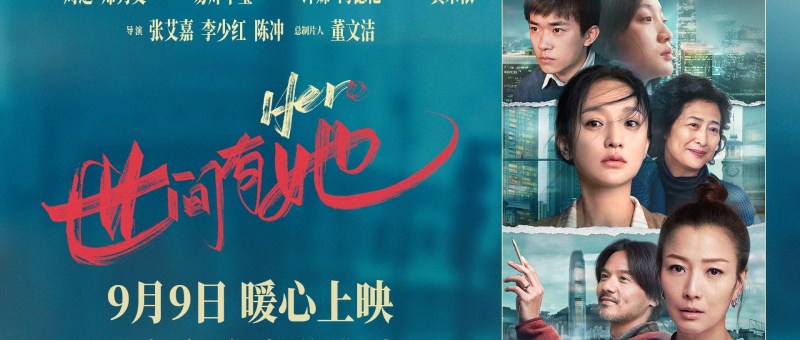
Hero (世间有她, Li Shaohong, Joan Chen, Sylvia Chang, 2022)

The latest addition to the growing sub-genre of Chinese pandemic movies, tripartite anthology film Hero (世间有她, Shìjiān Yǒu Tā, AKA Her Story) is the first to root itself in the lives of contemporary women just as they are disrupted by the arrival of COVID-19. As might be expected, the themes are largely those of love and endurance which draw additional poignancy from a Lunar New Year setting that prioritises family reunion but may also be in their way reactionary in reinforcing patriarchal social codes while implying that it might be the women who need  to give a little and reassess their notion of what’s really important. 

Directed by Li Shaohong, the opening sequence pits 30-something mother Yue (Zhou Xun) against her domineering mother-in-law, Ju (Xu Di), whose love and care for her son and grandson borders on the destructively possessive. Yue is the first to contract the mysterious new form of pneumonia then taking hold in Wuhan, prompting Ju to immediately try and kick her out of her own flat while insisting her son, Kai, and grandson, Dongdong, come back with her to another city further north. When lockdown is declared in Wuhan, the grandmother is trapped with the family but her acrimonious relationship with Yue adds to an already stressful situation. After Ju comes down with COVID too, Kai and Dongdong take refuge in the empty flat of a friend leaving the two women alone but mainly phoning Kai to complain about each other. 

A phone call from Yue’s parents eventually forces Ju into a reconsideration of her corrupted filiality as she remembers that Yue is also someone’s daughter and a mother herself. She accepts that Yue’s criticism of her as overly invested in her son’s life is fair and mostly born of her loneliness rather than an attack on her otherwise conservative values that imply she exists only in service of the men of the family, while realising that by failing to take proper care of herself she accidentally increases the burden on those around her and should instead agree to care and be cared for as a part of a harmonious community. 

This question of interdependence also raises its head in the third chapter directed by Sylvia Chang set in Hong Kong and filmed in Cantonese. Chang’s segment is not really much about the pandemic save for the additional strain it places on the relationship between press photographer Chelsea (Sammi Cheng Sau-man) and her husband Daren (Stephen Fung Tak-lun) with whom she is in the process of separating. When their son develops a fever, they end up in a blazing row discussing the reasons their marriage is falling apart which relate mostly to differing views of contemporary gender roles with Daren apparently reluctant to do his fair share at home while lowkey resentful that Chelsea has not only continued to work but is professionally ambitious especially as, it’s implied, his salary is not really enough to support a family of four on its own. The family also have a Filipina helper who in a rather poignant moment is heard singing happy birthday to her own child back in the Philippines whom she cannot see because she’s earning money taking care of Chelsea’s. Like Yue, Chelsea is also prompted to consider what’s most important, but the implication seems to be that she’s the one in the wrong and should learn to prioritise her family while her husband is more or less vindicated rather than encouraged to change. 

Only the middle section, directed by Joan Chen, attempts to deal with the gaping losses of the pandemic era as a young woman, Xiaolu (Huang Miyi), tries to gather the courage to tell her parents, who are still hoping she’s going to hook up with a now successful childhood friend, that she’s going to marry her uni boyfriend, Zhaohua (Jackson Yee), who’s stayed behind in Wuhan to look after their cat while she returns to Beijing for Lunar New Year. Xiaolu keeps in regular contact by phone but soon discovers that Zhaohua has become ill with a mysterious illness. She immediately decides to return to Wuhan but he warns her not to because it isn’t safe and shortly thereafter the city is locked down while she and her family are placed under quarantine in Beijing. Shot in a washed out black and white only the various FaceTime conversations between the young couple are in colour hinting at the greyness that now surrounds Xiaolu’s existence and the distance between herself and the happy life in Wuhan which has now been taken away from her. 

The film’s Chinese title more literally means “the world has her” or maybe more simply implies that she is in the world, more of an everywoman contending with the extraordinary than the “hero” of the title though the survival of the three women is in its own way also of course “heroic”. This concept of heroism may however be somewhat problematic in its emphasis on patriarchal social codes which insist that their first and only duty is to the family even if the message of holding your friends and relatives closer in the wake of disaster is universally understandable. Nevertheless, it does perhaps pay tribute to the women’s perseverance and determination to seek kindness and love even in the most difficult of times. 


Hero streams for free in the US and Canada until Feb. 5 as part of Asian Pop-Up Cinema’s Lunar New Year celebration.

Original trailer (English subtitles)

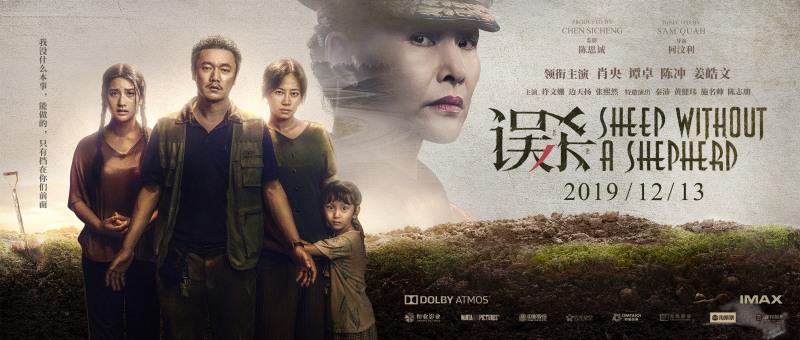
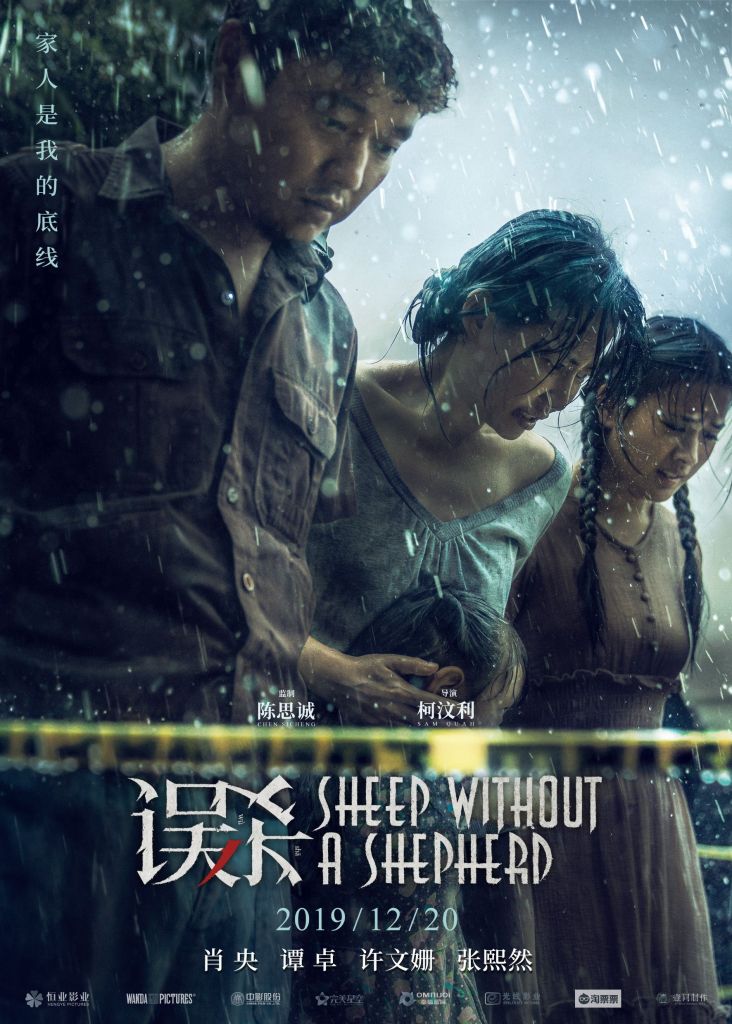
Sheep Without a Shepherd (误杀, Sam Quah Boon Lip, 2019)

“Sheep are happy as long as they have grass to graze, they don’t care if you shear their wool” according to a vox popped farmer in the ironically titled Sheep Without a Shepherd (误杀, Wùshā). Inspired by the Indian film Drishyam, the Mandarin title of Malaysian director Sam Quah’s Chinese remake is simply “manslaughter”, but as the English title perhaps implies if ironically Quah circumvents the censors to issue an oblique broadside to oppressive authoritarianism largely by setting the film in Thailand. 

As the film opens, affable Chinese-Thai IT and internet business owner Weijie (Xiao Yang) is chatting about his favourite thing, movies, with the regulars at his usual haunt, a restaurant run by Uncle Song. Meanwhile, Song tells him about the latest local gossip, the murder of a man who’d recently won the lottery, which is why corrupt cop Sangkun (Shih Ming-Shuai) has been hanging around but not actually doing much investigating. It’s rumoured that hotshot female police chief Laoorn (Joan Chen), who has a fearsome reputation for being able to solve any case, is going to take over. She eventually does just that, fabricating evidence to push the suspect into confessing. Her tactics may be underhanded and unethical, but at the end of the day, as she points out, it doesn’t really matter. She wasn’t framing anyone and isn’t intending to submit the evidence in court, she correctly solved the crime and exerted psychological pressure to trick the suspect into thinking she had something she didn’t so he’d know the game was up. 

“As long as you are not scared, they can’t do anything” Weijie tells his daughter, reminding her that fear is the only leverage of those like Laoorn when they have no real evidence. Unfortunately for him, he’s become involved with the disappearance of Laoorn’s odious son Suchat (Bian Tian Yang) who, we discover, drugged and raped Weijie’s teenage daughter Pingping (Audrey Hui) during an excursion for bright high schoolers, going so far as to film the whole thing in order to blackmail her into providing further sexual favours. Pingping had been keen to go on the trip, somewhat snobbishly looking down on her lower-class family and seeing it as a networking opportunity to make elite friends. She is perhaps the film uncomfortably implies being punished for her unfilial elitism, but eventually finds the courage to tell her mother Ayu (Tan Zhuo) what happened. Ayu accompanies her to the rendezvous with Suchat and confronts him but he is unrepentant, reminding them that his mother is the police chief and his father a politician so he can do as he pleases before trying to force himself on Ayu at which point Pingping hits him with a hoe and knocks him out. Believing that he’s dead, Ayu buries the body with a recently interred family friend and waits for her husband to come home from a business trip repairing the internet in a hotel the next town over. He eventually returns early, worried that he couldn’t get though on the phone because youngest daughter Anan (Zhang Xiran) had left the receiver off the hook. 

A decent and kind man, well liked by everyone, all Weijie wants is to protect his family. What’s done is done, all he can do is try to mitigate it by utilising all his movie knowledge to change the narrative so that they are merely implicated in the crime rather than active suspects. In this, the mini-feud with useless cop Sangkun actually works in his favour. An earlier episode had him offer some advice gleaned from movies to an old man whose grandson had been assaulted by Suchat. Sangkun was in the process of pressuring him to accept a payoff to drop the charges (most of which he’d have pocked for himself). Another business owner privy to the incident apparently reported him anonymously and was attacked in the street only for Weijie to come to his rescue and be accused of assaulting a police officer. It’s very easy for him to claim that Sangkun is trying to frame him out of pettiness, and very easy for people to believe him because that’s exactly something Sangkun would do. 

Sangkun is the embodiment of casual abuse of power. He doesn’t care about serving the people or protecting the vulnerable, he is only interested in validating himself through authority. Laoorn is not quite the same, but she too is an aspect of the all-powerful state as she marshals all her resources against Weijie, an ordinary husband and father, against whom she has no hard evidence only her much vaunted intuition. She will stop at nothing to find out what’s happened to her son, while Weijie is determined to do everything in his power to protect his family. Laoorn underestimates him, as Pingping had, because he is a poor orphan with no education, only later realising that he is clever and resourceful even if he’s pinched his defence strategy from a lifetime of watching crime movies. The pair are engaged in a perfectly matched battled of wits, but only one of them has the power of the state behind her and a gradual erosion of civil rights to allow her to wield it against a personal enemy. 

Filming in Thailand, Quah has a much freer hand to broach the subject of official corruption even if it’s quite obvious that he’s making a point about the overreach of the Chinese state rather than that of Thailand. Weijie’s plight eventually sparks a large scale riot that spreads throughout the country as the populace declares itself thoroughly fed up with the Sangkuns of the world, not to mention the Laoorns or her mayoral candidate husband Dutpon (Philip Keung Ho-Man) who is almost entirely absent from the crisis because all he cares about is the election even if it’s a minor inconvenience not to have his family on show at hustings. Dutpon’s disinterested authoritarian parenting coupled with Laoorn’s indulgence and willingness to enable her son’s crimes through covering them up is perhaps blamed for the “monstrous” young man Suchat was becoming, himself standing in for a generation of wealthy, pampered sons of elites raised with improper boundaries who think they can do as they please because they are somehow above the normal morality. “Good parents” Weijie and Ayu meanwhile find themselves at the mercy of a corrupt faux-aristocracy, abused by Suchat and then rendered powerless in the face of an authoritarian regime. 

Weijie, however, rejects his powerlessness in an attempt to think himself out of the cage in which he finds himself imprisoned. A perfectly plotted psychological thriller, Sheep Without a Shepherd ironically satirises the much cited claim of authoritarians that humanity flounders without a leader as the populace begins to fight back against its toxic relationship with those in power. Nevertheless, its admittedly compassionate and humanitarian conclusion cannot help but feel like an overt concession to the Mainland censors’ requirement that crime can never pay and all transgressions must be owned (even if not directly by those who are literally guilty). Ultimately, however, Weijie redeems himself in the eyes of his daughter, and in doing so subtly reinforces the anti-authoritarian message in instructing Pingping never to be afraid of anything again, freeing her from the oppressive leverage of fear which itself constitutes authoritarianism.


Sheep Without a Shepherd opens in UK cinemas on 21st August courtesy of Cine Asia.

UK release trailer (English / Simplified Chinese subtitles)