Frosted Window (흐린 창문 너머의 누군가, Kim Jong-kwan, 2025)

The title Frosted Window (흐린 창문 너머의 누군가, heulin changmun neomeoui nugunga) refers to the film’s final segment, a meta meditation on grief and loss, but, on the other hand, it’s true enough that we sometimes look at the world through a blurred lens and meet each other through an imperfect abstraction. A three-part portmanteau film, each of the segments takes place in a different season, with the opening titles perhaps standing in for an otherwise unseen spring, and reflect the director’s flights of fancy in imagining the lives of those living in the quiet backstreets of Seochon in Seoul, which is known for its literary associations and historical architecture.

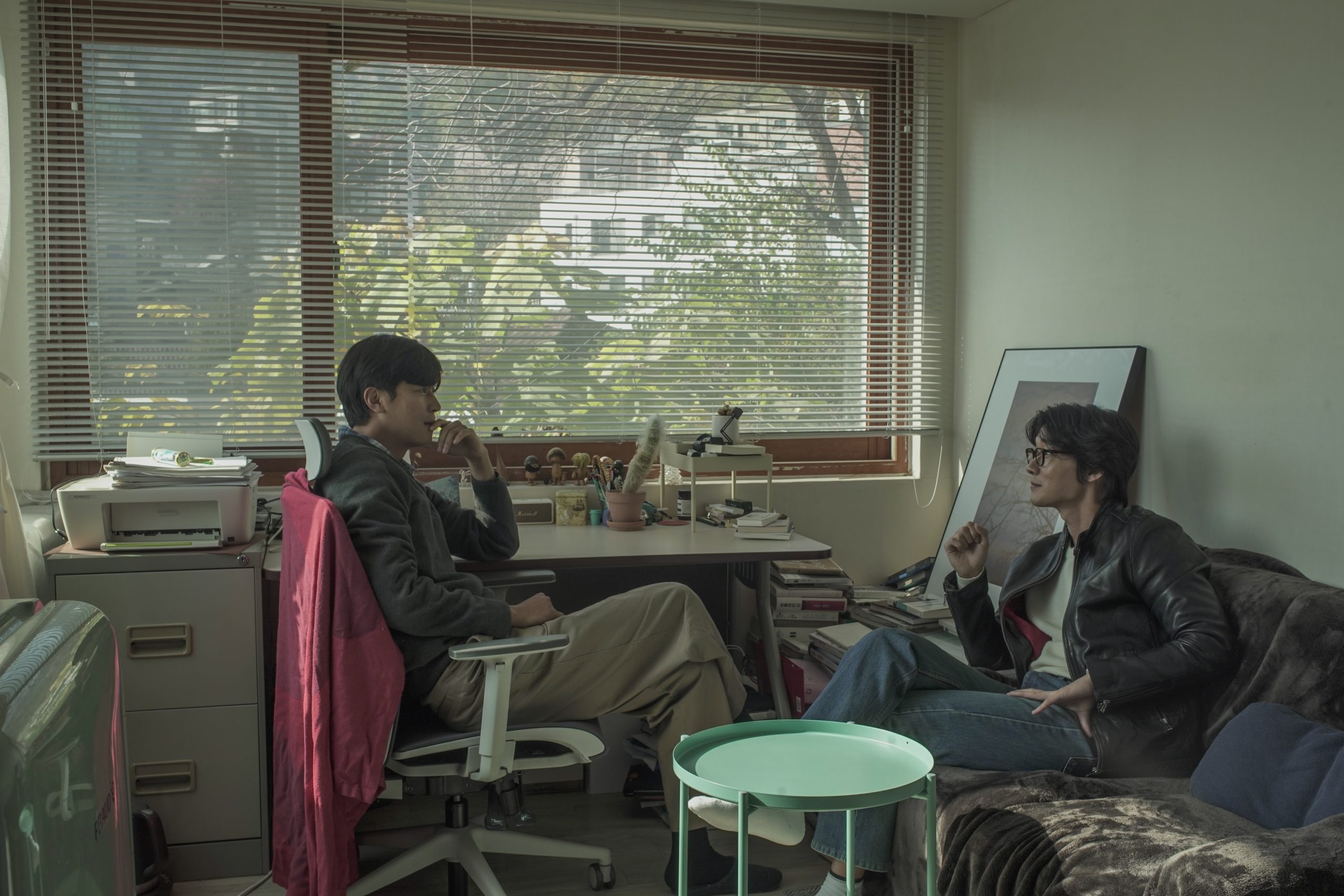
It may be its maze-like quality that gives rise to so many differing tales, but in the first segment, at least, it stands in as another place as a lovelorn artist tries to pick up various women by bothering them while they are minding their own business in public places. The first is in a German coffee shop, where he speaks to a woman in English assuming her to be a foreigner because she has international vibes and is reading a book in German, but she is actually Korean, if having lived abroad for many years, which is awkward. Nevertheless, he carries on trying to chat her up while she tolerates him. Eventually he gets the message and leaves, trying to pick up another foreign woman in the street before backing off when she’s joined by a foreign man. The artist seems to a romantic who finds inspiration in these quests for love and advises his friend, a blocked writer, to go for a walk in search of romance in order to reawaken his creativity.

But a man who is also a blocked writer played by the same actor turns up in the second part where he is both an observer and an object. A woman calls a man to an upscale bar and drinks expensive whisky with him. The man is clearly interested in her, though he has a girlfriend he’s become tired of but won’t break up with, but she seems uninterested in him even as she continues to behave flirtatiously. There’s obviously something else going on, but it’s not originally clear if she wanted to toy with him a while, is making fun of him by exploiting his attraction to her to get him to make a fool of himself (to which he gladly obliges), or has something against his unseen girlfriend, on whom this is all very unfair no matter which way you look at it. It is, however, a performance for the barman, who watches silently until the woman comes back later to ask him what he thought.

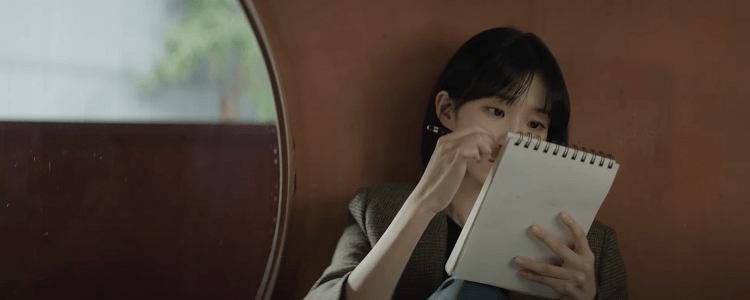
The woman, a local beautician, along with another from the florist’s who reunites with the artist in the October-set first tale, reappear in the last one echoing the sense of a fictional world that begins to take over as one story gives way to another. This time we have two artists, an actress who has been taking some time out, and a female film director she has worked with previously, who meet by chance in a cafe of which this area seems to have a lot considering its size. As the director outlines the story, we see the actress playing her role blurring the lines between the layers of “reality” present in this segment and the film as a whole. We have been, in some ways, like the barman passive observers with each of these tales performed for our benefit, but this last meta segment allows the actress to begin processing the weight of a loss which may be her own.

She is saved, in a way, by the friendly atmosphere of Seochon and the kindness of strangers that restore her sense of self-worth, both as an actress and person. The actress tells the director that though she had taken only a small break, people had already forgotten her and so her return to acting has been more difficult than anticipated with no offers of major roles, only smallish, walk-on parts. The encounter with a fan shows her that she had been missed and there are those who are waiting to see her again on screen, so her life and career had not been pointless and there is a path forward for her in the wake of her loss. This is perhaps testament to the frosty window of Seochon, home to a thousand stories, and a gentle warmth that seems to emanate even in the depths of winter. 


Frosted Window screened as part of this year’s London Korean Film Festival.

Trailer (English subtitles)
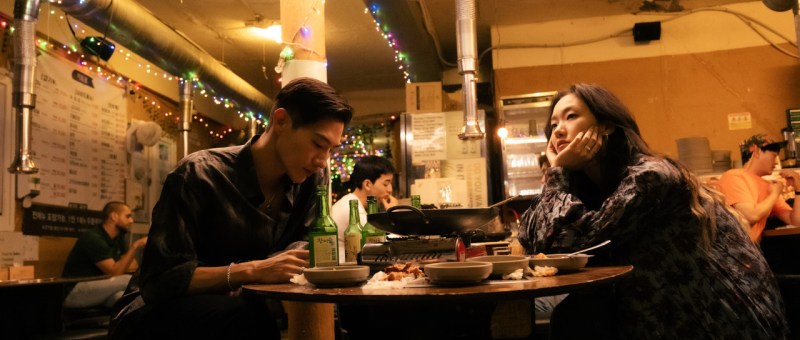
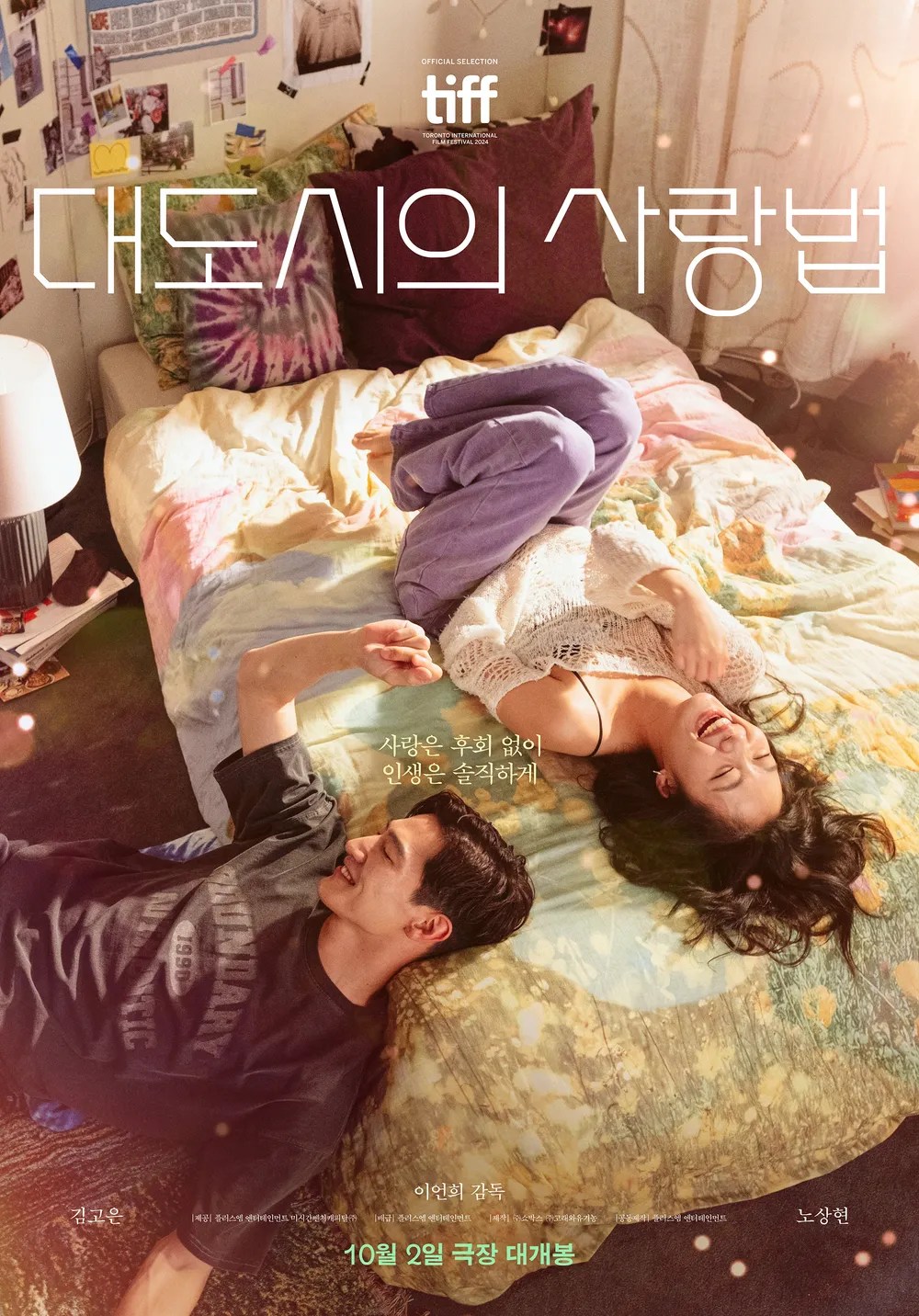
Love in the Big City (대도시의 사랑법, E.oni, 2024)

“How can being yourself be your weakness?” asks a young woman who, more than anything else, is defiantly herself, to a young man who indeed is anything but. The heroes of E.oni’s Love in the Big City (대도시의 사랑법, Daedosiui sarangbeop), adapted from the acclaimed novel by Park Sang-young, are in some ways on parallel journeys that somehow weave through and around each other as they each try to navigate an often hostile society that has no place either of them.

For aspiring writer and in the film’s early stretches student of French literature Heung-soo (Noh Sang-hyun), his “weakness” is that he’s gay and though he seems to have accepted this about himself is firmly in the closet. Free spirited Jae-hee (Kim Go-eun) who spent her teenage years abroad in France catches him making out with their professor but couldn’t care less though Heung-soo rebuffs her attempts at friendship fearing they’re akin to a kind of blackmail or that she plans to out him to their fellow students. It’s not until Jae-hee is publicly shamed when it’s rumoured a topless photo being shared online is of her that the pair finally become friends. Sick of the curious stares and covert giggles, she lifts her shirt in front of the class to prove it isn’t her, earning the nickname “crazy bitch”.

Her response is the exact opposite of Heung-soo. She claims her freedom by baring all, being defiantly herself and outwardly at least little caring for what others think of her while Heung-soo makes himself invisible and says nothing harbouring intense fear of being exposed. They are each in their way pariahs. Heung-soo because of his sexuality which is still unacceptable to many in the fiercely conformist society of South Korea in which Christian religious bodies still have huge influence and loudly oppose LGBTQ+ rights and freedoms. Heung-soo’s widowed mother is also intensely religious and having stumbled on one of his stories about a crush on a classmate is aware that he is gay but does not speak of it and continues to believe he will be “cured”. This is perhaps why she keeps urging him to do his military service believing it will make a man out of him.

For all of these reasons, it’s not surprising that Heung-soo is unwilling to live his life openly as a gay man because of the prejudice he knows he will face from those around him. Jae-hee, by contrast, refuses to hide and lives the way she wants to but is shamed by those who feel a woman should live in a certain way which is to say quietly, politely, and obediently. A man she thought was a boyfriend while he thought of her as a bit on the side publicly slut shames her and asks what sort of idiot would want to date a woman like her. Though we first meet her as a confident, rebellious student we see her gradually beaten down by the world around her and the demands of corporate culture. Considering marrying a man she may not actually like because it’s what you do, she stares sadly at a middle-aged woman opposite her on the train dressed in a near identical outfit and the comfortable shoes that are psychologically at least uncomfortable for Jae-hee in representing her capitulation to the properness of mainstream society. 

Her degradation continues to the extent that she finds herself in a relationship with a domineering, intensely patriarchal man who later turns violent when she tries to leave him. E often cross cuts and juxtaposes Heung-soo’s and Jae-hee’s experiences as they each suffer similar blows and indeed violence from a macho society if in different ways and for different reasons while having only their intense bond as fellow outsiders to rely on. This really is the love in the big city, a deeply felt platonic and unconditional love between two people who essentially have no one else. It’s through this love that each comes to love and accept themselves, Heung-soo eventually gaining the courage to fully embrace his authentic self while Jae-hee finally regains her independent spirit and refuses to let others shame her while standing up both for the LGBTQ+ community and the young woman she once was at the mercy of a male-dominated corporate culture. Warm and often funny, the film paints contemporary Seoul as an outwardly oppressive city of enforced conformity but equally discovers small pockets of freedom and joy along with the wholesome comfort of true friendship and self-acceptance.


Love in the Big City screened as part of this year’s London Korean Film Festival.

International trailer (English subtitles)

Iron Mask (만분의 일초, Kim Sung-hwan, 2023)

A young man seeking revenge sets his eyes on kendo glory in Kim Sung-hwan’s sporting drama Iron Mask (만분의 일초, Manbun-ui Ilcho). As his coach reminds him, a swordsman’s only opponent is himself though he continues to fixate on the man he blames for the destruction of his family still as an adult seeking reparation for the paternal influence he feels was stolen from him and the right to a legacy he feels to be rightfully his.

That might be one reason Jae-woo (Joo Jong-hyuk) is sometimes taken to task for his “entitlement” while some of the other students attending this training camp in the hope of making it onto the national team think he shouldn’t even be here seeing as he only came second in a regional competition when the others are veteran champions. But then as it turns out, Jae-woo has an ulterior motive for his participation. He is obsessed with number one challenger Tae-su (Moon Jin-seung) but for reasons outside of the sport, apparently hellbent on taking his revenge through kendo though it isn’t particularly clear what he hopes to achieve by it save personal vindication.

Kim pays particular attention to the peculiar rituals of the sport, a sense of rigorous order in the folding of the bandannas and tightening of the strings that fix the mask to the swordsman’s face while it’s clear that Jae-woo’s weakness is his emotional volatility. Though he manages to strike an impressive blow against Tae-su on the first day, his game then declines largely thanks to a hand tremor partly caused by a blow from Tae-su but also a manifestation of his jangling nerves.

He resents Tae-su on a personal level, irritated when he hears him talking on the phone to his wife about parenting their young daughter outraged that this man who he holds responsible for the implosion of his family has a family of his own while Jae-woo appears to have nothing other than his rage and resentment. He cannot forgive his estrangement from his kendo master father or that he chose to train another boy and not him, though perhaps that was simply his father’s way of coping with an impossible situation in the hope of making something good out of a personal tragedy. As another kendo master later tells him, as his father once did Jae-woo will have to find his own answers if he is to find success in kendo and indeed in life.

Still he struggles with fatherly relationships, first bonding with an older man who has two sons of his own and tries to impart paternal wisdom and comfort to the volatile Jae-woo but later accidentally injuring him during a sparring match when his temper gets the better of him. The only way he can free himself, is by moving past his image of his father to become his own man and also claim his own kendo rather than being resentful of that which was not bequeathed to him but to Tae-su for whom kendo is also a means of atonement and honouring of a paternal legacy.

Kim lends the battle a quasi-mythical quality, shooting a realm of eye-shaped mist as Jae-woo confronts Tae-su in his mind seeing only clashing swords and shadows while still unable to recognise that the man he is in competition with is only himself, his resentment and hurt in his abandonment, still a lonely little boy failing to become a man while Tae-su at least seemingly has been able to move on and make something of himself. Only by calming his nerves can he begin to perfect his art, taking the advice given to him by the team’s video replay expert seriously and apologising for his petulant behaviour. 

In essence, he has to escape from the “iron mask” of his repressed emotion and deal seriously with the traumatic past in order to progress to adulthood and also assume his rightful place on the kendo board. A psychological sports thriller, Kim lends a noirish touch to Jae-woo’s dark obsession even as it continues to consume him but finally implies the implosion of his rage through a dissolve transitioning to the falling snow as he now in white allows his resentment to melt away in favour of a more balanced hope for a peaceful future.


Iron Mask screened as part of this year’s London East Asia Film Festival.

Original trailer (Korean subtitles only)