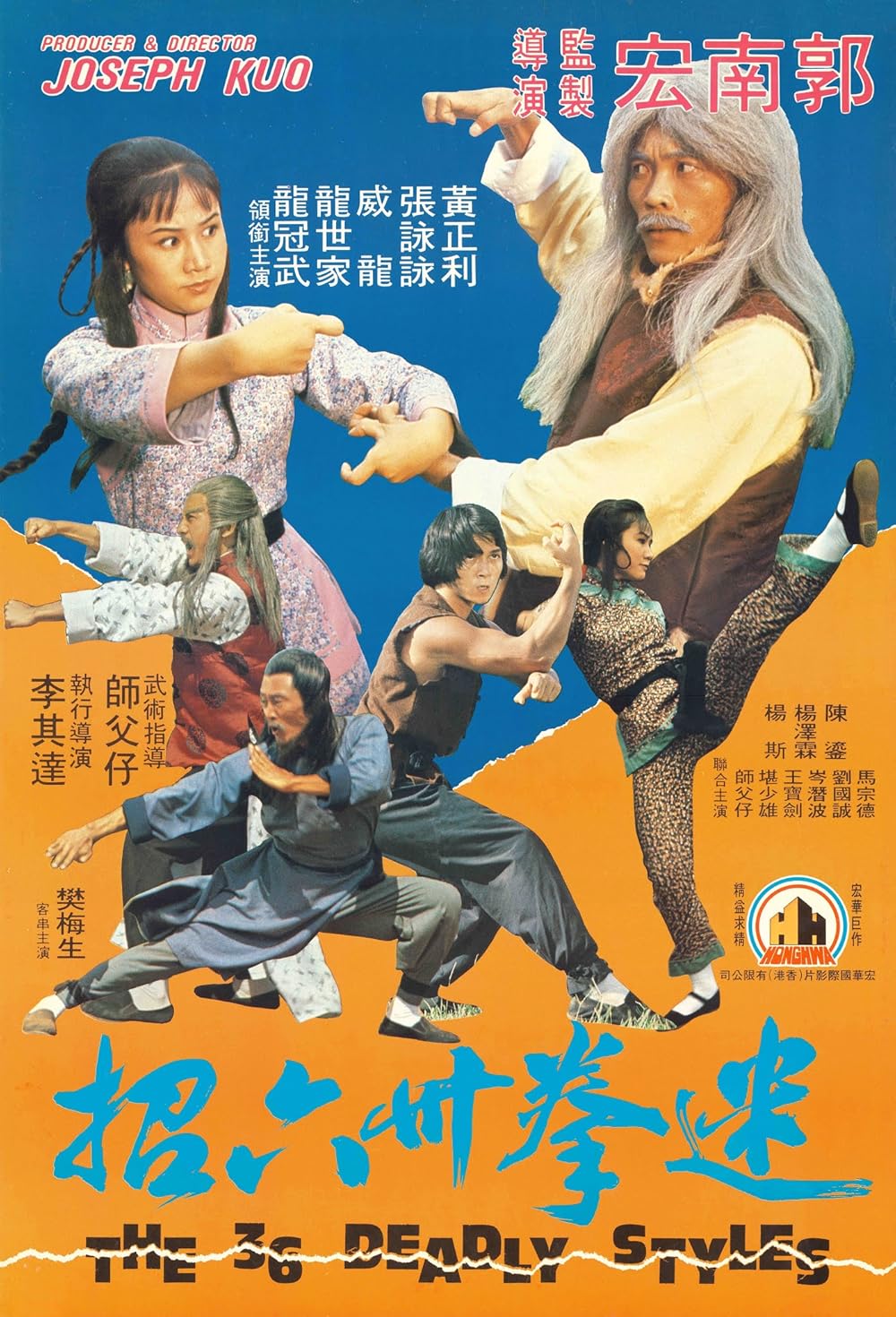
The 36 Deadly Styles (迷拳三十六招, Joseph Kuo, 1979)

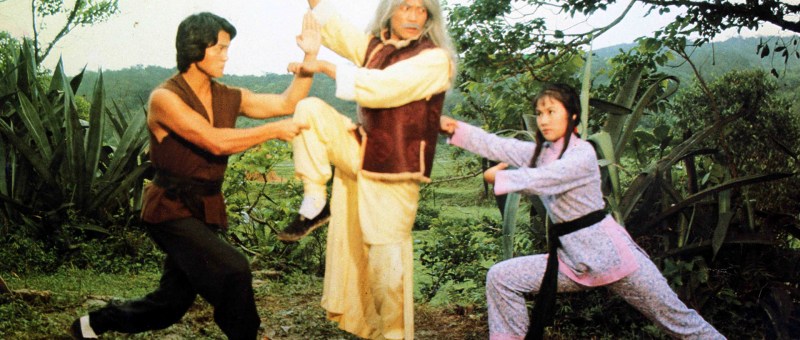
First you and your uncle are forced to flee for your life after getting attacked in a forest, then your uncle dies, you wake up in a monastery where you’re not a monk but the head monk keeps making you do all the chores anyway, and you still have no real idea of what is going on. That’s what happens to poor Wah-jee (Nick Cheung Lik) in Joseph Kuo’s wilfully confusing kung fu drama The 36 Deadly Styles (迷拳三十六招) which leaves us as much in the dark as the hero as he finds himself inexplicably pursued by a man with a red nose and his brothers who are each for some unexplained reason wearing ridiculous wigs. 

As much as we can gather, Wah-jee is on the run because the brother of a man his late father apparently killed by accident after messing up a kung fu move seeks vengeance against his entire family, leaving his uncles scattered and apparently unknown to him. As a young man, however, he is less than impressed with life in the monastery and often displays a comically cocky attitude, though if his torment of two of the lesser monks is intended to be comedic, it often comes off as cruel and bullying rather than just silly banter. Meanwhile, he remains clueless as to how to complete basic tasks familiar to the monks and even manages to get himself into a fight when sent to buy soy milk after forgetting he’d need to pay for it..

While all of this is going on, Kuo switches back and forth between a secondary plot strand concerning another man searching for the book of the 36 Deadly Styles before tracking down the man who’s supposed to have it only to be told he burnt the book ages ago without even reading it because it caused too much trouble in the martial arts world. It’s unclear how or if these two plot strands are intended to be connected, but they do perhaps hint at the confusing nature of personal vendettas and ironically destructive quests for full mastery over a particular style. Tsui-jee’s father (Fan Mei-Sheng) effectively splits his knowledge between Wah-jee and his daughter as a complementary pair of offence/defence partners. 

Meanwhile, Huang (Yeung Chak-Lam) and Tsui-jee’s father are also afflicted by pangs to the heart as a result of their previous battles, which can only be eased with strange medicine and herbal wine. Huang is a Buddhist monk but is seen early on skinning a live snake in order to make such a concoction. These are presumably symbolic of a bodily corruption caused by violence and the slow poisoning of the unresolved past. Wah-jee, a child at the time of his father’s transgression, is also forced to inherit this chaos of which he has little understanding and no real stake save vengeance for his familial disruption and a vindication for his father and brothers. If there is any kind of moral it seems to be in the ridiculous futility of vengeance as dictated by the codes of the martial arts world which demands that honour be satisfied even when it has lost all objective meaning. 

In any case, the narrative is largely unimportant merely connecting (or not) the various action scenes each well choreographed and expertly performed. Wah-jee undergoes a series of training sequences both at the monastery and after uniting with his second uncle who has some idiosyncratic teaching practices of his own that require Wah-jee to humble himself in order to learn. Then again, there are enough strange details to leave us wondering what is exactly is really going on such as Tsu-men suddenly turning up dressed as a woman looking for someone other than Wah-jee, eventually used for another bit of awkward comic relief as he struggles to write a letter and has to use drawings to make his point because he can’t remember the right characters. None of this makes any sense, but perhaps it never does when you live for the fight alone. 
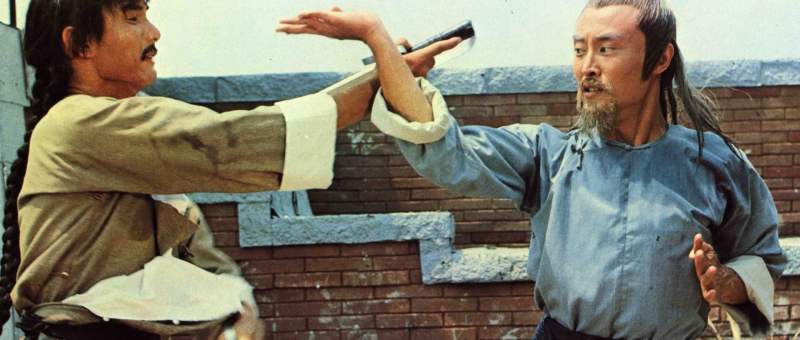
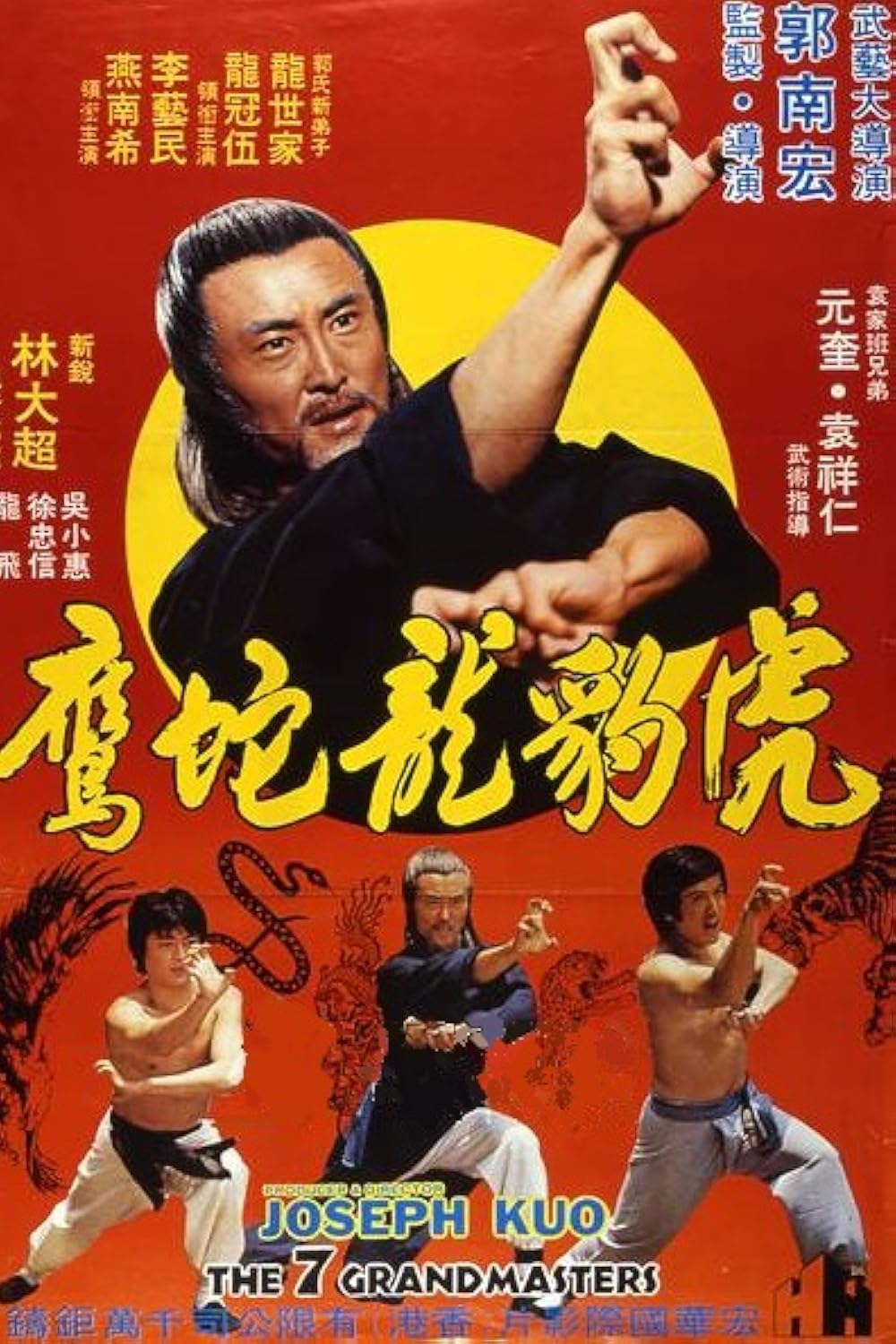
The 7 Grandmasters (虎豹龍蛇鷹, Joseph Kuo, 1977)

“The way of kung fu, no one is invincible. A fighter shouldn’t be arrogant and bully others,” according to one of the mini lessons given by the ageing champion at the centre of Joseph Kuo’s 7 Grandmasters (虎豹龍蛇鷹), though it has to be said there is a fair amount of cockiness in play while bullying does seem to be a part of his training programme. Arrogance is in fact what he has himself been accused of at the ceremony at which he has been honoured by the emperor and after which he planned to retire if he had not received a rude note telling him he is not a real champion and shouldn’t lay claim to the title until he’s defeated all of the other regional champions in each of their signature fighting styles. 

A 30-year veteran of the local martial arts scene, Zhang Shenguang (Jack Long) is tired and ready to pass his school on to the next generation but feels he cannot retire until he’s proved once and for all that he is the greatest kung fu master. Setting out with his daughter and three pupils, he roams around the land easily defeating his rivals and teaching them a lesson to boot. Unfortunately, however, his first target, Sha (Wong Fei-lung), ends up dying while he’s also being followed around by an over-earnest boy, Shao Ying (Li Yi Min), who insists on becoming his pupil, though Zhang is unwilling to take him on because his own master was betrayed by a bad faith student who stole the final three pages of the book he’d been given to safeguard outlining the 12 Bai Mei strikes.

Zhang is definitely all about righteousness, constantly reminding everyone about the responsibilities that come with kung fu but his own students are fairly merciless to Shao Ying firstly mocking him as he trails along behind them like a stray puppy and then continuing to bully him until he finally surpasses their own abilities. They are all also supremely confident and often resort to cocky banter during fights which it has to be admitted they usually win. The film is structured around Zhang’s quest abruptly shifting from one expertly choreographed fight sequence to another, each showing off a different style and the ways in which Zhang can overcome it while some of his opponents accept defeat gracefully and others not. In one town they are ambushed by goons working for the local master who wanted to avoid potentially losing his title by underhandedly taking Zhang out first but as Zhang puts it losing his good name instead. The final challenger meanwhile refuses to Zhang directly because he can see Zhang is already ill and it wouldn’t be fair so has their students square off instead. 

Nevertheless, Zhang is not permitted to exit the world of kung fu until dealing with the left over baggage of the three missing strikes of Bai Mei, Shao Ying eventually becoming its inheritor after a twist of fate connects him with Zhang’s past while causing him a paradoxical dilemma in temporarily becoming Zhang’s enemy in order to avenge the death of his father as his code dictates. Like Zhang however he is perhaps only trying to make a point, never intending to harm his former mentor, at least physically, but only to close the cycle through symbolic revenge, later returning to Zhang’s side on realising he’s been used and deceived. 

Featuring top choreography from Hong Kong’s Yuen Kwai and Yuen Cheung Yan, Kuo’s low budget indie kung fu drama is pure fight fest less interested in the emotional conflicts between the men than the physical which might explain its incredibly abrupt conclusion which largely implodes the moment of catharsis achieved in the villain’s defeat. Even so, it succeeds in showcasing a series of fighting styles as Zhang continues with his quest to prove himself the ultimate grandmaster so he can finally retire while throwing in some comic relief thanks to Shao Ying’s dogged determination to become one of the gang before finally proving himself the most talented of all the students, not least because of his perseverance and willingness to learn. Shooting mainly in the open air to avoid the expense of sets, Kuo’s approach is unfussy but to the point of removing all distractions in order to showcase the immense abilities of his performers in an otherwise generic tale of rivalry and revenge.