12.12: The Day (서울의 봄, Kim Sung-soo, 2023)

Sometimes, the bad guys win. Kim Sung-soo’s long-awaited return after superb underworld drama Asura, 12.12: The Day (서울의 봄, Seoul-ui Bom) explores one of the darkest hours of recent Korean history as all hopes for democracy and freedom are dashed by a 1979 coup by General Chun Doo-hwan whose reign turned out to be far worse than that of his predecessor, Park Chung-hee who had been assassinated by a member of his own security team some months previously.

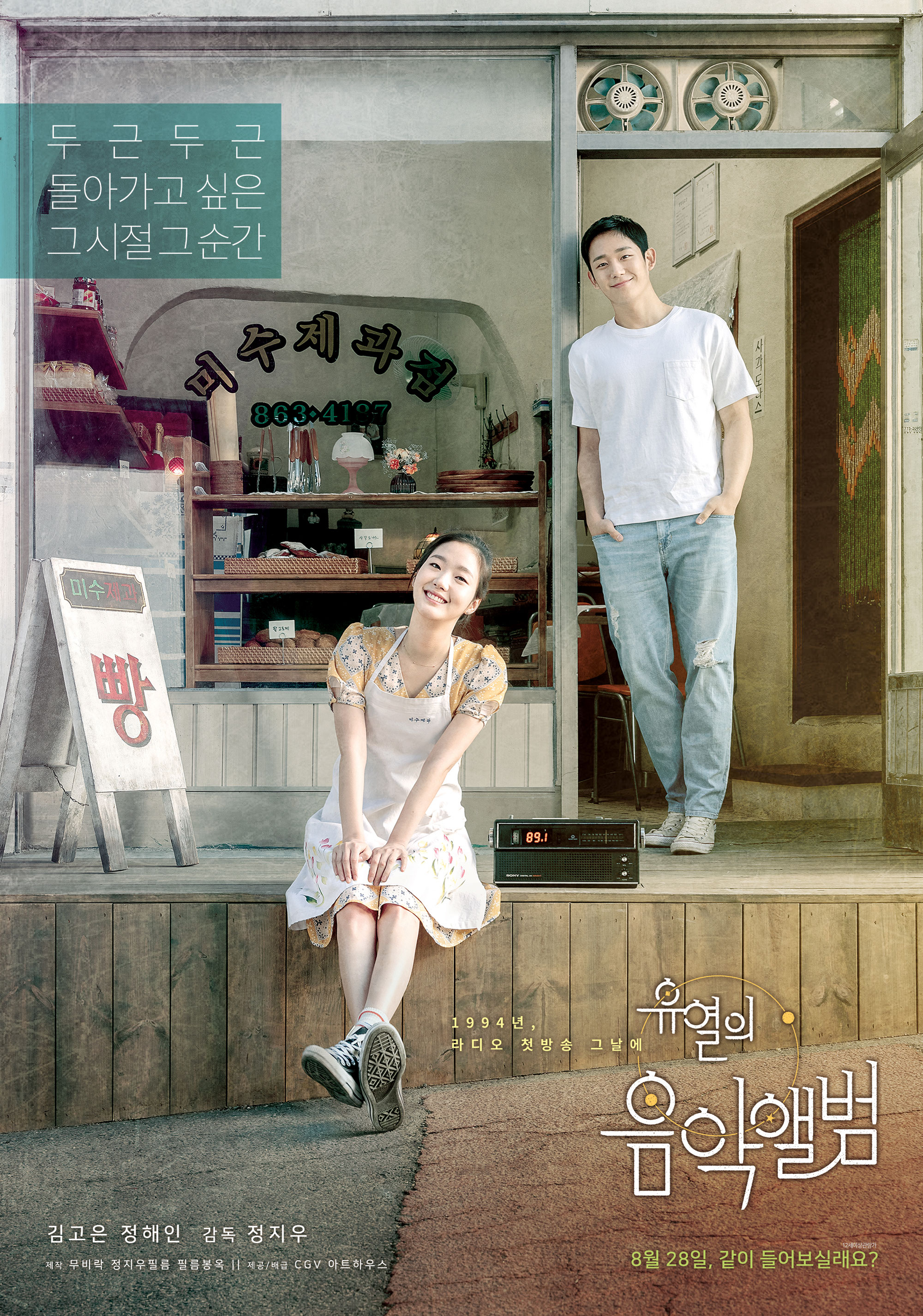
Yet Kim is less concerned with the coup itself than why so few people tried to stop it. Though everything appears to be going very badly for Chun (Hwang Jung-min), he eventually succeeds in taking Seoul by force while opposed by a solo general who is the lone guardian of justice and righteousness. Lee Tae-shin (Jung Woo-sung) first turns down a promotion to command the Seoul garrison and accepts it only when it’s explained to him that Jeong (Lee Sung-min), the army chief of staff, hopes to use him as a bulwark against Chun whom he fears is indeed preparing for an insurrection. Sure enough, Jeong is eventually abducted by Chun’s minions, who run the security division, on a trumped up charge of being involved with Park’s murder while Chun desperately needs the duly elected president of a democratising Korea to sign his arrest warrant so his blatant power grab will be legitimised rather than branded a “coup”.

Only the president doesn’t play along. He insists on following proper protocol and getting the approval of the defence minister all of which is vexing for Chun who is left humiliatingly standing in his office while the president holds his ground. The defence minister has, as it turns out, fled to the American embassy in his pyjamas where he finds little sympathy while the film subtly implies that the Americans advise him to return and back Chun who is doubtless considered much more useful to them politically.

Though Tae-shin and another officer at HQ try to warn of a brewing coup, their orders are often overruled by superiors either because they do not take the situation seriously or are actively siding with Chun whose “Hanahoe” faction has taken over a significantly large proportion of the military. Kim zooms in on militarism as the fatal flaw in this botched defence system as it seems no one can act without first receiving an order from above nor are they equipped to make critical decisions on a personal level as to whether or not an order should be obeyed. Tae-shin calls on countless devisions for backup but finds them either actively allying with Chun or refusing to get involved believing it is a hopeless battle. Tae-shin asks what the army is for if it refuses to fight at the crucial moment and abandons its responsibility to protect the interests of its citizens in simply allowing Chun to seize power but receives no real answer. 

Chun has already aroused suspicion for his handling of the investigation into Park’s death, reportedly bringing in countless people with no obvious connection to the case and torturing them. The men who support him want to continue Park’s “glorious revolution” which was in itself a repackaging of Colonial-era Japanese militarism, and fiercely resist the idea of “democracy” advocating totalitarian views that the ordinary person longs for a strong hand at the wheel and to be absolved of the responsibility of choice which ironically fits perfectly with hierarchal structure of the Army. The film paints Chun, slight, small, and bald, as a man with a chip on his shoulder apparently resentful of military elites and the wealthy. He craves power because of his own insecurity and a desire to get one over on righteous men like Tae-shin which might be why his line about Chun being unworthy of the uniform of a Korean solider seems to get to him. 

Using the film language of the 1970s such as heavy grain and split screens, Kim keeps the tension on a knife edge even though the conclusion is all too inevitable. Tae-shin cuts a heroic figure, standing alone on a bridge and forcing back the advancing tanks solely with his imperious righteousness but in the end it’s not enough, there are too few like him and too many like Chun whose maniacal laughter is intercut with scenes of Tae-shin in the torture facility which lies beneath the facade of government. Bleak, but also angry, Kim’s extraordinarily controlled political thriller is damning in its condemnations of a militarising culture and the ever present threat which accompanies it.


International trailer (English subtitles)
Start-Up (시동, Choi Jung-yol, 2019)

Two young men experience a failure to launch in Choi Jung-yol’s Start-Up (시동, Sidong), a much gentler coming of age tale than his 2016 feature debut One Way Trip. Like the earlier film, however, Start-Up finds its two heroes pulled in different directions while experiencing the same dilemmas, these being in the main a kind of toxic masculinity that sees them in part reject their respective maternal figures in internalised shame as sons who feel they should be but are fundamentally incapable of taking of care of them and perhaps concluding that their only familial connection must be disappointed and resentful.

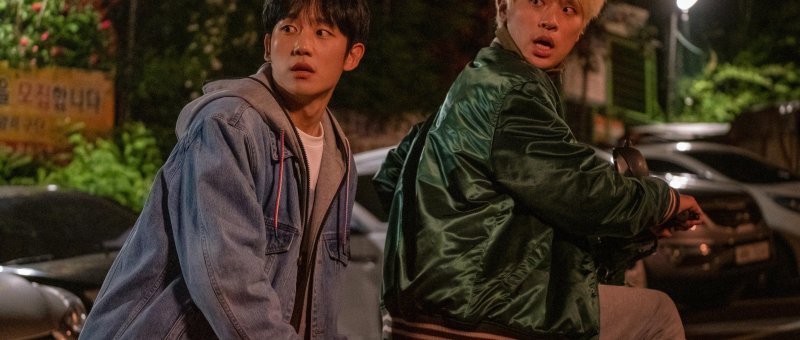
We can see the boys’ sense of futility in the opening sequence in which they literally fail to kickstart a scooter that 18-year-old Taek-il (Park Jung-min), the hero, has somehow managed to buy on the internet but seems to be a dud. Eventually they wind up having an accident and being taken to the police station where Taek-il’s mother Jeong-hye (Yum Jung-ah) has to bail them out leaving even the desk officers looking quite embarrassed as she takes Taek-il to task for his irresponsibility, disappointed to learn he spent money intended for lessons to help him (belatedly) get his high school diploma on the useless scooter. He tells her he’s dropped out of school and has no interest uni, fiercely resenting her refusal to accept his decision while unwisely cutting in that she doesn’t have the money to send him anyway which earns him one of her trademark volleyball slaps. 

Taek-il’s unwise words perhaps hint at part of the reason he’s rejecting the life his mother wants for him in that he knows how much she’s suffered and sacrificed on his behalf and doesn’t want to add to her burden by encouraging her to overwork herself to pay for college when he doesn’t think he’s worth it anyway. Of course, he can’t say any of this to her, and she can’t tell him she only wants the best for him, so they alternate between silence and blazing rows with Taek-il retreating into peaceful visions of life on a desert island when everything gets too hard. Wanting to prove himself independent, he ends up running away but doesn’t have money to get very far so ends up working in a Chinese noodle restaurant in provincial Gun-san. 

His friend Sang-pil (Jung Hae-in), meanwhile, is an orphan living with his elderly grandmother (Go Doo-shim) who appears to be suffering from dementia and has been supporting the pair of them by peeling chestnuts. Like Taek-il, Sang-Pil desperately wants to be able to take care of his grandmother and make her life as easy as possible but is largely out of options which might be why he lets a shady friend, Dong-hwa (Yoon Kyung-ho), introduce him to his “company” which turns out to be a local loansharking gang for which Dong-hwa is an enforcer and debt collector. Sang-pil tells Taek-il that he’s got a job “in finance”, and though he’s conflicted enjoys the sense of self worth he gains as a working man earning money to look after grandma. He is too naive to realise that the first family they visit is aggressively nice to Dong-hwa because he’s probably been less than nice to them in the past, coming away with the mistaken idea that the job’s not so bad and people are grateful for the “service” they’re providing. 

A repeated gag sees both boys getting repeatedly beaten up, literally struck down every time they attempt to move forward. Taek-il finds himself punched in the stomach by an amateur boxer with problems of her own and thereafter knocked around by the eccentric chef at the Chinese restaurant (Ma Dong-seok), while Sang-pil is finally awakened to the dark side of his new job when he’s thrown through a glass doorway by a drunken client very clearly at the end of his tether. The answer is less fighting back than it is standing together and up for oneself as the boys begin to make mutual decisions about the future directions of their lives and the kind of men they’d like to be even if they still don’t quite know where they’re going. 

Start-Up’s genesis as an online webmanga might help to explain its myriad unresolved plot strands including the backstory of the mysterious boxing high school girl (Choi Sung-eun) who appears to have lost or become estranged from her family but ends up becoming the surrogate daughter of the kindly man who owns the Chinese restaurant (Kim Jong-Soo) which seems to be a haven for lost people of all ages looking for a place to call home, while Jeong-hye’s past success as a volleyball star is resolved as little more than an awkward punchline and her desire to start her own business which she is then swindled out of presented as something done solely for her son rather than for herself. The difficult economic circumstances of contemporary South Korea are certainly a factor in the boys’ malaise and general sense of hopelessness but it’s less Hell Joseon that’s trapping them than a complex web of familial love and resentment coupled with their desire as a young men to feel in control of their own lives rather than being constrained by parental expectation. “You should decide where to go first” Taek-il is repeatedly told, but when it comes right down to it the most important thing is figuring out how to start the engine, everything else you can figure out later.


International trailer (English subtitles)
Tune in for Love (유열의 음악앨범, Jung Ji-woo, 2019)

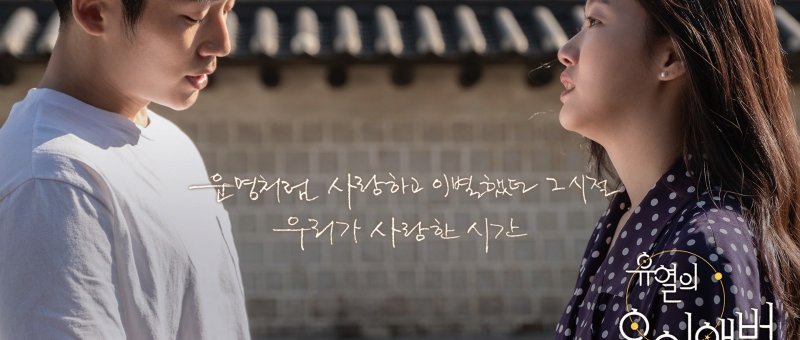
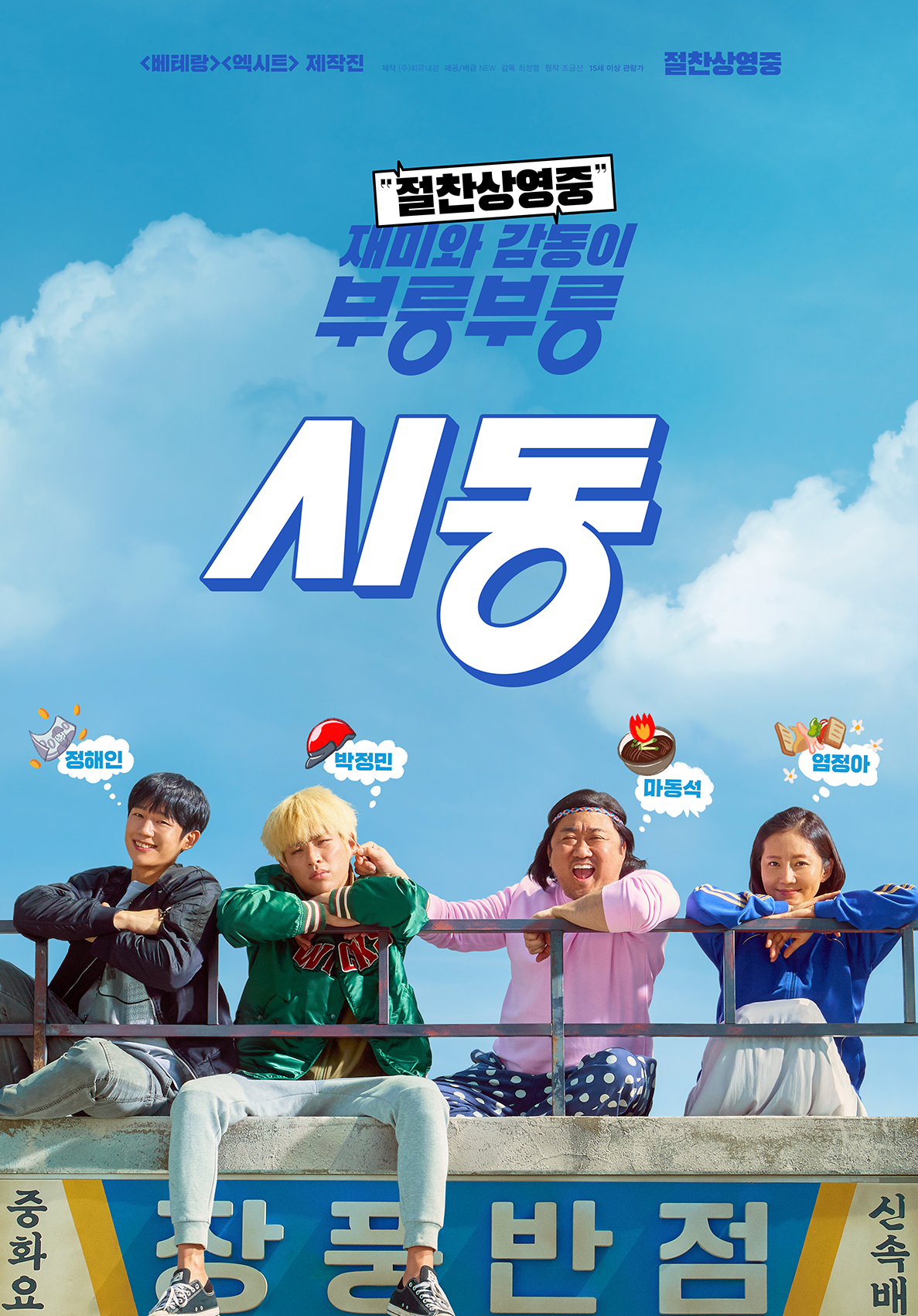
Tune in for love poster 2The course of true love never did run smooth. Another in the recent series of nostalgic ‘90s romances, Tune in for Love (유열의 음악앨범, Yooyeolui Eumakaelbum) takes a pair of nervous youngsters and charts the course of their love story over a decade which, though not quite turbulent, saw its share of difficulties and a host of technological changes. “Miracles are nothing special” the heroine tells us, but when it comes to love miracles are all there is and in the end you’ll just have to learn to trust them.

On Oct. 1, 1994 Hyeon-u (Jung Hae-in) walks into Mi-su’s (Kim Go-eun) bakery looking for something with tofu in it. While inside, he hears the first broadcast of Yoo Yeol’s Music Album, a new morning program which seems to signal the beginning of a new era. Though Mi-su is quick to realise that the only reason someone would be desperately looking for plain tofu early in the morning is because they’ve just been released from prison, she decides to offer him a part-time job in the bakery where he becomes a member of the family alongside her “aunt” Eun-ja (Kim Guk-Hee) who’s taken care of her since her mother died. His past, however, refuses to let him go however much he tries to move away from it. Tracked down by his delinquent friends, Hyeon-u is unable to return to the bakery and will spend the next decade trying to do just that.

Fate parts the youngsters repeatedly, but always brings them back together again seemingly by chance. Military service, changes of address, miscommunication and changing technology all conspire to keep them apart but like any good rom-com the problems aren’t so much circumstantial as personal. A deeply wounded young man, Hyeon-u is taken with the familial atmosphere at the bakery because he feels a sense of acceptance he hasn’t anywhere else, but deep down he still doubts he deserves the “normal life” he so deeply craves. His friends doubt it too, always turning up unexpectedly to remind him of their shared trauma and the debt of guilt he can’t repay. His insecurity prevents him from sharing the source of his pain with Mi-su, keeping her somehow outside the bubble of his shame as the only one capable of knowing the “real” him. She meanwhile is frustrated in realising that he’s holding something back, hurt he doesn’t trust her enough to let him in, and worrying he’ll never truly be ready for full commitment. 

Nevertheless, though often apart they remain painfully in sync, until that is fate brings them back together. As young man with a checkered past and no safety net, Hyeon-u has to fight twice as hard to get ahead, eventually graduating high school and getting into college while supporting himself with part-time jobs. Mi-su, meanwhile, is burdened by the knowledge that she’s lost her mother’s bakery and is desperate to get it back. Dreaming of being a writer, she turns down an internship at the all important radio show to go for a steady job she’s told is at a publisher’s but is actually somewhere more like a print shop where she’s stuck doing incredibly boring admin work. Hyeon-u is unable to get back in touch with her after miraculously reappearing because he’s ashamed to admit that he ended up getting in trouble again thanks to his awful friends even though it really wasn’t his fault. She meanwhile confesses that a part of her was relieved not to hear from him because she too is unhappy in herself, feeling lost and confused, disappointed not to be living the kind of life she could be proud of. 

Times change, but their one constant is the radio show broadcasting every morning and providing additional though indirect methods of communication when they are otherwise unable to make contact. Pay phones give way to email and then to mobiles all the way into the early days of the smartphone era, but face to face conversation remains the most difficult. Mi-su gives up on Hyeon-u while he, ironically, probably does sort something out by having a good old fashioned punch up with his generally unhelpful friend. She wonders if she’s better off to make the “smart” choice rather than waiting on love. Hyeon-u is hurt that in the end she didn’t trust him, but is eventually made realise that the problem was that he didn’t trust himself. Then again, you can’t fight the power of true connection or the pain of its absence, all you need to do is a little fine tuning to make sure the signal comes through loud and clear.


Currently available to stream online via Netflix in the UK (and possibly other territories)

Netflix trailer (English subtitles)