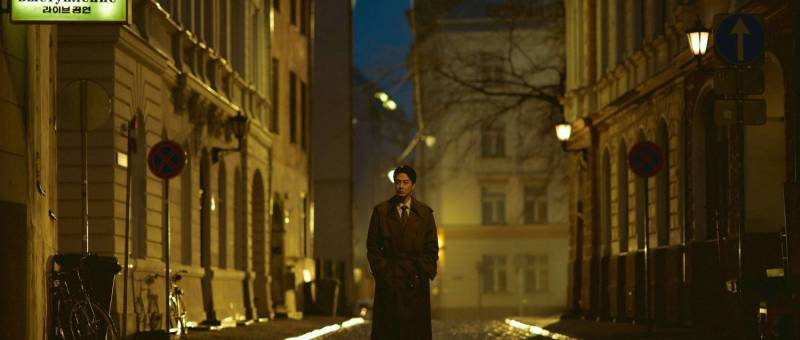
The Desperate Chase (필사의 추격, Kim Jae-hoon, 2024)

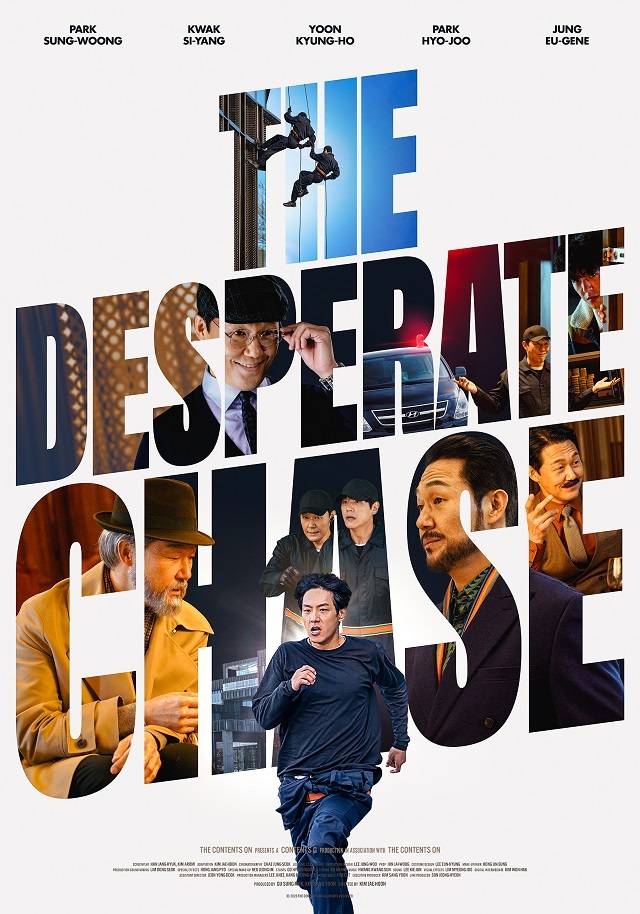
The peaceful life of Jeju Islanders is disrupted by the threat of crime and drugs in Kim Jae-hoon’s zany comedy, The Desperate Pursuit (필사의 추격, Pilsaui Chugyeok). Though nobody is really being desperately pursed, time moves quite slowly on Jeju, the film plays into a generalised anxiety in recent Korean film in which the local community is fearful of “foreign” incursion, not only from meddling mainlanders but from Chinese investors who are currently buying up land and thereby pushing locals out.

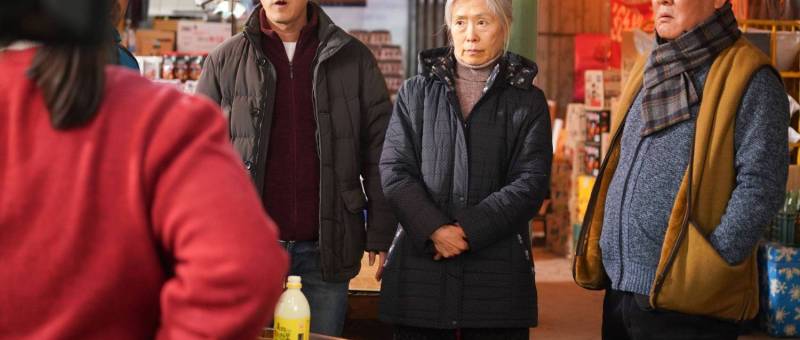
The main drama revolves around an old-fashioned market that Taiwan-based gangster Zhu (Yoon Kyung-ho) wants to use as a medical centre that will act as a drug hub. Everyone who works there uses Jeju dialect and is keen to protect this disappearing slice of their local culture. According to some, they’ve already seen off the yakuza and aren’t planning on giving in to Triads either, though Zhu has already proved himself more ruthless by murdering his mole at the market when he asked the gangsters to avoid using violence because it was making his job of convincing people to take the settlement money and leave more difficult. Meanwhile, detective Su-gwang (Kwak Si-yang) who has been transferred to the island temporarily due to excessive use of force in Seoul remarks on how the landscape has changed since he last visited with all the new Chinese-owned skyscrapers.

To that extent, the contrast between the area around the airport and the location Su-gwang eventually finds himself in couldn’t be more stark. Though he encounters difficulty finding accommodation ironically because he’s from the mainland and all the landlords assume he’ll end up doing a moonlight flit, echoing the issues faced by international residents in the city, he’s eventually billeted in a pleasant country cottage owned by Ms. Yoo (Ye Soo-jung), leader of the market resistance, despite the objections of the crotchety old man who rents the other room. He’s not anticipating having to do a lot of policing, but is put straight on the case of a known conman they think may be in the area despite having previously fled abroad to evade all the warrants out against him. 

The conman is one thing, but the other disruptive force is the beauty clinic run by Dr. Yang (Park Hyo-joo) with the very ominous name of “Omerta”. Yang is cahoots with Zhu after having spent some time in China after losing her medical license due to providing illegal pain killers to her VIP patients in a damning indictment of amoral and exploitative status-driven culture. Their aim is to start dealing fentanyl in Korea through Jeju, though Yang warns him it’s a risky prospect with no infrastructure in place and in consideration of Korea’s tight drug laws, but Zhu is insistent. One of the chief weapons they have against Yang is that she only treats “VIPs” of which there aren’t any in the local community. In order to create a diversion, the local women eventually storm the place demanding treatment and accusing Yang of discrimination in their proud Jeju accents. 

Meanwhile, Su-gwang and his colleagues battle police corruption while trying to attack the real source of disorder in the form of Zhu and his men who have already struck deals with the local authorities. Zhu speaks fluent standard Korean and claims to have had a Korean father, though he abandoned him when he was five, but is also irritated by the constraints placed on him in this new territory. It really does turn out that everything about personal connections in Jeju, though in a more positive sense than it first sounded as the islanders band together to protect the market and expel the corruption of Zhu’s gang who want to ruin the beautiful local landscape and corrupt the populace by dealing drugs.

It has to be said, however, that there’s something a little sinister in the justification of Su-gwang’s violent policing which is treated as a bit of joke while coming from a place of righteous fury at the contemporary society in which the rich and powerful are free to get away with their crimes thanks to their connections. Jeju, however, does seem to mellow him a little with its laid-back atmosphere and cast of quirky characters where everyone really does know everyone even if outsiders are still viewed with a degree of suspicion. Partly a kind of tourist ad for the local community, the film paints the island as a place of warmth both in terms of its climate and the kindness of the locals, at least once you get to know them.


Trailer (Korean subtitles only)

Tune in for Love (유열의 음악앨범, Jung Ji-woo, 2019)

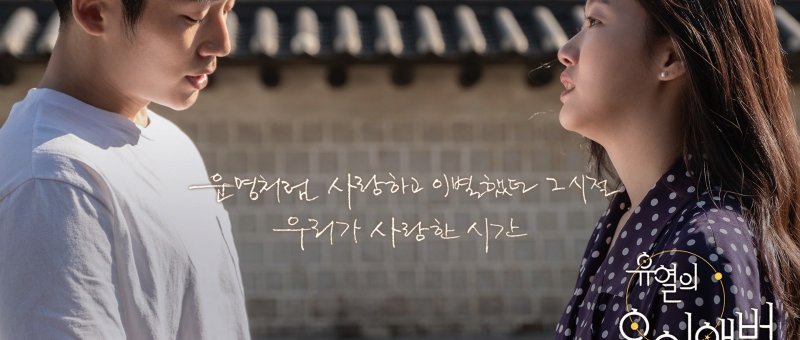
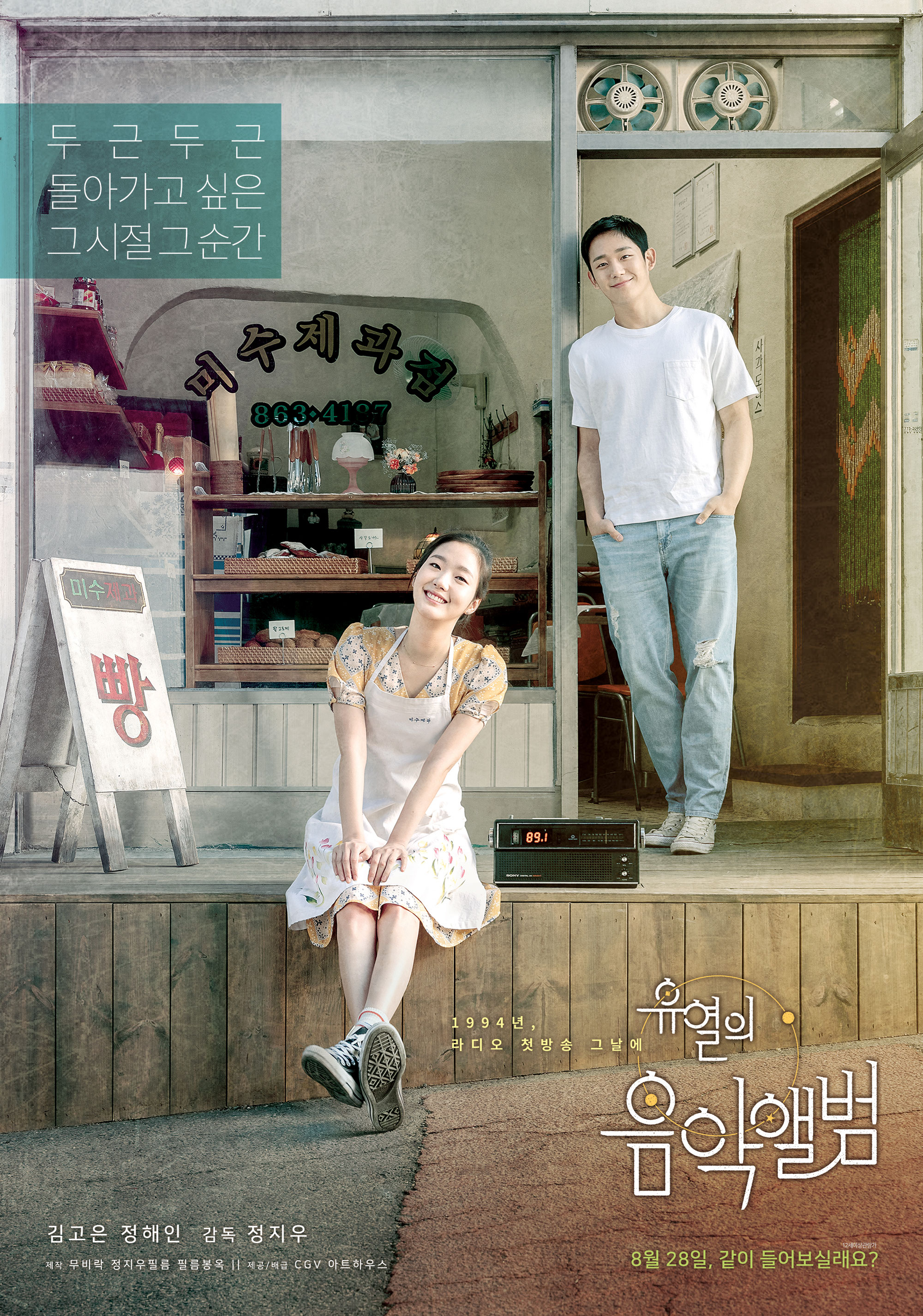
Tune in for love poster 2The course of true love never did run smooth. Another in the recent series of nostalgic ‘90s romances, Tune in for Love (유열의 음악앨범, Yooyeolui Eumakaelbum) takes a pair of nervous youngsters and charts the course of their love story over a decade which, though not quite turbulent, saw its share of difficulties and a host of technological changes. “Miracles are nothing special” the heroine tells us, but when it comes to love miracles are all there is and in the end you’ll just have to learn to trust them.

On Oct. 1, 1994 Hyeon-u (Jung Hae-in) walks into Mi-su’s (Kim Go-eun) bakery looking for something with tofu in it. While inside, he hears the first broadcast of Yoo Yeol’s Music Album, a new morning program which seems to signal the beginning of a new era. Though Mi-su is quick to realise that the only reason someone would be desperately looking for plain tofu early in the morning is because they’ve just been released from prison, she decides to offer him a part-time job in the bakery where he becomes a member of the family alongside her “aunt” Eun-ja (Kim Guk-Hee) who’s taken care of her since her mother died. His past, however, refuses to let him go however much he tries to move away from it. Tracked down by his delinquent friends, Hyeon-u is unable to return to the bakery and will spend the next decade trying to do just that.

Fate parts the youngsters repeatedly, but always brings them back together again seemingly by chance. Military service, changes of address, miscommunication and changing technology all conspire to keep them apart but like any good rom-com the problems aren’t so much circumstantial as personal. A deeply wounded young man, Hyeon-u is taken with the familial atmosphere at the bakery because he feels a sense of acceptance he hasn’t anywhere else, but deep down he still doubts he deserves the “normal life” he so deeply craves. His friends doubt it too, always turning up unexpectedly to remind him of their shared trauma and the debt of guilt he can’t repay. His insecurity prevents him from sharing the source of his pain with Mi-su, keeping her somehow outside the bubble of his shame as the only one capable of knowing the “real” him. She meanwhile is frustrated in realising that he’s holding something back, hurt he doesn’t trust her enough to let him in, and worrying he’ll never truly be ready for full commitment. 

Nevertheless, though often apart they remain painfully in sync, until that is fate brings them back together. As young man with a checkered past and no safety net, Hyeon-u has to fight twice as hard to get ahead, eventually graduating high school and getting into college while supporting himself with part-time jobs. Mi-su, meanwhile, is burdened by the knowledge that she’s lost her mother’s bakery and is desperate to get it back. Dreaming of being a writer, she turns down an internship at the all important radio show to go for a steady job she’s told is at a publisher’s but is actually somewhere more like a print shop where she’s stuck doing incredibly boring admin work. Hyeon-u is unable to get back in touch with her after miraculously reappearing because he’s ashamed to admit that he ended up getting in trouble again thanks to his awful friends even though it really wasn’t his fault. She meanwhile confesses that a part of her was relieved not to hear from him because she too is unhappy in herself, feeling lost and confused, disappointed not to be living the kind of life she could be proud of. 

Times change, but their one constant is the radio show broadcasting every morning and providing additional though indirect methods of communication when they are otherwise unable to make contact. Pay phones give way to email and then to mobiles all the way into the early days of the smartphone era, but face to face conversation remains the most difficult. Mi-su gives up on Hyeon-u while he, ironically, probably does sort something out by having a good old fashioned punch up with his generally unhelpful friend. She wonders if she’s better off to make the “smart” choice rather than waiting on love. Hyeon-u is hurt that in the end she didn’t trust him, but is eventually made realise that the problem was that he didn’t trust himself. Then again, you can’t fight the power of true connection or the pain of its absence, all you need to do is a little fine tuning to make sure the signal comes through loud and clear.


Currently available to stream online via Netflix in the UK (and possibly other territories)

Netflix trailer (English subtitles)